What to Wear to Diwali in Dubai
Festival of Lights November 2–12 · Diwali November 8, 2026 · Bur Dubai, Global Village and the Hindu temple in Jebel Ali, Dubai
NOAA's 1991–2020 November normals for Dubai International Airport, as on our Dubai November guide. Daylight is for 8 November.
Diwali in Dubai: Festival of Lights 2–12 November 2026, Diwali on the 8th, 31°C / 88°F days and 21°C / 70°F nights.
- Festive dress after dark — nights fall to 21°C, days reach 31°C
- A lehenga or kurta set in rose or pistachio — Dubai's Diwali parties dress up
- Sleeves and a covered knee for a temple — shoes off at the door
- A cardigan in the bag — malls and restaurants run cold
- Flat mules — marble floors and a temple door
- Heavy embroidery at 31°C — save it for the evening
- Sleeveless or short at a temple or at Global Village — both ask for modest dress
- Swimwear away from the beach — Visit Dubai says so plainly
- Head-to-toe black at a festival of light
Packing philosophy
Dress for the evening, because the evening is when Dubai celebrates. NOAA's 1991–2020 normals for Dubai International give November 30.7°C by day and 21.3°C at night, with less than one day of measurable rain, and the National Center of Meteorology calls it a transition month, 4 to 6 degrees below October. The Festival of Lights runs from 2 to 12 November on the city's retail calendar, and Diwali falls on Sunday 8 November. Heavy embroidery is miserable at 31°C and right at 21°C, so the lehenga comes out after sunset. Carry a light cardigan for air-conditioned malls, and keep one covered outfit ready for a temple visit, where shoes come off and shoulders are covered.
Dubai's Diwali is an evening festival for a practical reason: at 8pm it is 21 degrees, and every sequin you brought becomes wearable.
What the dress code actually is
Dubai asks for modesty in public before any festival does. Global Village's visitor rules open with "Please dress modestly", and Visit Dubai's guidance is that "swimwear and bikinis are fine to wear at the beach, but not in a shopping mall." At a Hindu temple the rules are the ones BAPS publishes in London and Singapore's Hindu Endowments Board publishes for its temples: shoulders, upper arms and knees covered, and shoes off at the door. A lehenga is party dress, the thing to wear to a Diwali dinner or a friend's celebration, and a guest who wears one is welcome; wear a kurta set or a long dress with sleeves to a temple instead. Buy from an Indian retailer in Bur Dubai, not a costume stall, and leave a bindi or tilak unless a host offers it.
The capsule
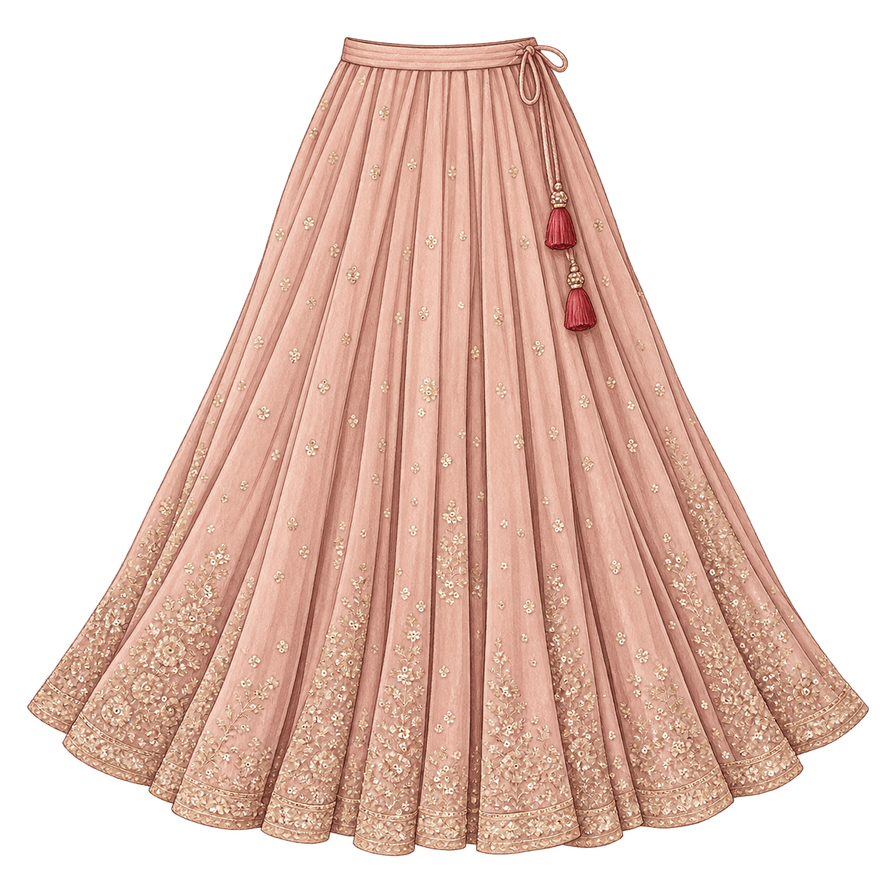 01Dusty-rose georgette lehenga skirt, gold zari hem
Dubai's Diwali dinners and parties dress up, and a lehenga is the guest's festive answer. Georgette is the light version, wearable at 21°C / 70°F after dark, and floor length satisfies the city's modesty rules as well as any temple's. Dusty rose with champagne gold reads bright without the red of a bride.
 02Dusty-rose embroidered choli, elbow sleeves
Elbow sleeves cover the upper arm, which a sleeveless choli would not, and they keep the look acceptable in a mall on the way to dinner. Matching the skirt makes it one outfit rather than two prints. Gold thread picks up the dupatta.
 03Champagne-gold organza dupatta, rose scalloped border
Over one shoulder it completes the lehenga, and draped across both it covers a cropped choli for a walk through the souk. Sheer organza weighs nothing at 21°C. Gold is the colour of the festival and ties the rose to the mules.
 04Gold embroidered flat mules, closed pointed toe
Backless mules come off at a temple door without your hands, and a flat sole walks marble mall floors and the lanes of Bur Dubai. Gold embroidery on the vamp makes a flat look like occasion shoes under a floor-length skirt. They also go with a kurta set for the temple visit.
 05Dusty-pink button-front knit cardigan, long sleeves
Dubai's malls, restaurants and taxis are cold even when it is 31°C outside. A long-sleeve cardigan in the same rose family goes over a choli for a mall and over a day outfit for the temple, covering the arms either way. Take it off for the photographs.
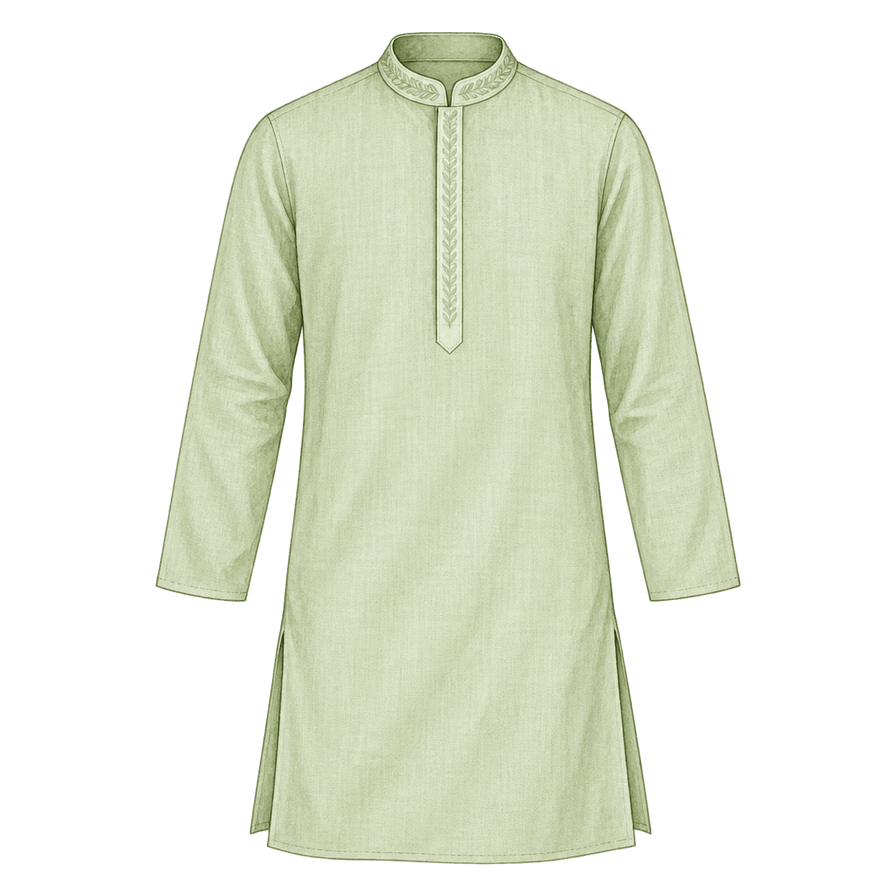 06Men's pistachio linen kurta, knee length
The menswear answer for a 31°C / 88°F day that becomes a 21°C party: linen breathes in the afternoon and looks dressed at night. Knee length and long sleeves suit a temple and a dinner alike. Pistachio sits with a partner's dusty rose.
Day to night
Pistachio or rose kurta with trousers · cardigan in the bag · gold mules. Morning darshan at the Hindu temple in Jebel Ali, shoes off at the door, before the heat.
Dusty-rose lehenga and choli · champagne dupatta · gold mules. Diwali dinner on Sunday 8 November, then the lights at Global Village in a 21°C / 70°F night.
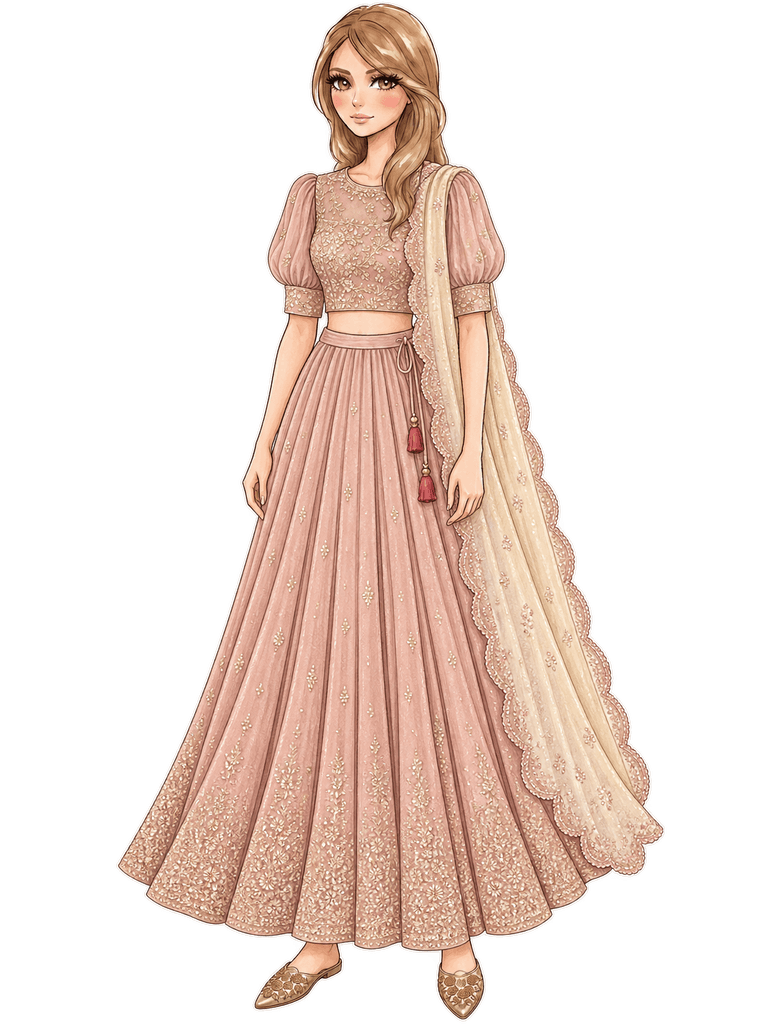
A suggested look — dusty rose lehenga skirt, dusty rose embroidered choli, champagne gold organza dupatta, gold embroidered flat mules.
What to avoid
- Heavy embroidery at 31°C — it is an after-dark outfit
- Sleeveless or short at a temple or Global Village
- Swimwear away from the beach
- No layer for the air-conditioning
- Head-to-toe black
Frequently asked questions
Festive clothes after dark and covered ones for a temple. NOAA's normals for Dubai International give November 31°C / 88°F by day and 21°C / 70°F at night, so a lehenga or an embroidered kurta set is comfortable in the evening and heavy at midday. Cover shoulders and knees for a temple, where shoes come off. Carry a cardigan for the air-conditioning.
Diwali falls on Sunday 8 November 2026. Dubai's retail calendar runs a Festival of Lights for it from 2 to 12 November, with events across the city, and Global Village opens every evening from 4pm through the month.
Yes, and at a dinner or a friend's celebration it is exactly what many Indian guests will wear. Choose a light georgette lehenga with a choli that has sleeves, and a dupatta you can drape across the shoulders in public. Wear a kurta set or a long dress with sleeves to a temple instead.
Expect the same rules Hindu temples publish elsewhere, such as BAPS in London and Singapore's Hindu Endowments Board: shoulders, upper arms and knees covered, and shoes removed at the door. A kurta with trousers, or a long skirt with a top that has sleeves, meets it. Dubai's general expectation of modest dress in public applies on the way there too.
Warm and dry. NOAA's 1991–2020 normals for Dubai International give November an average high of 30.7°C and a low of 21.3°C, with less than one day of measurable rain, and the National Center of Meteorology calls it a transition month, 4 to 6 degrees cooler than October. Sunset is at about half past five.
Sources
- Greater London Authority — Diwali on the Square 2026, Trafalgar Square, Sunday 25 October — accessed 2026-09-29
- BAPS Shri Swaminarayan Mandir, London — Visitor guidelines (dress code, footwear) — accessed 2026-09-29
- Neasden Temple — Diwali and Hindu New Year 2026 — accessed 2026-09-29
- Ministry of Manpower Singapore — Public holidays 2026 (Deepavali 8 November, Christmas 25 December) — accessed 2026-09-26
- LISHA — Deepavali Festival Village, Campbell Lane, 10 October – 8 November 2026 — accessed 2026-09-26
- LISHA — Deepavali 2026 Street Light-Up Ceremony, Little India — accessed 2026-09-26
- Hindu Endowments Board — Temple etiquette — accessed 2026-09-26
- Meteorological Service Singapore — Climate of Singapore — accessed 2026-09-26
- Government of Dubai Media Office — 2026 retail calendar (Fitness Challenge, Diwali, Eid Al Etihad) — accessed 2026-09-27
- Visit Dubai — Diwali in Dubai, Festival of Lights — accessed 2026-09-29
- Global Village — Plan your visit (hours, visitor rules) — accessed 2026-09-27
- Visit Dubai (DET) — Safety in Dubai (dress, beach flags, desert nights) — accessed 2026-09-27
- Aletihad — reprint of the NCM November climate summary (secondary) — accessed 2026-09-27
- NOAA National Centers for Environmental Information — Climate Data Online — accessed 2026-04-23