Margiela Modern Style Guide
Helmut Lang + Martin Margiela
Deconstruction as wearable system — Helmut Lang's S/S 1998 and Margiela's Tabi (F/W 1988).
Margiela Modern is Helmut Lang S/S 1998 'Travail' and Margiela's Tabi-toe boot (F/W 1988).
- An oversized off-white architectural coat — Lang or Margiela cut
- A wide cropped trouser with raw hem — the Lang signature
- German Army Trainer in cream — Margiela's reissue or vintage
- A heavy charcoal wool turtleneck — Acne Studios weight
- The Tabi-toe Mary Jane — Margiela's signature shoe
- Colour — palette is cream to charcoal, no saturated stops
- Hardware — buckles, prominent zippers break the reading
- Fitted tailoring — volume and drape are the entire move
- Polished leather — raw or matte finishes only
What is Margiela Modern style?
Margiela Modern names the wearable form of late-90s deconstruction. Helmut Lang's S/S 1998 collection (titled 'Travail' in the press) introduced the architectural off-white coat and the wide cropped trouser with raw hem that became the decade's most-imitated silhouette. Martin Margiela's contributions are spread across decades: the Tabi-toe boot debuted F/W 1988 and remains in production; the Replica line catalogues vintage garments reissued at scale; the brand's signature white cotton lab coat became identity-as-uniform. Cathy Horyn's New York Times Magazine profile of Margiela's anonymity (published in the late 2000s) and the MoMu Antwerp's archival holdings of Margiela's early collections are canonical references. The archetype is wearable when reduced: one architectural off-white coat, one raw-hem trouser, one pair of cream German Army Trainers, one heavy turtleneck, the Tabi-toe Mary Jane. Less Japanese than Tokyo Architect (the silhouettes are European-architectural), more wearable than the most-radical Margiela archive (the Replica reductions are the daily form). Contemporary maintainers in 2026: Margiela mainline, MM6 (the diffusion line), Acne Studios, and The Row when it leans architectural.
Margiela Modern is a 35-year project. Helmut Lang's S/S 1998 collection (the 'Travail' show) introduced the architectural off-white coat and the wide cropped raw-hem trouser that became the late-90s decade's most-imitated silhouette. Martin Margiela's contributions started earlier — the Tabi-toe boot debuted F/W 1988 — and continued through the brand's anonymous design era documented in Cathy Horyn's New York Times Magazine profile of the late 2000s. The MoMu Antwerp's archival holdings of Margiela's early collections include the original Tabi prototypes. The archetype lives in the wearable reduction Margiela himself sold through the Replica line: vintage garments reissued at scale, identifying decoration removed, the silhouette doing the work. The contemporary maintainers are Margiela mainline, MM6 (the diffusion line), Acne Studios, and The Row when it leans architectural.
Margiela Modern is decoration removed. The raw hem, the matte leather, the cream-to-charcoal palette — what's left is the silhouette doing the work.
Signature palette
The capsule
- 01Oversized off-white architectural coat
Helmut Lang S/S 1998 'Travail' is the reference; vintage Lang or contemporary Margiela mainline both deliver. Off-white wool or cotton, dropped shoulder, the silhouette walks straight from collar to hem. Skip belted versions and skip notched lapels.
- 02Wide cropped trouser with raw hem
The Helmut Lang S/S 1998 signature. Heavy fabric (wool or cotton), wide leg, cropped at the ankle with a deliberately unfinished hem. Margiela mainline's contemporary version delivers the same cut. Skip clean-finished hems and skip narrow legs.
- 03German Army Trainer in cream
Margiela's reissue (the 'Replica GAT') or vintage 1980s German Army surplus. Cream leather, low-top, plimsoll-like silhouette. The shoe carries the everyday register without adding height. Skip heavy chunky sneakers and skip white leather sneakers (Clean Sportif territory).
- 04Heavy charcoal wool turtleneck
Acne Studios' chunky merino or vintage Margiela 'Replica' knit. Heavy yarn, slightly slouchy at the neck. Worn under the off-white coat or alone with the raw-hem trouser. Skip fine merino (wrong weight) and skip cropped hem.
- 05Tabi-toe Mary Jane
Margiela's signature shoe — the Tabi was originally designed F/W 1988 and remains in production. Mary Jane variant in matte black leather. Worn with cropped trouser or under a midi-length skirt. Skip standard ballet flats; the split toe is the entire reading.
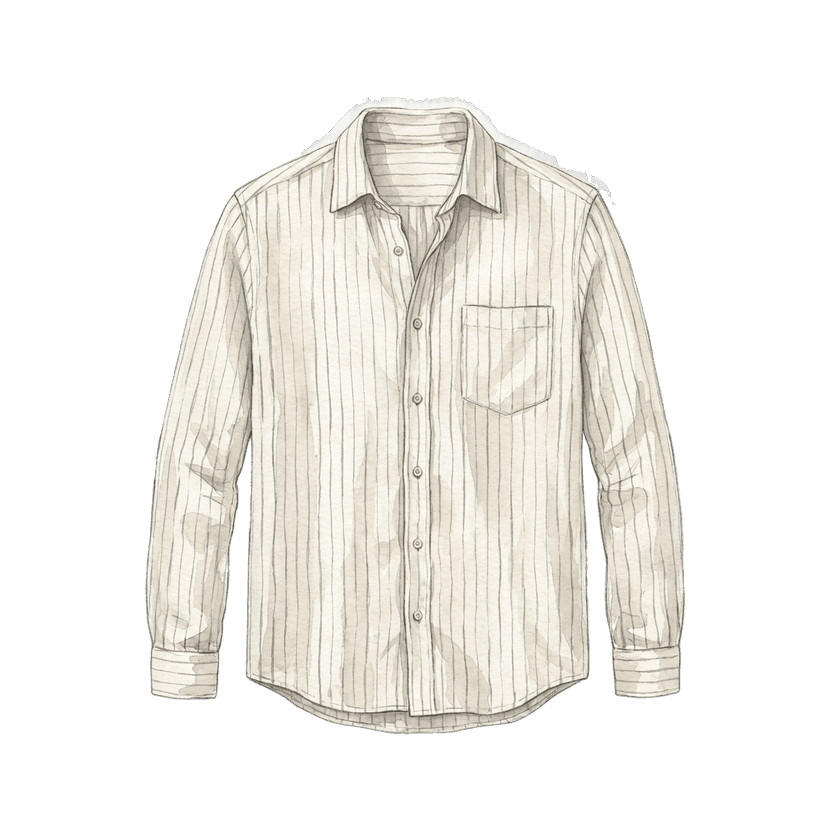 06Oversized white cotton lab coat or shirt
Margiela's signature lab coat (worn by the anonymous design team across decades) or any heavy white cotton men's-cut shirt with raw cuffs. Worn open over the turtleneck or buttoned alone. Skip crisp dress-shirt poplin.
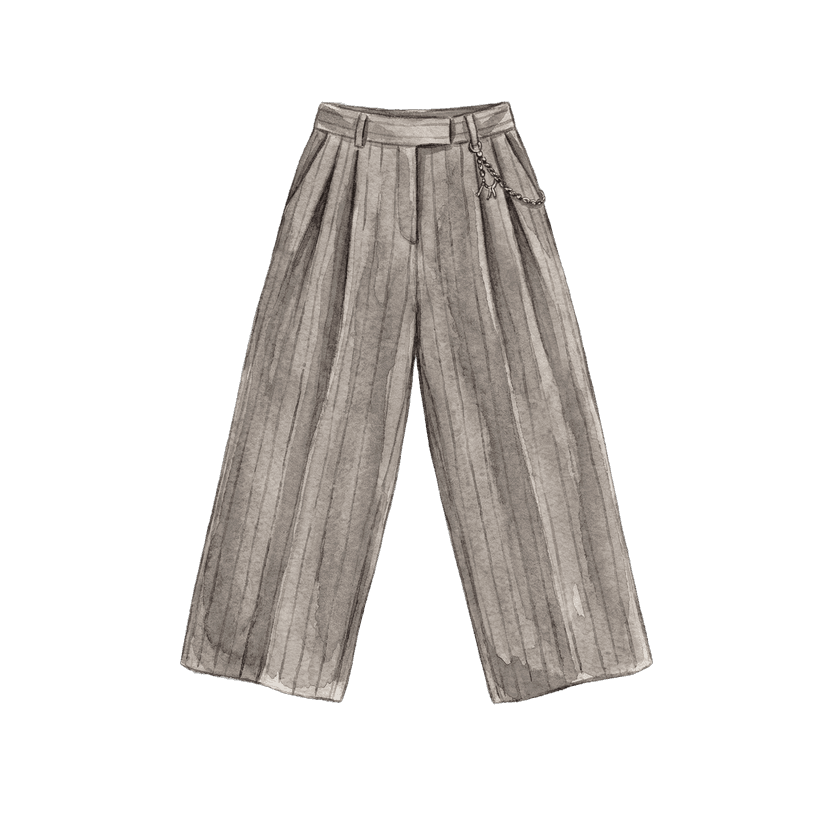 07Slate wool wide-leg trouser
The colour-alternate to the cream raw-hem trouser. Slate or charcoal wool, wide leg, slightly cropped. Worn with the heavy turtleneck and the Tabi or GAT. Margiela mainline or The Row's heavier wool both work.
What to avoid
- Colour beyond cream-to-charcoal — palette is the entire reading
- Hardware — buckles, prominent zippers break the silhouette
- Fitted tailoring — volume and drape are the entire move
- Polished leather — raw or matte finishes only
- Coloured or patent Tabi — matte black canonical form only
Frequently asked questions
Margiela Modern is Helmut Lang's S/S 1998 'Travail' collection (the architectural off-white coat, the wide cropped raw-hem trouser) and Martin Margiela's Tabi-toe boot debuted F/W 1988 plus the Replica line. The archetype is wearable late-90s deconstruction: oversized off-white architectural coat, raw-hem trouser, German Army Trainer in cream, heavy charcoal turtleneck, Tabi-toe Mary Jane.
Both share the volume-and-restraint grammar, but Tokyo Architect is Japanese-avant-garde (Yamamoto and Kawakubo, the F/W 1981 Paris debut) and centred on the colour black. Margiela Modern is European-architectural (Lang and Margiela), centred on cream-to-charcoal palette, and more wearable in its daily reduction. The two archetypes share The Row and Acne Studios as crossover maintainers.
Margiela mainline, MM6 (the diffusion line), Acne Studios, Lemaire, The Row when it leans architectural, and any vintage Helmut Lang archive. Lang's pre-2005 archive specifically (before he sold the brand) carries the canonical S/S 1998 cuts. The MoMu Antwerp's Margiela holdings are the canonical archive reference.
Functionally yes. The Tabi (debuted F/W 1988, in continuous production since) is Margiela's signature footwear and the visual marker of the archetype. The wearable variant is the Tabi-toe Mary Jane in matte black leather; the boot is the canonical original. A Margiela Modern outfit without the Tabi reads as adjacent quiet-luxury, not specifically Margiela Modern.
Helmut Lang S/S 1998 'Travail' runway and editorial coverage. Margiela's Tabi-toe boot in any of the brand's catalogues. Cathy Horyn's New York Times Magazine profile of Margiela's anonymity (late 2000s). The MoMu Antwerp's archival holdings of Margiela's early collections.