The 10-Piece Winter Capsule Wardrobe25 Outfits from 10 Pieces
Cream, camel, black. One palette, three months of cold-weather dressing.
Ten pieces in cream, camel, and black. Twenty-five outfits. One coat does every cold-weather job.
- Pick one outerwear hero. A camel coat handles every register from gym-run to restaurant
- Layer three top weights: a fine turtleneck, a heavier knit, a button-down for the collar peek
- Pick bottoms in two registers (one denim, one wool trouser) so the capsule clears office and weekend
- Add one smart layer (a black blazer) for the restaurant-and-event jobs
- Pick two shoes that handle wet pavement: ankle boots and loafers, both leather, both broken-in
- buy a 'just in case' formal dress for one party. It sits in the closet eleven months of the year
- add a fourth top in a colour the rest of the palette doesn't speak. The closet looks fuller, but combinations halve
- trust thin synthetic knits. They lose shape after three washes and read cheap under the coat
- keep an athletic puffer in the rotation as the only outer. Cute over leggings, ungainly over wool
Jennifer L. Scott introduced the ten-item wardrobe to a wide English-speaking audience in "Lessons from Madame Chic" (Simon & Schuster, 2012). The premise: a Parisian woman she lived with for a semester rotated about ten core pieces per season, plus extras like t-shirts and outerwear, and dressed better than any American she knew. Three years before Lee Vosburgh's 10x10 challenge made the number a styling exercise, Scott had already framed it as a closet philosophy. The ten below borrow Scott's discipline (one tight palette, every piece compatible with every other) and add a temperature anchor: 0-10°C / 32-50°F, which covers New York, London, Paris, and Tokyo from late November through early March. The palette is cream, camel, and black with cognac accents. No neon, no statement-print one-hits, no formal dress padded in for a party that hasn't been scheduled yet.
Curate ten core items per season, and round them out with extras: tees, sweaters, outerwear, special-occasion pieces, shoes, accessories.— Jennifer L. Scott, "Lessons from Madame Chic" (2012)
The 10 pieces
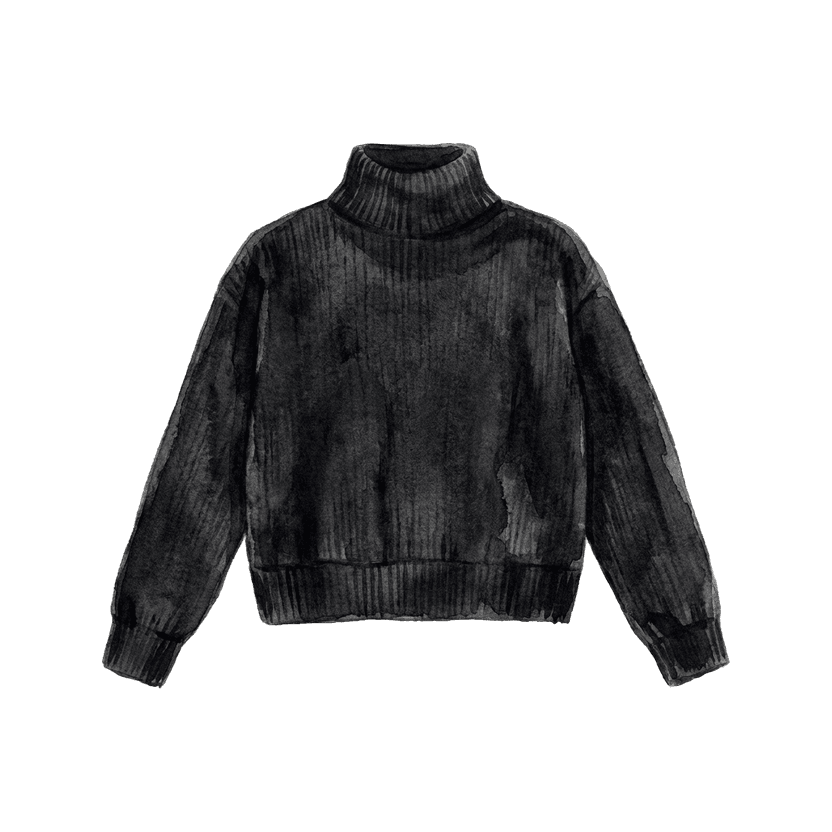 01Black turtleneck sweater (fine-gauge)
The base layer of the capsule. Fine-gauge knit, not chunky, so it sits flat under the blazer and the camel coat. Black anchors the cream and camel above it; high neck handles 0°C / 32°F mornings without a scarf.
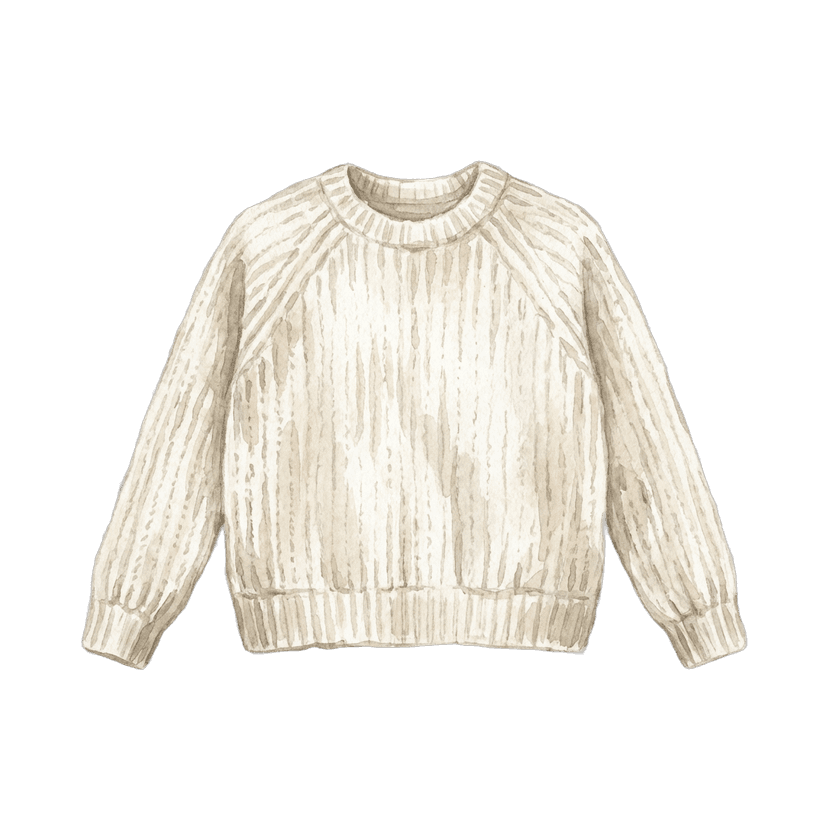 02Cream chunky knit sweater
The standalone heavyweight. Worn alone with jeans for cold-morning errands, or alone with the trousers for a softer office register. Too thick to layer under the blazer or coat sleeve, which is the point: this piece IS the layer.
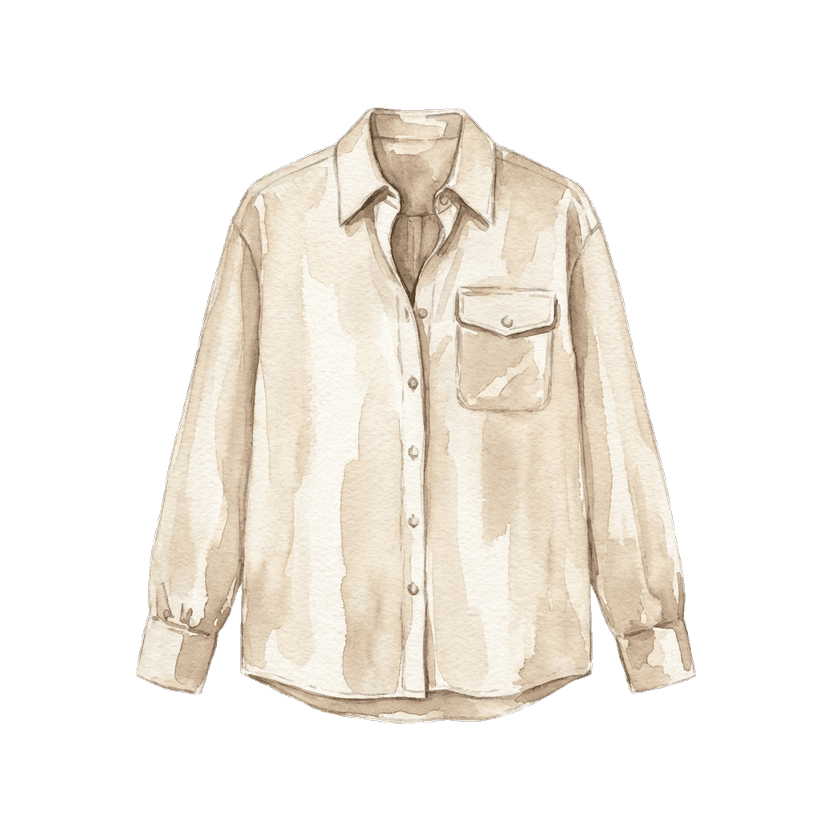 03Beige oversized button-down shirt
The collar-peek piece. Worn under the turtleneck so the collar shows at the neckline, or as a smart layer under the blazer. Beige threads cleanly between the cream knits and the camel coat. Cotton, not silk, so it handles a coat collar friction.
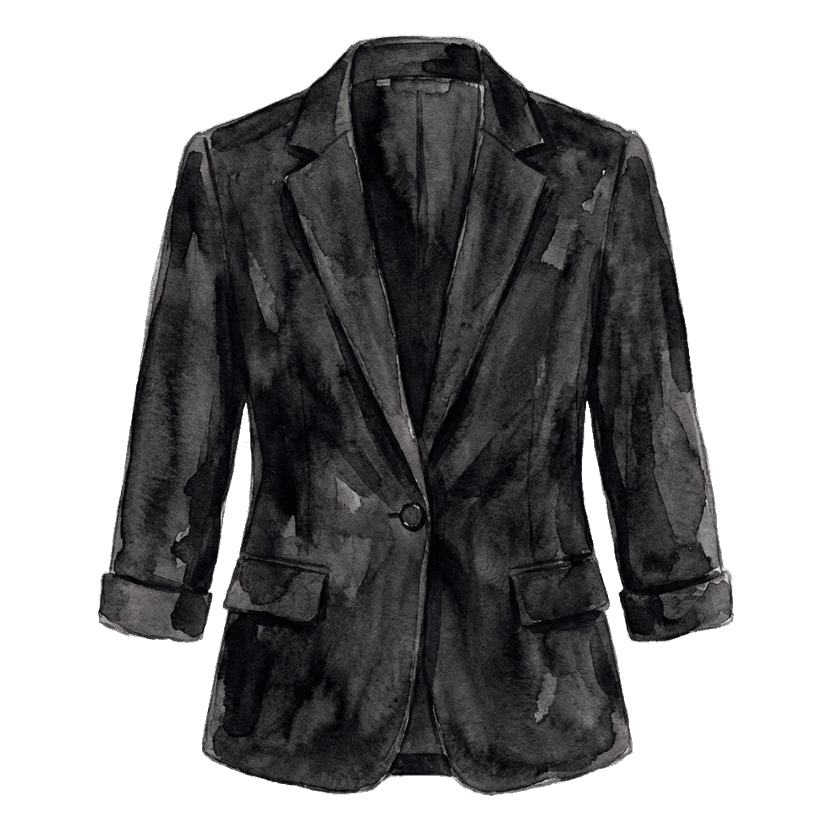 04Black structured blazer
The smart layer. Pulls the turtleneck or button-down into restaurant-and-event register. Structured shoulders read polished, not slouchy. Black, not navy, because black sides into both the camel coat and the cognac accessories.
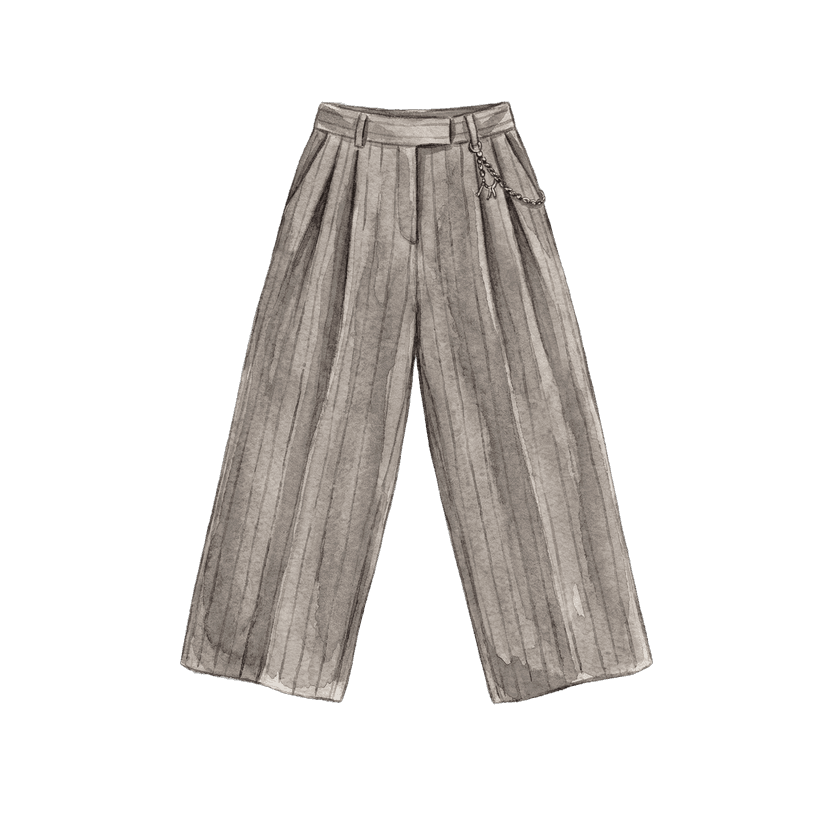 05Wide-leg pleated trousers (heathered gray-taupe)
The smart bottom. Wool-blend pleated wide-leg cools the legs and dresses up the chunky knit. Heathered gray-taupe is the cool neutral that sits between the warm cream and warm camel; the contrast is what makes the palette feel composed, not uniform.
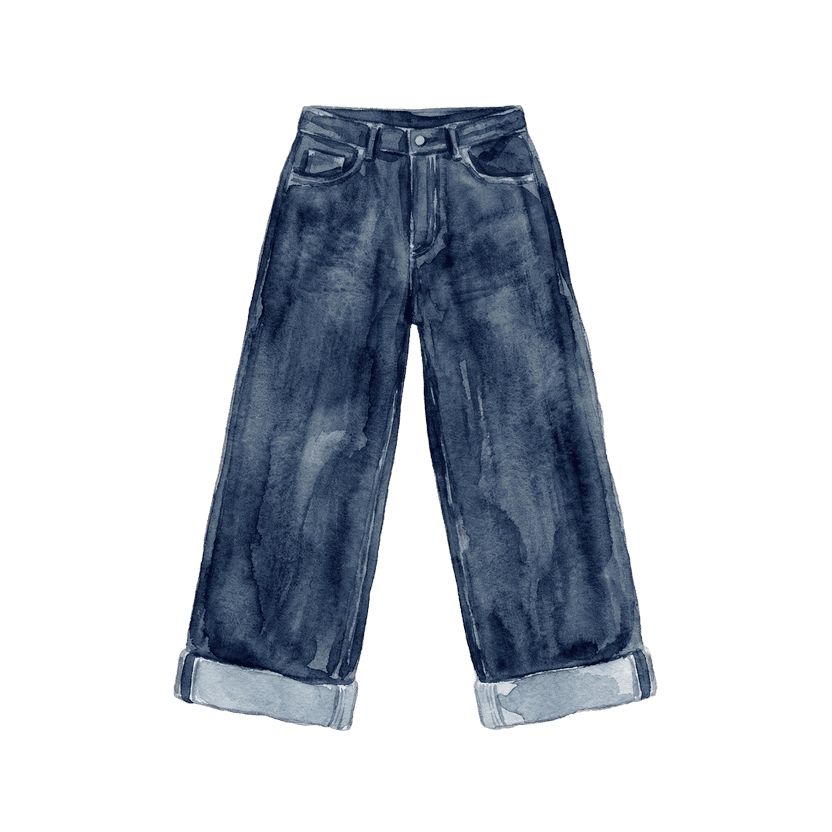 06Dark wash wide-leg jeans
The casual bottom. Dark wash reads winter: deep indigo holds against the camel coat where light wash reads transitional. Wide-leg covers the boot shaft, so ankle boots tuck under cleanly without bunching at the calf.
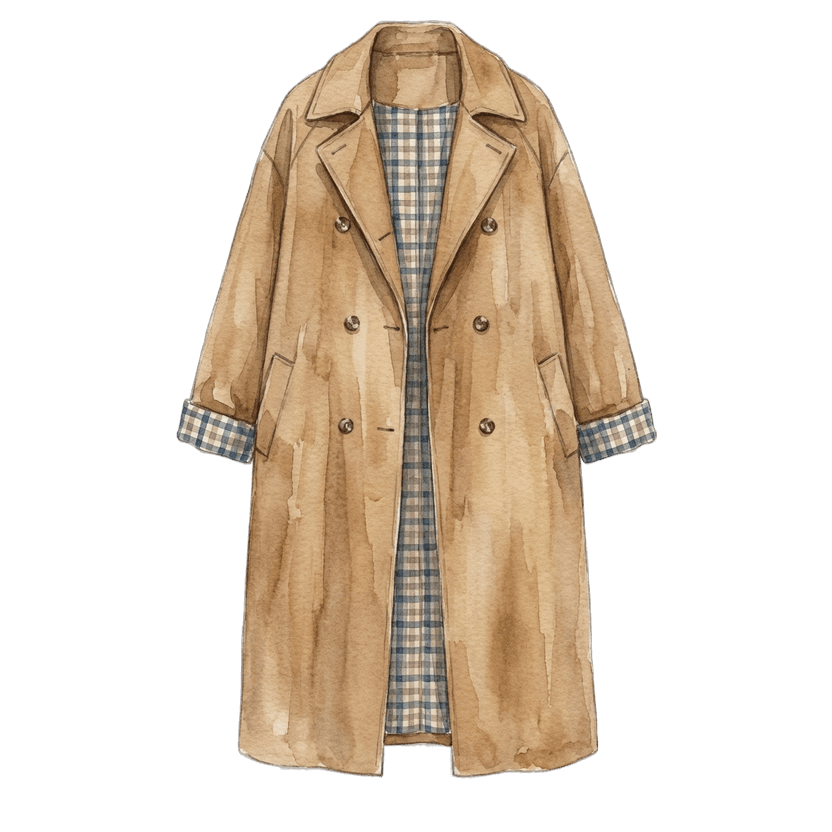 07Camel oversized trench coat
The outerwear hero. Cotton-gabardine trench in camel handles 0-10°C / 32-50°F with a chunky knit underneath. For sub-freezing days, swap in a wool overcoat or add a heavy wool scarf at the collar. The shape (long, belted, structured shoulders) is the head-term winter coat across editorial style guides.
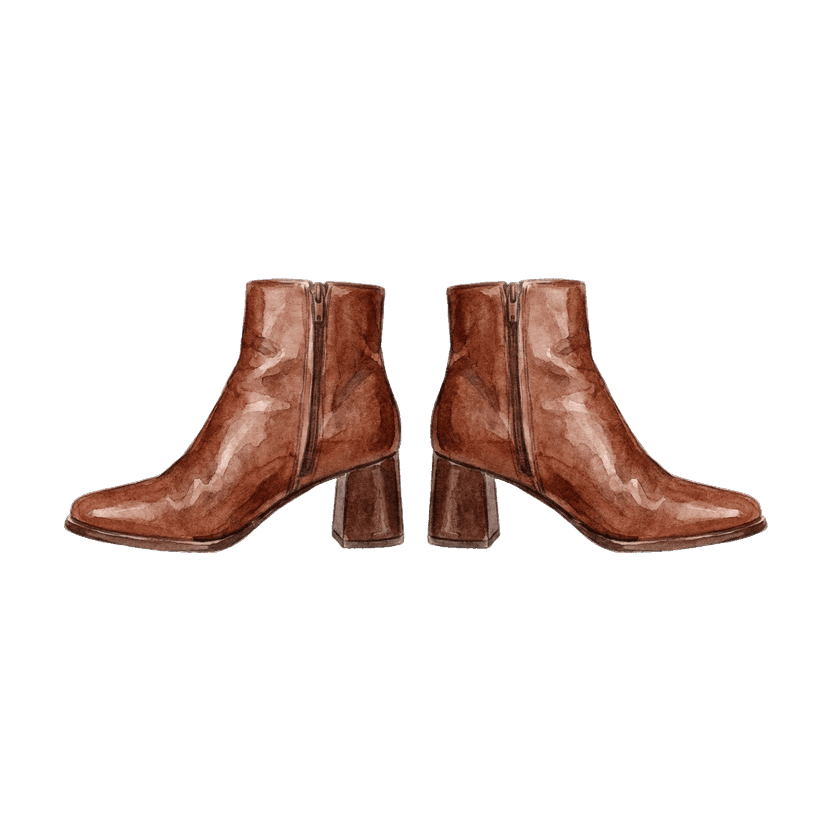 08Cognac leather ankle boots
The walking shoe of the capsule. Cognac leather sides into both the camel coat and the warm-neutral palette; ankle-height (not knee-height) keeps it season-flexible. Leather sole, not rubber, so it reads dressed enough for a restaurant after a museum.
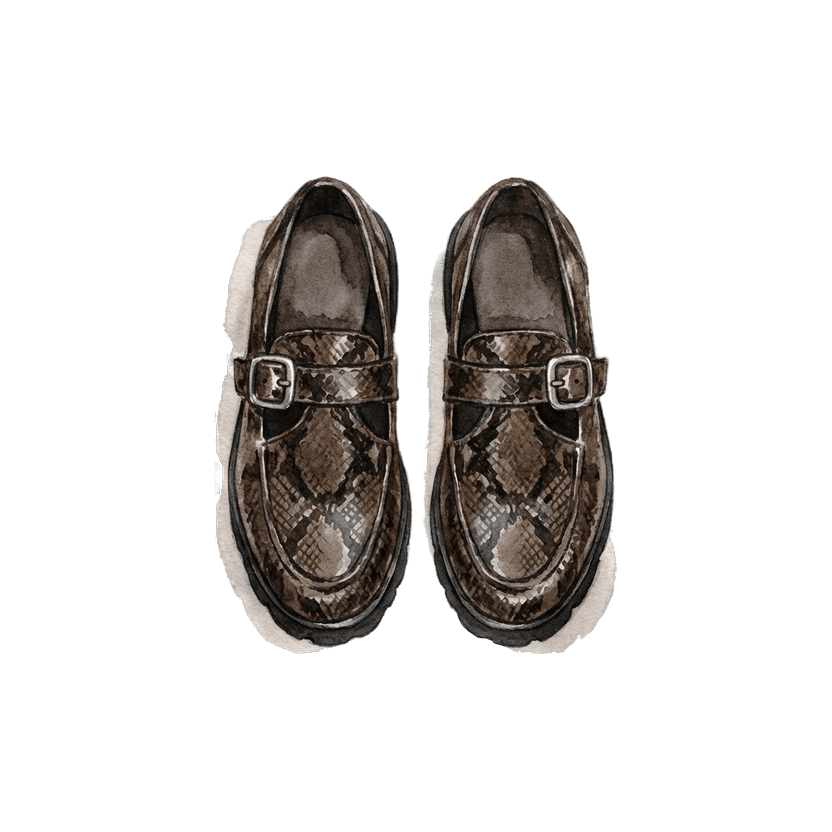 09Dark brown leather loafers
The dressier register. Loafers clear restaurant, office, and theatre dress codes that ankle boots barely scrape. Dark brown over black because the rest of the palette runs warm; black loafers fight the camel coat for attention.
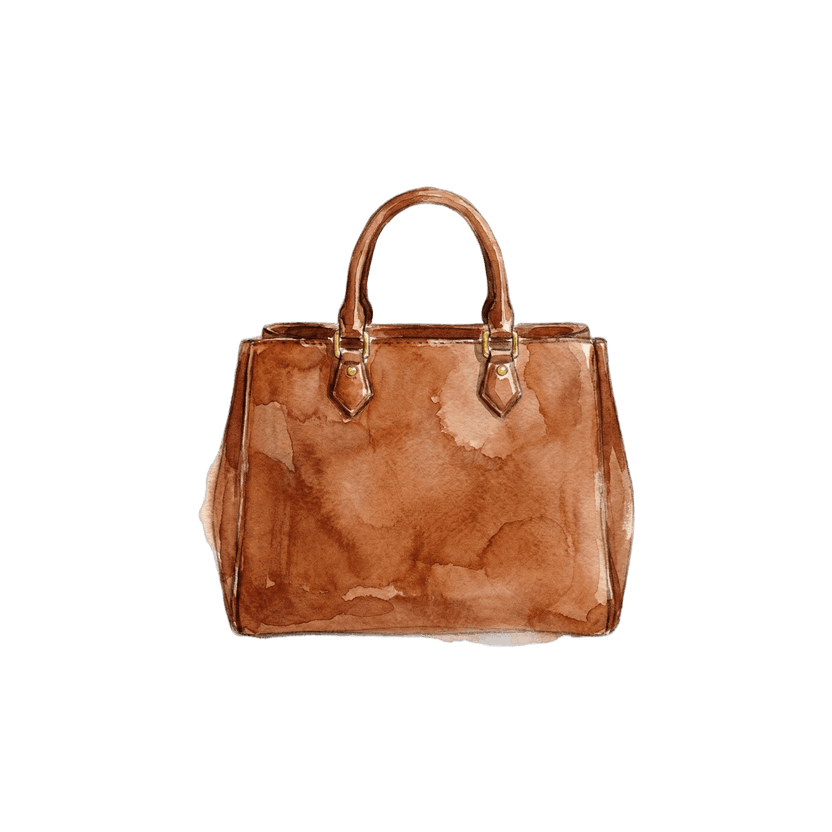 10Cognac structured leather bag
The carry-all. Structured (not slouchy) reads winter: holds shape under the coat shoulder, doesn't deflate when you set it down on a restaurant chair. Cognac threads with the boots and pulls the camel coat into accessory conversation.
25 outfits, 10 pieces
How 25 comes from 10: start with the 6 anchored hooks below, then rotate the capsule's compatible layers, shoes, proportions, and dress-code registers around them. The count is not raw permutation math; every swap still has to keep the silhouette, weather, and occasion intentional.
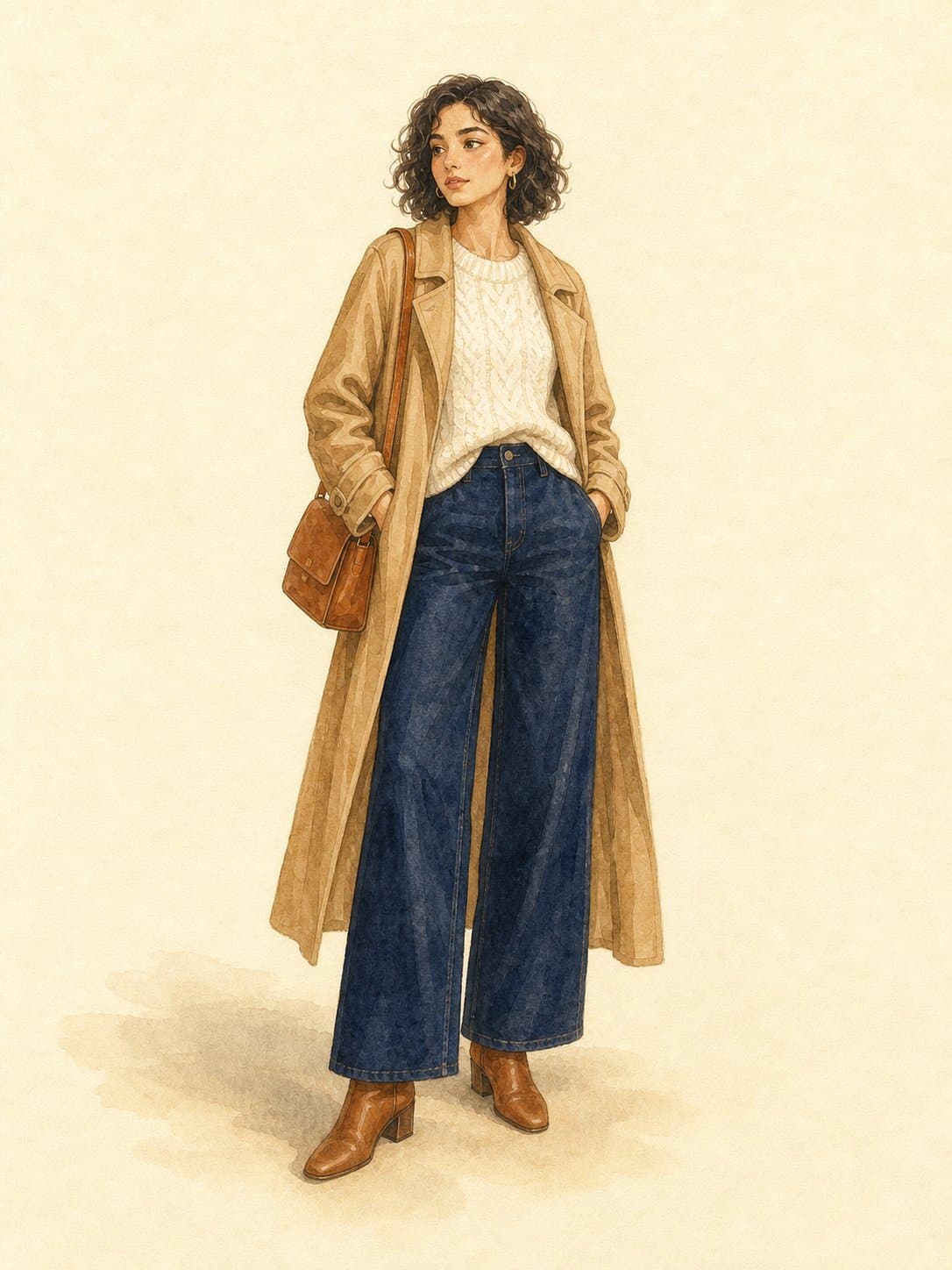
- 01Cold-morning errand
Coffee, post office, the dry cleaner. 2°C / 36°F at 8am. The chunky knit alone is the warm anchor; the trench is the universal outer.
- Cream chunky knit sweater
- Dark wash wide-leg jeans
- Cognac leather ankle boots
- Cognac structured leather bag
- Camel oversized trench coat
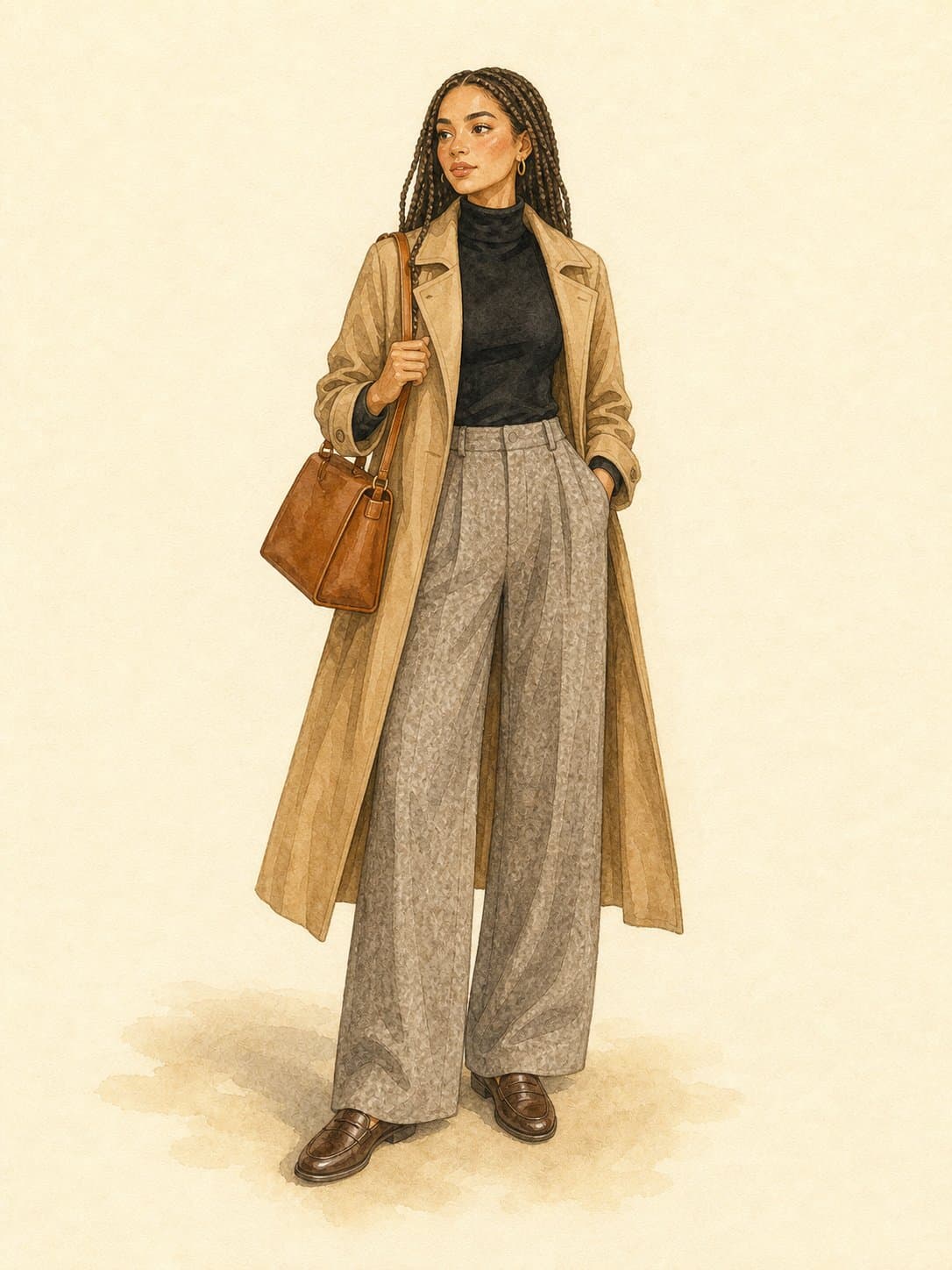
- 02Office day
Hybrid office, 9-5, lunch out. Turtleneck and trousers read polished without trying; loafers clear most office floors and the cafe after.
- Black turtleneck sweater
- Wide-leg pleated trousers
- Dark brown leather loafers
- Cognac structured leather bag
- Camel oversized trench coat
- 03Restaurant evening
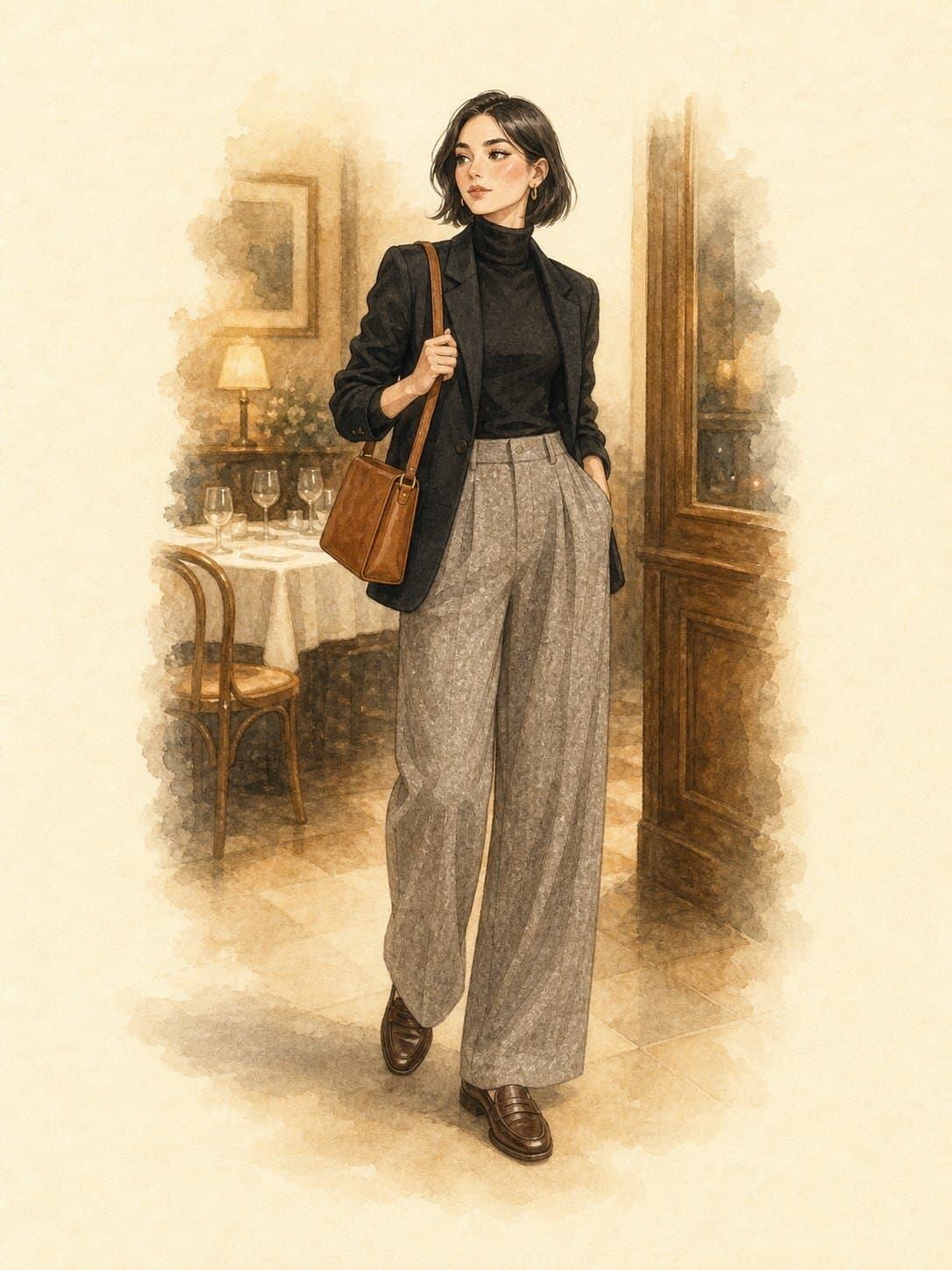
7pm reservation, restaurant AC at 19°C / 66°F. Coat at the door, blazer carries the look. The smartest configuration in the capsule short of the formal special-occasion pieces Scott keeps separately.
- Black turtleneck sweater
- Black structured blazer
- Wide-leg pleated trousers
- Dark brown leather loafers
- Cognac structured leather bag
- 04Bookshop and coffee
Saturday afternoon, 6°C / 43°F drizzle. Button-down untucked and unbuttoned over a tee for the layered relaxed register. Trench shrugs off light rain.
- Beige oversized button-down shirt
- Dark wash wide-leg jeans
- Cognac leather ankle boots
- Cognac structured leather bag
- Camel oversized trench coat
- 05Travel day
Plane chill at 22°C / 72°F cabin, taxi at 4°C / 39°F arrival. Knit handles cabin AC; trousers cleaner than jeans for a hotel check-in. Wear the bulky boots, fold the loafers into the bag.
- Cream chunky knit sweater
- Wide-leg pleated trousers
- Cognac leather ankle boots
- Cognac structured leather bag
- Camel oversized trench coat
- 06Holiday lunch
Family lunch, 12pm-3pm, 3°C / 37°F outside. Tucked button-down + blazer + dark jeans is the relaxed-elevated register: smarter than weekend, easier than office.
- Beige oversized button-down shirt
- Black structured blazer
- Dark wash wide-leg jeans
- Cognac leather ankle boots
- Cognac structured leather bag
- Camel oversized trench coat
Three looks, illustrated
3 of the 6 anchored hooks above, drawn out so the silhouette is unambiguous.
Build it in 8 steps
- 01Pick a three-colour winter palette before you shop. One warm neutral (cream, ivory), one universal (camel, tan, cognac), one anchor (black, charcoal, deep navy). Cream + camel + black is the version above; ivory + tan + charcoal is the same idea cooler.
- 02Pull every piece you already own that lives inside the palette and lay it out. Most winter capsule failure starts with adding a sentimental fourth colour the closet doesn't actually combine.
- 03Pick one outerwear hero. A camel coat at coat-length (long enough to cover the trousers) is the head-term winter outer; a wool-blend overcoat in charcoal does the same job in a cool palette.
- 04Pick three top weights. A fine turtleneck (fits under everything), a heavier knit (worn standalone), and a button-down (for the collar peek under the turtleneck and as a smart layer under the blazer).
- 05Pick two bottoms in different registers: dark wash jeans (casual) and a wool-blend wide-leg trouser (smart). One should always be slim or wide-leg in the same proportion as your coat to keep the silhouette balanced.
- 06Add one smart layer. A black structured blazer over the turtleneck or button-down clears restaurants and most events that don't require a separate dress.
- 07Pick two shoes that handle wet pavement. Cognac ankle boots and dark brown loafers cover walking, office, and restaurants. Skip suede unless you commit to spraying it weekly.
- 08Add one structured leather bag. Structured holds shape under the coat shoulder; the cognac or dark brown threads with the boots. Skip the slouchy hobo for winter; it deflates in the cold.
What to avoid
- Skip the chunky knit + blazer combo. The shoulder volumes fight; pick one or the other.
- Skip the thin cotton tee as the only base layer. A fine-knit turtleneck or merino crew handles 0°C weather; cotton conducts cold.
- Skip the 'just in case' formal dress. Special-occasion pieces are a separate small capsule per Jennifer L. Scott's framework, not part of the working ten.
- Skip the suede ankle boot as the only walking shoe in winter. One slushy crossing and they're done; pebble-grain leather handles winter pavement.
- Skip the puffer as the only outer. A camel or wool coat reads across every register; a puffer reads only one.
Frequently asked questions
Three colours, three top weights, two bottom registers, two shoes, one coat, one bag. The three colours: one warm neutral (cream), one universal (camel), one anchor (black). The three tops: a fine turtleneck for layering, a heavier knit for standalone wear, a button-down for the collar peek under the turtleneck. The two bottoms: dark jeans (casual) and a wool-blend wide-leg trouser (smart). The two shoes: cognac ankle boots and dark brown loafers. One camel coat covers every cold-weather register; one cognac structured bag carries it all. That's ten.
Down to about 0°C / 32°F with a chunky knit underneath, yes. Below that, a cotton-gabardine camel trench struggles; the move is to swap in a wool or wool-blend overcoat in the same camel shade, or add a heavy wool scarf at the collar to seal the heat. The trench shape (long, belted, structured shoulders) is the head-term silhouette winter editorials lean on; the fabric is what scales to the temperature, not the cut.
For three months, yes. Jennifer L. Scott's ten-item framework explicitly carves out special-occasion wear, exercise clothes, sleepwear, and accessories as separate small capsules. The 'ten' refers to your daily working rotation, the pieces you'll wear every week. A 30-piece year-round closet (Caroline Joy Rector's Un-Fancy framework) carries the same logic across all four seasons; the 10-piece-per-season version trades flexibility for simpler decision-making.
Two reasons. One: at 0-10°C / 32-50°F, a dress without a slip layer underneath conducts cold faster than separates. Two: the layering math (three top weights, two bottom registers, two shoes, plus a blazer) already crosses 25 outfit combinations without a dress. The summer capsule needs a dress for the one-and-done day; the winter capsule layers its way to the same combinatorial count. If your lifestyle includes a weekly dressy event, add a knit midi as an eleventh piece, or treat it as a separate special-occasion capsule per Scott's framework.
Three colours total: one warm neutral, one universal, one anchor. Cream + camel + black is the version above; ivory + tan + charcoal is the same idea in a cooler register; oatmeal + cognac + navy works for a softer cool palette. The rule that holds across all three: every top should pair with every bottom; every layer should layer over every base. If a piece only works with one other thing in the closet, it doesn't earn the slot. Skip neon and statement prints; both shorten outfit count by killing combinability.