The 8-Piece Summer Capsule Wardrobe16 Outfits in One Tight Palette
White, black, tan. The dressier summer eight, hotel to harbour.
Eight pieces in white, black, and tan. Sixteen outfits. The dressier summer eight, hotel to harbour.
- Pick three adjectives before you shop. Bornstein's Three-Word Method beats trend-following every time
- Skew dressier than a default summer capsule. Wide-leg trousers, mini skirt, slip dress over shorts and tees
- Pick two shoes that read summer-evening, not summer-beach. Sandals over flip-flops; sneakers in white/leather not canvas
- Add one accent colour anchor. Tan threads everything together: the bag, the skirt, the sandal trim
- Layer the white shirt over the cami AND over the slip dress. That's two extra outfits for one piece
- include a single trend-driven piece. The 8 is too tight for one piece to fail; trend-driven pieces fail half the time within twelve months
- duplicate the cami in two colours. White is the colour; layering and bottoms do the variety work
- skip the slip dress because you 'don't wear black'. Black slip is the most-worn evening piece in the editorial-capsule lineage; skip it and lose a third of the working outfits
- add a bag in a fourth colour. Two neutrals plus tan is three colours; a fourth bag breaks the math
Allison Bornstein's "Wear It Well" (TarcherPerigee, 2023) introduces the Three-Word Method: pick three adjectives that describe your personal style, and test every piece against them. The discipline matters more at eight pieces than at ten or thirty, because there's no slack. A piece that fails one of the three words can't earn a slot. The eight below test against Bornstein-style adjectives like "easy, polished, minimal" or "editorial, summer, monochrome". Anuschka Rees, in "The Curated Closet" (2016), framed the same discipline differently: a closet looks abundant when colours speak to each other, and starved when they don't. White, black, and tan speak to each other across every register from beach lunch to hotel restaurant.
Pick three words that describe your style, then test every piece against all three. Anything that fails a word doesn't earn a place.— Allison Bornstein, "Wear It Well" (2023), paraphrased
The 8 pieces
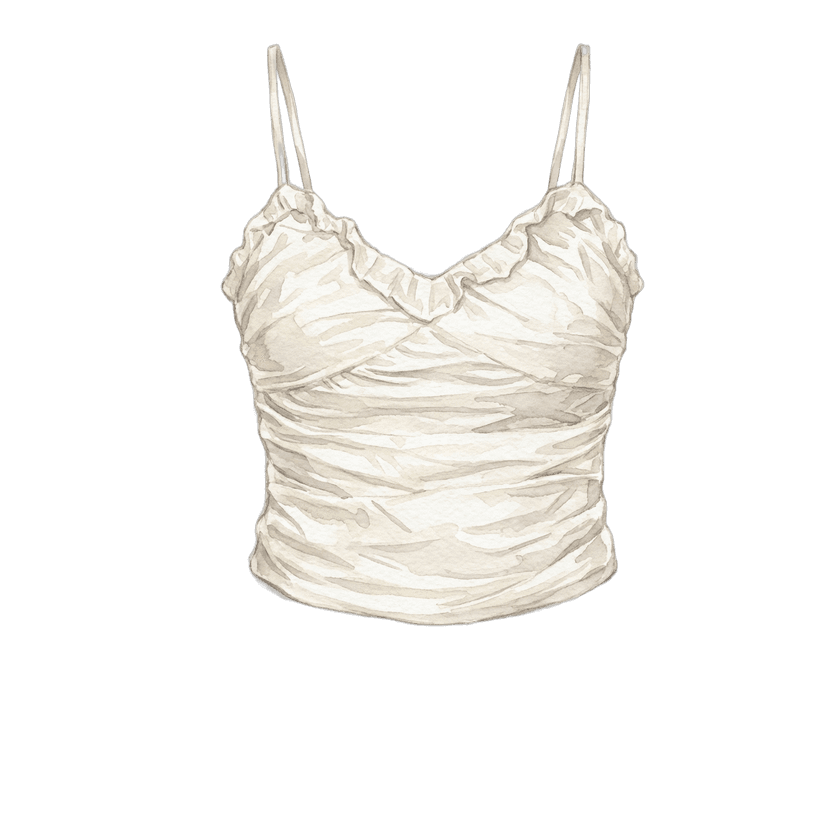 01White ruched cami top
The base layer of the capsule. Alone with the trousers or skirt, under the white shirt for layered evenings, under the slip dress's straps to lower the neckline for daytime. The only piece in the 8 that overlaps with the 10-piece-summer-capsule, because every summer capsule needs the same anchor.
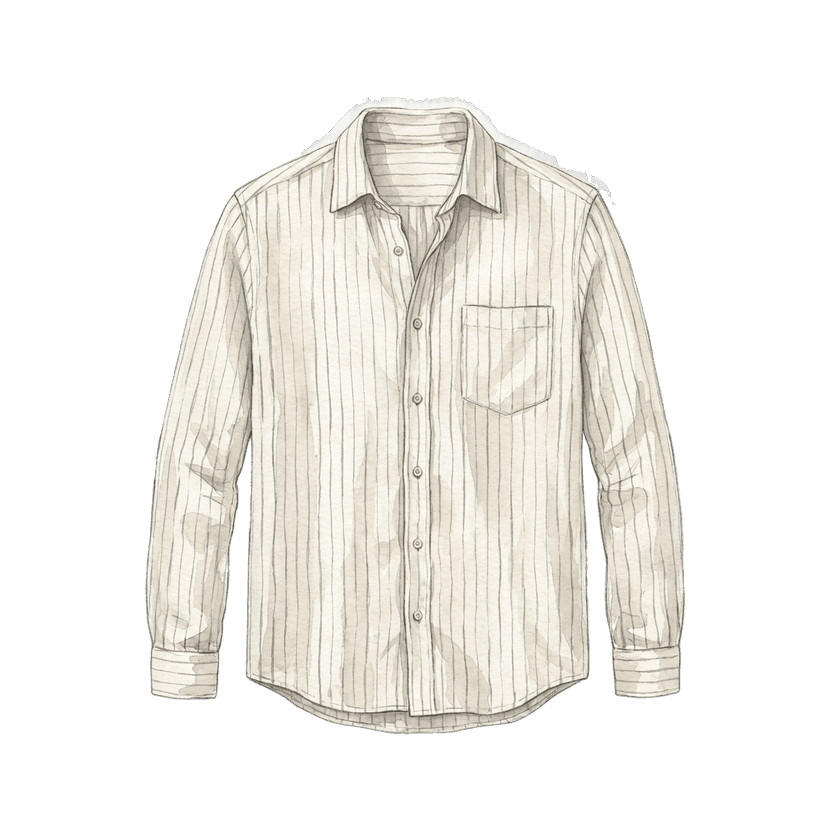 02White pinstripe linen shirt
The two-job layering top. Open and unbuttoned over the cami at the beach; tucked and buttoned with the trousers for dinner. Pinstripe reads dressed where a plain white shirt reads casual; linen blend cools through 30°C / 86°F.
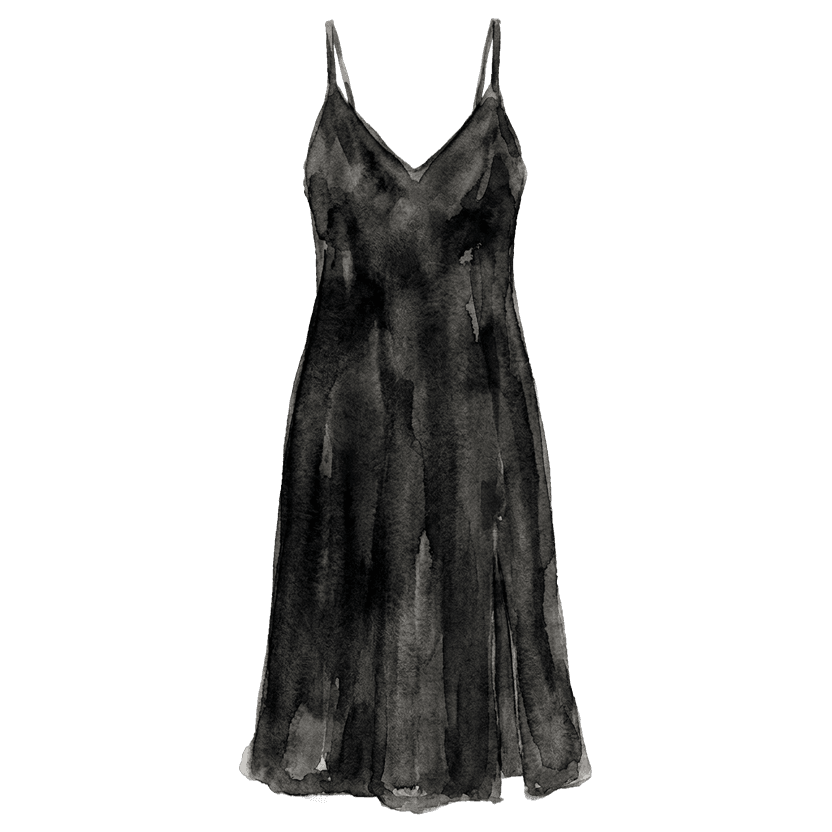 03Black midi slip dress
The dress that does the most work. Alone with sandals for restaurant evenings; under the white shirt for layered dressy days; with sneakers and the tan bag for a museum afternoon. The most-worn evening piece in the editorial-capsule lineage.
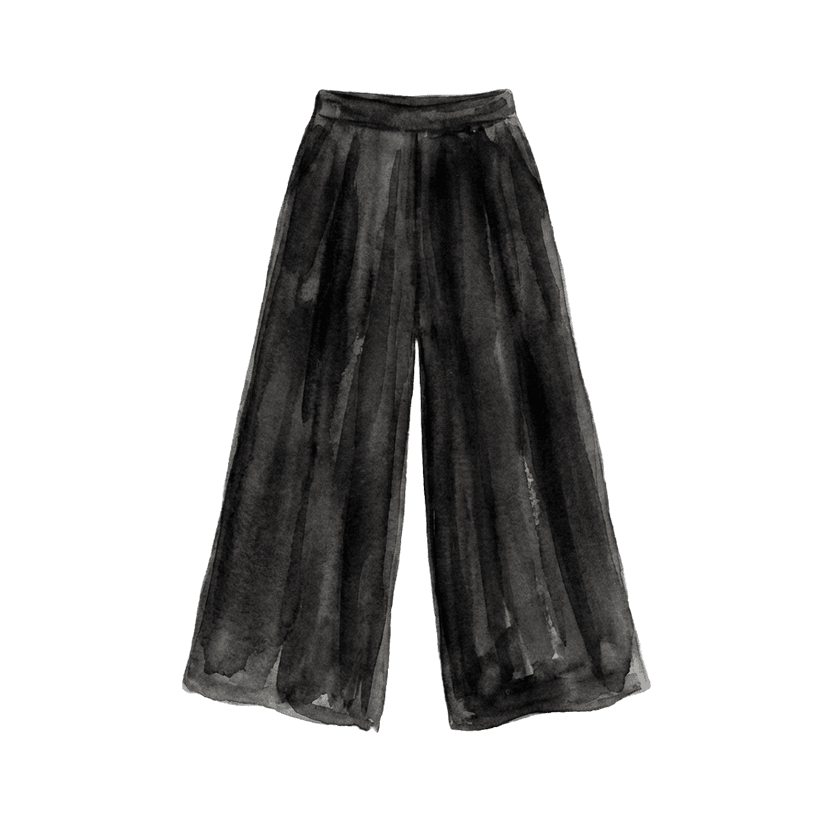 04Black wide-leg trousers
The smart bottom. Black holds against the white cami, the white shirt, and the tan accessories without effort. Wide-leg cools the legs; pleats or flat-front depending on cut, both work.
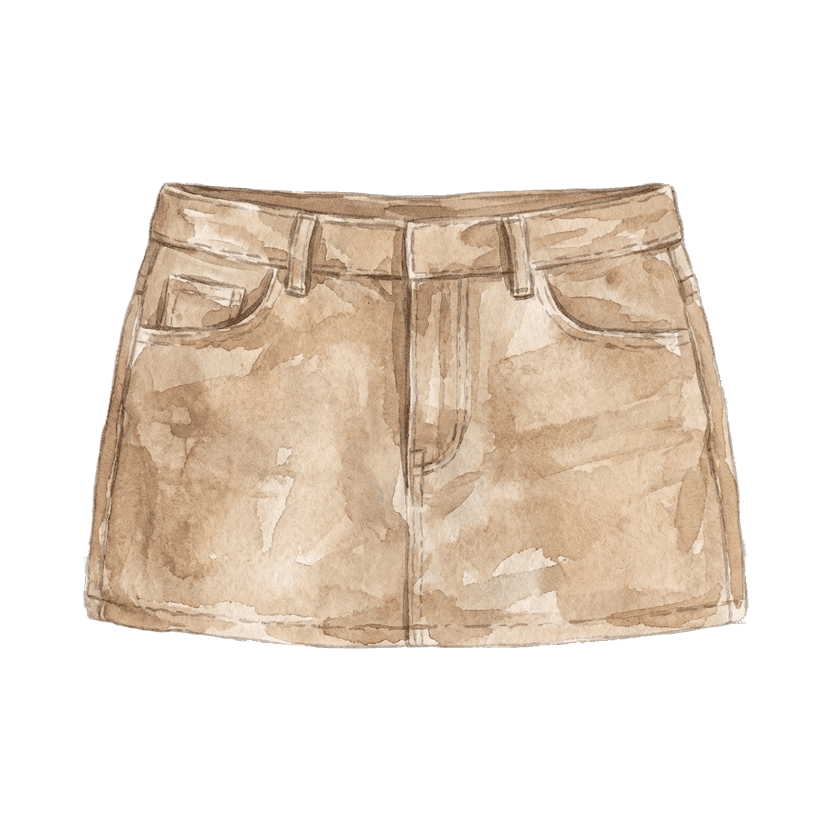 05Tan micro mini skirt
The summer-day register. Tan threads with the bag and the sandals; mini reads young-summer where the trousers read smart-evening. Worn with the cami tucked or the white shirt knotted at the waist.
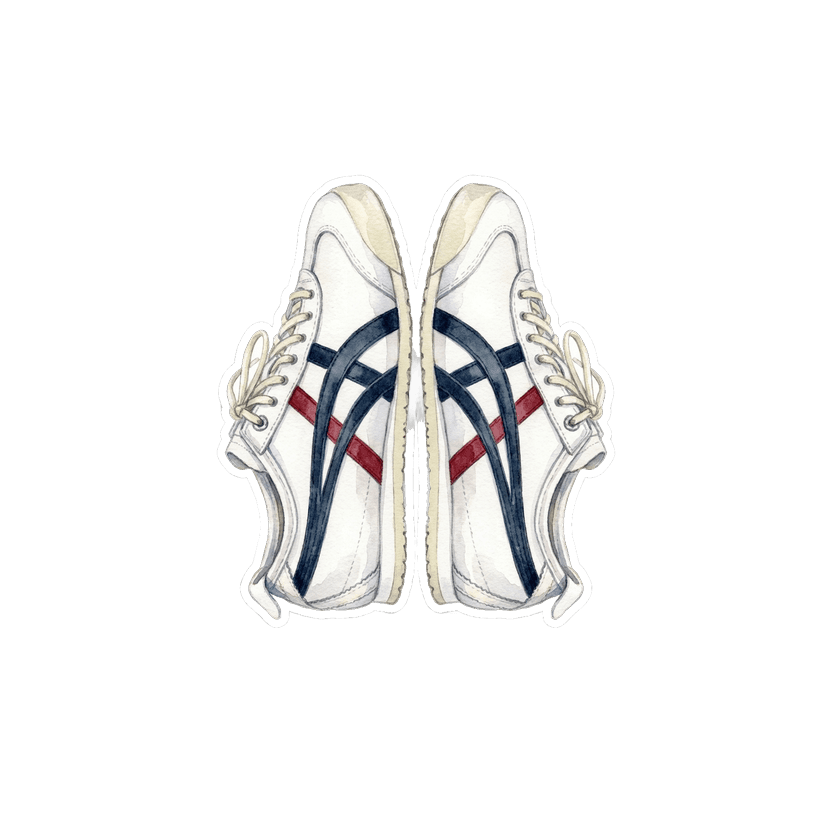 06Onitsuka Tiger low-top sneakers (white and black)
The walking shoe. Two-tone white-and-black pairs with both the cami and the slip dress without fighting either; low-top stays summer; leather upper takes a city day better than canvas. Worn for the gallery day, the brunch, the travel day.
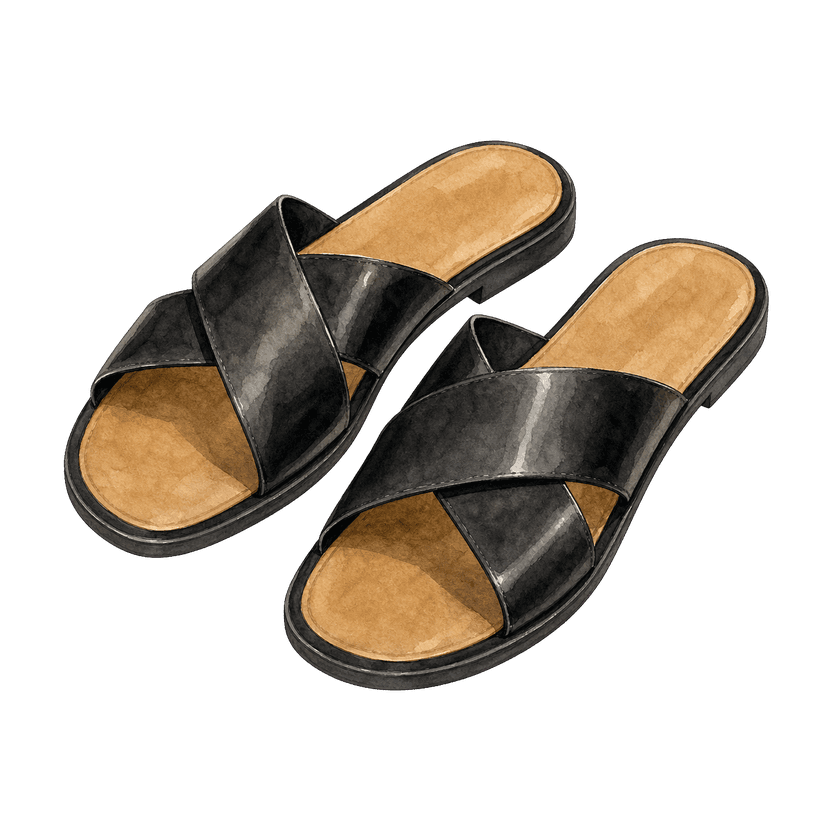 07Black crossover flat sandals
The evening shoe. Black holds against the slip dress and the trousers; crossover straps stay on the foot through cobblestones (flip-flops do not). Flat saves your feet on a long restaurant table.
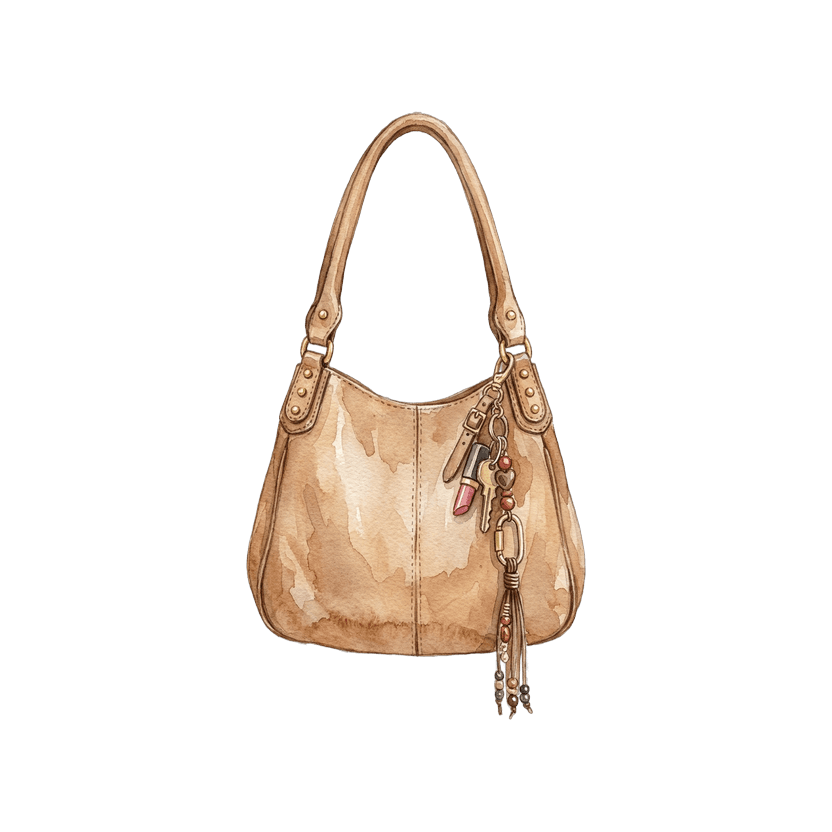 08Tan leather shoulder bag
The carry-all. Tan is the warm-neutral pivot that pulls the white-and-black palette into summer; structured-soft so it holds shape on a hotel chair without slumping. The capsule's only obvious accent piece, doing the work a straw tote does in the 10-piece.
16 outfits, 8 pieces
How 16 comes from 8: start with the 6 anchored hooks below, then rotate the capsule's compatible layers, shoes, proportions, and dress-code registers around them. The count is not raw permutation math; every swap still has to keep the silhouette, weather, and occasion intentional.
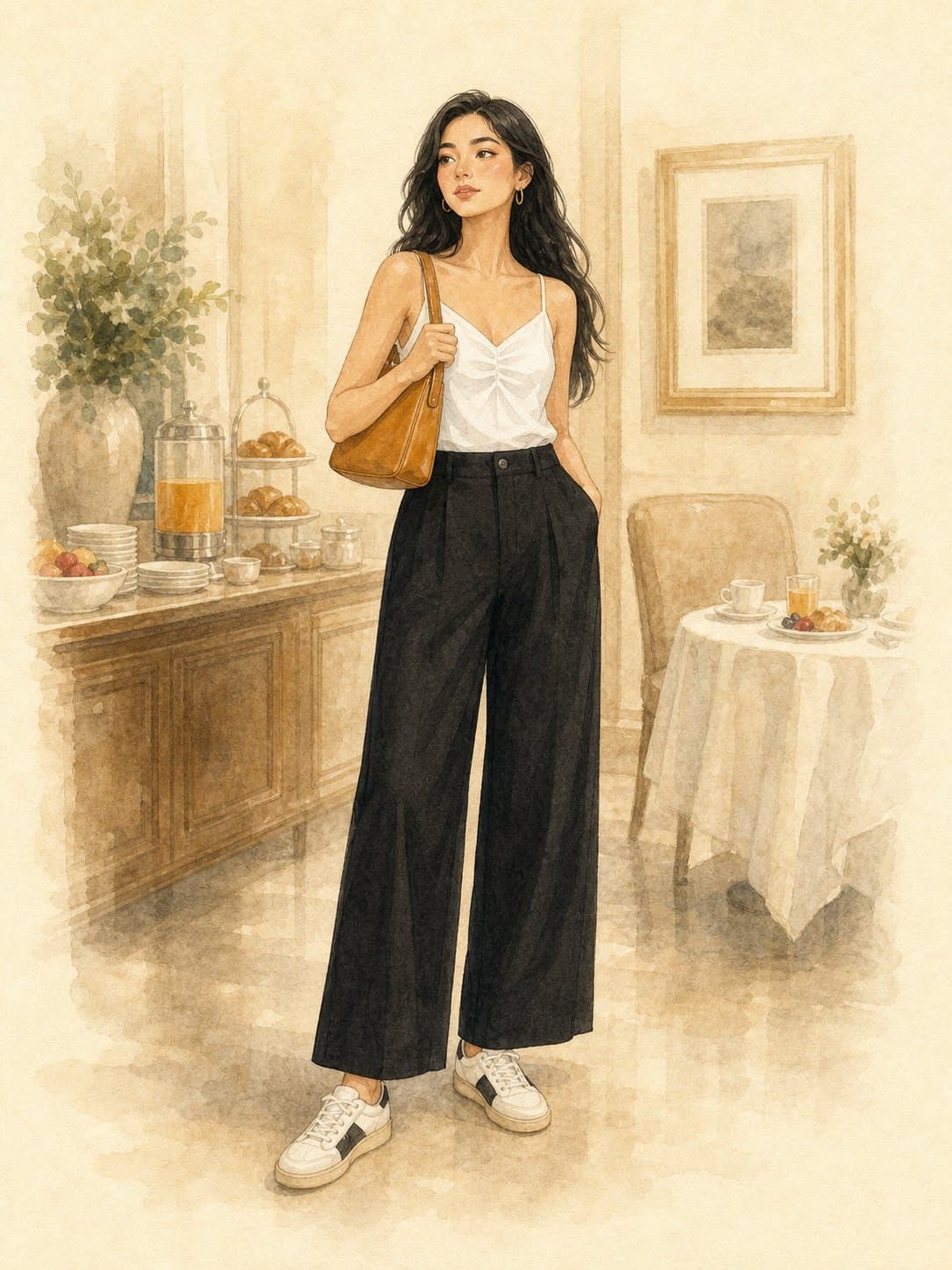
- 01Hotel breakfast
8am, 24°C / 75°F. Cami tucked, sneakers, walk to the cafe. The base 8-piece outfit.
- White ruched cami top
- Black wide-leg trousers
- Onitsuka Tiger low-top sneakers
- Tan leather shoulder bag
- 02Gallery day
Five hours on hard museum floors, then a cafe. Linen shirt tucked; tan-on-tan sides cleanly with the bag.
- White pinstripe linen shirt
- Tan micro mini skirt
- Onitsuka Tiger low-top sneakers
- Tan leather shoulder bag
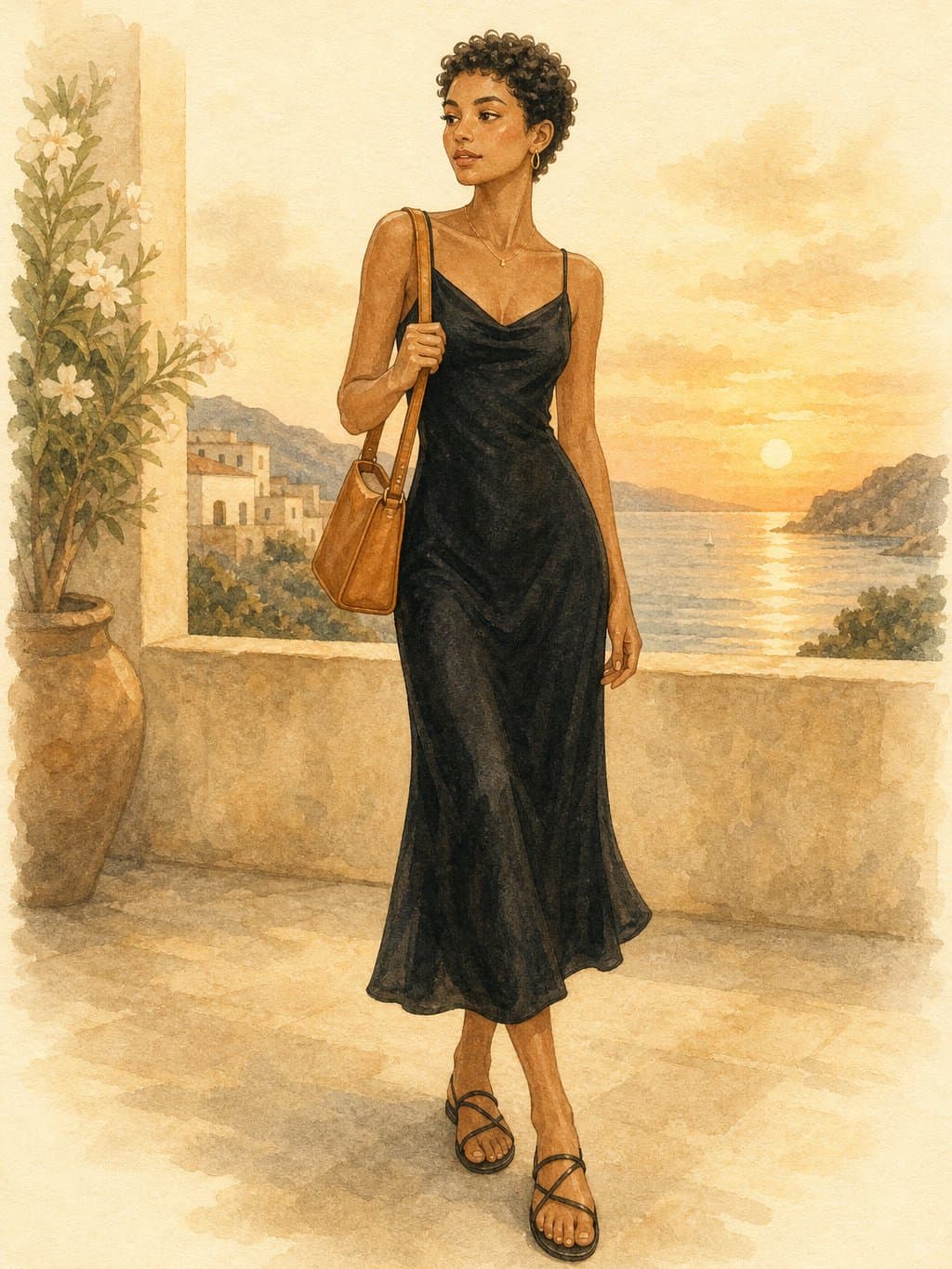
- 03Restaurant dinner
8pm reservation, 28°C / 82°F by sunset. Slip dress alone; the most-worn evening configuration.
- Black midi slip dress
- Black crossover flat sandals
- Tan leather shoulder bag
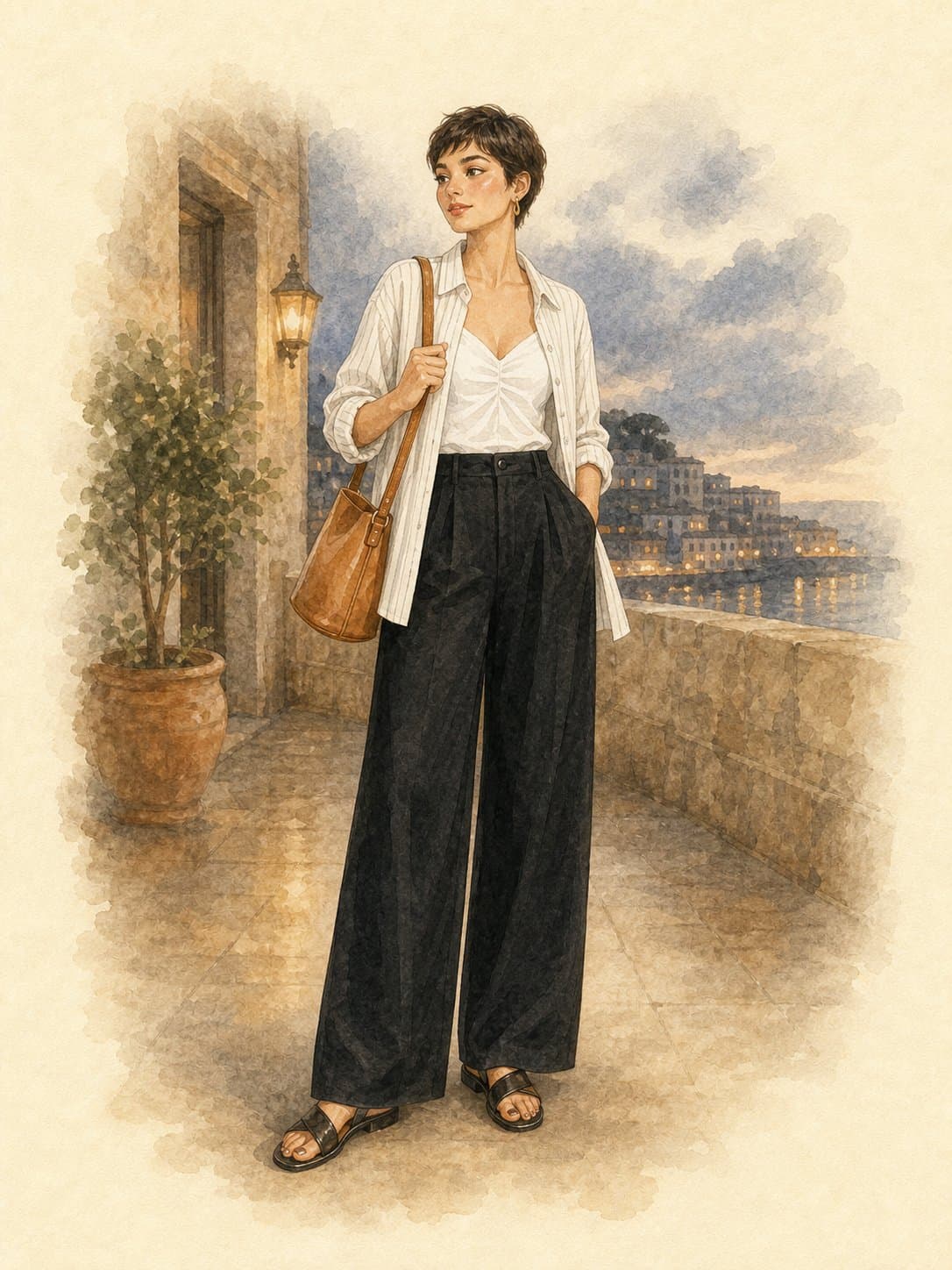
- 04Layered evening
Cooler 22°C / 72°F coastal night. Shirt open over the cami, trousers, sandals. The most-styled outfit in the 8.
- White ruched cami top
- White pinstripe linen shirt
- Black wide-leg trousers
- Black crossover flat sandals
- Tan leather shoulder bag
- 05Brunch with friends
Saturday lunch outdoors, 26°C / 79°F. Smart-casual register without trying. Knot the shirt at the waist if the trousers run high.
- White pinstripe linen shirt
- Black wide-leg trousers
- Black crossover flat sandals
- Tan leather shoulder bag
- 06Day-to-evening
Museum at noon, restaurant at 7pm. Slip dress with shirt layered open over for the daytime; shed the shirt for the evening. One outfit, two registers.
- Black midi slip dress
- White pinstripe linen shirt
- Onitsuka Tiger low-top sneakers
- Tan leather shoulder bag
Three looks, illustrated
3 of the 6 anchored hooks above, drawn out so the silhouette is unambiguous.
Build it in 8 steps
- 01Pick three adjectives for your style, per Allison Bornstein's Three-Word Method ("Wear It Well", 2023). Examples: "easy, polished, minimal"; "editorial, summer, monochrome"; "crisp, low-key, modern". Three words, no more.
- 02Pick a tight three-colour palette. White + black + tan is the version above. Two cool neutrals + one warm accent works as a template for any tighter monochrome.
- 03Pick one cami in white. The base layer of the capsule, doing three jobs: alone with bottoms, under the shirt, under the slip dress's straps for daytime.
- 04Pick one layering shirt in white. Pinstripe or solid, linen or cotton; just not the same fabric weight as the cami. The shirt is the variety engine: tucked, untucked, open over, layered under.
- 05Pick one black slip dress. The most-worn evening piece in the editorial capsule lineage. Skip it and lose a third of the working outfits.
- 06Pick two bottoms in different registers. Black wide-leg trousers (smart) and a tan mini skirt (summer-day) above. Or trousers and shorts if your life skews more casual.
- 07Pick two shoes that read summer-dressy, not summer-beach. Leather sneakers and flat sandals. Skip flip-flops, skip canvas Vans, skip heels (the 8 is too tight for an occasion-only piece).
- 08Pick one bag in your accent colour. Tan, cognac, or warm brown. Holds the cardigan or sun cream that the 8 doesn't include; threads the palette together.
What to avoid
- Skip a single trend piece. At 8, every piece must clear all three of your style words. A trend-driven slot is dead weight by Q4.
- Skip the heeled sandal as the only evening shoe. Flat sandals on cobblestones beat heels on cobblestones every time.
- Skip a printed dress for the 8. Print kills combinability; if it has to be in your wardrobe, put it outside the capsule.
- Skip a fourth colour. White, black, tan is the math. A pop of red is a fourth colour and breaks the count.
- Skip a shirt in the same fabric weight as the cami. The shirt is the layering piece; matched weights fight each other instead of stacking.
Frequently asked questions
Yes, for dressier summer use cases. Eight pieces in a tight white-black-tan palette produces sixteen working outfits across hotels, restaurants, museum days, and travel. The 8 isn't enough if your summer skews casual (beach days, weekend errands, kid-pickups in shorts and a tee); it's tuned for the dressier register. The 10-piece-summer-capsule adds shorts, a knit cardigan for AC, and a shirtdress for full-day casual range. Pick by use case, not piece count.
Allison Bornstein, in "Wear It Well" (TarcherPerigee, 2023), suggests picking three adjectives that describe your personal style. Examples she walks readers through include "easy, polished, minimal" or "crisp, low-key, modern." Then test every potential piece against all three words. A cropped halter top might pass "easy" and "summer" but fail "polished"; a tweed blazer might pass "polished" and "timeless" but fail "easy." Pieces that fail a word don't earn a slot. The discipline tightens at smaller piece counts, which is why we pair the method with the 8-piece specifically.
Three differences. Palette: white + black + tan (this 8) vs cream + navy + tan (the 10). Register: this 8 skews dressier (no shorts, no everyday tee, no chunky knit cardigan) while the 10 adds those for full-day casual range. Anchor: Allison Bornstein's Three-Word Method (this 8) vs Lee Vosburgh's 10x10 challenge (the 10). They're sisters, not duplicates; pick by what your summer actually looks like.
Yes. The 8 is a floor, not a ceiling. Common additions, in order: cream pleated tailored shorts (most-requested), a cream knit cardigan (for over-air-conditioned interiors), a cream linen midi shirtdress (one-and-done daytime). Adding all three turns the 8 into the 10-piece-summer-capsule, which is its own published article with a different palette and a different named-authority anchor.
Black absorbs heat in direct sun, but the slip dress and the trousers are the two black pieces here, both worn for evenings or interiors where direct sun isn't the issue. The cami, the shirt, and the skirt are white or tan, which carry the daytime register. The colour math is: white and tan for daytime sun, black for evenings and interiors. Skip black entirely if your summer is daytime-heavy and you'll lose the evening register; the 8 won't recover.