What to Wear in Reykjavík in January
Reykjavík in January: 3°C / 37°F afternoons, −2°C / 28°F nights, daylight growing from about four hours to seven, and aurora nights spent standing still.
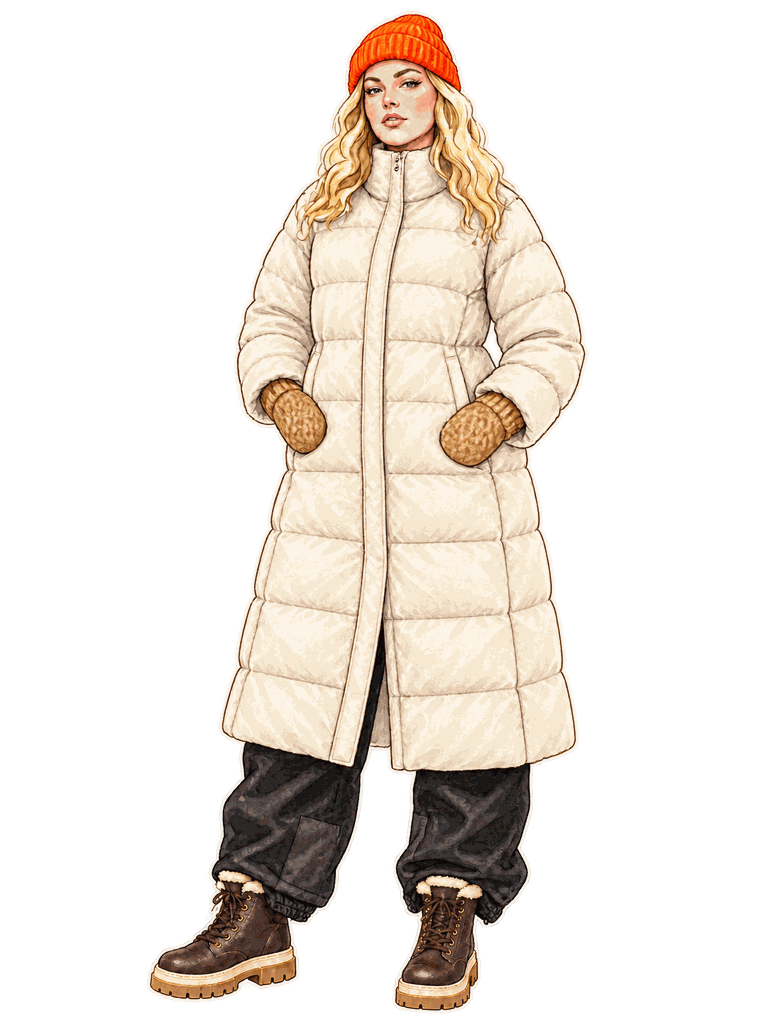
- Ivory mid-calf down coat — the cold on an aurora stop comes up through your legs
- Black insulated snow pants — over town trousers for an hour in a dark field
- Chocolate shearling-lined lace-up boots — frost on about 19 nights, snow on the verges
- Blaze-orange beanie — what headlights find at a roadside aurora stop
- Touchscreen liner gloves under camel mittens — fingers for the camera, warmth between shots
- Navy Nordic-star wool crew — Bóndadagur and the start of Þorri on Friday 22 January
- City-walk clothes on an aurora night — you stand still for an hour or more
- Jeans in the field — Safetravel says no cotton
- Reading the aurora number without the cloud map — the forecast needs clear patches
- Driving past a closed road — "Closed road means CLOSED! No entering!"
Dress for standing still in the dark. Veðurstofa Íslands's record for Reykjavík puts January at 3.2°C by day and −1.7°C at night across 1991–2020, with about 87mm of precipitation and 22.6 hours of sunshine in the month, nearly double December's. NOAA's record for the same station counts frost on about 19 nights. Daylight grows from about four hours and 23 minutes on 1 January to about seven hours by the 31st, but the nights are still long, and they are why most people come. The Icelandic Met Office says the aurora "requires dark and partly clear skies", and its forecast shows cloud cover alongside activity. The Met Office in Britain wrote in January 2026 that the Sun has entered the declining phase after its maximum, when some of the strongest space-weather events have historically occurred. Waiting for a clear patch means an hour or two in a field. Pack a long down coat, insulated trousers, warm boots, a bright hat and two layers of gloves.
An aurora night is not a walk. It is an hour or two standing still in a dark field at minus two, waiting for the cloud to clear, and you dress for the standing.
The capsule
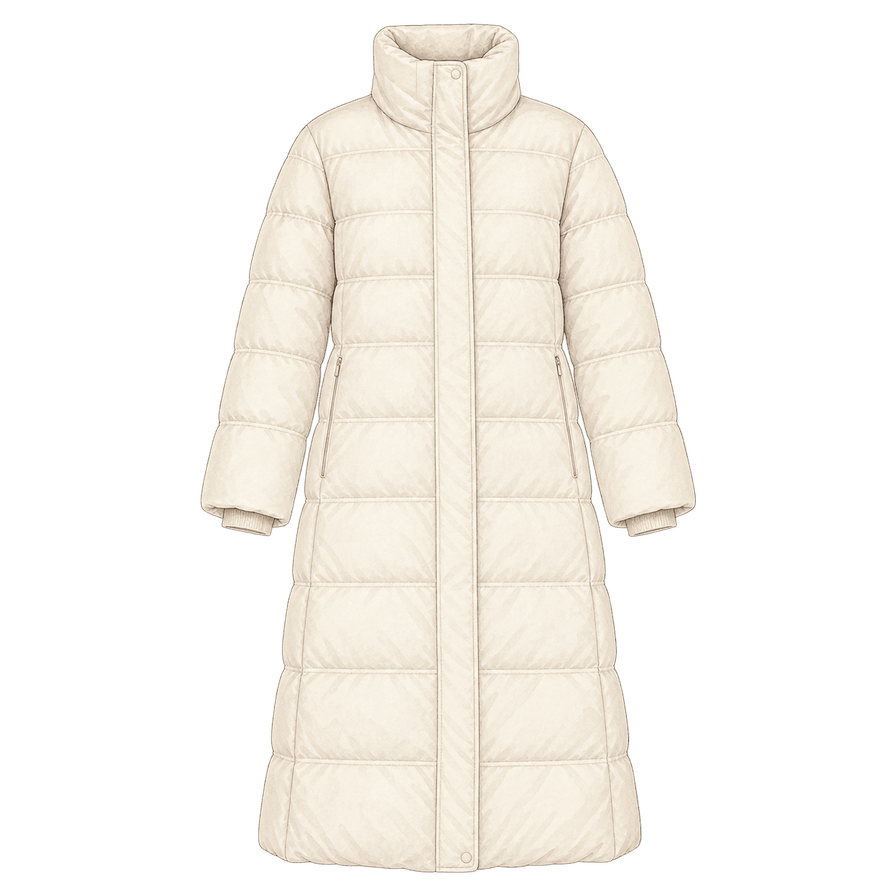 01Ivory mid-calf down coat, stand collar
On an aurora stop the cold comes up from the ground and in through your legs, and a down coat that reaches mid-calf covers them in a way a hip-length jacket cannot. Standing still at −2°C / 28°F with a breeze off the sea is colder than walking at the same temperature, and down is the warmest weight you can carry. Ivory shows up in the dark, which matters at a roadside pull-off.
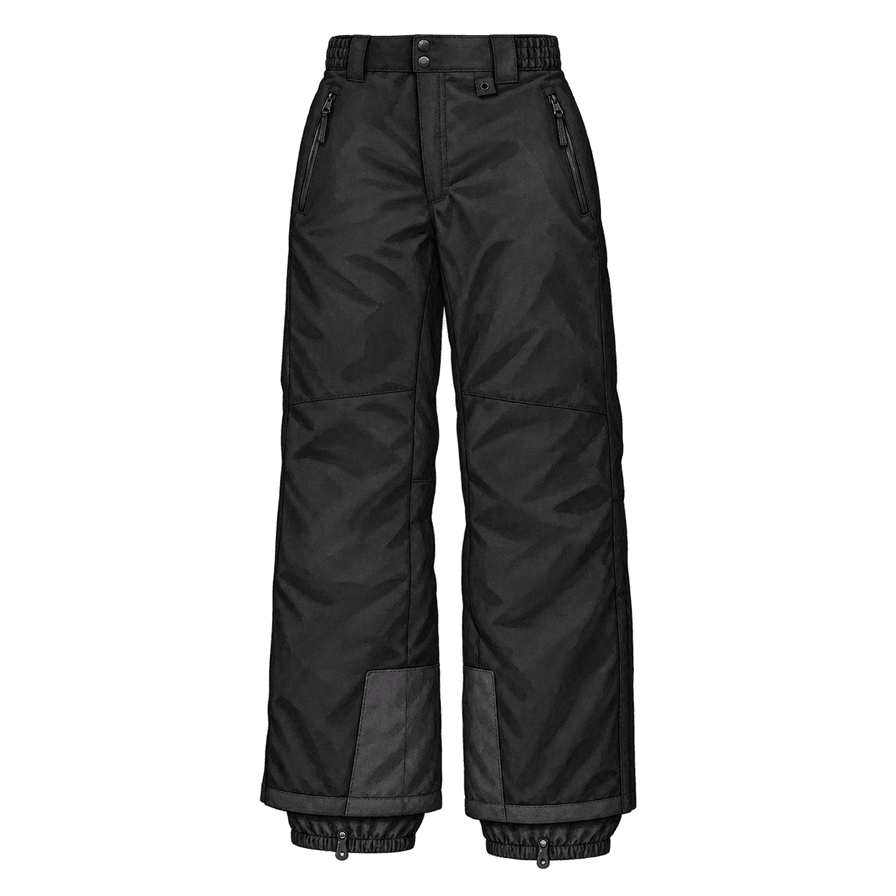 02Black insulated snow pants, straight leg
Pull them over the wool trousers when the tour bus stops and take them off at the hotel. Insulated, waterproof snow pants let you kneel on wet snow for a photo and stand in a frozen field for an hour without the cold reaching your knees. They are the piece most visitors leave out, and the reason most of them get back on the bus early.
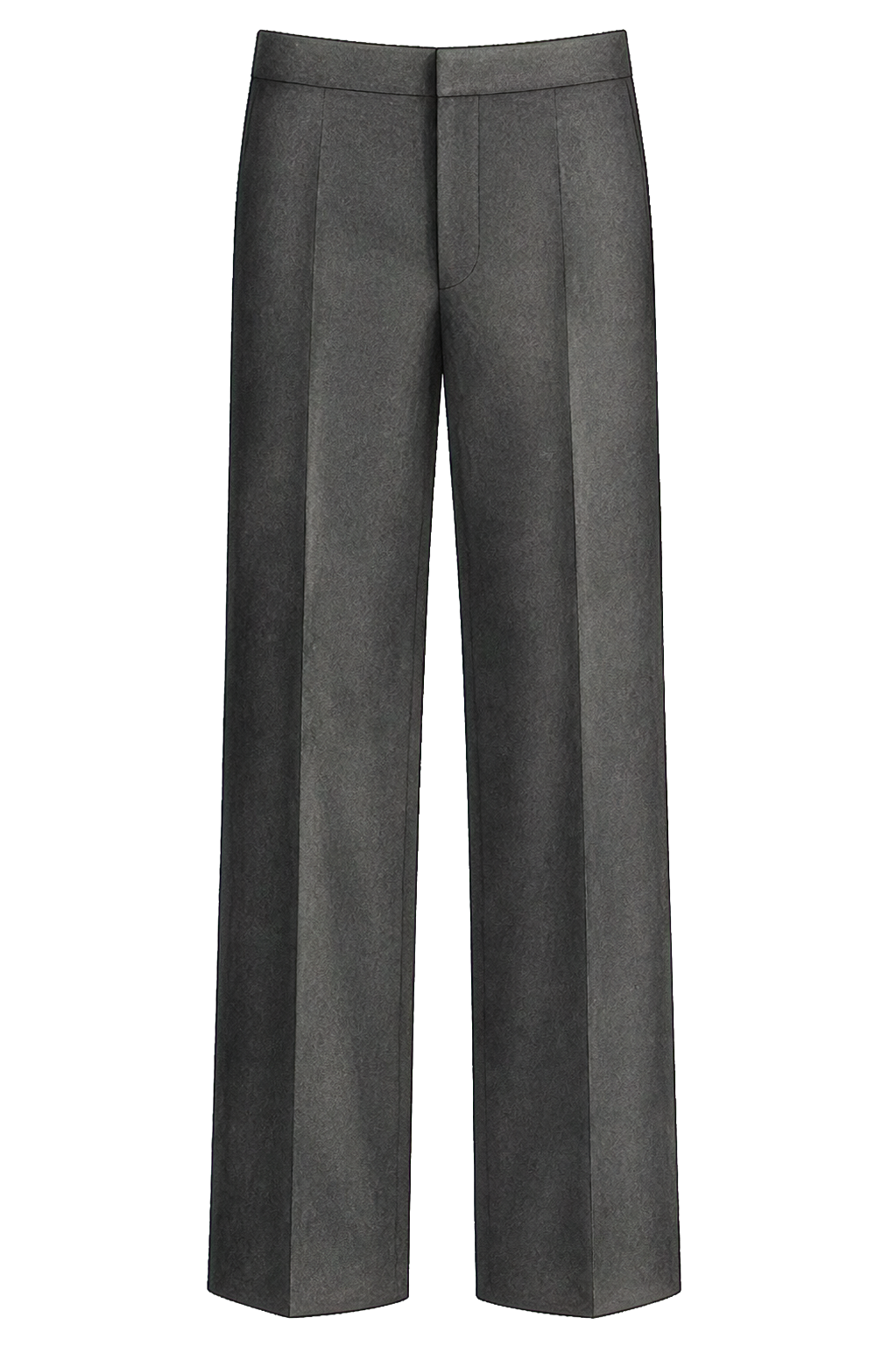 03Charcoal wool-blend straight trousers
These are the town trousers: wool, because Safetravel's rule is "Wool and synthetics are the best when outdoors, no cotton", and a straight leg that takes snow pants over the top on a tour night. A pressed crease makes them right for a Þorri dinner on Bóndadagur too. Charcoal hides slush spray.
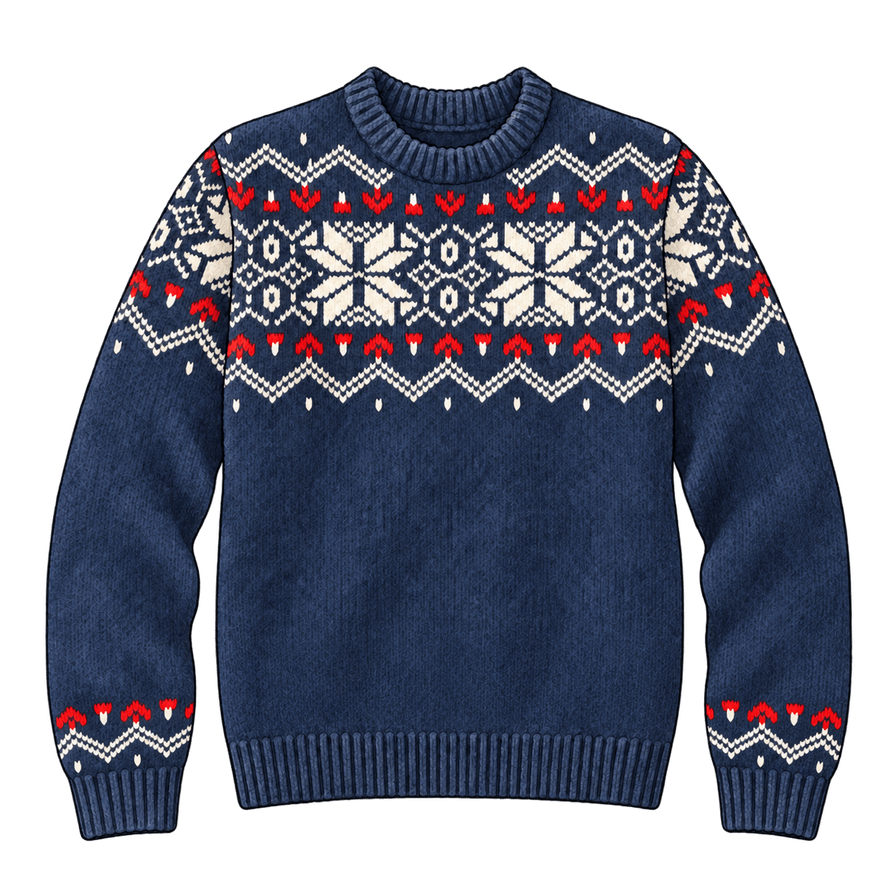 04Navy wool crew with a red-and-white Nordic star yoke
Bóndadagur, the first day of Þorri, falls on Friday 22 January, and Visit Reykjavík describes it as the day Icelanders celebrate husbands and boyfriends. A patterned wool crew is right for that dinner and warm enough for the walk there. Under the down coat it is the mid layer that keeps working when it gets damp, which cotton does not.
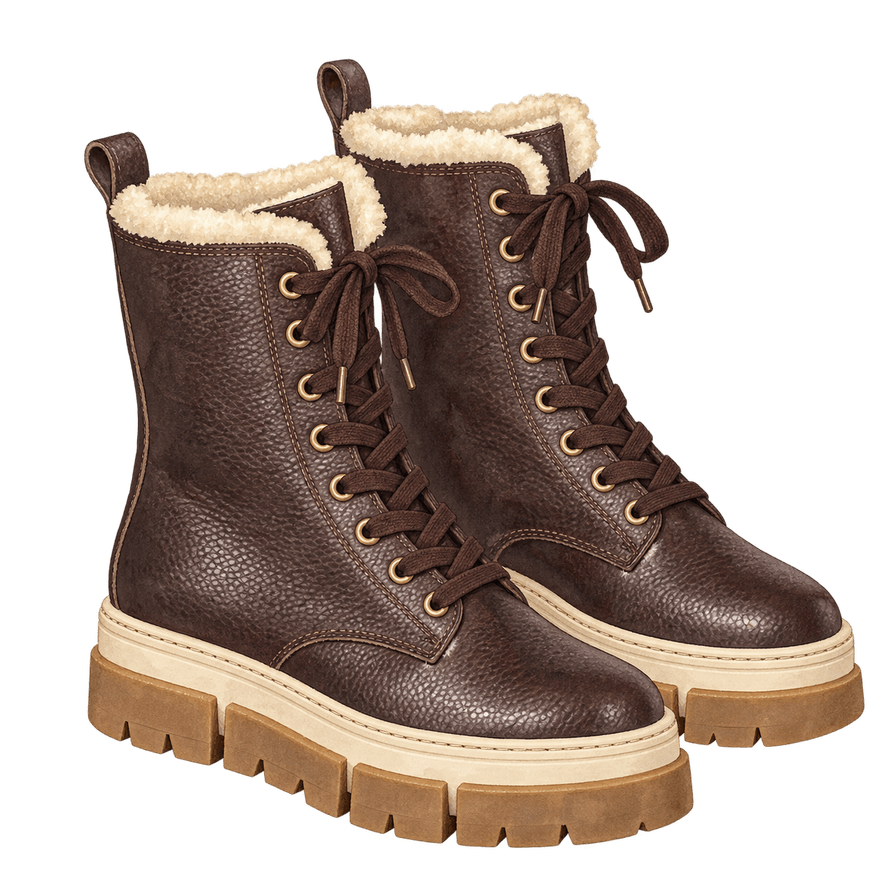 05Chocolate waterproof lace-up boots, shearling cuff
NOAA's record for Reykjavík has frost on about 19 January nights, and an aurora field means snow on the verges and ice on the gravel. A waterproof leather boot with a shearling lining keeps your feet warm through an hour of standing, and a deep lug sole grips the frozen car park. Lace them high so snow does not get in at the ankle.
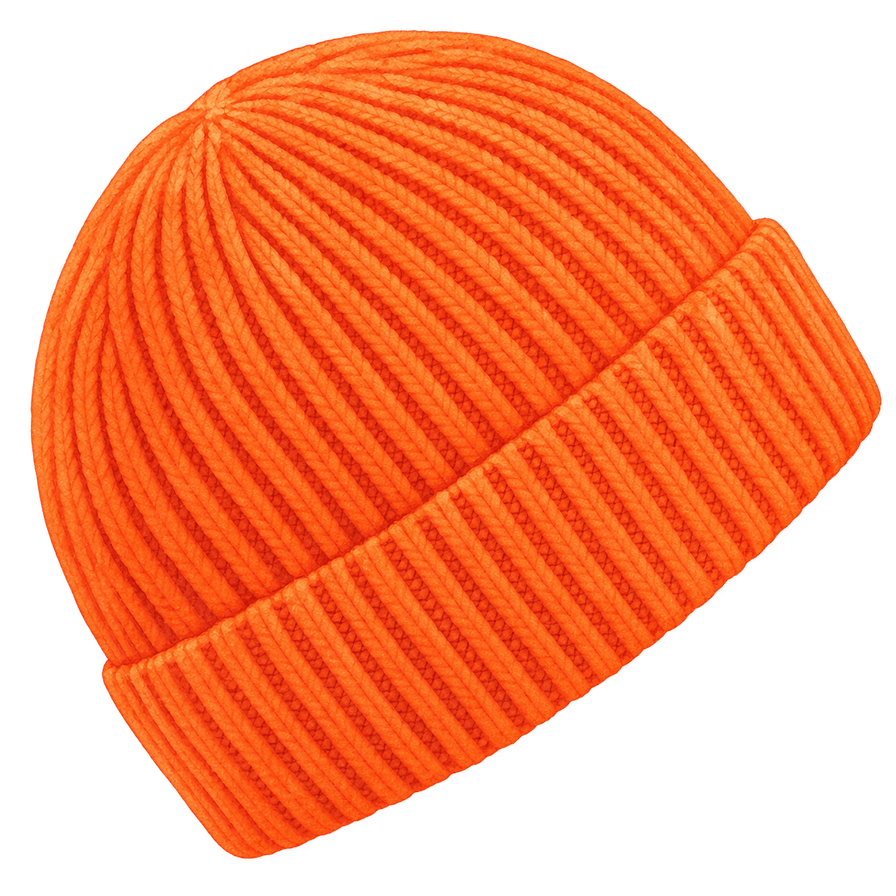 06Blaze-orange ribbed beanie
Aurora stops are roadside pull-offs in the dark, and a blaze-orange hat is what an oncoming driver's headlights pick out first. It also makes you easy to find when the group scatters across a field. Pull it down over your ears: that is where the wind goes first when you stand still.
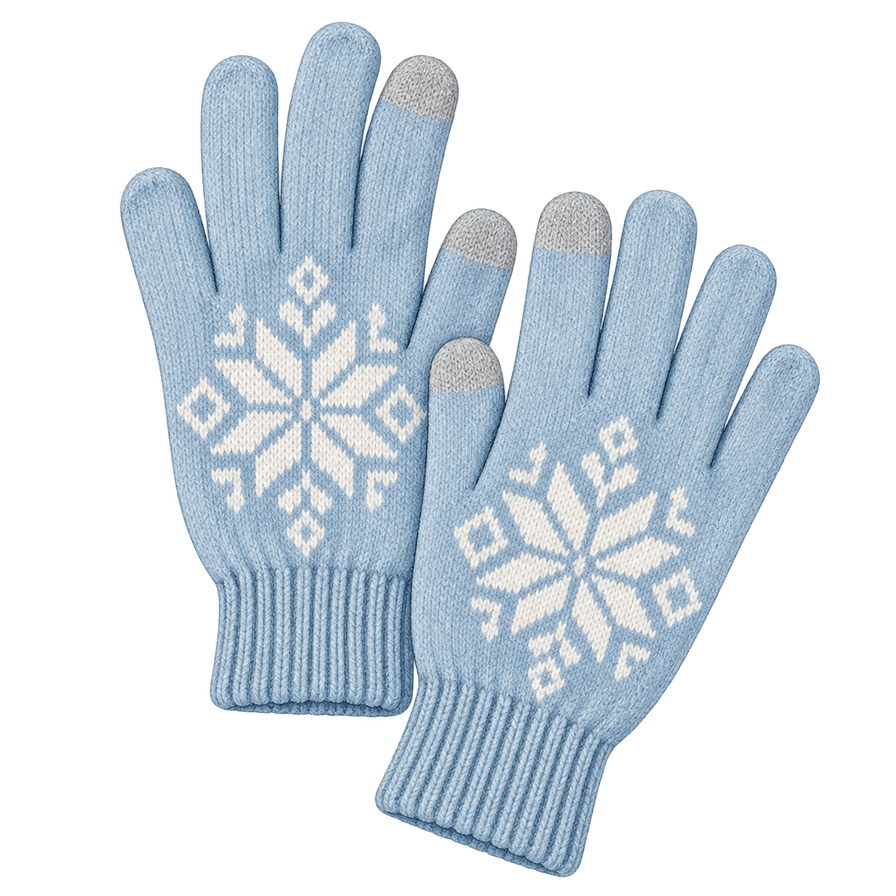 07Pale ice-blue Selbu-star knit gloves, touchscreen tips
Wear them as liners. Phone-camera aurora photos need fingers, and touchscreen tips let you change a setting without baring your hand at −2°C / 28°F. Between shots, slide the mittens back over them. Pale blue is easy to spot if you drop one in the snow.
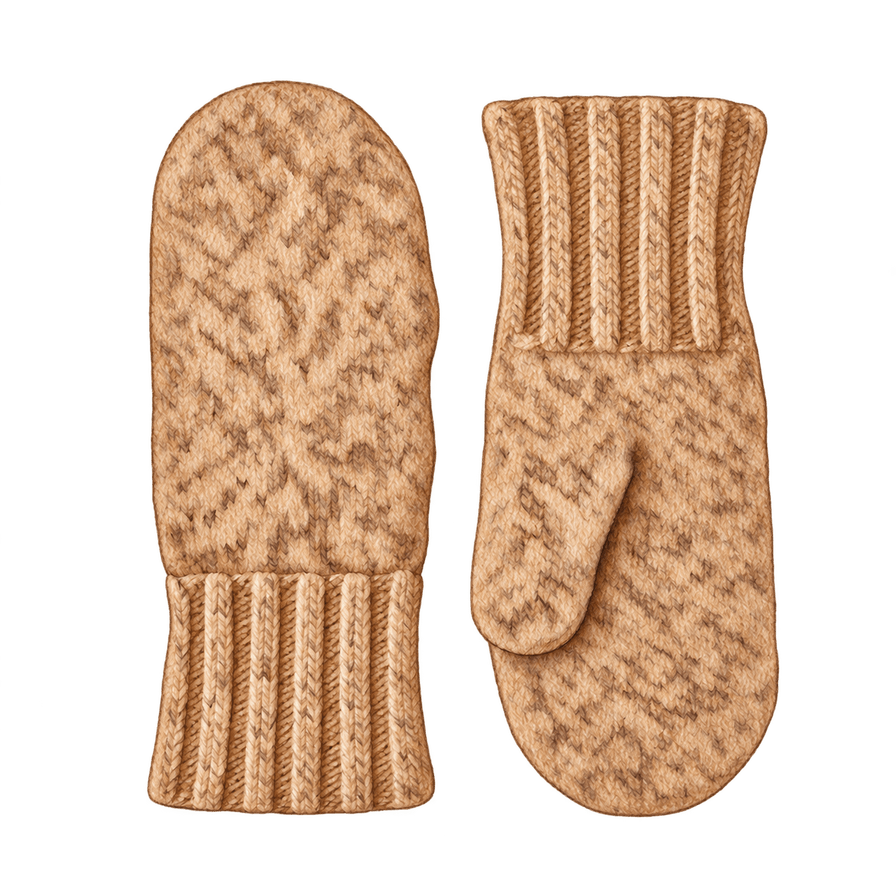 08Camel lambswool mittens, fleece lined
Mittens keep fingers together and warmer than any glove, which is what you want for the hour you spend waiting rather than shooting. Pulled over the liner gloves they make the two-layer system that lets you take a photo and get warm again in seconds. Camel goes with the chocolate boots and the ivory coat.
Day to night
Ivory down coat over the navy star crew · charcoal wool trousers · chocolate shearling boots · blaze-orange beanie · camel mittens. Out after the 11am sunrise in early January, coffee on Laugavegur, Harpa and the harbour while the light lasts, which by the end of the month is past 5pm.
Snow pants pulled over the wool trousers · down coat zipped to the collar · Selbu liner gloves under the mittens · beanie over the ears. An aurora tour after dark if the Met Office cloud map shows clear patches, or, on Friday 22 January, dinner out for Bóndadagur.
A suggested look — ivory long down coat, black insulated snow pants, chocolate shearling-lined lace-up boots, blaze orange beanie, camel wool mittens.
What to avoid
- City-walk clothes on an aurora night — you stand still for an hour or more
- Jeans in the field — Safetravel says no cotton
- The aurora number without the cloud map — white means clear, green means cloud
- Driving past a closed road — Safetravel: closed means closed
- Assuming January is calm — precipitation on about 20 days
Frequently asked questions
Cold, often wet, and getting lighter fast. Veðurstofa Íslands's monthly record for Reykjavík, averaged over 1991–2020, gives a January high of 3.2°C and a low of −1.7°C, about 87mm of precipitation and 22.6 hours of sunshine in the month. NOAA's record for the same station counts precipitation on about 20 days, frost on about 19 nights and about six days that stay below freezing. Mean wind is about 5 m/s, or 19 km/h. On our calculation, daylight grows from 4h 23m on 1 January to about 7h on the 31st.
An ivory mid-calf down coat, black insulated snow pants, charcoal wool-blend trousers, a navy Nordic-star wool crew, chocolate shearling-lined lace-up boots, a blaze-orange beanie, touchscreen liner gloves and camel lambswool mittens. That covers a 3°C / 37°F afternoon in town and an hour standing in a field at −2°C / 28°F on an aurora tour. Add a swimsuit if you plan a pool, and leave the jeans and the umbrella at home.
Everything warm you brought, in layers you can stand still in. The Icelandic Met Office's aurora forecast says the display "requires dark and partly clear skies", shows activity on a scale of 0 to 9 and maps cloud cover, so tours wait for a clear patch, often for an hour or two outside. Wear a long down coat, insulated trousers over wool, warm waterproof boots, a hat over your ears, and liner gloves under mittens so you can work a phone camera. Bright colours help at roadside stops after dark.
It is one of the longest-dark months, and the Sun is still active. NASA and NOAA announced in October 2024 that the Sun had reached the maximum period of its 11-year cycle, and the Met Office wrote in January 2026 that it has entered the declining phase, adding that some of the strongest and most significant space-weather events have come after solar maximum. Darkness is not the limit in January; cloud is. Check the Icelandic Met Office's cloud map, where white areas are clear, before booking a tour for a given night.
Late January, for most visitors. Daylight grows by more than two and a half hours across the month, from about 4h 23m to about seven hours, so late-January days have room for the harbour and a day trip while the nights stay long enough for aurora tours. Bóndadagur, the first day of Þorri, falls on Friday 22 January 2027. Dark Music Days ran at Harpa from 29 January to 1 February in 2026, and the 2027 dates are not out yet. The Winter Lights Festival follows on 4–7 February, with every event free.
The same temperature, a little drier and nearly twice as sunny. Veðurstofa's record gives January 3.2°C and −1.7°C against December's 3.4°C and −1.6°C, about 87mm of precipitation against 95mm, and 22.6 hours of sunshine against 12.6. December has about four hours of daylight at the solstice, the Yule Lads and the New Year's Eve bonfires, and our December guide is built around a waterproof parka for its rain. January's long nights are spent standing outside for the aurora, so a long down coat and snow pants take over.
Down or a technical shell over wool, boots with grip and a hat, every day. The wool is often local. The Handknitting Association of Iceland, founded in November 1977 mainly by women knitters, still sells members' hand-knitted lopapeysur from its shops at Skólavörðustígur 19 and Borgartún 31. Visit Iceland dates the first round-yoke lopapeysa pattern to 1956. For the shell, 66°North, founded in 1926 to clothe fishermen in the Westfjords, is the city's default.
Sources
- Veðurstofa Íslands — 1991–2020 climate normals, Reykjavík stationaveraged from Veðurstofa Íslands's own monthly series for station 1, Reykjavík, 30 complete Januaries; the counts of days with precipitation and frost are NOAA NCEI's, from its IC000004030 global-summary-of-the-month record, because the Veðurstofa file has no day-count columns.
- Veðurstofa Íslands — monthly means for station 1, Reykjavík (temperature, precipitation, sunshine hours, wind), 1949 onward — accessed 2026-10-22
- NOAA NCEI — Global Summary of the Month, Reykjavík (IC000004030): days of measurable precipitation and frost days, 1991–2020 — accessed 2026-10-22
- Icelandic Met Office (Veðurstofa Íslands) — aurora forecast (cloud cover and activity on a 0–9 scale) — accessed 2026-10-22
- UK Met Office blog (29 January 2026) — 'Declining phase' for the Sun's activity, but what's next? — accessed 2026-10-22
- NASA and NOAA (15 October 2024) — the Sun reaches the maximum phase of its 11-year cycle — accessed 2026-10-22
- Safetravel.is (ICE-SAR) — appropriate clothing outdoors in Iceland — accessed 2026-10-22
- Safetravel.is (ICE-SAR) — driving in winter — accessed 2026-10-22
- Visit Reykjavík — Bóndadagur, the first day of Þorri — accessed 2026-10-22
- Iceland Music — Dark Music Days 2026, 29 January to 1 February at Harpa (2027 dates not yet published) — accessed 2026-10-22
- Reykjavíkurborg — Vetrarhátíð (Winter Lights Festival), 4–7 February 2027, all events free — accessed 2026-10-22
- Handknitting Association of Iceland — About (founded November 1977; shops at Skólavörðustígur 19 and Borgartún 31) — accessed 2026-10-22
- Visit Iceland — History of the lopapeysa (first round-yoke pattern published in 1956) — accessed 2026-10-22
- 66°North — About us (founded 1926 by Hans Kristjánsson in Súgandafjörður) — accessed 2026-10-22