What to Wear in Reykjavík in June
Reykjavík in June is the midnight-sun month — 13°C / 55°F, 21+ hours of daylight at solstice (sun never sets below 5° below horizon). The warmest month of the Iceland summer.
- Merino wool base layer + lopapeysa + 66°North windproof shell — the Iceland summer uniform
- Waterproof or rubber-soled boots — Hunter, Sorel, 66°North
- Wool socks — pack 2x what you think you need
- Sleep mask — June 21 solstice has no functional darkness
- Sunglasses — sun stays in the sky 21+ hours, light is constant
- Day-trip kit — Golden Circle, Blue Lagoon, hop-on-hop-off bus all viable
- Don't expect summer warmth — June is the warmest month at only 13°C / 55°F
- Don't wear cotton base layers — wet wind chills you in minutes
- Don't skip the eye mask — Reykjavík June has no functional darkness
Reykjavík in June is the midnight-sun month and the warmest of the Iceland summer. Veðurstofa Íslands data put afternoon highs at 13°C / 55°F and lows at 7°C / 45°F with 9 rain days. The 21+ hours of daylight (sun never sets more than 5° below horizon at solstice June 21) means the city stays in functional twilight all night; locals universally use sleep masks. The dressing rule continues from May but lightens slightly: merino wool base layer, lopapeysa or wool sweater, 66°North windproof shell (still required), waterproof boots, wool socks, hat and scarf for wind chill. The Atlantic Gulf Stream keeps temperatures milder than other sub-arctic latitudes (Reykjavík at 64°N is similar to Anchorage), but the 7°C / 45°F low and 15-25mph wind means you can't pack like Mediterranean June. June is the strongest month for outdoor day trips: Golden Circle (Þingvellir-Geysir-Gullfoss), Blue Lagoon, South Coast (Seljalandsfoss-Skógafoss-black sand beach Reynisfjara), and the highland roads to Landmannalaugar and Þórsmörk open in mid-June.
June 21 in Reykjavík is the midnight sun — the sun never sets more than 5° below the horizon, and the city stays in functional twilight for 24 hours. Sleep masks are the universal local accessory.
The capsule
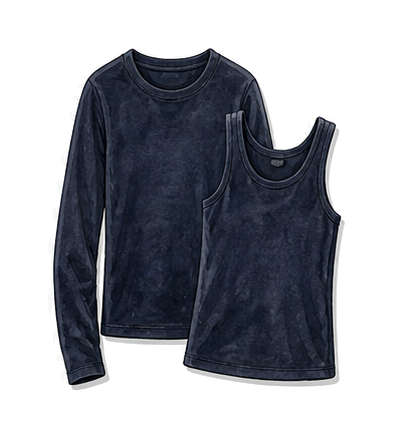 01Merino wool base layer — long-sleeve + tank
Cotton holds water in Icelandic wet wind. Merino wicks moisture, dries fast, resists odor. Smartwool, Icebreaker, or Icelandic 66°North.
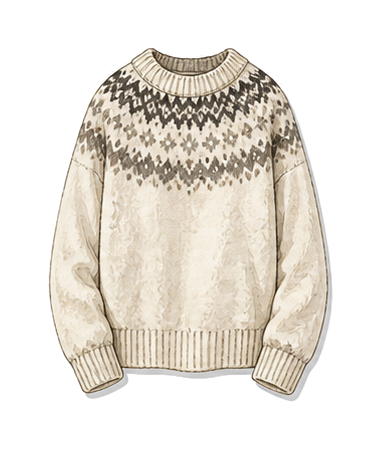 02Lopapeysa (Icelandic wool sweater)
The traditional yoke-pattern sweater is the Iceland summer uniform, even at 13°C / 55°F. Buy local at Álafoss or Handknitting Association.
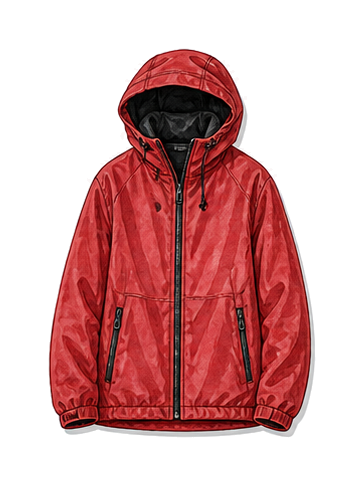 0366°North or Patagonia windproof shell
Wind is the bigger challenge than rain at 13°C / 55°F. 66°North is the Icelandic heritage; Houdini for backup.
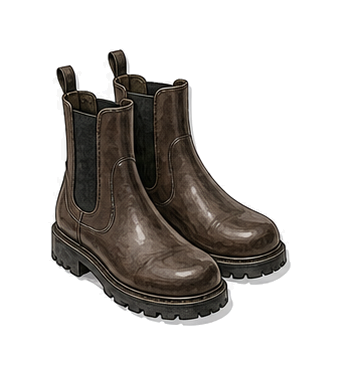 04Waterproof or rubber-soled boots
Streets stay wet; day trips require waterproof. Hunter, Sorel, 66°North.
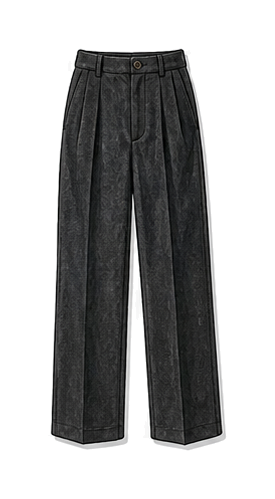 05Tailored wool or cotton-wool trousers
Mid-weight wool blend breathes and insulates. Skip athletic leggings; skip thin cotton.
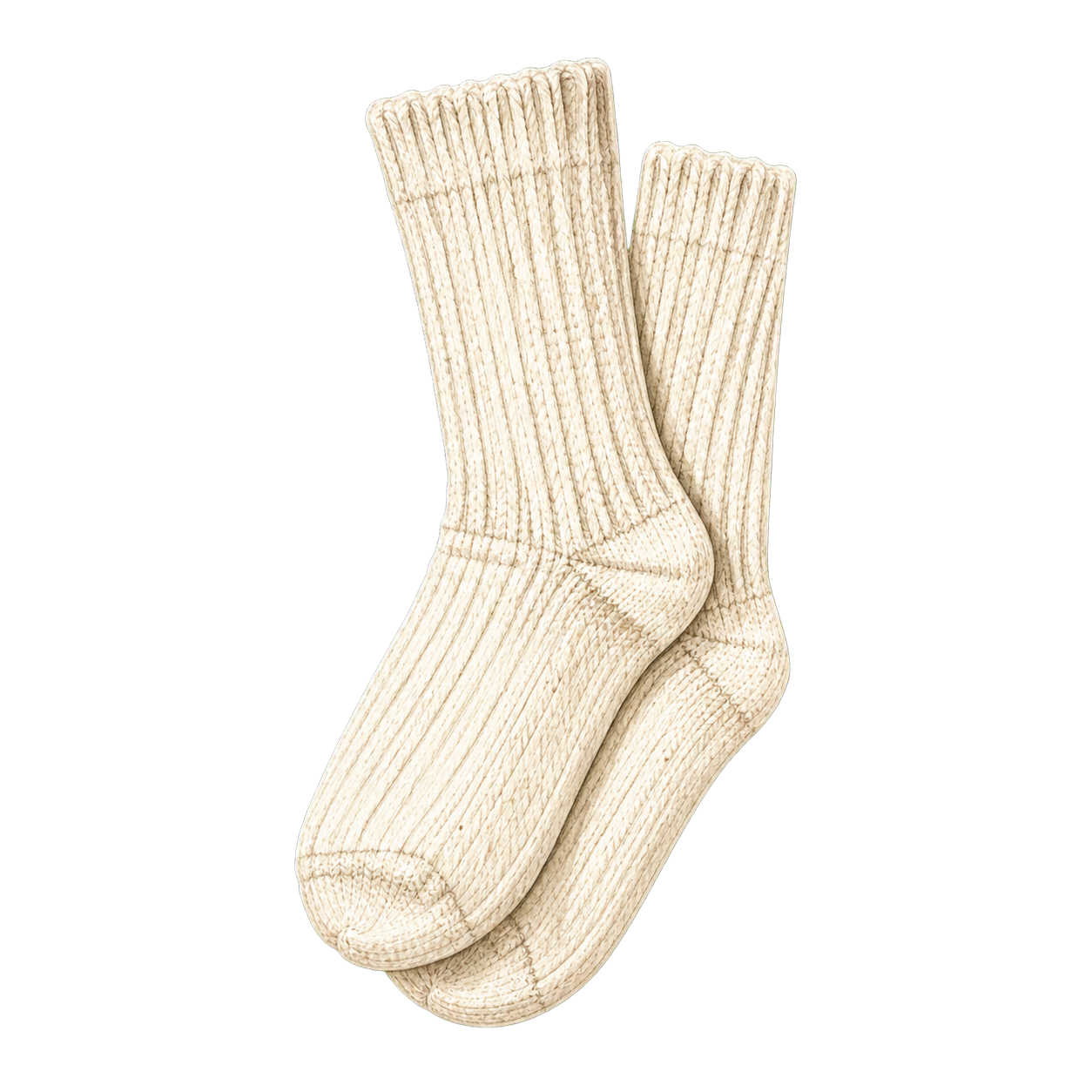 06Wool socks — merino or Icelandic
Wool wicks moisture; pack 2x what you'd expect. Smartwool, Icebreaker, local Icelandic wool.
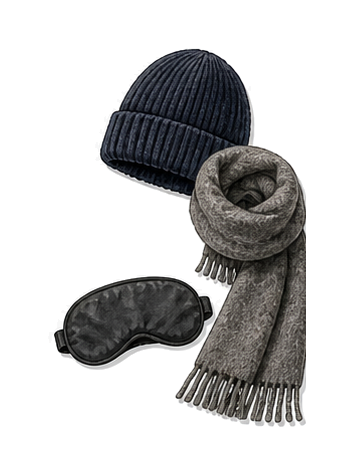 07Wool hat + scarf + sleep mask
Wind chill at 7-13°C / 45-55°F with 15-25mph wind. Sleep mask for the midnight-sun month — June 21 has no functional darkness.
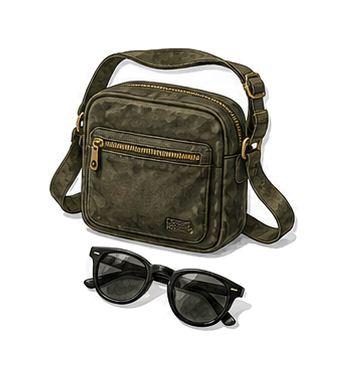 08Crossbody bag + sunglasses
Weather-resistant closure for wet streets; sunglasses for the 21h-of-light constant brightness.
Day to night
Merino base · lopapeysa · wool trousers · waterproof boots · windproof shell · crossbody. Coffee at Reykjavík Roasters 8am, walk Hallgrímskirkja and harbor 9am, brunch at Sandholt bakery 11am.
Wool trousers · button-down · lopapeysa · waterproof boots. Dinner at Dill (Michelin-starred Nordic) or Matur og Drykkur 8pm; rooftop at Slippbarinn or Lebowski Bar after.
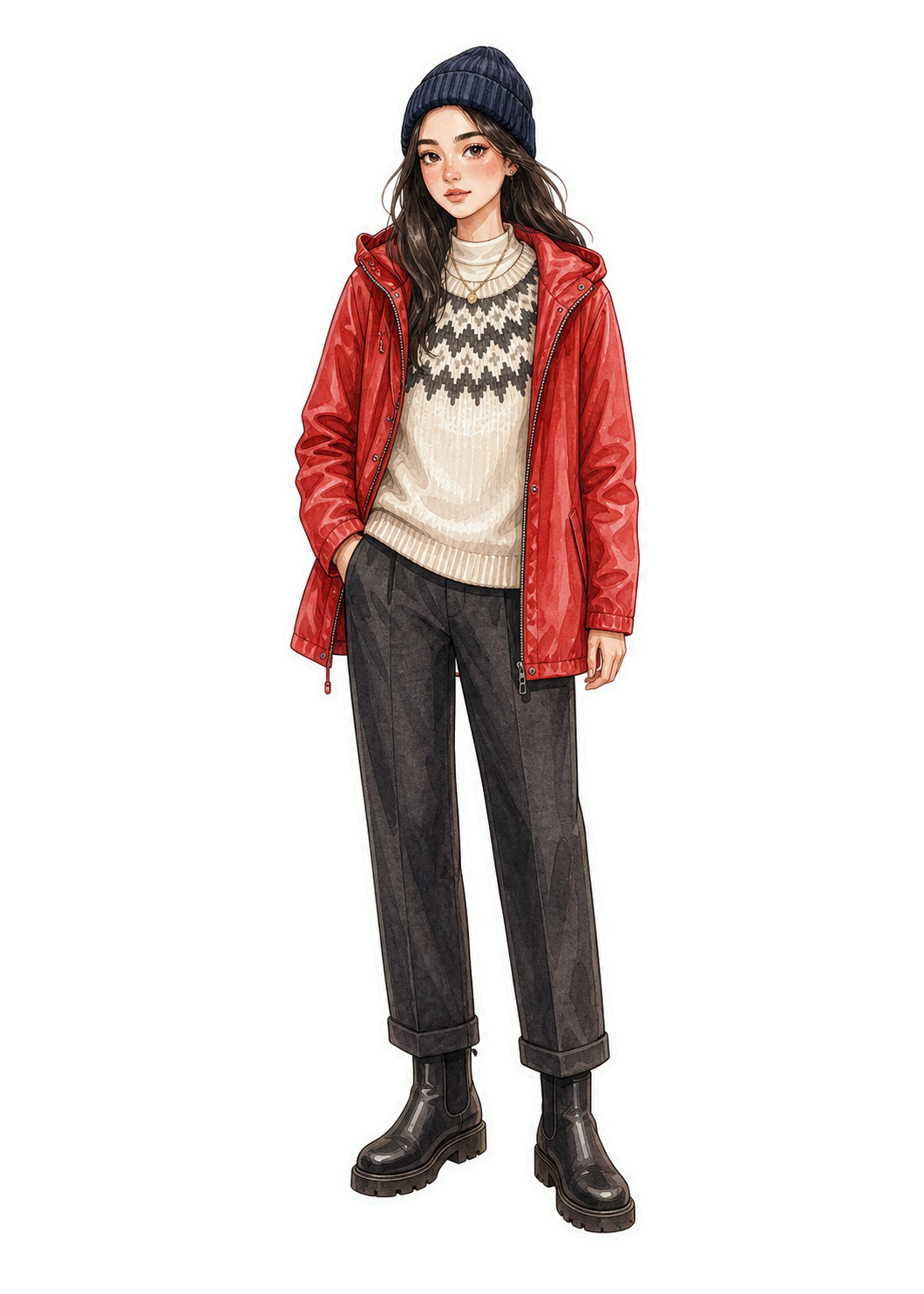
A suggested look — Reykjavik June evening look: merino base, cream lopapeysa, red windproof rain shell, charcoal wool trousers, waterproof boots.
What to avoid
- Cotton as base layer — holds water, chills you even at 13°C / 55°F
- Mediterranean summer expectations — June is warmest Iceland month, still 13°C / 55°F peak
- Leather sneakers daily — wet streets year-round, rubber soles required
- Athletic wear in Laugavegur or 101 downtown — Reykjavík reads minimalist Nordic
- Skipping the sleep mask — June solstice has no functional darkness
Frequently asked questions
The midnight sun is the phenomenon where the sun never sets below the horizon for several days around summer solstice (June 21). In Reykjavík, the sun technically dips below the horizon but never more than 5° below — so the city stays in functional twilight all night. From early June through early July, you can read outdoors at midnight without artificial light. North of Reykjavík (Akureyri, the Westfjords) experiences full midnight sun where the sun doesn't set at all. For dressing: a sleep mask is non-negotiable, even with hotel blackout curtains; sunglasses through the evening; understand that 'night' is functionally a softer daylight.
Per Veðurstofa Íslands: average daily high is 13°C (55°F), low is 7°C (45°F). About 9 rain days totalling 43mm. The warmest month of the Iceland summer. Daylight: 21+ hours at solstice (June 21). Wind speeds run 15-25mph year-round. The Atlantic Gulf Stream keeps Reykjavík warmer than other sub-arctic locations at the same latitude.
Yes — one of the best months. Pros: warmest temperatures (13°C / 55°F peak vs other months), midnight sun + 21h daylight, highland roads open from mid-June, all of the famous waterfalls (Seljalandsfoss, Skógafoss, Dettifoss) accessible, puffins on the Westman Islands. Cons: peak tourist season starts (book hotels and Blue Lagoon ahead), rental car prices double, perpetual daylight requires sleep mask. May and September are quieter alternatives with similar accessibility minus the highland roads.
The Golden Circle (Þingvellir National Park - Geysir geothermal area - Gullfoss waterfall) is a 6-8 hour day trip with significant outdoor walking time. Pack: merino base layer, lopapeysa or fleece, 66°North windproof shell, waterproof rubber-soled boots, wool socks, wool hat + scarf + gloves (Gullfoss spray is genuinely cold), sunglasses, water, snacks. Bring a small towel for Geysir (you'll be near the spray) and a fully-charged phone (no service in some highland sections). Skip leather sneakers and any non-rubber-soled footwear; the surfaces near Gullfoss can be slippery.
You can't — the midnight sun blocks visibility. Northern Lights (Aurora Borealis) require dark night skies, and Reykjavík June has no functional darkness. The Northern Lights season in Iceland runs from late August through mid-April, with peak visibility October-March. June visitors trade Northern Lights for midnight sun, puffins, and accessible highlands. For Northern Lights specifically, plan a trip for September-October or February-March.
Sources
- Veðurstofa Íslands — 1991–2020 climate normals