What to Wear in Stockholm in January
Stockholm in January: 1°C / 34°F days, −3°C / 27°F nights, rinks you can count on, and lakes that start to hold in a cold year.
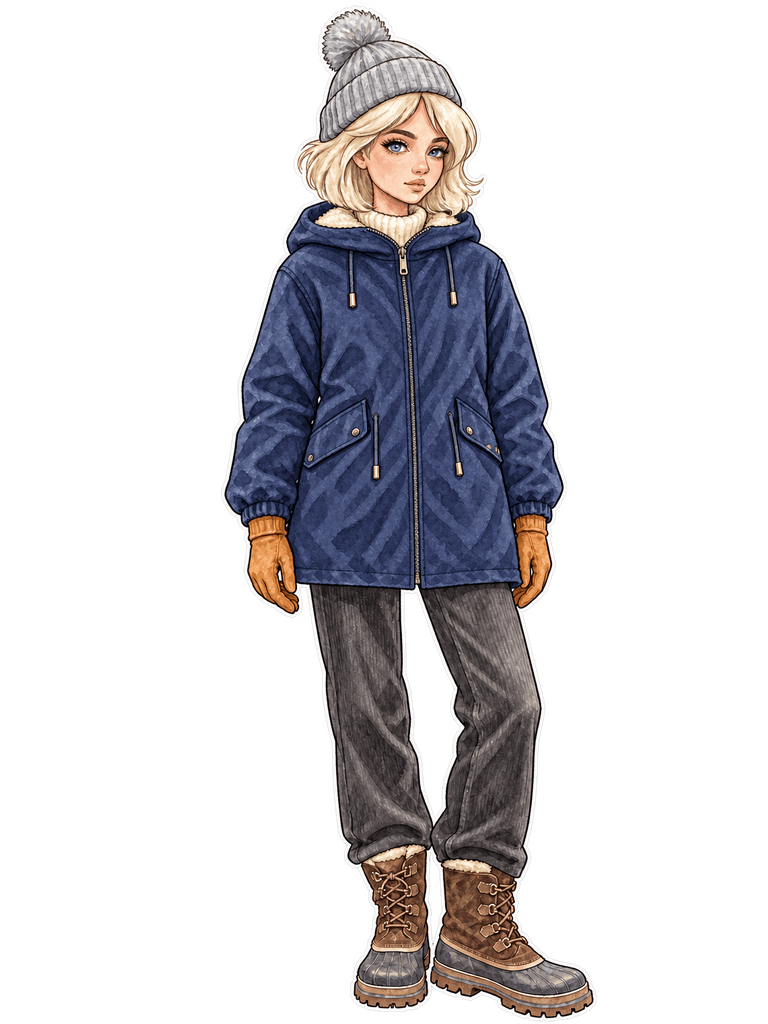
- Navy insulated parka to the knee. It covers your hips while you stand at the rink rail, and its flat placket lets ice claws hang outside
- Cream heavy roll-neck. It folds double at the throat under the parka zip, and it is what you sit in at a warm café
- Charcoal merino leggings under charcoal cords. Two layers at the thigh for an hour on the ice, with room for knee pads
- Dark brown felt-lined pac boots. Rubber for about 13 wet days, felt for a night that falls to −3°C / 27°F
- Tan lined leather gloves. The Ice Safety Council wants ice claws you can reach with gloves on, and five fingers grip a claw
- Black roll-top backpack with a hip belt. Packed with a dry change, the council counts it as flotation on a lake track
- Stepping onto a lake the city has not ploughed. It clears tracks only on 15 cm of clear ice and does not report the thickness
- Soft city shoes on a snowy lake. Snow hides weak spots, and soft soles carry you onto weak ice before you notice
- Sea ice in the archipelago. Saltwater ice is always weaker than lake ice, the Ice Safety Council says
- Building the trip around frozen lakes. SMHI records winters when many Svealand lakes stayed ice-free
Dress to stand on ice that is guaranteed, and pack for ice that is not. NOAA NCEI's figures for Stockholm-Observatorielunden, a station SMHI operates, give January 1.0°C / 34°F by day and −2.9°C / 27°F at night, with 37 mm over about 13 days. Kungsträdgården and Vasaparken freeze by machine and run all month. The lakes wait on the weather: Visit Stockholm says natural-ice skating usually starts mid to late January, the city ploughs a lake track only on 15 cm of clear ice, and SMHI records winters when many of Svealand's lakes never froze. So the parka, the roll-neck and the merino are for standing still, and the hip-belt backpack comes out only when a track opens.
Stockholm's rinks freeze by machine in November. Its lakes wait for a cold enough January, and in some winters they never freeze at all. Dress for an hour standing on the first, and carry claws and a dry change for the second.
The capsule
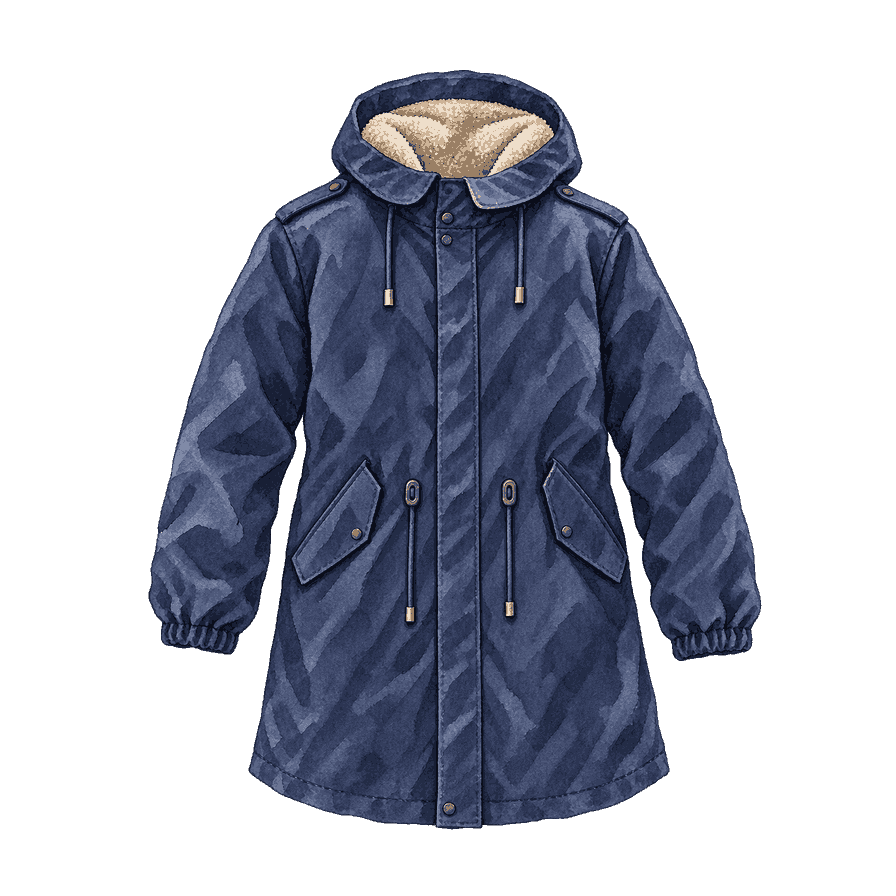 01Navy insulated parka, sherpa-lined hood, knee length
Plan on standing as much as gliding: lacing hired skates, waiting at the rail, watching from a track's edge at 1.0°C / 34°F. A knee-length insulated parka keeps your hips and thighs warm through all of it. The snap placket lies flat, so ice claws hang outside it as the Ice Safety Council asks, and the sherpa-lined hood goes up after sunset.
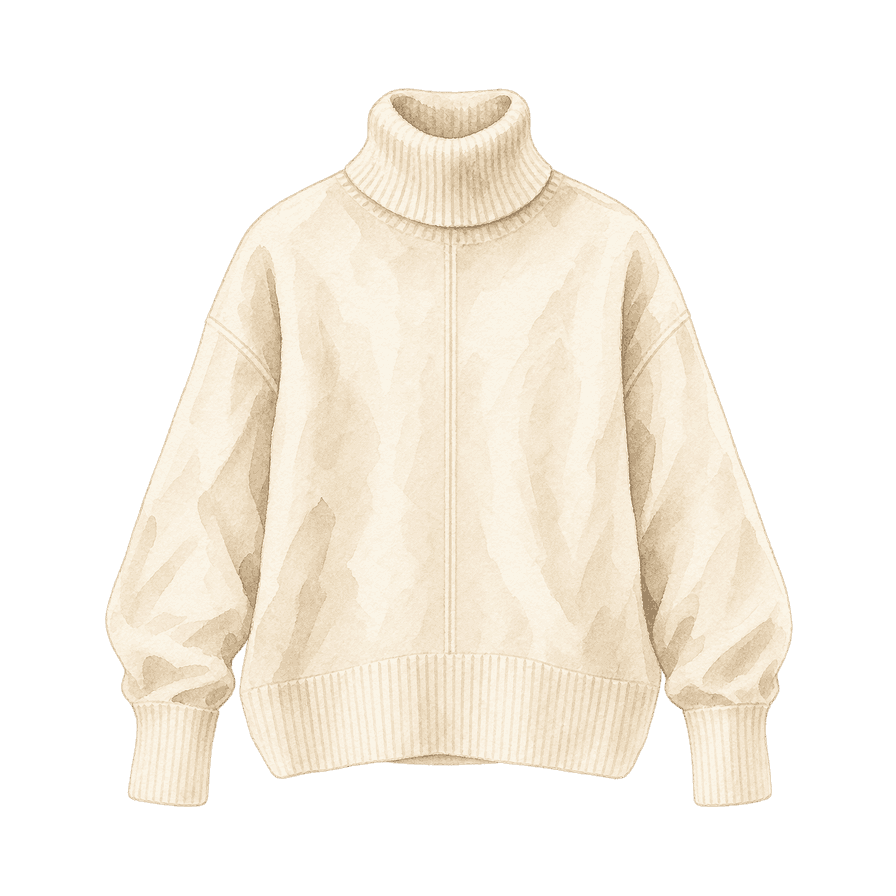 02Cream heavy wool roll-neck
A roll-neck folds double at the throat, closing the gap a parka zip leaves on a night that falls to −2.9°C / 27°F. One heavy knit does the work of two, so the parka still zips over it. Cream is the one light colour in a navy, charcoal and brown capsule, and you sit in it at a café once the parka comes off.
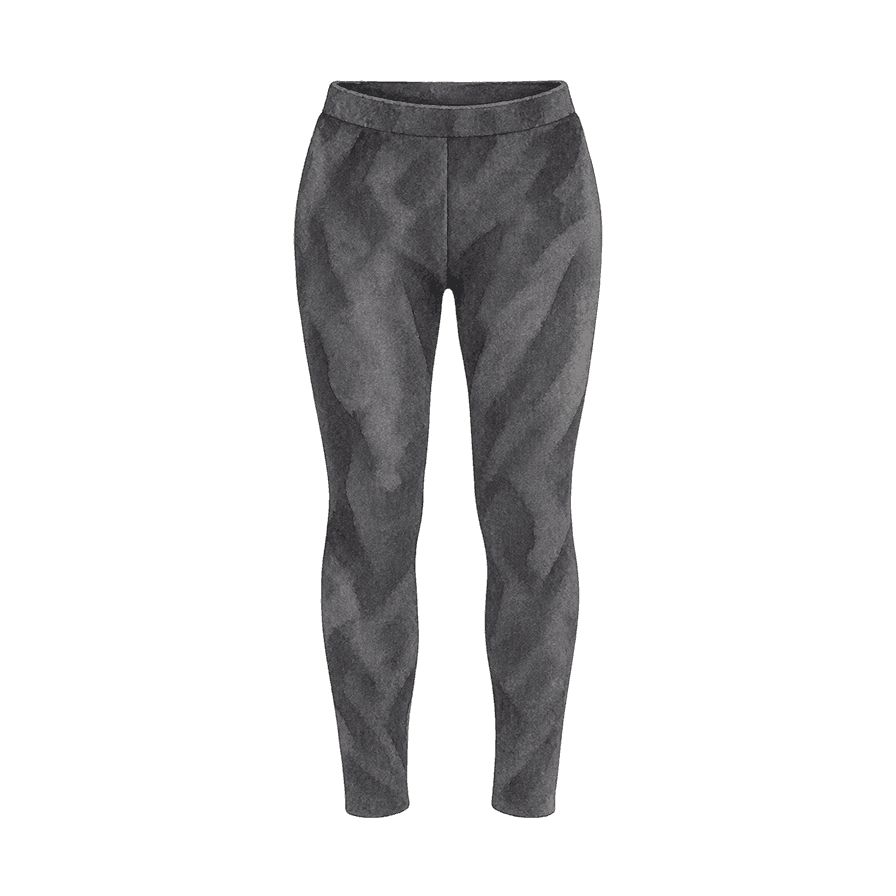 03Charcoal merino leggings, full length
Merino goes under the cords for an hour on a lake track or at the rink edge, when the afternoon tops out at 1.0°C / 34°F. A fine knit adds warmth at the thigh and knee without bulk, so you still crouch easily to lace a skate. Charcoal vanishes under charcoal corduroy, and nothing shows at the ankle in hired skates.
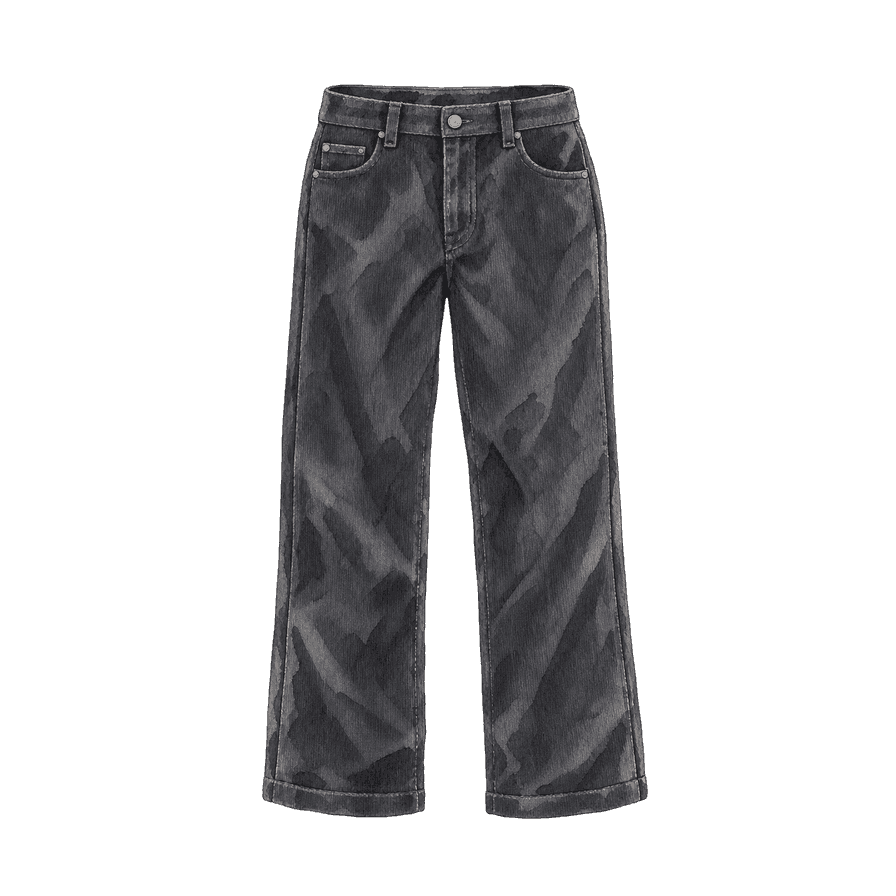 04Charcoal fine-wale corduroy trousers, straight leg
Fine-wale corduroy over merino gives you two layers below the parka hem, where a fall on hard ice lands. The straight leg drops over the pac boot's shaft and leaves room underneath for knee pads, which the Ice Safety Council lists with a helmet and gloves as what cuts injuries when you go down. Charcoal sits between the navy parka and the brown boots.
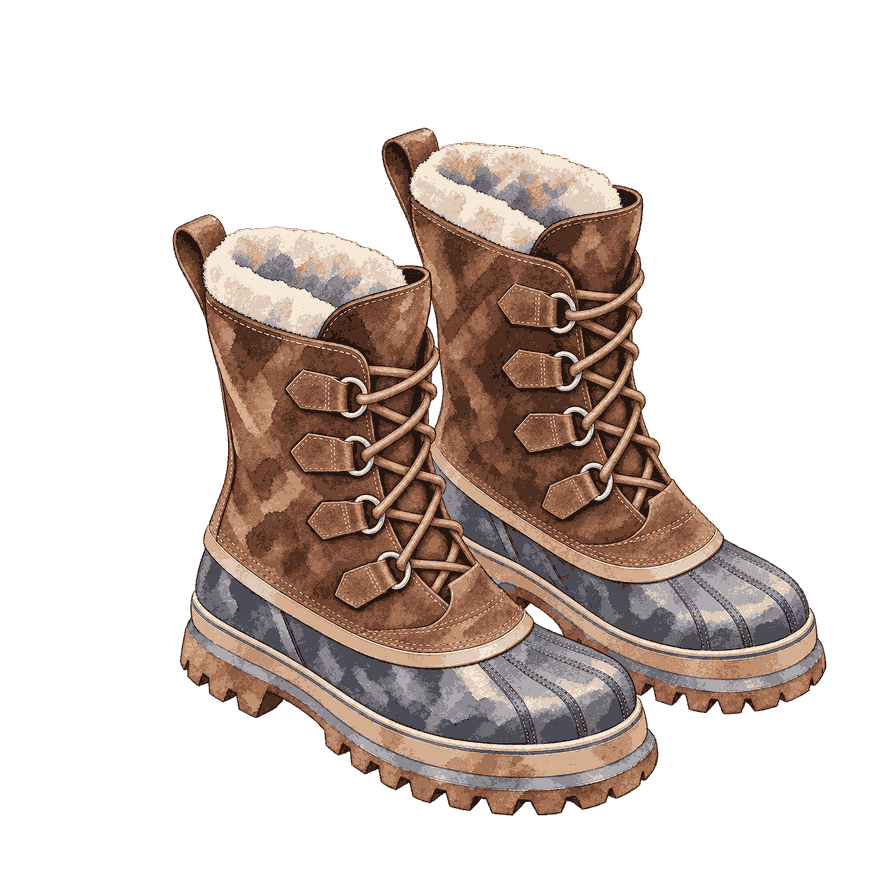 05Dark brown pac boots, felt-lined, rubber shell, lug sole
You walk to the ice in these and stand on it in them. A felt lining holds warmth on a night that falls to −2.9°C / 27°F, the rubber shell keeps wet snow out on about 13 wet days, and the deep lug grips a snowy path down to the shore. D-ring lacing opens fast when you swap into hired skates at Kungsträdgården.
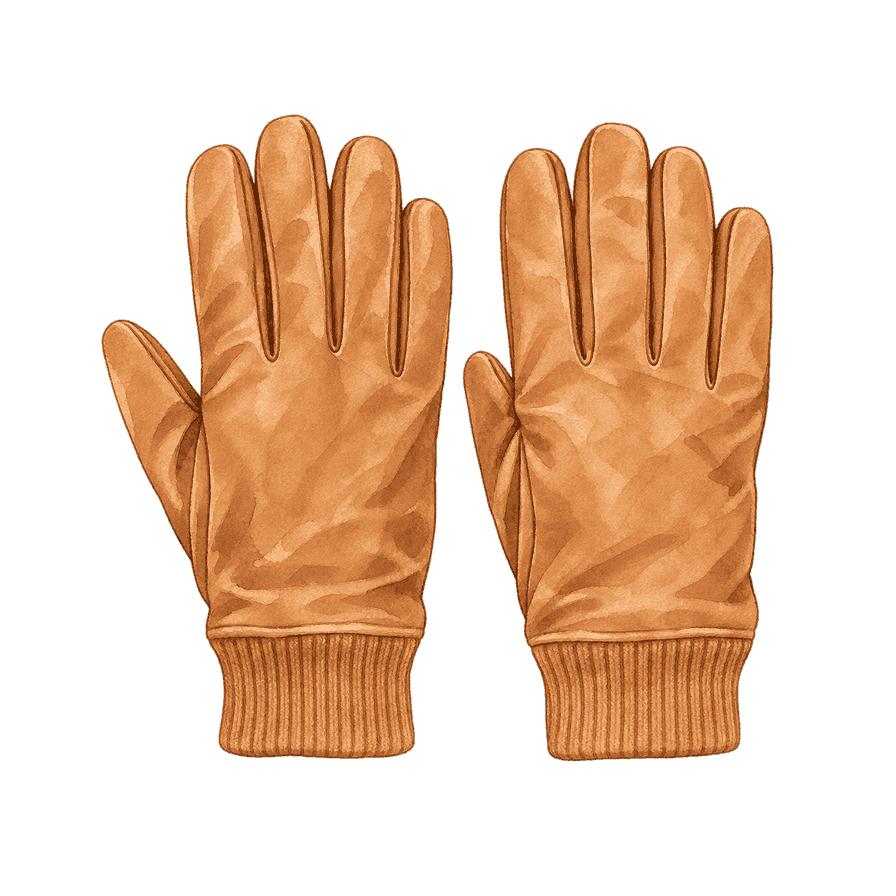 06Tan leather gloves, wool-lined, knit cuff
Five fingers, because the Ice Safety Council wants ice claws you can reach "med handskarna på", with your gloves on, and a claw handle needs a grip no mitten gives. Lined leather keeps fingers warm at −2.9°C / 27°F and survives a fall on hard ice; the council counts gloves among what cuts injuries. Tan stands out against the navy sleeve.
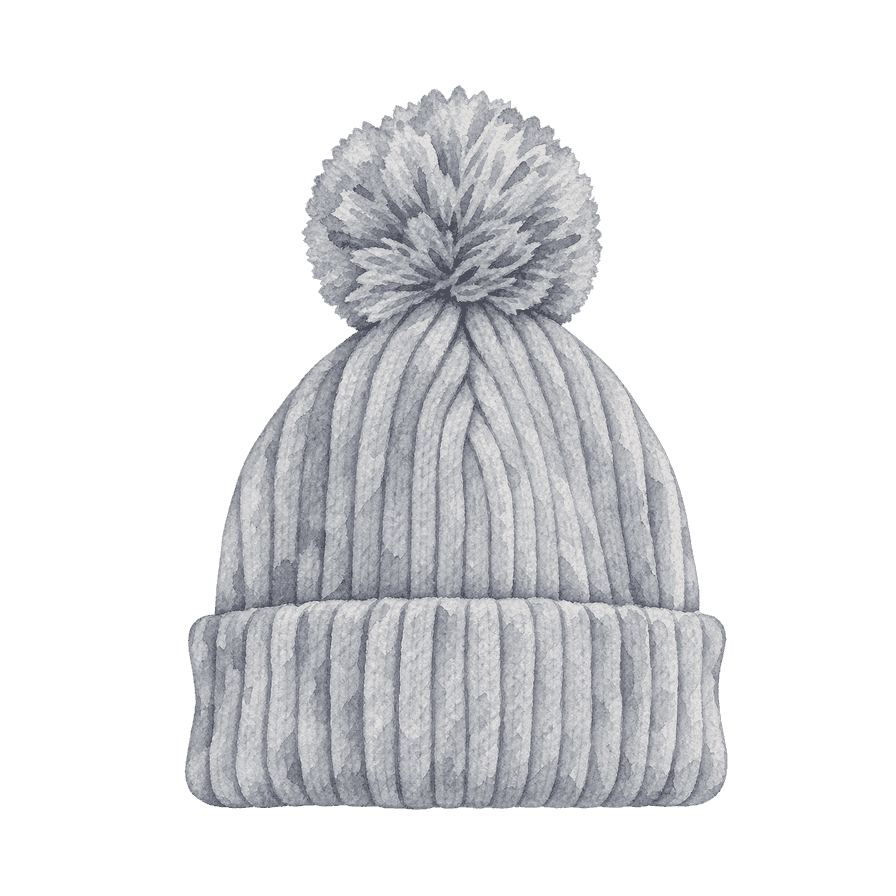 07Heather-grey rib toque, folded cuff, pompom
A deep folded cuff puts a double layer of rib over your ears while you wait at the rink rail on a 1.0°C / 34°F afternoon. The toque pulls down under the parka hood after sunset, 3:23pm on the 15th, and stuffs into a pocket in a heated café. Heather grey bridges the cream roll-neck and the charcoal cords.
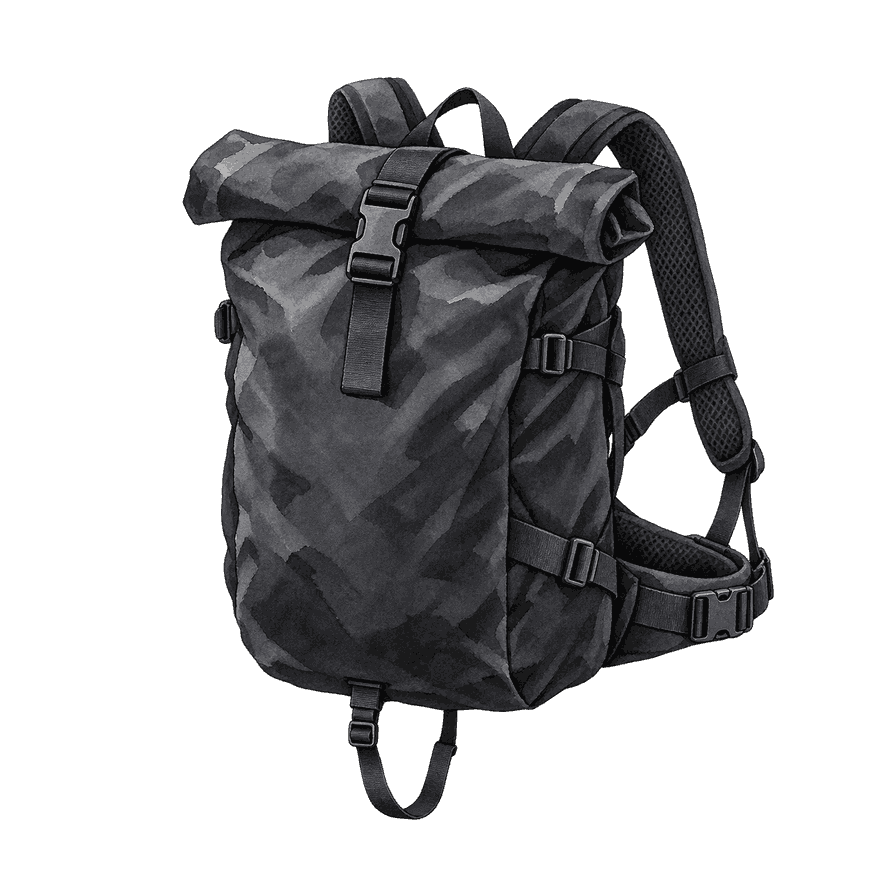 08Black roll-top backpack, hip belt and crotch strap
Only for a lake track. The Ice Safety Council writes: "En ryggsäck med höftbälte och grenrem samt ett ombyte kläder i vattentät förvaring fungerar bra som flythjälp." A backpack with a hip belt and a crotch strap, holding dry clothes in waterproof storage, works as a float. A roll-top keeps that change dry, and the belt holds the pack on you if the ice gives.
Day to night
Merino leggings · charcoal cords · cream roll-neck · navy parka zipped · pac boots · grey toque · tan gloves · black roll-top backpack with a dry change inside · ice claws round the neck, outside the parka. Sunrise is 8:30am on the 15th. If the city has ploughed Trekanten in Liljeholmen, skate it in daylight and never alone; if not, Vasaparken's public rink reopens at 8am after its first service closure.
Backpack and claws left at the hotel · navy parka zipped, hood down · cream roll-neck at the collar · charcoal cords · pac boots · grey toque · tan gloves on. Sunset is 3:23pm on the 15th. Kungsträdgården's rink runs into the evening: last season skate hire closed at 8pm and the rink at 9pm. On Wednesday the 13th, Tjugondag Knut, the Christmas trees go out.
A suggested look — navy insulated parka, cream roll-neck sweater, charcoal corduroy trousers, dark brown pac boots, heather-grey pompom toque.
What to avoid
- Lake ice the city has not ploughed. No track below 15 cm of clear ice
- Soft city shoes on a snowy lake. Snow hides weak spots
- Sea ice in the archipelago, or any ice alone. Saltwater ice is always weaker
- A trip that depends on frozen lakes. Svealand has had ice-free winters
- The Christmas lights after mid-month. They start coming down mid-January
Frequently asked questions
Cold, close to freezing on both sides of the day, and wet more often in small amounts than large. NOAA NCEI's figures for Stockholm-Observatorielunden, a station SMHI operates, give a January high of 1.0°C / 34°F and a low of −2.9°C / 27°F, with 37 mm of precipitation over about 13 days; only about 5 of them bring more than 2.5 mm. January has the lowest afternoons of the year at this station, and February the slightly colder nights. The sun rises at 8:44am and sets at 2:58pm on 1 January; by the 31st it is up at 8:00am and down at 4:02pm, and the day has grown by about 1h 47m.
A navy insulated parka to the knee, a cream heavy roll-neck, charcoal merino leggings, charcoal fine-wale corduroy trousers, dark brown felt-lined pac boots, tan lined leather gloves, a heather-grey pompom toque and a black roll-top backpack with a hip belt. That covers a 1°C / 34°F afternoon at the rink rail, a night that falls to −3°C / 27°F, and a morning on a ploughed lake track if the city opens one. For natural ice, the Ice Safety Council says to always carry ice claws and a phone in waterproof storage. Leave soft city shoes at home.
Sometimes, from mid to late month, and the rinks are the sure thing. Visit Stockholm writes: "Usually, the season for skating on natural ice starts mid to late January." The City of Stockholm explains the wait: "De fryser därför först när det har varit en längre period med tillräckligt många minusgrader", meaning its natural-ice rinks freeze only after a long enough run of sub-zero days. It ploughs lake tracks with light machines at about 15 cm of clear ice and with heavier vehicles at 20 cm; Trekanten in Liljeholmen is the closest to the centre, with Drevviken, Magelungen and Långsjön further south. Wear ice claws the Ice Safety Council's way: "Isdubbarna ska sitta högt runt halsen och utanpå kläderna", high round the neck and outside your clothes, where gloved hands find them. Kungsträdgården and Vasaparken run on artificial ice all season, and the city notes that its artificial rinks can open even when it is not especially cold. Kungsträdgården is free with your own skates, and last season it hired them at 100 kr an hour for adults; Vasaparken is open to the public with no booking and no skate hire, and is lit until 10pm.
Early January for the end of Christmas, late January for the better chance of lake ice. New Year's Day falls on a Friday and Epiphany on Wednesday 6 January, both public holidays under Lag (1989:253). Christmas lasts until Tjugondag Knut on Wednesday 13 January; Nordiska museet writes "Den 13 januari, tjugo dagar efter julafton, är julen slut", twenty days after Christmas Eve, by a tradition at least as old as the 1600s, and the julgransplundring that throws the tree out is a 19th-century bourgeois custom. Visit Stockholm lists the #Stockholmsjul lights to Saturday 16 January, and the organisers say "Julbelysningen börjar monteras ner från mitten av januari": the take-down starts mid-month. On the ice, SMHI's 1961–1990 figures put the average freeze-up of Mälaren's Kyrkfjärden at 5 January, and J. V. Eriksson's 1924 study, now in SMHI's archive, found the lake freezing west to east over about six weeks, so the Stockholm end comes last. Last winter, the Baltic's ice reached its largest extent on 20 February 2026.
Yes, by about a degree and a half, and it is drier. NOAA's figures for Observatorielunden give January 1.0°C / 34°F by day and −2.9°C / 27°F at night, against 2.5°C and −1.2°C in December, with 37 mm on about 13 days against 48 mm on about 16. The light turns the other way: December's shortest day is about 6h 05m, and January grows from 6h 14m on the 1st to 8h 01m on the 31st. December's calendar is Nobel Week Lights from 5 to 13 December, Lucia on Sunday the 13th and Skansen's market until the 20th. January trades those for the rinks, the lakes in a cold year, and Knut on the 13th.
Outdoor wool and leather worn straight into town, with a long history on the ice behind it. Stockholms Skridskoseglarklubb, a club for skate sailing and long-distance skating, was founded in 1901 by about twenty enthusiasts, Prince Wilhelm among them, "stående på blankan ban efter ändad kappsegling", standing on the bare ice after a finished race. By the end of its first year it had 158 active members, 12 of them women, and in season it still runs free ProvaPå introductions at Östermalms IP with equipment on loan. The gloves have a lineage too, from Småland rather than Stockholm: Hestra began in the 1930s when Martin Magnusson set up a workshop in a farmhouse in the timber forests, and "The first gloves he made were for local lumberjacks". Its site still reads "Gloves Since 1936".
Sources
- NOAA NCEI — 1991–2020 climate normals, Stockholm-Observatorielunden stationSMHI operates the station; NOAA NCEI computed this month's figures from its SWM00002485 global-summary-of-the-month record. Recorded per month because the rest of this city's pages are sourced differently.
- NOAA NCEI — Global Summary of the Month, Stockholm Observatorielunden (SWM00002485), 1991–2020: temperature, precipitation and wet days — accessed 2026-10-25
- NOAA National Centers for Environmental Information — Climate Data Online — accessed 2026-04-23
- Visit Stockholm — Ice skating in Stockholm: city rinks, ploughed lake tracks and when natural ice starts — accessed 2026-10-26
- City of Stockholm — Hitta isar för skridskoåkning: natural-ice and artificial rinks — accessed 2026-10-26
- City of Stockholm — Hitta sjöisbanor: ploughed lake tracks at 15 and 20 cm of clear ice — accessed 2026-10-26
- City of Stockholm — Kungsträdgårdens isbana: season, rules, skate hire hours and prices (page updated 5 March 2026) — accessed 2026-10-26
- City of Stockholm — Vasaparkens skridskoplan: artificial ice, lighting and service closures — accessed 2026-10-26
- SMHI — Is på sjöar: förändring över tid (shorter ice seasons; ice-free winters in Svealand) — accessed 2026-10-26
- SMHI — Eklund (1999), Isläggning och islossning i svenska sjöar, Hydrologi 81: Mälaren freeze-up dates, 1961–1990 — accessed 2026-10-25
- SMHI — Eriksson (1924), Mälarens isförhållanden 1917/18–1921/22: freeze-up runs west to east over six weeks — accessed 2026-10-26
- SMHI — Havsis vintern 2025–2026: maximum ice extent on 20 February 2026 — accessed 2026-10-26
- Issäkerhetsrådet — Isdubbar: how ice claws are worn — accessed 2026-10-26
- Issäkerhetsrådet — Skridskoåkning: kit for natural ice, and a hip-belt backpack as flotation — accessed 2026-10-26
- Issäkerhetsrådet — Isvett: never alone, 10 cm of clear ice — accessed 2026-10-26
- Issäkerhetsrådet — Fakta om is: saltwater ice is weaker than lake ice — accessed 2026-10-26
- Issäkerhetsrådet — Promenad på is: snow hides weak ice; soft shoes carry you out onto it — accessed 2026-10-26
- Nordiska museet — Tjugondag Knut: Christmas ends on 13 January — accessed 2026-10-26
- Visit Stockholm — #Stockholmsjul Christmas lights, 14 November 2026 – 16 January 2027 — accessed 2026-10-26
- Stockholmsjul — Christmas lights switched on in Kungsträdgården, 14 November 2026, 16:00 — accessed 2026-09-26
- Sveriges riksdag — Lag (1989:253) om allmänna helgdagar — accessed 2026-09-26
- Nobel Prize Museum — Nobel Week Lights, 5–13 December 2026 — accessed 2026-09-26
- Visit Stockholm — Lucia in Stockholm 2026 — accessed 2026-09-26
- Skansen — Christmas market, Fridays to Sundays, 27 November – 20 December 2026 — accessed 2026-09-26
- Stockholms Skridskoseglarklubb — Historik: founded 1901, Prince Wilhelm among the founders — accessed 2026-10-26
- Stockholms Skridskoseglarklubb — ProvaPå: free introductions to Nordic skates at Östermalms IP, with equipment on loan — accessed 2026-10-26
- Hestra — About us: gloves since 1936, Martin Magnusson's workshop in Hestra, Småland — accessed 2026-10-26