What to Wear to Hatsumōde in Tokyo
Open all night December 31 · busiest to January 3, 2027 · Meiji Jingu, Shibuya, Tokyo
The Japan Meteorological Agency's 1991–2020 January normals for Tokyo, the figures on our Tokyo January guide; JMA's ten-day normal for 1–10 January gives a 1.5°C minimum. Daylight is for 1 January.
Hatsumōde at Meiji Jingu 2027: open all night on 31 December, busiest to 3 January, 1°C / 34°F at dawn and an hour in a queue.
- A long wool coat — an hour standing still near freezing
- A thick knit under it — the cold is dry and still
- Mittens you can pull off fast — you bow and clap bare-handed
- A small crossbody — both hands free for the offering
- Slip-on boots — shoes come off at restaurants and homes all week
- Anything in your hands at the offering hall
- A short jacket for the midnight queue
- Snow boots or a rain shell in Tokyo's driest month
- A costume version of kimono, or a shrine attendant's red hakama
Packing philosophy
Dress for the queue. Meiji Jingu stays open all night on 31 December and says its grounds are busiest from 10pm to 3am and after 10am on the first three days of January, and that is when most of Tokyo comes. The Japan Meteorological Agency gives January 9.8°C by day and 1.2°C at dawn, with rain on only 4.5 days and 192.6 hours of sun, and its ten-day normal for 1 to 10 January drops the minimum to 1.5°C. An hour standing on gravel near freezing is colder than any walk. So the coat reaches below the knee, a down liner goes under it for the midnight queue, and the knit is thick. At the hall you bow twice, clap twice and bow once, so mittens come off in one move and the bag hangs across your body.
Hatsumōde is an hour of waiting for ten seconds at the offering box. Dress for the hour, and make sure your hands are free for the ten seconds.
What the dress code actually is
Meiji Jingu publishes no formal dress code, but its visitor guidance asks you to come "参拝にふさわしい服装で", in clothing suited to worship, and a long coat and scarf already meet it. The Japan National Tourism Organization's guide to shrine and temple customs says kimono is not required, and most visitors wear winter coats. If you want to wear kimono, rent a lined winter kimono with a haori jacket from a rental shop that dresses you, wear the collar left over right, and put thermals underneath; it is welcome at a shrine, and nobody will mind a foreign visitor in one. Leave the costume-shop version and the red hakama of the shrine's own attendants alone. The etiquette matters more than the clothes: rinse your hands at the water basin, bow at the torii, walk to the side of the path, and at the hall bow twice, clap twice and bow once.
The capsule
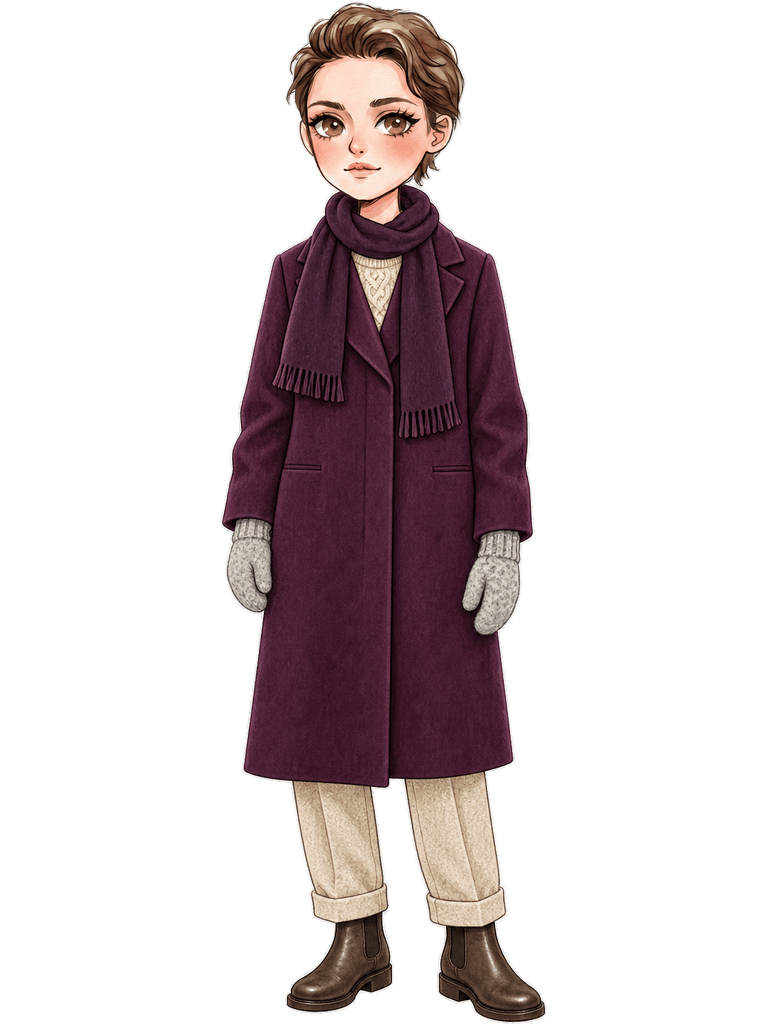
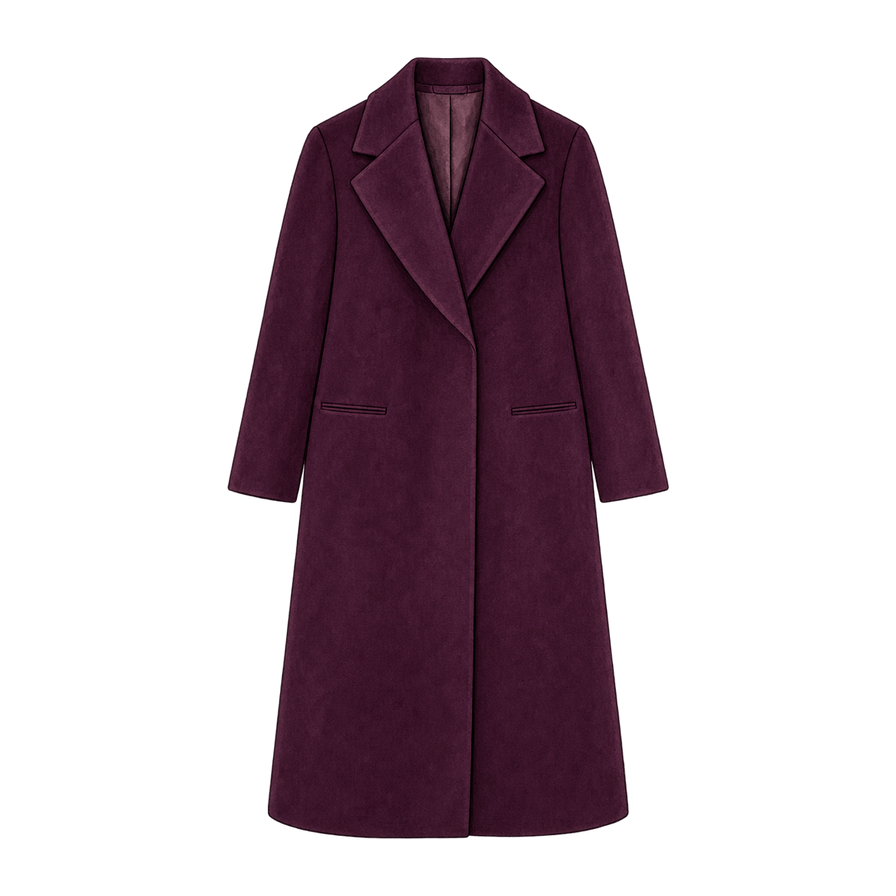 01Plum wool-cashmere coat, below the knee
An hour in the queue at 1.5°C is where a hip-length jacket fails, and a coat below the knee covers your legs. Wool-cashmere keeps its heat when you stand still. Plum is a colour Tokyo wears in winter, dark enough for a shrine and warmer than black in photographs by the torii.
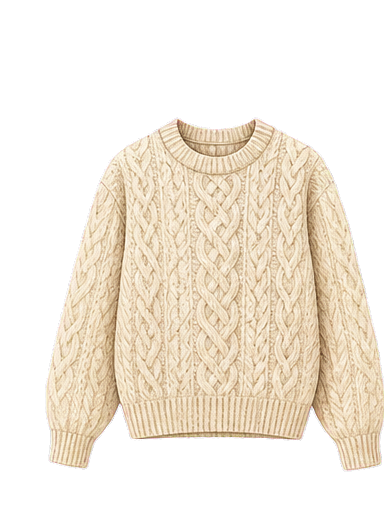 02Oatmeal cable Aran crew sweater
A thick cable knit traps warm air under the coat in a still, dry cold. Oatmeal lightens the plum at the collar and looks right on its own at a New Year lunch, when the coat comes off.
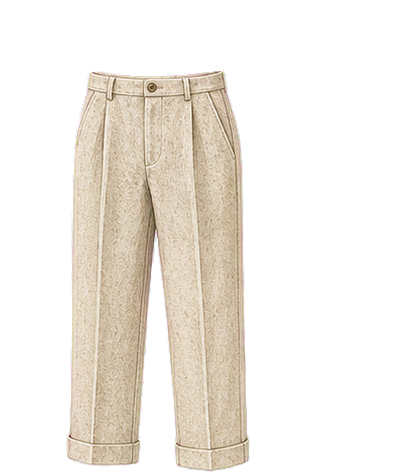 03Heather-oat wool pleated trousers, turn-ups
Wool trousers with room for thermal leggings, since JMA counts 8.1 January mornings below freezing. Pleats keep the line straight over the extra layer, and turn-ups sit neatly on the boot.
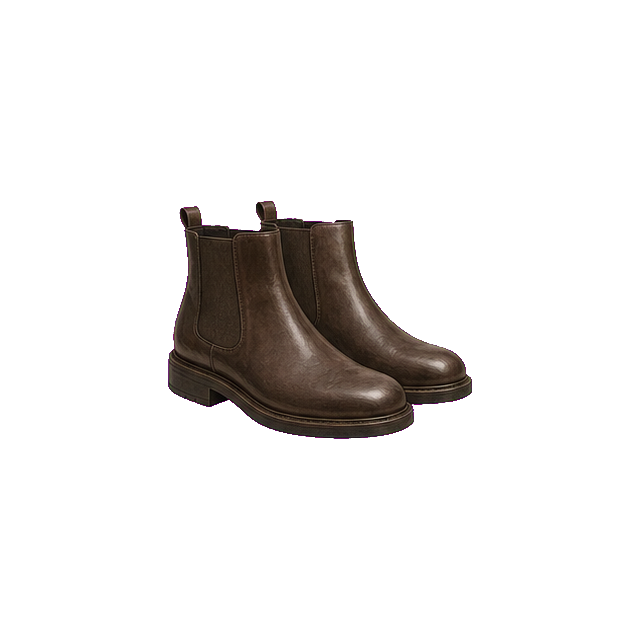 04Dark brown leather Chelsea boots
Over the New Year days you take your shoes off at restaurants, ryokan and homes, and a Chelsea boot comes off without unlacing. Leather keeps your feet warm on the gravel approach. Dark brown goes with plum and oat.
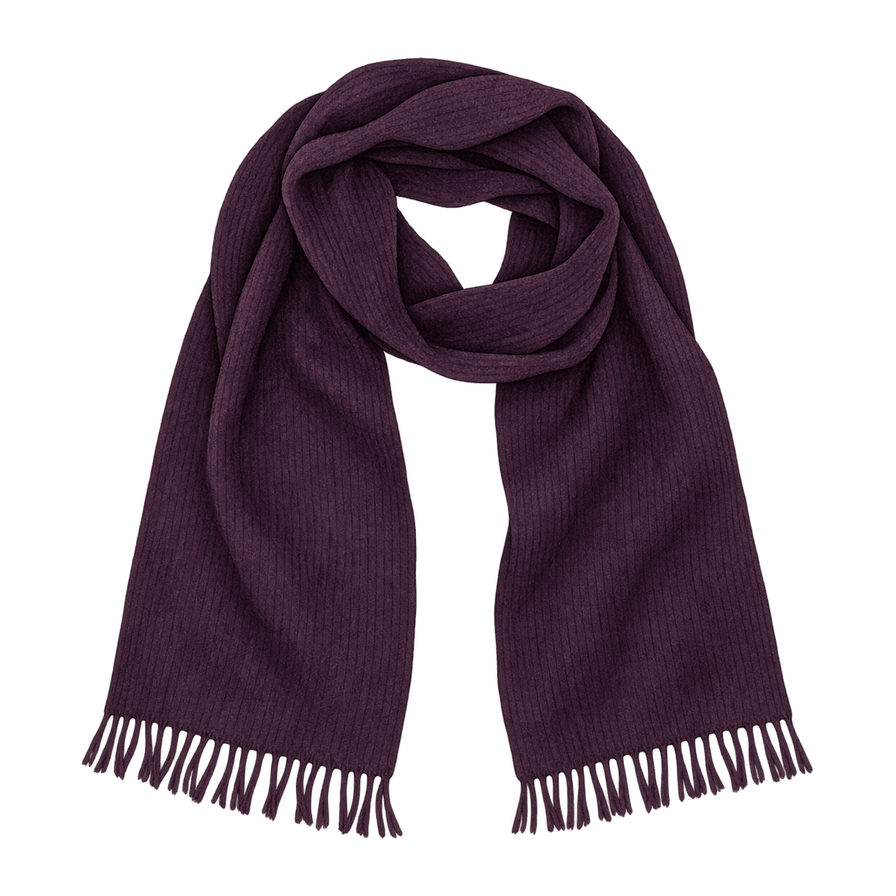 05Deep plum lambswool long scarf
Wind it twice in the midnight queue and once in the morning sun. The gap at the collar is where the cold gets in when you stand still, and a long lambswool scarf closes it. A shade darker than the coat, it reads tone on tone.
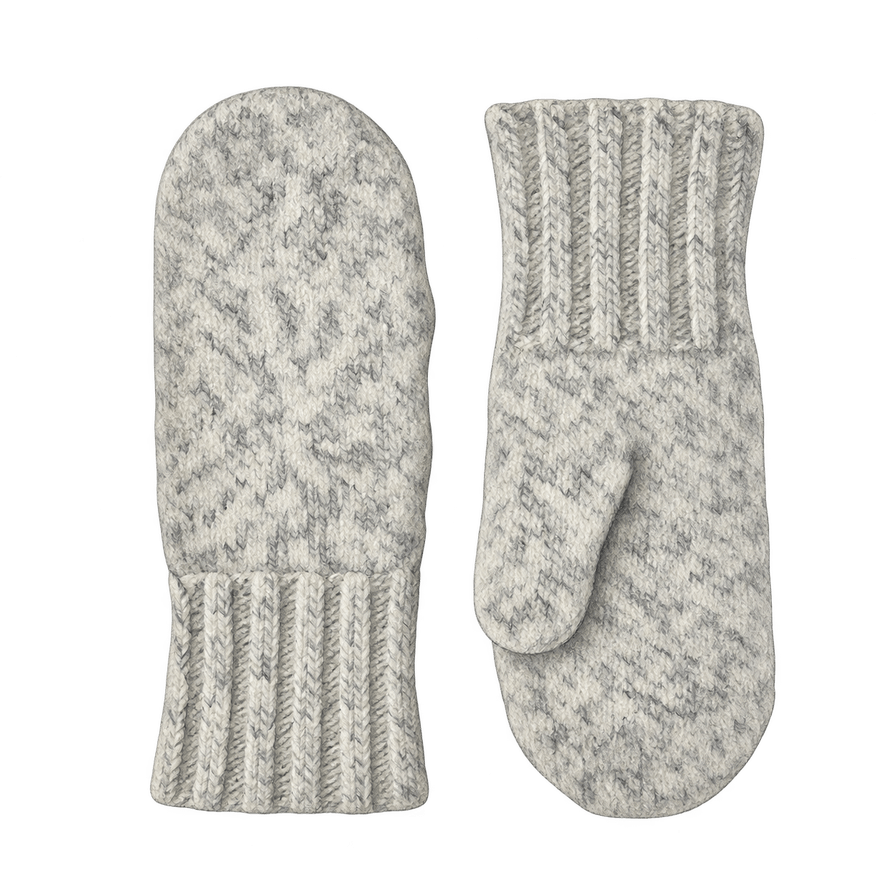 06Heather-grey felted wool mittens
Mittens are warmer than gloves in a queue, and they come off in one move at the hall, where you clap bare-handed. Tuck them in a pocket for the bow and put them back on before you step aside.
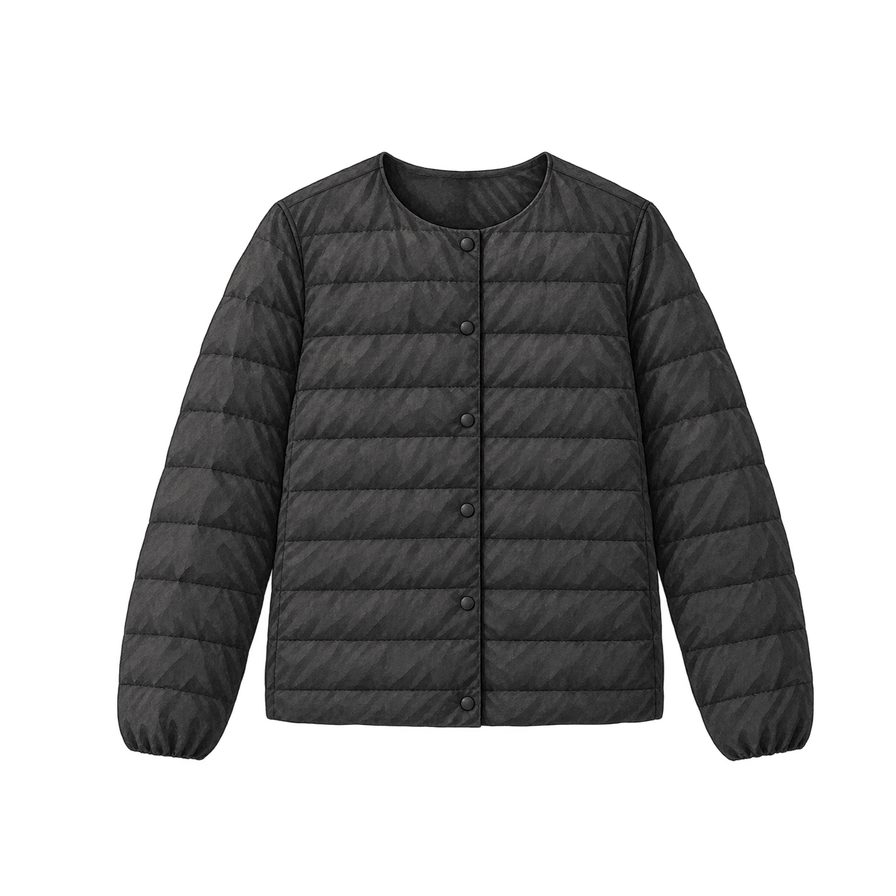 07Black collarless quilted down liner jacket
The layer for the busiest hours, 10pm to 3am, when you stand in line through the coldest part of the night. A collarless down liner zips under the coat without bulk and comes out again for a sunny 10°C afternoon on the 2nd.
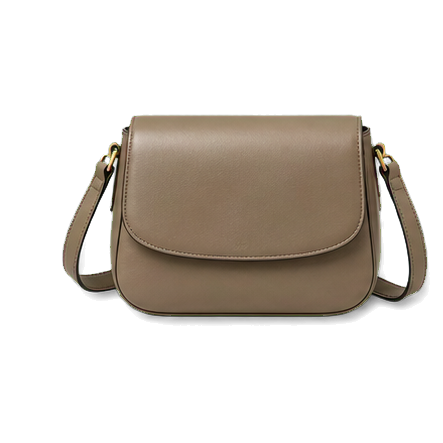 08Small taupe structured flap crossbody
Both hands have to be free: for coins at the offering box, for the clap, and for an omamori or omikuji afterwards. A small crossbody sits in front of you in the crowd. Taupe sits between the oatmeal knit and the brown boots.
Day to night
Plum coat over the Aran knit · oat trousers · Chelsea boots · scarf once round · crossbody. Meiji Jingu after the 10am rush has passed, or at 6:40am when the gates open later in the week, then lunch in the sun on Omotesandō.
Down liner zipped under the plum coat · scarf wound twice · mittens · crossbody. The New Year's Eve queue, busiest from 10pm to 3am, at about 2°C.
A suggested look — plum long wool coat, oatmeal cable aran sweater, oat wool trousers, dark brown chelsea boots, plum wool scarf.
What to avoid
- Full hands at the offering hall
- A short jacket for the midnight queue
- Snow boots and a rain shell
- Laced boots in a shoes-off week
- Costume kimono or a shrine attendant's red hakama
Frequently asked questions
A long wool coat, a thick knit, wool trousers with thermals, slip-on boots, a scarf and mittens. The Japan Meteorological Agency gives January dawns of 1°C / 34°F, and at Meiji Jingu you stand in a queue for an hour or more. Meiji Jingu asks for clothing suited to worship, and a coat and scarf already meet that.
Meiji Jingu says its grounds are busiest from 10pm on 31 December to 3am, and after 10am on 1 to 3 January. The shrine stays open all night on New Year's Eve. For a shorter queue, go early in the morning after the first three days; in January the gates open at 6:40am and close at 4:20pm.
No. The Japan National Tourism Organization's guide to shrine and temple customs says kimono is not required, and most visitors wear winter coats. If you want to wear one, rent a lined winter kimono with a haori from a shop that dresses you, wear it left over right, and wear thermals underneath.
Rinse your hands and mouth at the water basin, bow at the torii and walk to the side of the path. At the hall, drop a coin in the offering box, then bow twice, clap twice and bow once, as Meiji Jingu sets out. Keep your hands empty for it.
Cold, dry and bright. The Japan Meteorological Agency's 1991–2020 normals give Tokyo's January a high of 9.8°C / 50°F and a low of 1.2°C / 34°F, with rain on 4.5 days and 192.6 hours of sun, the most of any month. The ten-day normal for 1 to 10 January gives a 1.5°C minimum. Daylight lasts about 9 hours 48 minutes on 1 January.
Sources
- 明治神宮 — 初詣特集 (New Year gate hours; busiest 22:00–3:00 and after 10:00 on 1–3 Jan) — accessed 2026-09-27
- 明治神宮 — ご参拝の方へ (dress, 二拝二拍手一拝, January gates 6:40–16:20) — accessed 2026-09-27
- Japan National Tourism Organization — Shrine and temple traditions — accessed 2026-09-29
- Japan Meteorological Agency — 東京 平年値 1991–2020 (station 47662) — accessed 2026-09-26
- Japan Meteorological Agency — 東京 旬別平年値 1991–2020 (station 47662) — accessed 2026-09-27
- NAOJ — 日の出入り@東京, 令和9年1月 — accessed 2026-09-27
- 東京都の休日に関する条例 (29 Dec – 3 Jan) — accessed 2026-09-26