What to Wear with Navy blazer
The single jacket that crosses every register without changing identity.
A navy blazer is the most versatile jacket in the wardrobe — yacht in 1830, prep-school in 1936, Ivy League in 1965, Polo in 1972, runway in 2026.
- A crisp white shirt or oxford — the Brooks Brothers Number One formula since 1936
- Light-wash jeans for casual; cream wide-leg trousers for polished
- A Breton stripe knit for nautical — the Saint James / Armor Lux lineage
- Khaki or tan high-waist trousers — the Take Ivy formula
- Brown loafers — never black, which fights navy in photographs
- Pearl studs or a single gold chain — heritage finishing
- Don't pair with black trousers — tonal-flat in photographs
- Don't wear over a heavily logoed graphic tee — breaks the heritage register
- Don't skip steaming — wool wrinkles at the elbow within an hour of sitting
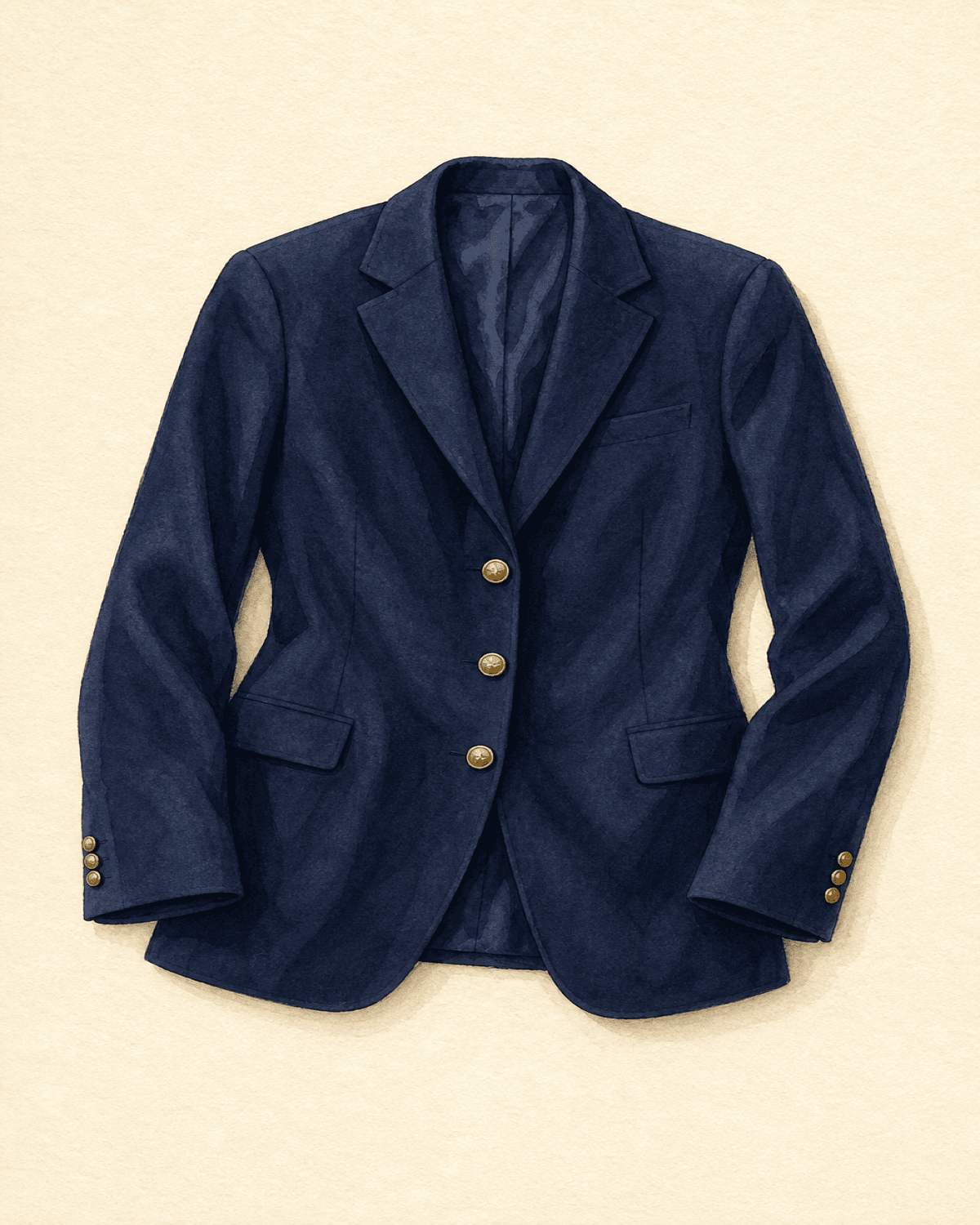
The navy blazer started in the British Royal Navy as a boat-cloak — early 19th century, double-breasted, brass-button. By the 1830s the Royal Yacht Squadron had adopted it as informal regatta wear, and the form spread through every English-speaking sailing club. Brooks Brothers introduced its single-breasted brass-button 'Number One' in 1936 and made it the prep-school standard for the next ninety years. Take Ivy — Teruyoshi Hayashida's 1965 photo book documenting Yale, Harvard, Princeton, and the rest — published the silhouette to a global audience and became one of the most-referenced style books in fashion. Ralph Lauren built his career on the same jacket starting with Polo's 1972 launch. Every generation has rediscovered it: J.Crew in the early 2000s, Take Ivy reprints during the prep revival of 2010, Aimé Leon Dore's New York preppy renaissance starting 2018, and the 2026 runway anchors at The Row, Bottega Veneta, and Brunello Cucinelli. The single rule across two centuries: navy + brown is correct, navy + black is the tonal-flat mistake. Pair the navy blazer with a white shirt and light denim and the outfit photographs the same in 2026 as it did in 1965.
Navy + brown is correct, navy + black is the tonal-flat mistake — a rule that has held across two centuries of editorial.
Wear it with
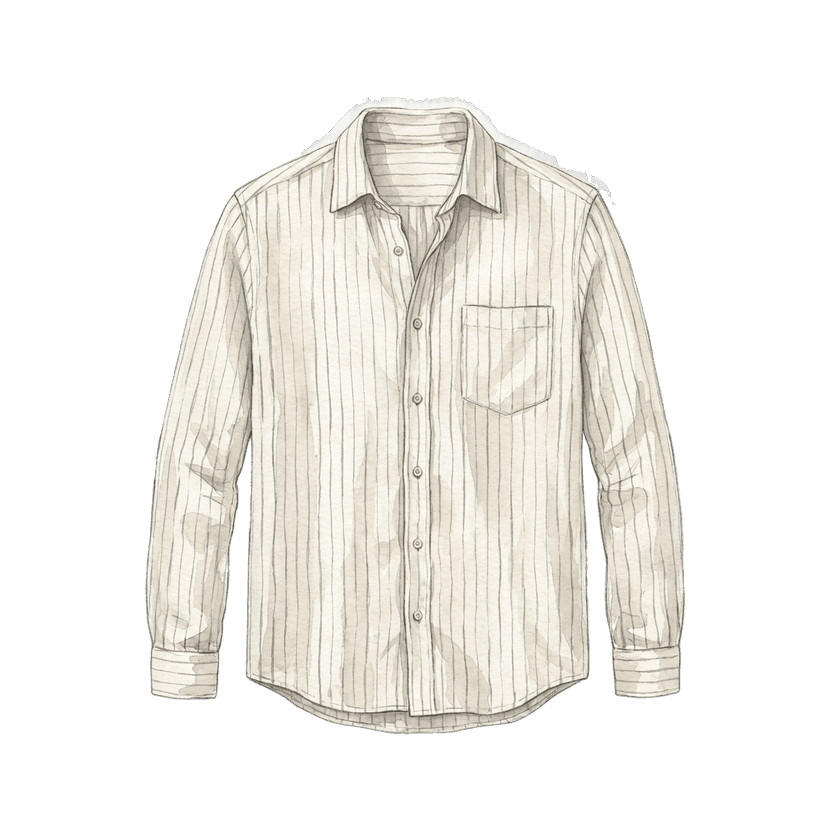 01Crisp white shirt or pinstripe oxford
The Brooks Brothers Number One formula, photographed in every Take Ivy spread and on every J.Crew catalog cover for a decade. White underneath navy is the highest-utility version of the outfit — clear neckline, daylight-flattering, no styling needed beyond rolling the sleeves once. A pinstripe oxford reads slightly more 2026 than a plain poplin; a soft-collar oxford reads more weekend than a stiff dress shirt.
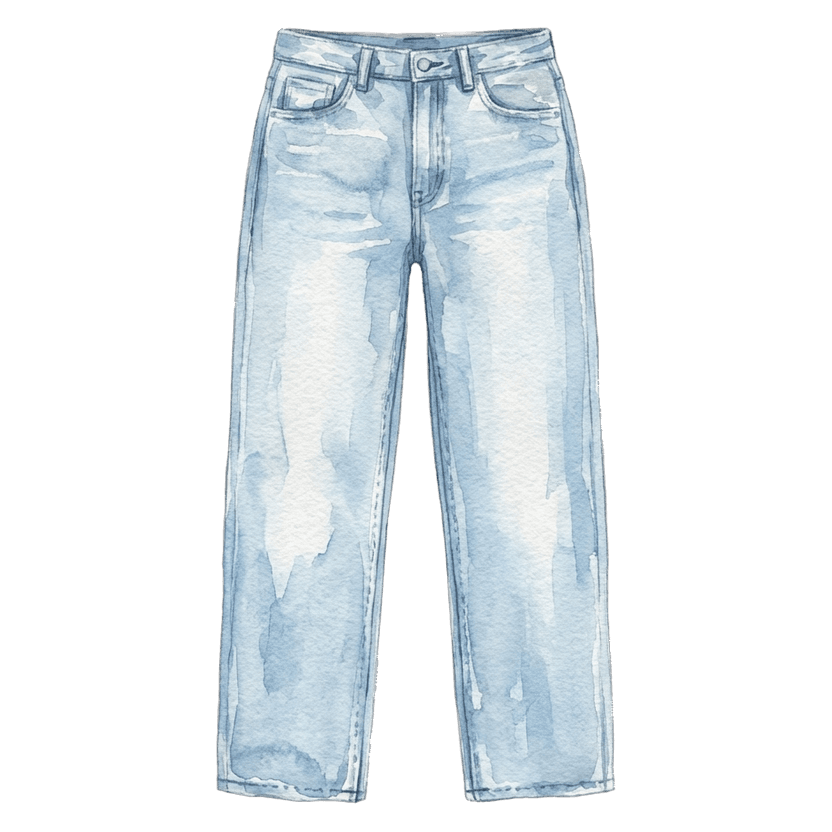 02Light-wash straight-leg jeans
The casual register. Light denim against a navy blazer is the boat-deck weekend uniform — lighter than the dark-wash + white-blazer pairing, more relaxed than the office version. Light-wash beats medium-wash here because the contrast against navy stays crisp; medium-wash starts to compete with the blazer's blue. Levi's 501 in light rinse, AGOLDE 90's, or Toteme straight cuts all work — the cut matters less than the wash.
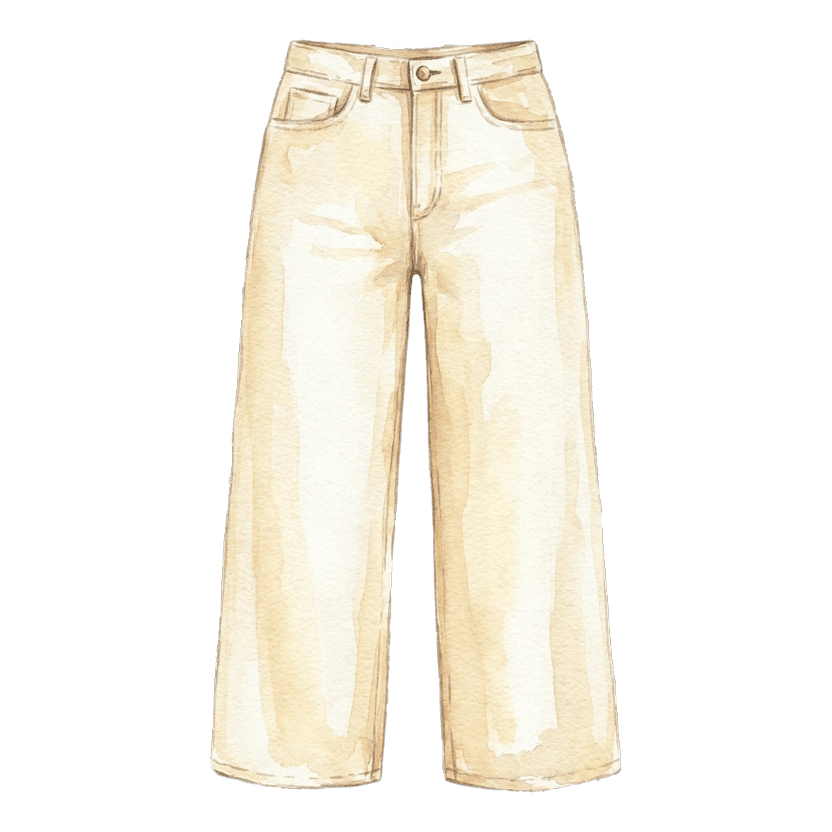 03Cream or ecru wide-leg trousers
The polished register. Cream wool or linen trousers + navy blazer is the contemporary 'old money' formula that ran through Sofia Richie Grainge's Grimaldi Forum wedding week in April 2023 and through every Loro Piana lookbook since. Cream warms the navy without competing — the silhouette reads continental, not corporate. The Row, Toteme, and Massimo Dutti all build collections around this exact pairing.
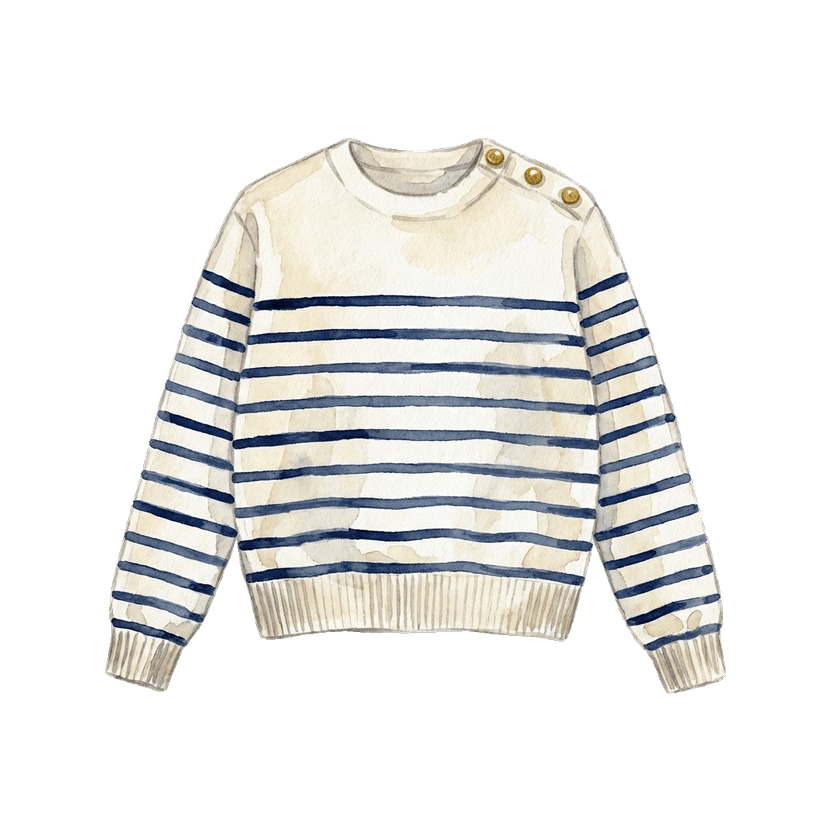 04Breton stripe knit underneath
The nautical register. A Breton stripe sweater (Saint James from Brittany since 1889, or Armor Lux from Quimper since 1938) under a navy blazer is the literal evolution of the regatta uniform — the stripe was originally the French Navy's standard sailor jersey, mandated in 1858 with twenty-one stripes for Napoleon's victories. Wear with light denim for weekend, with cream trousers for spring lunch. The stripe widens the silhouette, so size up the blazer slightly.
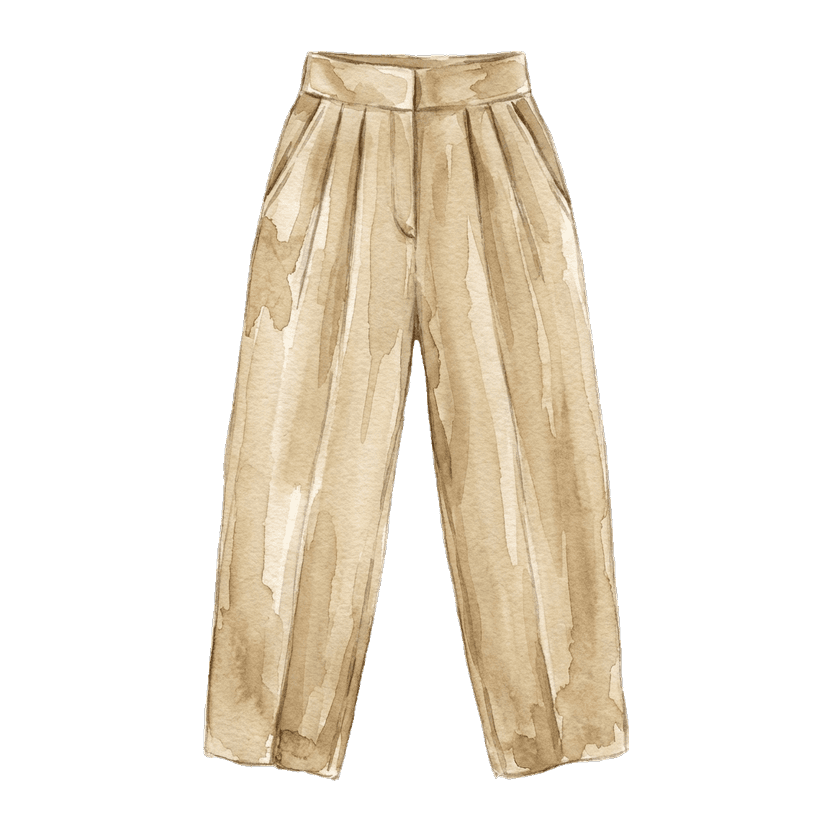 05Khaki or tan high-waist pleated trousers
The Take Ivy formula. Khaki chinos under a navy blazer with a white shirt and brown loafers is the literal Yale-1965 uniform — and it has aged better than nearly any other single outfit in the book. High-waist pleated cuts read more 2026 than flat-front; the proportion balances the blazer's shoulder. Skip cargo pockets and keep the trouser uncuffed.
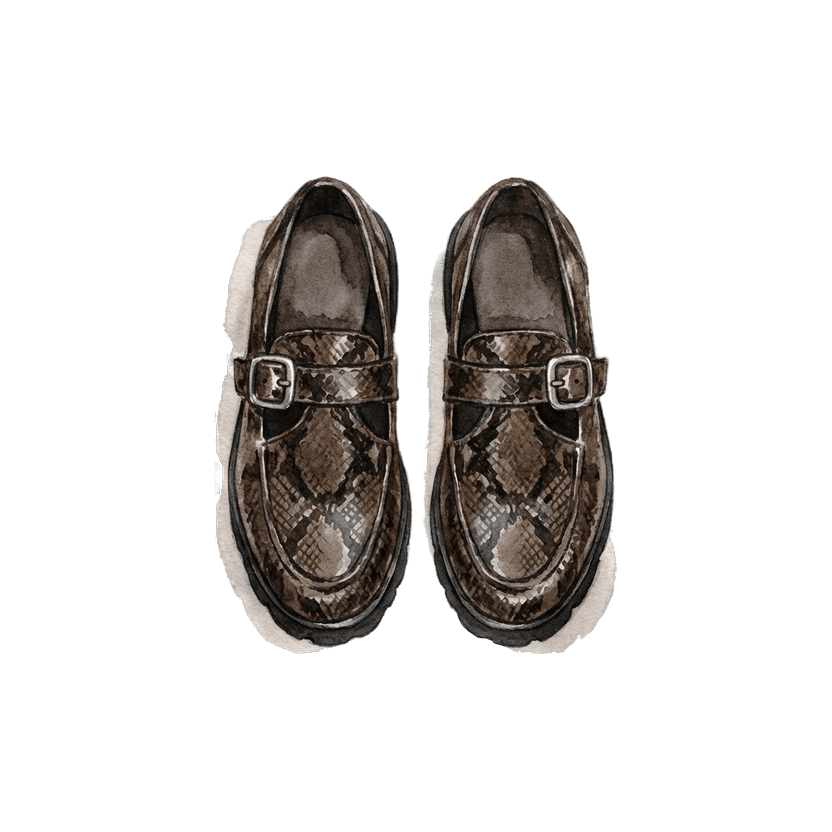 06Dark brown leather loafers
The two-century rule: navy + brown leather is correct, navy + black is tonal-flat. Penny loafers in cognac or chocolate, tassel loafers in dark brown, or a Belgian shoe in burgundy — any warm-tone leather grounds the navy and adds the heritage signal. Black loafers under a navy blazer reads corporate-conservative in a way that drains the silhouette of warmth; brown reads considered.
Dressing rules
A navy blazer clears every register from yacht-deck weekend to wedding cocktail. It is the only single jacket in the wardrobe that crosses business casual, smart casual, creative office, evening, and most non-black-tie weddings without modification — change the trouser, the shirt, and the shoe and the same blazer reads four different ways. For weddings: navy is widely accepted at every dress code below black-tie per The Knot's wedding-guest etiquette; pair with a tie or open-collar oxford depending on the venue. For evening at non-formal events: a navy blazer over a fine knit and dark trousers reads sharper than a black blazer would. The single care rule across every fabric: steam (not iron) wool, hang on a wide wooden hanger, brush off lint with a clothes brush after every wear. Wool blazers should be dry-cleaned no more than twice a year; cotton and linen blazers can take a gentle wash + immediate press.
What to avoid
- Black trousers — two cool-tone darks fight, the silhouette reads tonal-flat
- Heavily logoed graphic t-shirt — the heritage register collapses
- Skipping the steam — wool wrinkles visibly at the elbow within an hour of sitting
- Storing wet wool — deforms permanently at the shoulders, especially after rain or snow
- Royal-blue or cobalt accent pieces — the two blues fight
Frequently asked questions
For most wardrobes, yes. Navy works under more outfit registers than black — it crosses casual (over jeans), smart casual (over chinos), evening (over a fine knit), and most weddings. Black blazers are sharper in formal contexts (true black-tie events, urban evening) but more limited in casual and daytime use. For one blazer, choose navy. For two, add a black structured blazer or a cream/camel one for warm-tone variety. The Take Ivy lineage that Brooks Brothers cemented in 1936 still holds in 2026 — navy is the highest-utility wardrobe blazer.
Brown leather, every time. Cognac, chocolate, dark brown, oxblood, burgundy — any warm-tone leather grounds the navy and adds heritage signal. Black shoes under a navy blazer reads corporate-conservative in a way that drains the silhouette; the two cool-tone darks fight tonally. Suede in tan or chocolate also works, especially for spring and summer. White sneakers are acceptable in the casual register (navy blazer + jeans + white sneakers reads contemporary preppy), but skip black sneakers entirely.
Yes — the navy blazer is widely accepted at every wedding dress code below white-tie per The Knot's wedding-guest etiquette. For cocktail-coded weddings, pair with cream or grey wool trousers, a white shirt, and brown loafers or oxfords. For semi-formal, add a tie or pocket square. Black-tie events expect a tuxedo or a true black/midnight-navy formal suit; a regular navy blazer is too casual for that register. For garden, beach, and rustic weddings, the navy blazer over light chinos or denim with brown loafers reads polished without overdressing.
Worsted wool is the year-round default — lightweight enough for spring through fall, structured enough to hold the shoulder line. Hopsack wool (a looser weave) breathes better in summer. Cotton and linen blazers work for warm-weather wear but wrinkle more visibly; cotton + linen blends are the compromise. Avoid pure polyester — the fabric sheen reads cheap under photography and the cut collapses within a year. Brooks Brothers, J.Crew Ludlow, and Suitsupply Lazio all sit at the accessible end of quality wool; The Row and Loro Piana are the investment tier.
Brass buttons are the heritage signal — the original Royal Navy brass-button jacket from the early 19th century, the Brooks Brothers Number One since 1936, and every prep-school yearbook between. Matte buttons (horn, mother-of-pearl, fabric-covered) read more contemporary and dressier in a quiet-luxury register; The Row and Bottega Veneta have leaned matte since 2020. For one navy blazer, brass reads more versatile across casual-to-cocktail. For a more formal-only blazer, matte horn buttons read sharper.