What to Wear with White blazer
The piece that takes any outfit one step toward considered without going formal.
A white blazer is the single piece that pushes any outfit one step toward considered — Bianca Jagger wore one to her wedding in 1971, Carolyn Bessette-Kennedy made it her 1990s uniform, and Saint Laurent has put it on the runway every season since.
- Dark wash jeans or black trousers underneath — JFK formula, Carolyn Bessette-Kennedy formula
- Black turtleneck or fine knit for evening — Le Smoking lineage
- Cognac loafers or dark brown ankle boots — break the brightness at the foot
- A structured dark brown or cognac leather bag — anchors the white
- Roll the sleeves once for daytime, leave full-length for evening
- Pair with cream wide-leg jeans for tonal — not white-on-white
- Don't pair with white trousers — reads bridal suit
- Don't pair with pale lavender, blush, or icy pastel — washes you out
- Don't machine-wash a wool blazer — yellowing within a year, dry-clean only
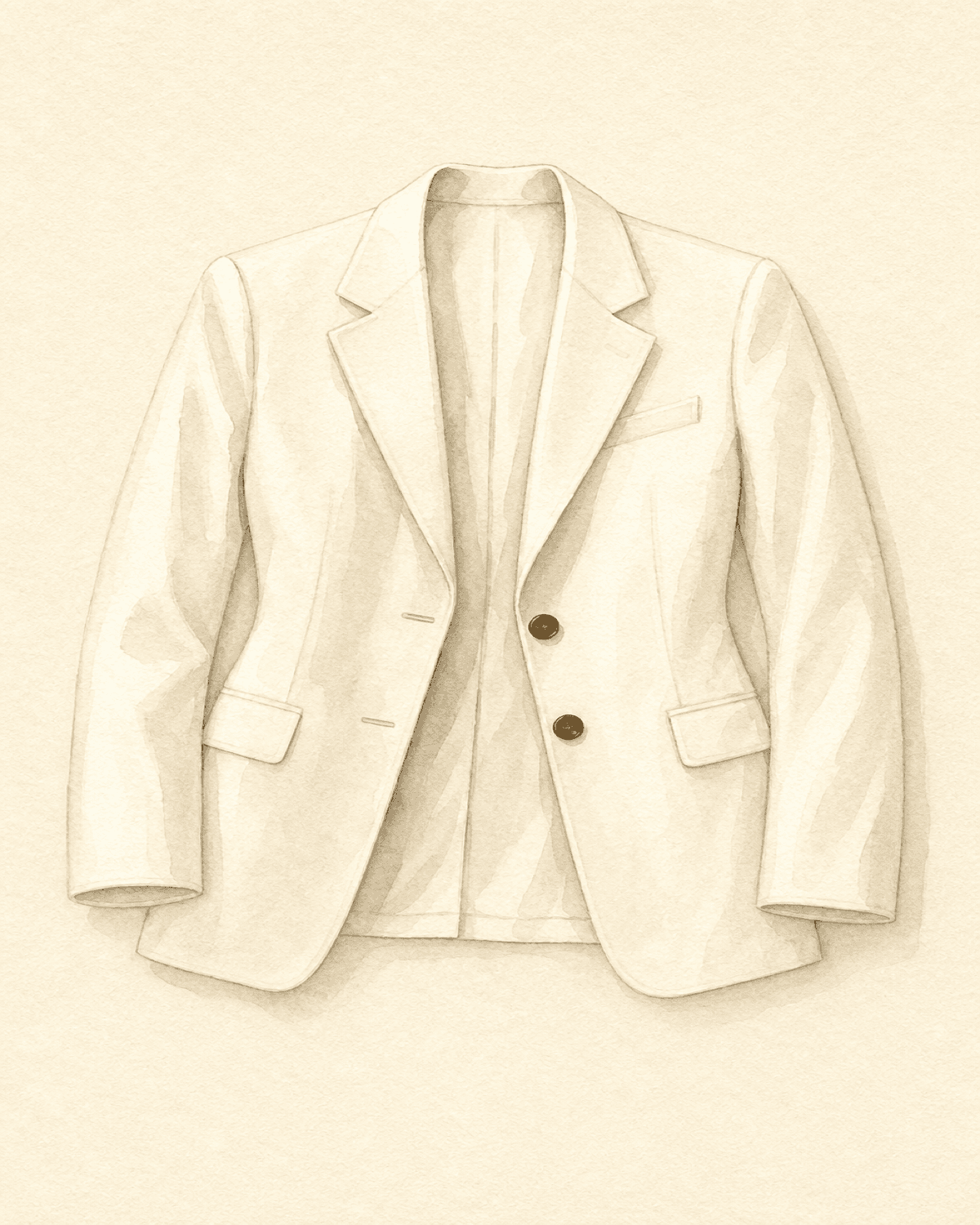
Yves Saint Laurent introduced Le Smoking in his autumn 1966 collection — the first tuxedo cut for women, and the moment the tailored jacket left men's wardrobes for good. The white version became the iconic alternative: Bianca Jagger wore one to her wedding to Mick Jagger in Saint-Tropez on 12 May 1971, and the photograph (by Patrick Lichfield) is in the Met Costume Institute. Carolyn Bessette-Kennedy made it the 1990s American minimalist signature — slim white blazer over dark jeans or black trousers, a Calvin Klein silk slip underneath. Saint Laurent under Hedi Slimane (2012–2016) and Anthony Vaccarello (2016–present) has kept Le Smoking on every runway. The throughline: a white blazer reads sharper than any other jacket color because it photographs so cleanly. The risks are bridal silhouettes (no white trousers), yellowing (dry-clean wool), and pastels that wash the wearer out. Worn against dark denim, black trousers, or a cream tonal pant, it does what cashmere does in fall — turns ordinary outfits intentional.
The white version of Le Smoking became the iconic alternative — Bianca Jagger wore one to her wedding to Mick Jagger in Saint-Tropez on 12 May 1971.— The Met Costume Institute, on YSL's autumn 1966 collection
Wear it with
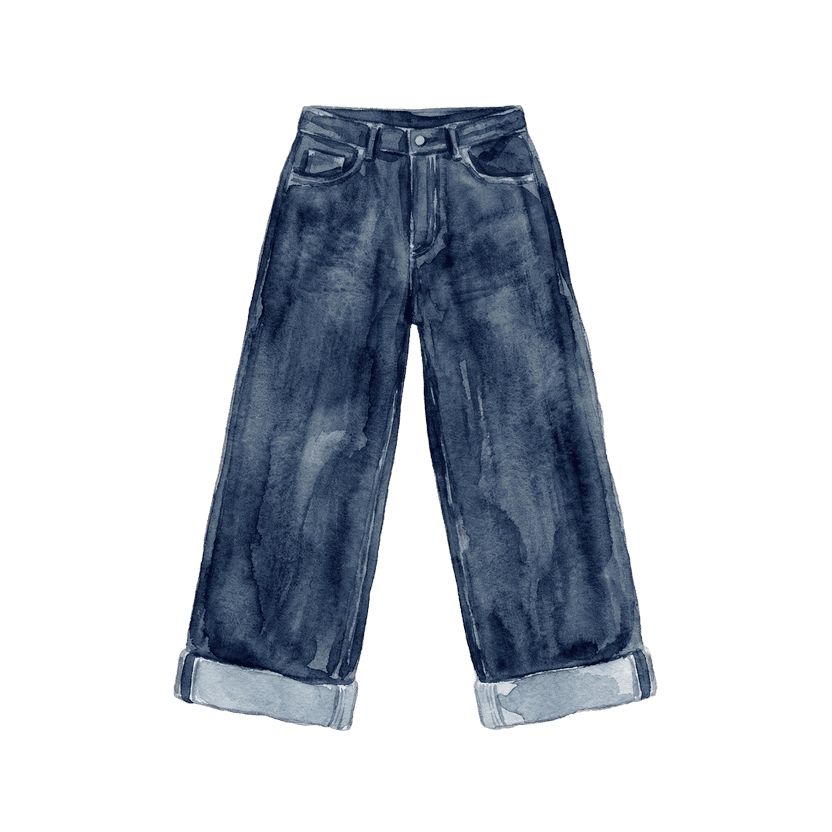 01Dark wash wide-leg jeans
The JFK / Carolyn Bessette-Kennedy formula. Dark indigo against a white blazer is the cleanest contrast in the wardrobe — the white reads cooler, the denim reads richer, and the silhouette photographs sharp under any light. Dark wash beats medium wash; medium wash competes for attention. AGOLDE Riley, Frame Le Slim, or Levi's 501 in dark rinse all work — the cut matters less than the wash depth.
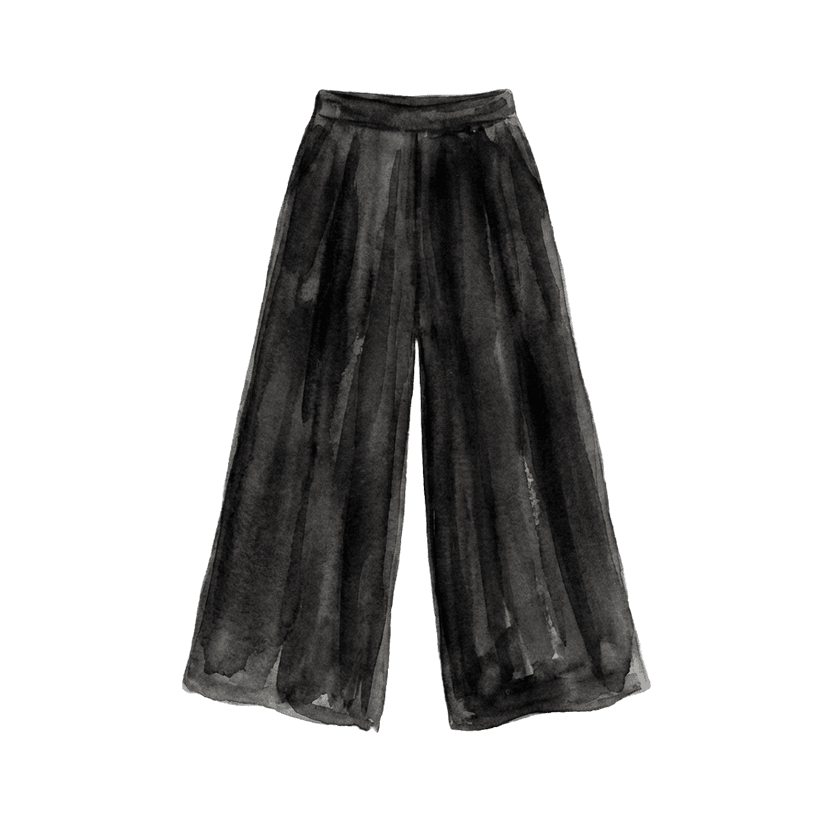 02Black wide-leg trousers
The evening or office shift. Black trousers + white blazer is the closest civilian outfit reads to Le Smoking without putting on a literal tuxedo — Bianca Jagger's 1971 photograph is the reference. A wide-leg or relaxed straight cut sits cleaner than skinny under a structured blazer; the leg balances the shoulder.
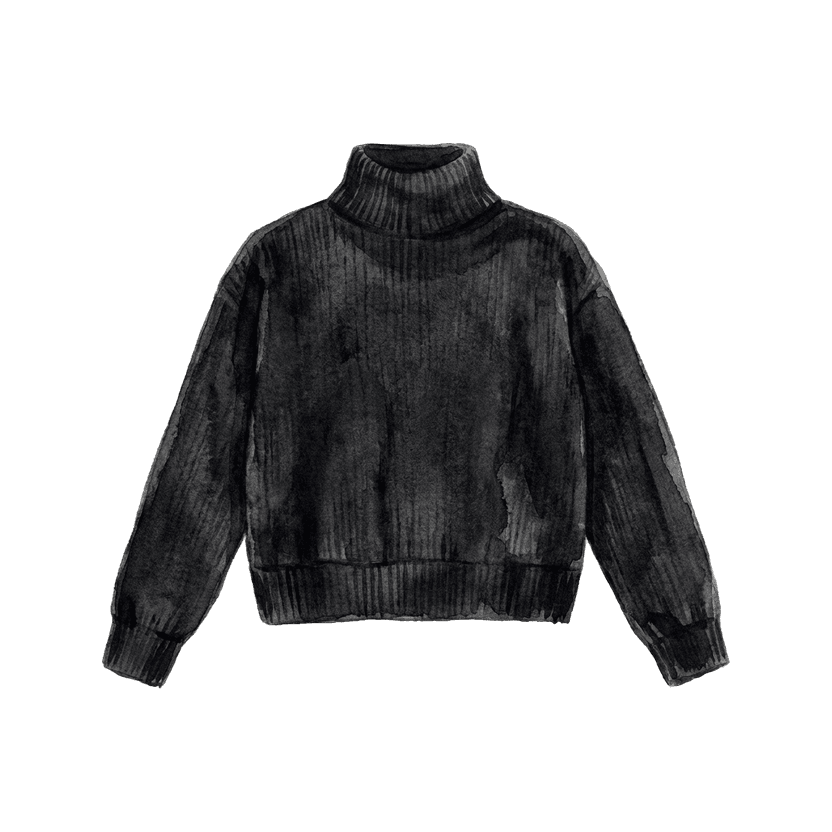 03Black turtleneck or fine knit underneath
Adds the third register — daytime gets a white tee, office gets a silk shell, evening gets a black turtleneck. The black knit defines the V of the blazer, sharpens the neckline, and pulls the outfit toward Saint Laurent rather than country club. The Row, Khaite, or Uniqlo Heattech all work — fine gauge, no chunky knits under a blazer.
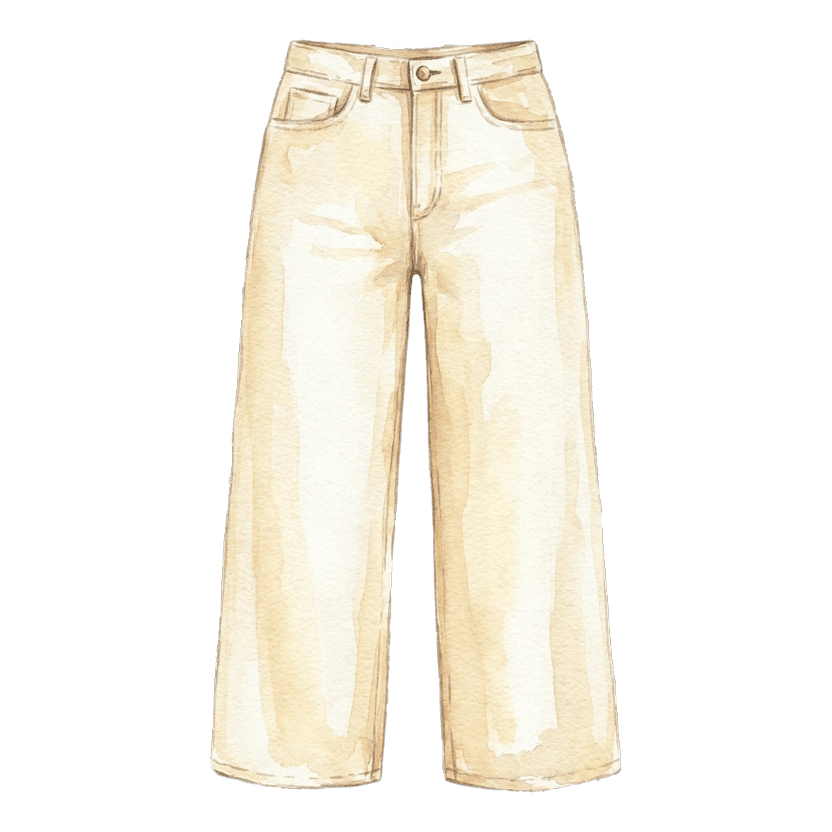 04Cream wide-leg jeans for tonal — not white
The tonal play that avoids the bridal suit. A cream or oat jean against a white blazer reads layered and considered (cream + white = warm tonal, like Toteme or The Row spring lookbooks); a literal white-on-white pant + jacket reads bridal. The half-shade of warmth is the whole game. Skip if you'd rather keep contrast crisp — go to the dark wash jeans instead.
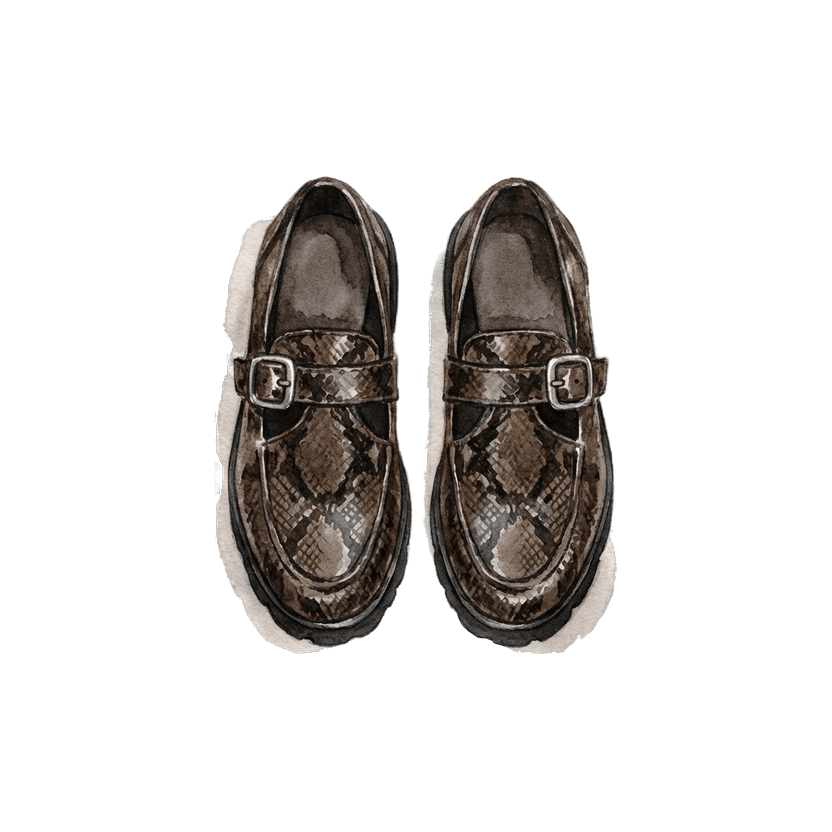 05Dark brown leather loafers or cognac ankle boots
The brightness break at the foot. White blazer + white-or-cream pant + light shoe runs into the leg-void problem in reverse — too much light, no anchor. A dark brown loafer or cognac ankle boot grounds the outfit and adds the warm-tone counterweight that black footwear cannot. Skip white sneakers with a white blazer for the same reason; the result reads like a tennis kit.
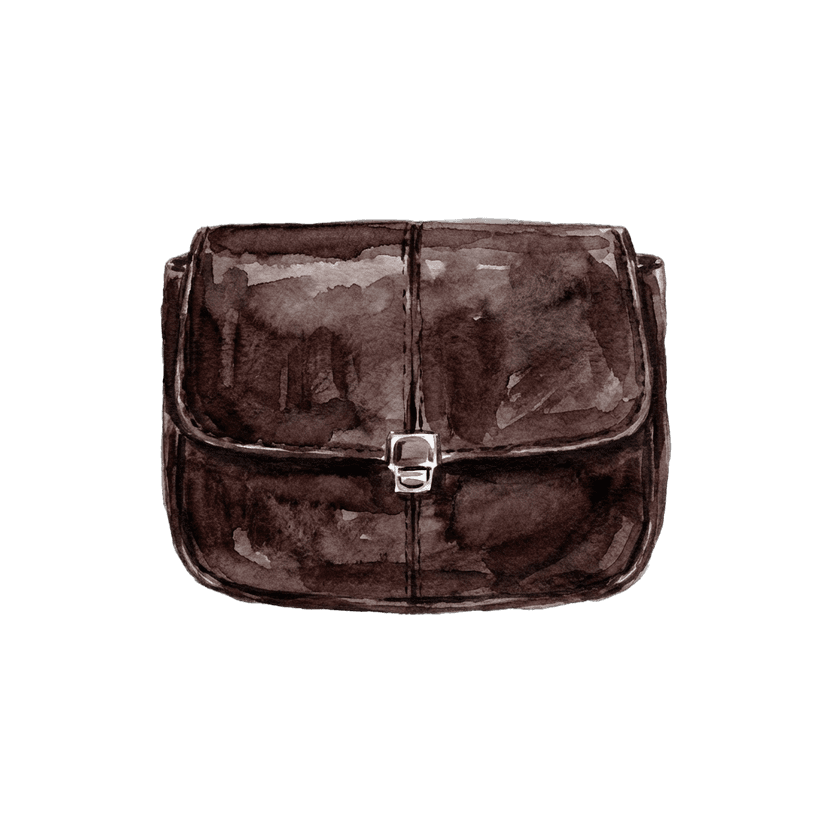 06Structured dark brown or cognac leather bag
The same warm-tone anchor logic as the shoe. A dark brown structured shoulder bag or cognac top-handle balances the brightness of the jacket and adds heritage signal — Hermès Constance, The Row Park Tote, or any well-kept vintage leather piece reads richer against white than against any other jacket color. The bag carries more visual weight against white than it would against a black blazer, so the leather quality matters more.
Dressing rules
A white blazer clears smart casual on a Tuesday and creative-evening on a Friday — pair with dark jeans + a fitted top for the former, with black trousers + a turtleneck for the latter. It does not clear true business formal in conservative industries (finance, law, large corporate boards) where a navy or charcoal suit is the default — a white blazer reads creative, which is the point. For weddings, a white blazer is allowable only if not worn over white separates (the bridal-suit rule); a black-trouser-and-white-blazer pairing reads polished and is widely accepted at cocktail-dress-coded weddings per The Knot's etiquette guidelines. The single care rule across every fabric: do not machine-wash wool. Cotton and linen blazers can take a gentle wash + immediate press; wool requires dry cleaning to prevent yellowing.
What to avoid
- White trousers underneath — reads bridal suit
- Pale lavender, blush, or icy pastel layering colors — wash out the wearer in direct light
- White sneakers with a white blazer — reads tennis kit, no anchor in the silhouette
- Sheer cotton or unlined linen over a bra-only top — transparency in sun, collapsing silhouette
- Skipping dry-cleaning on wool — yellowing along collar and cuffs sets in fast
Frequently asked questions
Less than reputation suggests. The two real risks are stains (white shows everything) and bridal silhouettes (don't pair with white trousers). Worn over dark jeans, black trousers, or a cream tonal pant, the white blazer is one of the highest-utility pieces in a creative-office wardrobe — it does what cashmere does in fall, turning a t-shirt-and-jeans into a considered outfit. Saint Laurent has put it on every runway since 1966 because the silhouette photographs cleanly under any light.
Dark wash jeans + a black or dark grey fitted top + dark brown loafers in creative offices; black trousers + a silk shell + pointed-toe pumps in more polished settings. The blazer is the statement; everything underneath reads quieter than it would without the white jacket — which is the point. Skip pale pastels and skip white pants. Cognac or dark brown bag, not black, to give the outfit a warm-tone anchor.
Yes, with caution. The Knot's etiquette is consistent: avoid white as a wedding guest, but a white blazer over non-white separates (black trousers, dark wash denim, navy slip) reads as 'creative cocktail' rather than 'bridal-adjacent' and is widely accepted at non-traditional weddings. Avoid the white-blazer-over-white-pants combination entirely — that's a bridal suit. When in doubt at a traditional or religious wedding, choose a different jacket color; black, navy, burgundy, or emerald all clear the dress code without ambiguity.
Three rules. First: dry-clean wool blazers, do not machine-wash. Yellowing along the collar and cuffs from sweat and oil sets in within a year of regular wear if you skip the dry-cleaner. Second: store away from direct sunlight — UV oxidizes white wool and cotton, turning it cream, then ivory, then grey. Use a garment bag, hang in an interior closet, and rotate often so no piece sits in the same shoulder fold for months. Third: spot-clean any visible mark within 24 hours; aged stains on white are nearly impossible to remove. Cotton and linen blazers can take a gentle cool wash; wool cannot.
Lapel and cut. A tuxedo jacket has satin or grosgrain peak lapels, no functional waist seam, and is cut to be worn with formal trousers; a blazer has notch lapels, a more relaxed waist, and is meant to be paired with denim, trousers, or a skirt. The Le Smoking lineage that began with Yves Saint Laurent's autumn 1966 collection blurred this — Saint Laurent's women's tuxedos were cut closer to a blazer than a traditional dinner jacket, which is why a contemporary white blazer can read as Le Smoking when paired with black trousers, while reading as smart casual over jeans.
Sources
- The Metropolitan Museum of Art — Yves Saint Laurent's Le Smoking — accessed 2026-04-25
- Vogue — Carolyn Bessette-Kennedy's Lasting Style Influence — accessed 2026-04-25