What to Wear in Quebec City in January
Quebec City in January: -7°C / 19°F afternoons, -17°C / 1°F nights, 38 cm of snow on the ground and about 11 nights below -20°C.
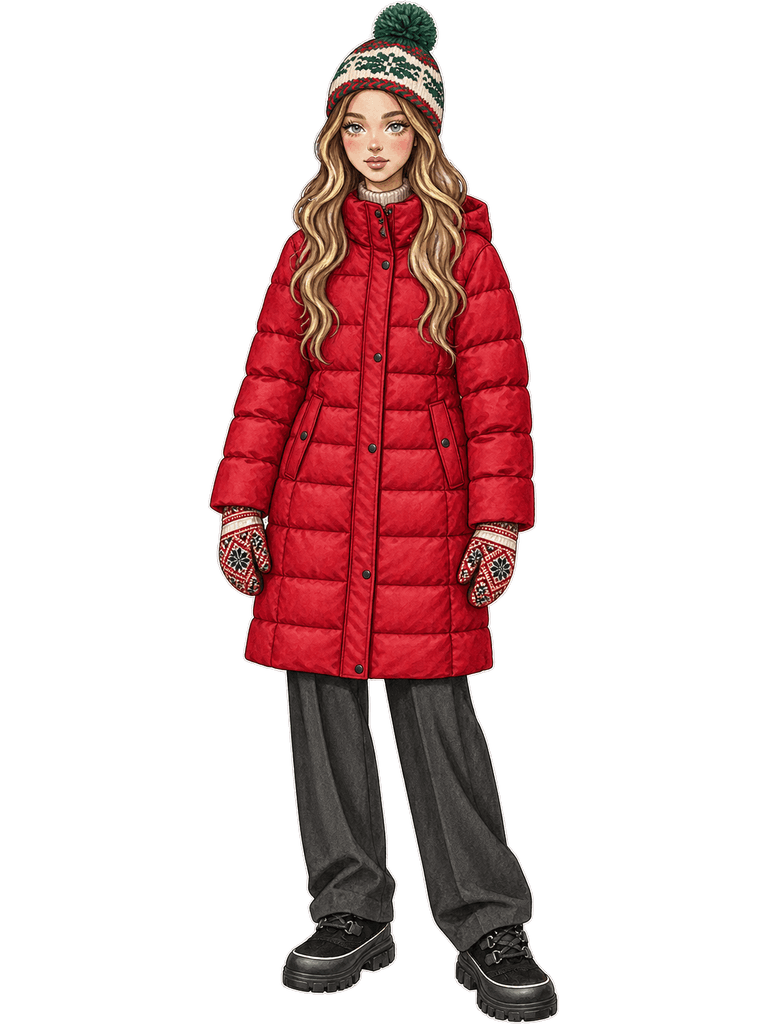
- Red knee-length down parka with a hood — the wind chill falls below -20 on about 19 days
- Stone chunky rib knit over oat merino — the low drops below -10°C on about 24 nights
- Charcoal pleated wool trousers, thermals underneath — the high stays at or below freezing on 26 days
- Black insulated snow boots with a deep lug — snow lies 30 cm or deeper on about 21 days
- Red double-knit wool mittens — fingers share heat in a mitten on a -16.7°C night
- Cream pompom tuque and ribbed wool socks — ears and toes are what the cold reaches first
- Ankle boots — snowbanks at the crossings are taller than the shaft, and snow gets in
- A wool overcoat on its own — no hood and no insulation for a -30 wind chill
- Fingered gloves — at -20°C each finger loses heat on its own
- Expecting a thaw day — the high climbs above freezing on fewer than 5 days
Pack for a month in which nothing melts. Environment and Climate Change Canada's figures for Jean Lesage airport make January the city's coldest month, at -7°C / 19°F by day and -16.7°C at night, and the high climbs above freezing on fewer than 5 days. December snows more, 75.7 cm against January's 69.1, but January keeps it: average snow depth doubles from 18 cm to 38 cm and reaches 46 cm by the 31st. On about 11 nights the low sinks below -20°C, and the wind chill passes -30 on about 8 days. So the kit is built for snowbanks and deep cold at once: a down parka to the knee, wool at every layer, insulated boots with a deep lug, mittens instead of gloves, and a tuque that covers your ears, even inside the Hôtel de Glace.
December brings Québec's snow. January keeps every flake of it, and the snow on the ground doubles before the month is out.
The capsule
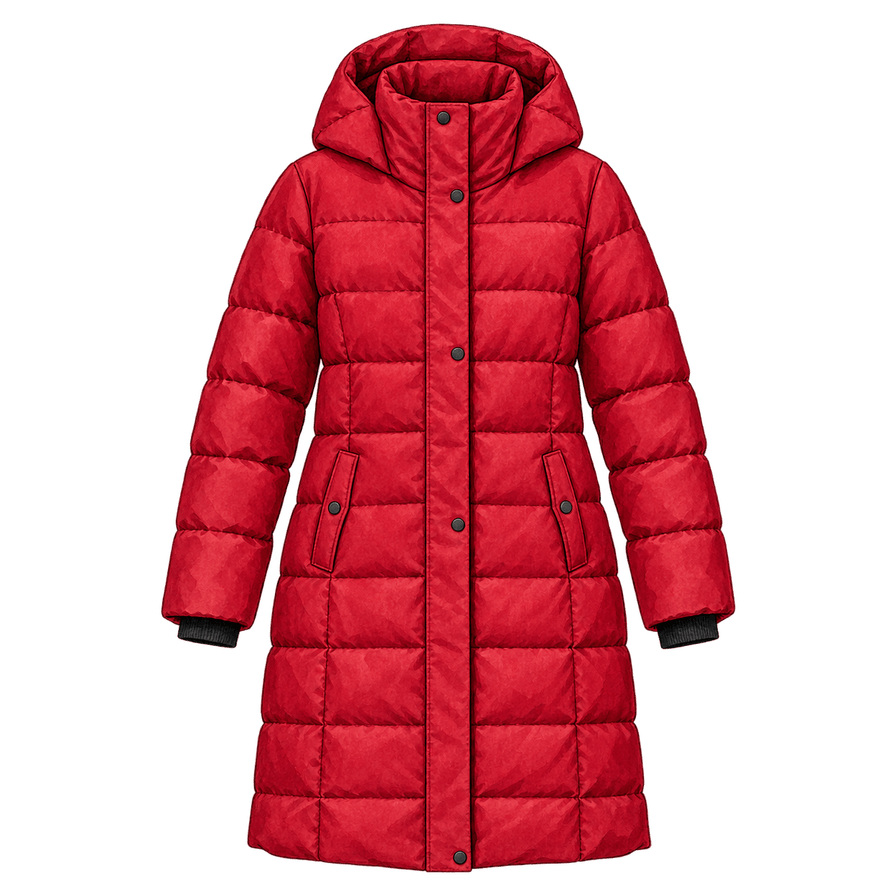 01Cardinal-red knee-length down parka, hood
Wind chill falls below -20 on about 19 January days at Jean Lesage and below -30 on about 8, and a down parka to the knee is the only coat in this capsule that handles both. Knee length covers the thighs a hip jacket leaves to the wind on the Dufferin Terrace. Red is deliberate: against 38 cm of white on the ground it is the one colour in the capsule that shows from across a street.
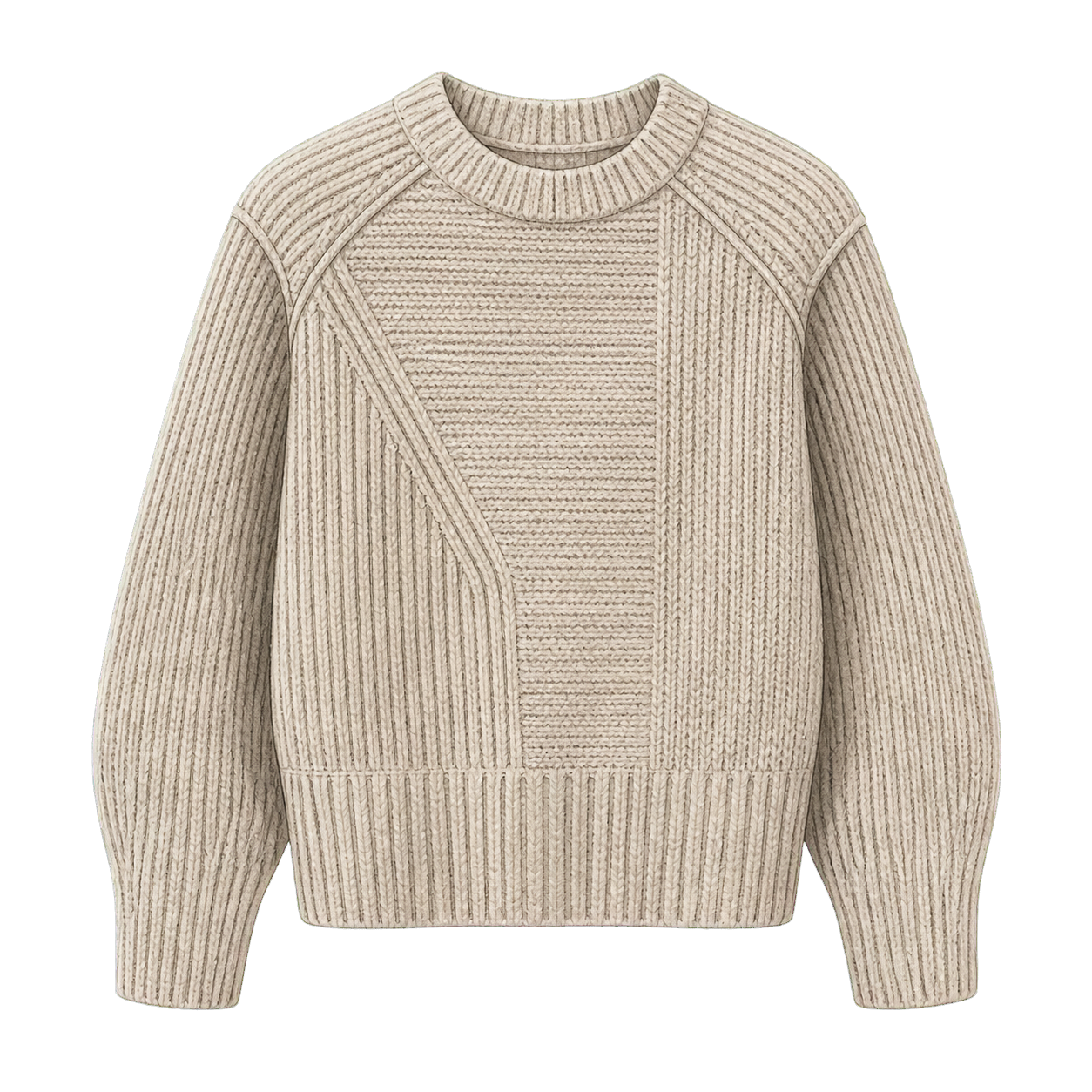 02Stone chunky rib wool crew
One chunky knit for a month when about 24 nights fall below -10°C. Deep ribs trap still air, and a stone crew is thick enough to wear alone in a heated restaurant on Saint-Jean Street once the parka comes off. The colour sits quietly between the red parka and the charcoal trousers, so the patterned tuque and mittens stay the only loud notes.
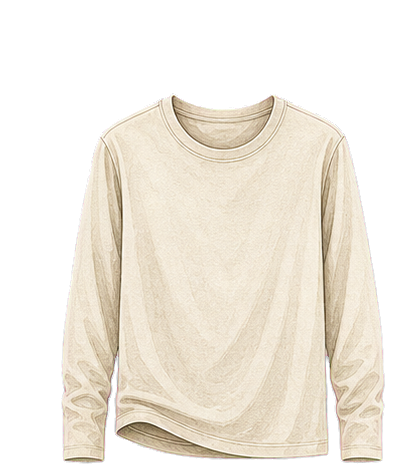 03Oat merino long-sleeve crew base layer
Wear it every day. With the low below -20°C on about 11 nights, the base layer is the warmth you cannot see, and merino holds it without the bulk that stops a parka zipping. It stays warm after an hour of walking the ramparts leaves you damp, and it dries overnight in a hotel room.
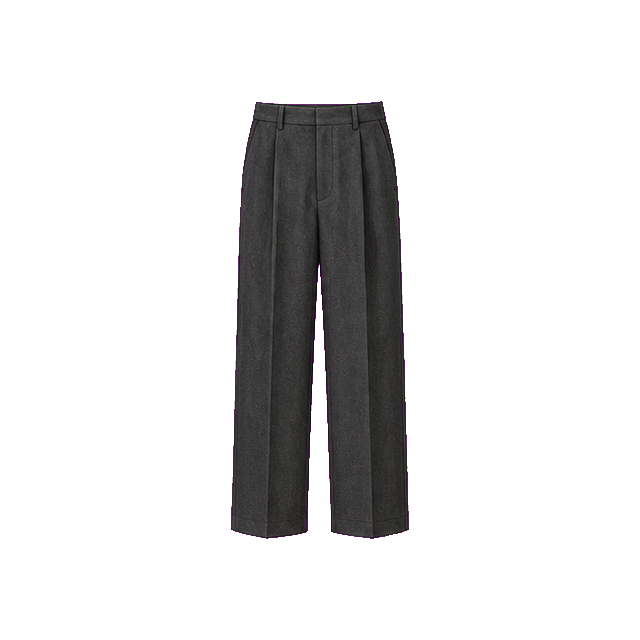 04Charcoal pleated straight wool trousers
Wool trousers with thermal leggings under them beat jeans on a -16.7°C night: wool keeps its warmth when snow melts on the hem, and denim does not. The straight charcoal leg falls over the boot shaft so snow stays out, hides the grit the city spreads on the stairs, and is smart enough for a table in the Old Town.
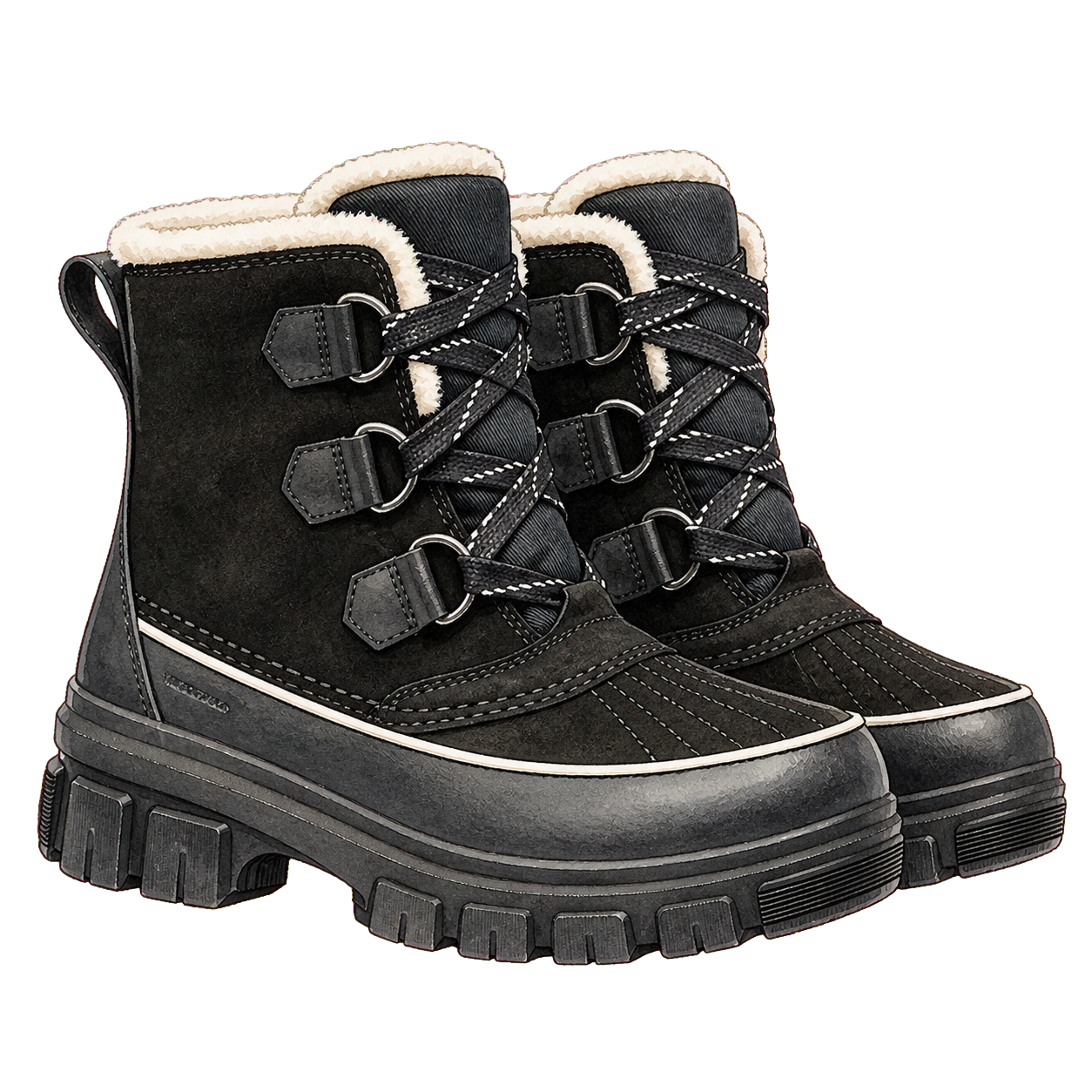 05Black insulated snow boots, cream lining, deep lug
Snow lies 30 cm or deeper on about 21 January days, which is taller than the shaft of an ankle boot, and crossing a snowbank to the kerb is part of every walk. A rubber shell keeps the foot dry, the insulated upper and cream lining hold heat at -16.7°C, and a deep lug grips the packed snow on the Breakneck Stairs and Côte de la Montagne.
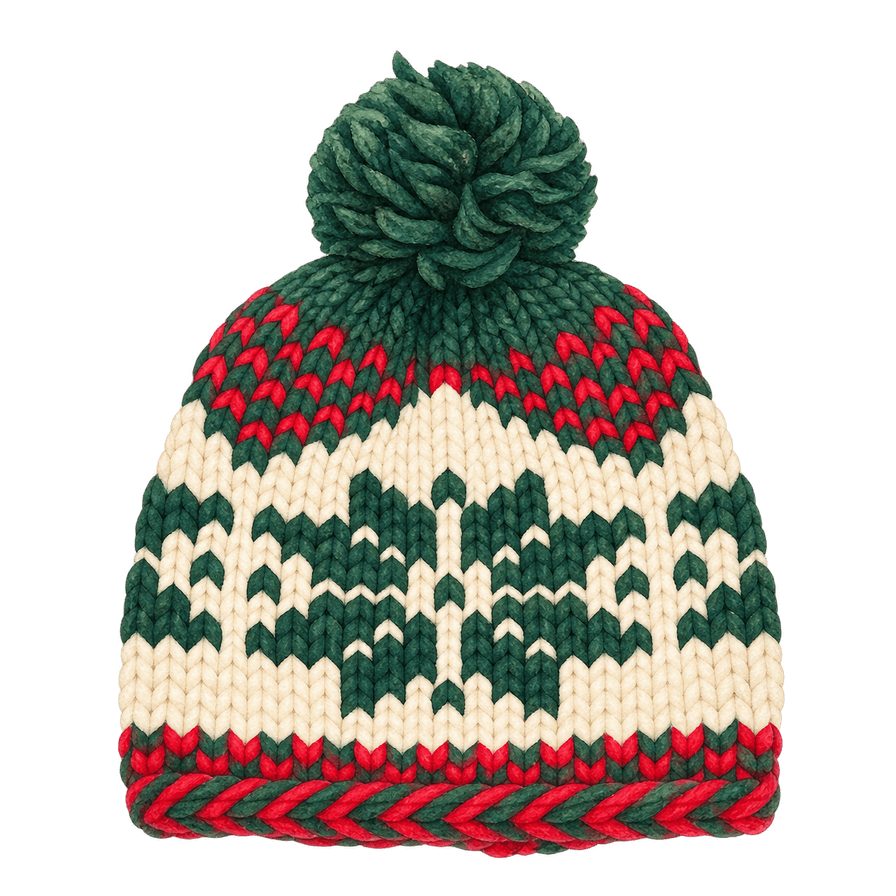 06Cream patterned wool tuque with a pompom
Keep it on, indoors and out. The Hôtel de Glace holds between -3°C and -5°C inside whatever the weather, so even the warmest room of the evening wants a hat, and outside the wind chill passes -20 on about 19 days. A thick double-knit tuque covers your ears completely, and its red and green stripes pick up the parka and the mittens.
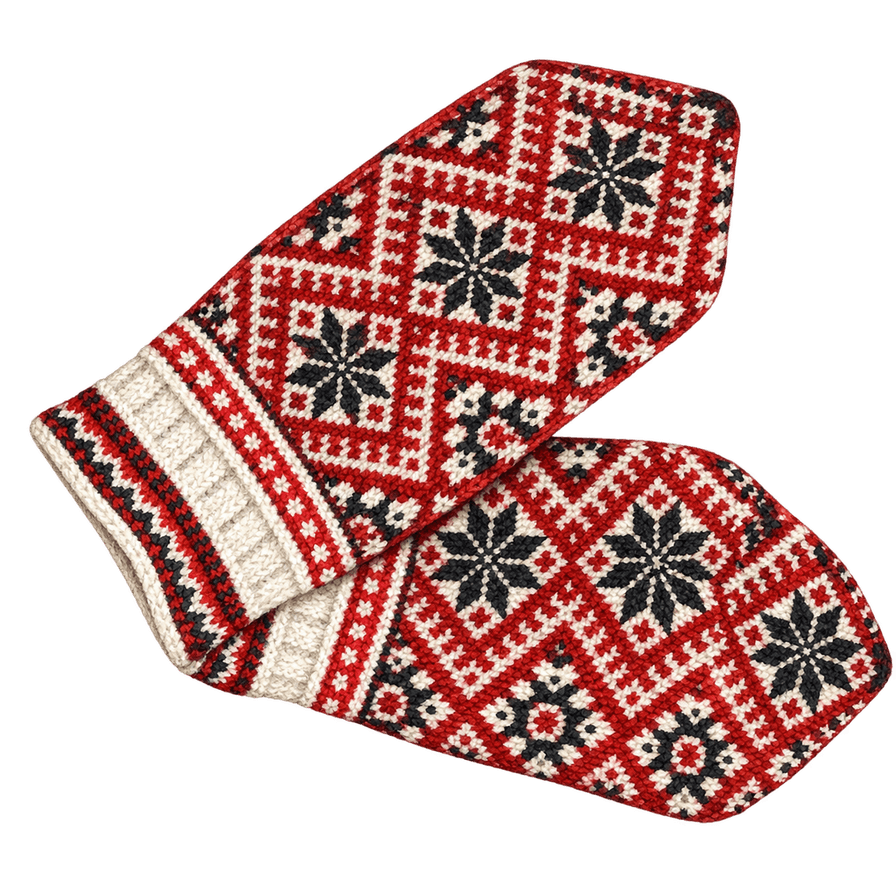 07Red double-knit patterned wool mittens
Mittens, because fingers inside one shell share their heat, and at -16.7°C that matters more than dexterity. Double-knit wool is twice as thick as a single knit, keeps its warmth if snow wets it, and pulls up under the parka's storm cuffs. The black stars and white diamonds make them the pair you can find in a coat pocket.
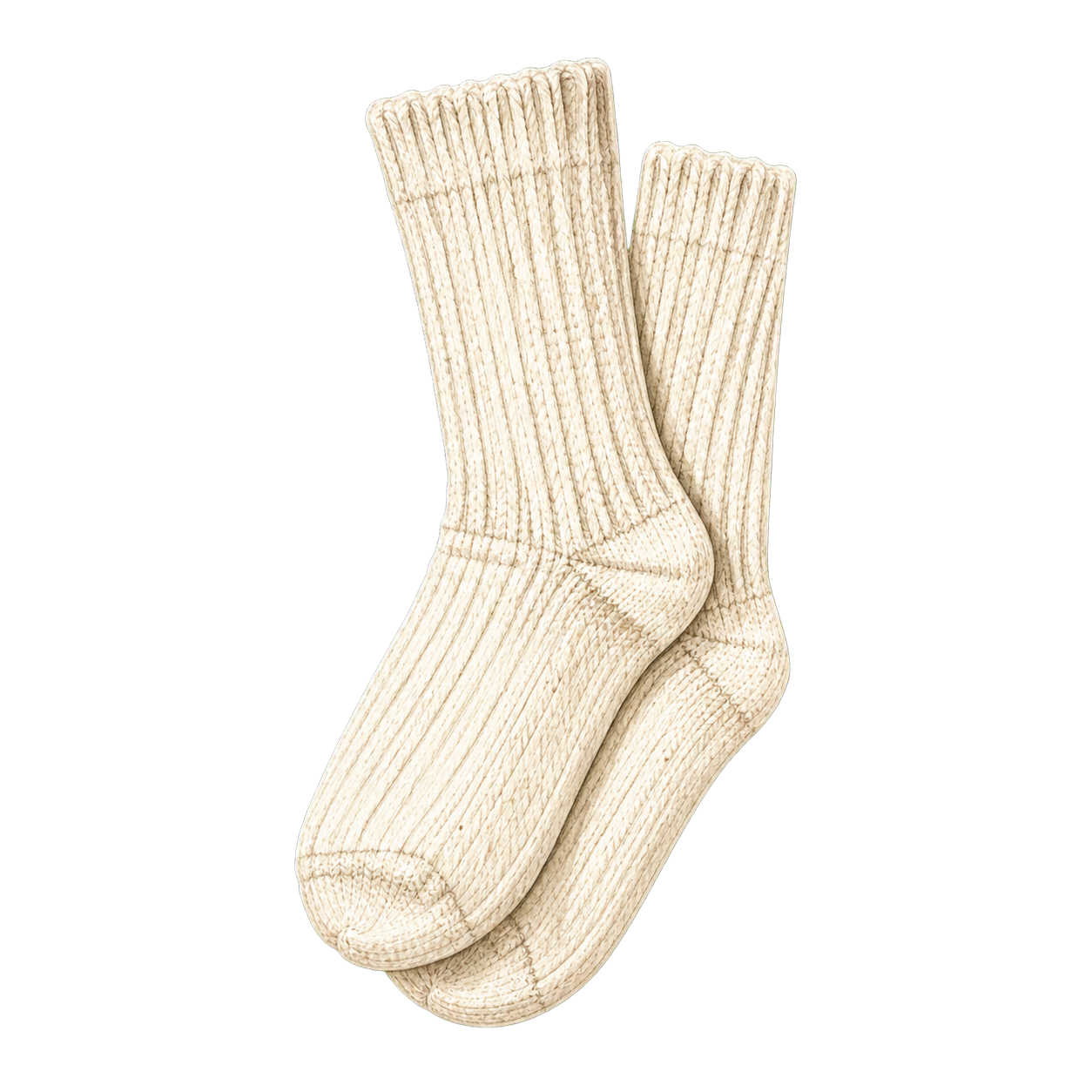 08Cream ribbed wool socks
Toes feel a -20°C night first, and cotton socks turn cold as soon as your feet warm up and sweat inside an insulated boot. Ribbed wool crew socks stay warm when damp and cushion a day on Old Québec's stairs. Pack two pairs and change into the dry one at lunch.
Day to night
Oat merino under the stone chunky crew · charcoal wool trousers over thermal leggings · wool socks · black snow boots · red parka zipped, hood down · patterned tuque · red mittens. The ramparts and the Dufferin Terrace at ten, while the sun is up, then lunch indoors on Saint-Jean Street.
Same layers with the second pair of socks · parka zipped, hood up over the tuque · mittens on. The Hôtel de Glace by shuttle from the Old Town, an ice bar at -3°C to -5°C inside, then back to a dark street after the 4:22pm sunset, heading for -17°C / 1°F.
A suggested look — red knee-length down parka, stone ribbed knit, cream patterned pompom tuque, red patterned wool mittens, charcoal wool trousers.
What to avoid
- Ankle boots — snow lies 30 cm or deeper on about 21 days
- A wool overcoat on its own — the wind chill passes -30 on about 8 days
- Fingered gloves — mittens keep fingers together at -16.7°C
- Waiting for a thaw — the high climbs above freezing on fewer than 5 days
- Shopping on 1 January — Québec shops are closed until the 2nd
Frequently asked questions
The coldest month, with snow that stays. Environment and Climate Change Canada's averages for Québec/Jean Lesage International Airport give January a daily maximum of -7.1°C / 19°F and a minimum of -16.7°C. The high stays at or below freezing on 26 days, the low falls below -10°C on about 24 nights and below -20°C on about 11, and the wind chill drops below -20 on about 19 days. Snowfall averages 69.1 cm over about 15 days, and snow on the ground averages 38 cm, reaching 46 cm by month-end. Daylight grows from 8h 36m on 1 January to 9h 35m on the 31st.
A cardinal-red knee-length down parka with a hood, a stone chunky rib crew, an oat merino base layer, charcoal pleated wool trousers with thermal leggings, black insulated snow boots with a deep lug, a cream patterned wool tuque, red double-knit wool mittens and two pairs of cream ribbed wool socks. That covers a -7°C / 19°F afternoon on the ramparts, an evening at -3°C to -5°C inside the Hôtel de Glace and a -17°C / 1°F walk back to the hotel. Leave ankle boots, jeans and fingered gloves at home.
Your full outdoor kit, hat on. Québec City's tourism office lists the Hôtel de Glace at Village Vacances Valcartier as reopening from 4 January to 13 March 2027, with an ice bar serving drinks in glasses made of ice, a chapel of snow and ice, and a shuttle from Old Québec. Valcartier says the temperature inside varies only between -3°C and -5°C, whatever it is outside, which makes it warmer than a January night in the Old Town but still well below freezing. Keep the parka zipped and the tuque and mittens on. Overnight guests sleep in arctic sleeping bags, and Valcartier recommends "just thermal underwear to keep humidity to a minimum".
Late January, if you want deep snow and the run-up to Carnaval; early January, to see the Hôtel de Glace in its first weeks. The ice hotel reopens on 4 January 2027, and the Carnaval de Québec follows from 5 to 14 February 2027. Snow cover builds all month, from about 27 cm at the start to 46 cm by the 31st on Environment and Climate Change Canada's figures, and daylight grows from 8h 36m to 9h 35m, with sunset moving from about 4:06pm to 4:45pm. Shops close on Friday 1 January and reopen on normal hours on Saturday the 2nd.
January is about four degrees colder by day and five at night, and it keeps its snow. Our December guide gives -3°C / 27°F afternoons and -11°C / 12°F nights. Environment and Climate Change Canada's figures put January at -7°C / 19°F and -17°C / 1°F, with 69.1 cm of snow against December's 75.7, so December actually snows more. The difference is what stays: average snow depth doubles from 18 cm to 38 cm, and the wind chill falls below -20 on about 19 days instead of 11. January wants taller boots, a longer parka and mittens rather than gloves.
Long parkas, tall boots and wool tuques, from a city with a long winter trade. La Maison Simons began in 1840, when John Simons and James Orkney opened a dry goods store at the corner of St. Jean and St. Angèle streets in Old Québec, and it has stood at 20 Côte de la Fabrique since 1870, according to the McCord Stewart Museum. J.B. Laliberté, founded in 1867 by Jean-Baptiste Laliberté on St. Joseph Street East in Saint-Roch, began by making and selling fur coats and still restyles and stores fur at the same address. On a January street, the local choice is warmth first: a hood, a tuque and mittens.
Sources
- Environment and Climate Change Canada — 1991–2020 climate normals, Jean Lesage International Airport (YQB) stationECCC counts a precipitation day at ≥0.2 mm, below the US threshold, so rain-day counts run slightly higher than US comparators.
- Environment and Climate Change Canada — Canadian Climate Normals 1991–2020, Québec/Jean Lesage Intl A (7016294) — accessed 2026-09-26
- Québec Cité (official tourism) — Hôtel de Glace, reopens 4 January – 13 March 2027 — accessed 2026-09-27
- Village Vacances Valcartier — Hôtel de Glace FAQ (inside temperature between -3°C and -5°C) — accessed 2026-09-27
- Carnaval de Québec — 2027 edition, 5 to 14 February 2027 — accessed 2026-09-27
- Gouvernement du Québec — Opening hours of shops on public holidays, 2026–2027 — accessed 2026-09-26
- McCord Stewart Museum, EncycloFashionQC — La Maison Simons (Old Québec, 1840; 20 Côte de la Fabrique since 1870) — accessed 2026-09-27
- McCord Stewart Museum, EncycloFashionQC — J.B. Laliberté (St. Joseph Street East, Québec City, 1867; fur) — accessed 2026-09-27