What to Wear in Taipei in January
Taipei in January: 19°C / 66°F afternoons, 14°C / 57°F nights, drizzle on 13.5 days and nearly 6 cold-surge days under the dimmest skies of the year.
- Navy quilted jacket — keeps its warmth in drizzle, and it stays on from morning to night
- Tan cable-knit cardigan — the extra layer for nearly 6 cold-surge days, not December's 2.4
- Slate merino long-sleeve — wool against the skin at 77% humidity, and enough alone on a 19°C / 66°F afternoon
- Deep brown wool-flannel trousers — wool on the legs for 2.8 days with a low of 10°C or below
- Brown leather brogue boots — closed, laced and lug-soled for 13.5 wet days
- Rust wool beanie — 10°C is where CWA's yellow low-temperature alert begins
- December's trench-and-scarf plan — January brings nearly 6 cold-surge days, not 2.4
- Jeans — denim soaks up drizzle on 13.5 wet days and stays cold all evening
- Canvas sneakers — wet through on the first drizzly walk
- Plans that need sun — 75.9 hours in the month, the least of the year
Pack for the cold, wet day as the default. The Central Weather Administration (CWA) puts Taipei's January at 19.4°C by day and 14.2°C at night, with 90.5mm of rain over 13.5 days, 77% humidity and 75.9 hours of sun, the least of any month. Its winter summary says northern cold air reaches Taiwan hardest in January, "以1月最為顯著", and counts nearly 6 January days in Taipei touched by a cold surge, against 2.4 in December. The station also averages 2.8 January days with a low of 10°C or below, the level at which CWA issues its yellow low-temperature alert. December's trench and scarf answer a few cold days. January needs an insulated jacket that works in drizzle, a chunky knit over merino, wool trousers, laced leather boots and a hat, with the umbrella still in the bag.
December in Taipei has a few cold days. January is built out of them: nearly six cold-surge days, the dimmest skies of the year and drizzle on 13.5 days. Pack for the cold, wet day as the normal one.
The capsule
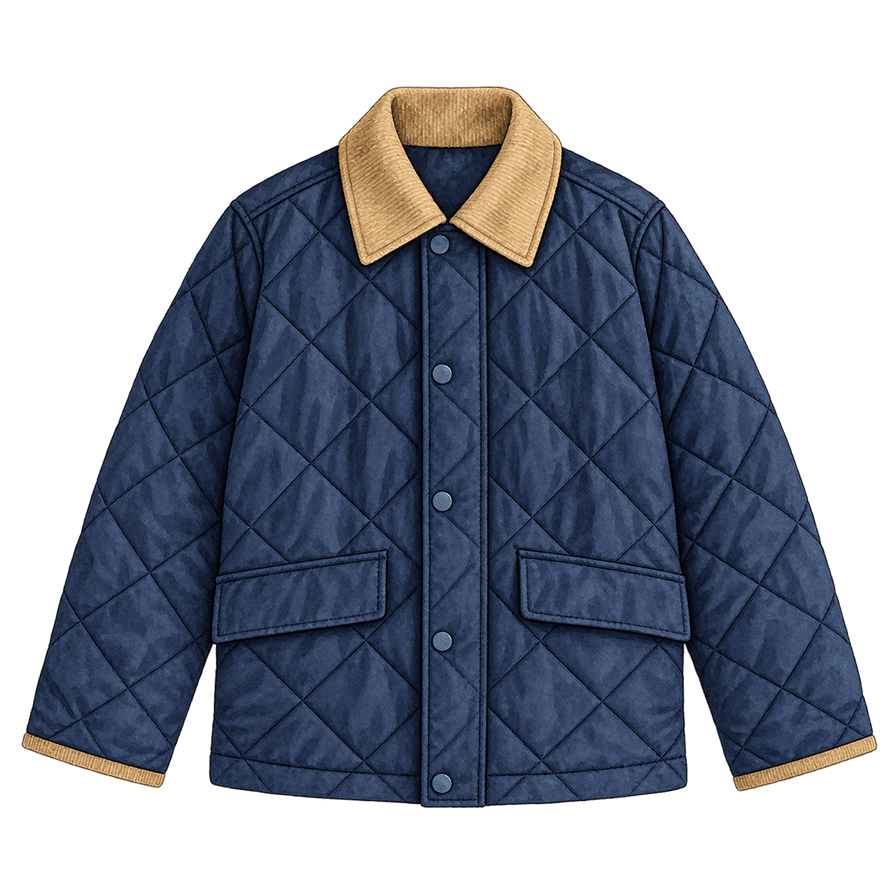 01Navy quilted jacket, tan corduroy collar, hip length
Wear it from the first morning to the last night. A navy diamond-quilted jacket keeps its warmth in drizzle, which a cotton trench does not, and CWA counts 13.5 wet days in a Taipei January. The snap front closes to a tan corduroy collar on a 14°C / 57°F evening, hip length leaves your legs free on MRT stairs, and the flap pockets hold an EasyCard and a phone.
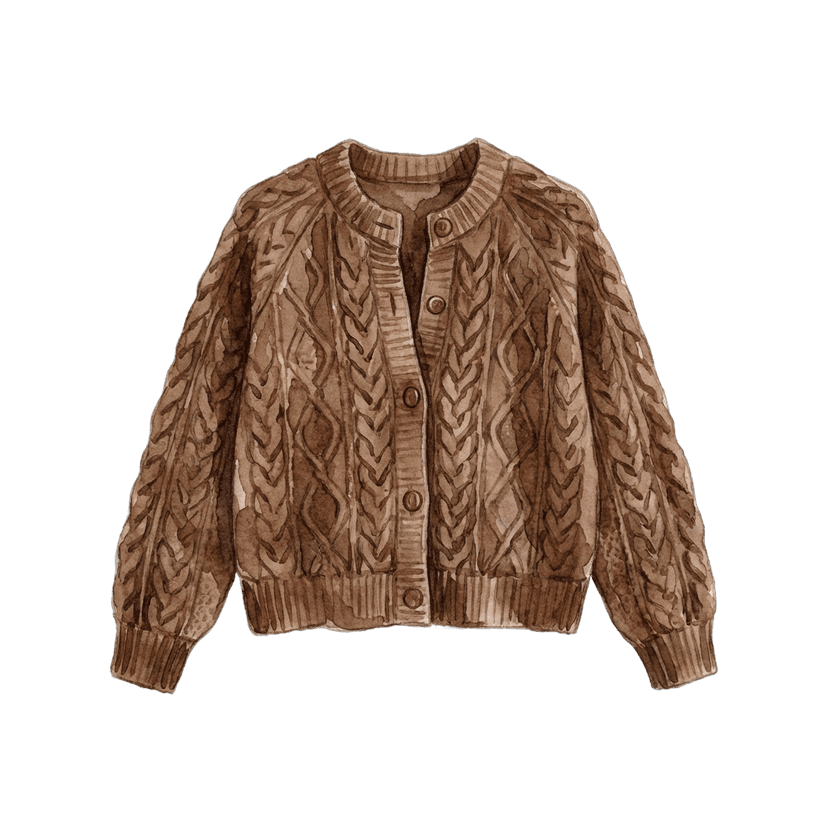 02Tan-brown chunky cable-knit cardigan
This is the cold-surge layer, and in January you reach for it on most days: CWA counts nearly 6 days when a cold surge reaches Taipei, against 2.4 in December. A chunky cable cardigan buttons under the quilted jacket at 14°C / 57°F and comes off at a 19°C / 66°F lunch to hang on a chair back. Tan picks up the jacket's corduroy collar and the brown boots.
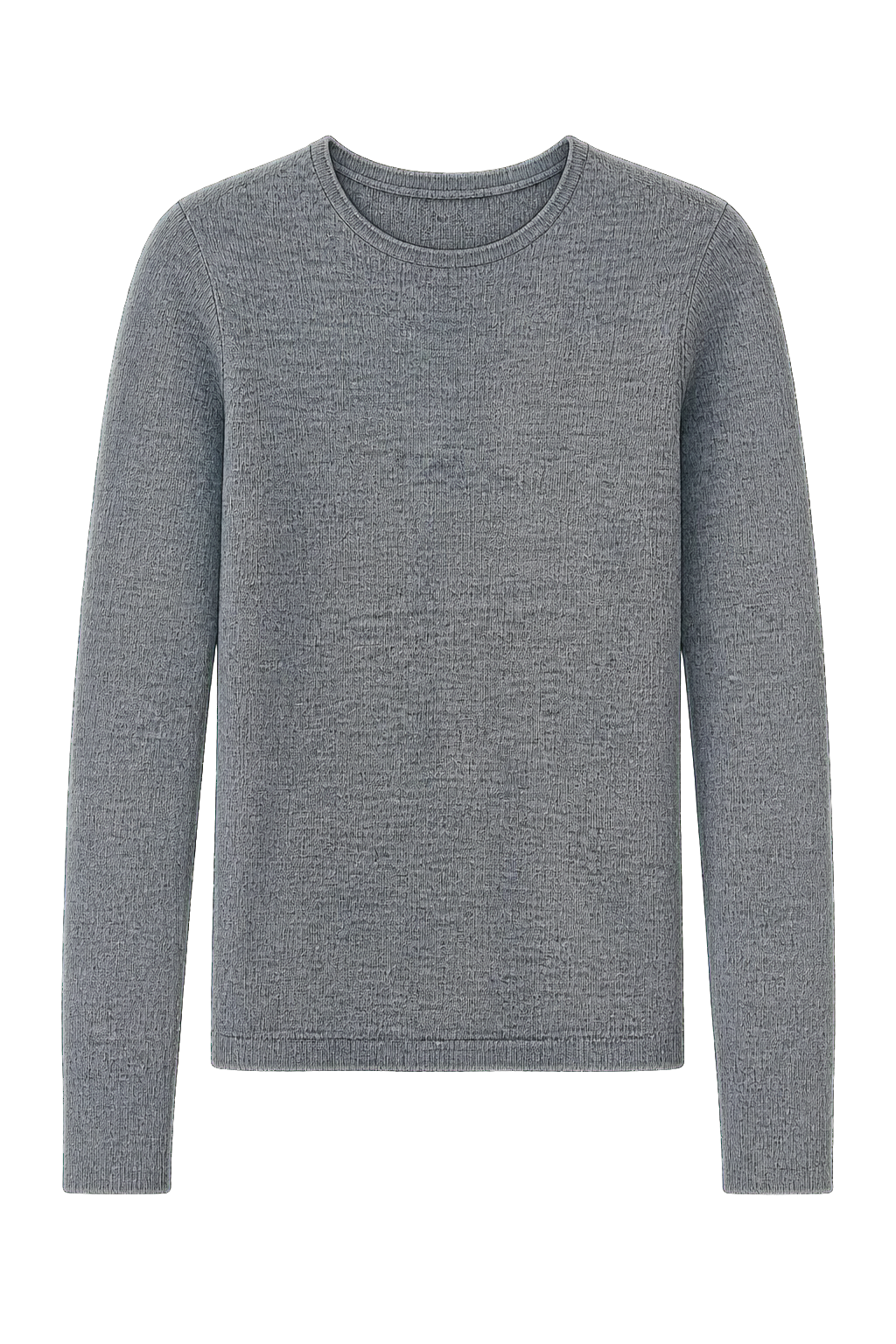 03Slate grey merino long-sleeve crew
Merino, not cotton, against the skin. At 77% humidity with drizzle on 13.5 days, a cotton tee turns clammy once the cuffs get wet, while a fine slate merino crew stays warm. Alone under the open jacket it covers a 19°C / 66°F afternoon in Da'an, and under the cardigan it is the base for a cold-surge morning.
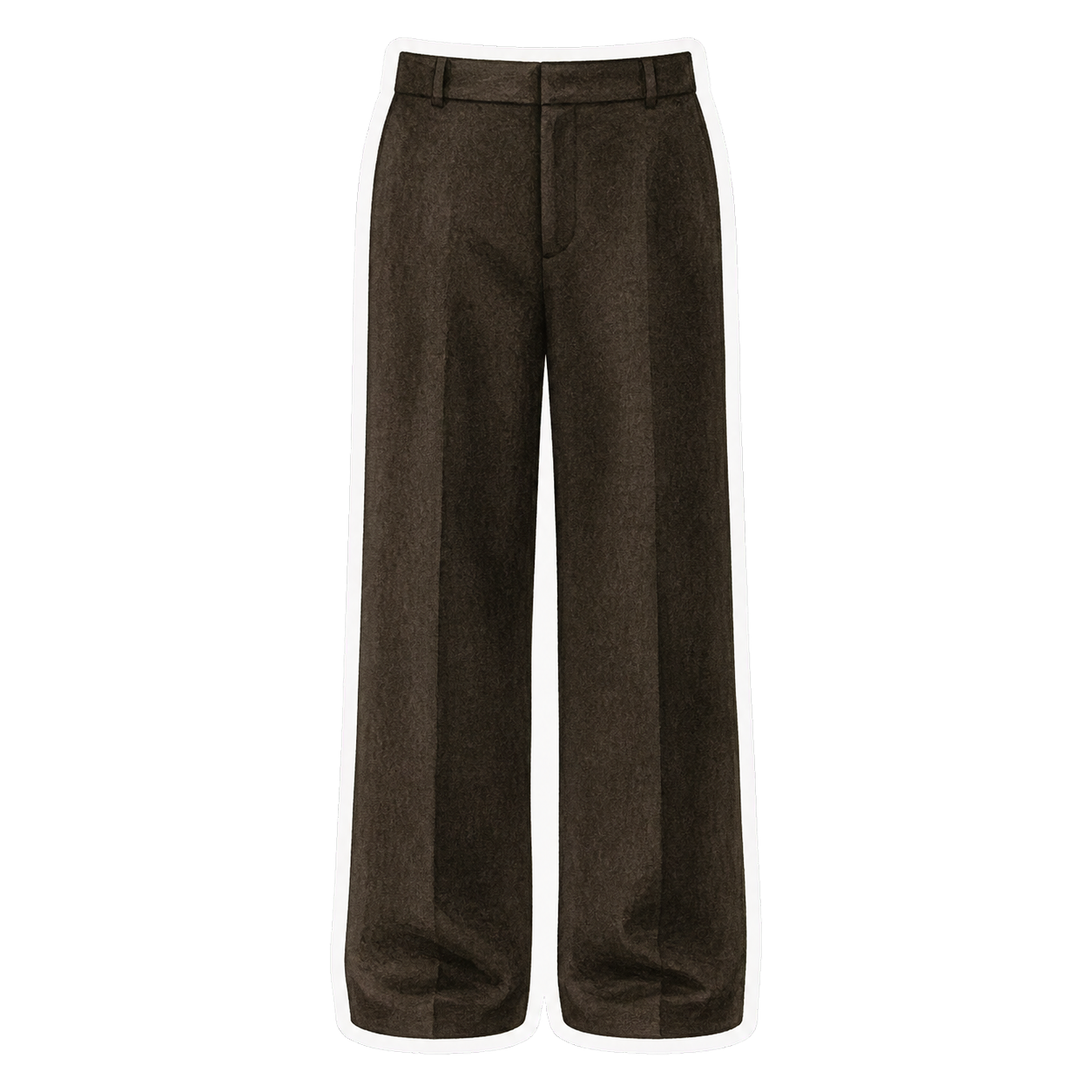 04Deep brown wool-flannel straight trousers
Wool on the legs, because the Taipei station averages 2.8 January days with a low of 10°C or below, the most of any month. Deep brown wool flannel keeps its warmth through a damp evening in a way cotton chinos do not, and the dark shade hides the splash from a wet kerb. A straight leg with a pressed crease falls cleanly over laced boots and never catches on them.
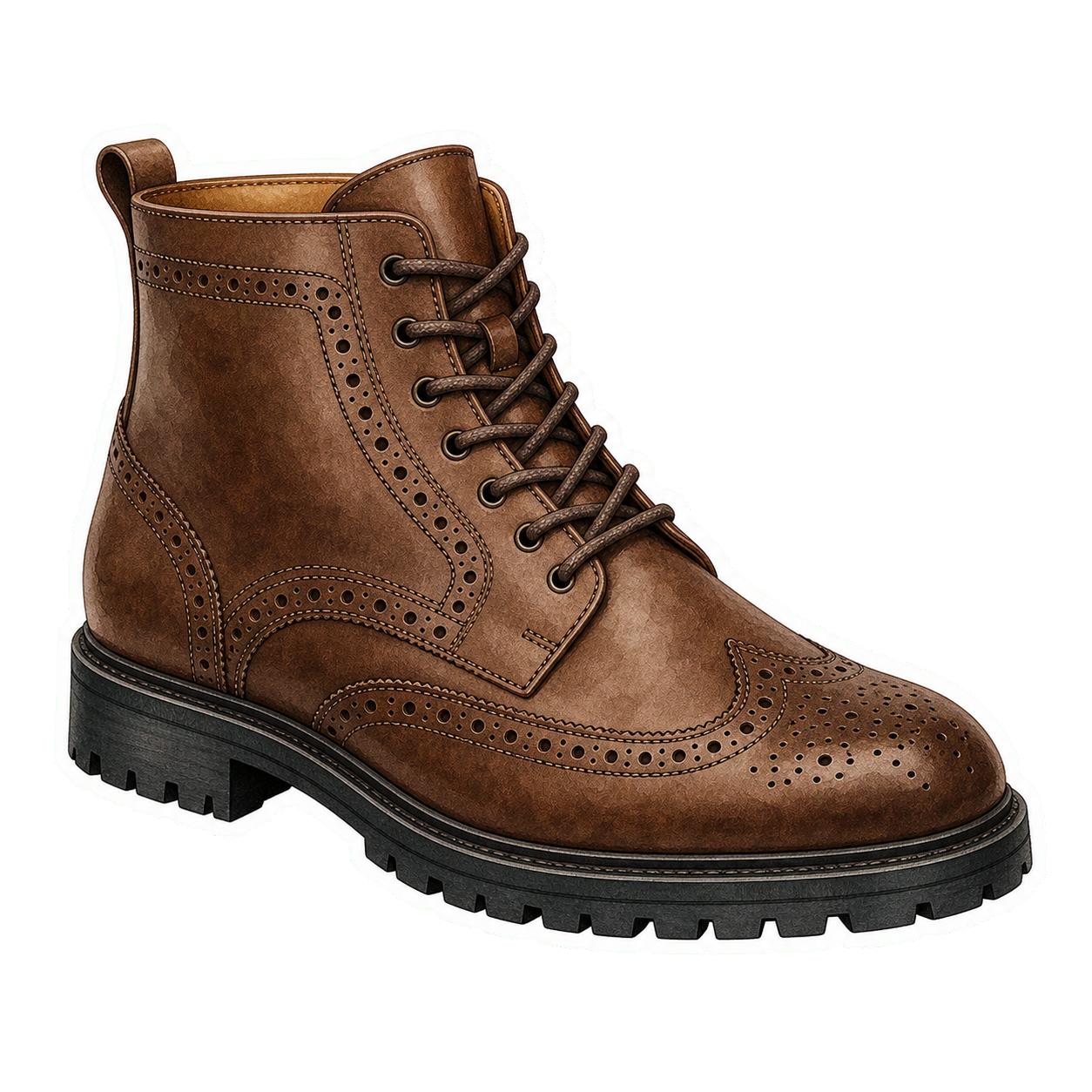 05Brown leather brogue boots, lace-up, lug sole
Closed, laced and lug-soled for a month with 13.5 wet days. Brown leather brogue boots keep drizzle off your socks from the MRT exit to Dihua Street, and the deep lug grips wet paving where a smooth sole slides. Lace them snug: on a cold-surge day these are the shoes you walk in from ten until dinner.
 06Rust ribbed wool beanie
Pack it for the 2.8 January days with a low of 10°C or below, which is where CWA's yellow low-temperature alert begins. A rust ribbed wool beanie folds into a jacket pocket on a 19°C / 66°F afternoon and goes on at dusk, which comes at about 5:25pm mid-month. Rust is the one bright note against navy, slate and deep brown.
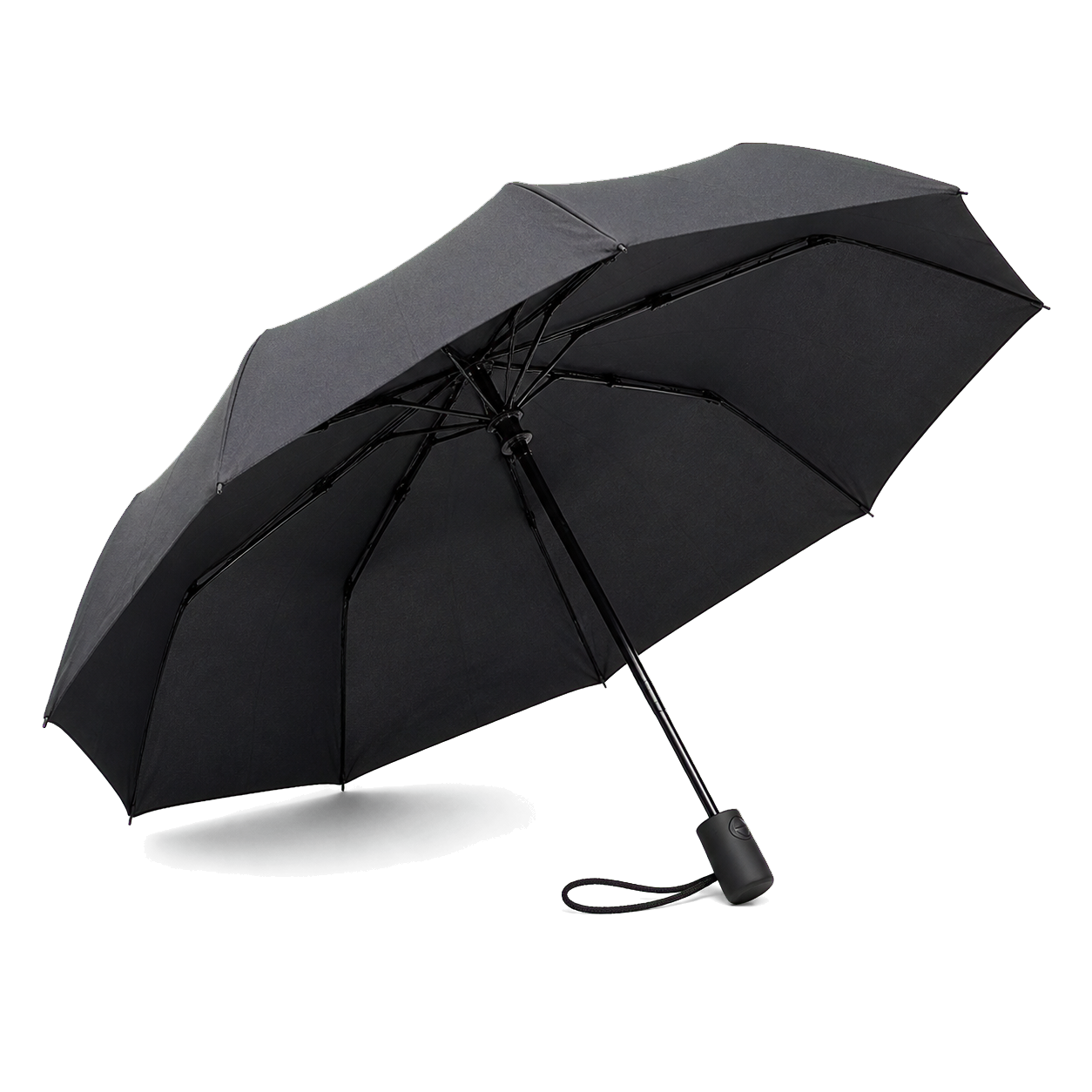 07Charcoal wind-resistant compact umbrella
Drizzle, not downpours: 90.5mm spread over 13.5 wet days is under 7mm a day. CWA's winter summary also says the East Asian northeast monsoon is at its strongest in January, so pick a compact built to resist wind rather than the cheapest canopy at a convenience store. Charcoal hides street grime on a grey day under CWA's January average of 8 tenths of cloud, and the wrist loop keeps it on you while you pay at a stall.
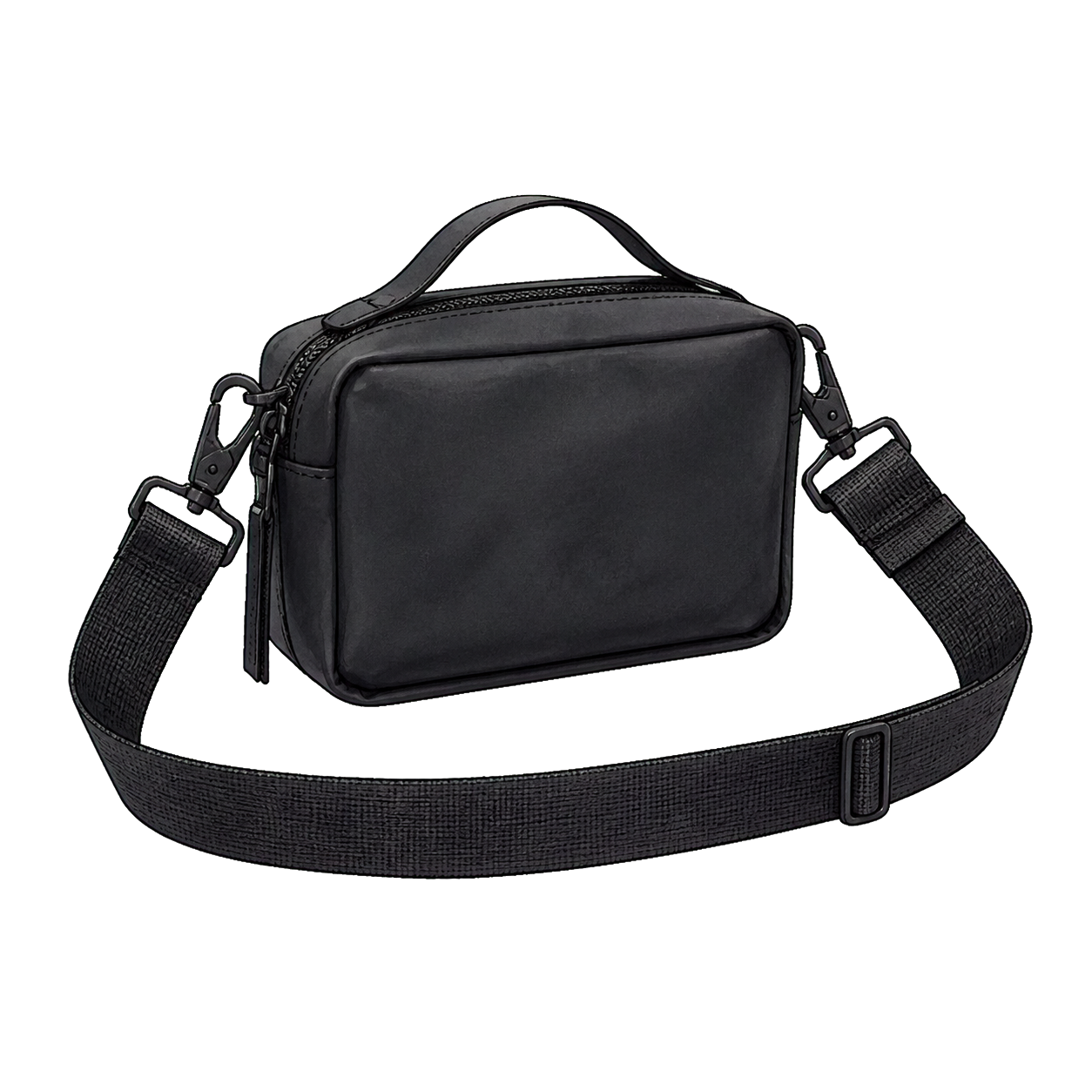 08Black water-resistant crossbody, top zip
Wear it in front, zipped. A black coated-fabric crossbody with a sealed top zip keeps a phone and an EasyCard dry on a drizzly walk and wipes clean at the hotel, where leather would mark. It sits flat under the open jacket in the crowded lanes around Dihua Street, and black is the one piece in the capsule that needs no care at all.
Day to night
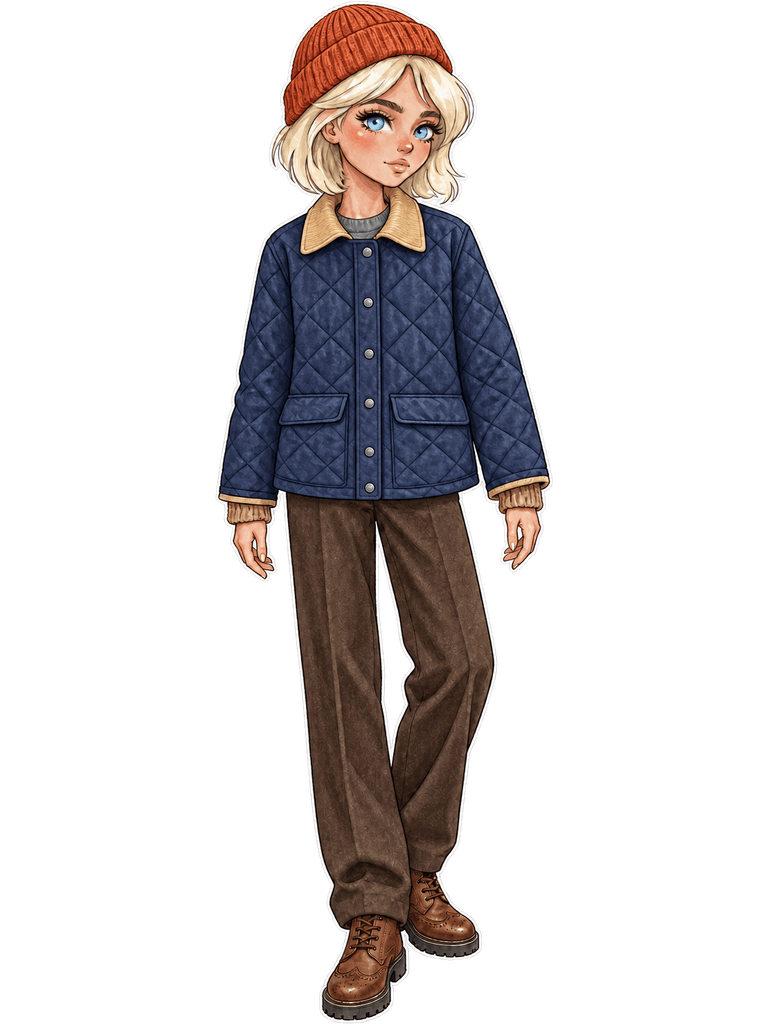
Quilted jacket snapped shut · tan cable cardigan over the slate merino · deep brown wool trousers · brown brogue boots · rust beanie · charcoal umbrella. A cold-surge morning: the National Palace Museum at ten, with the galleries as the plan for the wettest hours.
Cardigan off, jacket open over the slate merino · deep brown wool trousers · brogue boots · black crossbody worn in front · umbrella at the wrist. Dihua Street and the fabric stalls of Yongle Market before the upper floors close at 6pm, then dinner in Dadaocheng after a 5:25pm sunset.
A suggested look — navy diamond-quilted jacket, tan cable-knit cardigan, slate grey merino crew, deep brown wool trousers, brown brogue boots.
What to avoid
- December's trench-and-scarf plan — nearly 6 cold-surge days in January, against 2.4
- Jeans — denim soaks up drizzle on 13.5 wet days
- Canvas sneakers — wet through on the first drizzly walk
- Sun-dependent plans — 75.9 hours in the month, the least of the year
- Leaving the umbrella behind — northern Taiwan's rain climbs toward 5mm a day in January
Frequently asked questions
Per the Central Weather Administration (CWA) monthly means for the Taipei station, January's average daily maximum is 19.4°C and the average minimum 14.2°C, rounding to 19°C / 66°F and 14°C / 57°F, with a monthly mean of 16.4°C. Rain totals 90.5mm across 13.5 days, counted from 0.1mm, and relative humidity averages 77.4%. Sunshine drops to 75.9 hours, the least of any month, under an average of 8 tenths of cloud. The station averages 2.8 days with a low of 10°C or below, and CWA's winter summary counts nearly 6 January days affected by cold surges. Daylight runs from about 10h 36m on 1 January to 11h 00m on the 31st.
A navy quilted jacket, a tan chunky cable-knit cardigan, a slate merino long-sleeve, deep brown wool-flannel trousers, brown leather brogue boots, a rust wool beanie, a charcoal wind-resistant umbrella and a black water-resistant crossbody. That covers a 19°C / 66°F afternoon with the jacket open, a 14°C / 57°F night with everything buttoned, and the cold-surge days when the low reaches 10°C. Leave the jeans and the canvas sneakers at home: January brings drizzle on 13.5 days, and both stay wet.
Lunar New Year's Day falls on Saturday 6 February 2027, and Taiwan's government calendar gives a seven-day holiday from Thursday 4 to Wednesday 10 February. That makes late January the run-up. Dihua Street's New Year market is the centre of it: Mayor Chiang Wan-an described Dihua in 2026 as the city's oldest street and the one with the most New Year feeling, "迪化街更是歷史最悠久也是最有年味的一條街". The 2026 market ran until 15 February and widened its smoke-free zone into the side lanes; the 2027 dates are not yet published. Dress for a narrow, crowded street in drizzle: the quilted jacket closed, the crossbody in front, boots you can stand in for an hour.
Early January for a long weekend, late January for the New Year build-up. Taiwan's 2027 government calendar makes Friday 1 to Sunday 3 January a three-day holiday for New Year's Day. The last days of the month lead into the Lunar New Year holiday, which starts on 4 February, and into the Dihua Street market season; in 2026 that market ran until 15 February. Pack the same capsule for either half, since the cold-surge days and the drizzle belong to the whole month. Sunset moves from about 5:15pm on the 1st to 5:37pm on the 31st, so late January gives you about twenty more minutes of light at the end of the day.
January is about two degrees colder at both ends and a little wetter. CWA puts December at 21.0°C by day and 16.0°C at night, January at 19.4°C and 14.2°C. Rain rises from 88.7mm on 12.6 days to 90.5mm on 13.5, and sunshine falls from 79.6 to 75.9 hours, the lowest of the year. The bigger change is the cold days: December averages 0.9 days with a low of 10°C or below and 2.4 cold-surge days, January 2.8 and nearly 6. Our December guide answers those days with a trench and a navy scarf. January replaces the trench with a quilted jacket and adds a chunky cardigan, wool-flannel trousers and a beanie.
A quilted or padded jacket over a knit, closed shoes and an umbrella at hand. For a Taiwanese label built for this weather, look at oqLiq, a performance-wear brand based in Tainan's West Central District that describes its clothes as "functional garments suited for humid urban climates". For the heritage side, go to Yongle Market on Dihua Street. The city's market office dates it to 1908, when it opened as a public food market; it was rebuilt and reopened in 1985, and today its third floor is fabric sellers and tailors, one of whom makes qipao to order. The upper floors open 9am to 6pm and close on Sundays.
Sources
- Central Weather Administration (CWA) — 1991–2020 climate normals, Taipei (CWA station 466920) stationRead from CWA's Monthly Mean climate statistics page (30-year averages, 1991–2020) on 27 September 2026. CWA counts a precipitation day at ≥0.1 mm, a lower threshold than the ≥1 mm used by JMA, so Taipei's wet-day counts run higher than Japan's for the same rain.
- Central Weather Administration — Monthly Mean, Taipei, 1991–2020 — accessed 2026-09-26
- Central Weather Administration — 季節特徵概述:冬季 (Taipei cold-surge days) — accessed 2026-09-26
- Central Weather Administration — 低溫特報 criteria — accessed 2026-09-26
- DGPA — 行政院核定116年(西元2027年)政府行政機關辦公日曆表 (New Year 1–3 Jan; Lunar New Year 4–10 Feb, 初一 6 Feb) — accessed 2026-09-27
- Taipei City Commerce Office — 2026台北年貨大街「奔年貨」, Dihua Street, to 15 Feb 2026 — accessed 2026-09-27
- Taipei City Market Administration Office — 臺北市公有永樂市場 (founded 1908, reopened 1985; hours) — accessed 2026-09-27
- Taipei City Market Administration Office — 永樂市場布業專區 (third-floor fabric and tailoring stalls) — accessed 2026-09-27
- oqLiq — About (Taiwan-based performance wear, Tainan) — accessed 2026-09-27