What to Wear in Seoul in January
Seoul in January: 2°C / 36°F afternoons, −6°C / 21°F nights, frost on 29 of 31 nights and no mild week to wait for.
- Ivory mid-calf down coat — zipped to the chin, because every ten-day stretch averages about 2°C by day
- Charcoal merino base — the layer that carries the nine or ten days that never thaw
- Ivory heavy wool crew — one thick knit that comes off in a heated café
- Forest-green chinos over a thermal legging — the month's one colour, with warmth underneath
- Black pac boots with a shearling cuff — snow on about 6 days, then ice on the pavement
- Ivory earmuffs and leather mittens — ears and fingers go first at −6°C / 21°F
- Waiting for a mild week — the last ten days average 1.9°C by day, the coldest of the three
- Cropped trousers or short socks — a bare ankle on 29 frost nights
- A rain shell — about four wet days all month, much of it snow
- Bare ears at the New Year sunrise — 7:47am, close to the coldest hour of the day
Pack for cold that does not let up. NOAA's daily record for the Korea Meteorological Administration's Seoul station puts January at 2.0°C by day and −6.2°C at night, and its three ten-day stretches barely differ: 2.0°C, 2.0°C and 1.9°C in the afternoon. Frost comes on about 29 of 31 nights. On nine or ten days the air never climbs above freezing, and on about six nights it drops to −10°C or lower. KMA's normal date for the Han River to freeze at Hangang Bridge is 10 January. So build the warmth from the skin out: merino, heavy wool, a long down coat that zips to the chin, and nothing left bare.
December cools as it goes. January doesn't move: about 2°C by day and −6°C at night in the first ten days, the middle ten and the last ten. There is no mild week to wait for.
The capsule
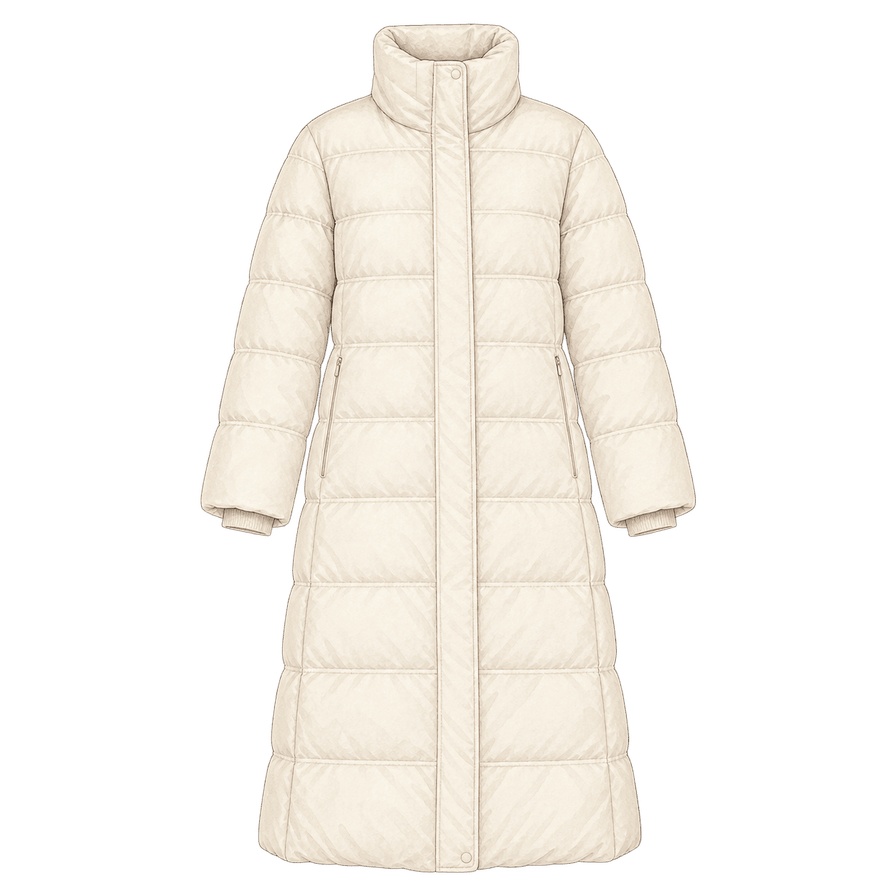 01Ivory mid-calf down coat, stand collar
Zip it to the chin and leave it zipped. January gives you no mild week, so the coat has to handle 2°C / 36°F at noon and −6°C / 21°F at the bus stop, and a mid-calf hem covers the knees that a knee-length coat leaves to the wind off the Han. Ivory rather than black because this is Seoul's driest winter month, about 23mm, and a pale matte shell stays clean when the pavement does. It also finds you in a hillside crowd of black coats before sunrise on the 1st.
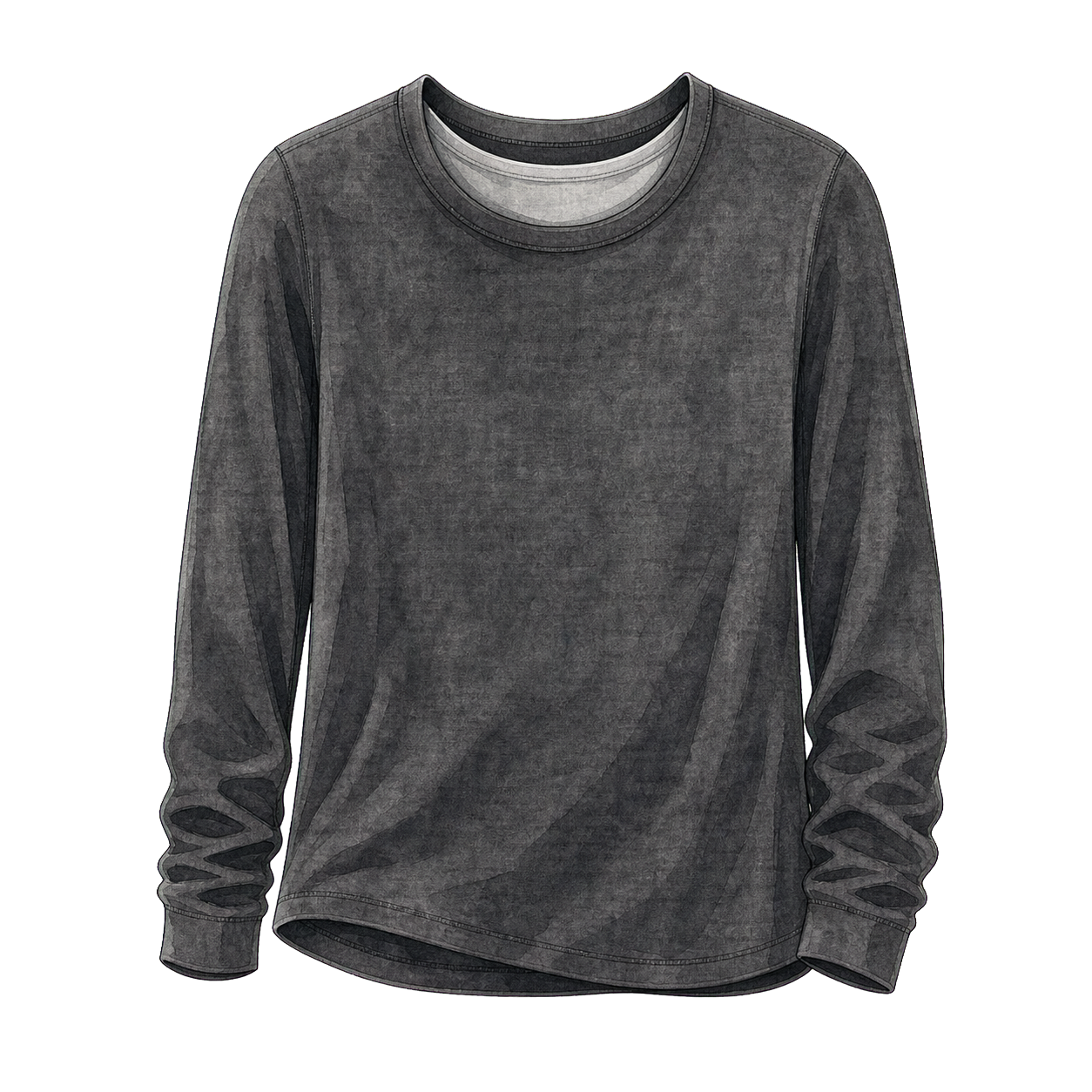 02Charcoal merino long-sleeve base layer
Wool against the skin, every day of the month. On nine or ten January days the air stays below freezing from dawn to dusk, and a fitted merino base holds warmth under the knit without the bulk of a second sweater. It also stays fresh through a week of heated subway cars, where you warm up under the coat and cool again on the platform.
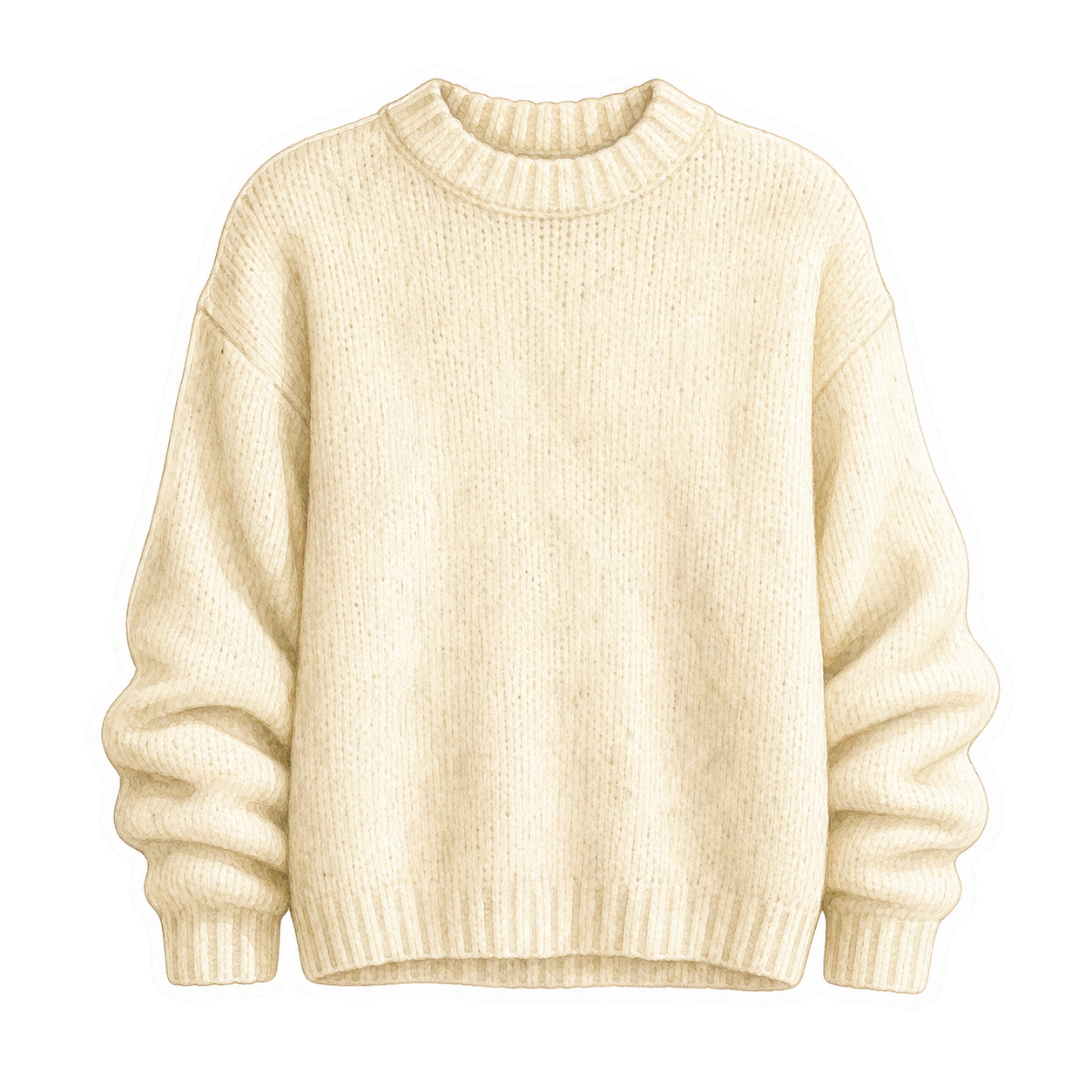 03Ivory heavy-gauge wool crew
One thick knit instead of two thin ones. Seoul heats its subway, its department stores and many of its restaurant floors, and a heavy wool crew pulls off in one move when you sit down to lunch in Ikseon-dong. Dropped shoulders sit under the down coat without dragging at the armholes, and ivory keeps the top half in one tone with the coat.
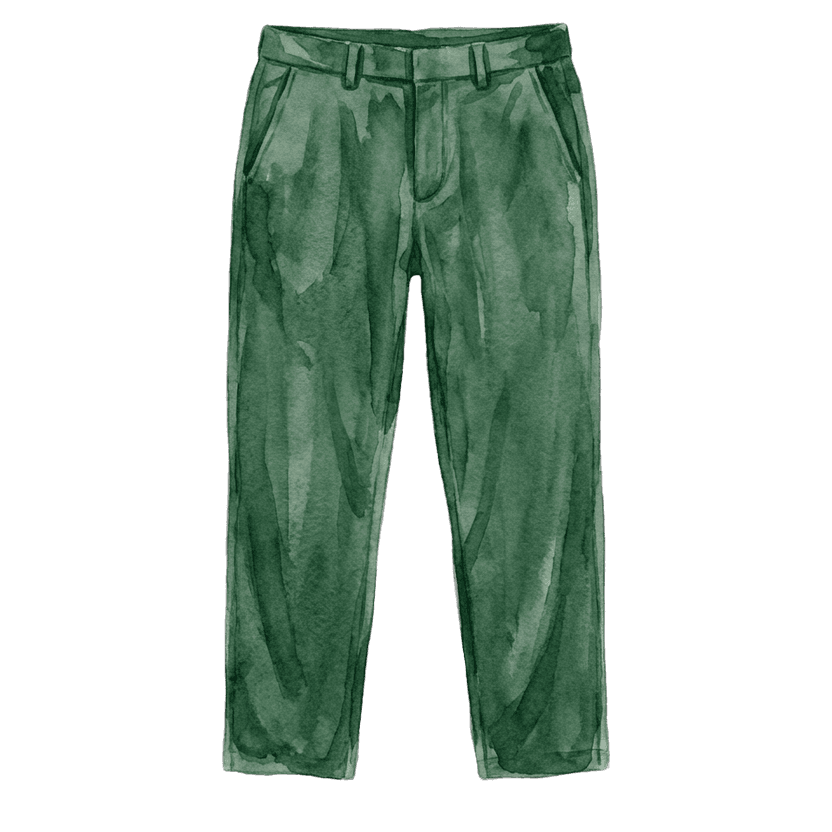 04Forest-green straight chinos
Your one colour, and it goes on the legs. Seoul breaks a winter of black and grey with a single accent, and deep forest green shows below an ivory coat without shouting. Pull a thermal legging on underneath: the straight, relaxed leg leaves room for it, and on the six or so nights at −10°C or below, cotton alone is not enough.
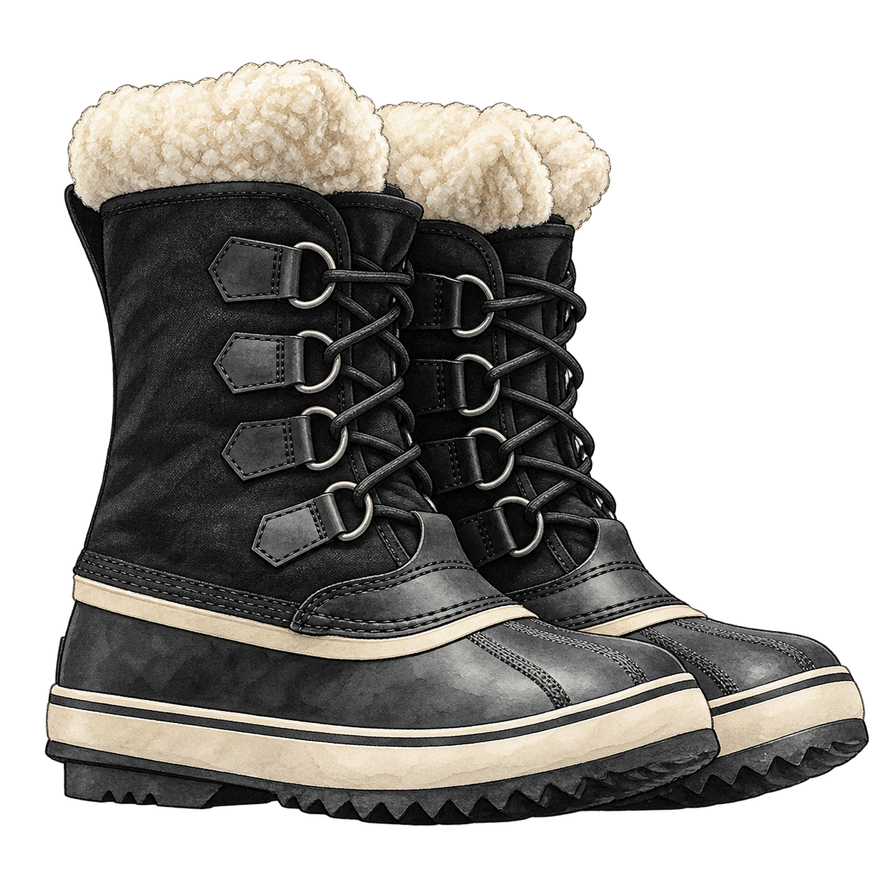 05Black pac boots, cream shearling cuff
NOAA's record flags snow on about six January days, and with frost on 29 of 31 nights whatever falls stays on the pavement as ice. A rubber-shelled lace-up pac boot keeps melt out, the lug grips frozen steps on the way up Achasan, and the shearling cuff closes the gap your trousers leave at the ankle.
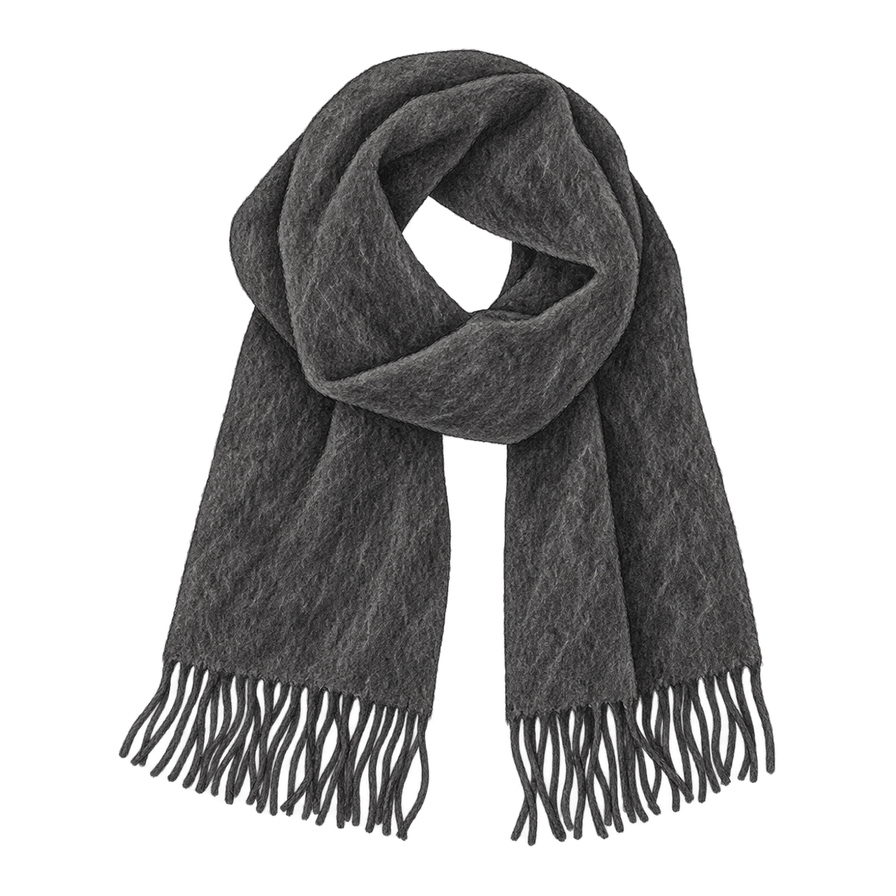 06Long charcoal wool scarf
Wind it twice and tuck the ends into the coat. A stand collar covers the throat but not the back of the neck, and a long brushed-wool scarf closes that gap on an evening walk along Cheonggyecheon. Charcoal matches the mittens and leaves green as the only colour in the outfit.
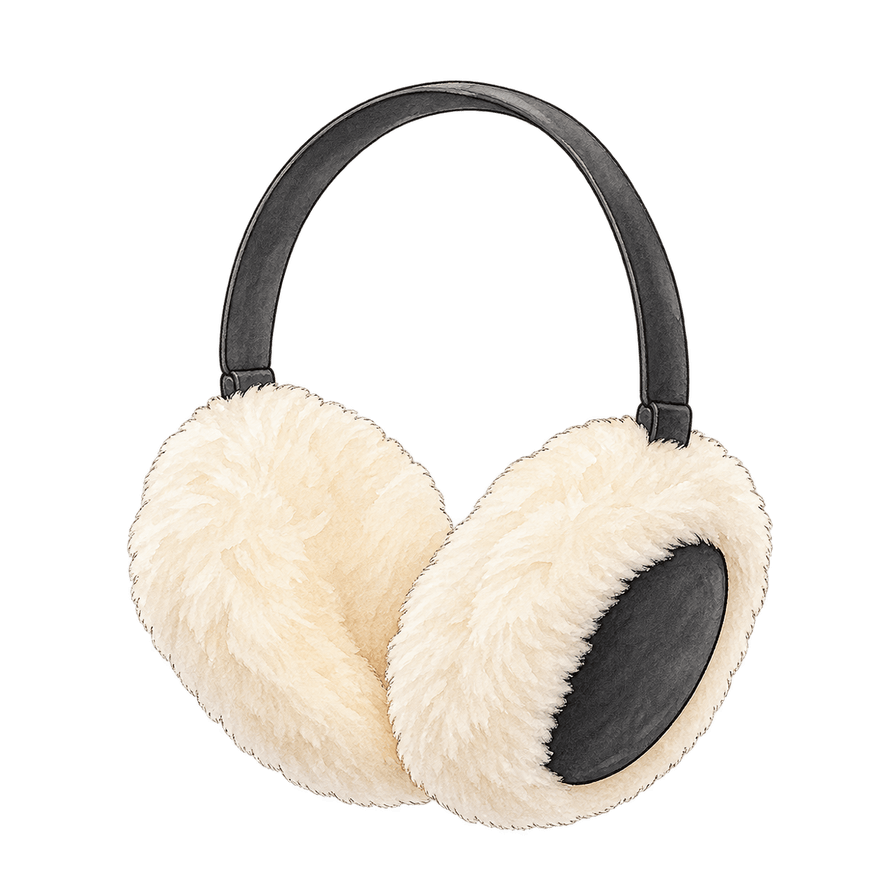 07Ivory faux-shearling earmuffs
Ears go first at −6°C / 21°F. Earmuffs keep them warm without flattening your hair for the rest of the day, which a beanie does, and they fold into a coat pocket the moment you go underground. At a 7:47am New Year sunrise, close to the coldest hour of the day, they decide whether you stay for the sun or leave before it.
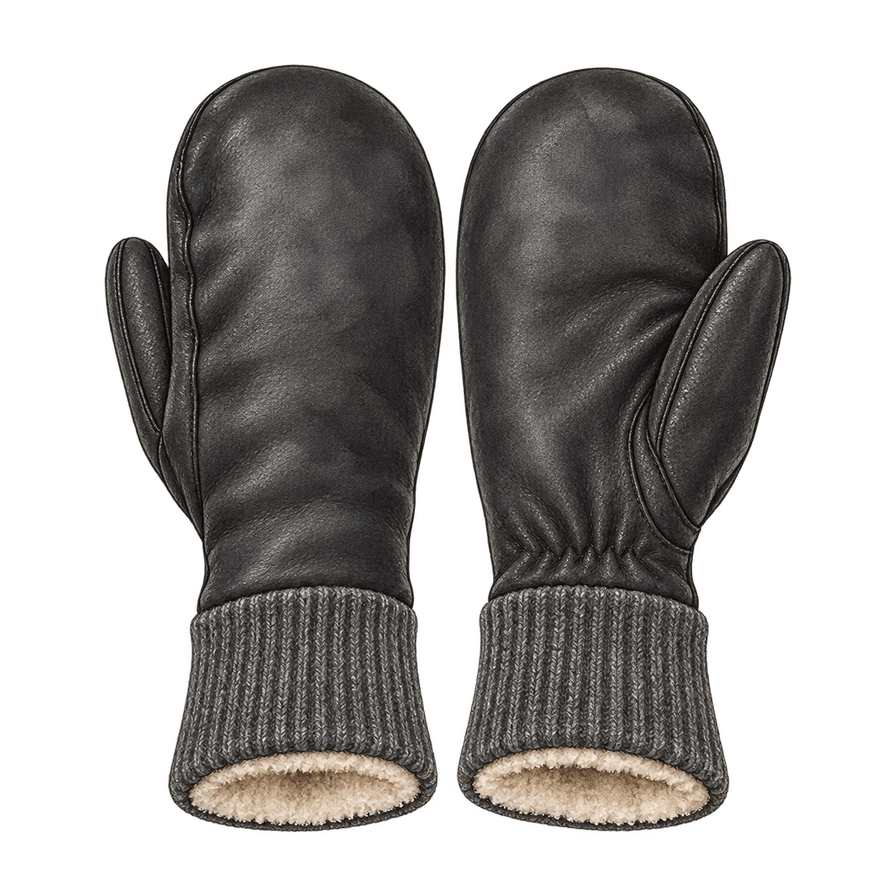 08Charcoal leather mittens, shearling-lined
Mittens, not gloves, for a month this cold: fingers share their warmth inside a mitten, and a shearling lining under leather holds it at a frozen market stall. Pull one off to tap a T-money card at the gate and put it back on before the escalator. The rib cuff tucks under the coat sleeve so no wrist shows.
Day to night
Ivory down coat zipped to the chin · charcoal scarf wound twice · ivory earmuffs · leather mittens · merino base under the ivory crew · green chinos over a thermal · pac boots. Achasan for the 7:47am sunrise on the 1st, or Gyeongbokgung at nine on any other morning, since the last entry in winter is 4pm.
Crew off at the table, coat open over the charcoal base · green chinos · pac boots · scarf and mittens back on for the walk. Dinner in Ikseon-dong after a sunset near 5:35pm, then Cheonggyecheon on foot with the coat closed.
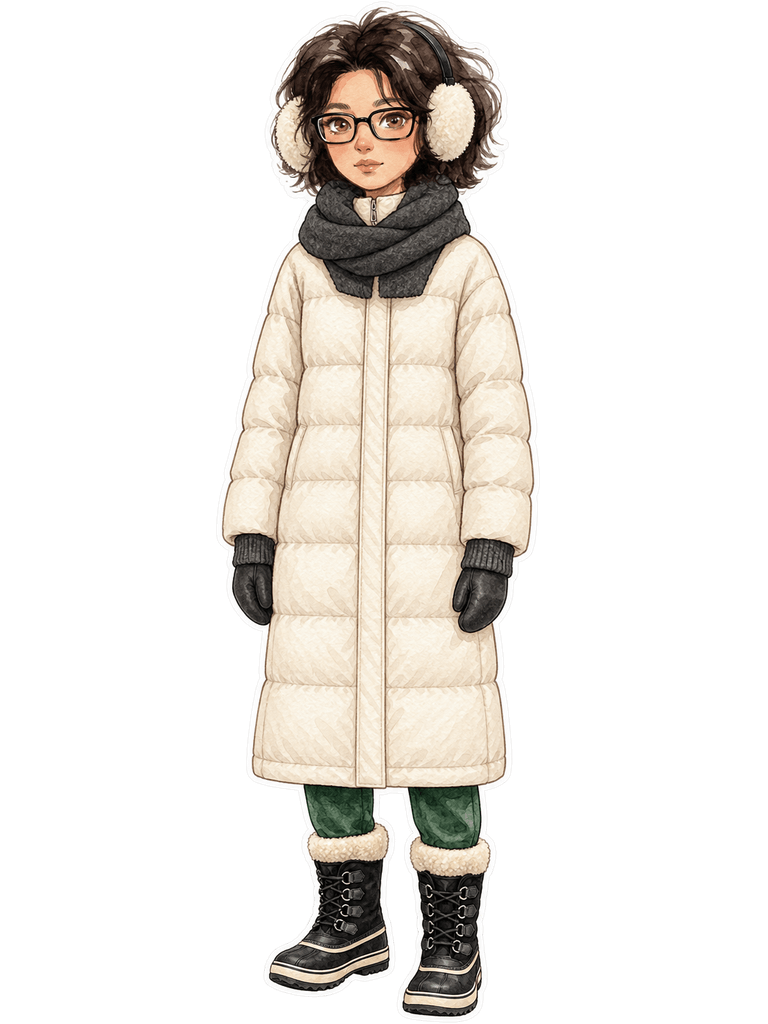
A suggested look — ivory mid-calf down coat, charcoal wool scarf, ivory shearling earmuffs, black rectangular glasses, charcoal leather mittens.
What to avoid
- Waiting for a mild week — every ten-day stretch averages about 2°C by day
- Cropped trousers or short socks — frost on about 29 of 31 nights
- A rain shell — about four wet days all month, much of it snow
- Bare ears at the New Year sunrise — 7:47am, near the day's coldest hour
- An afternoon palace plan — Gyeongbokgung's last entry is 4pm, closed Tuesdays
Frequently asked questions
NOAA NCEI's daily record for Seoul (KMA station 108, 30 Januaries from 1991 to 2020) gives an average high of 2.0°C and a low of −6.2°C, the coldest of any month, and the month barely moves: each ten-day stretch averages about 2°C by day and −6°C at night. Frost comes on about 29 of 31 nights, the air stays below freezing all day on nine or ten days, and about six nights fall to −10°C or lower. It is dry: the record logs 1mm or more on about four days and flags snow on about six. Daylight grows from 9 hours 37 minutes on 1 January to 10 hours 16 minutes on the 31st.
An ivory mid-calf down coat that zips to the chin, a charcoal merino base, an ivory heavy wool crew, forest-green chinos with a thermal legging underneath, black pac boots with a shearling cuff, a long charcoal wool scarf, ivory earmuffs and charcoal leather mittens. That covers a 2°C / 36°F afternoon and a −6°C / 21°F night, and the base and crew come off in a heated café. Leave the rain shell and anything cropped at home.
The sun rises at about 7:47am on Friday 1 January 2027, a public holiday, by the standard solar calculation for central Seoul. The Seoul Metropolitan Government gave the same time for 2026 in its guide to 16 New Year sunrise viewpoints, among them Achasan in the east of the city. Arrive before seven to find a place, which means standing on a hillside through the coldest part of the night, near −6°C / 21°F. Wear the down coat zipped, the scarf wound twice, earmuffs, mittens, a thermal under the chinos and lugged boots for a frozen trail.
Neither is warmer. NOAA's record gives the first ten days 2.0°C by day and −6.1°C at night and the last ten 1.9°C and −6.4°C, so choose by your plans. Early January has the New Year holiday on Friday the 1st, and in the 2025–26 season the city's winter festival ran until 4 January, with the Seoul Plaza skating rink open until 8 February. Mid-January is when the Han River usually freezes: KMA's normal date is 10 January, although in the winter of 2024–25 it held off until 9 February. The Hwacheon Sancheoneo Ice Festival, on a frozen stream in Gangwon Province, runs from 9 to 31 January 2027, its organiser says. Late January gives you sunsets about half an hour later than the 1st.
January is about two degrees colder at both ends: NOAA's record for the same station gives December 4.0°C by day and −4.2°C at night and January 2.0°C and −6.2°C. Frost goes from about 25 nights to about 29, days that never thaw from about seven to nine or ten. The bigger difference is shape: December slides colder through the month, while January holds flat. Our December guide builds on a black knee-length padded coat; January goes to mid-calf, adds a merino base and earmuffs, and trades gloves for mittens.
The long padded coat, zipped, over a knit and straight or wide trousers, with the hood down and something on the ears. Korea JoongAng Daily traces the coat to 1994, when it appeared on the bench in MBC's basketball drama Final Jump, and to a peak in 2017, and most of the street still wears it in black, which is why an ivory one stands out. KMA keeps the other January tradition: since 1906 it has watched a strip of the Han beside Hangang Bridge and declared the river frozen once ice covers it completely, on 10 January in a normal year.
Sources
- NOAA NCEI — 1991–2020 climate normals, Seoul (KMA 108) stationthe Korea Meteorological Administration operates the station; NOAA NCEI computed this month's figures from its global-summary-of-the-day record (47108099999, 30 Januaries). Wet days are counted at 1 mm or more, as on the November and December pages; NOAA's daily rain record for this station is incomplete (a day with no report is written as 0.00), so the count is indicative and no rain total is quoted. Recorded per month because Seoul's earlier pages cite KMA's own normals.
- NOAA NCEI — Global Summary of the Day, Seoul (KMA station 108, 47108099999), 1991–2020 — accessed 2026-09-27
- Korea Meteorological Administration — First Han River freeze of the 2024–25 winter (9 Feb 2025, 30 days after the 10 January normal; observed at Hangang Bridge since 1906) — accessed 2026-09-29
- Seoul Metropolitan Government — 16 New Year sunrise viewpoints in Seoul (first sunrise of 2026 at 7:47am) — accessed 2026-09-29
- Hwacheon Nara Festival (organiser) — 2027 Hwacheon Sancheoneo Ice Festival, 9–31 January 2027 — accessed 2026-09-29
- Korea Tourism Organization (VisitKorea) — Gyeongbokgung Palace: November–February 09:00–17:00, last entry 16:00, closed Tuesdays — accessed 2026-09-29
- Korea AeroSpace Administration — 2027 calendar almanac (월력요항): Seollal Sunday 7 February; holiday 6–9 February including a substitute day — accessed 2026-09-29
- Seoul Metropolitan Government — 2025 Seoul Winter Festa results (12 Dec 2025 – 4 Jan 2026) — accessed 2026-09-27
- Korea JoongAng Daily — Why Koreans can't let go of the long padded jacket (Kim Ji-ye, 30 Nov 2024) — accessed 2026-09-27