What to Wear in Tokyo in August
Tokyo in August: 32°C / 90°F afternoons, 25°C / 77°F mornings, 72% humidity, 15 rain days — tsuyu remnants meet typhoon season.
- Loose cotton-blend or linen midi dresses in light colors
- Uniqlo AIRism tees — worth buying on arrival if you didn't pack enough
- Wide-leg linen trousers + tailored shorts (mid-thigh minimum)
- Breathable mesh sneakers + sport sandals (Teva, Keen, Suicoke)
- Packable rain shell + ¥500 convenience-store vinyl umbrella
- Portable handheld fan (sensu), UV parasol, and a tenugui towel
- Optional yukata for festival nights (Tokyu Hands, Don Quijote)
- Ignore typhoon alerts late month — they cancel trains and flights
- Stilettos to fireworks festivals — Sumida riverbank is hours of standing
- Tank tops at Meiji Jingu or Senso-ji — temples expect covered shoulders
August is Tokyo at peak summer: hot, humid, and alive with festivals. JMA climate data put afternoons at 32°C (90°F), mornings at 25°C / 77°F, humidity at 72%, and 15 rain days as the late summer rainy pattern and typhoon season overlap. Early August still has tsuyu remnants; late August brings typhoons. Between storms are the defining August experiences: Obon (mid-August ancestral festival), fireworks festivals (hanabi taikai) at Sumida, Tokyo Bay, and Jingu, and matsuri (street festivals) in most neighborhoods. Locals dress in lightweight traditional pieces for festivals — yukata (summer kimono), geta (wooden sandals) — or in minimal modern summer outfits. For visitors, the August Tokyo uniform is the July Tokyo uniform plus typhoon preparation: lighter fabrics, one packable rain shell, hydration, a portable fan, and enough rotation for humidity-sweat laundry.
August is Tokyo at peak summer — hot, humid, and alive with festivals. Between storms are Obon, hanabi, matsuri.
The capsule
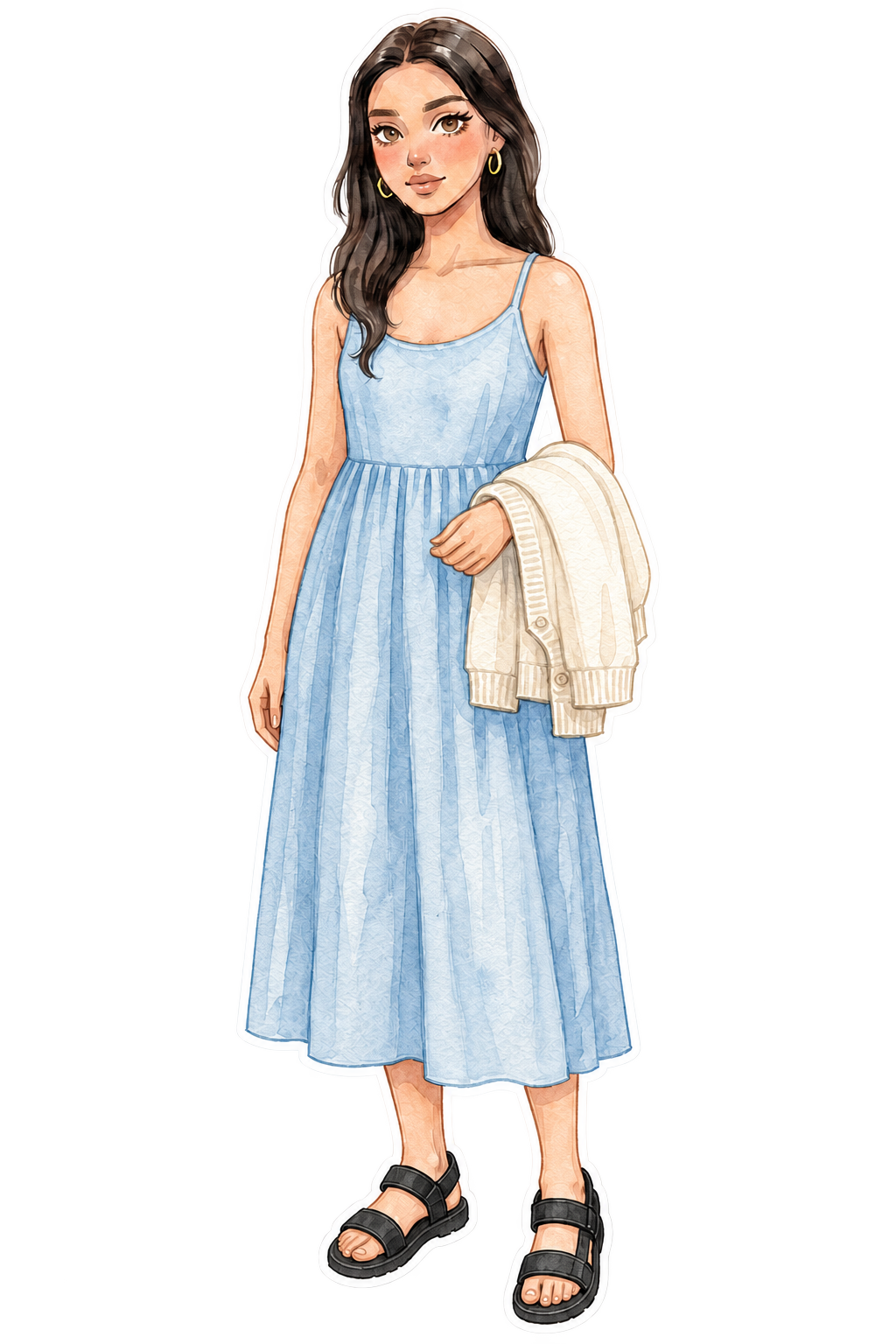
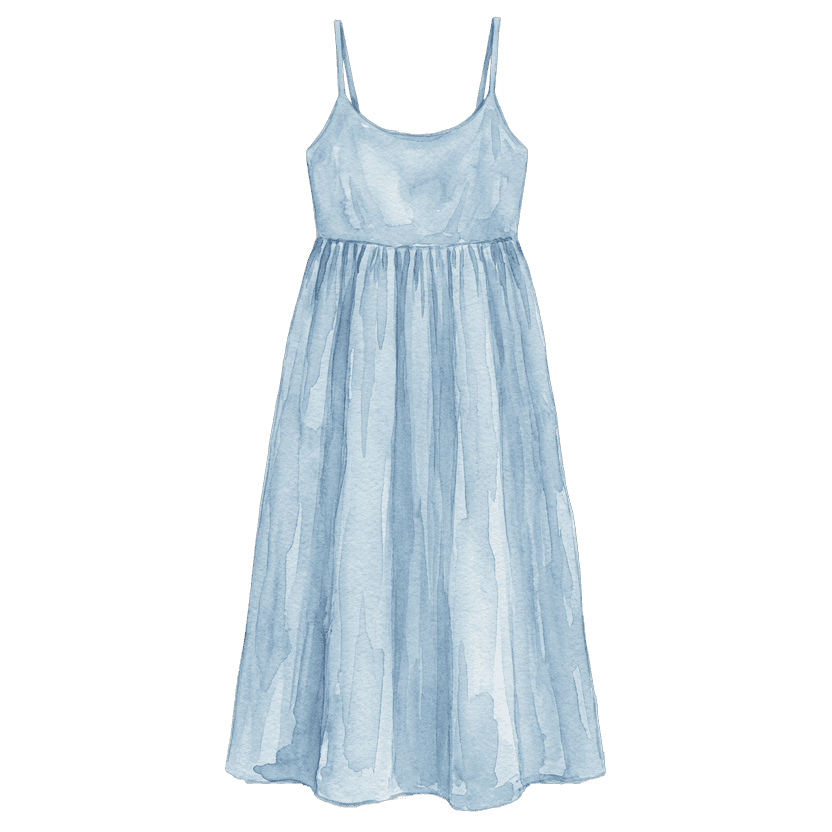 01Powder-blue linen midi dress with spaghetti straps
August heat + humidity demands loose natural fibers and minimal coverage. The gathered bodice and wrinkled linen-look fabric pull air; pair with the cardigan for the train AC swing. Powder blue reflects sun better than cognac or rust, and the strap silhouette frees the shoulders that cotton sleeves seal in.
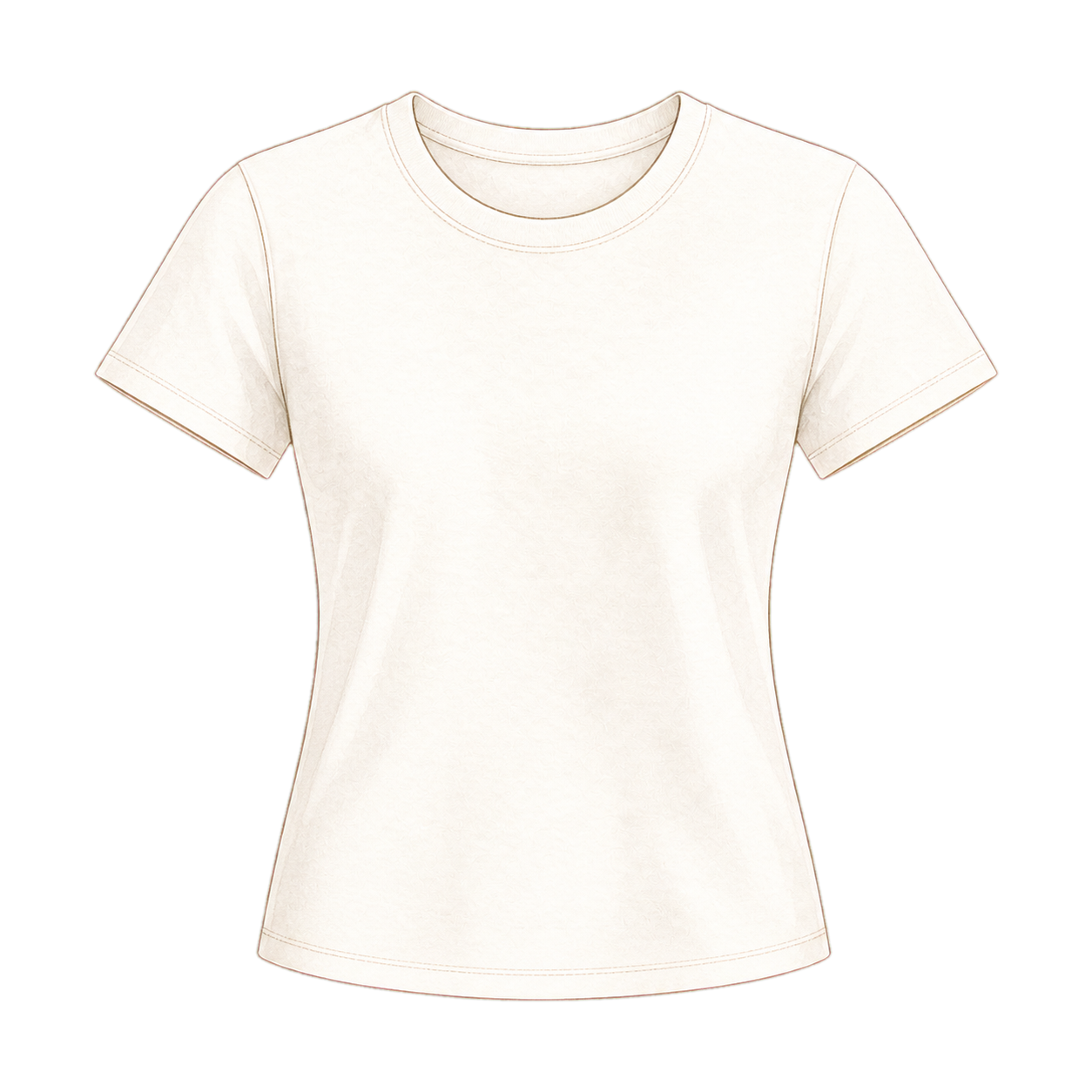 02Fitted white short-sleeve quick-dry tee
Moisture-wicking technical fabric outperforms pure cotton for 72% humidity and works for temple mornings.
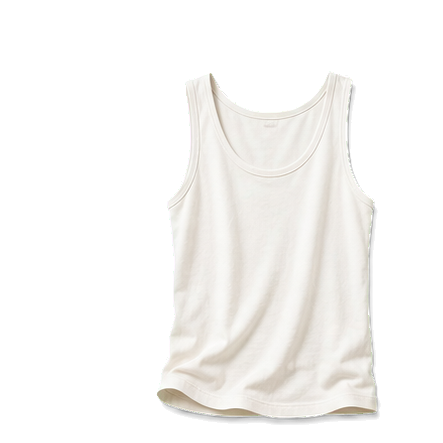 03Ivory quick-dry tank
A second light base layer gives the humidity rotation that Tokyo August requires.
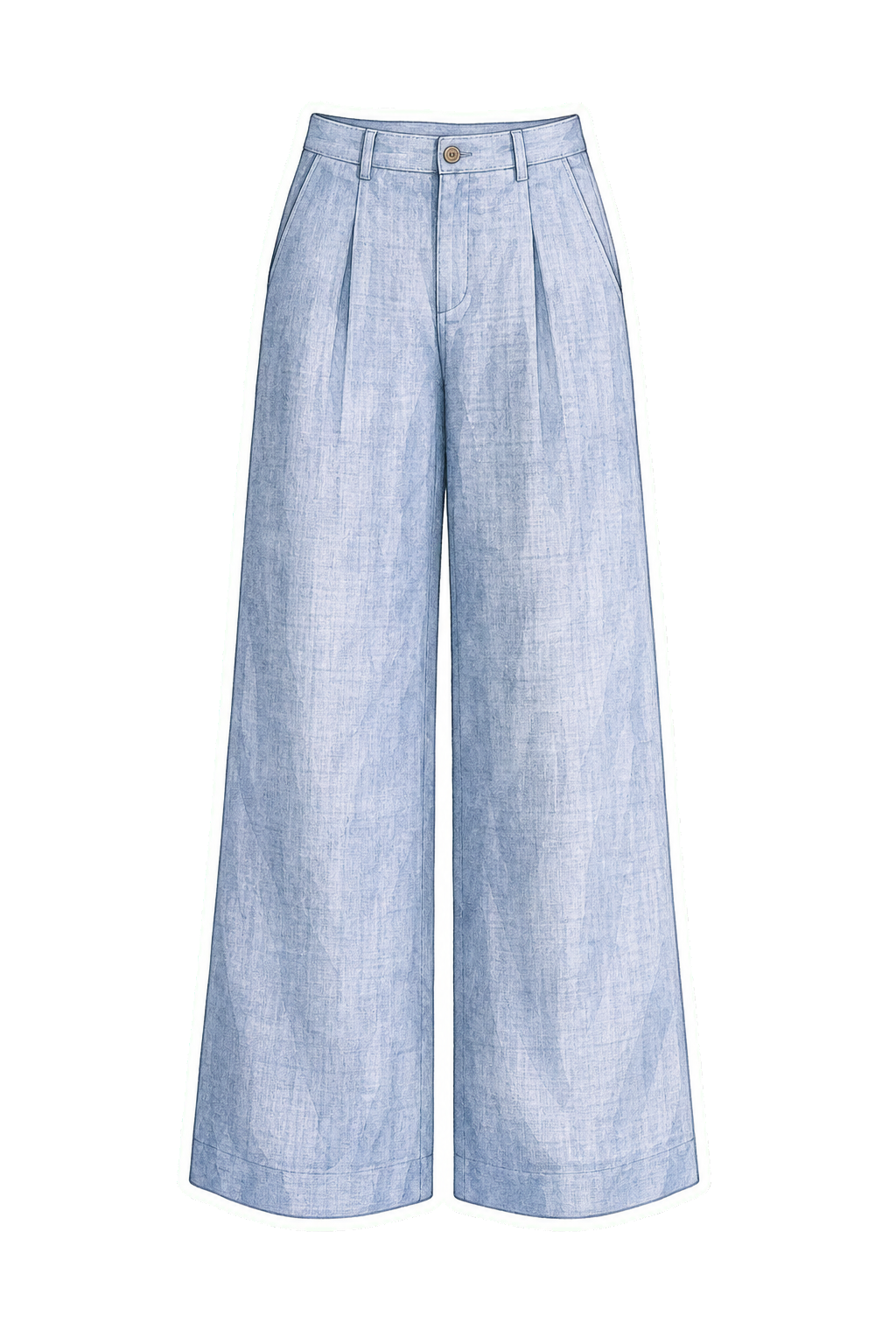 04Pale blue wide-leg linen trousers
Long hems cover knees at Meiji Jingu and Senso-ji while the wide leg keeps air moving.
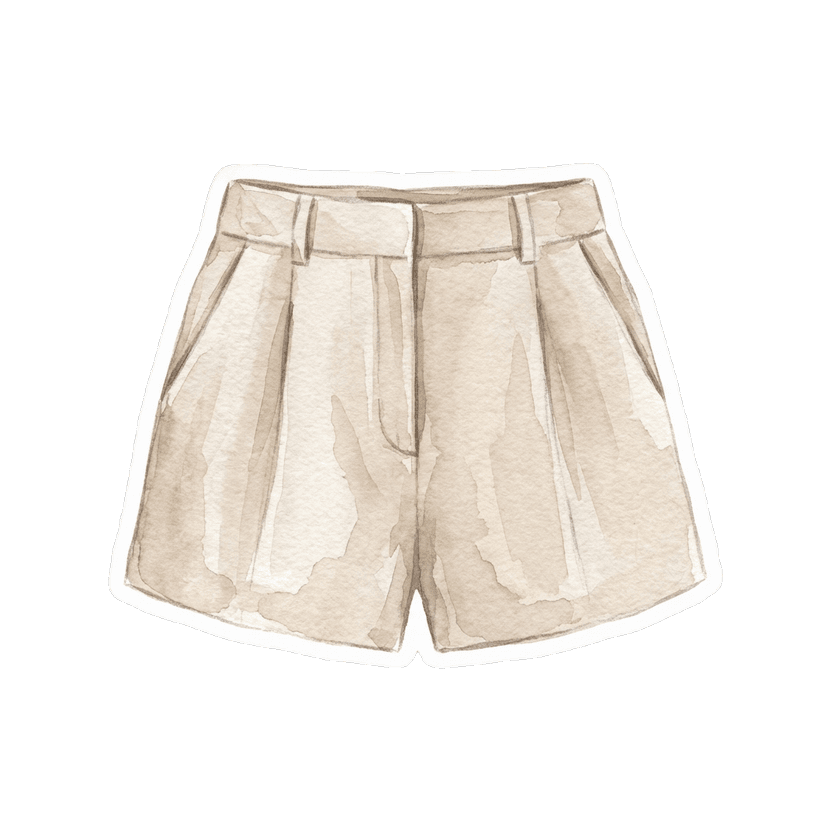 05Beige tailored cotton shorts
A neat mid-thigh hem handles casual afternoons without reading athletic.
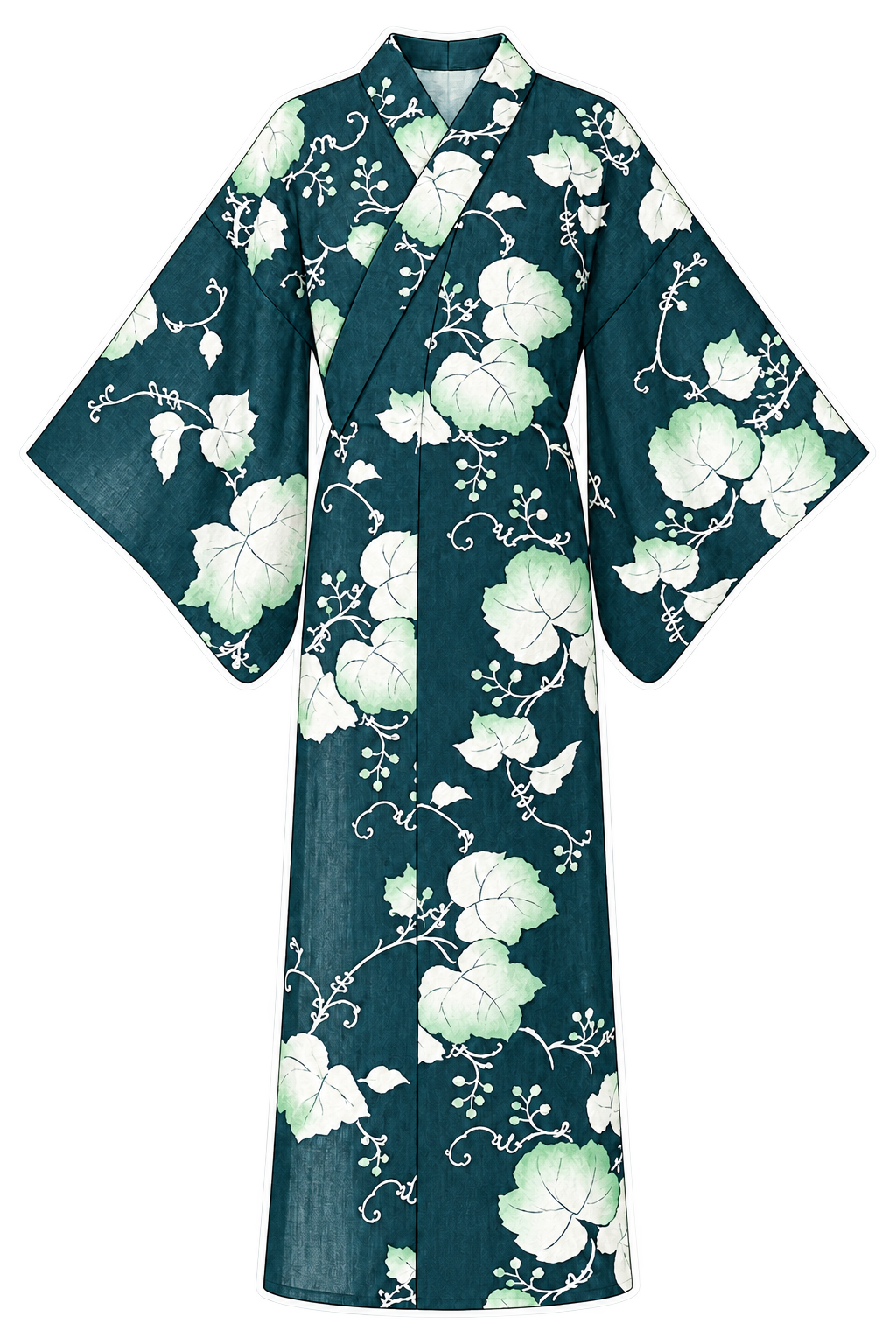 06Dark green botanical cotton-linen yukata
An optional standalone summer yukata for Obon, matsuri, and fireworks nights.
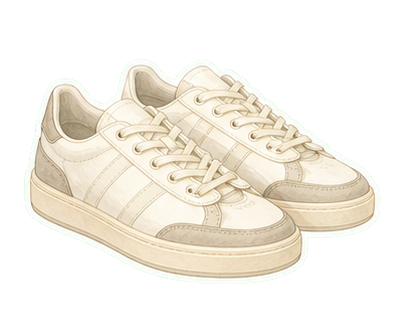 07Cream-grey weatherproof walking sneakers
A breathable walking pair distributes the load across Tokyo's routine 18,000-step days.
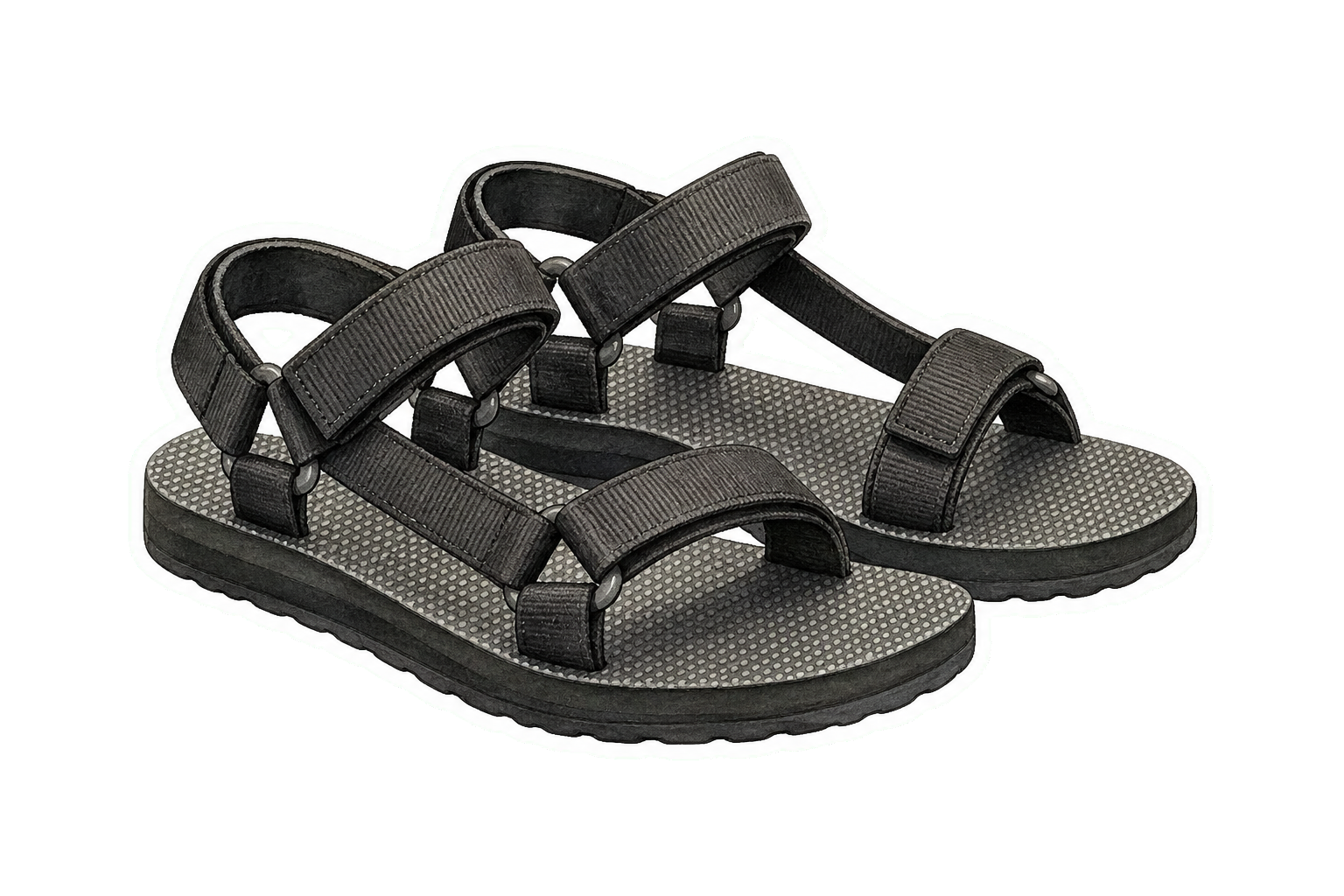 08Black supportive sport sandals
A structured sandal handles temple visits and festival standing better than unbroken-in leather.
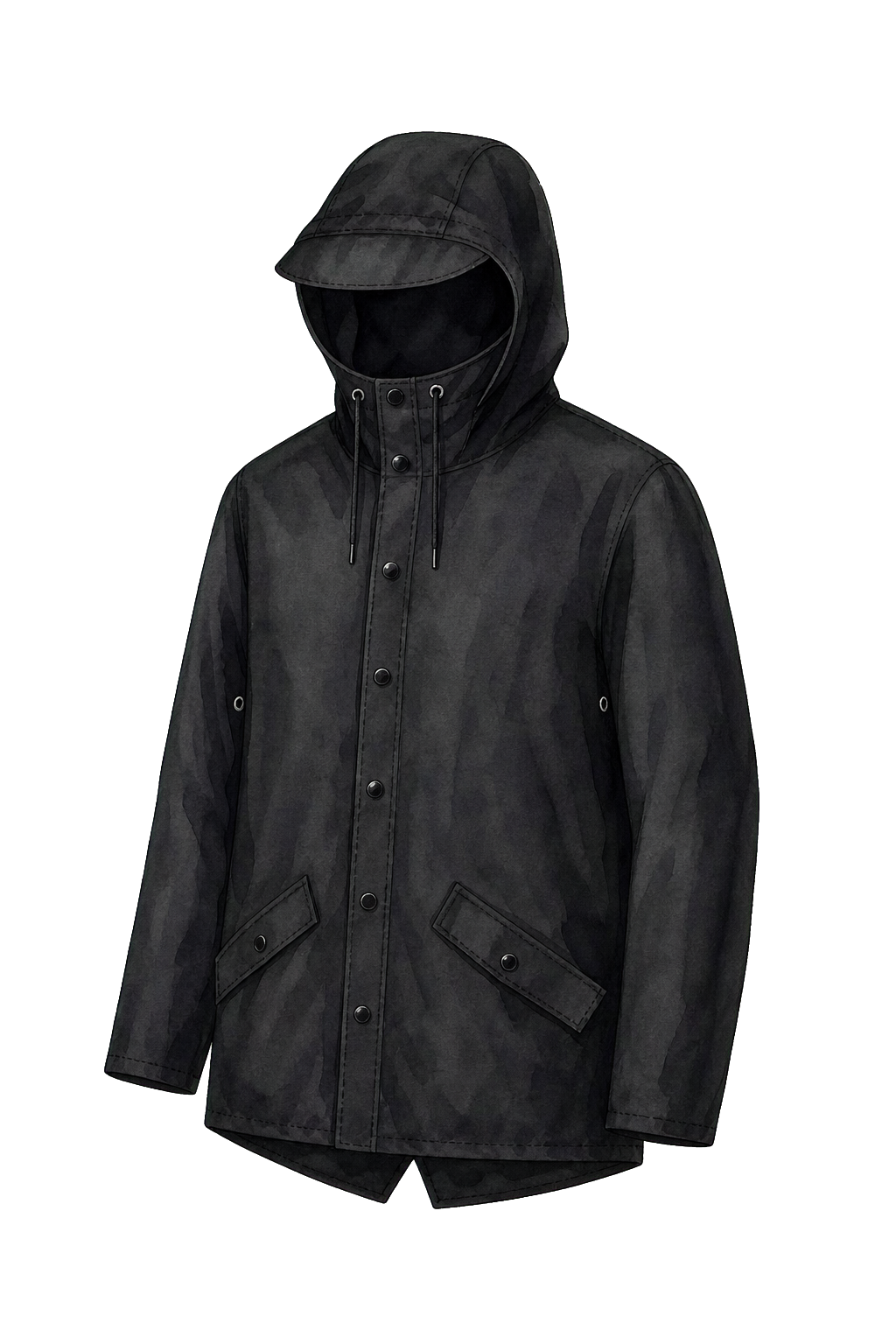 09Black packable rain shell
A lightweight shell handles typhoon wind without adding bulk in August heat.
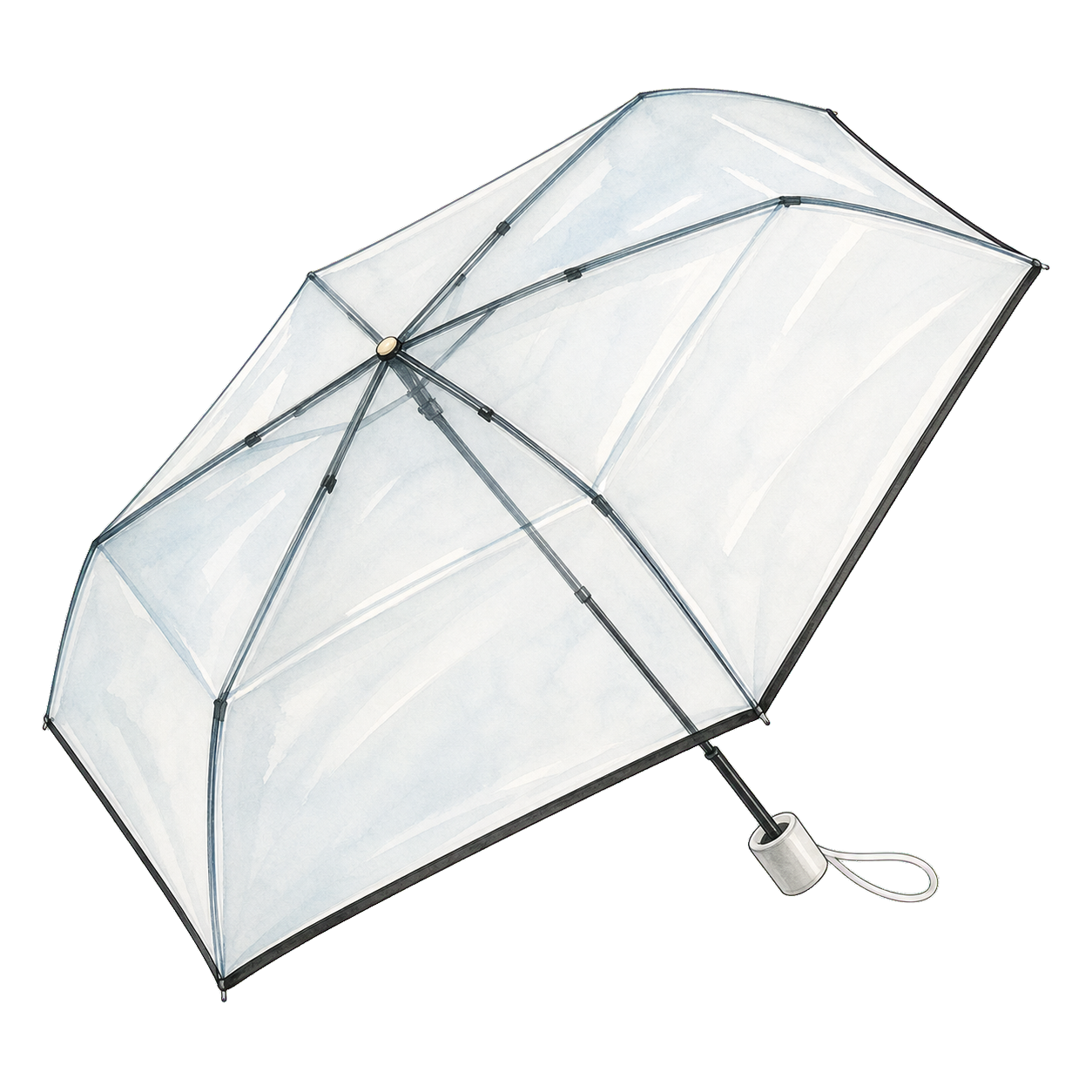 10Compact clear vinyl umbrella
The ¥500-style clear umbrella handles regular showers while keeping sightlines open in crowds.
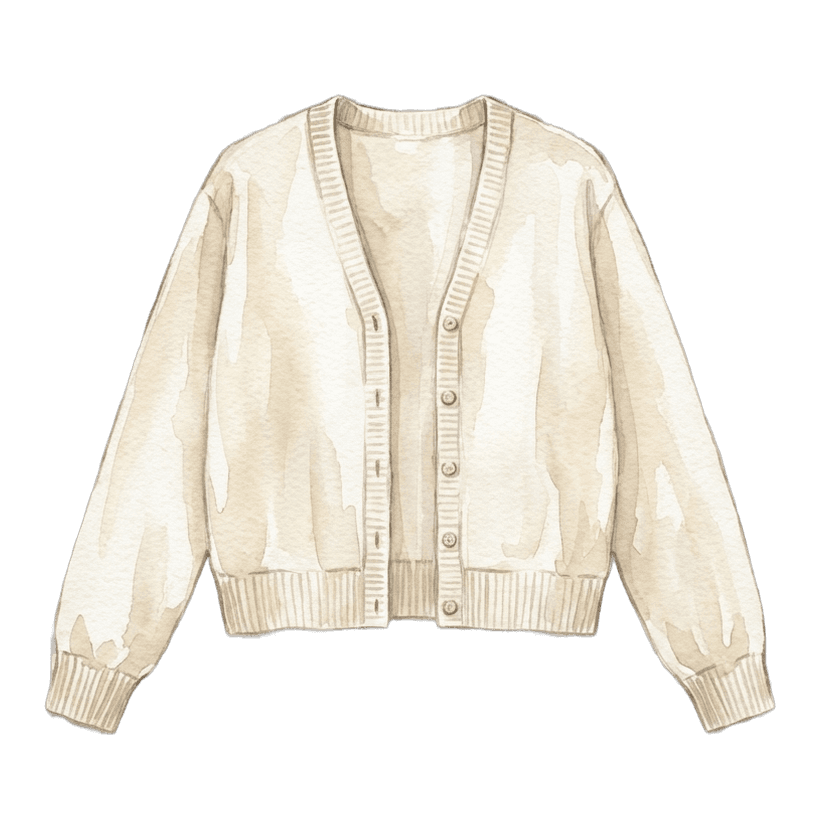 11Cream open-front knit cardigan
Every Tokyo August visitor re-learns this: the train goes from a 32°C / 90°F platform to a 22°C / 72°F carriage in 30 seconds. A longline open-front cardigan unbuttons to nothing on the platform and buttons to half-coverage in the carriage; cardigan stays in your bag year-round.
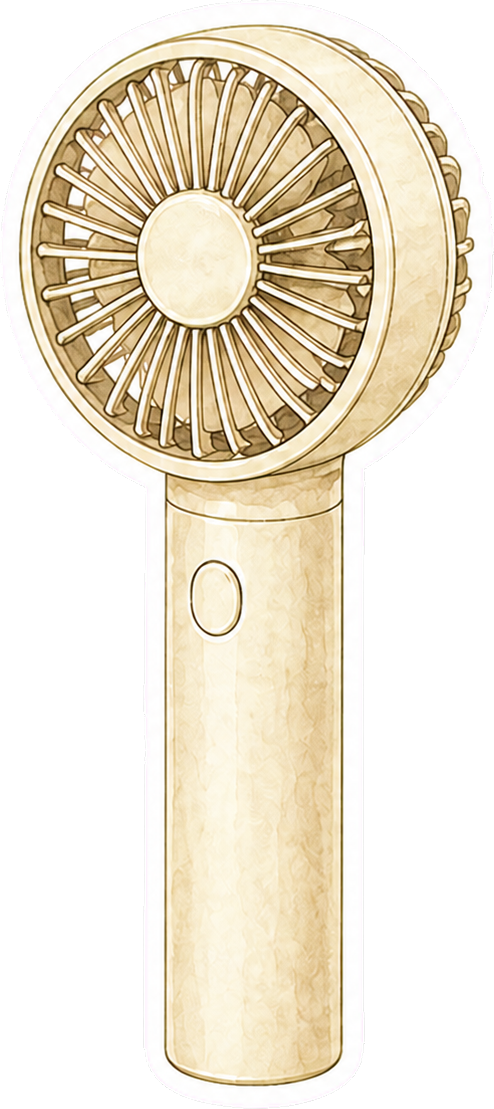 12Portable mini fan
August in Tokyo is the month a handheld fan earns its space in the day bag.
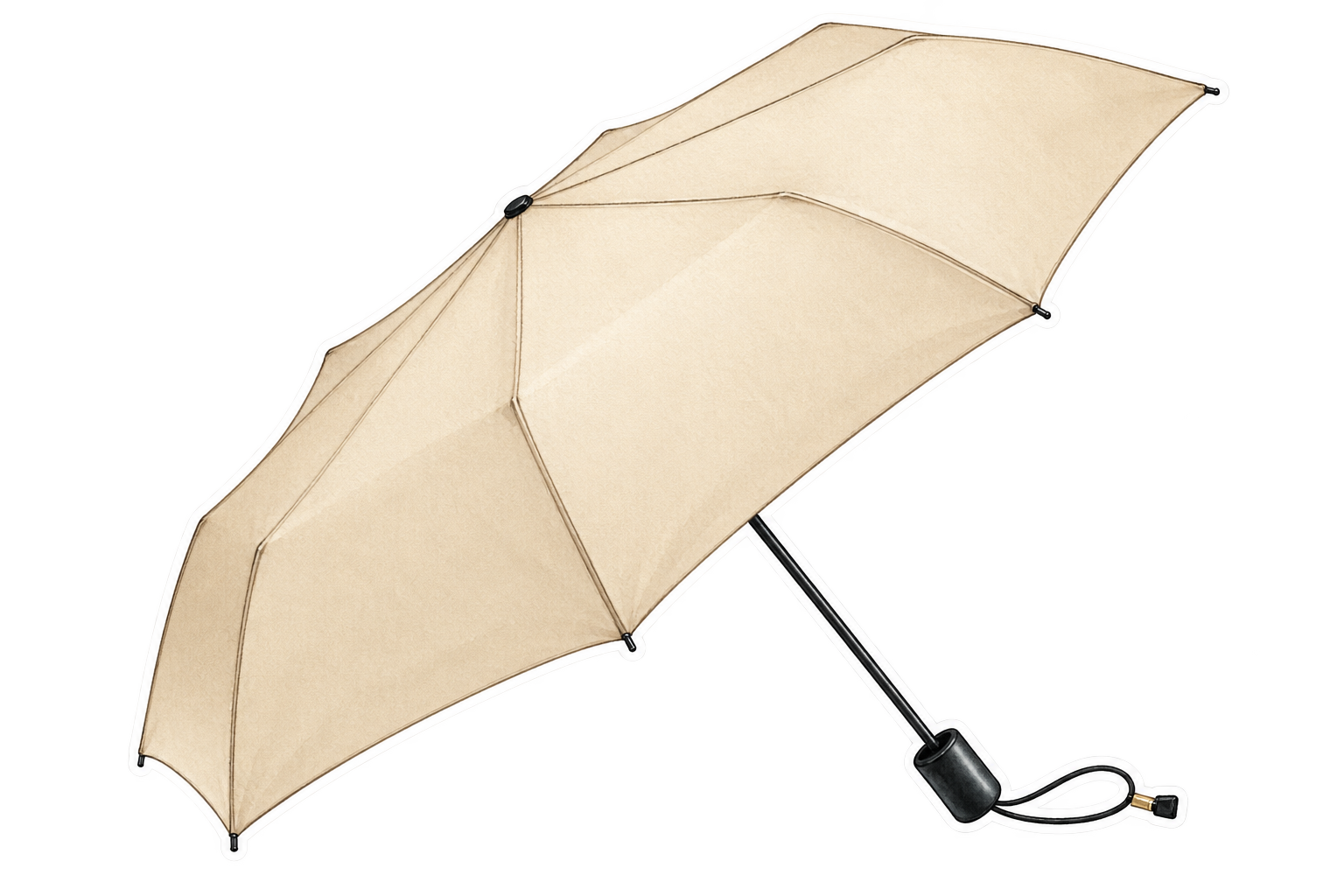 13Natural beige compact UV parasol
A UV parasol cuts direct sun more effectively than repeated sunscreen alone.
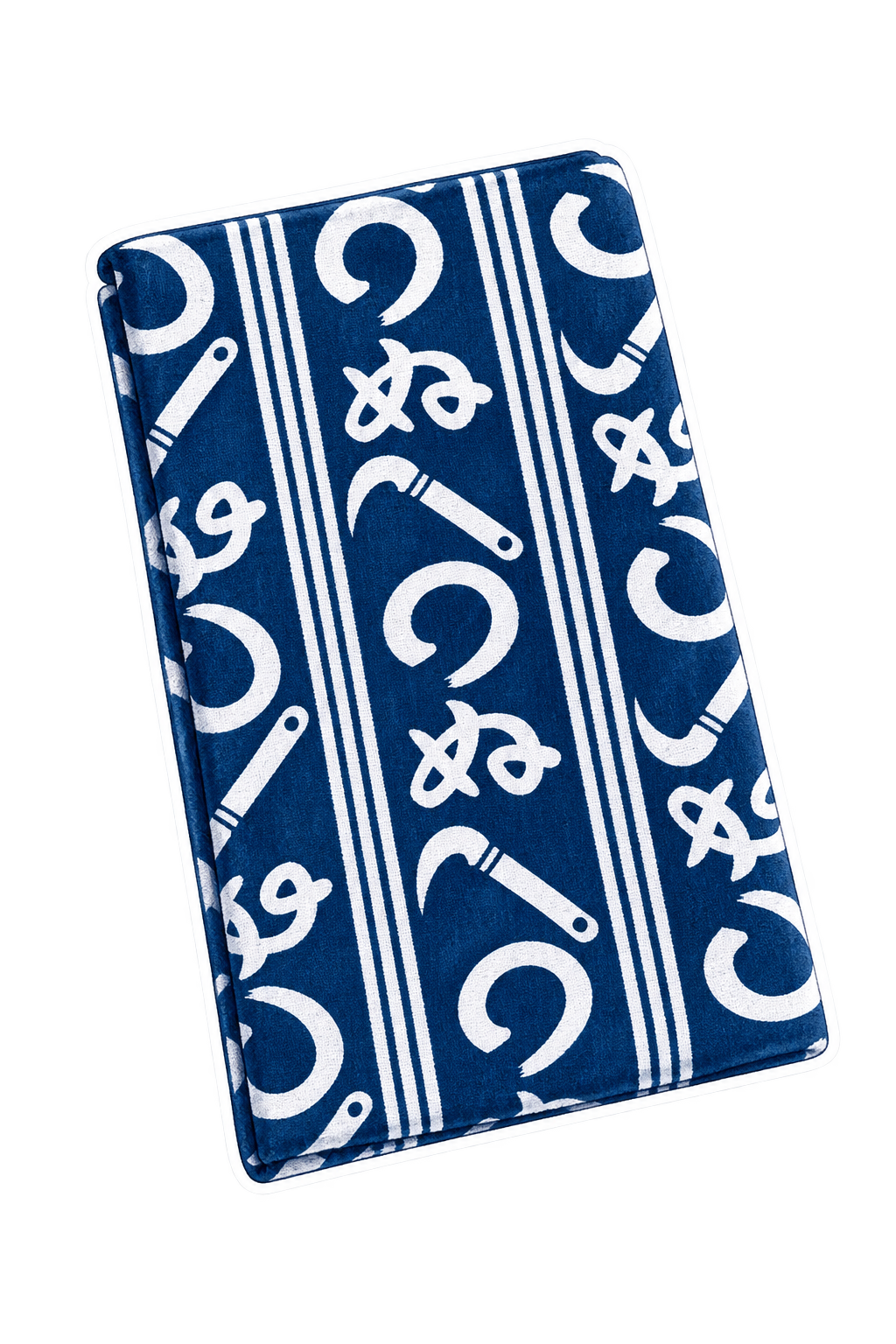 14Indigo cotton tenugui
A compact traditional towel handles sweat without the bulk of a terry hand towel.
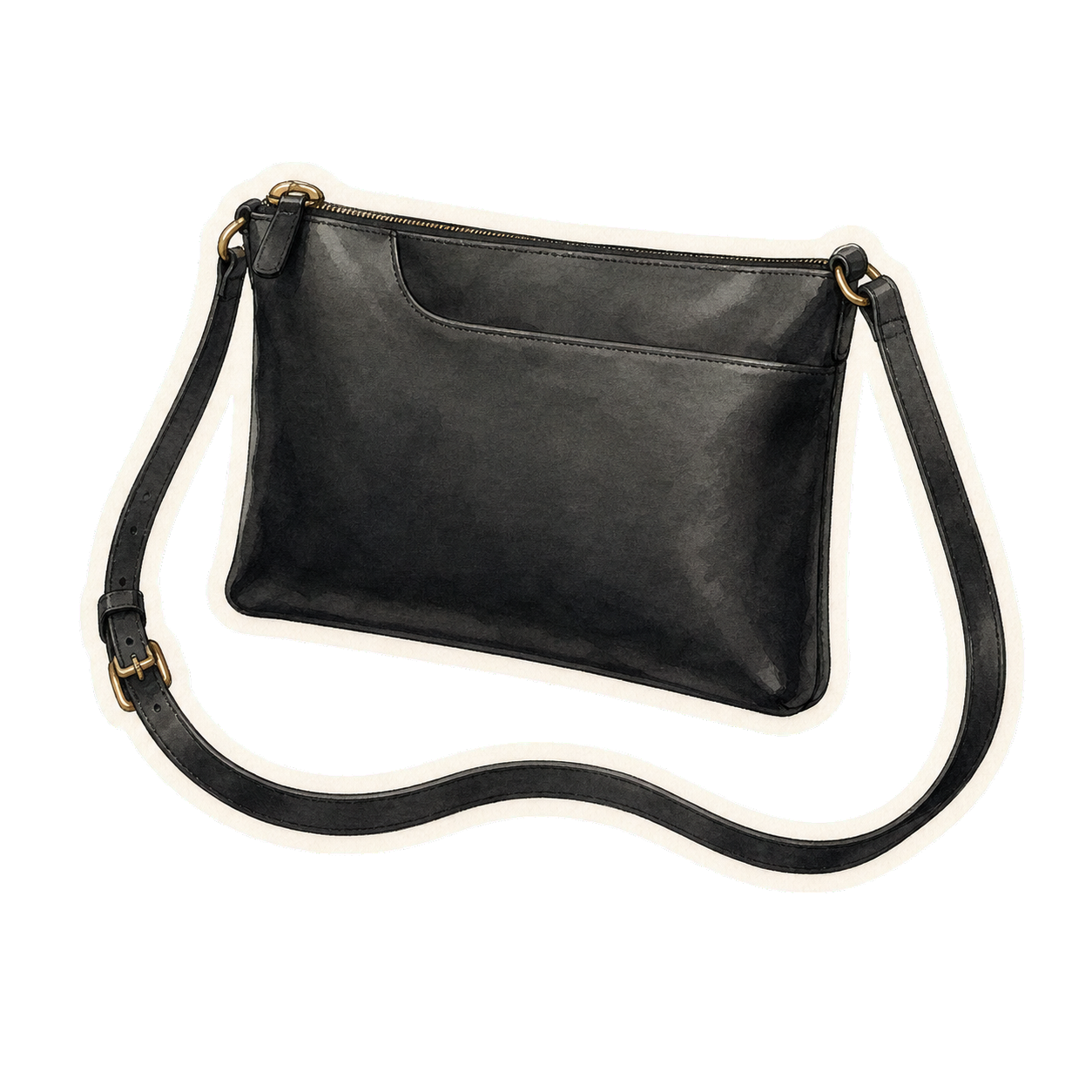 15Small black zip-top crossbody
A secure hands-free bag keeps the parasol hand free and valuables close in festival crowds.
Day to night
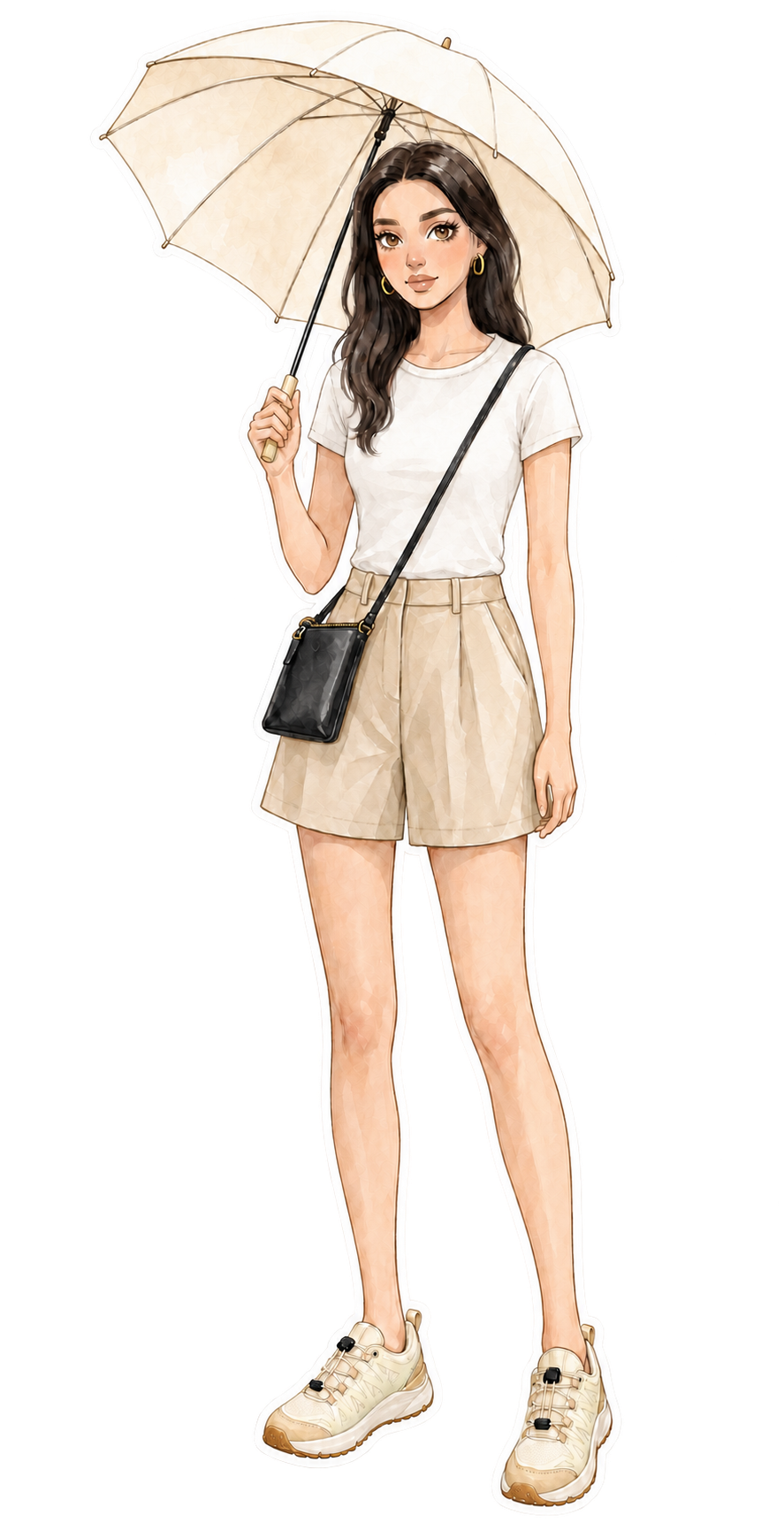
AIRism tee · cotton shorts · mesh sneakers · crossbody · parasol. Morning at Meiji Jingu, shaved ice in Shibuya by 11am.
Linen midi dress (or yukata for festival nights) · sport sandals · cardigan in bag. Sumida fireworks late July/early August, or izakaya in Shimokitazawa.
What to avoid
- Heavy denim — miserable in 72% humidity
- Dark head-to-toe outfits in direct sun — heat absorption + visible sweat marks
- Stilettos at fireworks festivals — Sumida riverbank and Jingu grounds mean hours of standing
- Ignoring typhoon alerts in late August — they cancel trains and flights
- Tank tops at Meiji Jingu or Senso-ji — temples expect covered shoulders
Frequently asked questions
Per JMA climate data: average daily high is 32°C (90°F), low is 25°C (77°F), humidity 72%. Combined with humidity, afternoons feel 37-38°C / 99-100°F+. Tokyo August is the hottest month by both average temperature and heat index. Plan indoor stops (department stores, museums, cafés) for the 2-5pm peak.
Yes — Tokyo's typhoon season is August through October, with peak threat in September. August typhoons occur but are less frequent than September's. Track Japan Meteorological Agency alerts if traveling late August. A typhoon day typically cancels flights, closes trains for 6-12 hours, and brings flooding to low areas.
Obon is a mid-August Japanese Buddhist festival honoring ancestors (usually August 13-16). Cities feel quieter as locals travel home, but Tokyo still holds Bon Odori (communal dances) at local shrines. Wear a yukata (summer kimono, sold affordably at Tokyu Hands or Don Quijote) or light summer clothing. Fireworks festivals (hanabi taikai) often coincide — yukata with geta sandals is the classic pairing.
Linen, Uniqlo AIRism (moisture-wicking), lightweight cotton-synthetic blends, technical blends. Skip polyester (traps heat), pure cotton for all-day wear (stays damp), heavy denim (miserable). Loose silhouettes over fitted for airflow.
Most tolerate them but knee-length or longer reads more respectful. At Meiji Jingu and Senso-ji specifically, covered shoulders + below-the-knee bottoms remain the expected standard. Carry a wrap or long scarf if you're wearing shorter pieces and plan temple stops.
Sources
- Japan Meteorological Agency — 1991–2020 climate normals, Tokyo station