What to Wear in San Francisco in January
San Francisco in January: 14°C / 57°F afternoons, 7°C / 45°F mornings, rain on about 11 days and dry weather on the other 20.
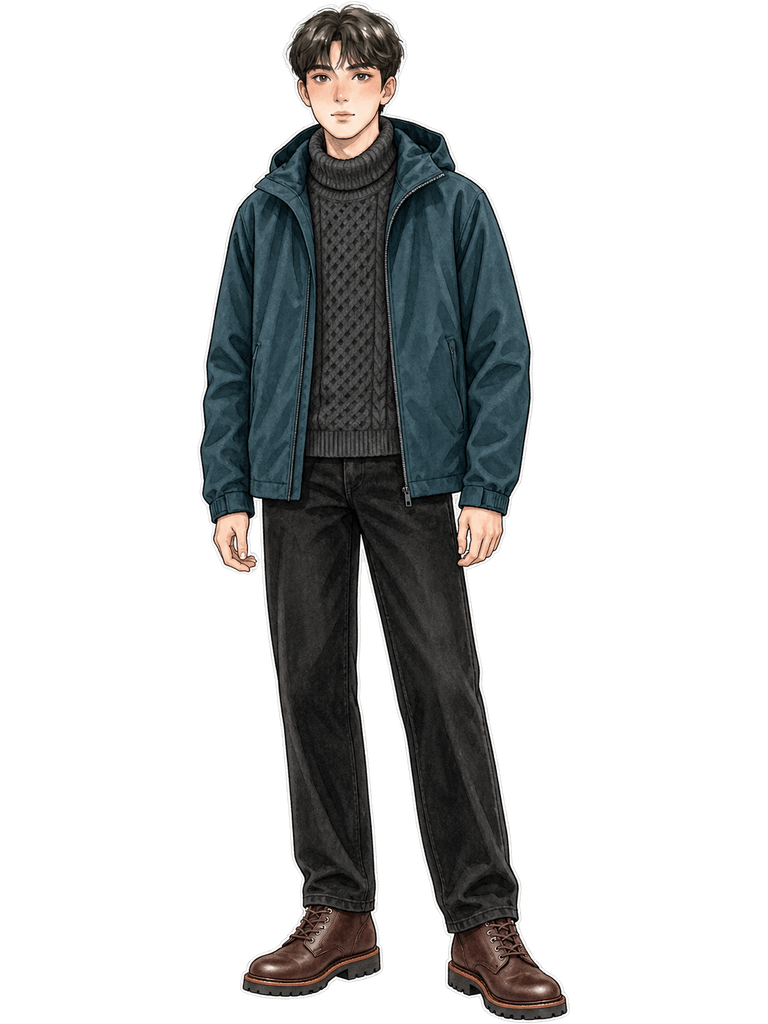
- Dark teal hooded rain shell — 7 January days bring a tenth of an inch of rain or more
- Charcoal cable roll-neck — January edges December as the coldest month at SFO, with 6.9°C mornings
- Rust cord overshirt — the jacket for the 20 dry days, when a rain shell is too much
- Dark brown lace-up lug boots — sealed leather for a storm, grip for wet hills
- Olive waxed-canvas crossbody — the wax sheds a shower and the flap keeps it out
- Olive cap — the noon sun sits barely a third of the way up the sky
- Suede — 3.89 inches of rain on about 11 days
- Canvas sneakers — they soak through on the first storm morning
- A down parka — afternoons reach 14°C / 57°F and it becomes luggage
- Waiting to buy a cable car fare at Powell and Market — you must pay in advance there from 8am to 8pm
Pack for the switch. NOAA's figures for SFO make January the coldest month by a fraction, at 14.4°C by afternoon and 6.9°C at dawn, and give it 3.89 inches of rain on about 11 days. Seven of those days bring a tenth of an inch or more and two and a half bring half an inch, so a wet day is a real storm. The other 20 are dry, and in January the sun stays low all day. So the capsule has two jackets on one base. A hooded shell goes over a charcoal roll-neck for the storm days; a rust cord overshirt replaces it on the dry ones. Leather lug boots and a waxed bag work in both. From 20 to 23 January the king tides, the highest high tides of the year, peak at the Golden Gate in mid-morning.
January in San Francisco is not one kind of weather. It is eleven storm days and twenty clear ones, and the outfit has to switch between them without a trip back to the hotel.
The capsule
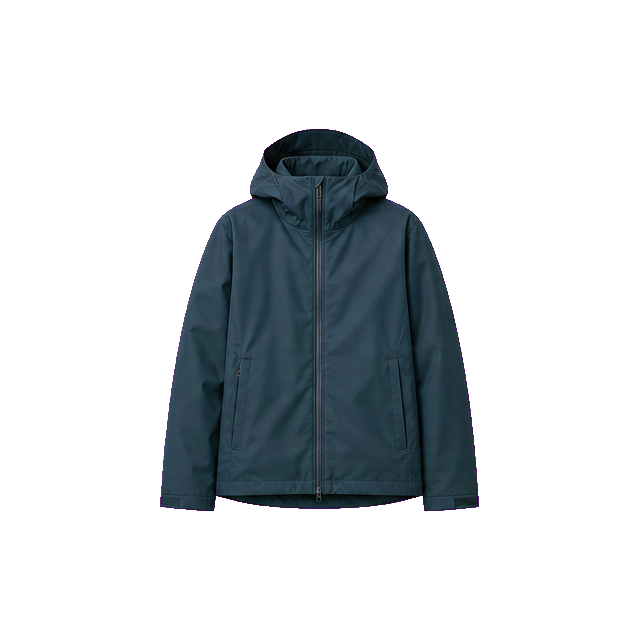 01Dark teal hooded rain shell, hip length
Wear it on the storm days and leave it in the room on the clear ones. NOAA counts about 7 January days at SFO with a tenth of an inch of rain or more, and on those days the hills and crosswalks are wet all day. A hooded shell keeps your hands free for a cable car pole, and dark teal reads as a colour against the grey of a wet street without clashing with the rust overshirt.
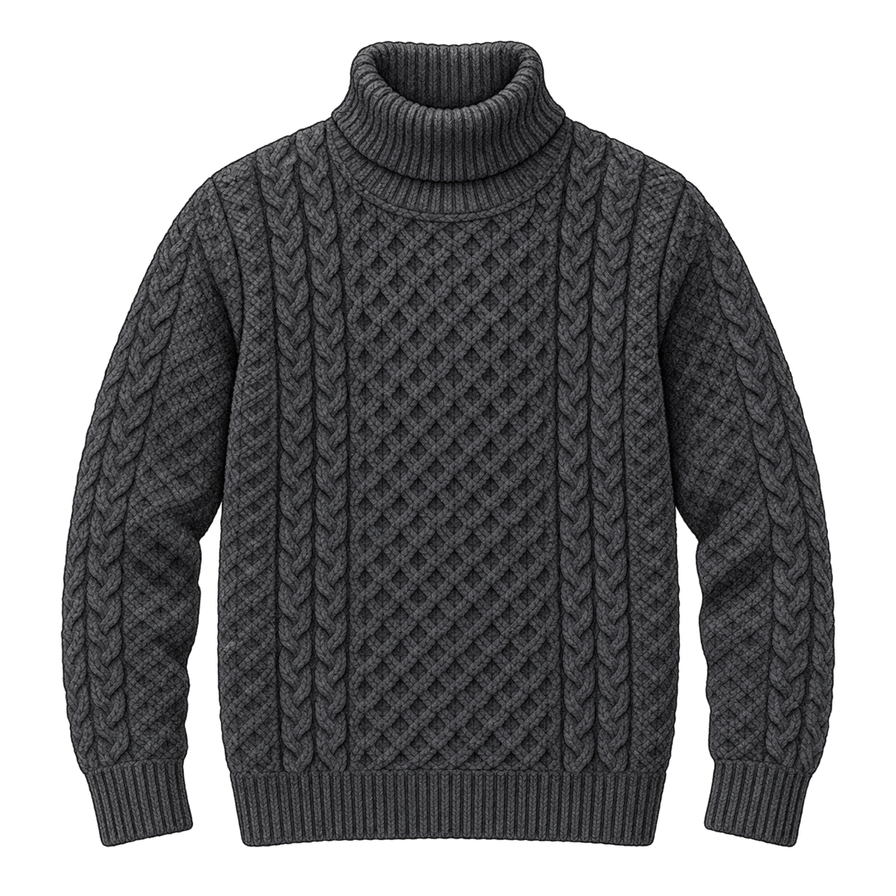 02Charcoal cable-knit roll-neck
January edges December as the coldest month at SFO, and dawn averages 6.9°C with sunrise at about 7:25am in the first week, so breakfast happens in the cold and half-dark. A charcoal cable roll-neck covers the neck that a crew leaves bare under an open shell, and the wool stays warm when a sleeve gets wet. It goes under both jackets and dresses up with the oat wool trousers.
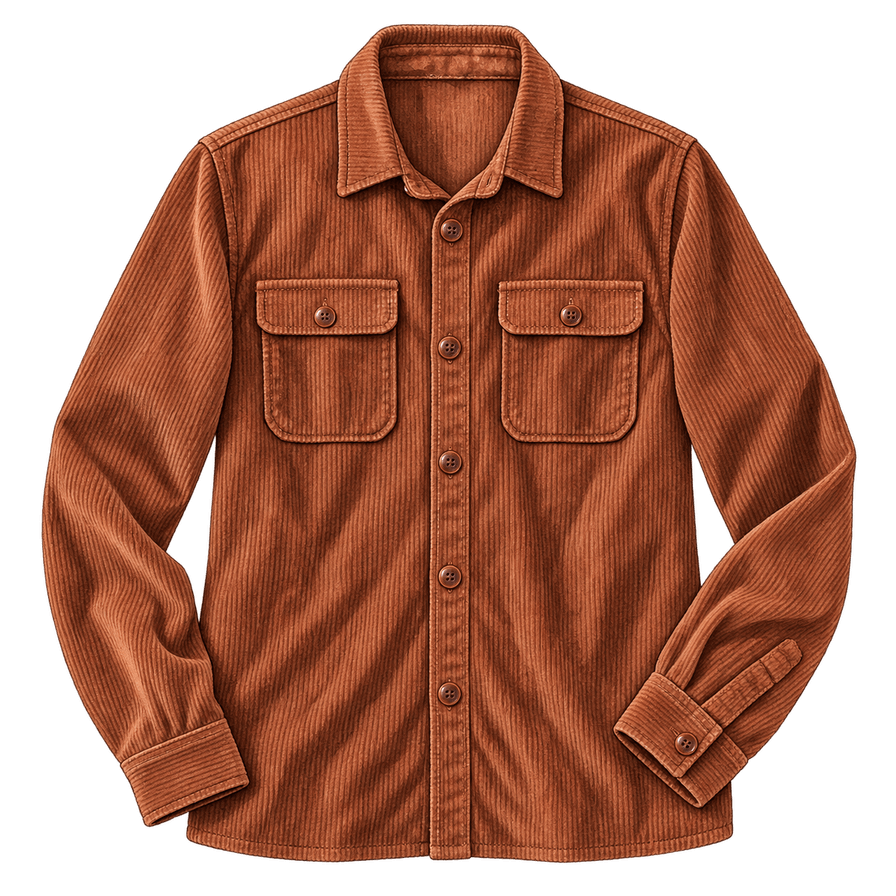 03Rust wide-wale cord overshirt
This is the jacket for the 20 dry days. On a bright 14°C afternoon a rain shell is too much and a knit alone is too little, and an unlined corduroy overshirt sits between them. Rust against charcoal gives the capsule its warm note, and the chest pockets carry a phone and a Clipper card for the hop between neighbourhoods.
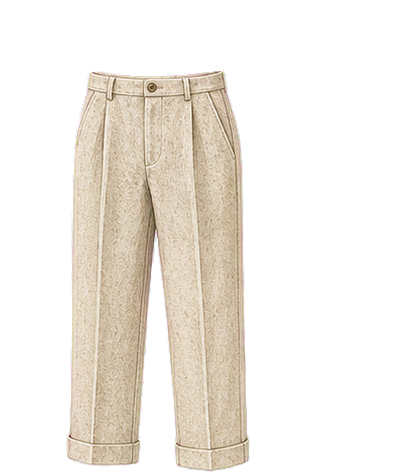 04Heather oat wool trousers, pleated, turn-up hem
Wool is the fabric to wear on a 7°C morning that turns wet at eleven: it keeps its warmth when damp, where cotton chinos go cold and cling. Heather oat sits softly between the charcoal knit and the rust overshirt, the pleats give a 14°C afternoon room to move, and the turn-up hem stops at the ankle, clear of a wet kerb and showing off the boots. Wear them to dinner with the roll-neck.
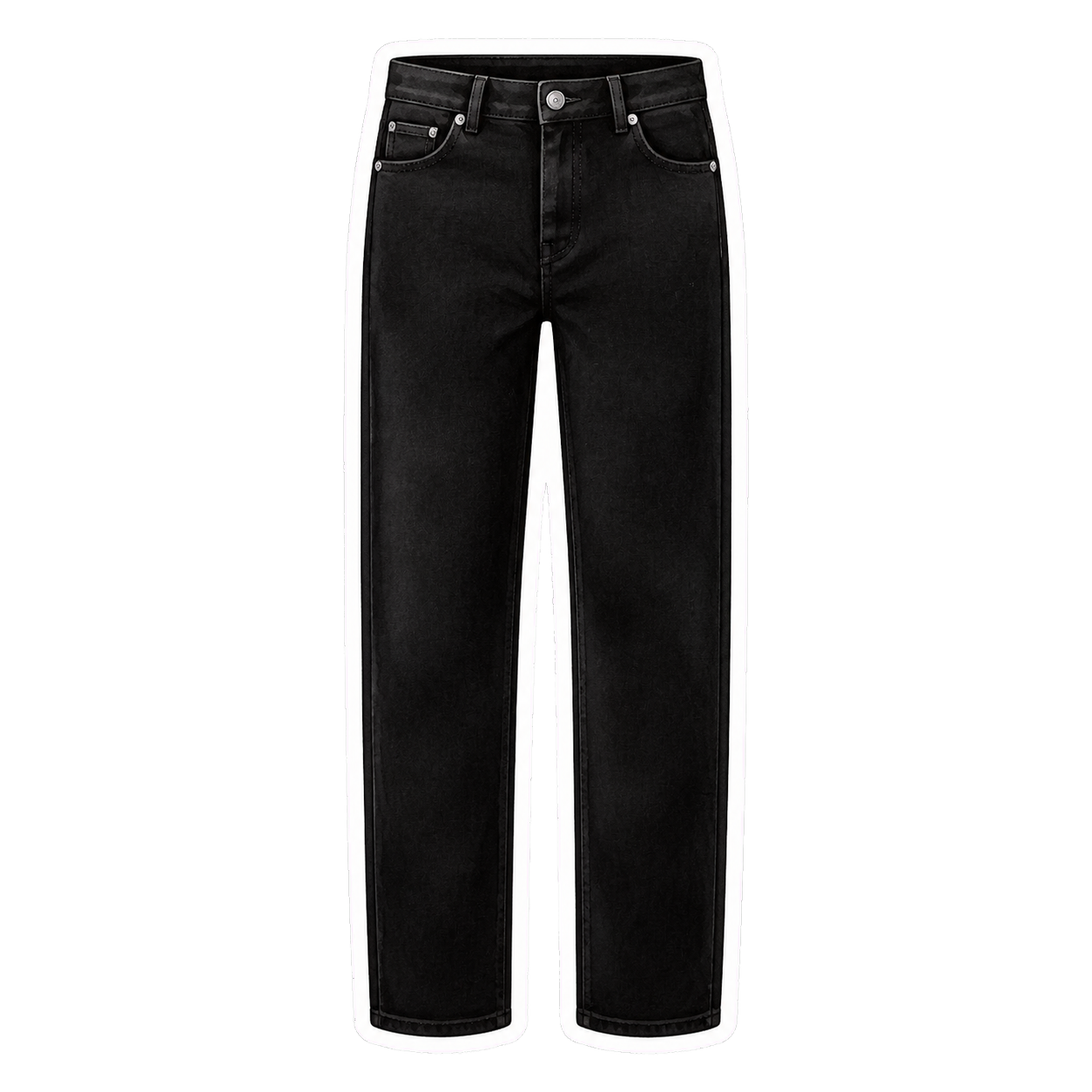 05Black straight-leg jeans
Black denim hides a splash from a passing bus and a wet cable car seat, and a straight leg sits cleanly over a lace-up boot. These are the storm-day trousers, when a pale wool would show every splash, and the dry-day trousers with the cord overshirt when you want a darker base than oat.
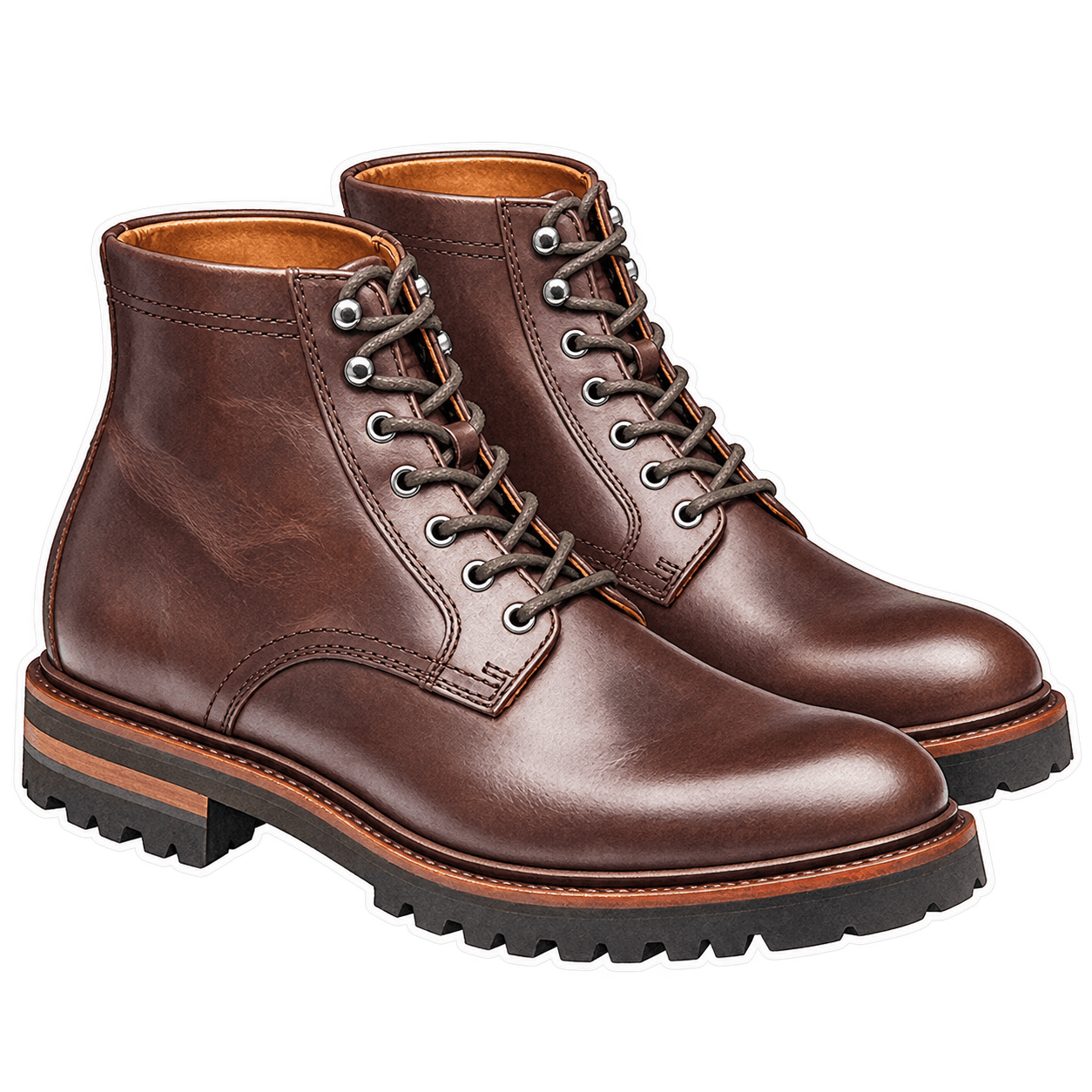 06Dark brown lace-up leather boots, lug sole
One pair for eleven wet days and twenty dry ones. Smooth, sealed leather sheds a storm that would stain suede in a block, a stacked lug sole grips the wet hills between Nob Hill and North Beach, and laces hold the ankle steady on a steep descent. Dark brown works with both the oat wool and the black jeans.
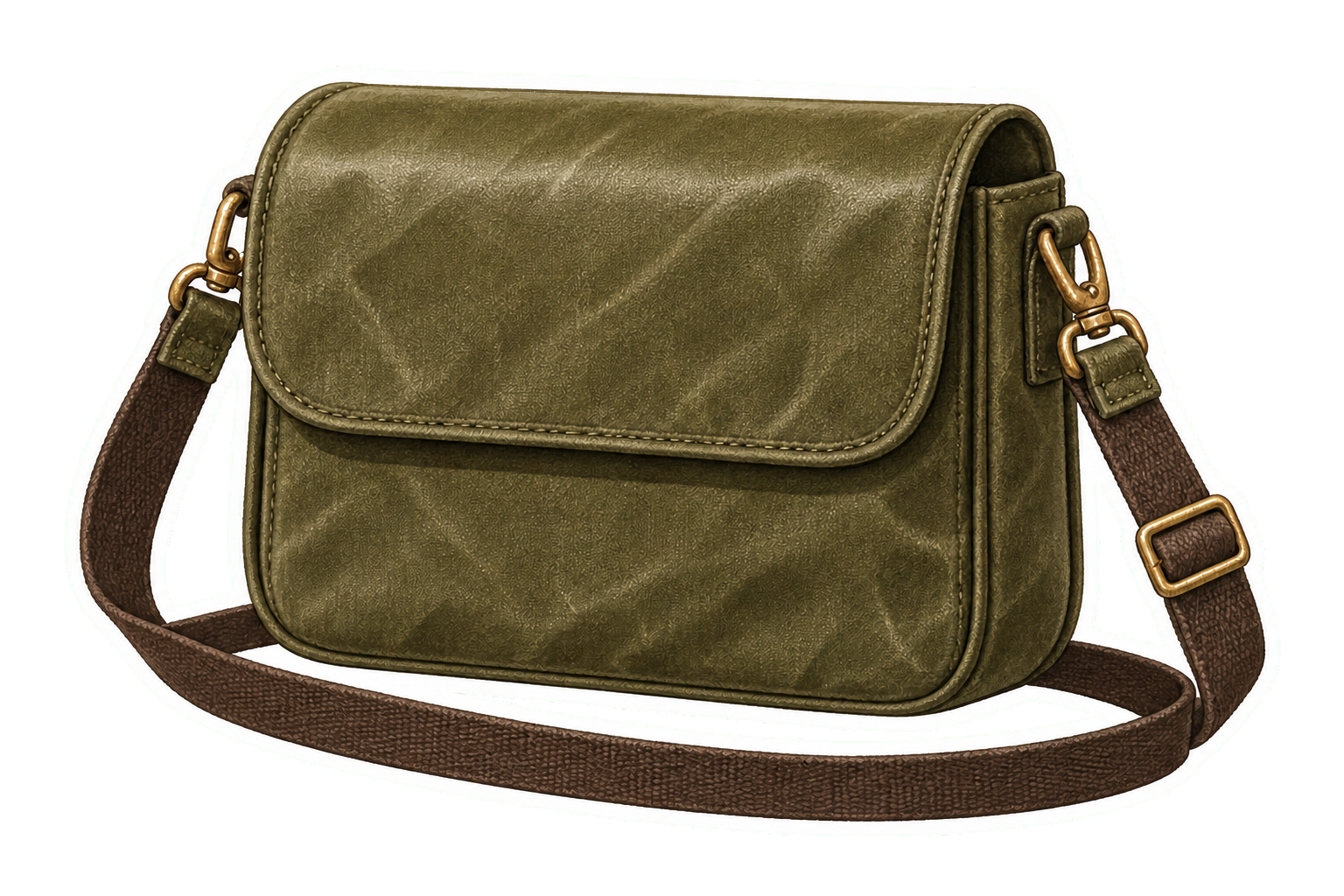 07Olive waxed-canvas crossbody
Waxed canvas beads a shower off and the full flap keeps it out of the bag, which matters on a storm morning when your phone lives in it. Worn across the body it leaves both hands free for a cable car rail, and olive ties the teal shell, the rust overshirt and the brown boots together.
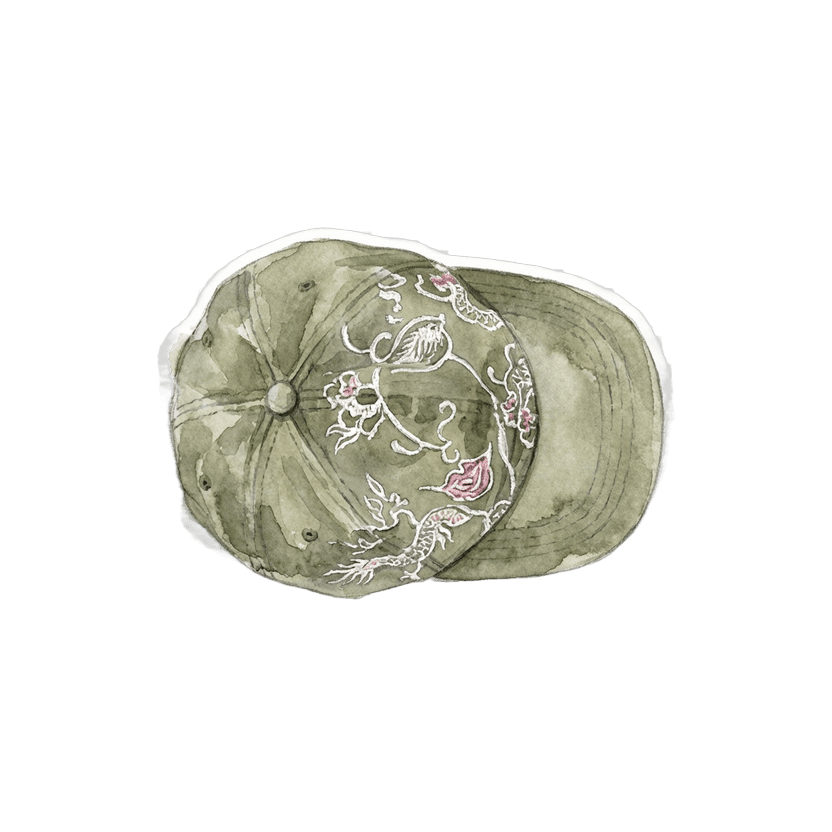 08Olive cotton baseball cap
The dry days are the reason. In mid-January the sun at noon stands only about 31 degrees above the horizon, so it sits low in your eyes along east-west streets through the afternoon. A soft olive cap puts a brim between your eyes and that glare, and it keeps drizzle off your face on a day that cannot decide.
Day to night
Charcoal roll-neck · teal rain shell, open · black straight jeans · brown lace-up boots · olive waxed crossbody. The Embarcadero on 21 or 22 January for the king tide, high near 9:40am on the 21st and 10:30am on the 22nd, then the Ferry Building when the rain comes in.
Charcoal roll-neck · rust cord overshirt · oat wool trousers · brown boots · olive cap. A dry afternoon on the coastal trail at Lands End, back across town before sunset at about 5:15pm and dinner as the air heads for 7°C / 45°F.
A suggested look — dark teal hooded rain shell, charcoal cable roll-neck, black straight jeans, dark brown lace-up lug boots.
What to avoid
- Suede — about 7 January days bring a tenth of an inch of rain or more
- Canvas sneakers — soaked on the first storm morning
- A down parka — afternoons reach 14°C / 57°F
- Leaving the shell in the room on a clear morning — about 11 of 31 days are wet
- Boarding a cable car at Powell and Market without a prepaid fare — required from 8am to 8pm
Frequently asked questions
Cool, and split between storms and clear days. NOAA's figures for San Francisco International (SFO) give January an average high of 14.4°C and a low of 6.9°C, which makes it the coldest month of the year there by a fraction of a degree. Rain totals 3.89 inches across 10.9 days of measurable rain, so about 20 days stay dry; 7 of the wet days bring a tenth of an inch or more, and about 2.5 bring half an inch. December and February are both slightly wetter. Daylight grows from 9h 36m on 1 January to 10h 16m on the 31st, and sunset moves from about 5pm to 5:30pm.
A dark teal hooded rain shell, a charcoal cable roll-neck, a rust corduroy overshirt, heather oat wool trousers, black straight jeans, dark brown lace-up lug boots, an olive waxed-canvas crossbody, and an olive cap. That covers a storm morning at 7°C / 45°F, a clear 14°C / 57°F afternoon in low sun, and a dinner on either kind of day. Leave the suede, the canvas sneakers and the down parka at home.
From 20 to 23 January. The California Coastal Commission lists 21 and 22 January 2027 as statewide king tide dates and adds that northern California locations may also see them on the 20th and the 23rd. It describes king tides as the highest high tides of the year, one to two feet above an average high tide. NOAA's predictions for the Golden Gate put the peaks at 7.11 feet at 9:39am on the 21st and 7.09 feet at 10:33am on the 22nd, so watch from the Embarcadero in the morning. Wear lace-up leather boots, a hooded shell and a knit, because a January morning on the waterfront is cold and may well be wet.
Late January, for the light and the tides. Sunrise is at its latest in the first week, about 7:25am, and daylight is 9h 36m on the 1st; by the 31st it is 10h 16m, with sunset past 5:30pm. The king tides fall between 20 and 23 January, and the same days bring afternoon low tides near minus 1.6 feet at the Golden Gate. The rain is a whole-month figure, about 11 wet days in 31, so pack the shell for either half.
Almost the same temperature, slightly less rain and more light. NOAA's SFO figures give January 14.4°C by day and 6.9°C at night, against December's 14.6°C and 7.0°C; that sliver is enough to round January to 14°C / 57°F and December to 15°C / 59°F. December is the wettest month, 4.14 inches on 11.1 days; January has 3.89 inches on 10.9. Daylight at mid-month grows from 9h 35m to 9h 50m. Our December guide builds its capsule around a mackintosh, cashmere and a tweed jacket for the Dickens Fair; January swaps them for a hooded shell and a cord overshirt for the dry days.
Workwear and weatherproof layers, built for wet hills. The habit is old. Levi Strauss & Co. was founded in Gold Rush San Francisco in 1853, and in 1873 the company and Jacob Davis received a patent for adding metal rivets to work pants. The same year, on 2 August 1873, Andrew Smith Hallidie tested the first cable car on Clay Street, an idea the SFMTA says he had after watching horses struggle on wet cobblestones up Jackson Street. The January version is black jeans or wool trousers, lug-sole boots, a knit and a hooded shell.
Sources
- NOAA — 1991–2020 climate normals, San Francisco International Airport (SFO) station
- California Coastal Commission — California King Tides Project: 2026–27 dates (21–22 January 2027 statewide; 20 and 23 January in northern California) — accessed 2026-09-27
- California Coastal Commission — About King Tides — accessed 2026-09-27
- NOAA Tides & Currents — Tide predictions, San Francisco (Golden Gate) station 9414290 — accessed 2026-09-27
- SFMTA — Cable Cars: prepaid fares required at Powell & Market, Bay & Taylor and Hyde & Beach, 8am–8pm — accessed 2026-09-27
- SFMTA — Cable Car History: Andrew Smith Hallidie's first run on Clay Street, 2 August 1873 — accessed 2026-09-27
- Levi Strauss & Co. — Levi's history: founded in San Francisco in 1853; riveted work pants patented with Jacob Davis in 1873 — accessed 2026-09-27
- NOAA NCEI — U.S. Climate Normals 1991–2020 (monthly normals by station) — accessed 2026-09-26