What to Wear in Auckland in January
Auckland in January: 23°C / 73°F days, 16°C / 61°F nights, the year's highest UV index, and a city on holiday on its own harbour.
- Sand packable windbreaker — on for the ferry home, when NIWA's 9pm mean is 18.8°C and the deck is in the wind
- Sea-blue linen shirt, sleeves down — SunSmart NZ asks for cover on the water all year, and the UV index peaks at 12.2
- Navy drawstring linen trousers — ankle length on a summit track DOC says has little shade on a hot day
- Slate-grey trail shoes with a deep lug — DOC asks for sturdy shoes that can cope with Rangitoto's rugged lava
- Olive wide-brim canvas hat — DOC pairs a hat with sunscreen because the black rock reflects the heat
- Olive roll-top dry bag — room for two 1-litre bottles, because there is no drinking water on Rangitoto
- Jandals or sandals on the Rangitoto summit track — loose, slippery gravel over rough lava
- Rolling your sleeves up because the deck feels cool — the breeze does nothing to a UV index of 12.2
- A bag too big to go under your seat at the ASB Classic — it is on the prohibited list, and every bag is searched
- Planning the Anniversary Day Regatta into a January trip — in 2027 it sails on Monday 1 February
Pack for a summer holiday spent on the water. NOAA's figures for Auckland Airport put January at 23.2°C by day and 16.1°C / 61°F at night, and NIWA's mean daily maximum UV index at Leigh peaks at 12.2, the highest of the year. Schools are out until Term 1 starts between 28 January and 3 February, and the harbour fills: Waiheke is a 40-minute ferry ride, Devonport 12. The Department of Conservation's advice for Rangitoto reads as a packing list: "Wear sunscreen and a hat. The heat reflecting off the ground can be intense." Bring linen sleeves, a brim, grip soles, water for the island and one windbreaker for the deck.
In January the city goes out on its own harbour. The sun comes down from above, the heat comes back up off Rangitoto's black rock, and the wind finds you on the ferry home.
The capsule
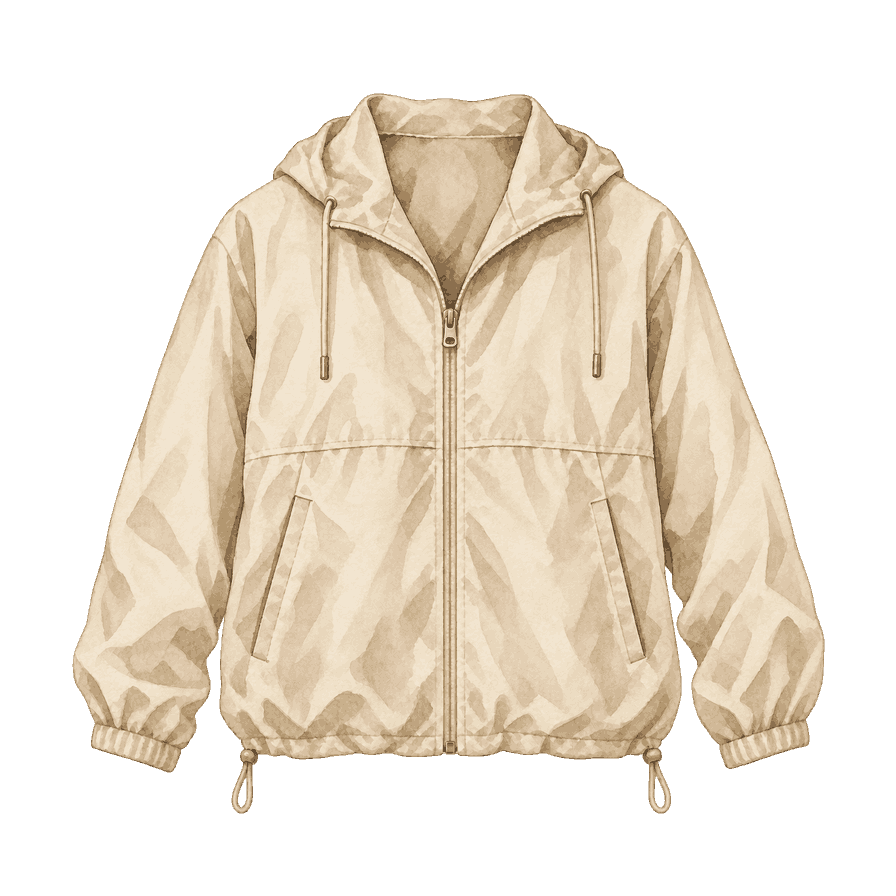 01Sand packable windbreaker, hood and drawstring hem
NIWA's hourly means put the airport at 21.0°C at 6pm and 18.8°C at 9pm, and a ferry deck at speed adds its own wind. A sand nylon windbreaker with a toggled hem keeps that off arms that spent the day in linen. DOC's Rangitoto list asks for warm and waterproof clothing; a hooded nylon windbreaker turns a passing shower and rolls into the dry bag.
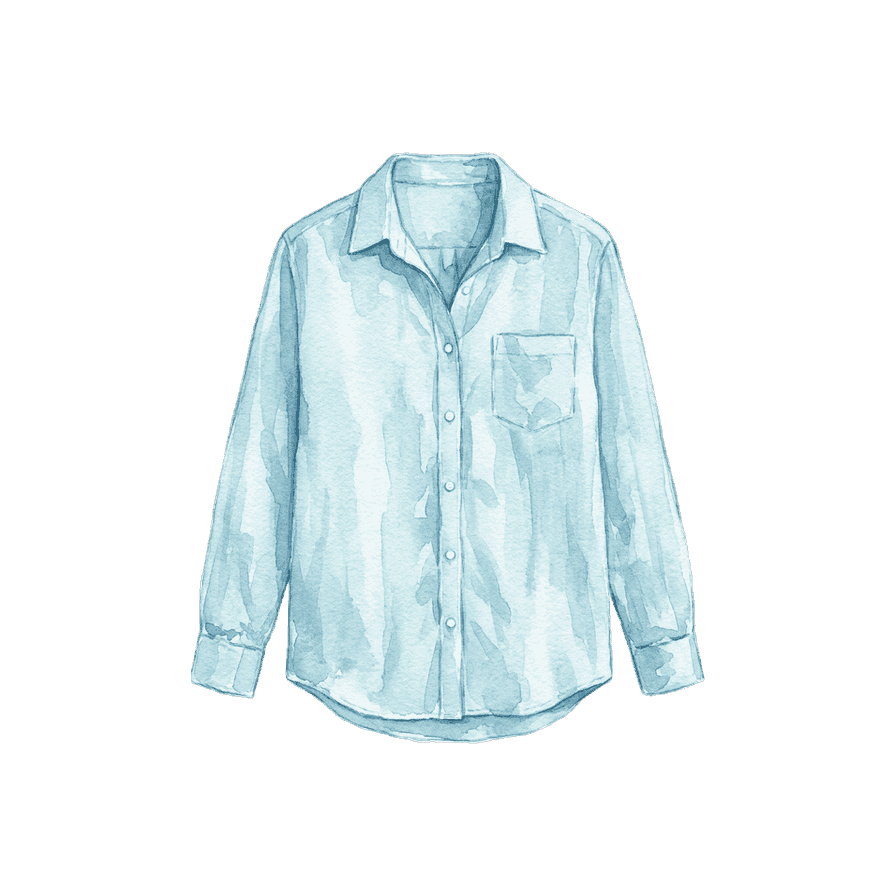 02Sea-blue linen shirt, long sleeves, chest pocket
SunSmart NZ asks you to protect skin and eyes from 10am to 4pm between September and April, "or all year-round when you're in the mountains, on the water, or around snow and ice". January's UV index at Leigh peaks at 12.2. Linen breathes at 23°C / 73°F, the buttoned cuffs stay down in a breeze, and the shirt goes open over the striped sundress.
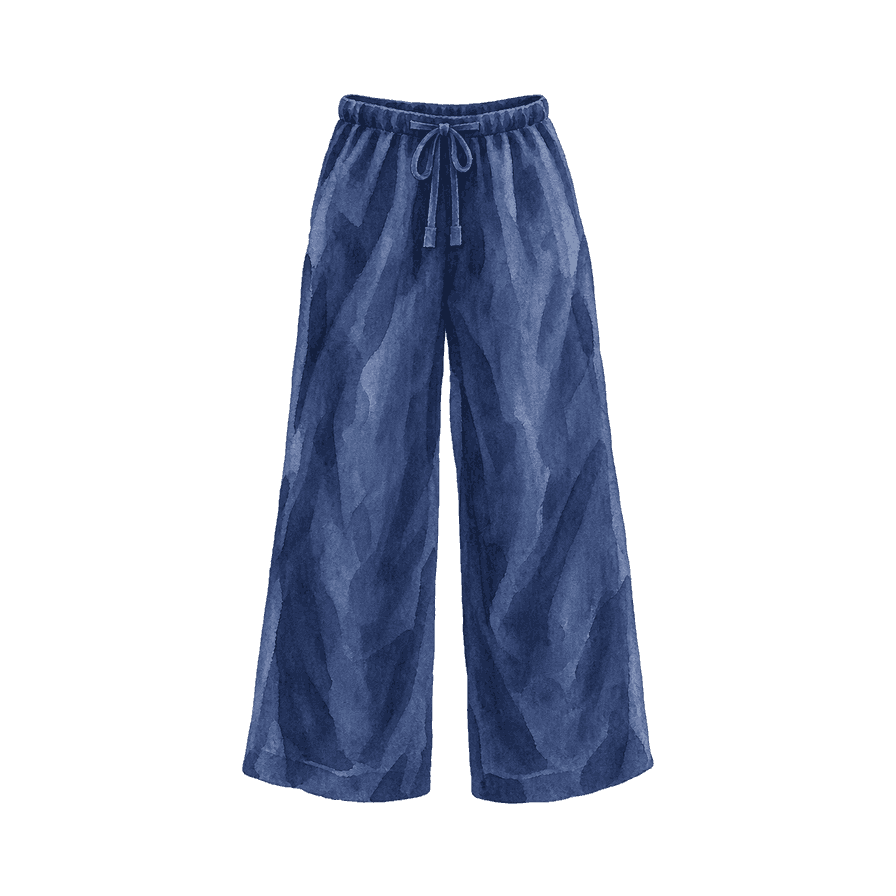 03Navy drawstring linen trousers, wide leg
Rangitoto's summit track is 7 km and 2 hours return, with 250 m of climbing over what DOC calls rough and uneven volcanic terrain, loose gravel and "little shade on a hot day". Ankle-length linen keeps the sun and the rock off your legs and breathes at NIWA's 2–3pm mean of 22.5°C. Navy hides the black grit a lava track leaves on a hem.
 04Green-and-white striped tiered sundress, smocked bodice
Two outings in one dress: lunch on Waiheke, a 40-minute ferry ride away, and an ASB Classic night session, which starts at 6pm in full daylight with NIWA's 6pm mean at 21.0°C. Thin straps leave your shoulders bare, so the linen shirt goes over them at lunch, inside SunSmart's 10am–4pm window. Green-and-white stripes sit with the sea-blue shirt instead of fighting it.
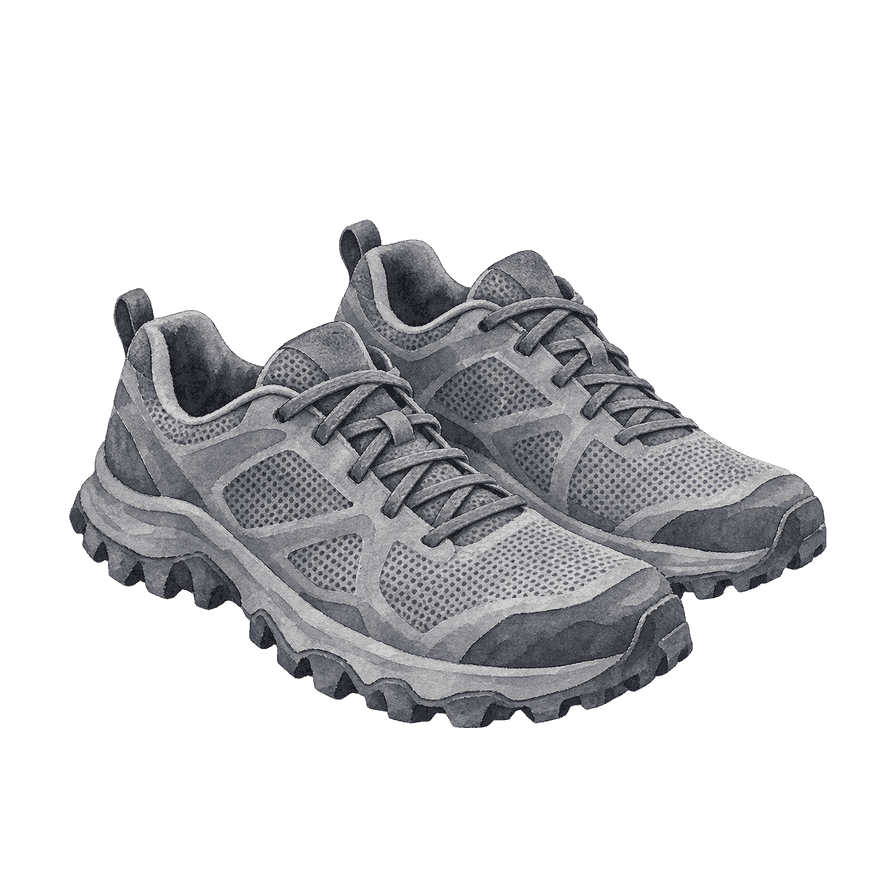 05Slate-grey trail shoes, deep lug sole
DOC's Rangitoto advice is plain about your feet: "Wear sturdy walking shoes that can cope with the rugged lava surfaces." On the summit track the path turns to loose, slippery gravel and stones, and DOC asks for footwear with good grip. A trail shoe with a deep lug does both, breathes at 23°C / 73°F, and is light enough for the ferry and the tennis.
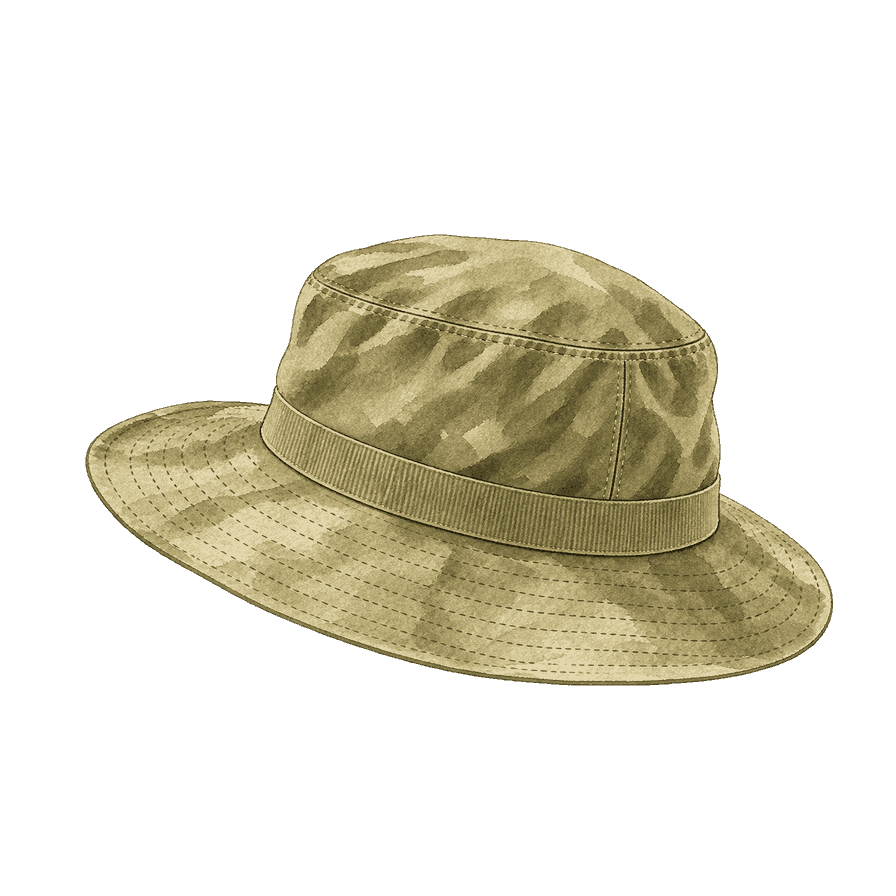 06Olive canvas wide-brim sun hat
On Rangitoto the heat arrives from two sides. DOC's summit track advice warns: "Black volcanic rock reflects intense heat. Come prepared for very hot temperatures, especially in summer." A brim all the way round shades your ears and neck as well as your face. With no chin cord, it rides in the dry bag on the ferry.
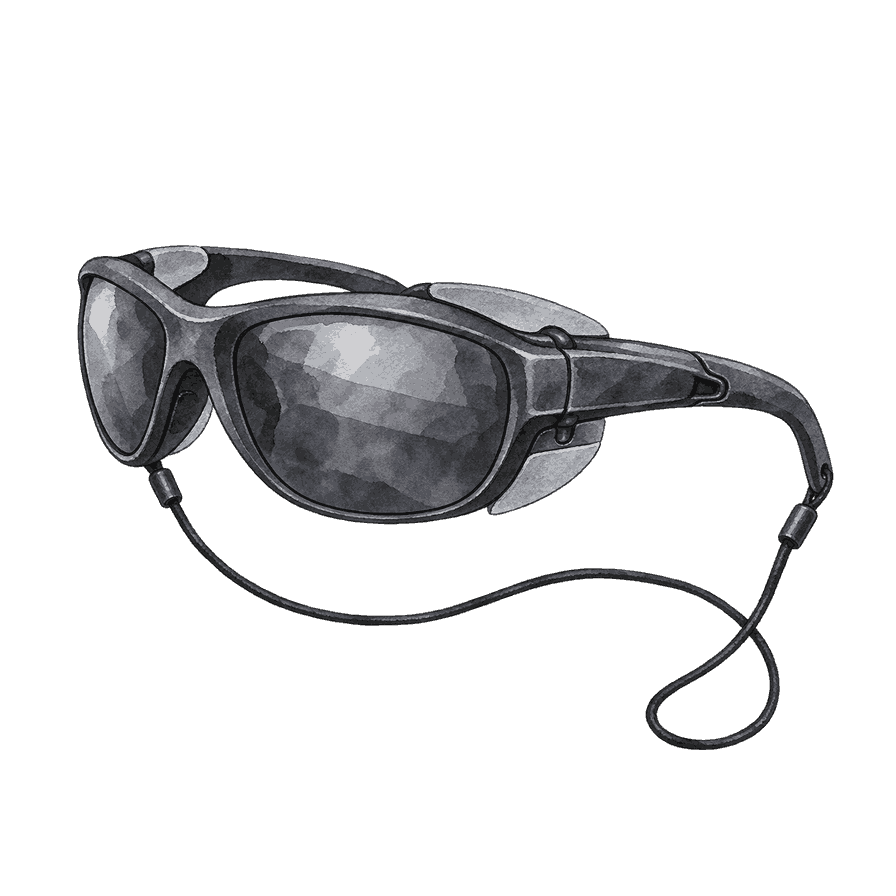 07Black wraparound sunglasses, side shields and cord
SunSmart NZ's advice ends in "Slip, Slop, Slap and Wrap", and the last word is for your eyes, which it asks you to protect on the water all year. Glare comes off the harbour as well as the sky. Wraparound smoke lenses with grey side shields close the gap at your temples, and the cord keeps them round your neck at a ferry rail.
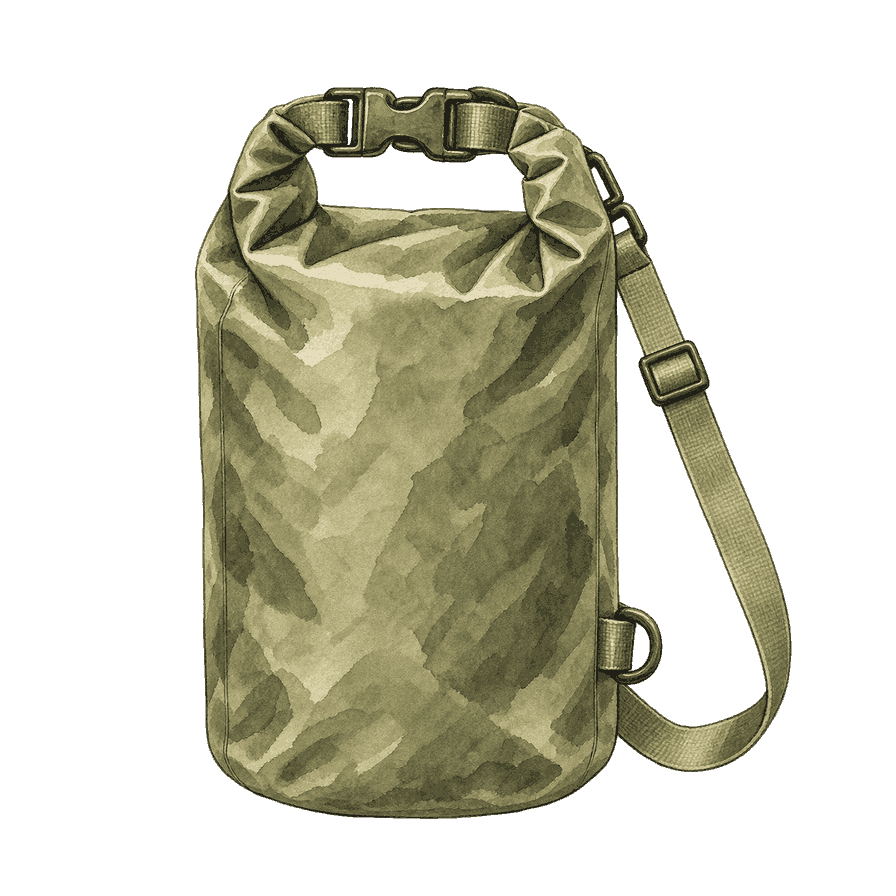 08Olive roll-top dry bag, shoulder strap
DOC asks for 1 to 2 litres of drinking water per person on Rangitoto and writes, "Bring your own food and water. There are no shops on the island." A roll-top dry bag carries two 1-litre bottles and keeps spray off your phone on deck. At the ASB Classic, which bars sealed drinks over 1 litre, one bottle is enough.
Day to night
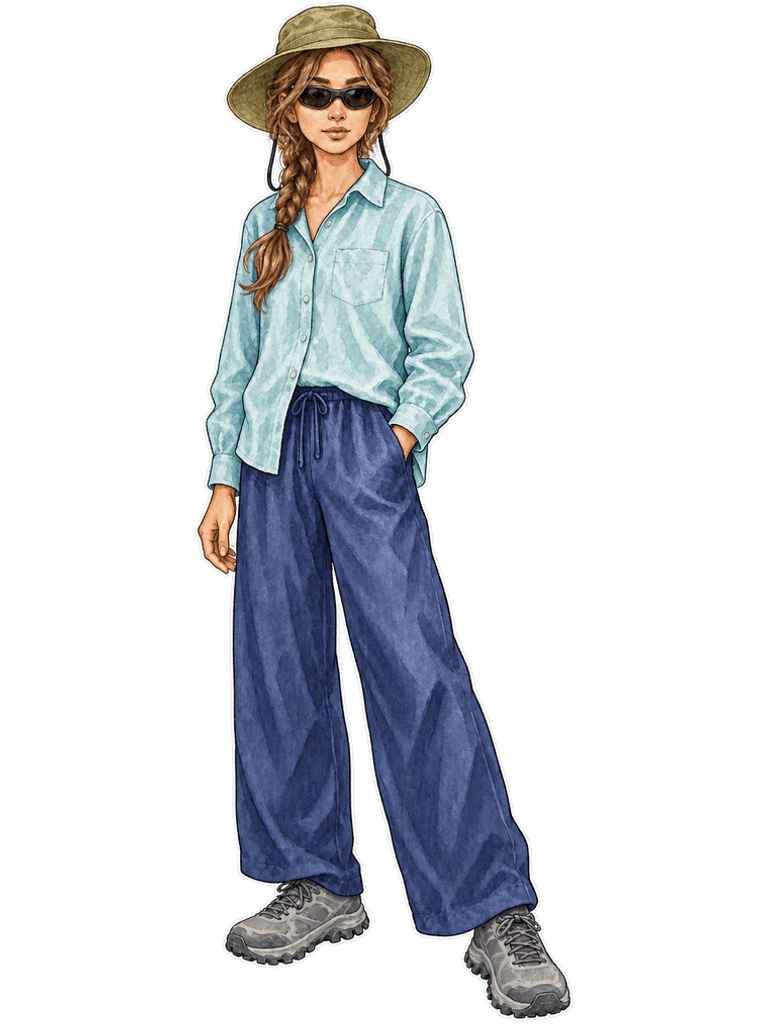
Sea-blue linen shirt · navy linen trousers · slate-grey trail shoes · olive brim · wraparound sunglasses · two litres of water and the windbreaker in the dry bag. An early ferry to Rangitoto, the 7 km summit track done before the midday sun, and back at the wharf in good time for the return sailing, as DOC asks.
Green-and-white sundress · linen shirt open over it · slate-grey trail shoes · windbreaker in the dry bag. A 6pm night session at the ASB Classic with NIWA's mean at 21.0°C and sunset after half past eight, then the windbreaker on for the walk or the ferry home as the air heads toward 18.8°C at 9pm.
A suggested look — sea-blue linen shirt, navy drawstring linen wide-leg trousers, slate-grey trail shoes, olive wide-brim canvas hat, black wraparound sunglasses.
What to avoid
- Jandals on Rangitoto — loose, slippery gravel over rough lava
- Sleeves rolled up on a cool deck — the UV index is still 12.2
- A bag too big for under your seat — refused at the ASB Classic
- Rangitoto without water — DOC says there is none on the island
- The regatta in a January plan — it sails on Monday 1 February 2027
Frequently asked questions
Warm by day, mild at night, and under the strongest sun of the year. NOAA NCEI's figures for Auckland Airport, from 30 complete Januaries, give an average high of 23.2°C and a low of 16.1°C / 61°F. NIWA's Climate and Weather of Auckland records 66mm of rain at the airport across 7 days of 1mm or more, about 11 days with any measurable rain, and a mean wind of 18 km/h. Its mean daily maximum UV index at Leigh is 12.2, the year's highest. NIWA's hourly means run from 16.9°C at 5am to 22.5°C at 2 to 3pm and 18.8°C at 9pm. The sun rises at 6:04am and sets at 8:43pm on 1 January, and sets at 8:33pm by the 31st. February is a little warmer, and the sea keeps warming into it.
A sand packable windbreaker, a sea-blue linen shirt, navy drawstring linen trousers, a green-and-white striped sundress, slate-grey trail shoes, an olive wide-brim canvas hat, black wraparound sunglasses and an olive roll-top dry bag. That covers a 23°C / 73°F afternoon under a UV index of 12.2, a summit walk on Rangitoto's lava, an evening session at the ASB Classic and a ferry home in the wind. Add swimwear, sunscreen and two 1-litre water bottles. Keep jandals for the beach rather than the island track, and leave the big bag at the hotel on tennis days.
The ASB Classic runs from 4 to 16 January 2027 at the Manuka Doctor Arena on Stanley Street: Women's Week from 4 to 10 January and Men's Week from 11 to 16 January, with qualifiers on 2 to 3 and 9 to 10 January that need only a Grounds Pass. The organiser calls it "New Zealand's premier international tennis tournament", one "attracting leading players to Auckland each January". Day sessions start from 11:30am, inside SunSmart NZ's 10am–4pm window, so wear sleeves, a brim and sunglasses; night sessions start at 6pm. Every bag is searched, and anything that will not fit under your seat is refused, as are chilly bins, glass, cans and sealed drinks over 1 litre. The event is cashless. From the Downtown Ferry Terminal it is a flat 15-minute walk to the gates. In 2026, 19 of the 22 sessions sold out, so book early.
Early January for the public holidays and the start of the tennis, late January for the last week of the school holidays. New Year's Day is Friday 1 January, and Employment New Zealand lists the day after as Saturday 2 January, or Monday 4 January if you don't work Saturdays. The ASB Classic's women's qualifiers open on 2 January, Women's Week runs from 4 to 10 January and Men's Week from 11 to 16 January. Schools stay on holiday until Term 1 starts, between 28 January and 3 February. Auckland Anniversary Day falls on Monday 1 February 2027, with the regatta on the harbour that day. The light shortens slowly: sunset moves from 8:43pm on the 1st to 8:33pm on the 31st, and day length from 14h 38m to 13h 58m.
Warmer, drier and under a stronger sun. NOAA's airport figures give January 23°C / 73°F and 16°C / 61°F against December's 22°C / 72°F and 15°C / 59°F. NIWA counts 7 wet days and 66mm in January against 9 and 87mm, the least rain of the three summer months, and the mean wind eases from 19 km/h to 18. The UV index at Leigh rises from 11.5 to 12.2, while the days start to shorten, from 14h 40m at mid-December to 14h 25m. December brings Christmas in the Park on the 12th and schools finishing by the 18th; January is the holiday itself, spent on ferries, islands and the tennis. Our December guide packs a straw hat, tan boat shoes and a red rain shell. This capsule swaps them for a wide brim, trail shoes and a windbreaker.
Holiday clothes for a boat, a bach and a track. The bach is Auckland's summer heritage: on Rangitoto, the Department of Conservation counts "Around 30 of these classic holiday homes" still standing, "largely unchanged since the 1930s", with Bach 38 beside the wharf restored as a museum. For colour, look to Swanndri. William Broome trademarked the brand on 23 December 1913, and in 1927 the tailor John McKendrick added a hood, a laced front and long sleeves to the bush shirt and "introduced the classic olive green we still use today", the olive of the hat and the dry bag in this capsule. The month ends on the water too: the Auckland Anniversary Regatta, first sailed on the day the city was founded, 18 September 1840, takes to the harbour on Monday 1 February 2027, the day after January ends.
Sources
- NOAA NCEI — 1991–2020 climate normals, Auckland Airport stationNOAA NCEI computed this month's temperatures from the Auckland Airport global-summary-of-the-day record (93119099999), 30 complete Januaries. The wet-day count and the UV index come from NIWA's Climate and Weather of Auckland, which uses 1981–2010 normals.
- NOAA NCEI — Global Summary of the Day, Auckland Airport (93119099999), 1991–2020: daily maximum and minimum temperature — accessed 2026-10-25
- NOAA National Centers for Environmental Information — Climate Data Online — accessed 2026-04-23
- NIWA — The Climate and Weather of Auckland, 2nd edition (P.R. Chappell) — accessed 2026-09-26
- SunSmart NZ — UV radiation — accessed 2026-09-26
- ASB Classic — FAQ: 2027 dates (4–16 January), sessions, Grounds Pass — accessed 2026-10-26
- ASB Classic — Conditions of entry: bag search, no glass, cans or chilly bins — accessed 2026-10-26
- ASB Classic — Getting here: train to Britomart, ferry to Downtown, walk to Stanley Street — accessed 2026-10-26
- ASB Classic — Eala returns for the 2027 tournament, 4–16 January 2027 (23 October 2026) — accessed 2026-10-26
- ASB Classic — Record crowds define the biggest ASB Classic (2026 edition: 19 of 22 sessions sold out) — accessed 2026-10-26
- Department of Conservation — Rangitoto Island: visitor information — accessed 2026-10-26
- Department of Conservation — Rangitoto Summit Track: 7 km, 2 hours return — accessed 2026-10-26
- Department of Conservation — Historic Rangitoto: the baches, largely unchanged since the 1930s — accessed 2026-10-26
- Auckland Transport — Auckland ferry destinations: Waiheke 40 minutes, Devonport 12 — accessed 2026-10-26
- Ministry of Education — School terms and holidays 2027: Term 1 starts 28 January–3 February — accessed 2026-10-26
- Employment New Zealand — Public holidays and anniversary dates 2027: Auckland Anniversary Monday 1 February — accessed 2026-10-26
- Auckland Anniversary Regatta — Monday 1 February 2027 — accessed 2026-10-26
- Auckland Anniversary Regatta — History: first sailed 18 September 1840 — accessed 2026-10-26
- Swanndri — The history of Swanndri: William Broome, 1913; John McKendrick's hooded bush shirt, 1927 — accessed 2026-10-26
- Coca-Cola Christmas in the Park — Auckland Domain, Saturday 12 December 2026 — accessed 2026-09-26
- New Zealand Government — School terms and holidays 2026 — accessed 2026-09-26