What to Wear in Melbourne in February
Melbourne in February: 25°C / 77°F afternoons, 15°C / 59°F nights, rain on about 6 days, and Lunar New Year on Saturday 6 February 2027.
- Stone hooded mac — the Bureau of Meteorology says a cool change can cut the temperature by up to 20°C in about an hour
- Cobalt fine merino crew — four or five February afternoons peak at 20°C or less on NOAA's Olympic Park record
- Black cotton crew tee — Cancer Council Australia rates dark colours above pale ones in the same fabric for UV
- Black mock-neck maxi dress — the warmest February night on NOAA's record stayed above 22°C
- Stone linen wide-leg trousers — nearly a quarter of February afternoons reach 30°C
- Black wide-brim hat with a chin cord — SunSmart wants a brim of 7.5cm or more, and the change arrives on a southwesterly
- Packing for 25°C — February afternoons on NOAA's record run from 38°C to under 17°C
- A cap as sun cover — SunSmart says it leaves your face, neck and ears exposed
- Leaving the mac at the hotel on a 35°C morning — the change can arrive within the hour
- Swimming in your tee — Cancer Council Australia says wet fabric blocks less UV
Pack for the heat and the day after. NOAA NCEI's record for Melbourne (Olympic Park) puts February at 25°C / 77°F by day and 15°C / 59°F at night, but almost a quarter of its afternoons reach 30°C and four or five peak at 20°C or less. The Bureau of Meteorology explains the swing: hot northerlies from the interior, then a front and a southwesterly off the Southern Ocean that can cut the temperature by up to 20°C in about an hour. In 2025 the station logged 37.3°C on 4 February and 23.2°C the next day. So a black tee, stone linen and a brim for the heat, and a stone mac and a cobalt merino crew for the change.
February in Melbourne is two cities a day apart. On 4 February 2025 Olympic Park reached 37.3°C; on the 5th it stopped at 23.2°C. You dress for the first and carry the second.
The capsule
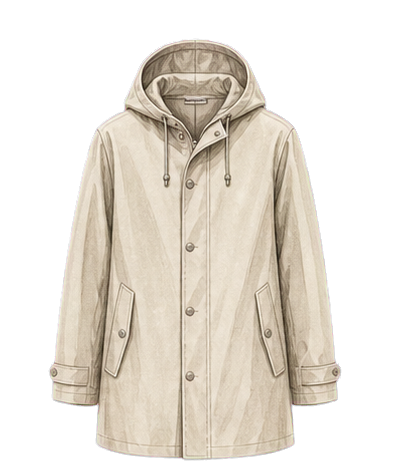 01Stone hooded cotton mac, thigh length, button front
Carry it on the hot mornings, because that is when the change catches you out. The Bureau of Meteorology says a Melbourne cool change can cut the temperature by up to 20°C in about an hour, and NOAA's record for Olympic Park went from 34.8°C on 13 February 2025 to 17.9°C two days later. A stone cotton mac blocks the southwesterly without wool, and the drawcord hood covers the shower that comes in with the front.
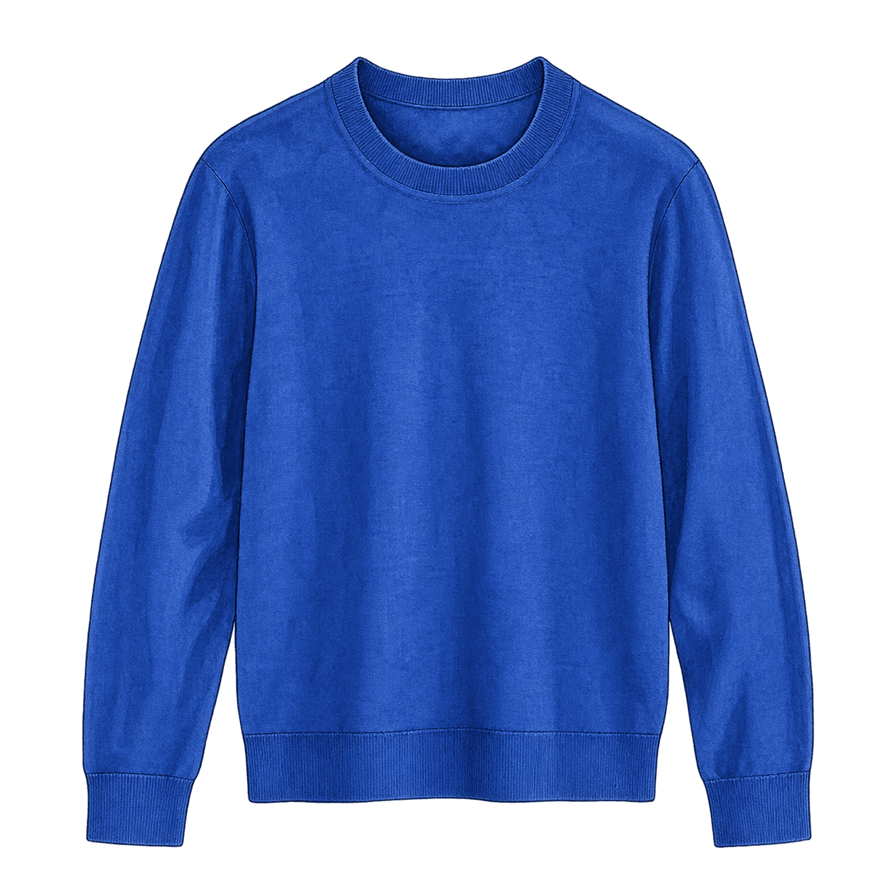 02Cobalt fine merino crew-neck sweater
Four or five February afternoons a year peak at 20°C or less on NOAA's Olympic Park record, and the coldest February night on it fell to 9.9°C. Fine-gauge merino gives you that warmth without bulk, worn over the tee or pulled on over the maxi. Cobalt is the capsule's one colour, which makes it the piece for a Lunar New Year dinner on Saturday 6 February, a night for colour rather than head-to-toe black.
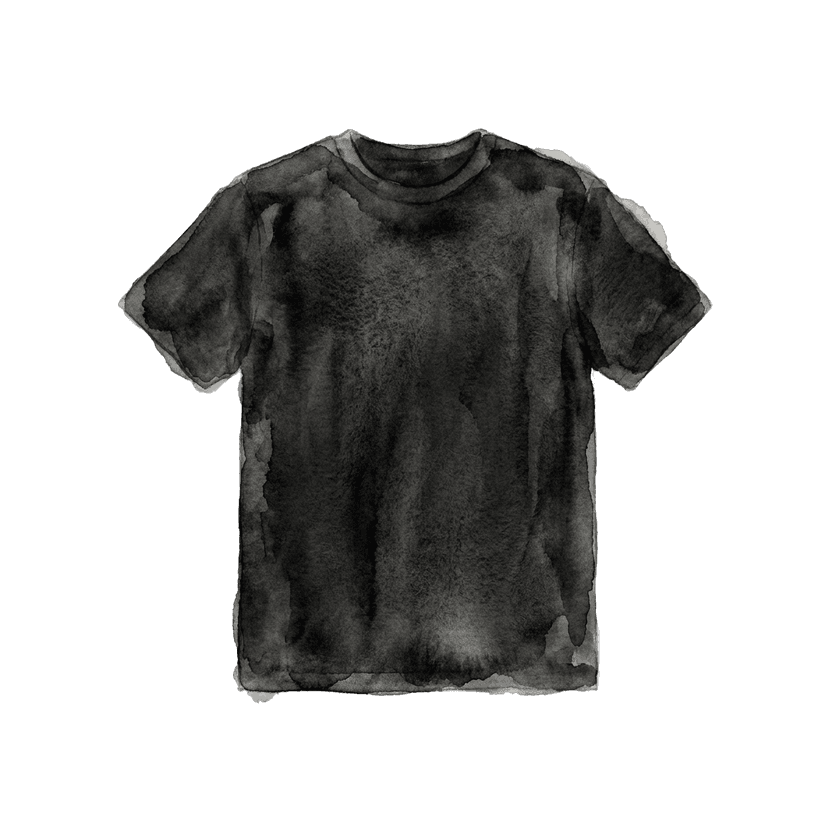 03Black short-sleeve cotton crew-neck tee
Cancer Council Australia rates dark colours above pale ones in the same fabric for UV protection, so black is a sun decision here as much as the city's habit. SunSmart says that in Victoria's summer months UV can damage skin in as little as 11 minutes. A crew tee keeps your shoulders covered under the brim on a 30°C afternoon, and it goes under the cobalt crew when the change comes through.
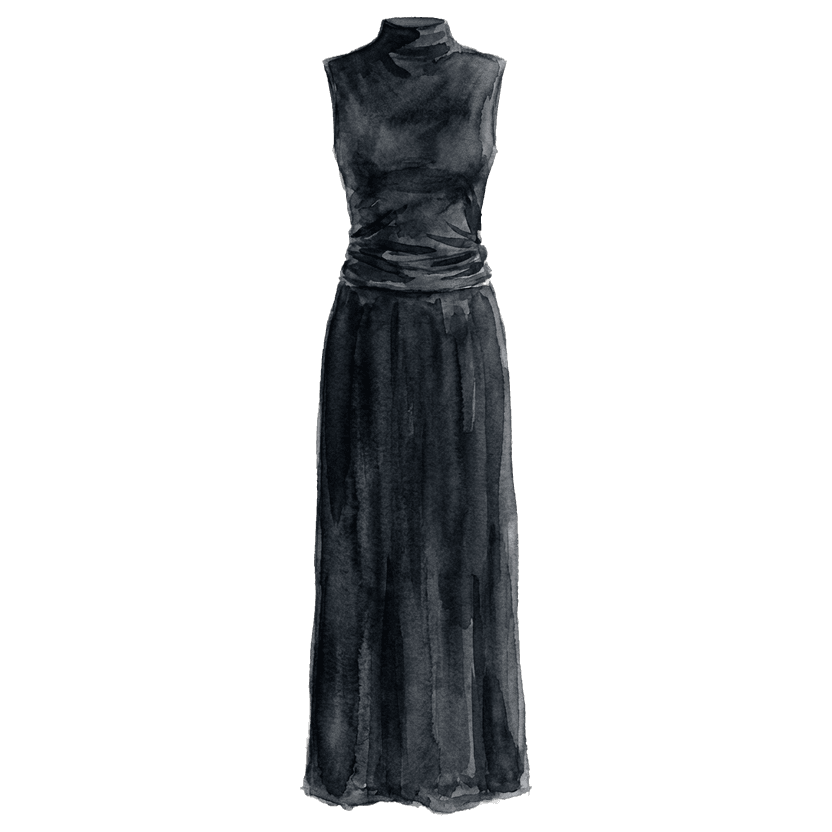 04Black sleeveless mock-neck maxi dress, ruched waist
For the hot nights. February evenings average 15°C / 59°F, but the warmest February night on NOAA's Olympic Park record stayed above 22°C, and a heatwave keeps the laneways warm well past a sunset of about 8:30pm early in the month. Black stretch jersey packs without creasing, covers your legs for a late dinner, and takes the cobalt crew over it if the southerly arrives before you leave.
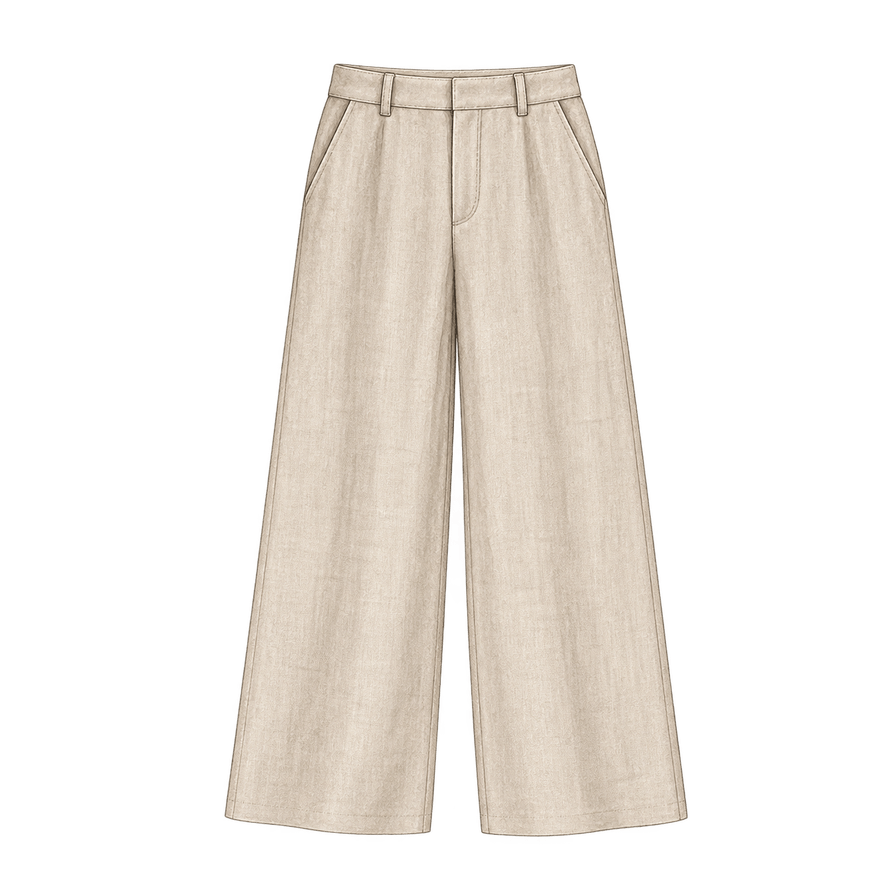 05Stone washed-linen wide-leg trousers, flat front
Nearly a quarter of February afternoons reach 30°C on NOAA's Olympic Park record, and about two reach 35°C. Wide-leg linen keeps your legs covered from the sun with air moving round them, which shorts do not. Stone sits between the black tee and the stone mac, so one pair carries the heat day and the cool change behind it.
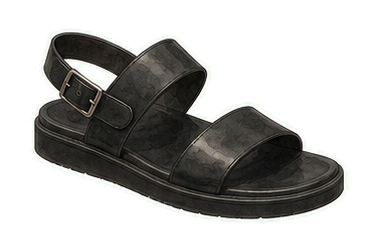 06Black leather two-strap sandals, buckled slingback
Buckle them for the 30°C days and the warm nights. A slingback strap keeps the sole under your heel in a Lunar New Year crowd on Little Bourke Street, where a slide or a thong comes off underfoot. Wide leather straps spread the load over a day of walking between the city grid and the laneways, and the thick sole keeps your feet off a wet footpath after the change.
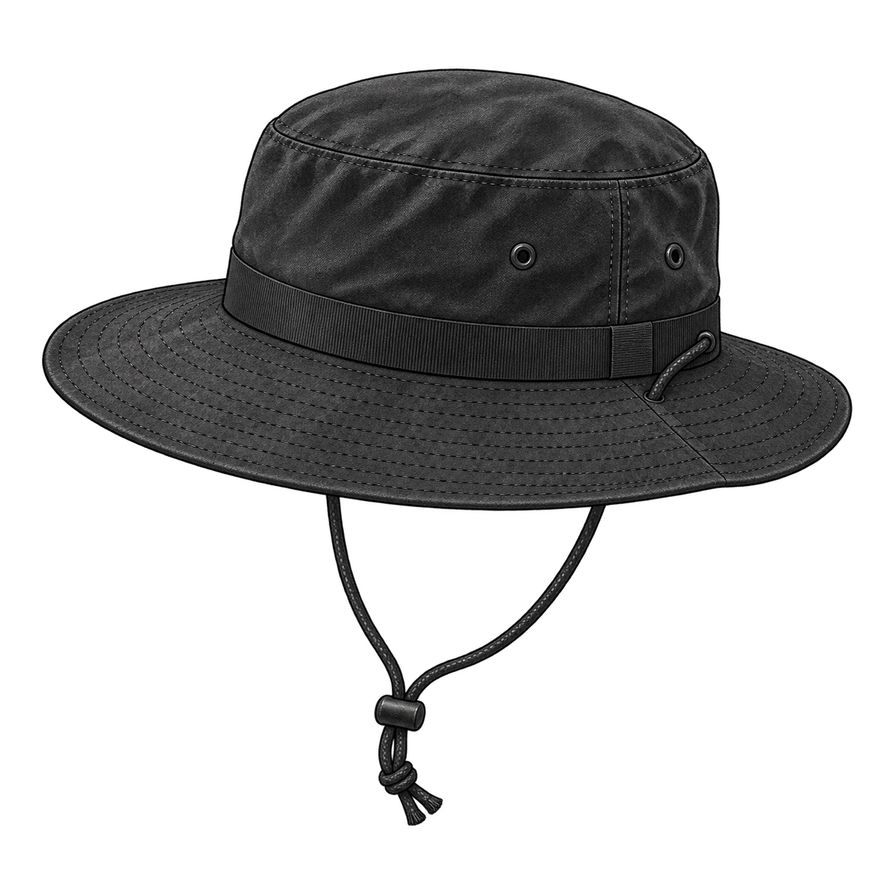 07Black cotton-twill wide-brim sun hat, chin cord
SunSmart wants a brim of at least 7.5cm on an adult and says a cap leaves much of your face, neck and ears in the sun. Pick densely woven cotton over straw, which SunSmart warns can let UV through when the weave is loose. The chin cord is for the change: the Bureau of Meteorology describes it arriving on a southwesterly off the Southern Ocean, and a brim without a cord leaves with it.
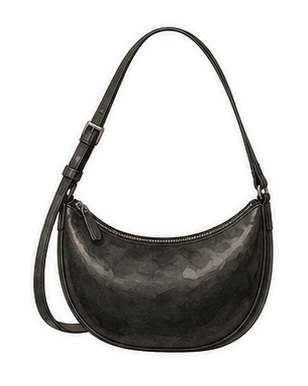 08Black leather crescent crossbody, zip top
Wear it across your body. SunSmart asks you to reapply sunscreen at least every two hours, so the SPF 50 has to come with you, along with sunglasses and a phone, and a zip top keeps all three shut in a crowd. A crescent sits flat against your side under the open mac once the change comes through, and black leather matches the sandals.
Day to night
Black crew tee · stone linen wide-leg trousers · black wide-brim hat, cord under the chin · black slingback sandals · crescent crossbody with the SPF 50. A morning forecast for 34°C, out before the heat builds, the stone mac over your arm because the change is due by evening.
Black mock-neck maxi · cobalt merino crew pulled on over it · stone mac, hood down · black slingback sandals · crossbody. The southwesterly has come through, the temperature has fallen by 15°C since lunch, and dinner in Chinatown on Little Bourke Street runs past a sunset of about 8:20pm.
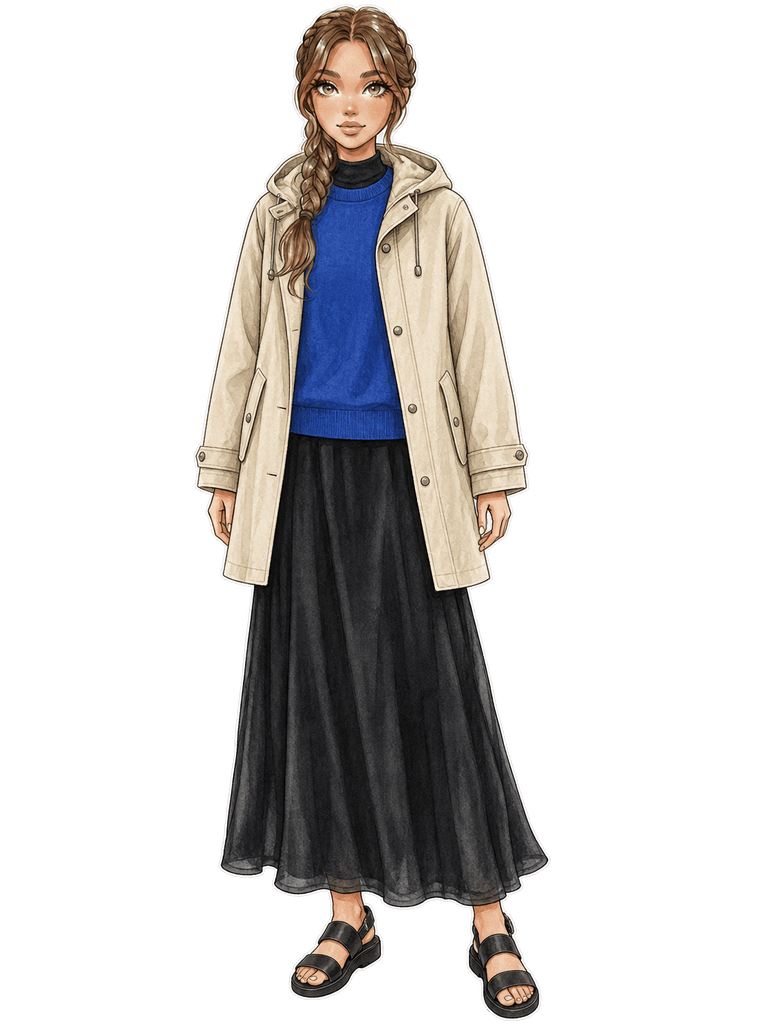
A suggested look — stone hooded cotton mac, cobalt merino crew-neck sweater, black mock-neck maxi dress, black leather slingback sandals.
What to avoid
- Packing for 25°C — February afternoons on NOAA's record run from 38°C to under 17°C
- Leaving the mac behind on a hot morning — the Bureau says a change can cut up to 20°C in about an hour
- A cap as sun cover — SunSmart says it leaves face, neck and ears exposed
- Loosely woven straw as your only brim — SunSmart says it lets UV through
- Swimming in your tee — Cancer Council Australia says wet fabric blocks less UV
Frequently asked questions
Warm on average and unsettled from one day to the next. NOAA NCEI's record for Melbourne (Olympic Park), a Bureau of Meteorology station, gives February a mean maximum of 25°C / 77°F and a mean minimum of 15°C / 59°F across 2015–2025, with rain on about 6 days. Nearly a quarter of February afternoons reach 30°C and about 2 reach 35°C, while four or five peak at 20°C or less. The hottest February afternoon on that record reached 38.9°C; the coolest peaked at 16.5°C. Daylight shrinks from about 14 hours on the 1st to 13 hours on the 28th.
A stone hooded cotton mac, a cobalt fine merino crew, a black cotton crew tee, a black sleeveless mock-neck maxi dress, stone linen wide-leg trousers, black leather slingback sandals, a black wide-brim hat with a chin cord and a black leather crescent crossbody. That covers a 35°C afternoon and the 20°C afternoon that follows a cool change, often in the same week. Add SPF 50 and reapply it at least every two hours, as SunSmart advises. Leave the cap and any loosely woven straw hat at home.
Lunar New Year falls on Saturday 6 February 2027, the start of the Year of the Goat, Melbourne's big celebration is the Chinatown festival run by the Melbourne Chinatown Business Association: in 2026 it took over Little Bourke and Russell streets on Sunday 22 February, the weekend after the new year. The 2027 date is not yet published, so check it before you book. Dress for a crowd on a summer evening: sandals with a heel strap, a crossbody worn across your body, and a knit within reach, because nights average 15°C / 59°F and the Bureau of Meteorology says a cool change can take up to 20°C off in about an hour. For a family dinner, lead with the cobalt crew rather than head-to-toe black: the Singapore Chinese Cultural Centre's New Year guide treats black and white as funeral colours.
Early February for Lunar New Year and longer evenings, late February for slightly cooler nights and the St Kilda Festival, free on the foreshore on Saturday 20 and Sunday 21 February 2027. The Australian Open finishes on Sunday 31 January 2027, and Victorian government school students are back from Thursday 28 January, so February runs in school term from the start. Lunar New Year falls on Saturday 6 February. On NOAA's Olympic Park record the first half of the month has had more 35°C days, about 1.2 a year against 0.8, and the second half slightly cooler nights. Sunset moves from about 8:35pm on the 1st to about 8pm on the 28th.
About a degree cooler by day and half a degree cooler at night when both months are read from the same record. On NOAA NCEI's copy of the Olympic Park station, February's mean maximum sits about 1°C below January's and its mean minimum about 0.6°C lower. February has fewer hot afternoons, about 6.5 of 30°C or more against 8.5, and more cool ones, 4.5 at 20°C or less against 3. It is drier too: rain on about 6 days against 8 or 9. Our January guide quotes the Bureau of Meteorology's own 2013–2026 figures, 26.8°C and 16.5°C; NOAA's record, which lacks 2013, 2014 and 2026, reads January at 26.4°C and 15.8°C. January is built around the Australian Open; February keeps the cool change and loses the tennis.
Black cotton and linen for the heat, and a knit and a mac carried for the change. Viktoria & Woods, which Margie Woods established in 2004, built its range on its signature merino before adding tailoring, outerwear and occasion pieces, and a fine merino layer is the local answer to an evening after a cool change. Kuwaii, established in 2008 by Kristy Barber, describes itself as one of Melbourne's first slow-fashion labels and makes most of its range in the city. Its stores sit in Brunswick and the CBD's Cathedral Arcade.
Sources
- NOAA NCEI — 2015–2025 climate normals, Melbourne (Olympic Park) stationthe Bureau of Meteorology operates the station; NOAA NCEI computed this month's figures from its 95936099999 global-summary-of-the-day record, 11 Februaries 2015–2025, and rain days count any day with at least 0.01 in. Recorded per month because this city's other pages read the Bureau's own 2013–2026 statistics.
- NOAA NCEI — Global Summary of the Day, Melbourne Olympic Park (BoM 086338, 95936099999), January and February 2015–2025 — accessed 2026-09-29
- Bureau of Meteorology — Climate statistics, Melbourne (Olympic Park) 086338, 2013–2026 — accessed 2026-09-26
- Bureau of Meteorology — Explainer: what influences air temperature? (Melbourne's summer temperature swings) — accessed 2026-09-27
- SunSmart (Cancer Council Victoria) — Protect your skin: clothing, hats, sunglasses — accessed 2026-09-26
- SunSmart (Cancer Council Victoria) — UV radiation — accessed 2026-09-26
- Cancer Council Australia — Sun protective clothing — accessed 2026-09-26
- Ministry of Manpower Singapore — Public holidays 2027 (New Year's Day 1 January; Chinese New Year 6–7 February) — accessed 2026-09-27
- Australian Open — Australian Open 2027 dates announced (11–31 January, Melbourne Park) — accessed 2026-09-27
- Victorian Government — School term dates and holidays in Victoria (2027 term 1) — accessed 2026-09-27
- Viktoria & Woods — About us, established 2004 by Margie Woods — accessed 2026-09-26
- Kuwaii — About Kuwaii, established 2008 by Kristy Barber — accessed 2026-09-26
- Melbourne Chinatown Business Association — 2026 Melbourne Chinese Lunar New Year Festival (Sunday 22 February 2026, Little Bourke Street and Russell Street) — accessed 2026-09-29
- Singapore Chinese Cultural Centre — Festive Fever: Chinese New Year Good Luck Guide (red for luck; black and white as funeral colours) — accessed 2026-09-29
- St Kilda Festival — 2027 dates (Saturday 20 February, First Peoples First; Sunday 21 February, Festival Sunday, St Kilda foreshore; free) — accessed 2026-09-29