What to Wear in Sydney in February
Sydney in February: 27°C / 81°F afternoons, 20°C / 68°F nights, January's heat with 40mm more rain and the most humid air of the year.
- Sea-blue linen shirt, sleeves down — Cancer Institute NSW rates UV high until May, and linen dries on the body
- Blue-and-white striped shorts — bare legs shrug off a downpour that leaves trouser hems wet all afternoon
- Terracotta linen wrap skirt — Lunar New Year on 6 February and Cabramatta's festival on the 20th, nights near 20°C / 68°F
- Hot-pink high-neck one-piece — swim between the red and yellow flags, and keep the linen dry for after
- White thongs — a flat sole and a toe post have nothing to soak when the gutters run
- Phone pouch, terracotta umbrella and a zip tote — an average February brings 1.4 days above 25mm
- Denim — February has the year's highest mean dew point, 17.2°C, and wet jeans stay wet
- Canvas or suede sneakers — the first flooded crossing soaks them through
- A rain shell — in the most humid month it fills with sweat before the rain reaches you
- A straw hat — straw loses its shape once soaked; bring a cotton brim
Pack to get caught in the rain. NOAA NCEI's daily record for Observatory Hill, a Bureau of Meteorology station, puts February afternoons at 26.8°C and nights at 20°C / 68°F, a fraction under January. The rain is the difference: 132mm in an average February against 91mm in January, with 1.4 days above 25mm against 0.9. NOAA's daily summaries for the same site give February the highest mean dew point of the year, 17.2°C, so wet cloth dries slowly. Choose linen and bare legs that dry on the body, thongs with nothing to soak, a pouch for your phone and an umbrella rather than a shell. Keep the sleeves long: Cancer Institute NSW rates UV high until May.
February in Sydney is January with the rain turned up: the same heat, the same warm nights, and bigger storms in heavier air. Dress for the downpour you will get caught in, not the one you plan to avoid.
The capsule
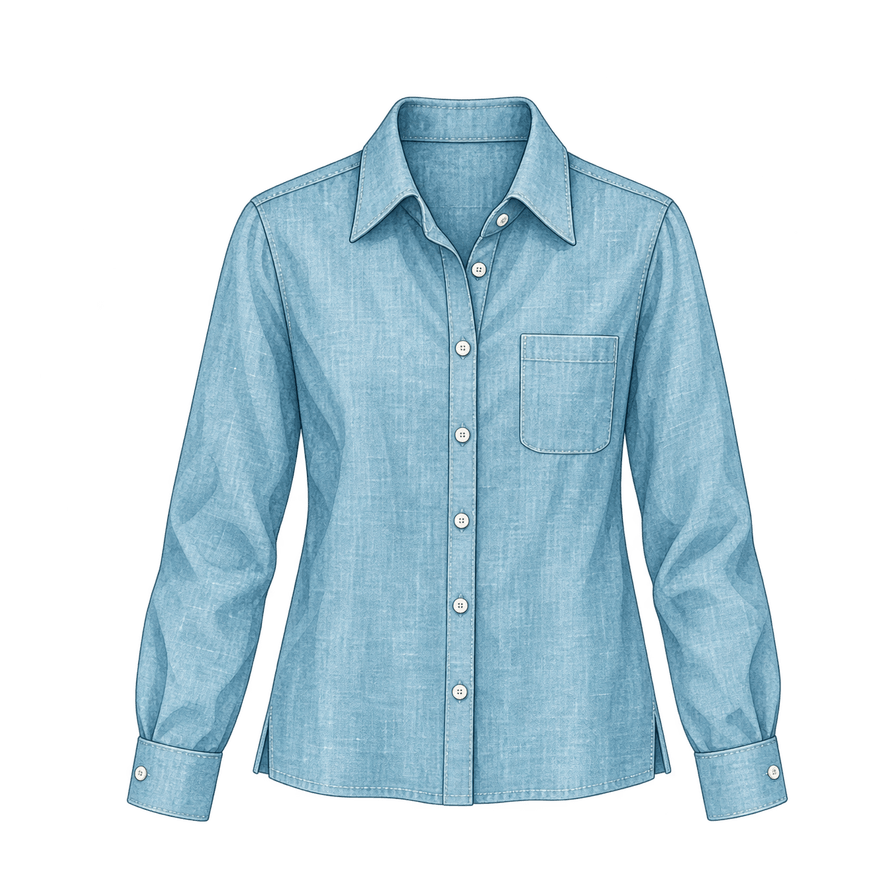 01Sea-blue linen shirt, long sleeves, chest pocket
Wear it over everything, with the sleeves down. Cancer Institute NSW rates UV in New South Wales high from August to May, and Cancer Council Australia rates darker colours above pale shades of the same fabric, which is why this shirt is sea-blue and not white. Linen also dries on your back faster than cotton after a shower, and February has the most humid air of the year on NOAA's daily summaries.
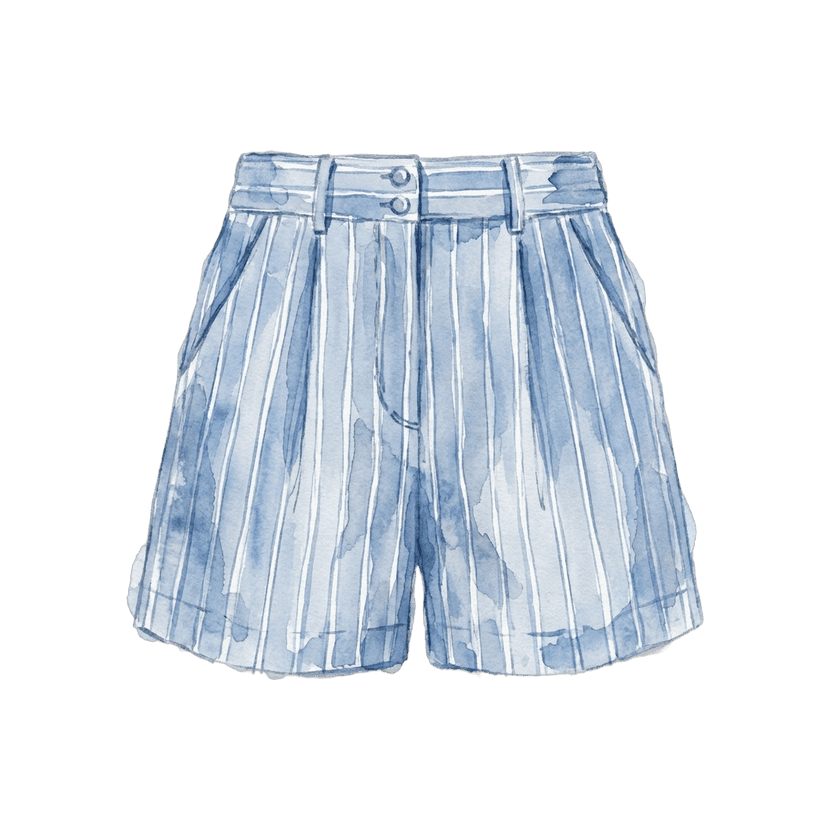 02Blue-and-white striped pleated shorts, turned-up hem
Bare legs are the rain gear. NOAA's Observatory Hill record gives February 1.4 days above 25mm, against 0.9 in January, and a full-length trouser leg soaks up a flooded footpath and clings for the rest of the afternoon. These sit high with two front pleats, so the waist stays loose in humid air, and the blue stripe ties them to the shirt.
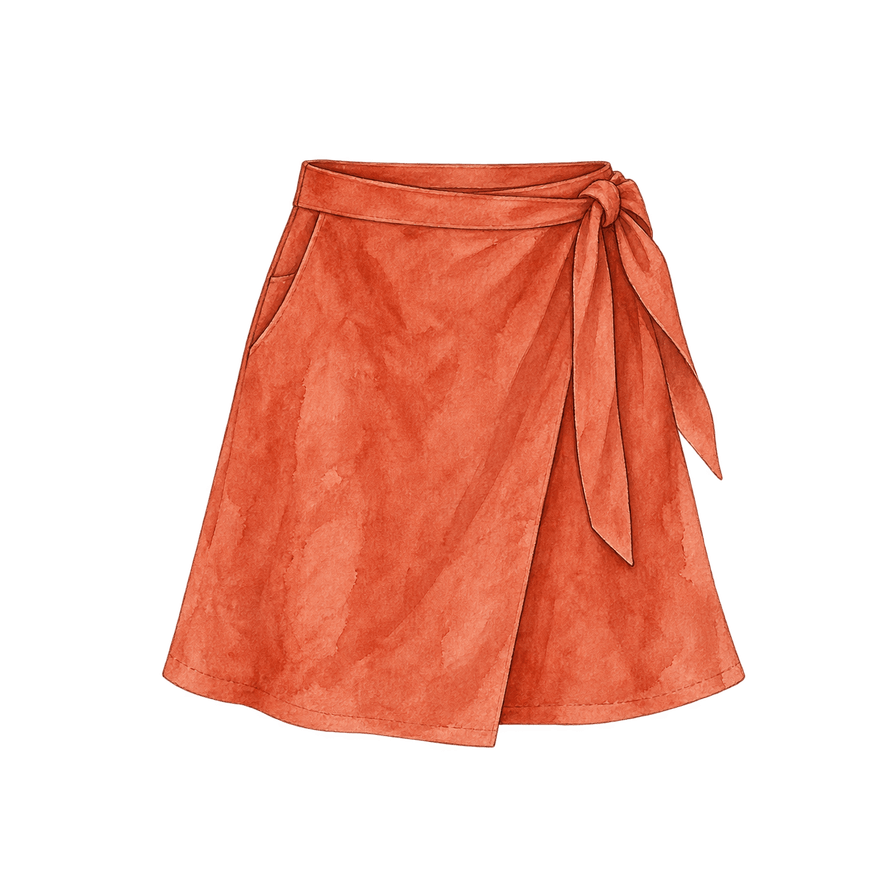 03Terracotta linen wrap skirt, knee length
For Lunar New Year on Saturday 6 February 2027, and for the Cabramatta Lunar New Year Festival on Arthur Street two weeks later, when the Year of the Goat gets a street party from 11am to 9pm. Terracotta sits next to the new year's red without turning into a costume. Tie the wrap loose on a night that stays near 20°C / 68°F, and keep it at the knee, clear of the puddles a midi hem would drag through.
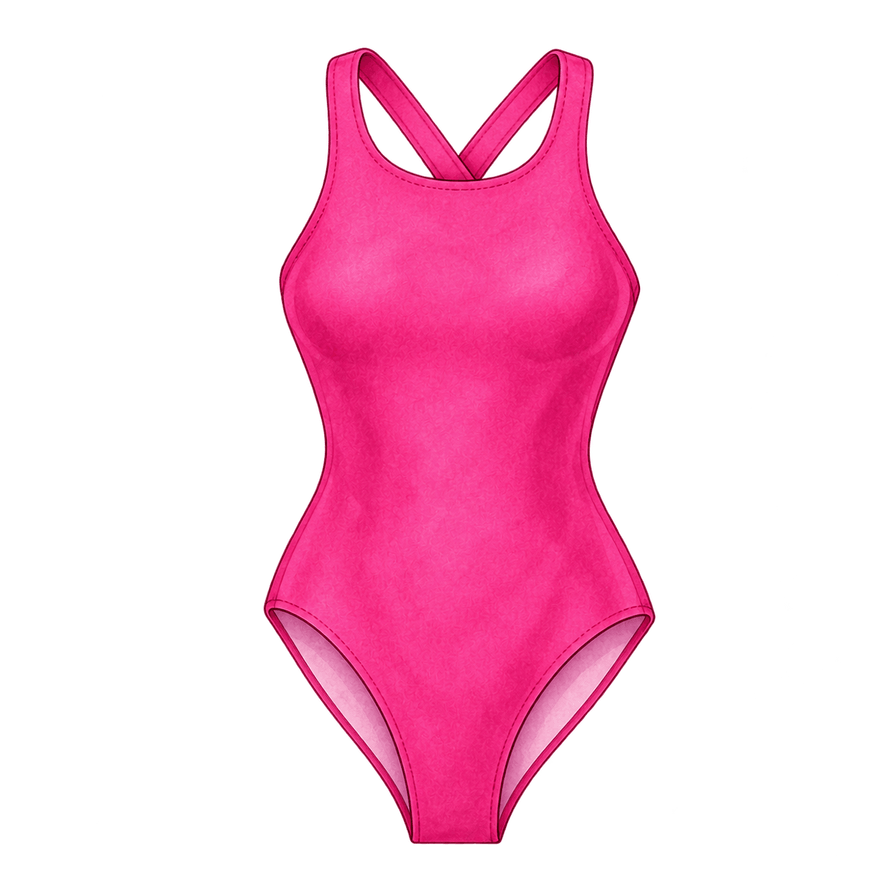 04Hot-pink high-neck one-piece, crossed back straps
Swim in this and nothing else, and swim it between the red and yellow flags, where Surf Life Saving NSW puts its lifesavers and lifeguards. Cancer Council Australia says fabric gives less UV protection wet than dry, so the linen shirt stays in the tote until you are out. A high neck and crossed back straps stay in place when a Bondi wave dumps you.
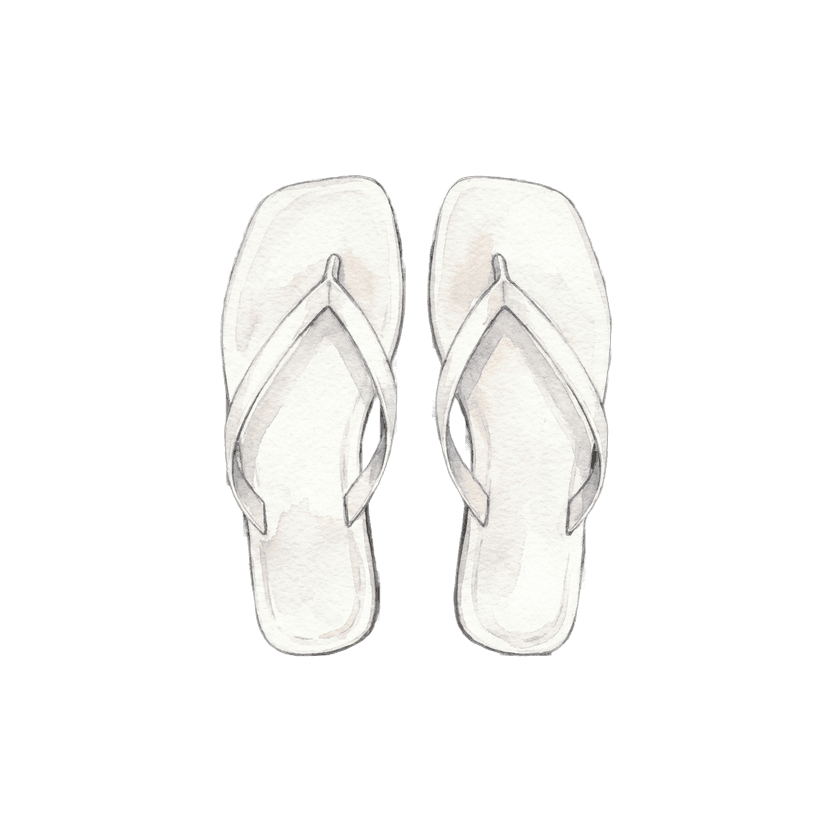 05White square-toe thongs
Sydney calls them thongs, and in February they beat any closed shoe. A flat sole and a single toe post have nothing to soak, so a cloudburst costs you wet feet and nothing more, while canvas sneakers stay damp for the rest of the day in air this humid. White keeps them in step with the tote and the stripe in the shorts.
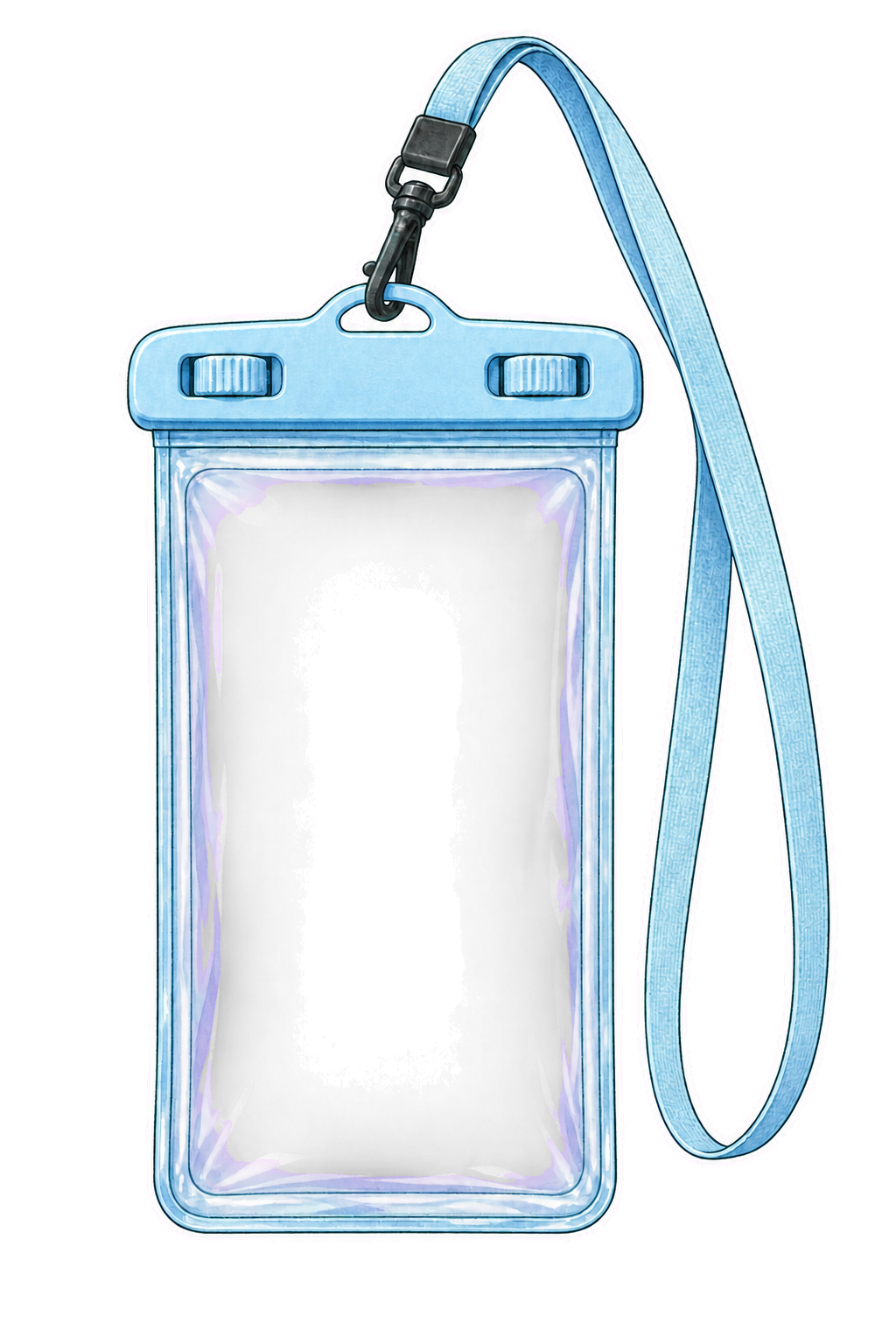 06Sky-blue waterproof phone pouch on a lanyard
Your phone lives in here from the first downpour to the last swim. Hang it across your body and your hands stay free for the umbrella, and the clear window still lets you check a ferry time or take a photo without opening it. On NOAA's record the worst February storms have landed in the first fortnight, 428mm of rain between 1 and 14 February 2020.
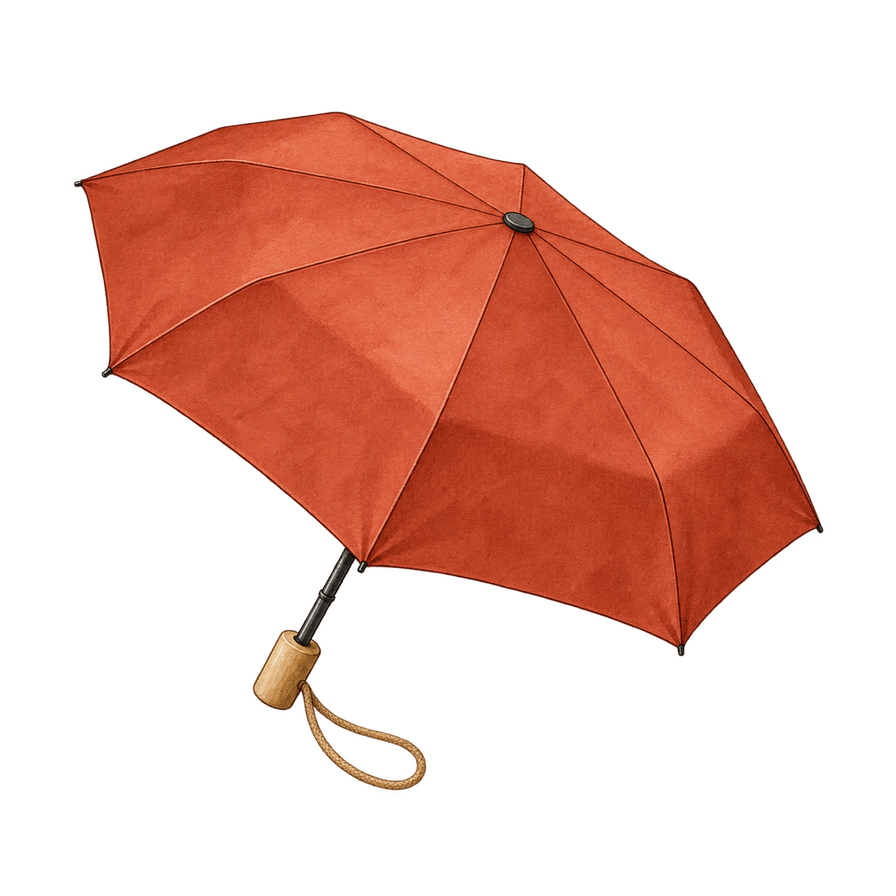 07Terracotta compact umbrella
Carry an umbrella, not a shell. At a mean dew point of 17.2°C, the highest of the year on NOAA's daily summaries, a sealed jacket fills with sweat on the walk, while an umbrella leaves the air moving around you. It folds small enough for the tote, and the terracotta canopy matches the skirt for the walk to dinner.
 08White coated-canvas zip tote
A zip is the reason to pack this bag. An open straw or cotton tote fills with water in a February downpour; coated canvas sheds it, and the zip keeps a towel, the folded umbrella and the linen shirt dry for after the beach. White wipes clean of sand and matches the thongs.
Day to night
Hot-pink one-piece under the sea-blue linen shirt · striped shorts · white thongs · phone pouch on its lanyard · umbrella in the zip tote. A swim before lunch, then the shirt back on, dry, and sleeves down for the walk up from the sand.
Sea-blue shirt tucked into the terracotta wrap skirt · white thongs · phone pouch · terracotta umbrella. Lunar New Year dinner on Saturday 6 February 2027, or the last hours of the Cabramatta festival on the 20th, which runs to 9pm; sunset is at about 7:45pm and the night holds near 20°C / 68°F.
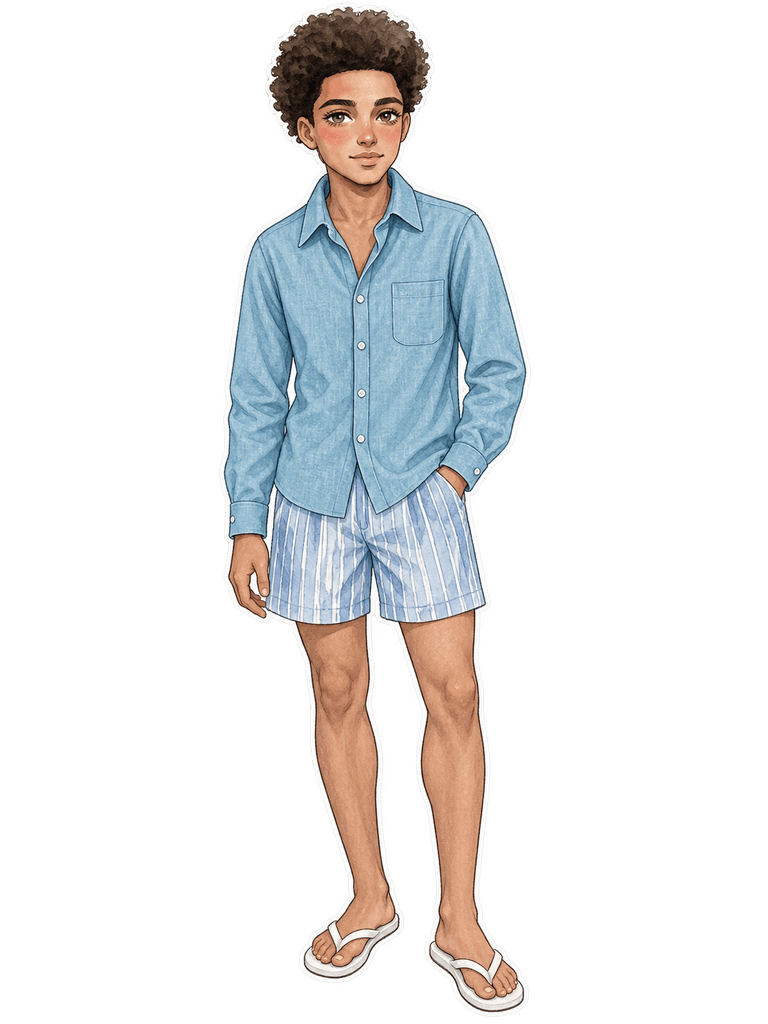
A suggested look — sea-blue linen long-sleeve shirt, blue and white striped pleated shorts, white thong sandals.
What to avoid
- Denim — February has the year's highest mean dew point, and wet jeans stay wet
- Suede or canvas sneakers — an average February brings 1.4 days above 25mm
- A rain shell — in the most humid month it fills with sweat
- A straw hat — it loses its shape in the first downpour
- Swimming outside the red and yellow flags — that is where Surf Life Saving NSW has no one watching
- Swimming in the linen shirt — wet fabric blocks less UV
Frequently asked questions
Hot, humid and the wettest month of the summer. NOAA NCEI's daily record for Sydney Observatory Hill, a station the Bureau of Meteorology operates, gives an average February high of 26.8°C and a low of 20°C / 68°F, with 132mm of rain across about 11 days of measurable rain; about 6 of those bring more than 2.5mm and 1.4 bring more than 25mm. Only June is wetter on the same record. NOAA's daily summaries for the station give February the highest mean dew point of any month, 17.2°C. Daylight runs from 13h 45m on 1 February to 12h 53m on the 28th, with sunset moving from about 8pm to 7:35pm.
A sea-blue linen long-sleeve shirt, blue-and-white striped shorts, a terracotta linen wrap skirt, a hot-pink one-piece, white thongs, a waterproof phone pouch, a terracotta compact umbrella and a white coated-canvas zip tote. That covers a humid 27°C / 81°F afternoon, a downpour on the walk back from the beach and a Lunar New Year dinner on a night near 20°C / 68°F. Leave denim, canvas sneakers, a rain shell and any straw hat at home, and pack sunscreen: Cancer Institute NSW rates UV high until May.
Lunar New Year falls on Saturday 6 February 2027, the start of the Year of the Goat. The City of Sydney has not published its 2027 Lunar Festival programme, but the NSW Government lists the Cabramatta Lunar New Year Festival for Saturday 20 February 2027, from 11am to 9pm on Arthur Street. Dress for a crowded street on a humid day that runs into evening: the sea-blue linen shirt with sleeves down, the terracotta wrap skirt, flat shoes, the phone pouch across your body and the umbrella. NOAA's record gives February about 11 rain days, and the night stays near 20°C / 68°F.
Late February for a smaller risk of a washout and the run-up to Mardi Gras; early February for Lunar New Year. On NOAA NCEI's daily record for Observatory Hill, the four wettest February fortnights from 1991 to 2020 all fell between the 1st and the 14th, led by 428mm in 2020, though in a typical year the halves are close, about 45mm against 40mm. Lunar New Year is Saturday 6 February 2027, with Eastern division students back at school from the 3rd. Mardi Gras season opens in the last days of the month, ahead of the 49th Parade from Oxford Street to Moore Park on Saturday 6 March. Sunset moves from about 8pm to 7:35pm.
Same heat, more rain. On NOAA NCEI's daily record for Observatory Hill, February's average high is 26.8°C against January's 27.0°C, and both months average 20°C / 68°F at night. Rainfall rises from 91mm to 132mm and days above 25mm from 0.9 to 1.4, while days above 2.5mm barely move, 6.4 against 6.3. February has slightly fewer 30°C days, about 3 against 4. NOAA's daily summaries put its mean dew point at 17.2°C against January's 16.9°C. You also lose about 50 minutes of daylight across the month. Our January guide covers Sydney Festival nights; February is about getting caught in the rain.
Swimwear, and something with sleeves to pull over it. The habit goes back a long way here: the Australian National Maritime Museum traces Speedo to MacRae Knitting Mills, formed in 1914 with a first factory on Regent Street, which began selling swimwear under the Speedo name in 1929, and Seafolly started on Bondi Beach in 1975. For February, add what the wet month asks for: linen that dries on the body, thongs instead of sneakers, and a phone sealed in a pouch. Cancer Institute NSW rates UV high until May, so keep the sleeves long.
Sources
- NOAA NCEI — 1991–2020 climate normals, Sydney Observatory Hill stationthe Bureau of Meteorology operates the station; figures computed from NOAA NCEI's GHCN-Daily record ASN00066062, 30 complete Februarys. Rain days count days with at least 0.25mm, the threshold on this city's October to January pages. Recorded per month because the rest of this city's pages are sourced differently.
- NOAA National Centers for Environmental Information — Climate Data Online — accessed 2026-04-23
- NOAA NCEI — GHCN-Daily, Sydney (Observatory Hill) ASN00066062 (BoM 066062), daily maxima, minima and rainfall; February and January computed from 30 complete years 1991–2020 — accessed 2026-09-29
- NOAA NCEI — Global Summary of the Day, Sydney Observatory Hill (94768099999), daily mean dew point by month, 30 complete years 1991–2020 — accessed 2026-09-29
- Bureau of Meteorology — Climate statistics, Sydney (Observatory Hill) 066062 — accessed 2026-09-26
- NSW Government — Daylight saving in NSW, 4 October 2026 – 4 April 2027 — accessed 2026-09-26
- Cancer Institute NSW — Know the UV index — accessed 2026-09-26
- Cancer Council Australia — Sun protective clothing — accessed 2026-09-26
- Ministry of Manpower Singapore — Public holidays 2027 (New Year's Day 1 January; Chinese New Year 6–7 February) — accessed 2026-09-27
- NSW Department of Education — 2027 term dates and school holidays — accessed 2026-09-27
- Australian National Maritime Museum — Speedo International Ltd (MacRae Knitting Mills, 1914) — accessed 2026-09-26
- Seafolly — About us, born on Bondi Beach in 1975 — accessed 2026-09-26
- Sydney Gay and Lesbian Mardi Gras — 49th Parade, Saturday 6 March 2027, Oxford Street to Moore Park (theme: HYPERBLOOM) — accessed 2026-09-29
- NSW Government — Cabramatta Lunar New Year Festival 2027, Saturday 20 February, 11am–9pm, Arthur Street, Cabramatta (Year of the Goat) — accessed 2026-09-29
- Surf Life Saving NSW Beach Safety Hub — Staying safe at the beach (swim between the red and yellow flags) — accessed 2026-09-29