What to Wear in Prague in January
Prague in January: 4°C / 39°F afternoons, nights around −0.5°C, frost on about 15 nights, and the fewest visitors of the year.
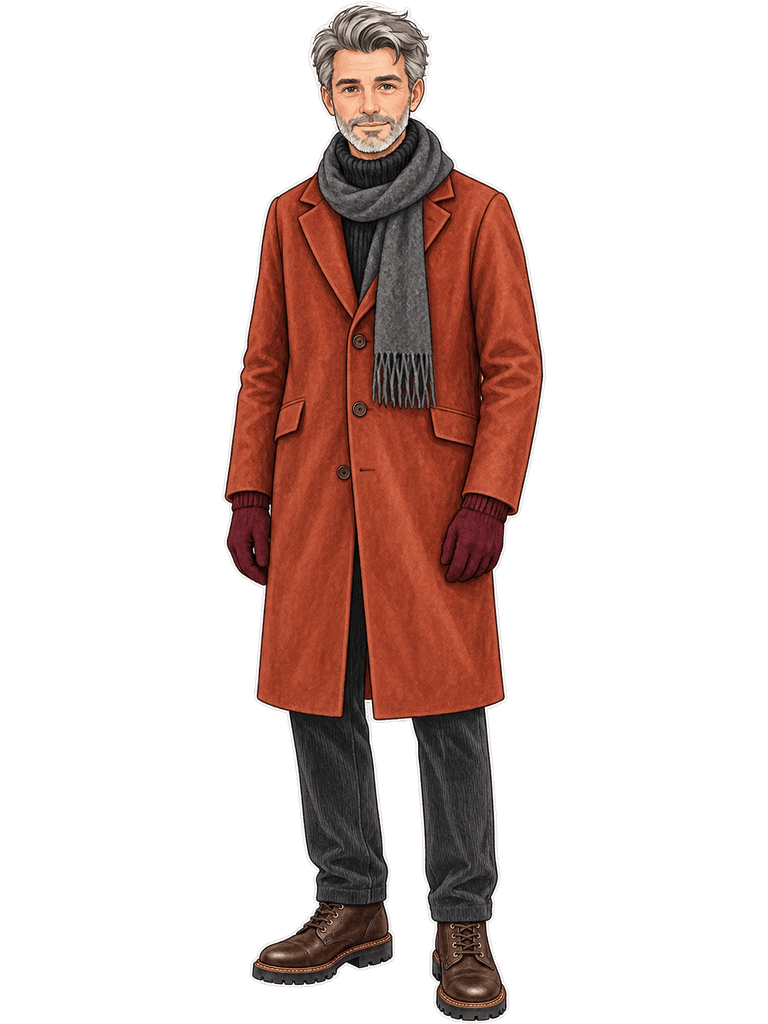
- Rust wool overcoat below the knee — the point of January is standing still on an empty bridge at 8am
- Black chunky roll-neck — dry cold finds the gap at the neck
- Bottle-green herringbone tweed jacket — the coat comes off at every warm pub and concert-hall door
- Charcoal corduroy trousers — the pile holds still air on a morning at −0.5°C
- Dark brown lug-sole boots — frost on about 15 nights on stone polished smooth by centuries of feet
- Burgundy touchscreen knit gloves — dawn photographs of an empty city without bare fingers
- Smooth leather soles — frosted setts on the Castle steps and the bridge approaches
- Planning the trip around the Christmas markets — they close on 6 January
- The Castle's historic buildings after 4pm — that is closing time until 31 March
- A rain shell as the outer layer — about 18mm falls in the whole month
Pack for walking an empty city in dry cold. ČHMÚ's open-data series for the Klementinum, in the Old Town, puts January at 3.9°C / 39°F by day and −0.5°C at night, with frost on about 15 nights, just 18.1mm of rain or snow over about 5 days of a millimetre or more, and 1.7 hours of sun a day. The Czech Statistical Office supplies the other half of the picture: January and February are Prague's weakest months, each just under half a million hotel guests in 2025, against 790,233 in December. The Old Town Square and Wenceslas Square markets close on 6 January, and Prague Castle's historic buildings shut at 4pm all winter. So the long coat is for standing on a bridge at 8am, the tweed jacket is for the warm rooms, and the boots are for frost on polished stone.
Prague in January belongs to whoever gets up early. The markets are packed away, the coaches have thinned out, and at eight the Charles Bridge is yours, just below freezing.
The capsule
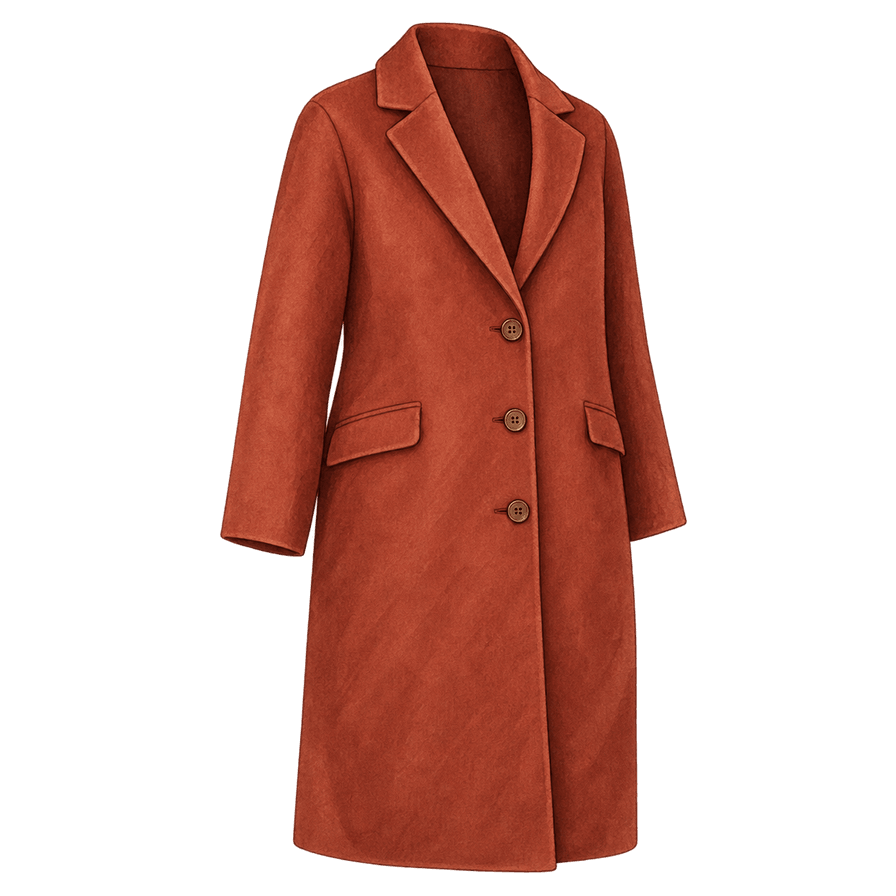 01Rust-brown wool overcoat, below the knee
Length is for standing still. The reason to come in January is an empty city, and you spend it stopped: on the Charles Bridge at eight, in the Castle courtyards once the complex opens at six, on a riverbank for the light. Double-faced wool holds warmth in dry cold, and with 18.1mm of precipitation in the month there is little rain to soak it. Rust is the one colour against the charcoal and black underneath.
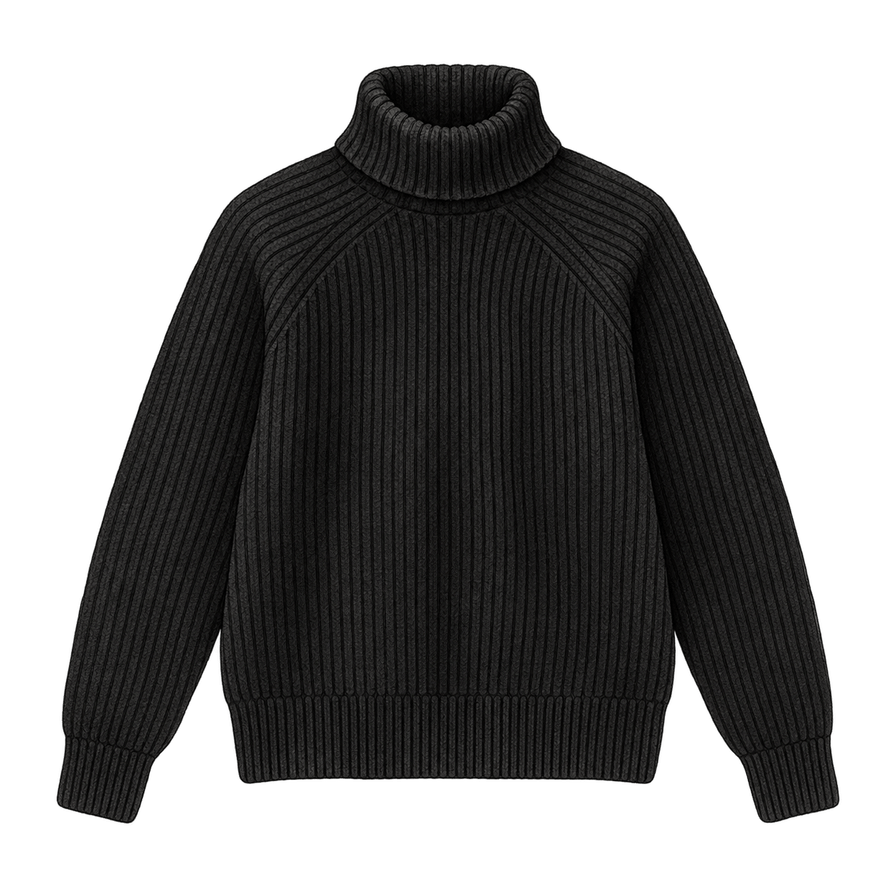 02Black chunky ribbed wool roll-neck
Dry cold finds the gap between collar and chin before anywhere else, and a roll-neck closes it without a scarf once you are indoors. A chunky rib traps air under the overcoat on a −0.5°C morning, then stands on its own under the tweed jacket at a concert. Black is the base colour for everything in the case.
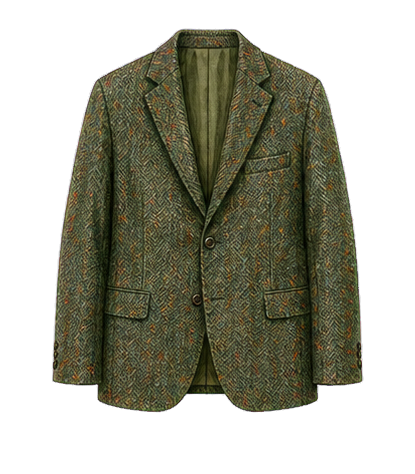 03Bottle-green herringbone tweed jacket
The overcoat comes off at the door of every pub and concert hall, and what is left has to look dressed. A bottle-green herringbone tweed with rust and ochre flecks goes over the roll-neck, picks up the colour of the coat in its weave, and keeps its shape through an evening on a bench in a Malá Strana beer hall.
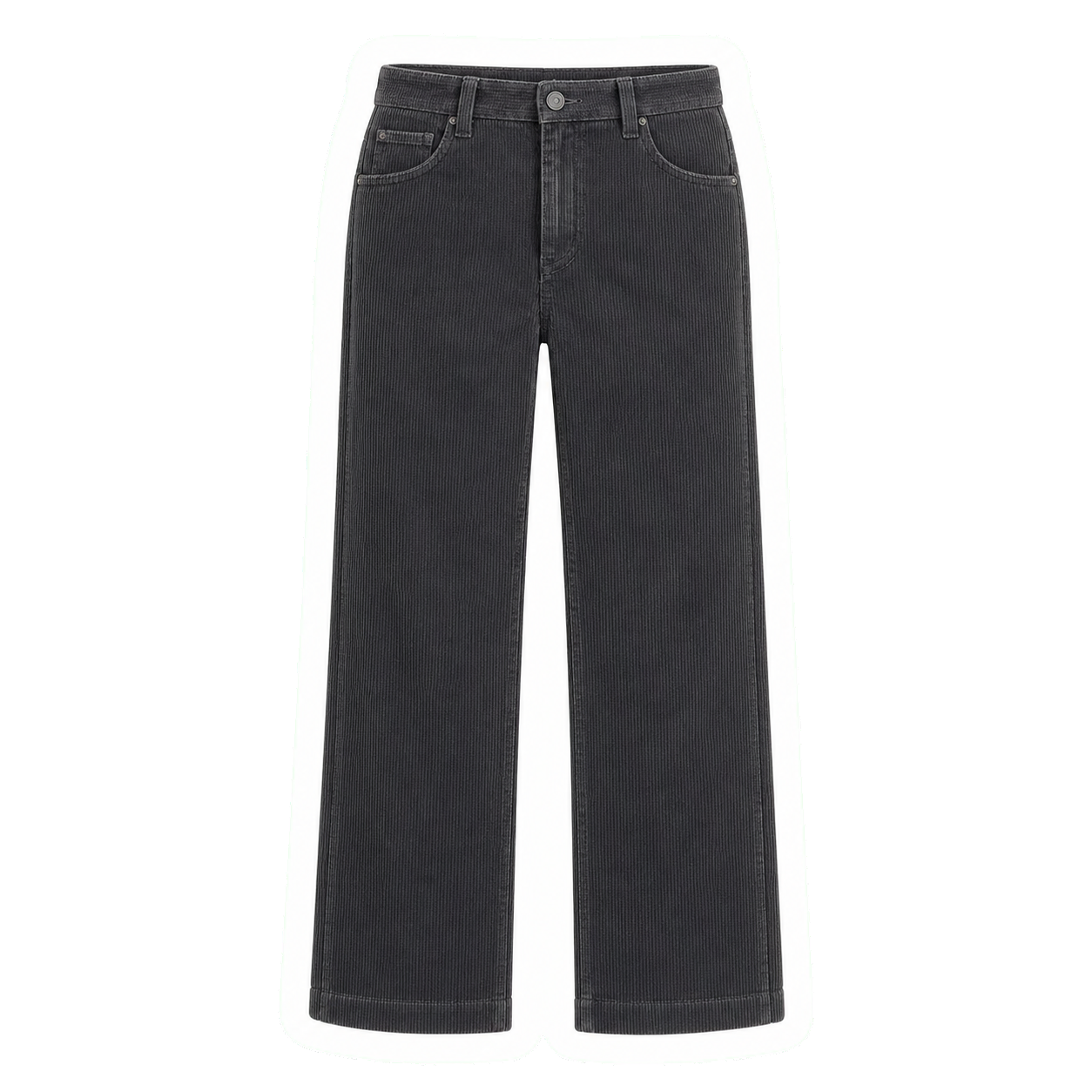 04Charcoal corduroy trousers
Corduroy's pile holds a layer of still air that flat cotton lets go, which is what your shins want on a riverbank at −0.5°C at 8am. Charcoal hides the grey grit spread on frozen paths, and a straight, roomy leg leaves space for thermal leggings on the coldest mornings. They go with both the tweed and the roll-neck.
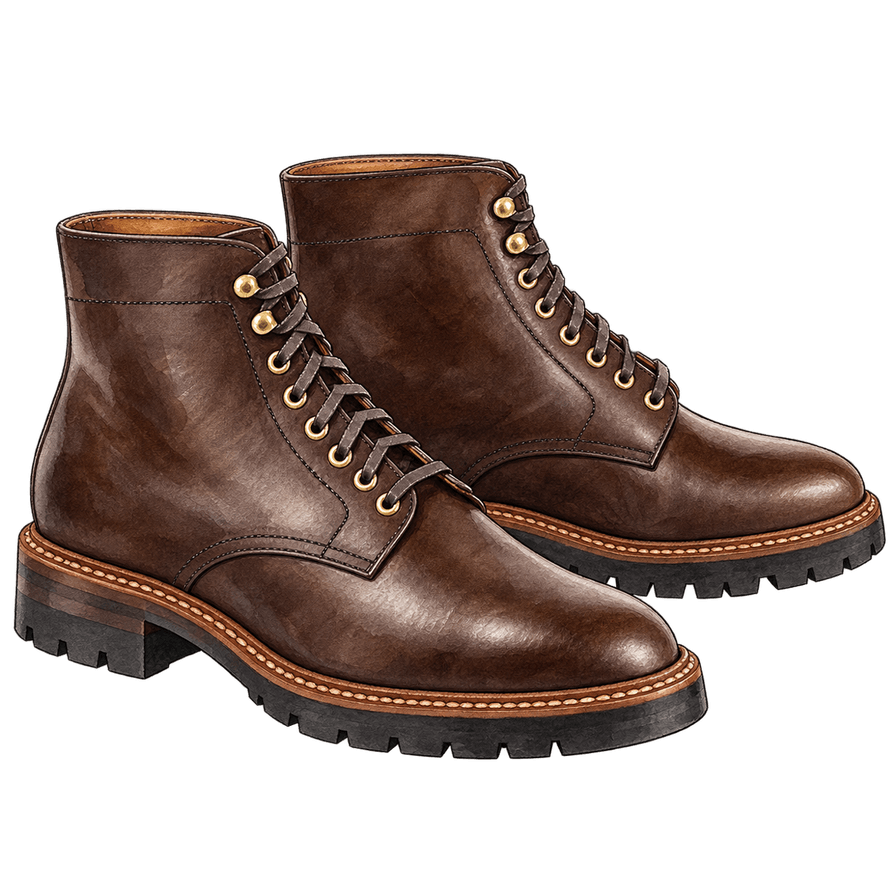 05Dark brown lace-up derby boots on a squared lug sole
About 15 nights of frost settle on stone that centuries of feet have polished, and the setts of the Castle steps and the bridge approaches are slick before nine. A deep, squared-edge lug grips where a smooth leather sole slides. Laces pull the boot snug over a wool sock, and a plain dark brown derby looks right at a concert that evening.
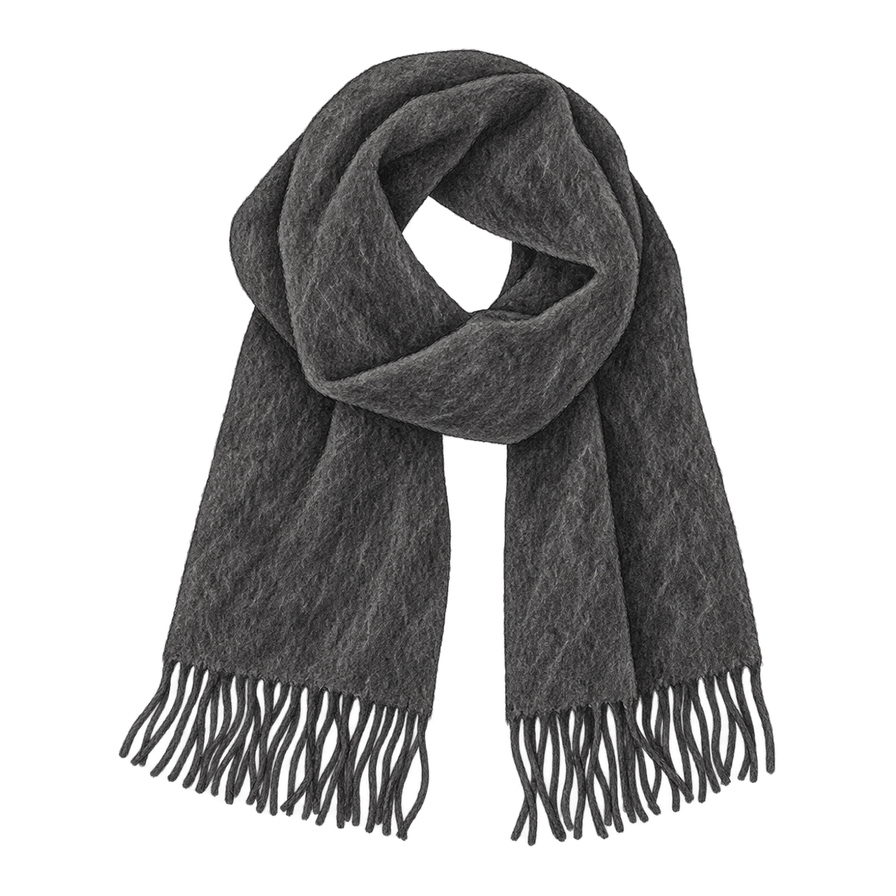 06Long charcoal wool scarf, fringed
Wound once over the coat collar, a long wool scarf keeps the wind off your neck on the open bridge; loosened, it hangs open over the tweed indoors. Charcoal repeats the trousers and leaves the rust coat as the single warm note in the outfit.
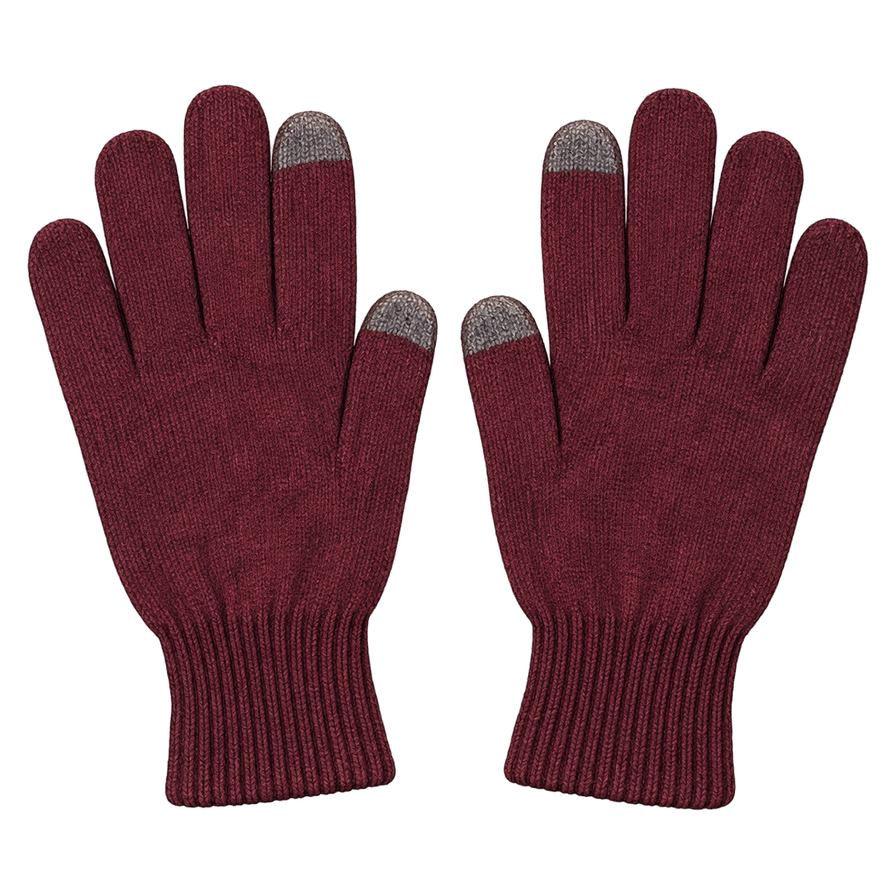 07Burgundy merino knit gloves, touchscreen fingertips
An empty Charles Bridge at dawn is the photograph you came for, and taking gloves off at −0.5°C to use a phone is how fingers go numb. Fine merino gloves with conductive fingertips let you shoot without removing them, and burgundy is warm against the rust coat without matching it.
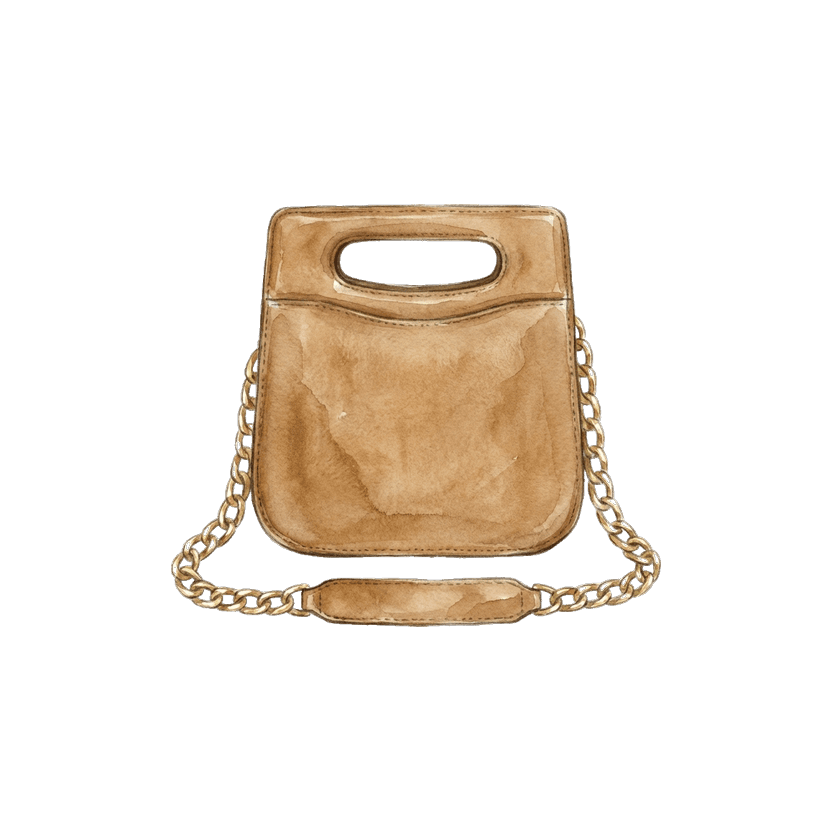 08Camel leather top-handle bag on a chain strap
Small and structured, so nothing swings in the wind on the bridge, and dry January is kind to smooth leather. Carry it by the cut-out handle into a concert or put the chain over your shoulder for a long walk up to the Castle. Camel picks up the rust of the coat and the flecks in the tweed.
Day to night
Black roll-neck · charcoal corduroys · lug-sole derby boots · rust overcoat · charcoal scarf · burgundy gloves · camel bag. The Charles Bridge at eight, up Nerudova to the Castle, the historic buildings from nine and out well before the 4pm close.
Tweed jacket over the roll-neck, overcoat off at the door. A concert or a Malá Strana pub after a sunset at about 4:27pm in mid-January, then the walk home over frosted setts at −0.5°C.
A suggested look — rust wool overcoat, black chunky roll-neck, charcoal corduroy trousers, dark brown lug-sole derby boots, charcoal wool scarf.
What to avoid
- Smooth leather soles — frost on about 15 nights on polished setts
- A trip built around the markets — they close on 6 January
- The Castle's historic buildings after 4pm — winter hours run to 31 March
- A rain shell — about 18mm of rain or snow in the whole month
- One heavy layer with nothing under it — the coat comes off at every warm door
Frequently asked questions
Cold, dry and often frosty. ČHMÚ's open-data series for Praha-Klementinum, the Old Town station, averages 3.9°C / 39°F by day and −0.5°C at night over 30 Januaries, with a mean of about 1.7°C. Frost comes on about 15 nights. Precipitation totals only 18.1mm, with about 5 days of a millimetre or more, and the sun shines about 1.7 hours a day. Ruzyně airport, higher and west of the centre, runs about two degrees colder by day and three at night. Daylight grows from 8h 10m on 1 January to 9h 15m on the 31st.
A rust wool overcoat below the knee, a black chunky roll-neck, a bottle-green herringbone tweed jacket, charcoal corduroy trousers, dark brown lug-sole lace-up boots, a long charcoal wool scarf, burgundy touchscreen knit gloves and a small camel leather bag. That covers an 8am walk over the Charles Bridge at −0.5°C and an evening in a warm concert hall or pub. Leave the rain shell and the smooth-soled shoes at home, and add thermal leggings and wool socks for the coldest mornings.
Quieter than at any other time of year. The Czech Statistical Office's report on 2025 says January and February are traditionally Prague's weakest months, each just under half a million hotel guests, while December brought 790,233 and August nearly 800,000. The Old Town Square and Wenceslas Square Christmas markets close on 6 January. Prague Castle's grounds stay open from 6am to 10pm, but its historic buildings keep winter hours from 1 November to 31 March, 9am to 4pm. Dress for long, slow walks and standing still outdoors, with a coat you can take off in every warm room.
Late January, if quiet is the point. The first week still has the Old Town Square and Wenceslas Square markets, which run to 6 January, and the crowds that come with them. After that the city empties, and the days lengthen: sunset moves from about 4:10pm on the 1st to about 4:55pm on the 31st, and sunrise from about 8am to about 7:35am. Early January suits a trip that wants the markets and the lights; late January suits one that wants the Charles Bridge to itself.
Colder, drier and far emptier. On ČHMÚ's Klementinum series January runs about a degree colder than December at both ends, 3.9°C against 4.8°C by day and −0.5°C against 0.6°C at night, with frost on about 15 nights against about 12 and 18.1mm of precipitation against 22.6mm. Our December guide is built around the markets, the crowds on Old Town Square and glazed setts after dark. After 6 January the markets are gone, and the Czech Statistical Office's 2025 figures show December's 790,233 hotel guests falling to under half a million.
A long dark wool coat, a knit, corduroy or wool trousers and a leather boot with grip, and Czech footwear has two landmarks worth knowing. Botas began on 4 July 1949 as Botana in Skuteč, a town with centuries of shoemaking behind it, took the Botas name and three-star logo in 1963, and in 2008 two graphic-design students, Jan Kloss and Jakub Korouš, redrew its classic trainer as a school project that became the Botas 66 Classic in 2009. On Wenceslas Square, the Baťa department store at No. 6, built in 1928 to 1929 to a design by Luděk Kysela with Baťa's Zlín project office, is one of the key buildings of Czech functionalism.
Sources
- ČHMÚ — 1991–2020 climate normals, Praha-Klementinum station
- ČHMÚ open data — monthly climate series by station (Praha-Klementinum 0-203-0-11514) — accessed 2026-09-26
- ČHMÚ — Praha-Klementinum station data (long-term averages 1961–1990 / 1991–2020) — accessed 2026-09-26
- ČHMÚ open data — daily climate series by station (Praha-Klementinum 0-203-0-11514, daily precipitation) — accessed 2026-09-27
- Czech Statistical Office (ČSÚ), Prague office — Tourism in Prague in 2025: January and February the weakest months, December 790,233 guests — accessed 2026-09-27
- Trhy Praha — Old Town Square and Wenceslas Square Christmas markets, 28 November 2026 – 6 January 2027 — accessed 2026-09-26
- Prague Castle — opening hours (winter season 1 November – 31 March: complex 6.00–22.00, historical buildings 9.00–16.00) — accessed 2026-09-27
- Botas — history: Botana founded in Skuteč on 4 July 1949; Botas name 1963; Botas 66 Classic project 2008 — accessed 2026-09-27
- Prague City Tourism — Wenceslas Square: Baťa Department Store (No. 6), 1928–1929, Luděk Kysela — accessed 2026-09-27