What to Wear in Cape Town in February
Cape Town in February: 28°C / 82°F afternoons, 16°C / 61°F nights, the hottest month on NOAA's airport record, and about three fewer days of hard wind than January.
- Washed-black shirt dress — a straight cut hangs from the shoulders where a tiered skirt lifts
- Washed-black one-piece — last season the City's Blue Flag beaches held the status until 28 February
- Protea-pink canvas hat with a chin cord — CANSA wants a wide brim, the south-easter wants a cord
- Faded black jeans — for the roughly 9 days a month when the wind reaches 41 km/h
- Sand cotton Harrington — zipped to the throat tab after sunset, 7:52pm on the 1st and 7:26pm by the 28th
- Golden-sand strappy sandals — a buckled back strap keeps them on across soft sand
- A tiered sundress or a flared skirt — the wind eases in February, it does not stop
- A cap as sun cover — CANSA says caps leave the neck and ears exposed
- An open tote on the beach — blown sand fills it
- Counting on December's late mountain evenings — the Cableway's peak hours end on 31 January
Pack for heat first and wind second, the reverse of January. NOAA NCEI's record for Cape Town International puts February at 28.2°C by day, the highest of any month, with about 8 days reaching 30°C, and 16.4°C at night. Rain barely registers at about 17mm, and under 12mm in half the years. The south-easter, which the Table Mountain Fund ties to the summer months, still blows, but days with a sustained 41 km/h wind drop to about 9 from January's 13. Schools have been back since 13 January and February has no public holiday, so plan the beach for weekdays. That earns back a dress, if it is a straight shirt dress, plus a one-piece, a corded brim and jeans for the windy days.
February is the Cape summer with the wind turned down a notch. The days are the hottest of the year, the schools are back, and a straight dress stays down.
The capsule
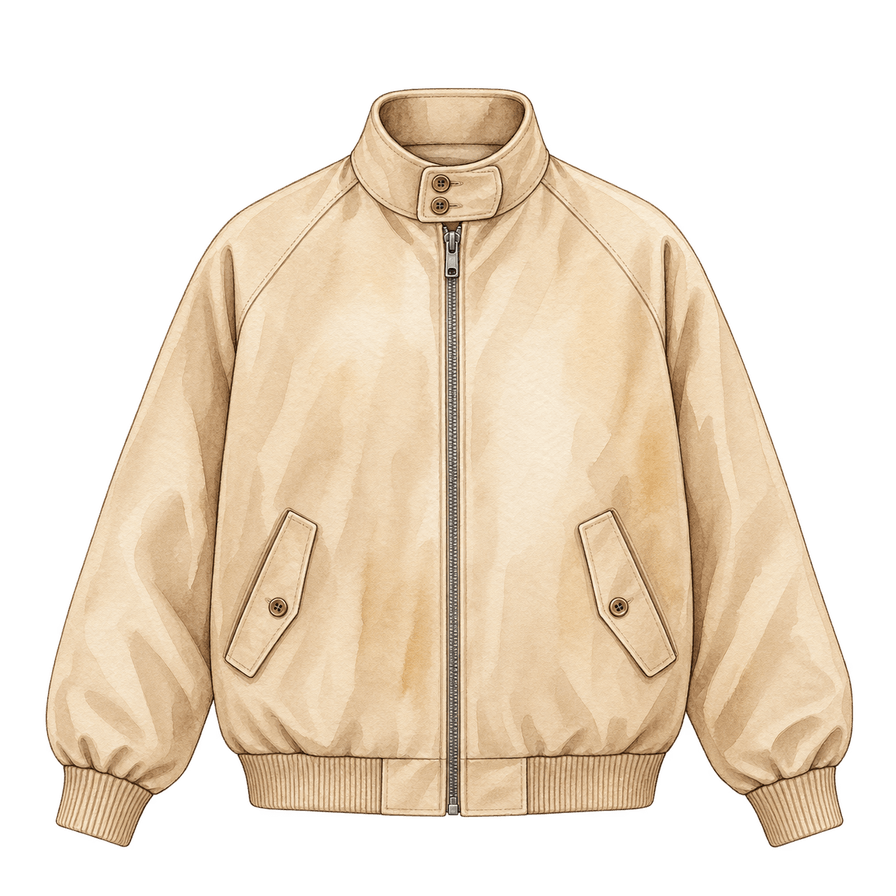 01Sand cotton-twill Harrington jacket, stand collar
Wear it after sunset, not before. Sunset slides from 7:52pm on the 1st to 7:26pm on the 28th, and the night settles toward 16.4°C, which feels colder on an exposed promenade with the wind up. Dense cotton twill stops the air without a hood or a rain coating, and you will not miss either: only about 2 February days bring 1mm of rain. Zip it to the throat tab on the Kirstenbosch lawn at a Sunday concert, once the sun drops behind the mountain.
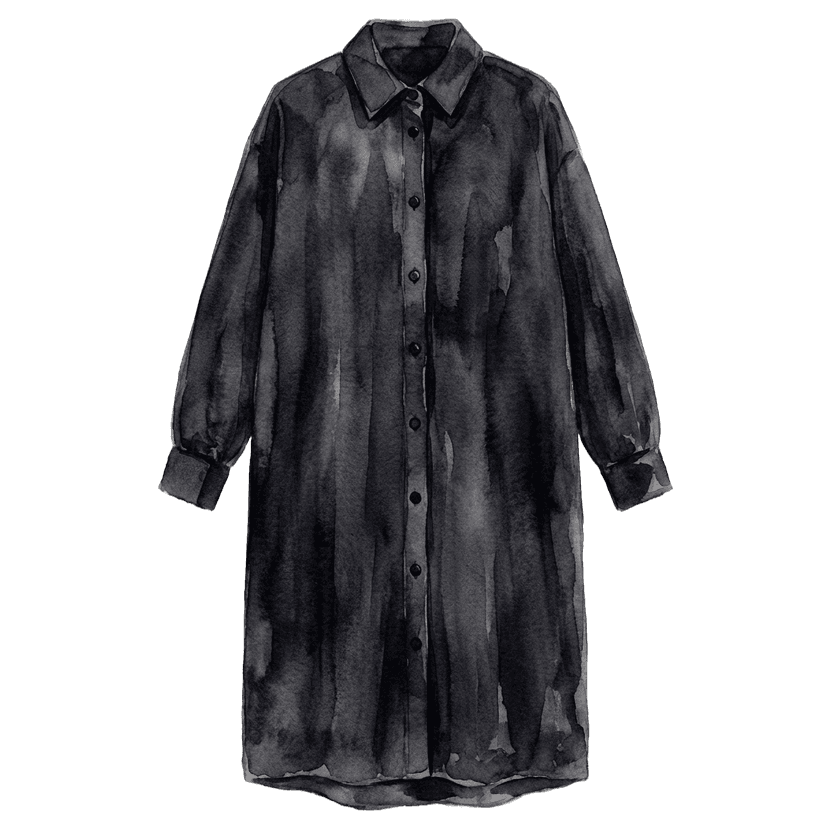 02Washed-black oversized shirt dress, long sleeves
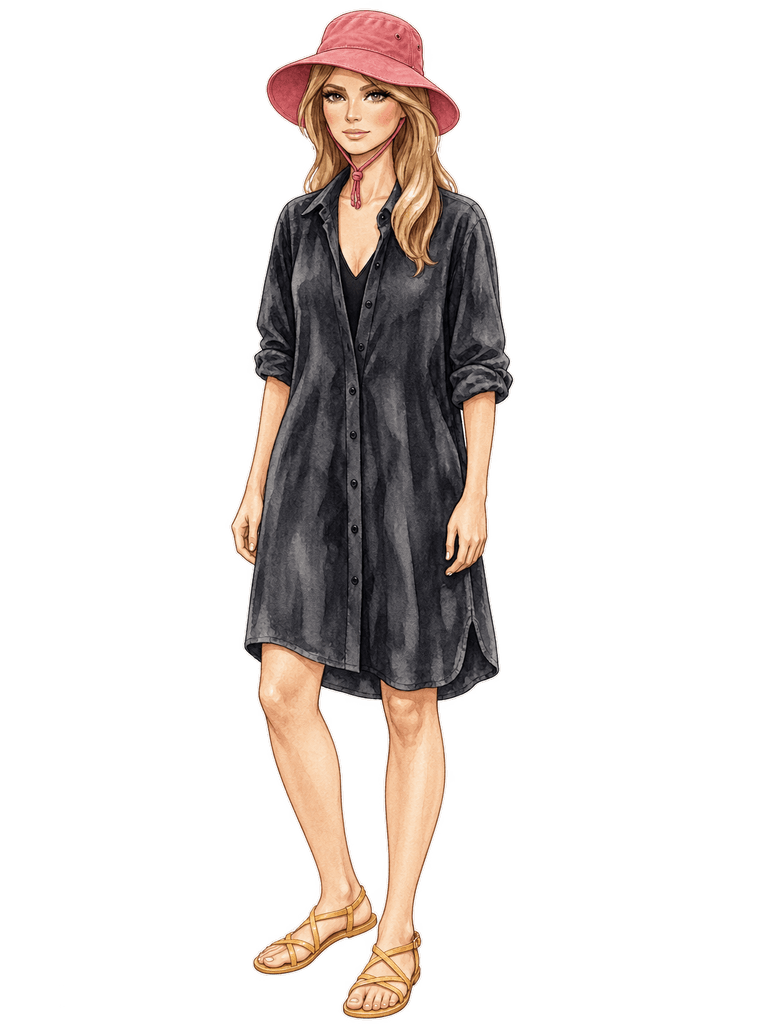
A straight shirt dress hangs from the shoulders, so a gust flattens it against you rather than lifting it, which is why it works in February and a tiered sundress does not. Wear it open over the one-piece on the sand and buttoned for lunch, with the long sleeves covering your arms through the 10am-to-4pm hours CANSA tells you to avoid. Washed black hides sunscreen smears and blown sand.
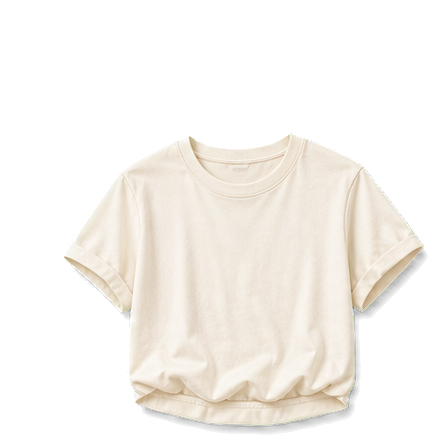 03Cream cropped cotton tee, rolled sleeves
Cream cotton reflects the sun that black soaks up, and on the roughly 8 February days that reach 30°C that difference is the reason to pack it. The cropped length tucks into high-waisted jeans without bunching under the jacket, and the rolled cuffs keep the sleeves short and neat. This is your evening top in jeans and your second top for a day in the city.
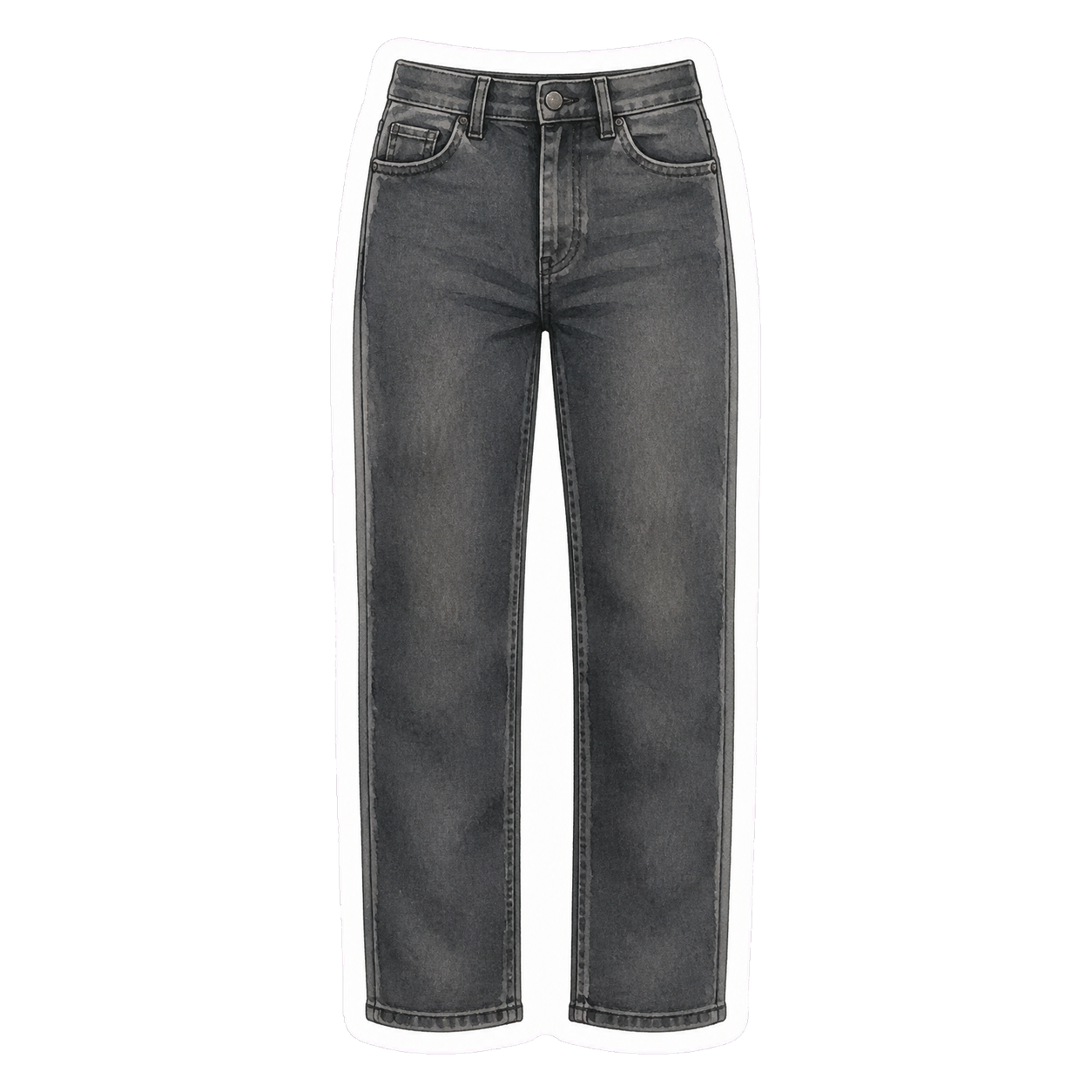 04Faded black straight-leg jeans
Keep these for the windy days and the evenings. On about 9 February days the wind reaches a sustained 41 km/h, and denim is heavy enough to stay still while a dress or a linen trouser flaps. Faded black hides the dust the wind lifts, goes with the cream tee and the sand jacket, and does not show sunscreen marks the way white denim does.
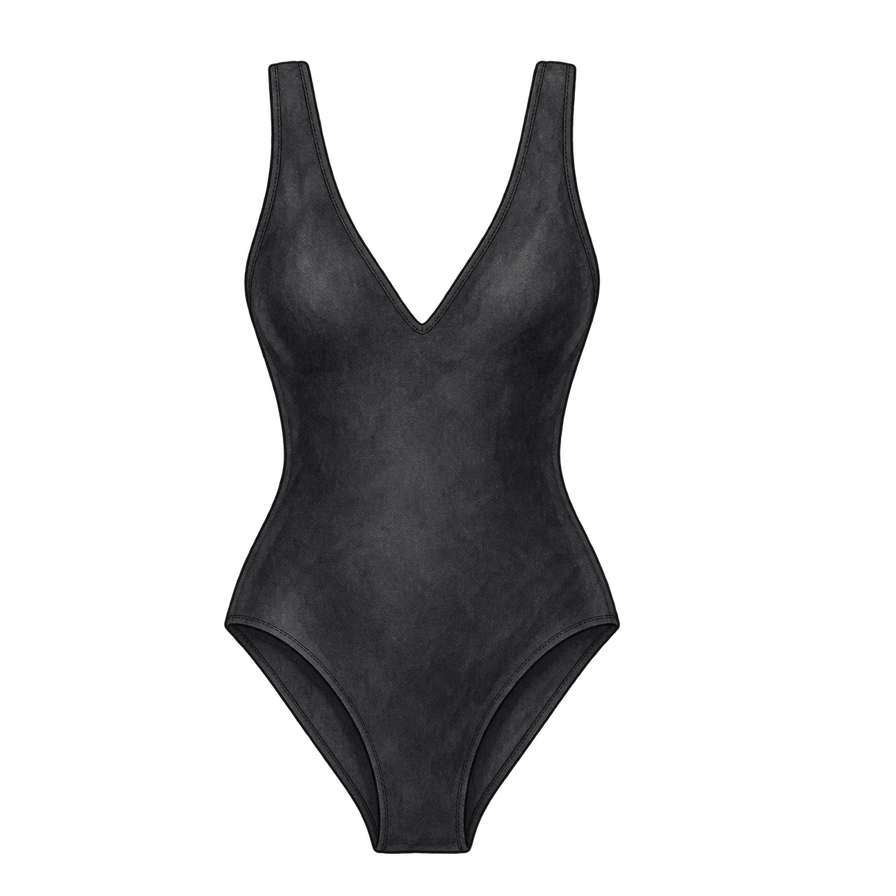 05Washed-black V-neck one-piece, wide straps
Choose a one-piece for a beach day in the hottest month: it covers more of your back than a bikini, and wide straps stay put when a wave knocks you sideways. Last season the City held Blue Flag status at eight beaches, Camps Bay, Clifton 4th, Muizenberg and Llandudno among them, until 28 February 2026. Black matches the shirt dress, so the pair goes from the sand to a table as one outfit.
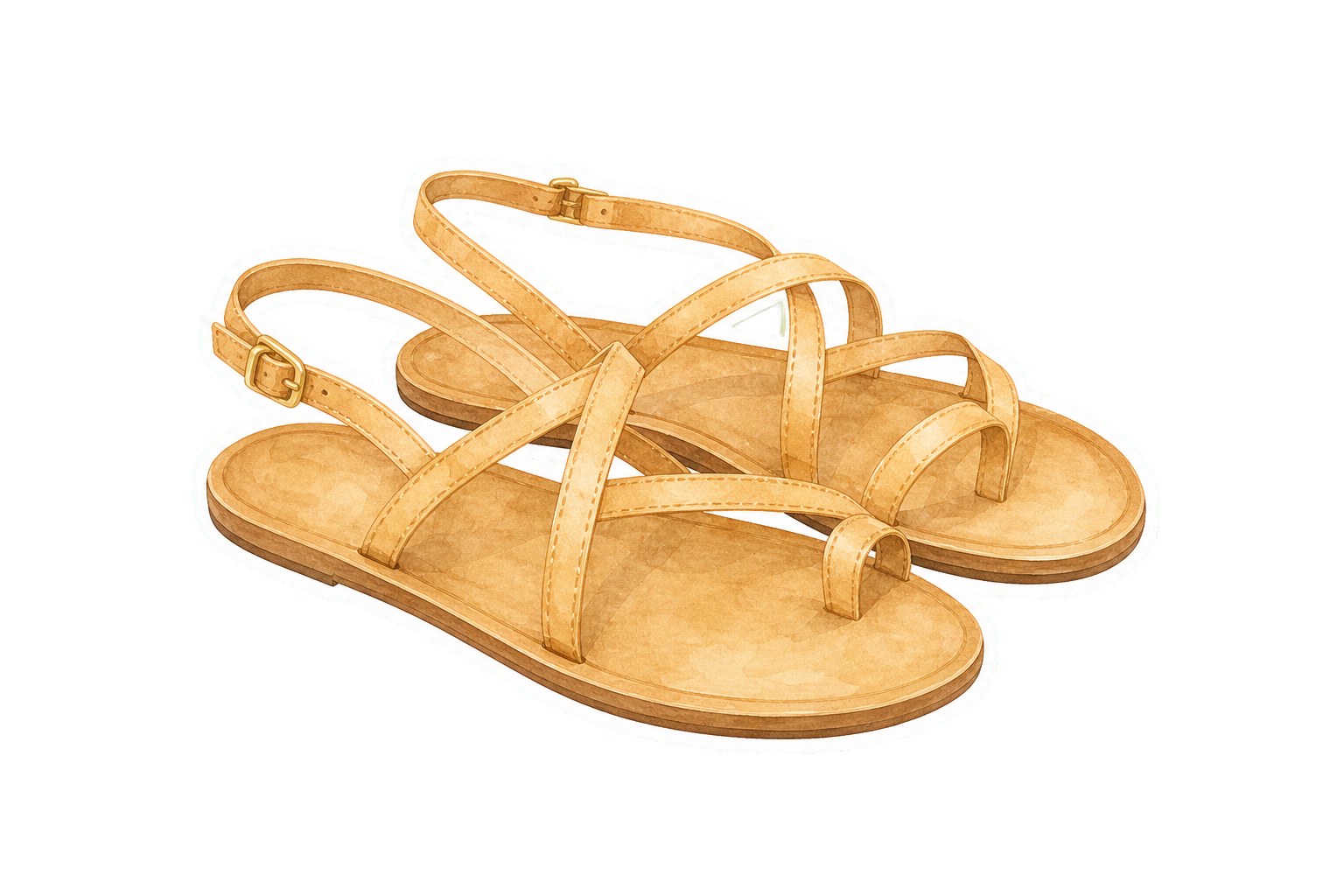 06Golden-sand strappy leather sandals, buckled back strap
A buckled back strap and a toe loop hold a flat sandal on across soft sand, promenade paving and the paths at Kirstenbosch, where a slide slips off at the heel. Closed shoes are what you leave behind in the hottest month of the year. Golden-sand leather matches the Harrington and disappears against a beach.
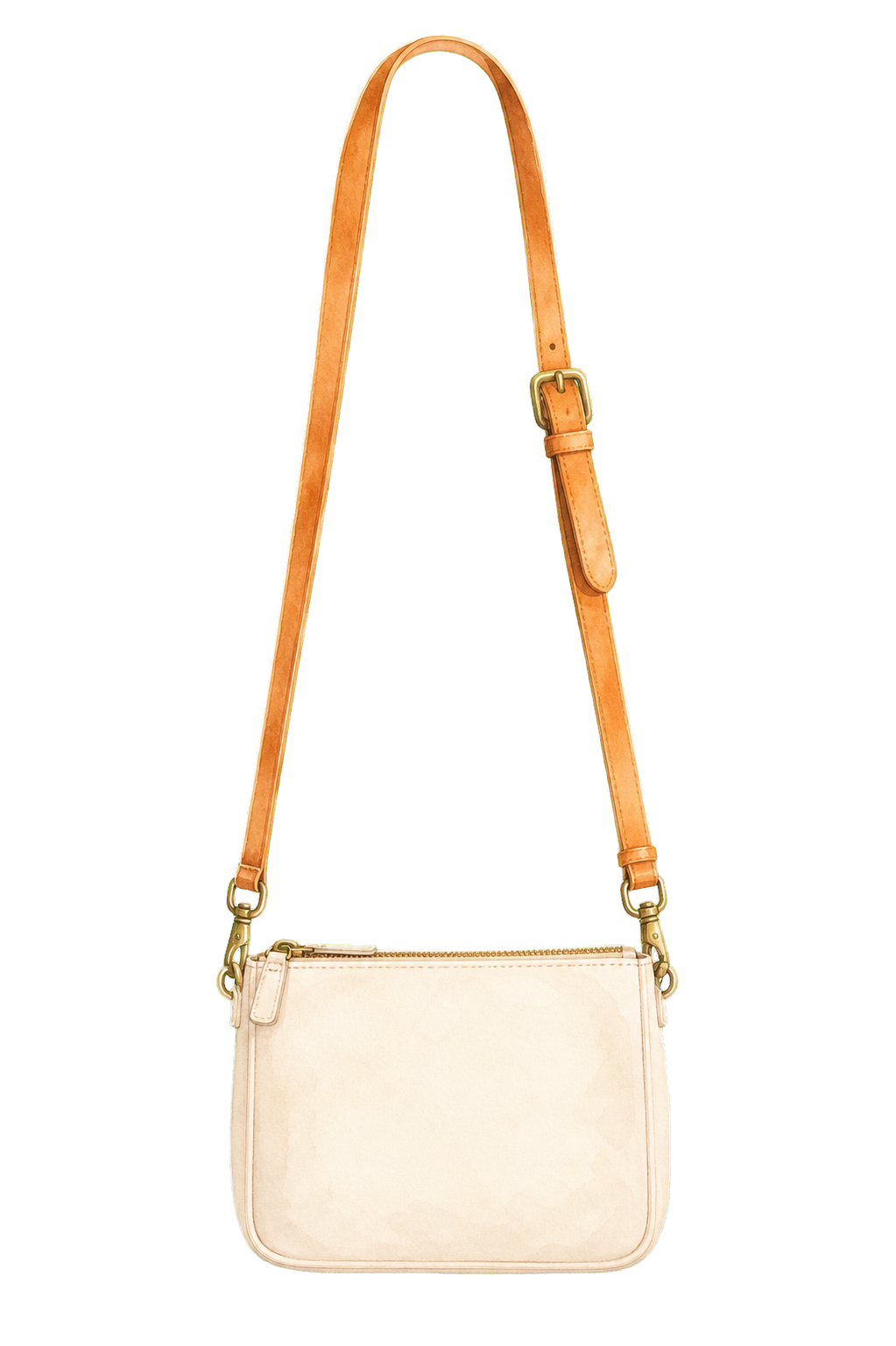 07Cream leather zip-top crossbody, tan strap
Wear it across your body with the zip closed. A shoulder bag slides off when a gust hits, and an open tote collects the sand the wind lifts off the beach. This flat pouch holds a phone, a card and sunscreen, sits under the Harrington after dark, and its buckled strap shortens so the bag rides high and still against your ribs.
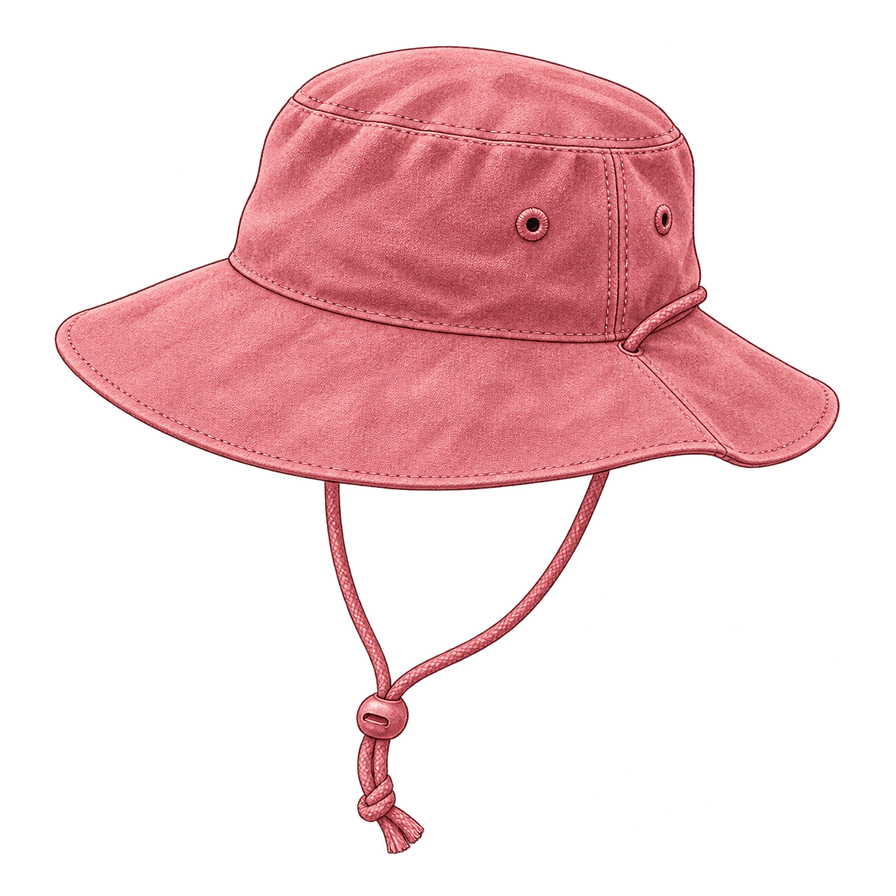 08Protea-pink canvas sun hat with a chin cord
CANSA asks for thickly woven fabric and a wide brim, never a cap, and the south-easter asks for a cord. Draw it up under your chin on the sand and on Signal Hill, and let it hang loose indoors. Protea pink, the colour of a king protea in bloom, is the one colour in a capsule of sand, cream and washed black, so it goes with every other piece here.
Day to night
Washed-black one-piece under the shirt dress, buttoned from the second button · protea-pink hat, cord drawn up · golden-sand sandals · cream crossbody zipped. On the sand at Muizenberg or Camps Bay by eight on a weekday, and into the shade by ten.
Cream tee · faded black jeans · sand Harrington · golden-sand sandals · cream crossbody. On a Sunday, the Kirstenbosch Summer Sunset Concerts: a blanket on the lawn before the music starts at about 5:15pm, the Harrington on once the sun goes behind the mountain. Other nights, Signal Hill for sunset, 7:52pm on the 1st and 7:26pm on the 28th.
A suggested look — washed black shirt dress, black v-neck swimsuit, protea pink canvas sun hat with a chin cord, sand leather strappy sandals.
What to avoid
- A tiered sundress or flared skirt — about 9 February days still bring a sustained 41 km/h wind
- A cap as sun cover — CANSA says it leaves the neck and ears exposed
- A brim with no cord — the south-easter still blows through February
- An open straw tote on the beach — blown sand fills it
- December's late mountain evenings — the Cableway's peak hours end on 31 January
Frequently asked questions
Hot, dry and a little calmer than January. On NOAA NCEI's figures for Cape Town International, which the South African Weather Service runs, February averages 28.2°C at its high, the highest of any month, and 16.4°C at its low, with about 17mm of rain; rain is measurable on about 4 days and only about 2 reach 1mm. About 8 days reach 30°C. The mean daily wind drops to 22.1 km/h from January's 23.8 km/h, and days with a sustained 41 km/h wind fall to about 9. Sunset moves from 7:52pm on the 1st to 7:26pm on the 28th.
A sand cotton Harrington jacket, a washed-black shirt dress, a cream cropped tee, faded black straight-leg jeans, a washed-black one-piece, golden-sand strappy sandals, a cream zip-top crossbody and a protea-pink canvas hat with a chin cord. That covers a 28°C / 82°F beach morning, the six hours CANSA marks for shade, and an evening that settles toward 16°C / 61°F with a hard wind on about 9 days of the month. Leave tiered skirts, caps and open totes at home.
Friday 19 to Sunday 21 February 2027, the fair's 14th edition, at the Cape Town International Convention Centre (CTICC). It is a day on your feet indoors in the hottest month, so dress for the walk there and for hours in the halls: the cream tee with the faded black jeans, or the shirt dress buttoned, with the strappy sandals and the sand Harrington over your arm for the halls. Keep the crossbody zipped and worn in front in the crowd. Save the hat for outside, where CANSA's 10am-to-4pm sun hours still apply to the walk in.
Early February for the light, late February for the Art Fair and a little less wind. The Investec Cape Town Art Fair runs from 19 to 21 February 2027 at the CTICC, and the Kirstenbosch Summer Sunset Concerts season, which runs on Sunday evenings from late November to March, covers both halves. On NOAA's airport record the first two weeks average about 5 days with a sustained 41 km/h wind and the last two about 4, with the same 28°C daytime high in both. Daylight shrinks from 13h 46m on the 1st to 12h 53m on the 28th, and sunset moves from 7:52pm to 7:26pm. Schools are in term all month, since 13 January 2027, and February has no public holiday, so in either half plan the beach for a weekday.
A shade hotter by day, the same at night, and less windy. On the same NOAA record February's mean high is 28.2°C against January's 27.8°C, its low 16.4°C against 16.5°C, and rain about 8mm against 17mm in the years with complete reports, both slight. January's page rounds its nights to 17°C; the real gap is a tenth of a degree. The mean daily wind drops from 23.8 km/h to 22.1 km/h, and days with a sustained 41 km/h wind from about 13 to about 9. That is why January's capsule is tapered trousers, a hood and a corded brim, and February's brings back a dress and adds a swimsuit.
Beachwear with sleeves by day, one layer after dark. For a label from the peninsula, Sealand, which two surfers started near Hout Bay in 2015, makes bags and apparel from waste or responsibly sourced materials. On the sand the register is a swimsuit under a shirt that covers the arms through the midday hours, a hat that ties on, and sandals with a strap at the heel. After sunset it is jeans and a jacket, because a 16.4°C night feels colder in the wind than the number suggests.
Sources
- NOAA NCEI — 1991–2020 climate normals, Cape Town International stationSAWS operates the station; NOAA NCEI computed this month's figures from its 68816099999 global-summary-of-the-day record, 30 complete Februarys for temperature; rain comes from the 11 Februarys whose real daily reports cover at least 90% of the days (GSOD writes an unreported day as 0.00 flagged I), counted at 0.01in or more. Recorded per month because the rest of this city's pages are sourced differently.
- NOAA National Centers for Environmental Information — Climate Data Online — accessed 2026-04-23
- NOAA NCEI — Global Summary of the Day, Cape Town International (68816099999), Februarys and Januarys 1991–2020 (temperature, precipitation, wind) — accessed 2026-09-29
- The Table Mountain Fund (WWF-SA associated trust) — Our famous life giving tablecloth (the summer south-easter) — accessed 2026-09-27
- Cancer Association of South Africa (CANSA) — Be SunSmart — accessed 2026-09-26
- City of Cape Town — Eight City beaches secure Blue Flag status (1 December 2025 – 28 February 2026) — accessed 2026-09-26
- South African Government — School calendar (2027: term 1 from 13 January) — accessed 2026-09-27
- South African Government — Public holidays — accessed 2026-09-26
- Table Mountain Aerial Cableway — Operating hours (November; peak hours 1 December – 31 January) — accessed 2026-09-26
- Sealand — Our story (Hout Bay, 2015) — accessed 2026-09-26
- Investec Cape Town Art Fair — 14th edition, 19–21 February 2027, Cape Town International Convention Centre (CTICC) — accessed 2026-09-29
- SANBI — Kirstenbosch Summer Sunset Concerts 2026/27 season (Sunday evenings, late November 2026 to March 2027) — accessed 2026-09-29