What to Wear in Chicago in January
Chicago in January: 0°C / 32°F afternoons, −7°C / 19°F nights, 11.3 inches of snow and 3.5 nights at or below 0°F.
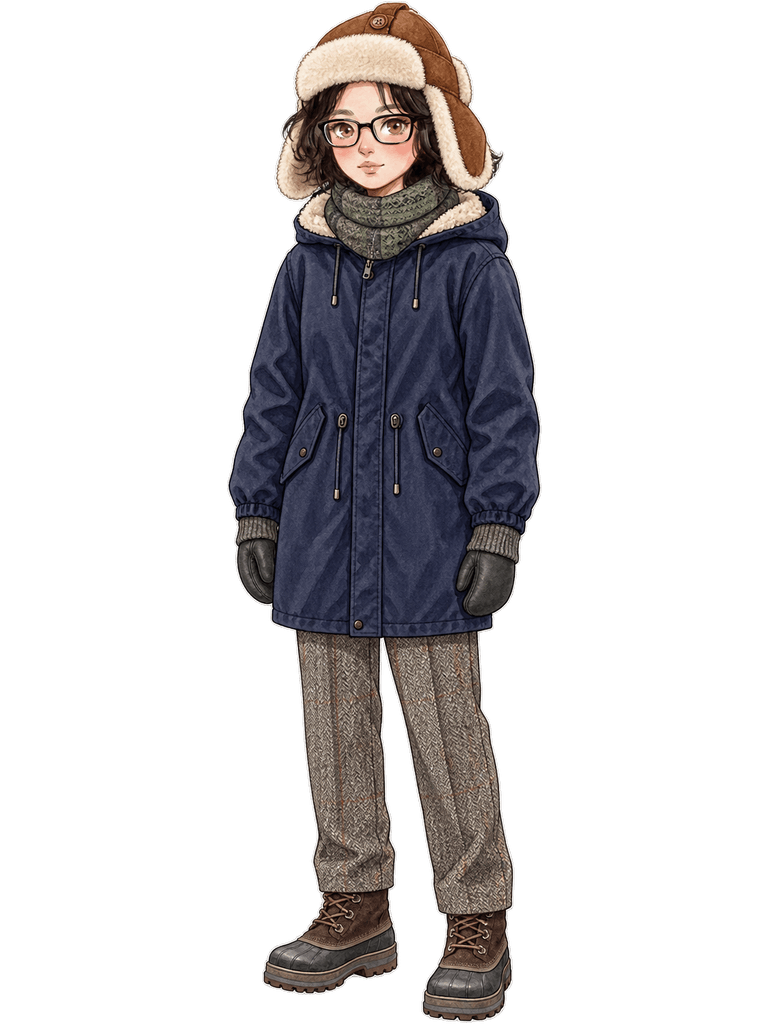
- Navy knee-length parka with a sherpa-lined hood — the high stays at or below freezing on about 16 days
- Black waffle thermal under an ivory lambswool crew — 28 nights of the 31 fall to freezing or below
- Heather-grey tweed trousers — dense wool blocks the wind that goes straight through jeans
- Dark brown felt-lined pac boots — snow lies an inch or deeper on about 16 days
- Charcoal leather mittens — the National Weather Service says "Mittens are better than gloves"
- Brown suede trapper hat and a long wool scarf — ear flaps and a wrapped scarf cover the skin a hood leaves bare
- Gloves as your only handwear — fingers kept apart lose the heat a mitten holds together
- Ankle boots or sneakers — 11.3 inches of snow leave a slush ridge at every Loop crossing
- A beanie that stops above the ears — at 0°F a 15 mph wind can freeze bare skin in 30 minutes
- Street-level walks across the Loop on the coldest mornings — the Pedway links more than 40 blocks indoors
Pack for the bottom of the year. NOAA's figures for O'Hare make January Chicago's coldest month and its snowiest: a 31.6°F afternoon, a −7.3°C night, 11.3 inches of snow, and a high that stays at or below freezing on about 16 days. On 3.5 nights the low reaches 0°F, and the National Weather Service's wind chill chart says a 15 mph wind at that temperature can freeze exposed skin in 30 minutes. NWS Chicago's daily normals reach their lowest between 17 and 26 January. So this capsule covers skin rather than decorating it. You want a parka to the knee with a lined hood, a thermal base, dense wool on the legs, felt-lined boots, mittens and ear flaps. In the Loop, use the Pedway, which links more than 40 blocks through tunnels and bridges.
December puts the snow down. January is the month Chicago asks you to cover every inch of skin, because on the coldest nights the wind does the rest.
The capsule
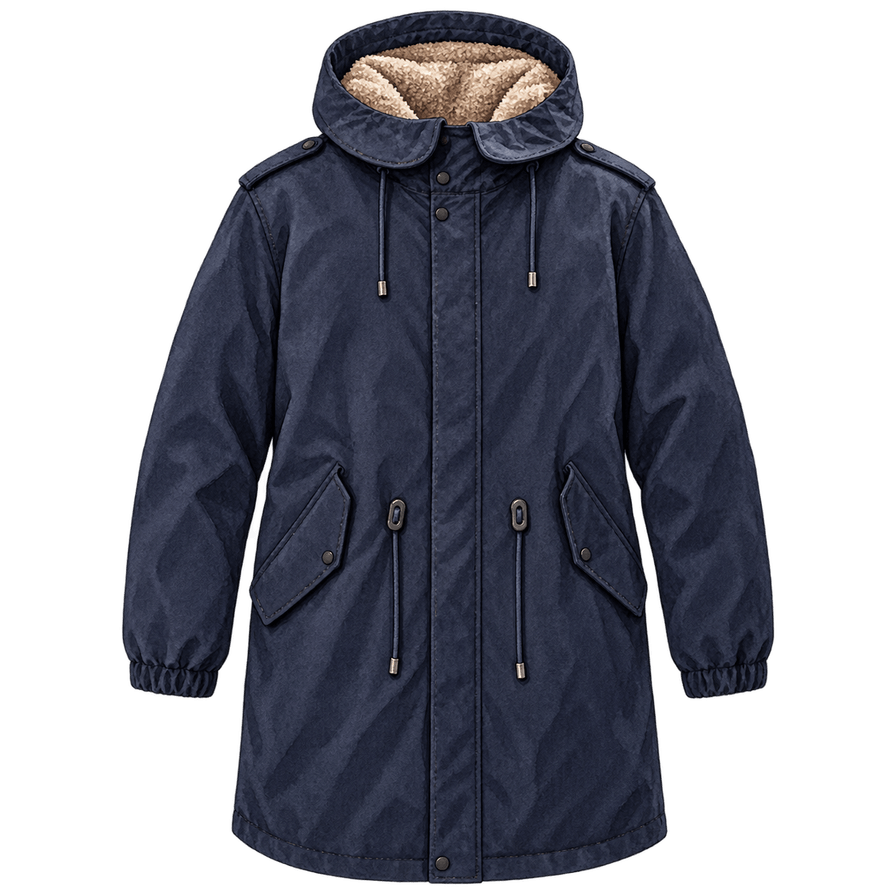 01Dark navy knee-length insulated parka, sherpa-lined hood
Knee length decides this slot. On the 16 or so January days when the high stays at or below freezing, a hip-length jacket hands your thighs to the wind, while this dark navy parka runs to the knee and cinches at the waist with a drawcord. The sherpa-lined hood goes up over the trapper hat on the worst nights, and elastic cuffs close the gap above a mitten.
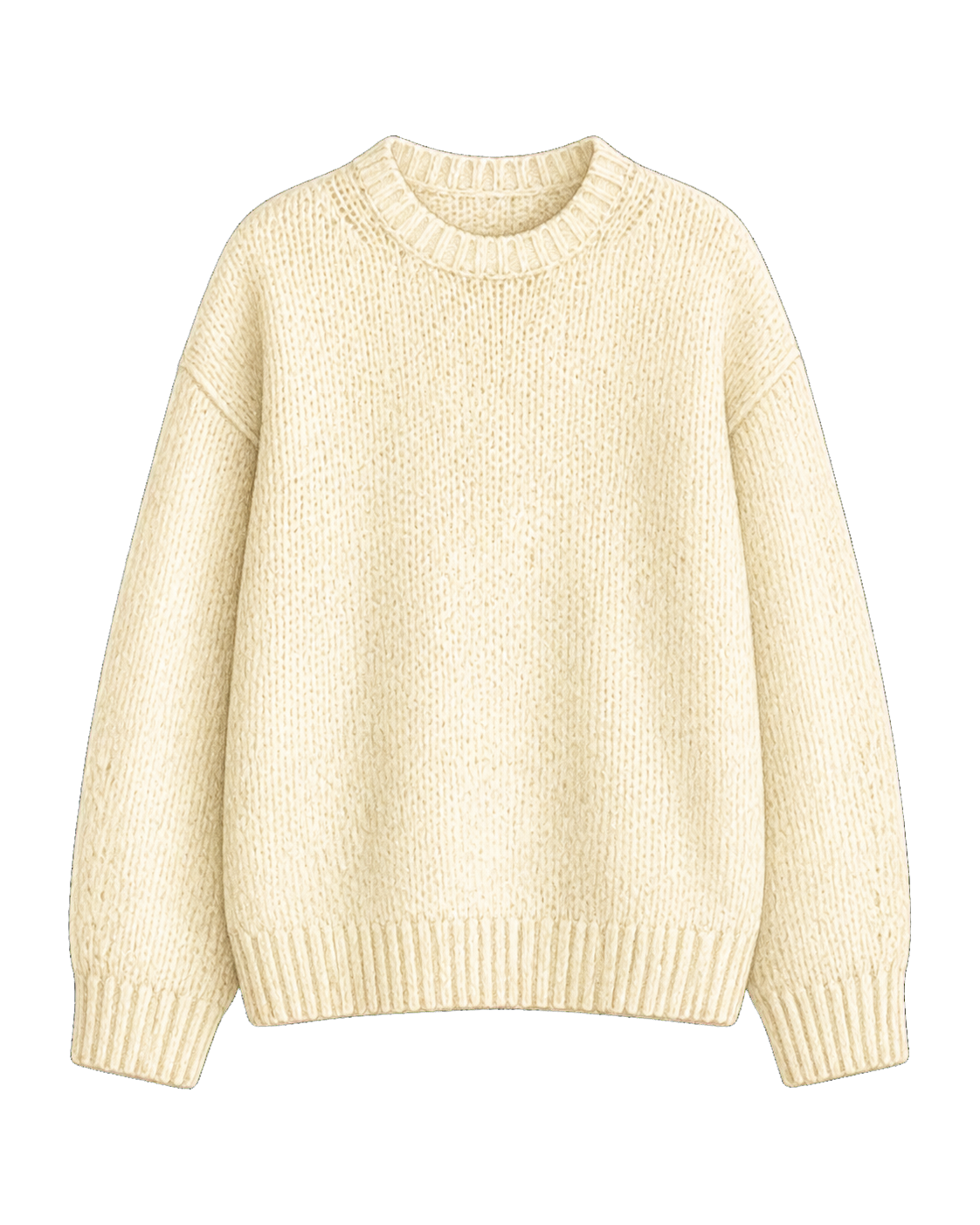 02Ivory heavy lambswool crew
One heavy knit, worn every day. A dense ivory lambswool crew with dropped shoulders goes under the parka without dragging at the sleeves, and it is warm enough to be the whole top half at a Chicago Restaurant Week table from 22 January. Ivory also lifts a capsule of navy, grey and brown that would otherwise vanish against grey kerbside snow.
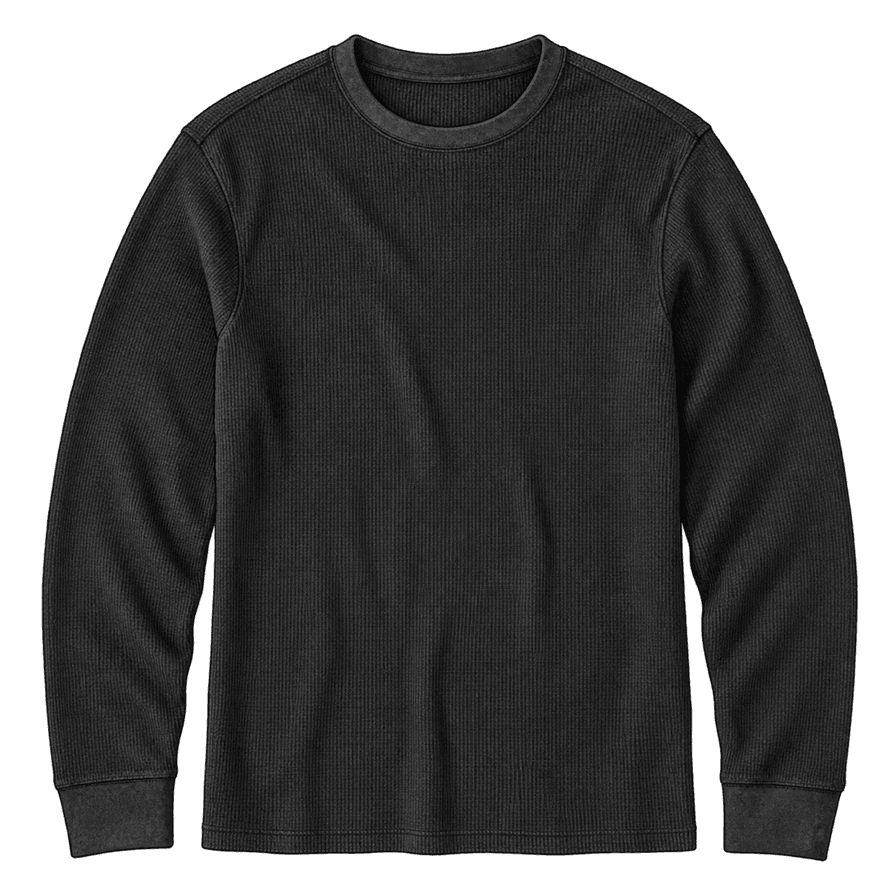 03Black waffle-knit thermal long-sleeve
A base layer goes on every morning: O'Hare averages 28 January nights at or below freezing. A black waffle knit holds a layer of warm air against the skin, sits flat under the lambswool crew, and dries overnight on a hotel radiator. On Pedway and museum days, when you spend most of the day indoors, leave it off and wear the crew alone.
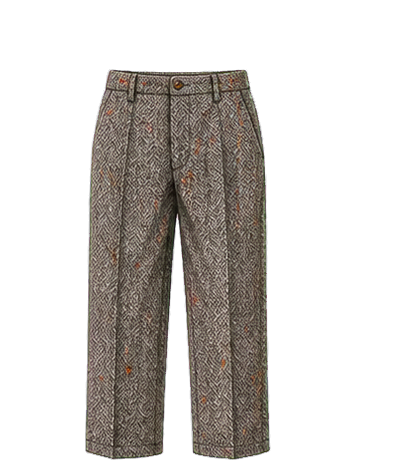 04Heather-grey herringbone tweed trousers
Put dense wool on your legs. Herringbone tweed stops a wind that goes straight through denim, and in a month with 3.5 nights at or below 0°F that matters more than the cut. Heather grey hides the white tide line road salt leaves on a hem, and the straight leg falls over the pac boot's cuff so snow stays out at the ankle.
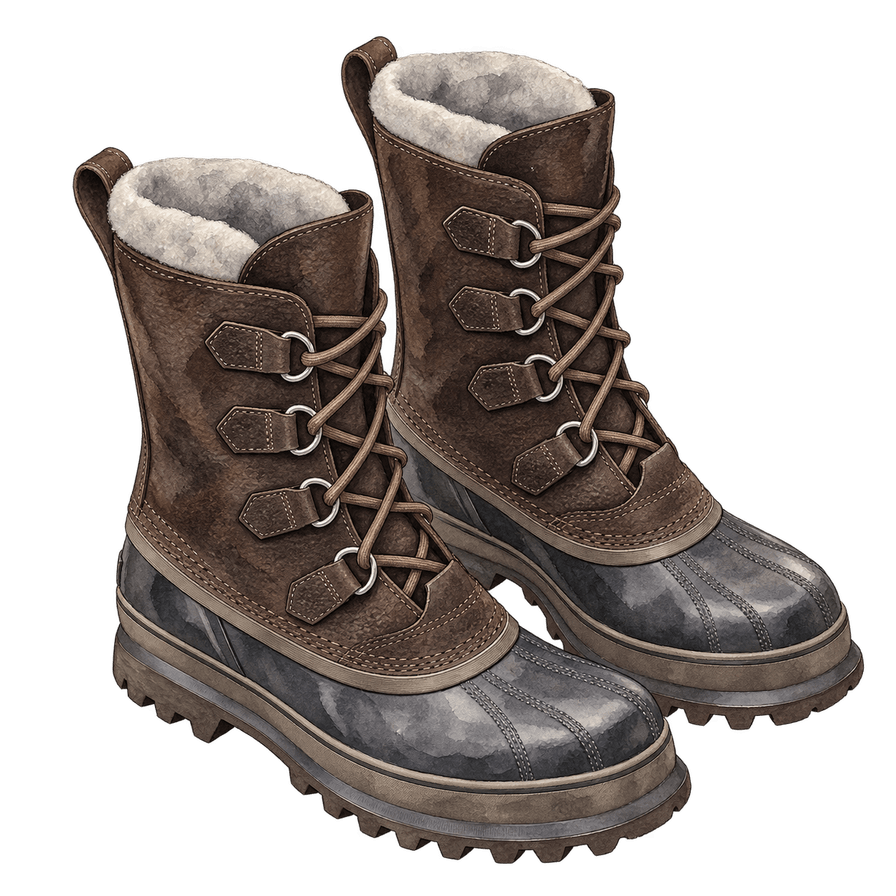 05Dark brown felt-lined pac boots, rubber lower
Snow lies an inch or deeper on about 16 January days, and a leather ankle boot is wet through by the second crossing. These pac boots put a rubber lower where slush collects and a felt lining above it, with a deep lug for the packed snow outside every L station. Lace them snug over wool socks so the cuff closes around your shin.
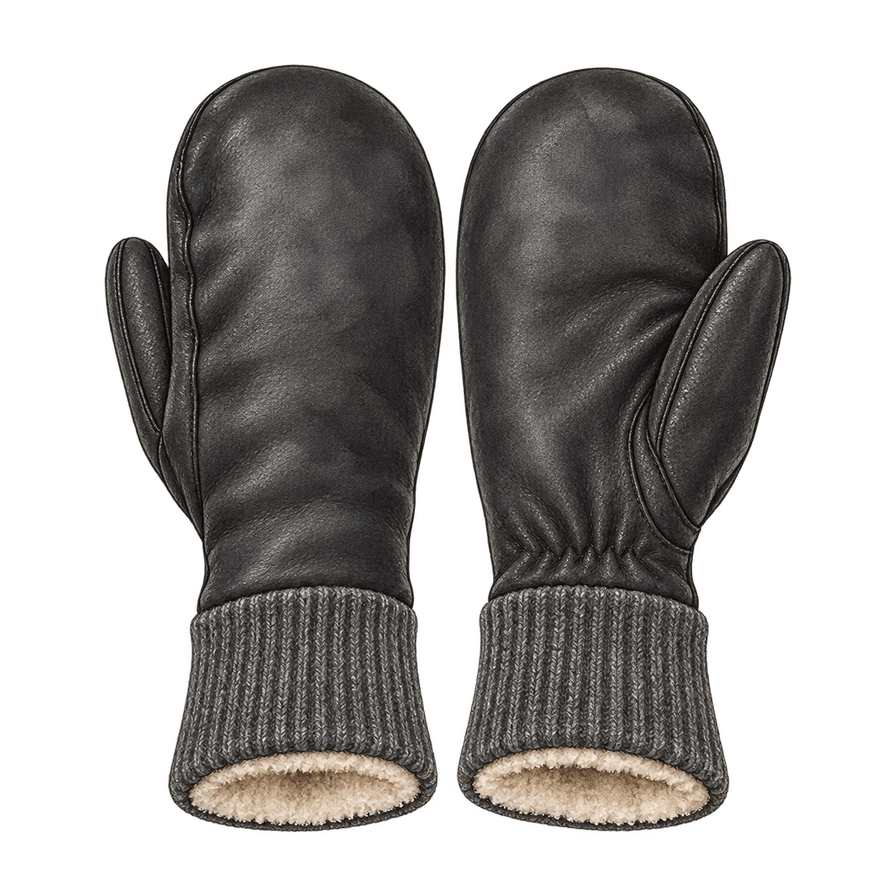 06Charcoal wool-lined leather mittens
The National Weather Service puts it in five words: "Mittens are better than gloves." Fingers inside one shell share their heat, and a wool lining keeps it there on a 0°F night. Leather sheds snow that soaks a knitted glove, and the ribbed cuff tucks under the parka sleeve. Pull one off for a card at a Pedway coffee counter, then put it straight back on.
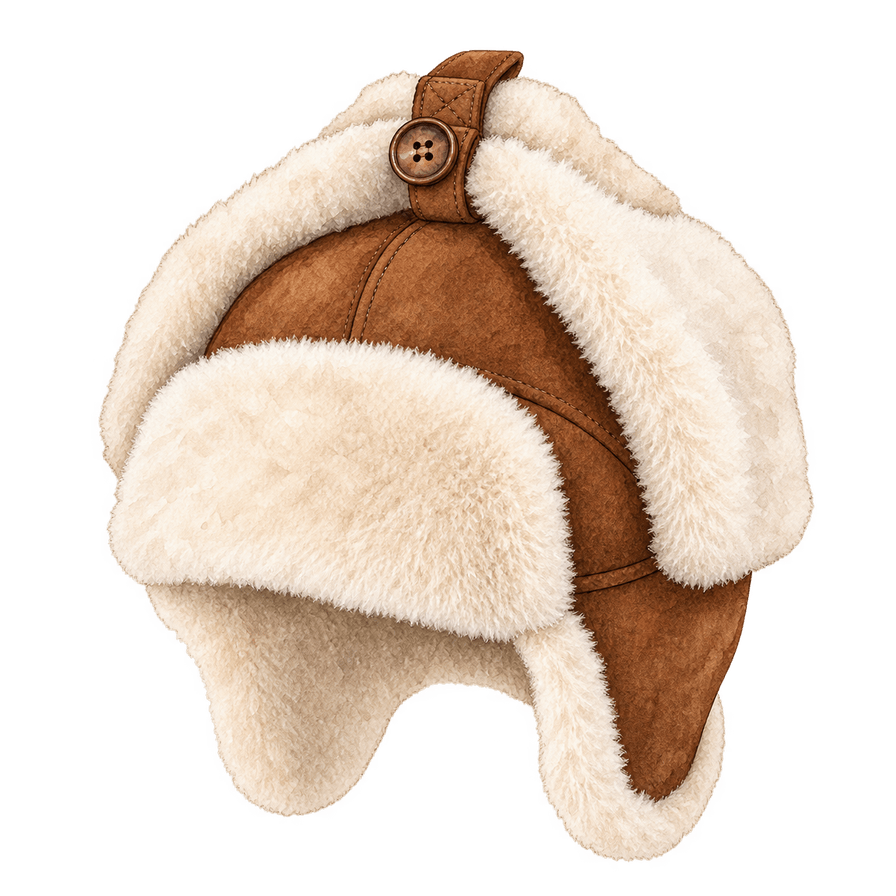 07Brown suede trapper hat, cream shearling lining
At 0°F, a 15 mph wind takes the wind chill to −19°F, and the National Weather Service's chart gives exposed skin 30 minutes before it can freeze. Its cold-weather advice lists ears first among the parts to cover. This brown suede trapper has a cream shearling lining and flaps that fold down over your ears and button up over the crown indoors, so you can leave the hood down and still see the street.
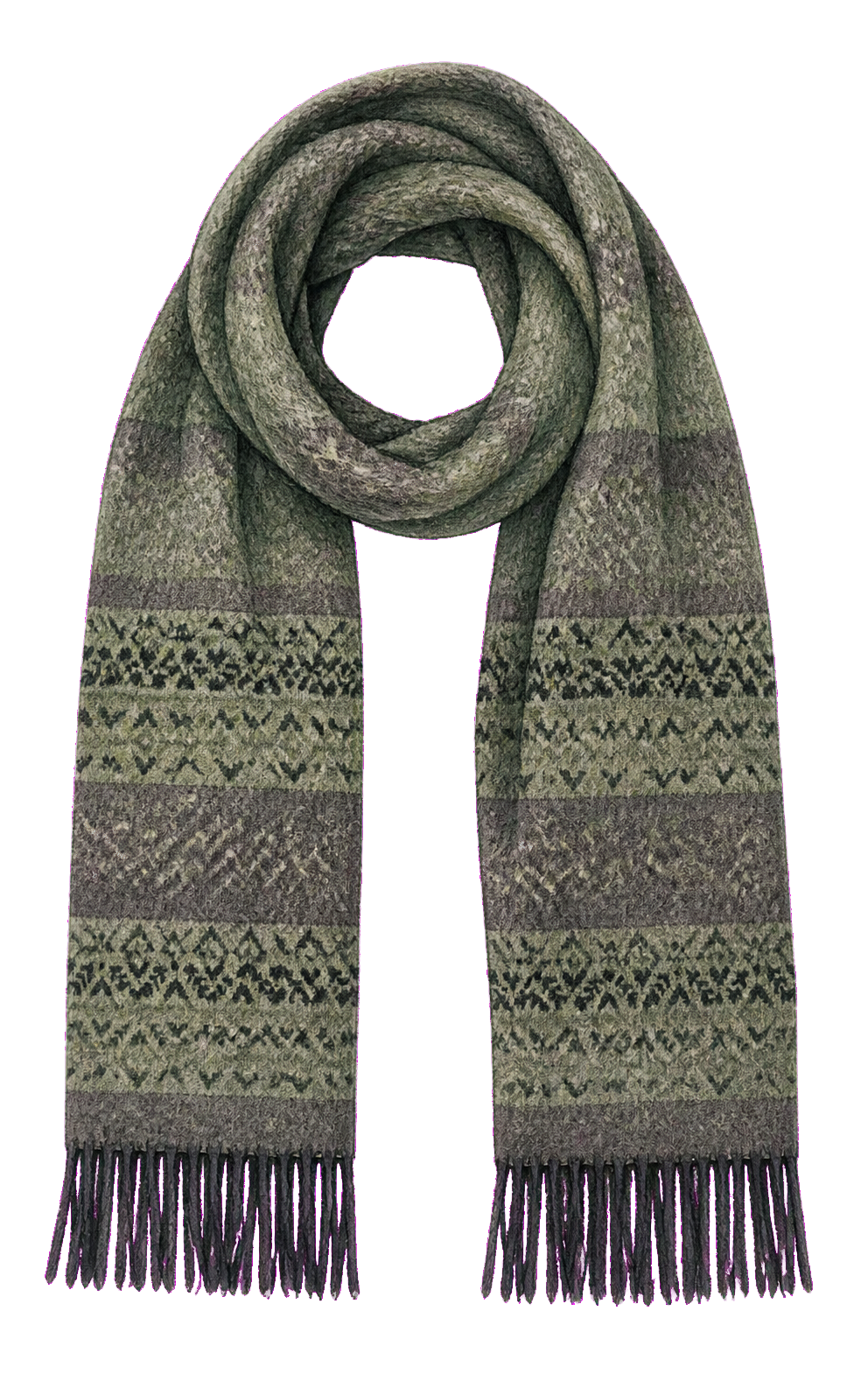 08Long loden-and-charcoal patterned wool scarf
Wrap it twice and pull it over your nose on the platform. A long, wide wool scarf in loden green and charcoal bands closes the gap between the parka's collar and the trapper's flaps, which is where a crosswind finds bare skin. Tuck the fringe inside the zipped parka before a skating session. The green is the one colour in a navy, grey and brown capsule.
Day to night
Black thermal under the ivory lambswool crew · tweed trousers · pac boots · navy parka zipped, hood down · trapper hat · loden scarf · leather mittens. Across the Loop by Pedway at nine, museum hours indoors, and every outdoor plan finished before the sun sets at about 4:45pm.
Same thermal and crew · tweed · pac boots · parka zipped with the sherpa hood up · trapper flaps down · scarf over the nose · mittens. The 5pm or 8pm session on the Maggie Daley Park ribbon, then a Chicago Restaurant Week table after 22 January, with the walk back heading for −7°C / 19°F.
A suggested look — navy knee-length hooded parka, brown suede trapper hat, loden and charcoal wool scarf, charcoal leather mittens, heather grey tweed trousers.
What to avoid
- Gloves on their own — the National Weather Service rates mittens warmer
- Ankle boots and sneakers — snow lies an inch or deeper on about 16 days
- A hat that leaves your ears bare — at a −19°F wind chill bare skin can freeze in 30 minutes
- December's layering plan — the high stays at or below freezing on about 16 days, not 10
- Street-level walks across the Loop at dawn — the Pedway covers more than 40 blocks
Frequently asked questions
Cold, dark early and snowier than any other month at O'Hare. NOAA's figures give an average January high of 31.6°F (−0.2°C) and a low of 18.8°F (−7.3°C), with 1.99 inches of precipitation across 11 days, 5.2 of them above a tenth of an inch. Snowfall averages 11.3 inches, and snow lies an inch or deeper on about 16 days. The high stays at or below freezing on 16.5 days, and the low reaches 0°F or below on 3.5 nights. Daylight grows from 9h 11m on 1 January to about 10 hours on the 31st, and sunset moves from 4:29pm to 5:03pm.
A dark navy knee-length insulated parka with a sherpa-lined hood, an ivory heavy lambswool crew, a black waffle-knit thermal, heather-grey herringbone tweed trousers, dark brown felt-lined pac boots, charcoal wool-lined leather mittens, a brown suede trapper hat with a shearling lining and a long loden-and-charcoal wool scarf. That covers a 32°F afternoon in the Loop, two hours on the skating ribbon and a −7°C / 19°F walk back from dinner. Leave ankle boots, sneakers and knitted gloves at home.
Dress for two hours outdoors, often after dark. The Maggie Daley Park Ice Skating Ribbon runs its 2026–27 season from 13 November to 7 March in two-hour sessions: 11am, 2pm, 5pm and 8pm on weekdays, plus an 8am session at weekends and on holidays. Every skater needs a ticket for a specific session, and skate rental costs $17 online Monday to Thursday and $21 from Friday to Sunday. The park warns that the ribbon "is an outdoor skating venue that is subjected to the elements of the Chicago Winter" and posts cancellations at least an hour ahead. Wear the thermal, the tweed, the parka zipped, mittens and the trapper hat, and tuck the scarf ends in.
Early January for the last of the holiday lights and marginally milder days; late January for the restaurant deals, if you can take the coldest week. NWS Chicago's daily normals open the month at 33°F and 21°F, then bottom out at 31°F by day around 17 January and near 18°F at night between 20 and 26 January. ZooLights in Lincoln Park closes on 3 January. Chicago Restaurant Week, in its 20th year, runs from 22 January to 7 February 2027, with prix fixe menus at $30 for brunch or lunch and $45 or $60 for dinner. Snow cover is likelier late: NOAA's daily normals put an inch on the ground in 38% of years on 1 January and 52% by the 20th.
January runs about three degrees Celsius colder, day and night, and brings half as much snow again. Our December guide works from 3°C / 37°F afternoons and −4°C / 25°F nights with 7.6 inches of snow; NOAA's O'Hare figures put January at 0°C / 32°F and −7°C / 19°F with 11.3 inches. The high stays at or below freezing on about 16 days, against 10 in December, and nights at or below 0°F rise from about one to 3.5. That is why December's leather snow boots and lined gloves give way here to felt-lined pac boots and mittens, and why the hat now needs ear flaps.
Long hooded parkas in navy or black, boots with a rubber lower, and a hat that covers the ears, with the scarf wound high. The city's clothing trade runs deep. Hart Schaffner Marx dates its start to 1887, when the immigrant brothers Harry and Max Hart set up in downtown Chicago, and says it was the first to introduce suits tailored for different body types. Lands' End began in Chicago in 1963, when Gary Comer sold sailboat equipment from a storefront in the city's tannery district; the company moved to Dodgeville, Wisconsin, from 1978. On a January street, the practical layer wins: parka zipped to the chin, mittens on.
Sources
- NOAA — 1991–2020 climate normals, O'Hare station
- NOAA NCEI — U.S. Climate Normals 1991–2020 (monthly normals by station) — accessed 2026-09-26
- NOAA / NWS Chicago — January normals for Chicago, IL (1991–2020), daily highs, lows, precipitation and snowfall — accessed 2026-09-27
- National Weather Service — Wind Chill Chart and frostbite times — accessed 2026-09-27
- National Weather Service — What to wear during extremely cold weather — accessed 2026-09-27
- City of Chicago, CDOT — The Pedway, downtown pedestrian walkway system (40+ blocks, 50+ buildings, begun 1951) — accessed 2026-09-27
- Maggie Daley Park — Ice Skating Ribbon 2026–27 season — accessed 2026-09-26
- Lincoln Park Zoo — ZooLights, 20 November 2026 – 3 January 2027 — accessed 2026-09-26
- Choose Chicago — Chicago Restaurant Week 2027, 22 January – 7 February (20th annual) — accessed 2026-09-27
- Hart Schaffner Marx — About Us (founded 1887 in downtown Chicago by Harry and Max Hart) — accessed 2026-09-27
- Lands' End — Our History (founded 1963 in Chicago by Gary Comer; moved to Dodgeville, Wisconsin, from 1978) — accessed 2026-09-27