What to Wear in Paris in September
Paris in September: 22°C / 72°F afternoons, 13°C / 55°F nights, eight light rain days — la rentrée, and the best-lit month of the Paris autumn.
- Unstructured navy blazer — the nine-degree swing is one layer, not a coat
- White cotton shirt — it takes the blazer at nine and the knit at eight without a change
- Camel fine-gauge crew — the terrace at ten at night is 13°C / 55°F
- Dark indigo straight-leg jeans — 15,000 steps of Haussmann pavement is a normal day
- Black penny loafers, already broken in — flat leather soles, no logo
- A small silk square — it closes the neck the blazer leaves open, and folds onto the bag
- Lead with a trench — that is October's coat here; at 22°C / 72°F you carry it all day
- Pack shorts — the city went back to work on 1 September and the street shows it
- Carry a full-size umbrella — 44.7mm across eight days; a compact lives in the bag
- Arrive in new shoes — Haussmann pavement finds every unworn seam by the second museum
September is the month Paris dresses for itself. La rentrée puts the city back to work in the first week, and the street returns to a register that is quiet, worn-in and exact. Météo-France records a 21.5°C afternoon over a 13.0°C night, 44.7mm of rain across about eight days, and 174.7 hours of sunshine, close to six a day, which makes this the best-lit month of the Paris autumn. Nine degrees separate two in the afternoon from ten at night and you walk most of them. One unstructured layer solves that: carried at three, worn at eight, and never the trench.
Paris in September is not dressing for you. It is going back to work, and you are welcome to walk alongside it.
The capsule
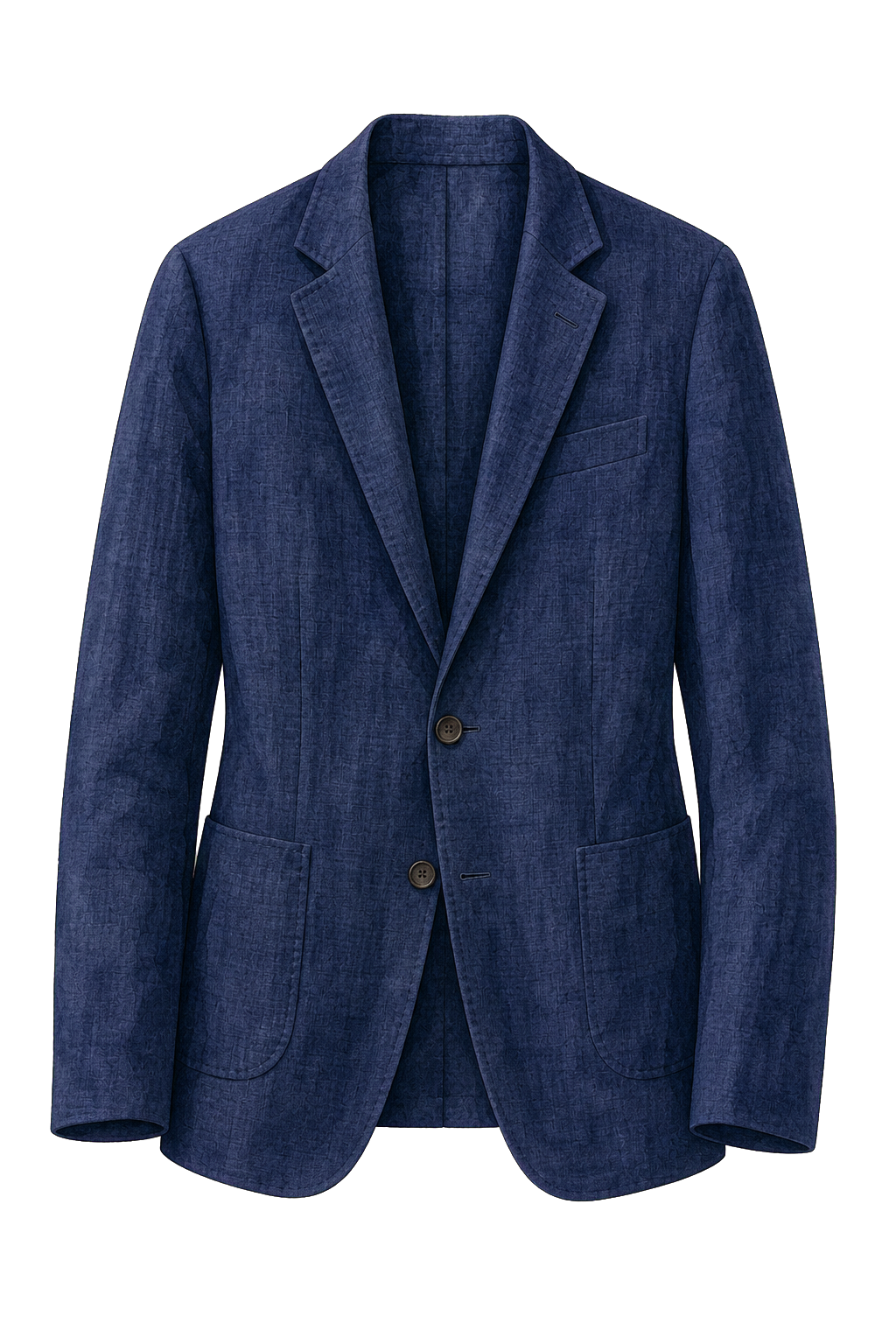 01Navy slub-weave blazer, unstructured, patch pockets
Carry it at three, wear it at eight. Nine degrees separate a 22°C / 72°F afternoon from a 13°C / 55°F night, and a gap that size is one layer rather than a coat. Two buttons, patch pockets, and a shoulder with no padding in it, so it reads as a jacket and not as office uniform; the slubby weave takes a fold in a bag and gives it back without a pressing. Navy rather than camel, because camel belongs to the trench and the trench belongs to October.
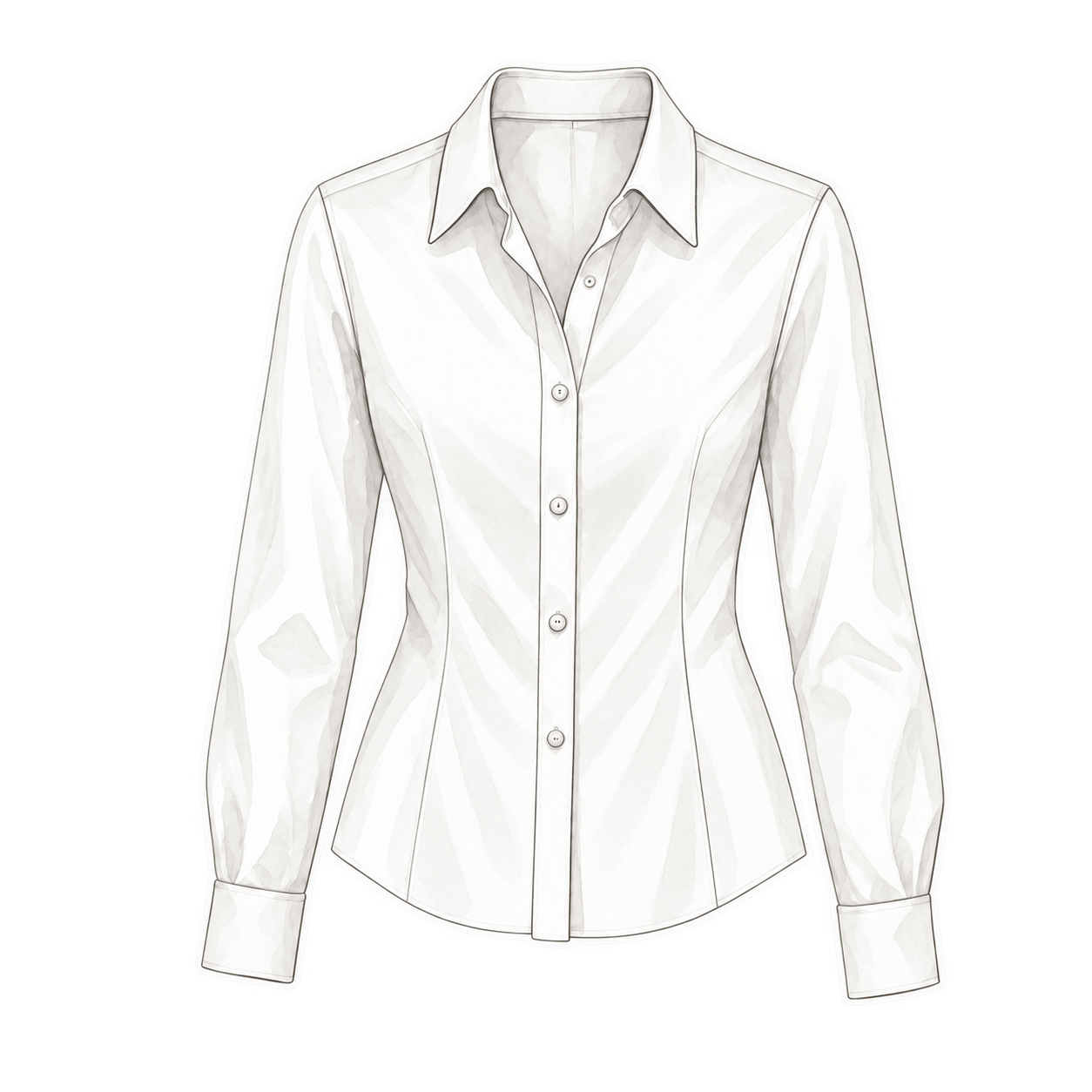 02White cotton shirt, point collar, buttoned cuffs
Wear this five days in seven and nobody counts. A fitted white cotton shirt takes the blazer at nine in the morning, goes under the camel crew at eight at night, and is the one piece that holds up in a patrimoine queue and at a late table without a change of clothes. Fitted rather than oversized, and with no chest pocket: a boxy shirt worn open reads as a beach in a month that went back to work.
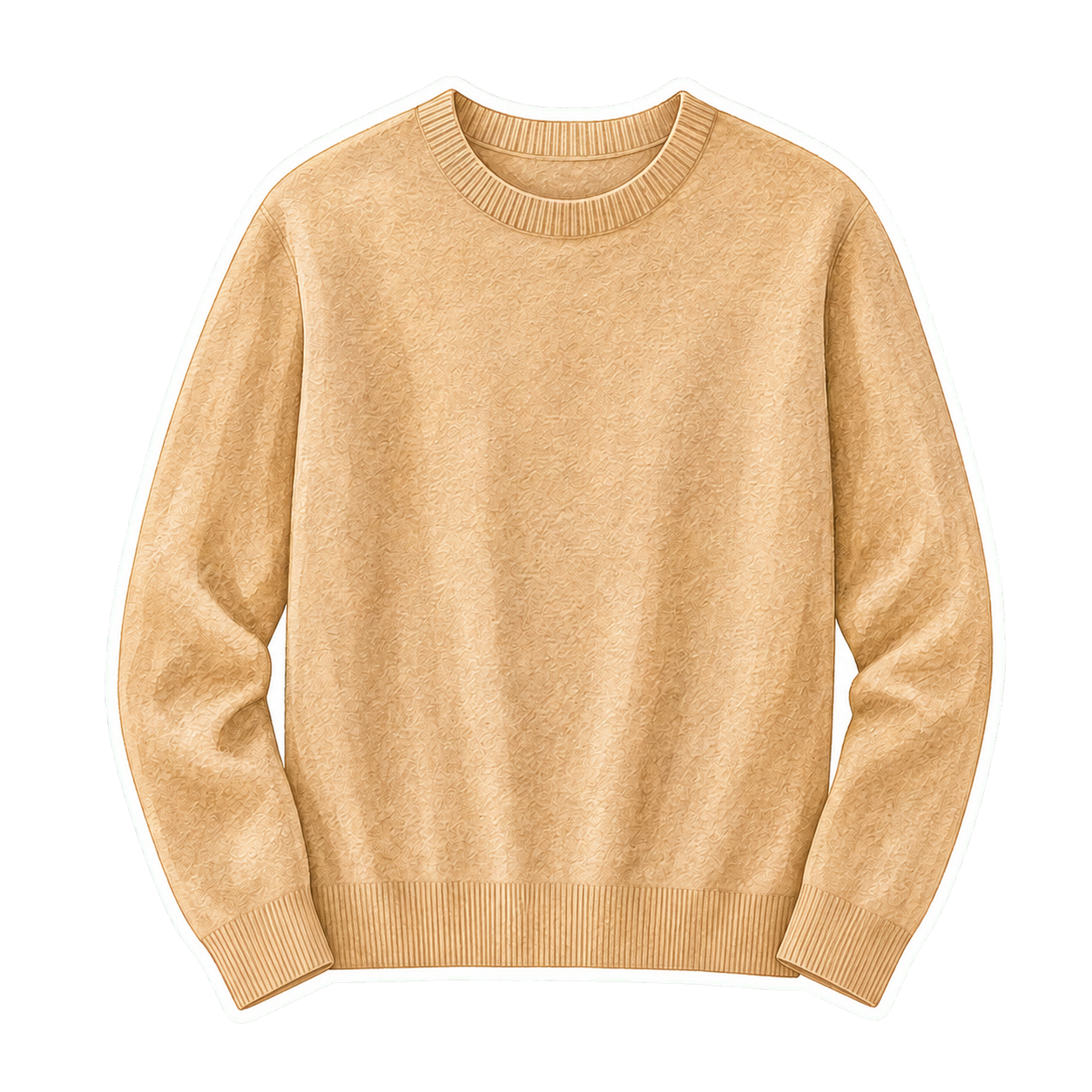 03Camel fine-gauge crew knit
Thirteen degrees at ten at night is where this earns its place. A fine-gauge camel crew goes under the blazer when the terrace heaters are not on yet and sits alone over the shirt at lunch, and at this gauge it rolls into a bag instead of filling it. Camel rather than cream, because cream is what Paris October wears, and camel holds its own against the limestone the city is built from.
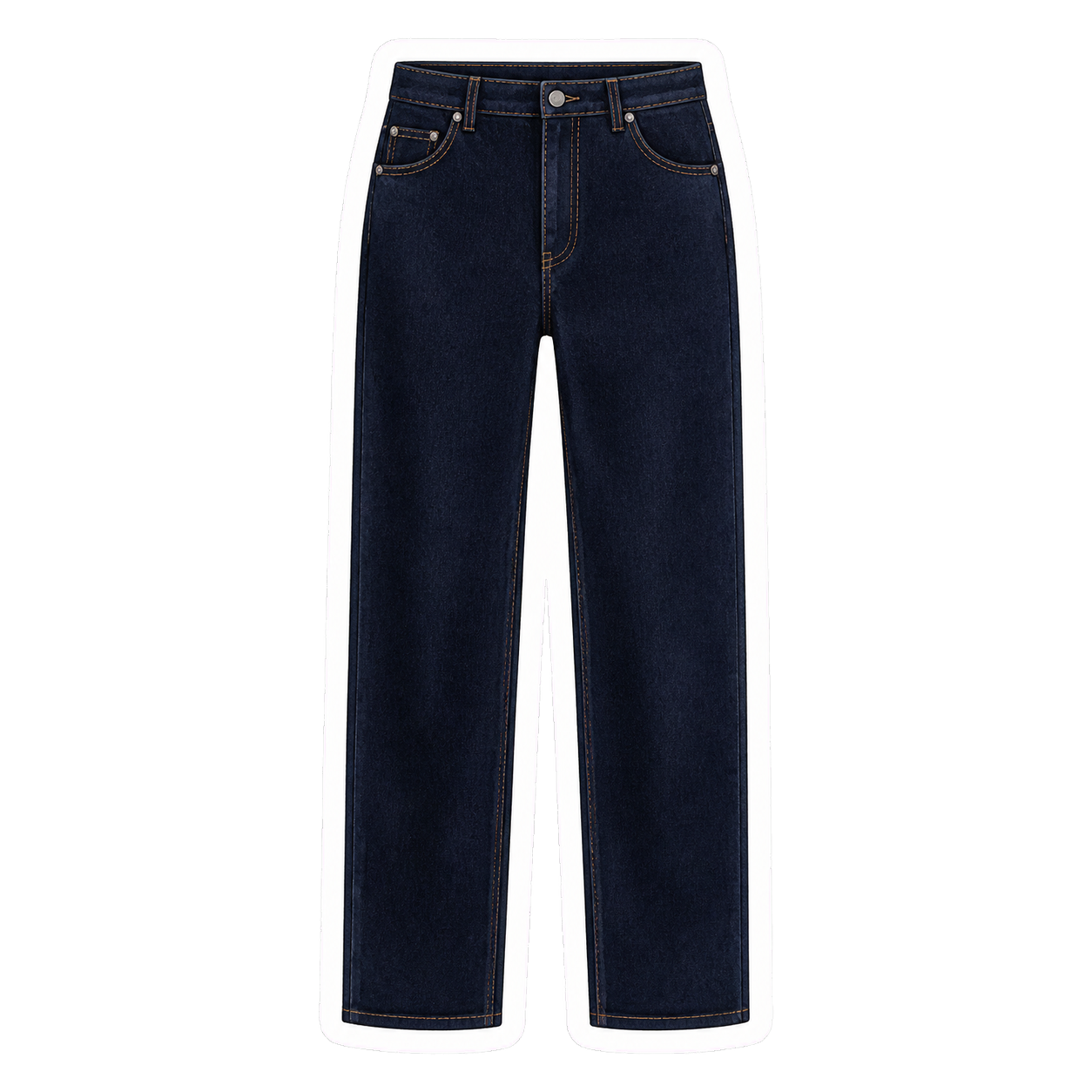 04Dark indigo straight-leg jeans, cropped at the ankle
Rigid indigo, straight through the leg, cropped a finger above the ankle, with no rips and no whiskering. Fifteen thousand steps across Haussmann pavement is an ordinary Paris day and denim at this weight takes it; the crop keeps the hem clear of a wet kerb on one of the eight rain days. Dark enough to carry a nine o'clock bistro table, which a light wash never manages.
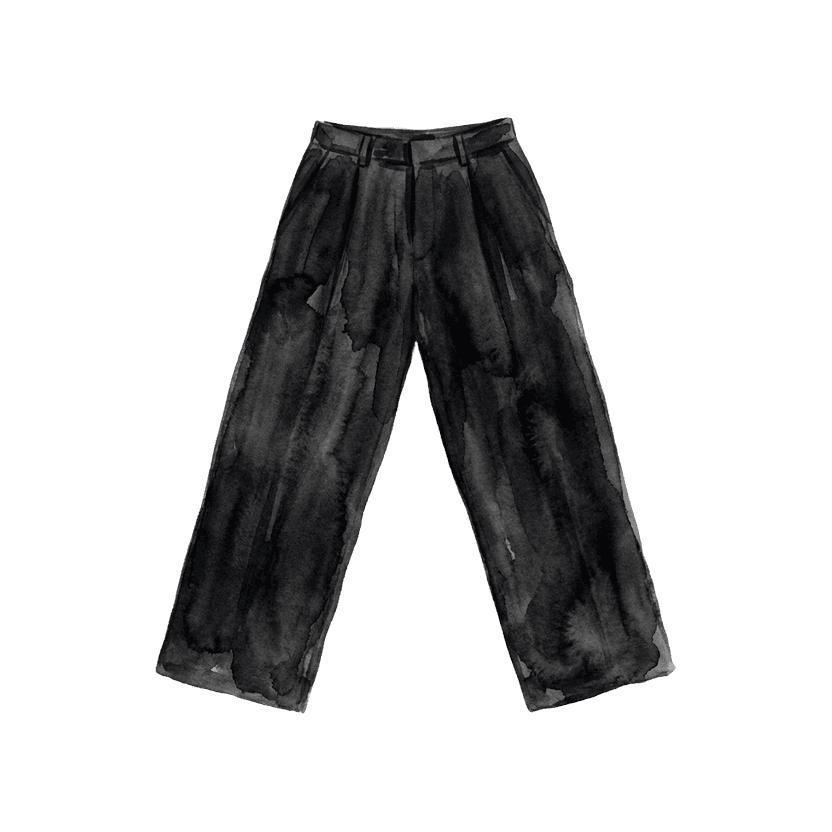 05Black pleated wide-leg trousers
Swap these in at seven. Black pleated wide-leg trousers do the thing the jeans will not: hold a crease through an evening on the Fashion Week pavement in the 8th and a late table in the 2nd, and read finished with nothing over them but the shirt. Pleated at the waist and hemmed to brush the loafer, so the line runs unbroken and the 13°C / 55°F air stops at the ankle instead of running up the leg.
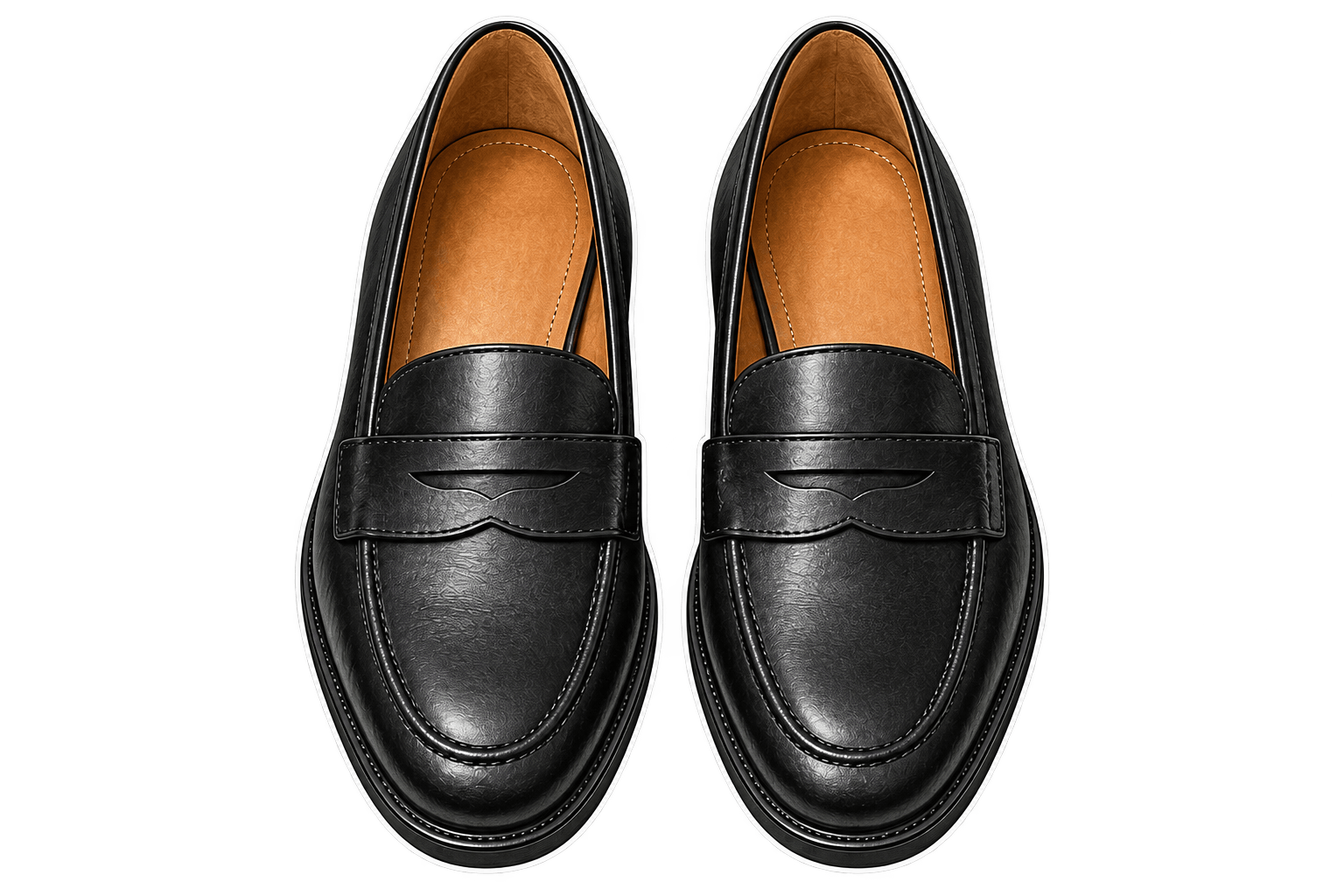 06Black leather penny loafers
Break them in at home, not on the rue de Rivoli. A black leather penny loafer on a flat leather sole is the September shoe, because the pavement is stone and the walking never stops; a new pair delivers blisters by the second museum. No logo and no trainer sole, which is the difference between reading local and reading visitor.
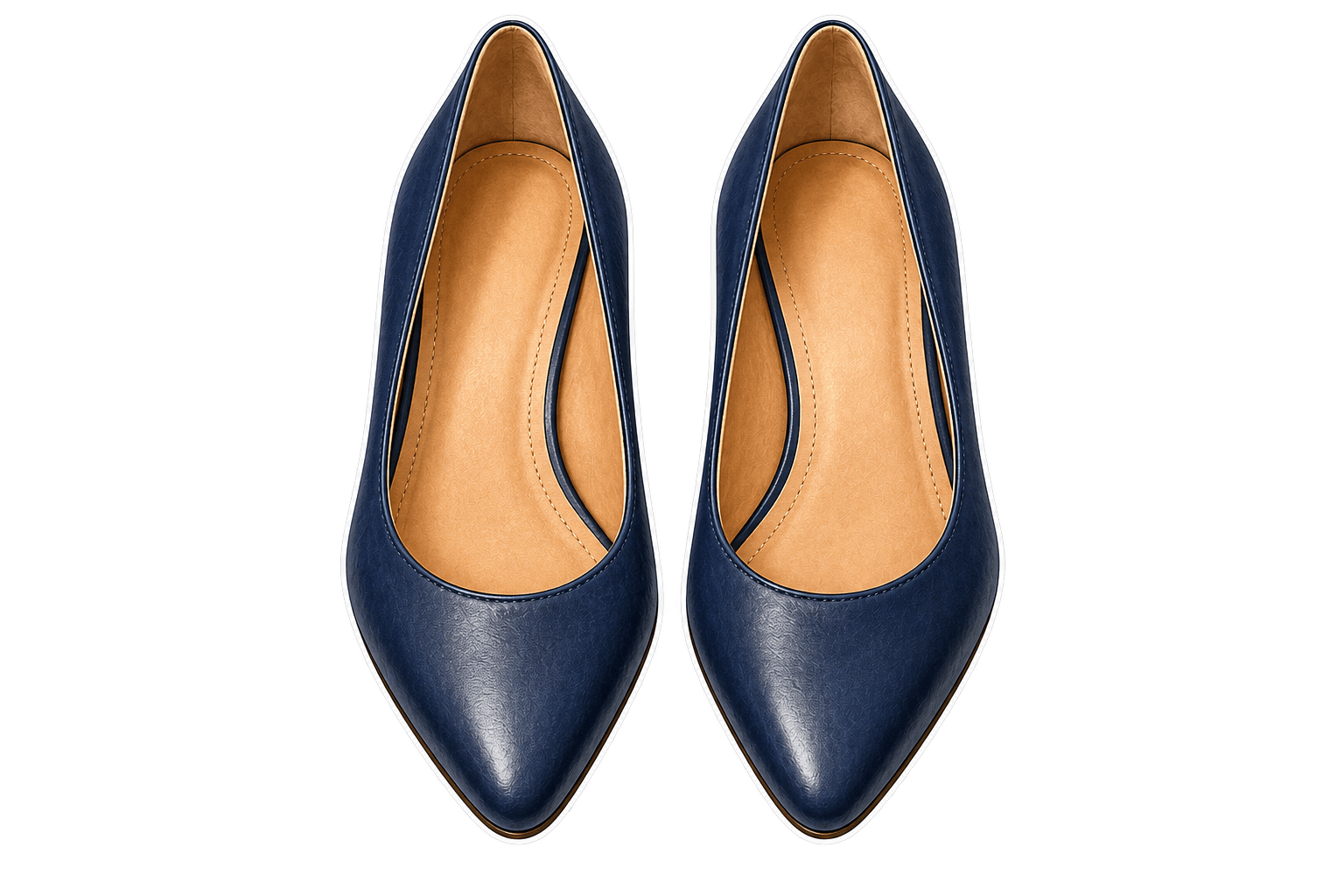 07Navy pointed low-heel pumps
The evening swap when the black trousers come out. A navy pointed pair keeps the line quiet at a late table and sits inside the blazer-and-scarf palette. Break these in before the trip too: the walk from the Metro is still stone pavement.
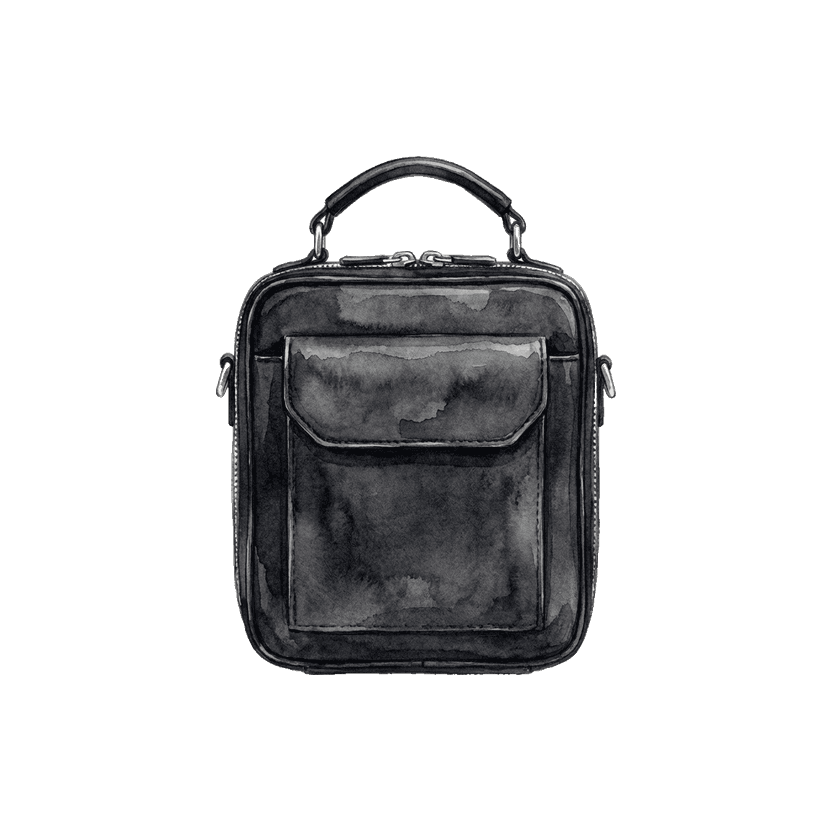 08Black boxy leather bag, top handle, zip top
The bag is where the compact umbrella lives, and across eight light rain days that is the whole of your rain planning. Boxy black leather with a zip top, a front flap pocket and side rings for a strap: hand-carried in a patrimoine queue, dropped onto the shoulder on a full Line 4 carriage. Big enough for the umbrella, a phone and a Navigo card, small enough that it never reads as luggage.
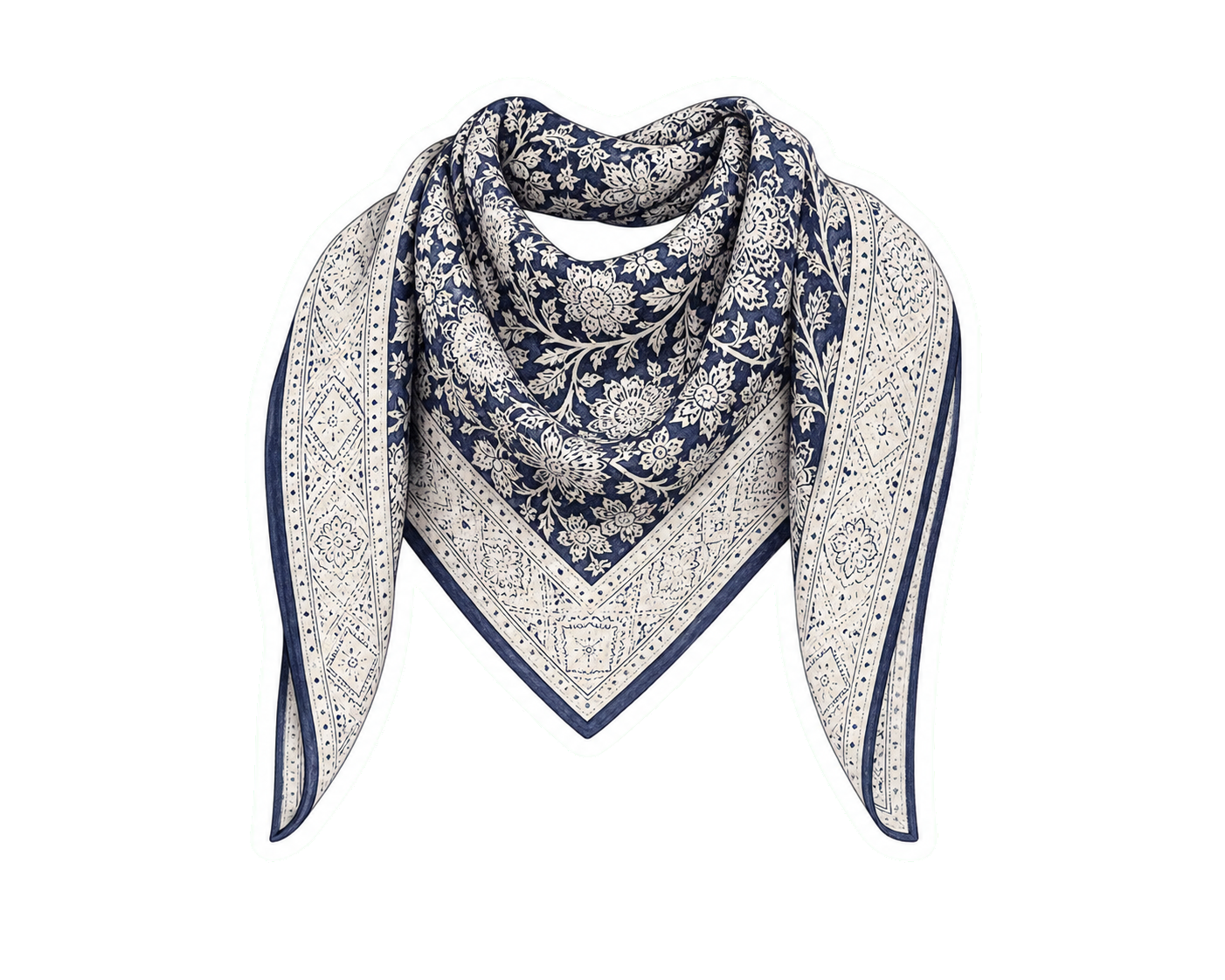 09Navy-and-cream block-print silk square
One square of silk does three jobs. Knotted at the throat it closes the gap the blazer leaves at 13°C / 55°F; folded around the bag handle it is the only pattern in the capsule; opened over the shoulders it covers you for a church on the patrimoine weekend. Navy and cream, so it sits inside the palette rather than fighting it, and small enough that it never turns into a shawl.
Day to night
White shirt · dark indigo jeans · black penny loafers · navy blazer over the forearm · black boxy bag. Coffee in the 9th at nine, then the Journées du patrimoine queue outside a ministry, standing in 13°C / 55°F air until the doors open.
Camel crew over the shirt · black pleated wide-leg trousers · navy pointed pair · blazer on and buttoned · silk square at the throat. Seven o'clock past the show entrances in the 1st, an 8:30 table in the 2nd, and the walk home along the Seine.
A suggested look — white cotton shirt, dark indigo straight jeans, black penny loafers, navy blazer, black top-handle bag.

What to avoid
- A trench as the hero coat — that is October here; at 22°C / 72°F you carry it all day
- Shorts — the city went back to work on 1 September, and the patrimoine rooms are not the place
- A full-size umbrella — 44.7mm across eight days; you will leave it on a café chair
- New shoes — 15,000 steps on Haussmann pavement finds every unworn seam
- Dressing for a photograph, not the Métro — the register is quiet, worn-in and exact
Frequently asked questions
Per Météo-France's normals for Paris-Montsouris, the city's reference station: the average daily maximum is 21.5°C, the average daily minimum 13.0°C, and rainfall averages 44.7mm across about 7.5 days of 1mm or more. Sunshine runs to 174.7 hours, close to six hours a day, more than any other month of the Paris autumn. In round numbers that is 22°C / 72°F afternoons over 13°C / 55°F nights, a nine-degree swing across a day you spend on foot.
Yes, and Parisians would tell you it is the best month of the year. La rentrée refills the city in the first week, so the small restaurants that shut for August reopen and the museum queues fall away from their July length. Two fixed dates anchor the month: the Journées européennes du patrimoine on 19 and 20 September 2026, when ministries, embassies and the Élysée open their doors to anyone willing to stand in line, and Paris Fashion Week womenswear from 28 September to 6 October 2026. The light is the third argument, at 174.7 hours of sunshine.
An unstructured navy blazer, a fitted white cotton shirt, a camel fine-gauge crew knit, dark indigo straight-leg jeans, black pleated wide-leg trousers for the evenings, black penny loafers you have already worn in, a small structured black bag and a navy-and-cream silk square. Add a compact umbrella for the eight light rain days. Leave out the trench, the shorts and anything new on your feet: 22°C / 72°F afternoons over 13°C / 55°F nights is a one-layer month, and the walking decides everything else.
Nothing loud. The womenswear season runs from 28 September to 6 October 2026, with 68 shows and 33 presentations, Julie Kegels opening on the 28th and Louis Vuitton closing on 6 October, and the pavement outside the venues in the 8th and the 1st divides into two groups. One dresses to be photographed. The other works in the industry and wears a navy blazer, a white shirt, a flat black shoe and a bag that holds a laptop. Copy the second group, stand clear of the entrance rather than in it, and expect an hour on your feet in 13°C / 55°F air once the sun goes.
September sits between them and behaves like neither. August runs 26°C / 79°F by day and 16°C / 61°F at night in a half-empty city. October drops to 17°C / 63°F and 10°C / 50°F and hands the month to the wool coat. September holds 22°C / 72°F and 13°C / 55°F, and all three months carry about eight rain days, so the difference is not rain but layer count: August needs none, October needs a coat, September needs one unstructured jacket you can carry. The other difference is who is here. August is visitors; September is Parisians.
Navy, white, camel and black, and very little else. The rentrée street is a blazer or a knit jacket over a collared shirt, a dark straight jean or a pressed trouser, a flat leather shoe, and a small structured bag, with a silk square at the throat or the bag handle as the only pattern in the outfit. Condition matters more than labels: clothes look worn-in rather than new, hems are finished, shoes are flat and polished, and nothing carries a visible logo. The trench appears in the last week of the month, when the nights start falling below 13°C / 55°F, and not before.
Sources
- Météo-France — 1991–2020 climate normals, Parc Montsouris station