What to Wear in Kathmandu in January
Kathmandu in January: 19°C / 66°F days, 3°C / 37°F nights, and Maghe Sankranti on Friday 15 January.
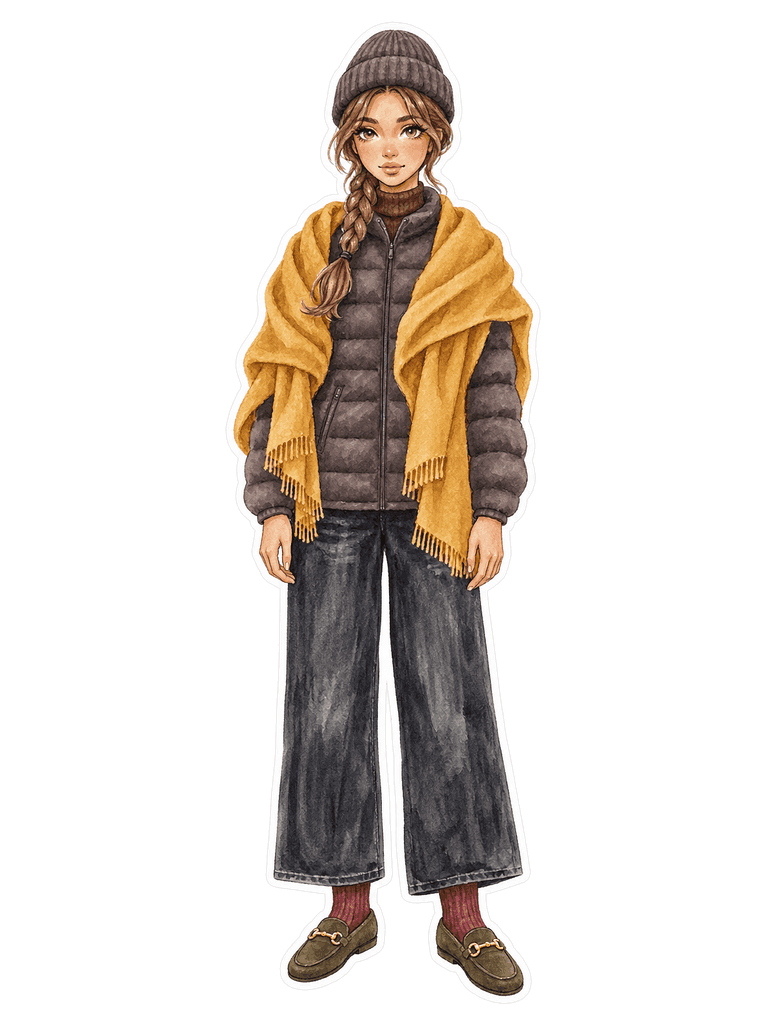
- Charcoal down jacket — the coldest month at the airport, 19.2°C by day and 2.8°C (37°F) near dawn
- Chocolate-brown turtleneck — enough on its own once the afternoon reaches 19°C / 66°F
- Mustard pashmina shawl — look for the Chyangra Pashmina collective trademark when you buy
- Faded black wide-leg jeans — room to layer, and covered knees at the temples
- Burgundy ribbed socks — loafers leave the ankle bare before a 6:56am mid-month sunrise
- Deep-red suede crossbody — notes for Pashupatinath's NPR 1,000 day ticket, and no camera inside
- A camera or a leather belt into Pashupatinath's main complex — the Nepal Tourism Board says both stay outside
- Dressing for the 19°C / 66°F noon — the sun sets at 5:30pm in mid-January and the night falls to 3°C / 37°F
- A government-office errand on Friday 15 January — Maghe Sankranti is a nationwide public holiday
- Bare shoulders on the terraces across the Bagmati — covered shoulders are the safe choice at Pashupatinath
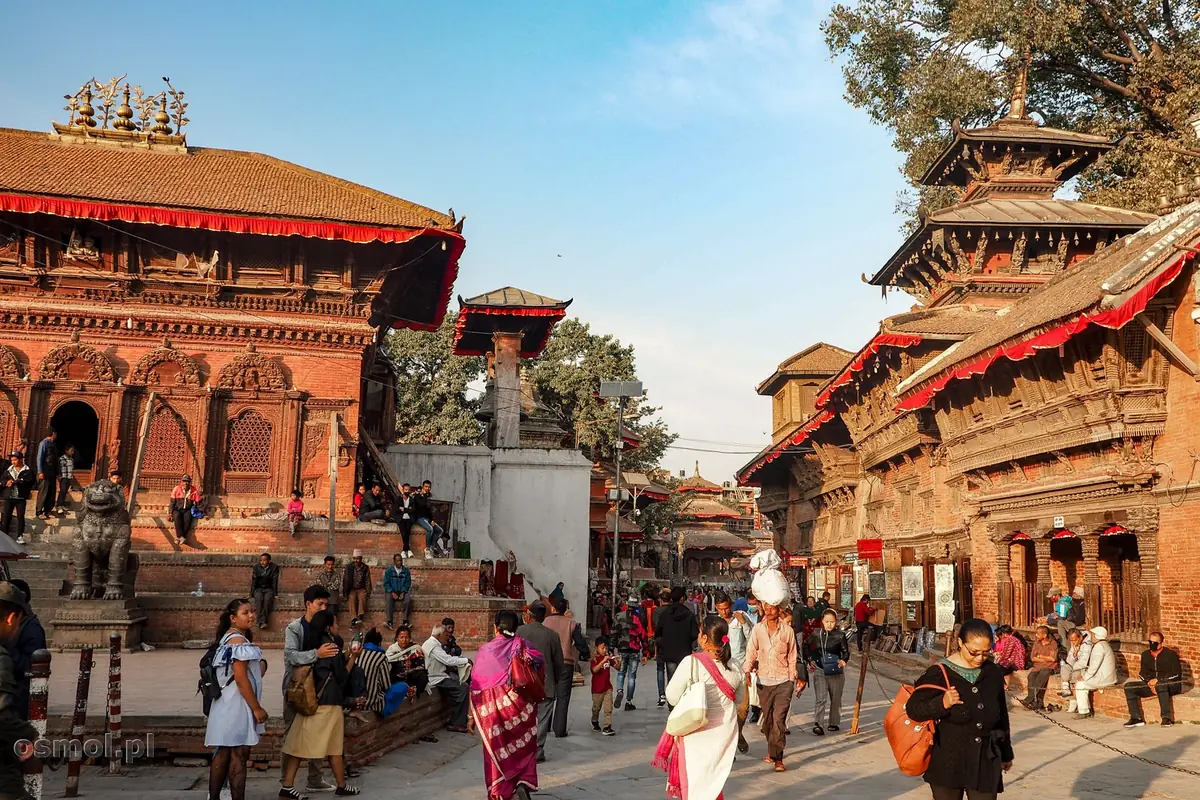
Maghe Sankranti opens the month of Magh on Friday 15 January, a public holiday on the Ministry of Home Affairs' gazette, and the Nepal Tourism Board writes that "Many people also take holy dips in rivers like the Bagmati, Gandaki, and Koshi".
In Kathmandu the Bagmati runs past Pashupatinath, and the morning by the river is the year's coldest weather: the Department of Hydrology and Meteorology's airport normal, archived by NOAA's NCEI, gives 19.2°C at noon and 2.8°C (37°F) near dawn. Pack a charcoal down jacket, a chocolate turtleneck and a mustard pashmina shawl, and peel back to the sweater by lunch.
January is Kathmandu's coldest month, 3°C at dawn and 19°C by noon. Maghe Sankranti answers it with sesame, molasses and ghee; you answer it with down, wool and a pashmina.
The capsule
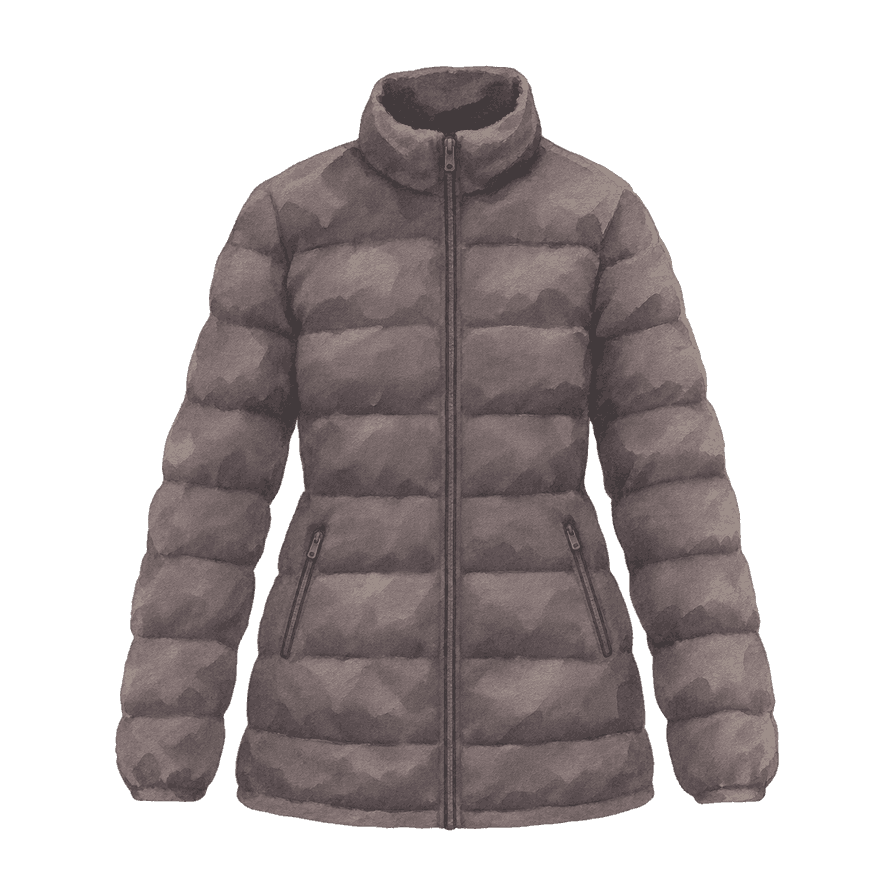 01Charcoal hip-length down jacket
January is Kathmandu's coldest month by day and by night on the Department of Hydrology and Meteorology's airport normal, at 19.2°C at noon and 2.8°C (37°F) near dawn. A hip-length down jacket covers a 6:56am start by the Bagmati and comes off as the 16°C swing plays out. Charcoal sits under a mustard shawl and goes with every piece here.
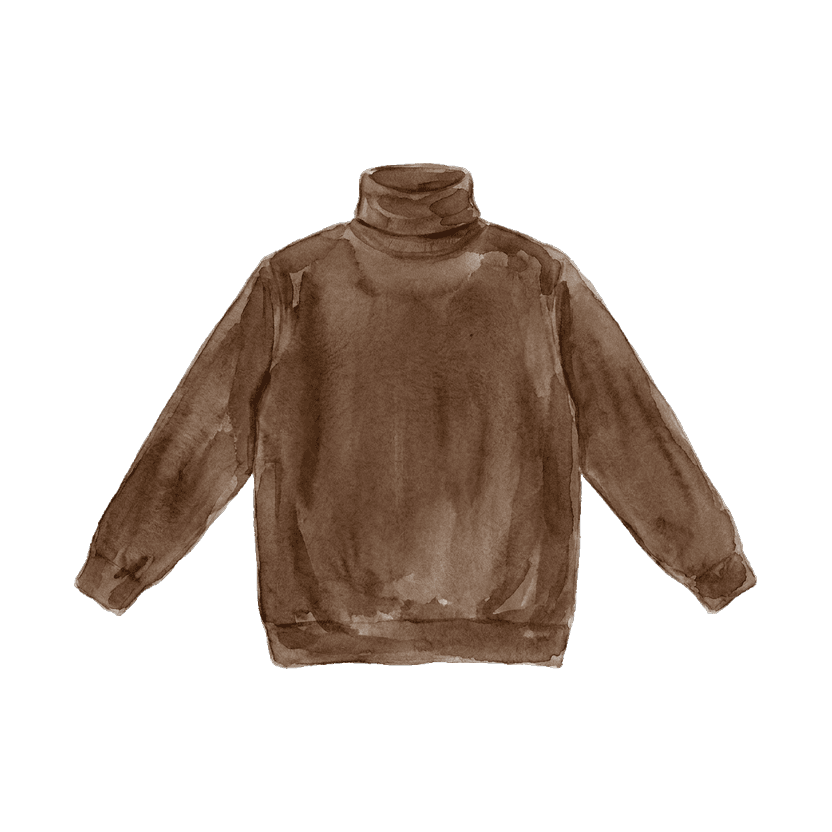 02Chocolate-brown turtleneck sweater
A roll neck keeps the cold off your throat on a morning that starts near 3°C, and on its own it is enough by noon at 19°C / 66°F. On the terraces across the Bagmati, covered shoulders are the safe choice, and a turtleneck settles that under any layer. Chocolate brown sits easily with the shawl's mustard and the bag's deep red.
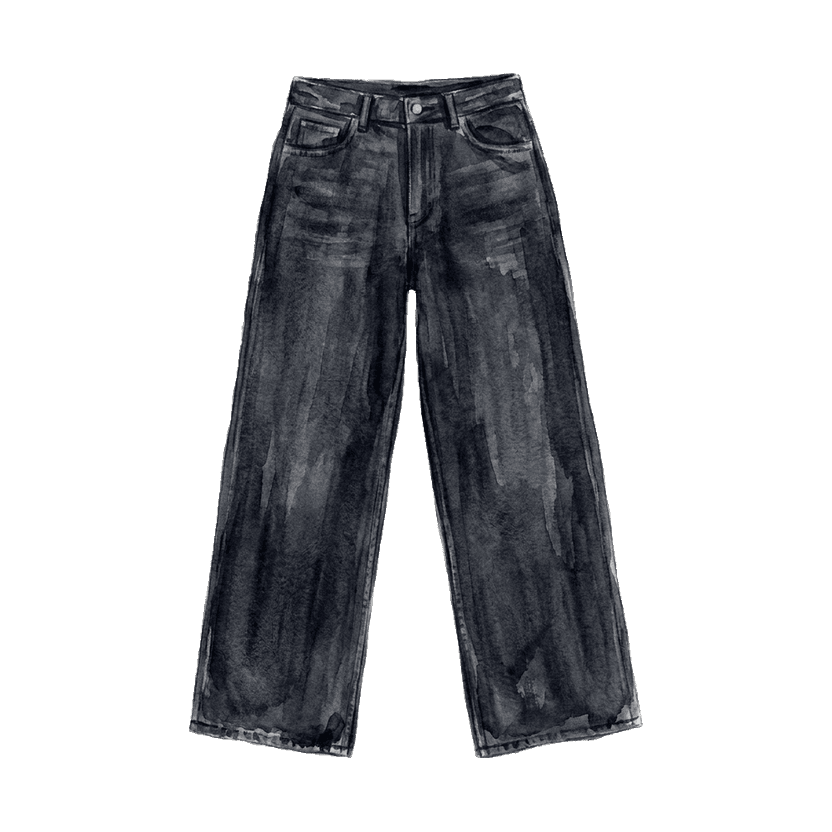 03Faded black wide-leg jeans
January is wetter than the month before, with 15.2 mm on 1.9 days at the airport, and dark denim takes a damp afternoon without showing it. A wide leg leaves room to layer at a 2.8°C (37°F) dawn and covers the knees, the safe choice at temples. Faded black keeps the mustard shawl and the deep-red bag as the only colour in the outfit.
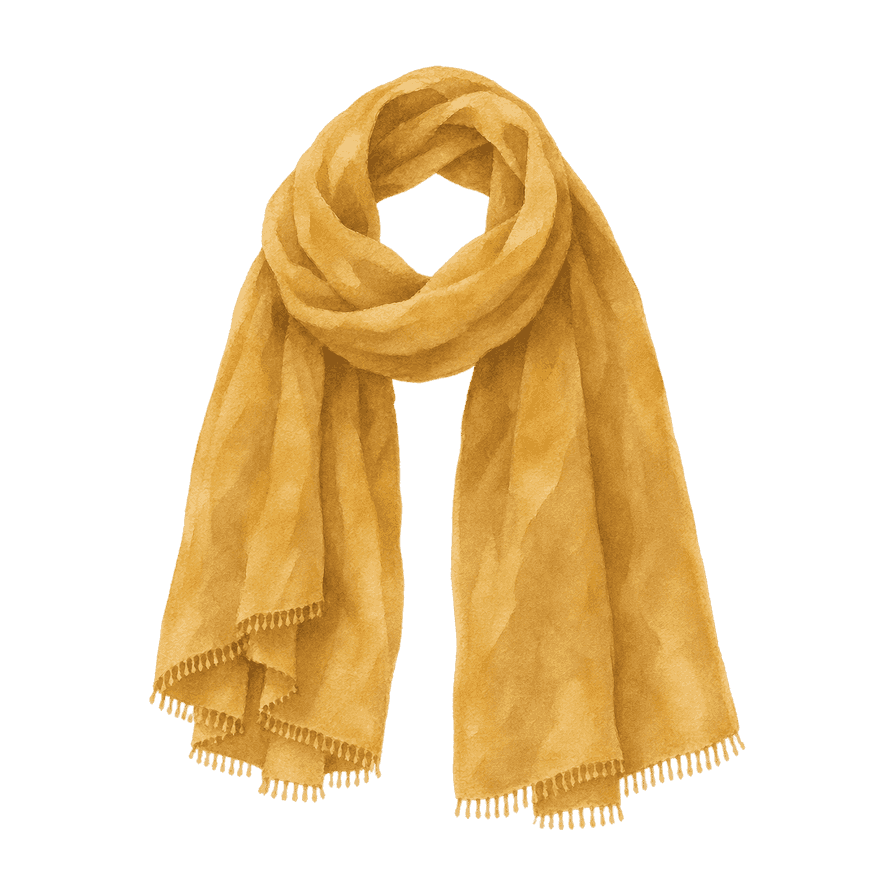 04Mustard pashmina shawl
Nepal's own pashmina comes from the chyangra, a goat of the Himalayan belt above 3,000 m, and is sold under the Chyangra Pashmina collective trademark, which Nepal Trade reported as registered in 41 countries by 2012. Look for that mark before you buy in Kathmandu. A shawl goes over the jacket at a 2.8°C dawn and round your shoulders at noon.
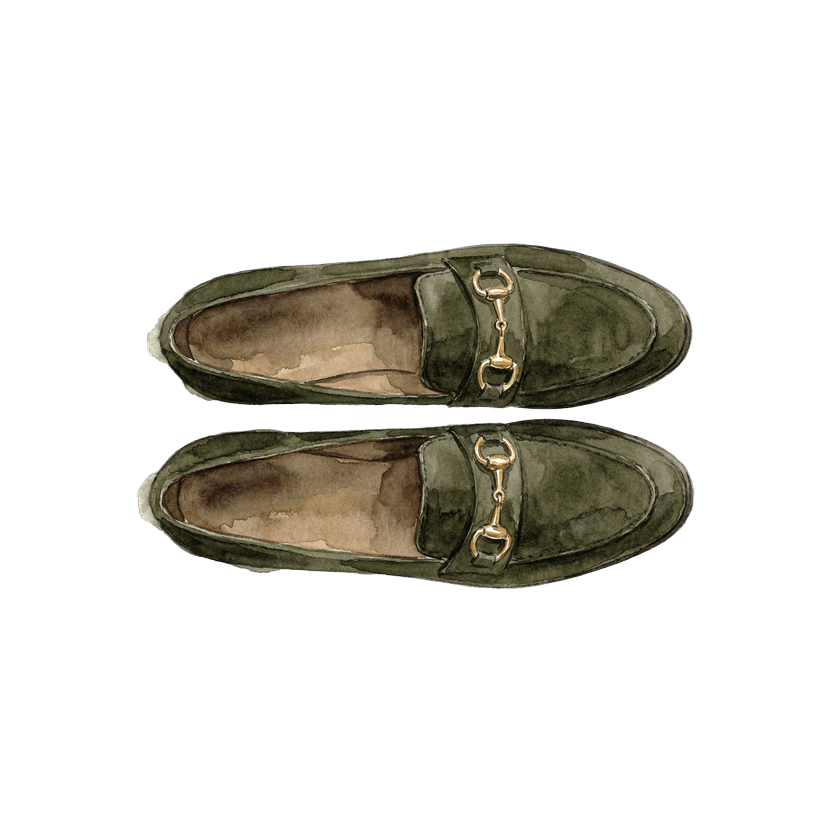 05Dark olive suede horsebit loafers
With 15.2 mm of rain on 1.9 days in an average January, suede is a fair risk, and a horsebit loafer smartens a turtleneck for a Maghe Sankranti meal. Wear them with ribbed socks for a 2.8°C (37°F) dawn. Suede counts as leather: if you are Hindu and go into Pashupatinath's main complex, the Nepal Tourism Board says leather shoes and belts stay outside.
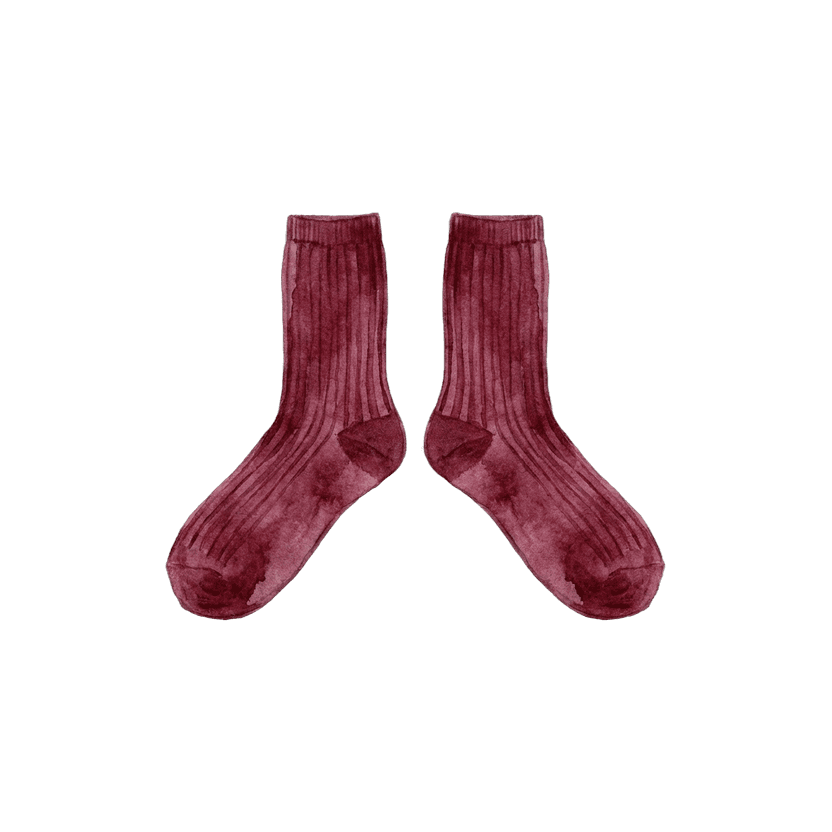 06Burgundy ribbed crew socks
Loafers leave the ankle bare, and the airport normal's 2.8°C (37°F) mean low arrives near dawn, before a 6:56am mid-month sunrise. A ribbed crew sock closes that gap under wide-leg jeans and changes nothing else about the outfit. Burgundy picks up the deep red of the crossbody, so the two read as one accent against charcoal and faded black.
 07Deep-red suede top-handle crossbody
Maghe Sankranti on Friday 15 January runs into Saturday the 16th, Nepal's weekly holiday, on the Ministry of Home Affairs' gazette. At Pashupatinath the Nepal Tourism Board's fee table lists NPR 1,000 per day per entry, with tourists viewing the temple from the back premises, so carry notes in a bag that closes. Deep red stands out against the charcoal jacket.
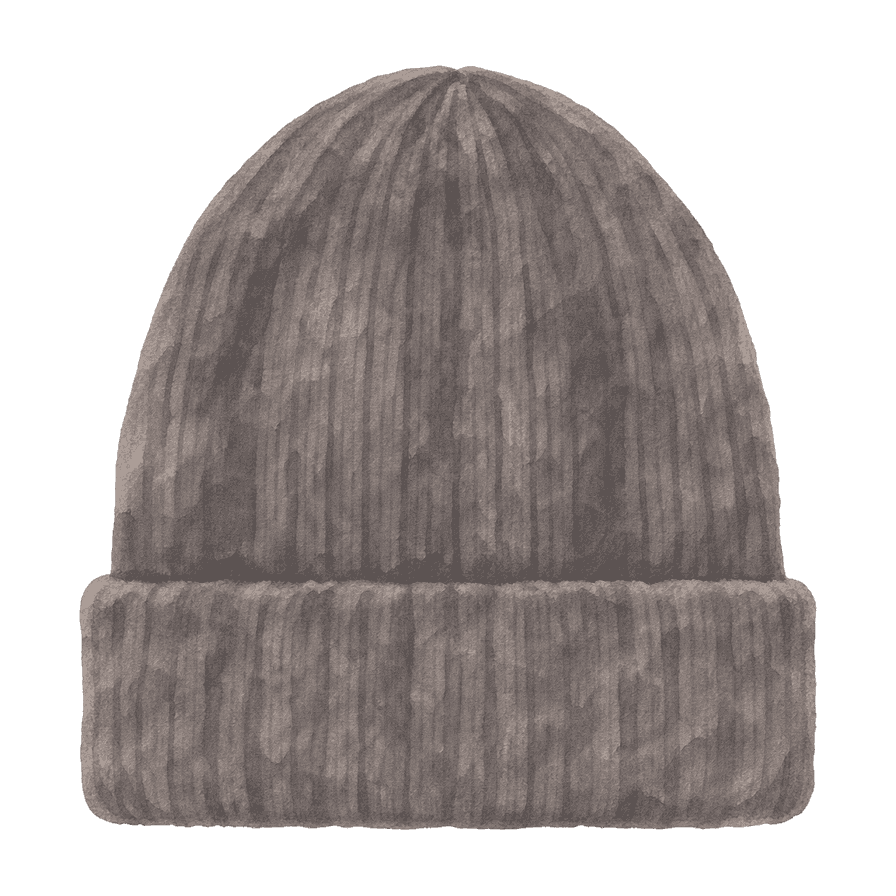 08Charcoal ribbed wool beanie
The sun rises at 6:54am on 1 January and 6:56am on the 15th, after a night that falls to about 3°C, so the first hour out is the coldest of the year. A rib-knit beanie keeps your ears warm by the Bagmati at that hour and fits a jacket pocket once the day reaches 19°C. Charcoal matches the jacket and leaves the mustard shawl to stand out.
Day to night
Maghe Sankranti morning. Charcoal down jacket over the chocolate-brown turtleneck · mustard pashmina shawl · faded black wide-leg jeans · burgundy ribbed socks · dark olive suede loafers · charcoal beanie. Sunrise is at 6:56am on Maghe Sankranti; the Nepal Tourism Board says non-Hindus observe Pashupatinath from the terraces across the Bagmati to the east.
Afternoon into dusk. Turtleneck on its own at 19°C / 66°F · jeans · loafers · deep-red suede crossbody, with the shawl round your shoulders and the jacket back on when the sun sets at 5:30pm. NTB lists til ko laddu, chaku, ghee and tarul among the day's warming foods.
A suggested look — charcoal down jacket, chocolate-brown turtleneck, mustard pashmina shawl, faded black wide-leg jeans, burgundy ribbed socks.
What to avoid
- A camera or a leather belt inside Pashupatinath's main complex
- Photographs anywhere inside the Pashupatinath temple complex
- Dressing for the 19°C / 66°F noon with nothing for a 3°C / 37°F dawn
- Government-office errands on Friday 15 or Saturday 16 January
- Bare shoulders on the terraces across the Bagmati
Frequently asked questions
Cold at dawn and mild by day: 19°C / 66°F afternoons and 3°C / 37°F nights. The Department of Hydrology and Meteorology's 30-year normal for its Kathmandu airport station, as submitted to the WMO and archived by NOAA's NCEI, gives January a mean high of 19.2°C and a mean low of 2.8°C (37°F), the coldest month of the year by day and by night, with a 16.4°C swing between them.
It brings 15.2 mm of rain on 1.9 days with 1 mm or more. The sun rises between 6:51am and 6:56am all month and sets at 5:20pm on the 1st and 5:43pm on the 31st.
Pack for the coldest month. For mornings: a charcoal down jacket over a chocolate-brown turtleneck, a mustard pashmina shawl, a charcoal ribbed beanie and burgundy ribbed socks.
For the day: faded black wide-leg jeans, dark olive suede loafers and a deep-red suede crossbody for notes. That covers a night that falls to 3°C / 37°F and a 19°C / 66°F afternoon. Covered shoulders and knees are the safe choice at temples, and every piece here covers both.
With food and the river. The Nepal Tourism Board writes that Maghe Sankranti falls on the first day of Magh and marks "the start of Uttarayana (the sun's northward journey), bringing longer, warmer days and the promise of spring."
Families gather for "traditional foods believed to give warmth and strength during winter—such as til ko laddu (sesame sweets), chaku (molasses), ghee, sweet potatoes, yam, and tarul (root vegetables)."
Many take holy dips in rivers such as the Bagmati, which runs past Pashupatinath, "the most revered Hindu temple in Nepal" in NTB's words. It is known as "Maghi among the Tharu community and Maghi Sankranti in the hills". In 2027 it falls on Friday 15 January, a public holiday across Nepal; dress for a cold morning.
Late January has more light: the sun sets at 5:20pm on the 1st and 5:43pm on the 31st, while sunrise barely moves (6:54am to 6:51am). Maghe Sankranti sits mid-month, on Friday 15 January, and Saturday the 16th is the weekly holiday, so government offices close for two days in a row.
Martyrs' Day, a public day-holiday, falls on Saturday 30 January. Every Saturday is Nepal's weekly day off: 2, 9, 16, 23 and 30 January. The cold holds all month on the airport normal, 19.2°C by day and 2.8°C near dawn.
December is a little milder and drier. On the Department of Hydrology and Meteorology's airport normal, January runs 1.0°C cooler by day and 1.4°C cooler at night than December, and it is wetter: 15.2 mm on 1.9 days against 7.8 mm on 0.7. The sun sets at 5:30pm in mid-January and 5:11pm in mid-December.
December stacks three public holidays into one week: Yomari Punhi on 24 December, Christmas, and Tamu Lhosar, the Gurung new year, on Wednesday 30 December. January has Maghe Sankranti on 15 January, plus Martyrs' Day on Saturday the 30th.
It is Nepal's own pashmina, and the trademark tells you what you are buying. Nepal Trade, a 2012 issue published under the Enhanced Integrated Framework, explains: "It is a soft, weightless and natural fibre extracted from the special breed of goat, Capra Hircus locally known as Chyangra." The goat lives in the Himalayan belt above 3,000 m.
The Ministry of Commerce and Supplies helped register Chyangra Pashmina as a collective trademark, "which assures buyers of the product's quality", and "So far, 'Chyangra Pashmina' has been registered in 41 countries till date." Look for that mark on a shawl before you pay; it is the piece that carries a January morning by the Bagmati.
More from Kathmandu
More January packing guides
Sources
- DHM Nepal — 1991–2020 climate normals, Kathmandu Airport (44454) stationNepal's Department of Hydrology and Meteorology's 1991–2020 normal for its Kathmandu airport station, as submitted to the WMO's normals collection. Rain days are days with 1 mm or more.
- Department of Hydrology and Meteorology, Nepal — 1991–2020 climate normals, Kathmandu airport (44454), as submitted to the WMO's normals collection (NOAA NCEI accession 0253808) — accessed 2026-11-22
- Ministry of Home Affairs, Nepal Gazette (Rajpatra) Part 5, 2082/11/18 — public holidays for BS 2083 (Tamu Lhosar Poush 15; Maghe Sankranti Magh 1; Sonam Lhosar Magh 24; Gyalpo Lhosar Falgun 25) — accessed 2026-11-23
- Embassy of Nepal, Kuala Lumpur — Public Holidays 2083 BS (2026/27 AD), BS–AD date pairs — accessed 2026-11-23
- Nepal Tourism Board — Maghe Sankranti (Magh 1; winter foods; river dips) — accessed 2026-11-23
- Nepal Tourism Board — Pashupatinath (Hindus only in the main complex; no leather or cameras; no photography) — accessed 2026-11-23
- Nepal Tourism Board — Heritage Site Entry Fees (Kathmandu Valley) — accessed 2026-11-23
- Nepal Trade, Issue 4 (Oct 2012, Enhanced Integrated Framework) — Chyangra Pashmina, the collective trademark, registered in 41 countries — accessed 2026-11-23
- Nepal Tourism Board — Tamu Lhosar: Poush 15, the Tundikhel gathering and traditional dress — accessed 2026-11-23
- Nepal Tourism Board — Yomari Punhi (Newar rice-harvest day; the yomari dumpling) — accessed 2026-11-23