What to Wear in Osaka in February
Osaka in February: 11°C / 52°F afternoons, 3°C / 37°F nights, the year's least sun, and seven hours of marathon on Sunday 28 February 2027.
- Navy hooded windbreaker, unlined. The organiser runs the race in rain, and its six roadside cheering venues are all outdoors
- Charcoal down vest under the shell. You stand still for hours, and JMA's normal for race day starts from a 4.4°C low
- Cream raglan sweatshirt. It is the layer you keep on from the 9:15am start to the 4:15pm cut-off, vest on or off
- Slate-grey water-resistant trousers and navy waterproof sneakers. Rain of 1mm or more falls on about 6 February days
- Yellow rib beanie and grey touchscreen fleece gloves. Your runner looks for one face in a crowd AIMS put at a million in 2026, and you clap for hours
- Navy nylon sling, worn on your back. Layers come off as race day climbs toward 12.1°C, and both hands stay free
- Dressing for the 11°C / 52°F afternoon at a 9:15am start. You stand still, and JMA's normal for the day runs from 4.4°C to 12.1°C
- An umbrella in a pavement crowd. It blocks the view of the people behind you and leaves you one hand to clap with
- Jeans if rain is forecast. Wet denim stays cold for hours while you stand at the course
- Assuming the race always falls on the last Sunday. The 2025 edition ran on Monday 24 February
Plan for seven hours on one stretch of pavement. JMA's figures for the Osaka station give February 10.5°C by day and 3.2°C at night, rain of 1mm or more on about 6 days, and 140.6 hours of sun, the least of any month. On Sunday 28 February 2027 the 15th Osaka Marathon starts at 9:15am outside the Osaka Prefectural Government Building and closes its course at 4:15pm in Osaka Castle Park. The organiser's FAQ is plain: "The event will take place even if it rains." Its six roadside cheering venues are all outdoors. Pack a shell over a vest you can take off, shoes that keep water out, and one colour your runner can find.
The runners are warm by the second kilometre. You stand on the pavement from 9:15am until the course closes at 4:15pm, so pack like the one who isn't moving.
The capsule
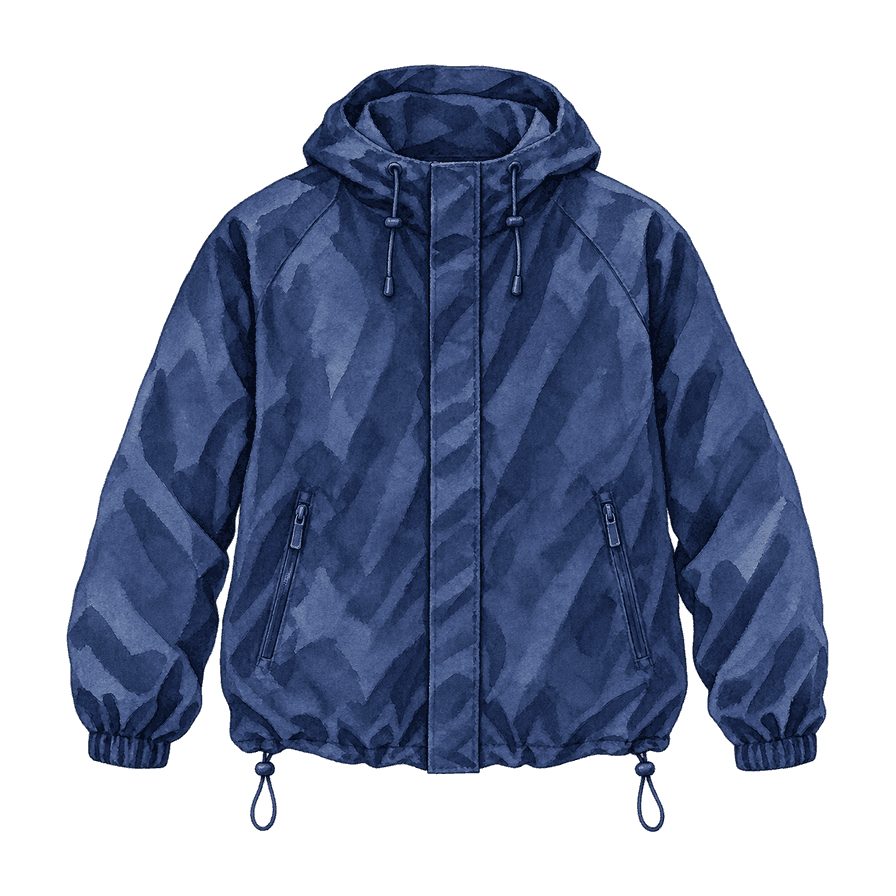 01Navy hooded windbreaker, unlined, hip length, packable
Rain of 1mm or more falls on about 6 February days in Osaka, and the organiser says the marathon goes ahead in rain. Its six roadside cheering venues are all outdoors, so you bring your own shelter. An unlined nylon shell with a hood keeps the vest and sweatshirt dry, cuts a 2.4 m/s wind, and packs into the sling when the shower passes.
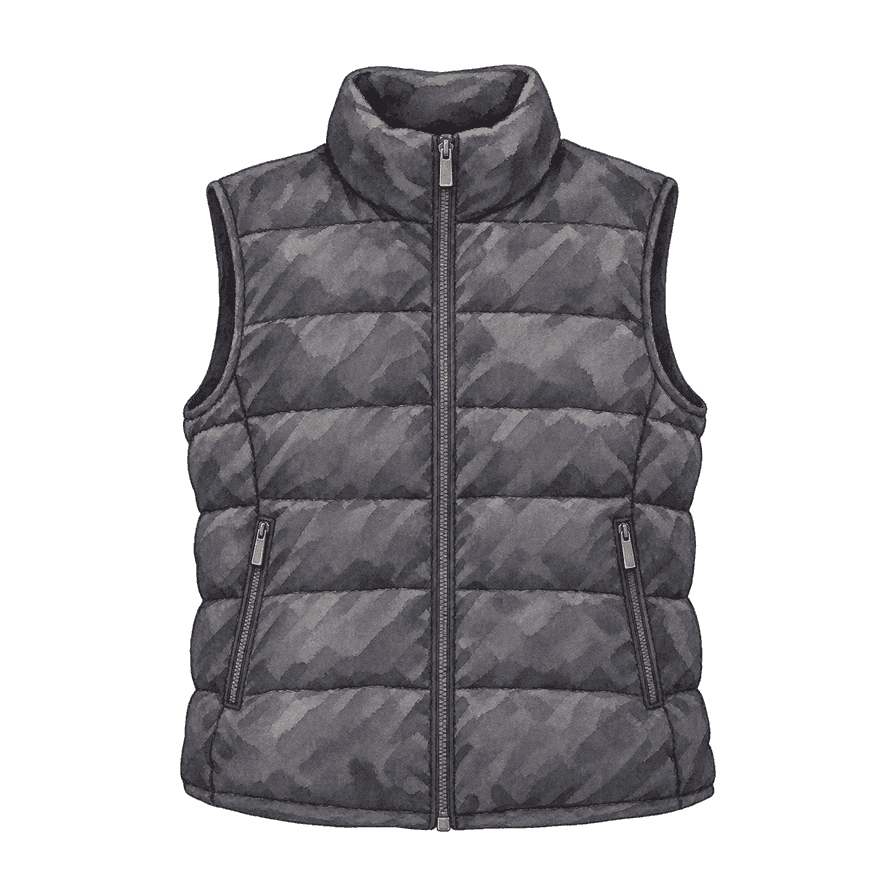 02Charcoal quilted down vest, stand collar
You stand on one stretch of pavement for hours while the field runs past you. JMA's daily normal for 28 February runs from 4.4°C to 12.1°C, and the first wave leaves at 9:15am. A down vest keeps your core warm with your arms free to clap and wave, and once the afternoon warms it rolls into the sling. Charcoal hides a morning's wear.
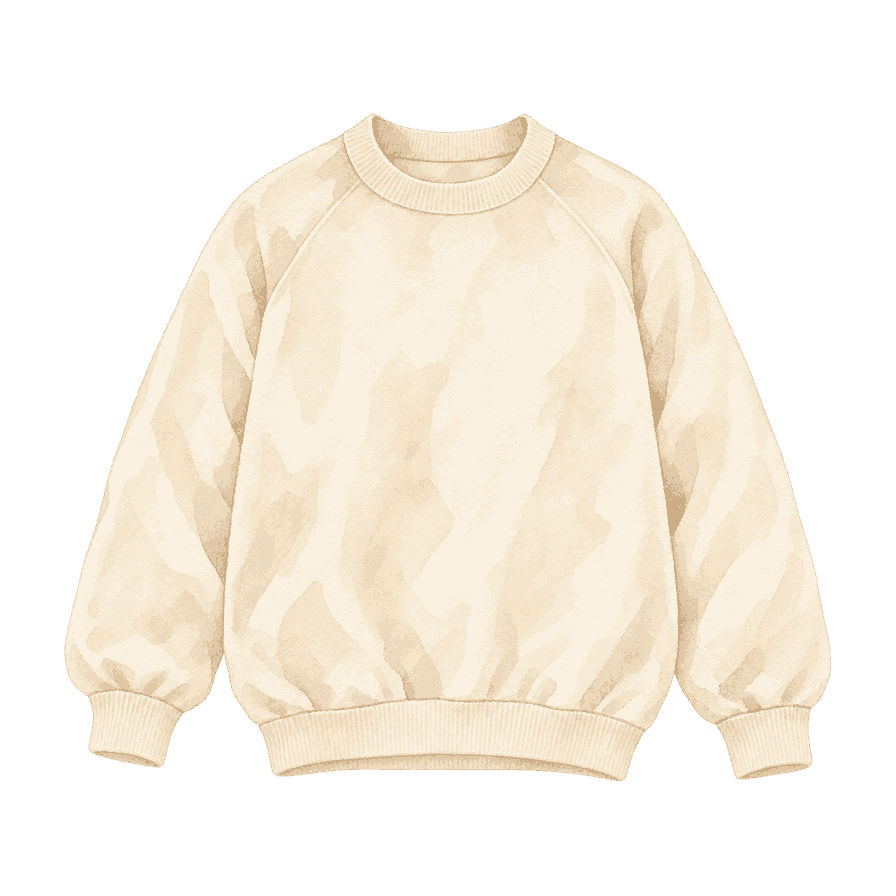 03Cream raglan crew sweatshirt, ribbed cuffs and hem
This is the layer you keep on from the 9:15am start to the 4:15pm cut-off: under the vest in the morning, under the open windbreaker once the day climbs toward 12.1°C. Raglan sleeves leave room to raise both arms when your runner passes, and ribbed cuffs stay put under the gloves. Cream sits light between the navy shell and the slate trousers.
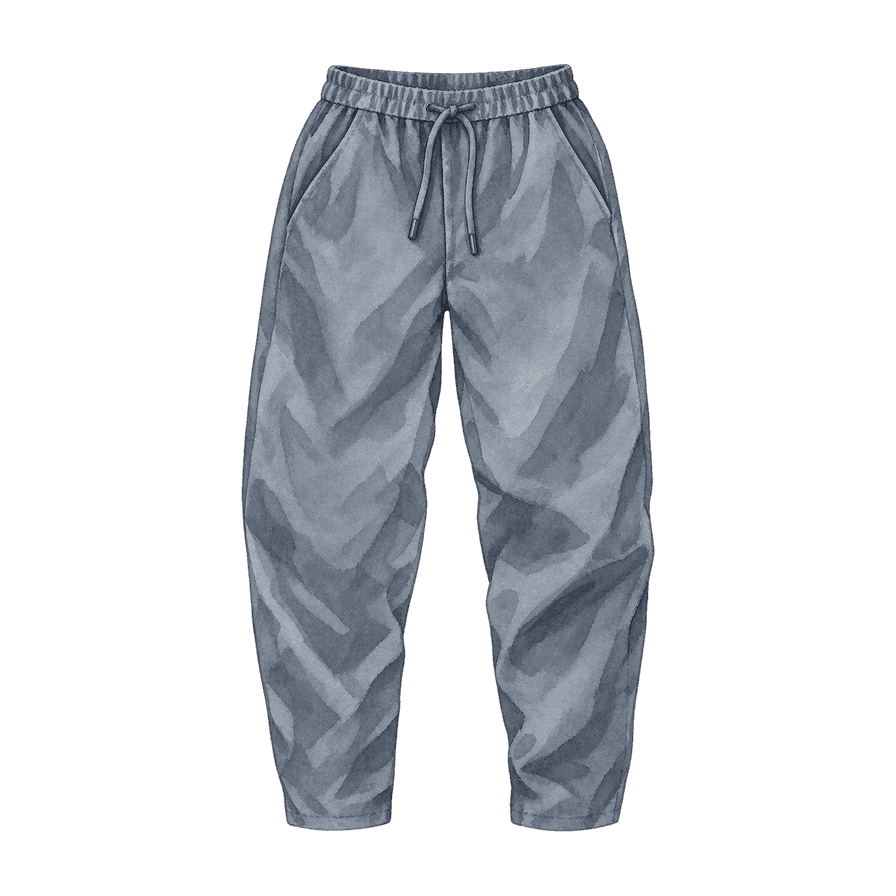 04Slate-grey water-resistant tapered trousers, drawcord waist
With every roadside venue outdoors, rain meets your legs below the windbreaker's hem. Water-resistant trousers shed a shower and dry quickly once you are indoors for lunch, a drawcord waist stays comfortable through hours of standing, and a tapered leg keeps the hems out of puddles at the kerb. Slate grey hides road spray and goes with every other piece.
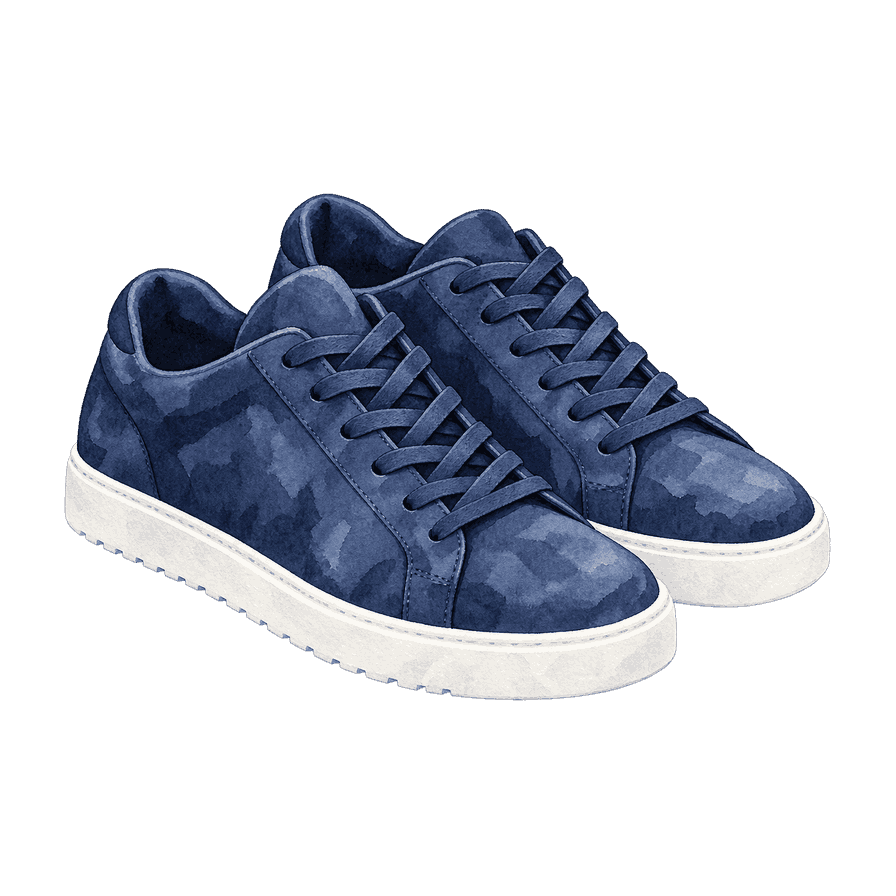 05Navy waterproof sneakers, white rubber sole
Watching a marathon means walking between viewing points. In 2026 the course ran along Midōsuji, Osaka's main road, and in 2025 it passed Nakanoshima and Tenjinbashisuji, which AIMS called "known as the longest shopping arcade in Japan". Waterproof uppers keep 60.5mm of February rain off your socks, a rubber sole grips a wet pavement, and navy matches the windbreaker.
 06Yellow ribbed wool beanie
AIMS's preview of the 2026 race spoke of "a million people cheering along the road", and your runner, tired, is scanning for one face. A yellow beanie is the single bright note in a navy, grey and cream capsule, the thing they spot from the middle of the road. Rib-knit wool covers your ears in a 2.4 m/s wind, most often from the north-north-east, and stays on under the hood.
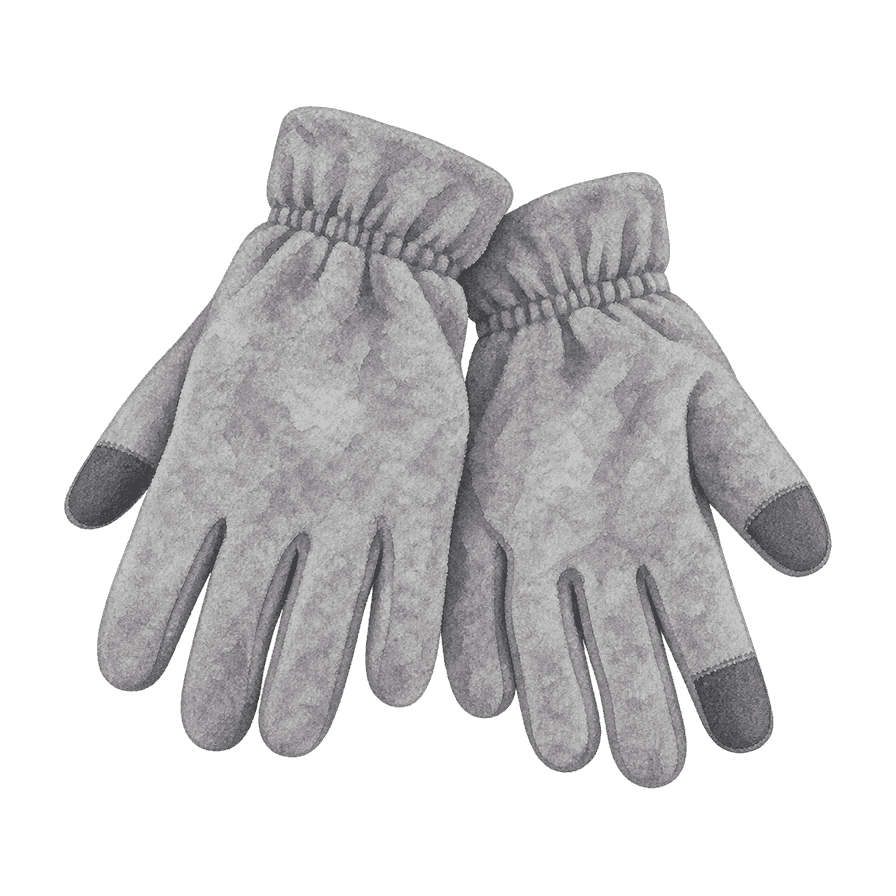 07Grey fleece gloves, touchscreen fingertips
You clap for a long time: the course stays open from 9:15am to 4:15pm, and three waves leave in turn, so runners pass your spot for hours. Fleece keeps your fingers working on a morning between the 4.4°C low and the 12.1°C high, and touchscreen fingertips let you check the course map or message your runner without baring a hand to the wind.
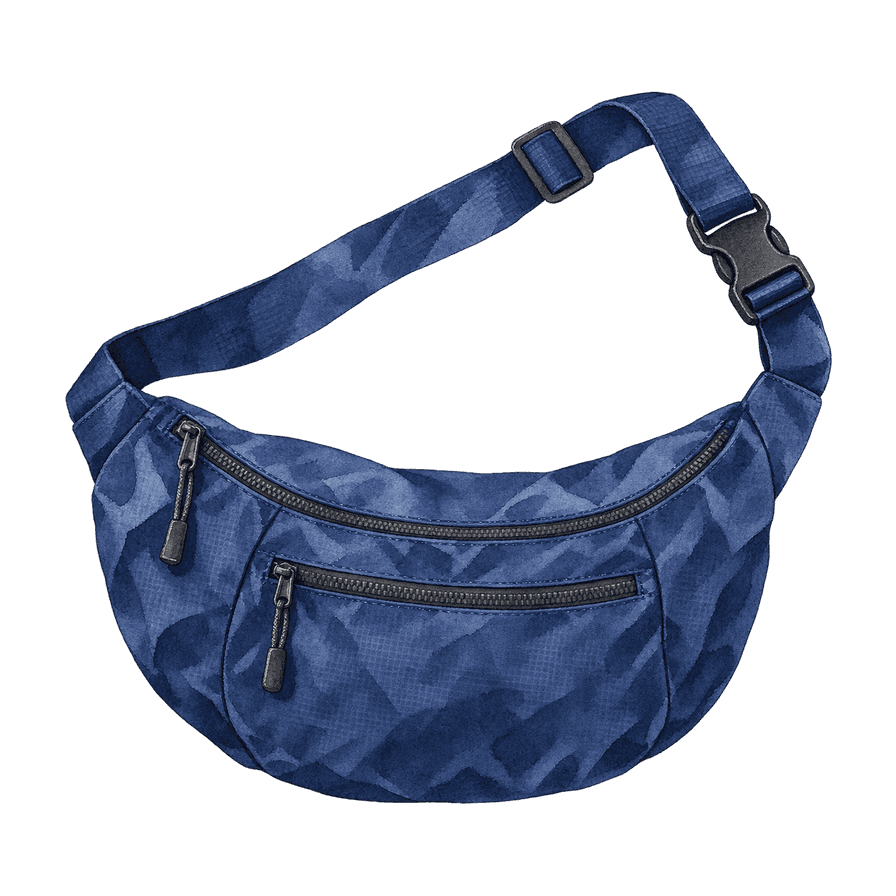 08Navy nylon zip sling bag
Race day climbs from a 4.4°C low toward a 12.1°C high on JMA's daily normal, so layers come off as you go. A nylon sling holds the rolled vest or the packed windbreaker, a water bottle and a snack, and it zips shut in a shower. Worn on your back, it leaves both hands free and stays out of the way of the people beside you.
Day to night
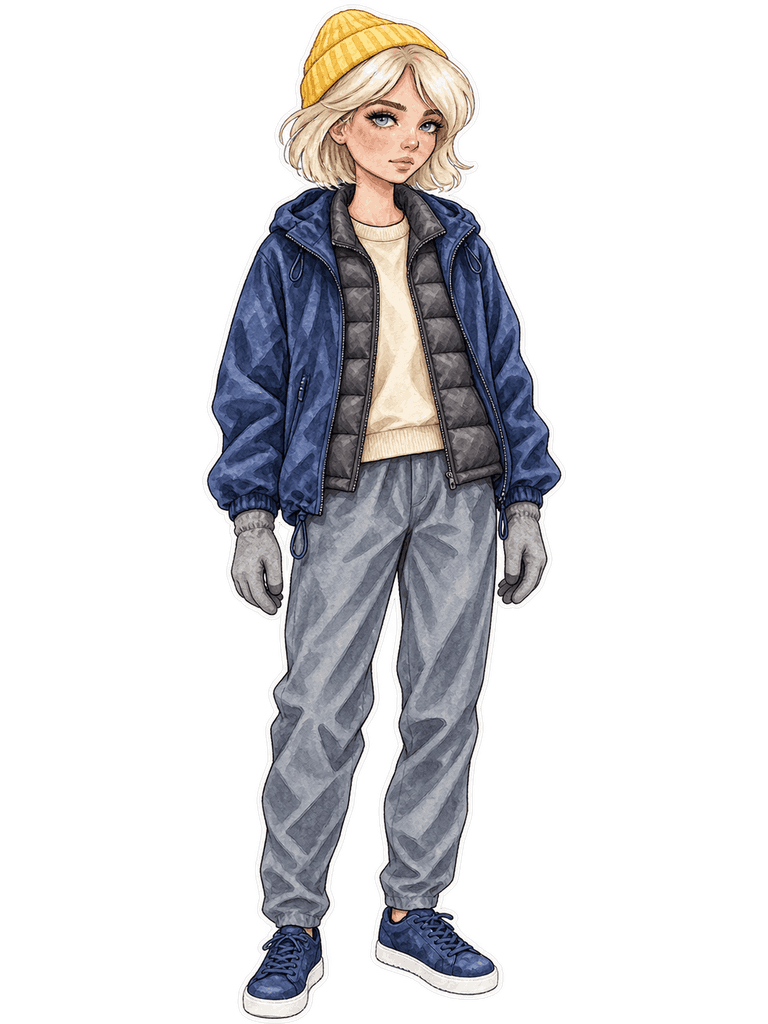
Sunday 28 February, race day: cream sweatshirt · charcoal down vest · navy windbreaker · slate-grey trousers · navy waterproof sneakers · yellow beanie · grey gloves · sling on your back. Be on the pavement before the first wave leaves the Osaka Prefectural Government Building at 9:15am. Three waves leave in turn, so the field passes any one spot for a long time.
Vest off and into the sling as the day climbs toward 12.1°C, windbreaker open. Head for Osaka Castle Park, where the course finishes; east of the inner moat, the plum grove holds about 1,245 trees of 105 varieties. The course closes at 4:15pm, sunset is at 5:53pm, and the night falls to 3°C / 37°F, so zip the shell back up.
A suggested look — navy hooded windbreaker, charcoal quilted down vest, cream raglan crew sweatshirt, slate-grey water-resistant tapered trousers, navy waterproof sneakers.
What to avoid
- Dressing for the afternoon at a 9:15am start. The day runs from 4.4°C to 12.1°C, and you stand still
- An umbrella in a pavement crowd. It blocks the view behind you
- Jeans if rain is forecast. Wet denim stays cold for hours
- Assuming the last Sunday. The 2025 race ran on Monday 24 February
- Calling it a World Marathon Major. The organiser lists eight, and Osaka is not one
Frequently asked questions
Cool, damp and short on sun. Japan Meteorological Agency figures for the Osaka station give February an average high of 10.5°C and a low of 3.2°C, so afternoons reach about 11°C / 52°F and nights fall to 3°C / 37°F. Rain of 1mm or more falls on about 6.3 days, 60.5mm in all, and the month gets 140.6 hours of sun, the least of any month. Frost comes on about 2 nights. Snow is seen falling on about 5.5 days, but it adds up to about a centimetre in the month. JMA's ten-day normals warm from 9.5°C and 2.6°C in early February, the year's coldest ten days of nights, to 11.8°C and 4.0°C at the end. Wind averages 2.4 m/s, most often from the north-north-east. Against Kyoto, Osaka's nights run 1.6°C milder and it gets 18.4 more hours of sun. The National Astronomical Observatory of Japan puts sunrise and sunset at 6:57am and 5:27pm on 1 February and 6:29am and 5:53pm on the 28th.
A navy hooded windbreaker, a charcoal down vest, a cream raglan sweatshirt, slate-grey water-resistant trousers, navy waterproof sneakers, a yellow rib beanie, grey touchscreen fleece gloves and a navy nylon sling bag. That covers an 11°C / 52°F afternoon, a night that falls to 3°C / 37°F, rain on about 6 days and a long day standing at the marathon. The shell goes over the vest, so you shed a layer as the day warms and add it back at sunset. Navy, grey and cream keep every piece working with the others, and the yellow beanie is the one colour meant to be seen.
Layers you can stand still in, and your own rain cover. The 15th Osaka Marathon runs on Sunday 28 February 2027: the first wave starts at 9:15am outside the Osaka Prefectural Government Building, three waves leave in turn, and the course closes at 4:15pm in Osaka Castle Park. There are 34,000 places, 31,970 of them in the marathon. The organiser's FAQ says, "The event will take place even if it rains," and names a storm or other extreme weather as the reason to call it off. Its roadside cheering programme, the Runner Support Squad, runs at six planned venues in Kita, Chūō, Nishi and Ikuno wards from 9:00 to about 16:00, and it tells performers that every venue is outdoors and that "雨天の場合も雨天用テントの用意はございません" [no rain tents are provided, even if it rains; our translation]. AIMS's preview of the 2026 race put the roadside crowd at a million, with the squad's dancing, cheerleading, brass bands and Japanese drumming. The 2026 course ran along Midōsuji; check the 2027 course map before you choose a spot. It is a World Athletics label race, not an Abbott World Marathon Major.
Late February, for the marathon and a little more warmth. JMA's ten-day normals put early February at 9.5°C by day and 2.6°C at night, the year's coldest ten days of nights, and the last ten days at 11.8°C and 4.0°C. Daylight grows from 10h 30m on the 1st to 11h 24m on the 28th. Early February has Setsubun on Wednesday 3 February and National Foundation Day, a public holiday, on Thursday 11 February. Lunar New Year falls on Saturday 6 February but is not a public holiday in Japan. Late February has the Emperor's Birthday holiday on Tuesday 23 February, runner registration at INTEX Osaka on Friday 26 and Saturday 27, and the marathon on Sunday 28.
No, slightly milder, but wetter and greyer. On JMA's figures, January averages 9.7°C by day and 3.0°C at night against February's 10.5°C and 3.2°C, with frost on about 2.0 nights against 1.8. February brings more rain, 60.5mm on about 6.3 days against 47.0mm on 5.6, and less sun, 140.6 hours against 146.5, the least of the year. Snow is seen falling on more February days, 5.5 against 4.7, and still adds up to about a centimetre. The coldest ten days of nights come in early February, at 2.6°C. Daylight on the 15th grows from 10h 05m in January to 10h 57m. Our January guide is built around the shrine crowds at Sumiyoshi Taisha and Imamiya Ebisu; February's plan is set by a day standing at the marathon.
Yes: two Japanese jeans labels began here. Studio D'Artisan was founded in Osaka in 1979 by a designer who had studied in France. The brand says it made Japan's first selvedge jeans: it found old power looms in the Bingo region and set them running again, and it calls its first model, the DO-1, the world's first vintage-style selvedge jean. Its Osaka shop stands near Amerikamura in Shinsaibashi, at the entrance to Horie. EVISU followed in 1991, and its own history says the label "is named after the Japanese God of prosperity Ebisu", the god honoured each January at Imamiya Ebisu's Tōka Ebisu. "Initially only around 14 pairs of jeans a day were created," EVISU writes, each hand-painted with its seagull. On marathon Sunday, though, leave the raw denim in Horie: wet indigo stays cold, and it rubs off on a cream sweatshirt.
Sources
- Japan Meteorological Agency — 1991–2020 climate normals, Osaka station
- Japan Meteorological Agency — Osaka station normals, monthly values (1991–2020) — accessed 2026-10-02
- Japan Meteorological Agency — Osaka station normals, ten-day values (1991–2020) — accessed 2026-10-02
- Japan Meteorological Agency — Osaka station normals, daily values for February (1991–2020) — accessed 2026-10-28
- Japan Meteorological Agency — Osaka station normals: snowfall and snow cover (1991–2020) — accessed 2026-10-28
- Japan Meteorological Agency — Kyoto station normals, monthly values (1991–2020) — accessed 2026-09-27
- National Astronomical Observatory of Japan — Osaka sunrise and sunset, February 2027 — accessed 2026-10-28
- Osaka Marathon 2027 — Race outline: 15th race, Sunday 28 February 2027, 9:15 start, Osaka Prefectural Government Building to Osaka Castle Park — accessed 2026-10-29
- Osaka Marathon 2027 — FAQ: the race runs in rain — accessed 2026-10-29
- Osaka Marathon 2027 — 沿道応援イベント「ランナー盛上げ隊!」: six outdoor venues in Kita, Chūō, Nishi and Ikuno wards, 9:00 to about 16:00 on 28 February — accessed 2026-10-29
- Osaka Marathon — History: first race 2011; merged with the Lake Biwa Mainichi Marathon in 2022 — accessed 2026-10-29
- Osaka Marathon 2027 — Abbott World Marathon Majors: the eight Majors, and Osaka as a race in the over-40 age-group rankings — accessed 2026-10-29
- AIMS, Distance Running — Osaka Marathon preview, Sunday 22 February 2026 — accessed 2026-10-29
- AIMS, Distance Running — Osaka Marathon preview, Monday 24 February 2025: Nakanoshima, Tenjinbashisuji and Midōsuji — accessed 2026-10-29
- Osaka Castle Park — 梅林: about 1,245 trees of 105 varieties, opened March 1974 — accessed 2026-10-29
- Studio D'Artisan — Brand: founded in Osaka in 1979; the DO-1 selvedge jean — accessed 2026-10-28
- Studio D'Artisan — Osaka shop: near Amerikamura in Shinsaibashi, at the entrance to Horie — accessed 2026-10-28
- EVISU — About: founded in Osaka in 1991, named after Ebisu — accessed 2026-10-29
- Cabinet Office — National holidays 2026 and 2027 (Coming of Age Day, Monday 11 January 2027) — accessed 2026-10-02
- NAOJ — 令和9年(2027)暦要項 二十四節気および雑節 (節分 3 Feb, 立春 4 Feb) — accessed 2026-09-29
- Osaka International Women's Marathon — 46th race, Sunday 31 January 2027, 12:15 start, Yanmar Stadium Nagai — accessed 2026-10-02
- Osaka Convention & Tourism Bureau — Imamiya Ebisu Shrine (Tōka Ebisu, 9–11 January) — accessed 2026-10-02
- Sumiyoshi Taisha — English guide (two million at hatsumōde; the Sorihashi bridge, steps added in 1955) — accessed 2026-10-02