What to Wear in Bali in May
Bali in May: 31°C / 87°F afternoons, 25°C / 77°F coastal mornings, 7 rain days — dry season opens, Galungan in many years.
- Lightweight cotton or rayon tees — Bali humidity favours fast-drying
- Breathable wide-leg trousers or knee-length sundress
- A sarong — mandatory at every temple (loaned but bring your own)
- Waterproof leather sandals — temples remove shoes, jungle paths slip
- Surf rashguard for Seminyak, Canggu, or Uluwatu
- SPF 50 mineral + wide-brim hat — equatorial UV at 8°S latitude
- Shorts or sleeveless tops at temples — sarong + sash required
- Assume Ubud is as warm as the coast — 700m+ elevation drops mornings to ~22°C / 72°F
- Skip the packable rain shell — May still has 7 rain days
May in Bali opens the dry season. BMKG (Indonesia's meteorological agency) data for Denpasar Ngurah Rai put afternoons at 31°C / 87°F, coastal mornings at 25°C / 77°F, humidity around 75%, and 7 rain days totalling ~80mm. Ubud's 700m+ elevation drops mornings 3-5°C below the coast — Pengosekan and Penestanan villages run ~22°C / 72°F before sunrise. Daylight stays at 12 hours; Bali sits 8° south of the equator, so seasons swing modestly. Galungan, the 10-day Hindu-Bali festival celebrating dharma's victory over adharma, falls every 210 days on the Pawukon calendar; many years it lands in May. The wardrobe register splits across three Balis: Seminyak-Canggu (surf-and-cocktail beach scene, brands like Magali Pascal, Kim Soo, Indah Clothing), Ubud (jungle-and-yoga, lighter cotton plus a sarong always within reach), and Uluwatu-Bingin (cliff-edge surf villas, the most resort-luxury register). Sarong and sash are non-negotiable at every Hindu temple — Tanah Lot, Pura Tirta Empul, Pura Besakih, Pura Saraswati in Ubud, and the rest. Most temples loan them at the gate, but locals carry their own. The packable rain shell holds value through May because the dry season just opens; isolated afternoon showers still hit.
At every Balinese temple — Tanah Lot, Uluwatu, Tirta Empul, Besakih, Ubud's Pura Saraswati — you cover with a sarong (kamen) and a sash (selendang). Loaned at the gate, but locals carry their own.
The capsule
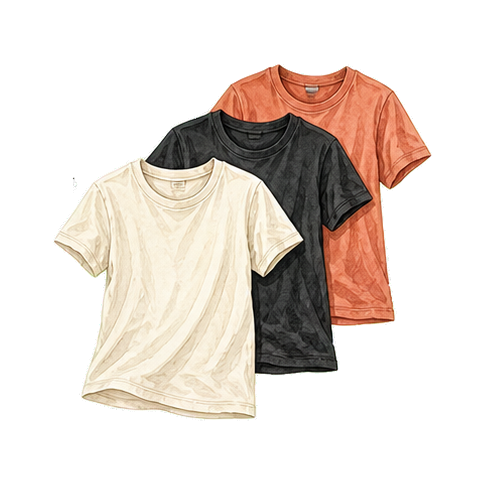 01Lightweight cotton or rayon tees (3+)
Bali base layer. Cotton-modal blends or rayon dry faster than pure cotton in 75% humidity. Black, white, neutral, plus one bright. Magali Pascal (Bali-based, French-Australian designer) carries the local register.
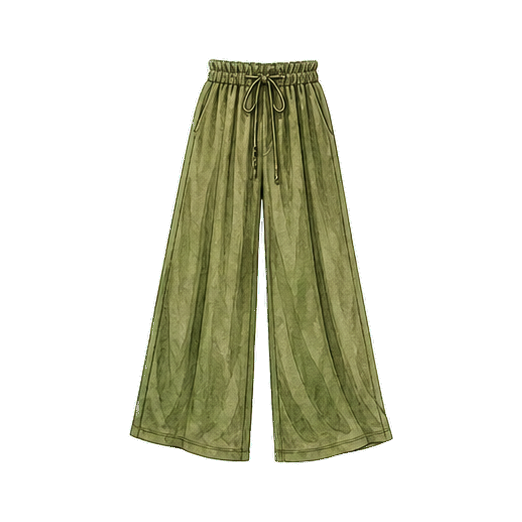 02Wide-leg cotton or rayon trousers
Temple-modest (covers knees), breathable, packs flat. Bali heat doesn't punish wide-leg the way humidity-heavy Bangkok or Singapore do — the air is drier here. Magali Pascal, Kim Soo, or Indah Clothing.
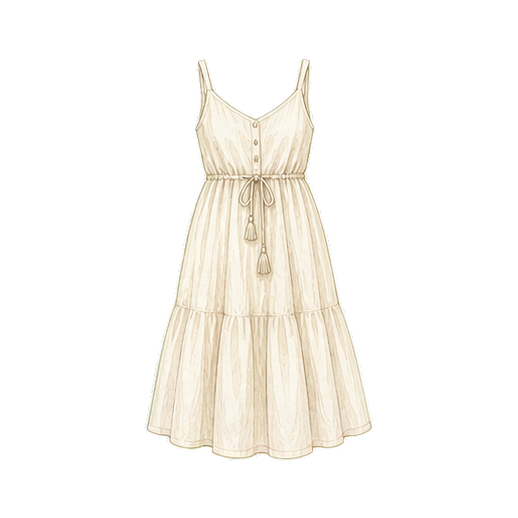 03Knee-length sundress
Day-to-night across Seminyak beach clubs (Potato Head, Kuoy, La Brisa) and Ubud cafés. Knee-length covers temple dress codes when paired with sarong. Linen or cotton-modal.
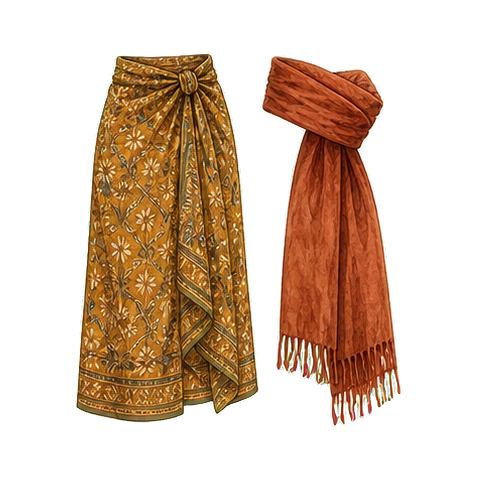 04Sarong (kamen) + sash (selendang)
Mandatory at every Hindu temple — Tanah Lot, Pura Tirta Empul, Pura Besakih, Pura Luhur Uluwatu, Ubud's Pura Saraswati. Most temples loan them at the gate but having your own (any sarong from a Seminyak market) reads respectful and saves the loaner-queue time.
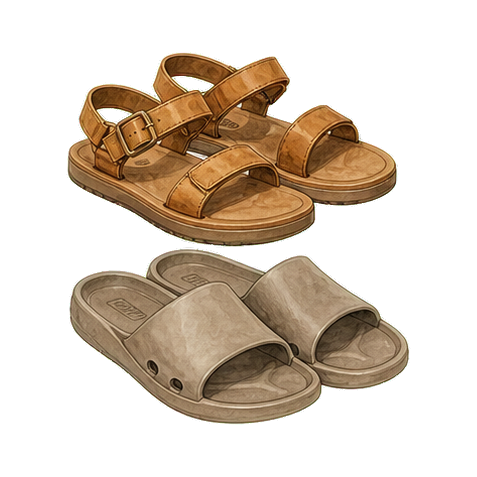 05Waterproof leather sandals or rubber slides
You'll remove shoes at every temple, every villa, and most spas (Bodyworks Bali, Jiwa Spa). Slip-on essential. Birkenstocks or Tkees for the dressier register; rubber Crocs or Teva for jungle walks and waterfall hikes (Tegenungan, Tibumana).
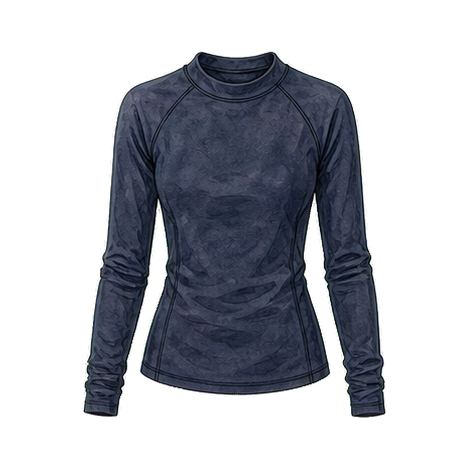 06Surf rashguard or UV-protective top
For Seminyak and Canggu surf lessons (Odyssey Surf School, Pro Surf Bali) or Uluwatu cliff swims. UV at 8°S latitude is extreme; rashguard outperforms reapplied sunscreen.
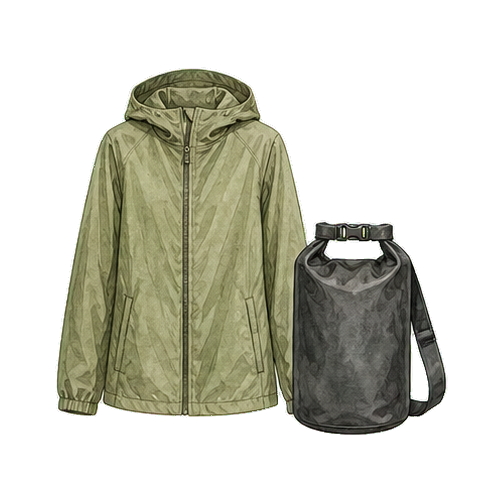 07Packable rain shell + dry bag
May has 7 rain days — dry season opens but isolated thunderstorms hit. Compact rain shell. Dry bag for sudden Karangasem motorbike-rental rides through rice terraces.
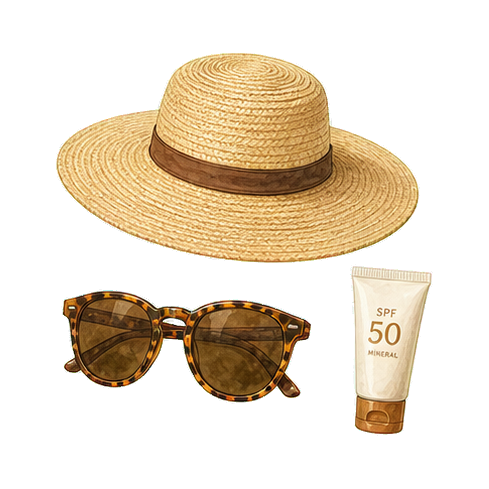 08Wide-brim hat + UV400 sunglasses + SPF 50 mineral
Equatorial UV at 8°S latitude is extreme. Wide-brim straw hat for beach and temple grounds. SPF 50 mineral (zinc oxide) reapplied every 90 minutes. Le Specs Australian-made or Persol for sunglasses.
Day to night
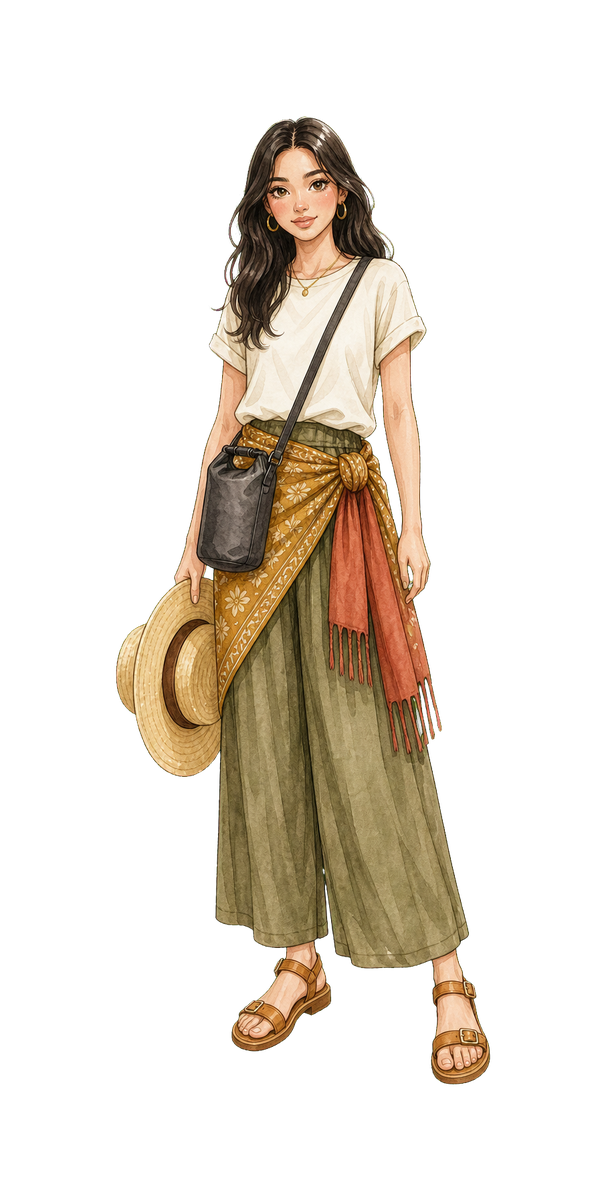
Cotton tee · wide-leg trousers · sarong tied around hips · waterproof sandals · dry bag. Coffee at Revolver (Seminyak) 8am, motorbike to Tirta Empul temple bath ritual 10am, lunch at Locavore To Go (Ubud).
Knee-length sundress · light cardigan for Ubud night air · leather sandals · slim crossbody. Dinner at Mosaic or Locavore (Ubud) 7:30pm, drinks at Akademi (Canggu) or No Mas (Seminyak).
A suggested look — Bali May temple morning look: ivory cotton-rayon tee, olive wide-leg trousers, ochre sarong and rust sash, tan waterproof sandals, compact dry bag crossbody.
What to avoid
- Shorts and sleeveless tops at temples — sarong + sash required
- Flip-flops on Tegenungan, Tibumana, Sekumpul waterfall paths — slick rock
- Stilettos in Seminyak and Ubud — sand-pavement and cobbles ruin them
- Bright neon UV gear — the Bali register reads natural fibres
- Dinner before 7pm in Ubud — restaurant rhythm runs 7-10pm
Frequently asked questions
Per BMKG Denpasar Ngurah Rai data: average daily high is 31°C / 87°F, coastal low is 25°C / 77°F, humidity ~75%, 7 rain days totalling ~80mm. May opens Bali's dry season (May-October), with progressively less rain through the month. Ubud and the higher villages (Bedugul 1,200m, Munduk 1,000m) run 3-5°C / 5-9°F cooler than the coast. Daylight stays at 12 hours — Bali is 8° south of the equator. UV index regularly reads 11-12 (extreme).
Strictly enforced at every Hindu temple: sarong (kamen) covering the legs to the knee minimum, plus a sash (selendang) tied at the waist. Shoulder coverage required (no tank tops or strapless). Pura Tirta Empul, Pura Besakih, Tanah Lot, Pura Luhur Uluwatu, and Ubud's Pura Saraswati all loan sarongs at the gate (the loaner sarong is included with entry fee), but most regulars carry their own. Removed shoes at temple inner courtyards. Menstruating visitors are traditionally asked not to enter the inner sanctum at some temples.
Magali Pascal (Bali-based French-Australian designer, Seminyak flagship), Kim Soo (Seminyak homeware-and-fashion), Indah Clothing (Bali resort-tropical), Bambu Indah (eco-fashion plus the resort), Stradivarius for budget tropical pieces. The Saturday Old Man's market in Canggu and the Sunday Pasar Sindhu market in Sanur both run local-designer pop-ups. Skip the touristy Bali Belly Shopping Center stalls — quality and pricing both run lower than the proper boutiques.
Galungan is the 10-day Balinese Hindu festival celebrating dharma's (good's) victory over adharma (evil), with the climactic Kuningan day on day 10. The date moves on the 210-day Pawukon calendar — many years it falls in May. Streets across Bali display penjor (tall bamboo arches with palm-leaf decoration), temples fill with offering-bearing residents, and many shops and restaurants close on the central day for family ceremony. Modest dress is strictly enforced through Galungan; extra sarong-and-sash readiness pays off.
Yes — at minimum a leather sandal you can hose off and a rubber slide for waterfall hikes (Tegenungan, Tibumana, Sekumpul). Birkenstocks (the cork-leather model handles Bali humidity better than rubber knockoffs) for daily wear; Teva or Chacos for jungle paths; Crocs for villa-and-temple slip-on. Skip suede or canvas — both fail in the dry-season's residual humidity.
Sources
- BMKG — climate normals