What to Wear in Rio de Janeiro in May
Rio in May: 26°C / 79°F afternoons, 19°C / 66°F mornings, 6 rain days — Southern hemisphere autumn, beach culture continues.
- Lightweight cotton or linen tees — carioca casual, not athletic
- Havaianas — the Brazilian sandal staple, on every Rio foot since 1962
- Beach-ready cotton shorts + linen trousers for evening
- Knee-length cotton-modal dress for Ipanema and Leblon dinners
- A light wrap or cardigan for 19°C / 66°F evenings (Cariocas wrap up)
- Swimsuit + cover-up — beach culture continues even in autumn
- Flip-flops to Lapa nightlife — closed-toe enforced at most lounges and clubs
- Assume Rio nights are warm year-round — 19°C / 66°F reads cool to Cariocas
- Skip the swimsuit — May still has beach-warm 23°C / 73°F ocean water
May in Rio is Southern Hemisphere autumn — Brazilian outono. INMET (Instituto Nacional de Meteorologia) data put afternoons at 26°C / 79°F, mornings at 19°C / 66°F, humidity around 75%, and 6 rain days totalling ~80mm. Daylight is 11 hours and contracting toward winter solstice. The carioca dress register stays beach-and-casual even in autumn — Rio's beach culture defines the city year-round, with Ipanema-to-Leblon-to-Copacabana running a continuous rhythm even at gentler May intensity. The wardrobe vocabulary draws from Brazilian heritage and contemporary: Havaianas (founded 1962, the rubber sandal on every Rio foot), Lenny Niemeyer (swim, Rio-based since 1976), Adriana Degreas (resort), Salinas (swim, Rio-Bahia), Osklen (Rio-founded contemporary, since 1989), Galeria Melissa (jelly shoes, plastic-luxury). Beach-day uniform: cotton tee or linen shirt, cotton shorts, swimsuit + cover-up, Havaianas; evening uniform: knee-length cotton-modal dress, light wrap for 19°C / 66°F evenings, leather sandals or low-heel sandals, Osklen-tier crossbody. Lapa nightlife (Sambadromo Norte, Rio Scenarium, Carioca da Gema samba clubs) requires closed-toe shoes — this is the one Rio dress code that overrides Havaianas culture.
Havaianas have been Brazil's national rubber sandal since 1962 — São Paulo origin, but on every Rio foot from Ipanema's Posto 9 to Leme's Posto 1. Brazilian-made beats the imported knockoff every time.
The capsule
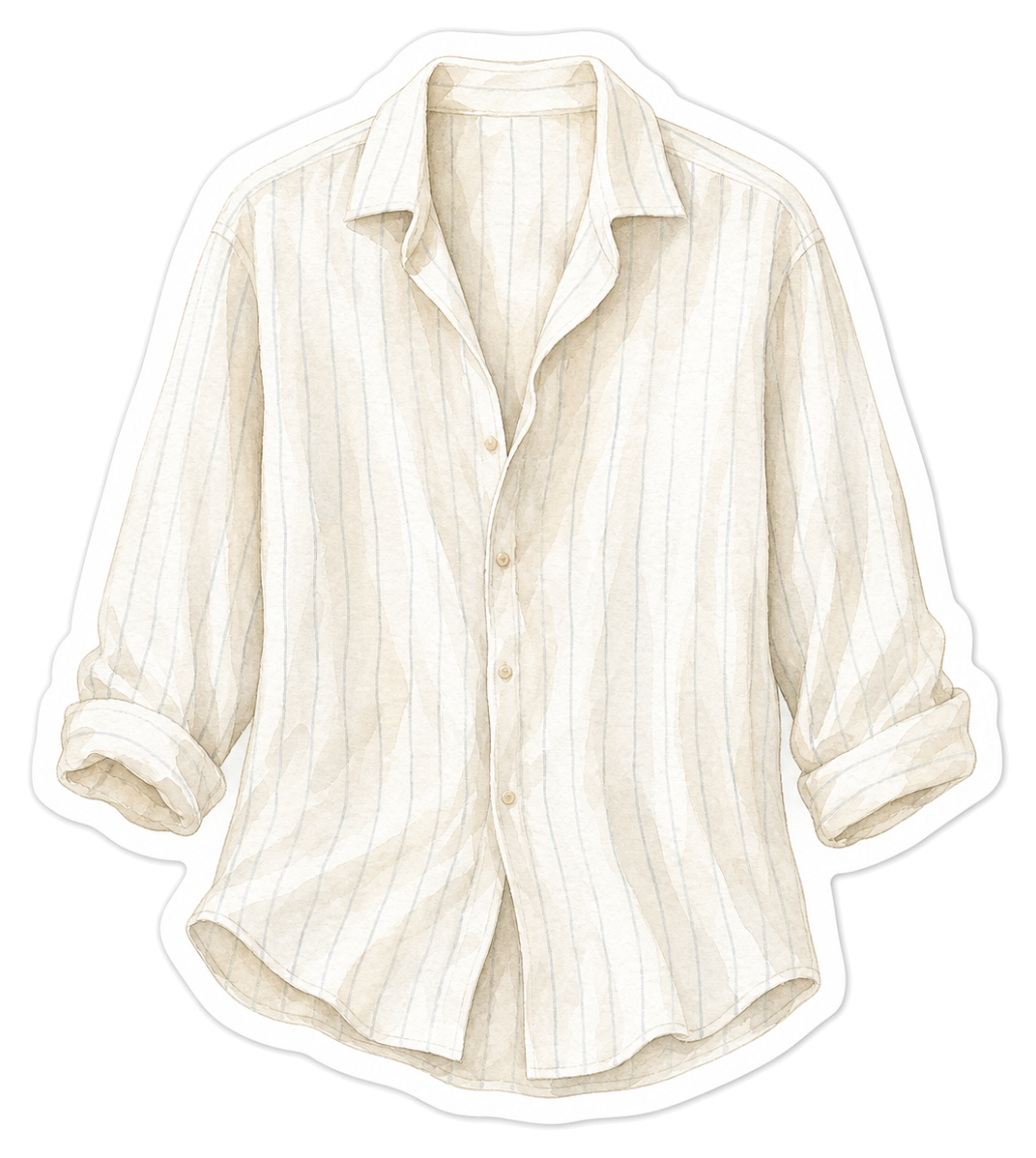 01Lightweight cotton or linen tees (3+)
Rio carioca-casual base. Black, white, neutral, plus one bright. Osklen (Rio-founded, contemporary) carries the local register; Reserva for Brazilian heritage; Uniqlo at Shopping Leblon for budget.
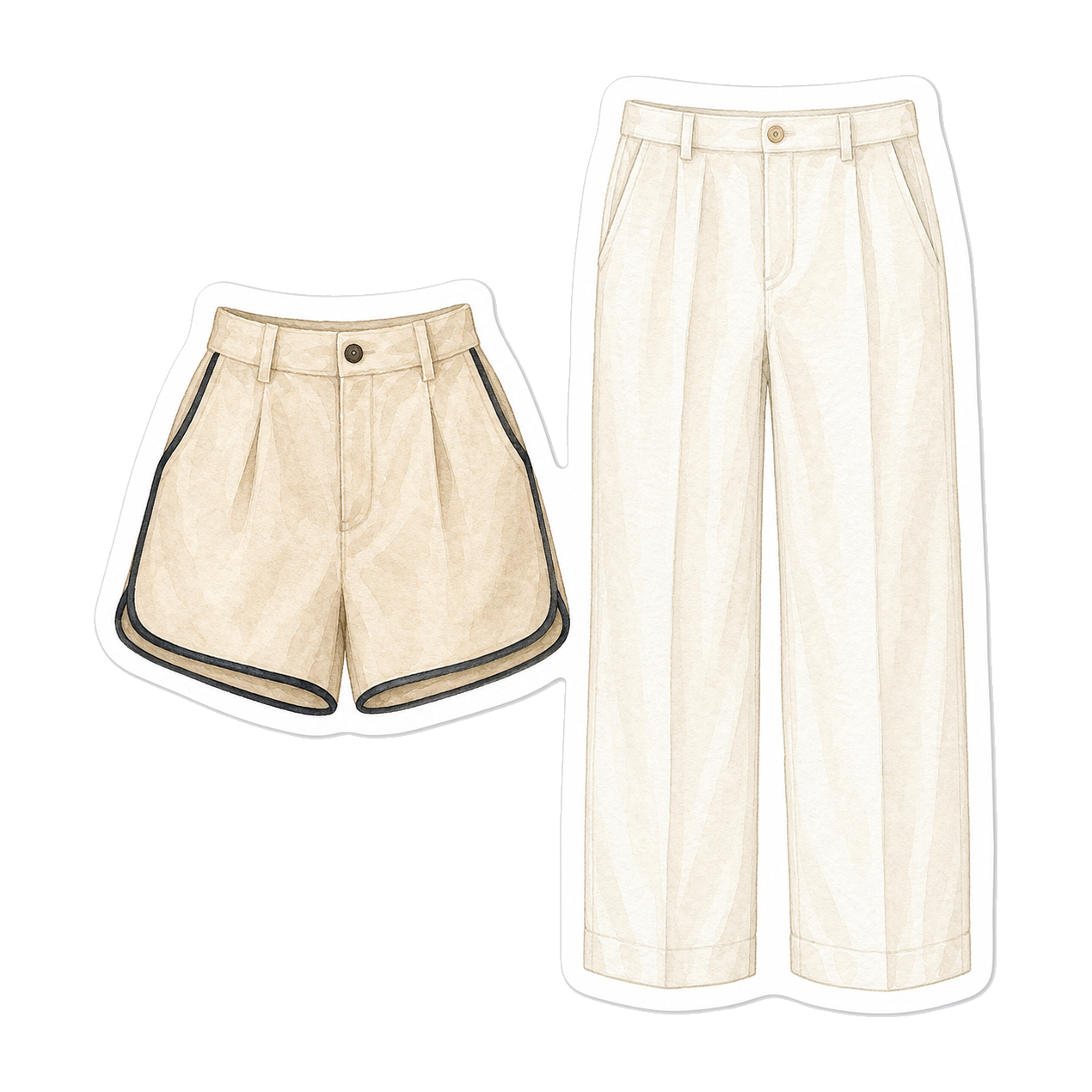 02Cotton shorts + linen trousers
Shorts for beach days (Ipanema, Leblon, Copacabana, Praia Vermelha); linen trousers for Lapa, Centro, and Santa Teresa. The Rio register accepts shorts widely except at higher-end restaurants — pack one trouser for those.
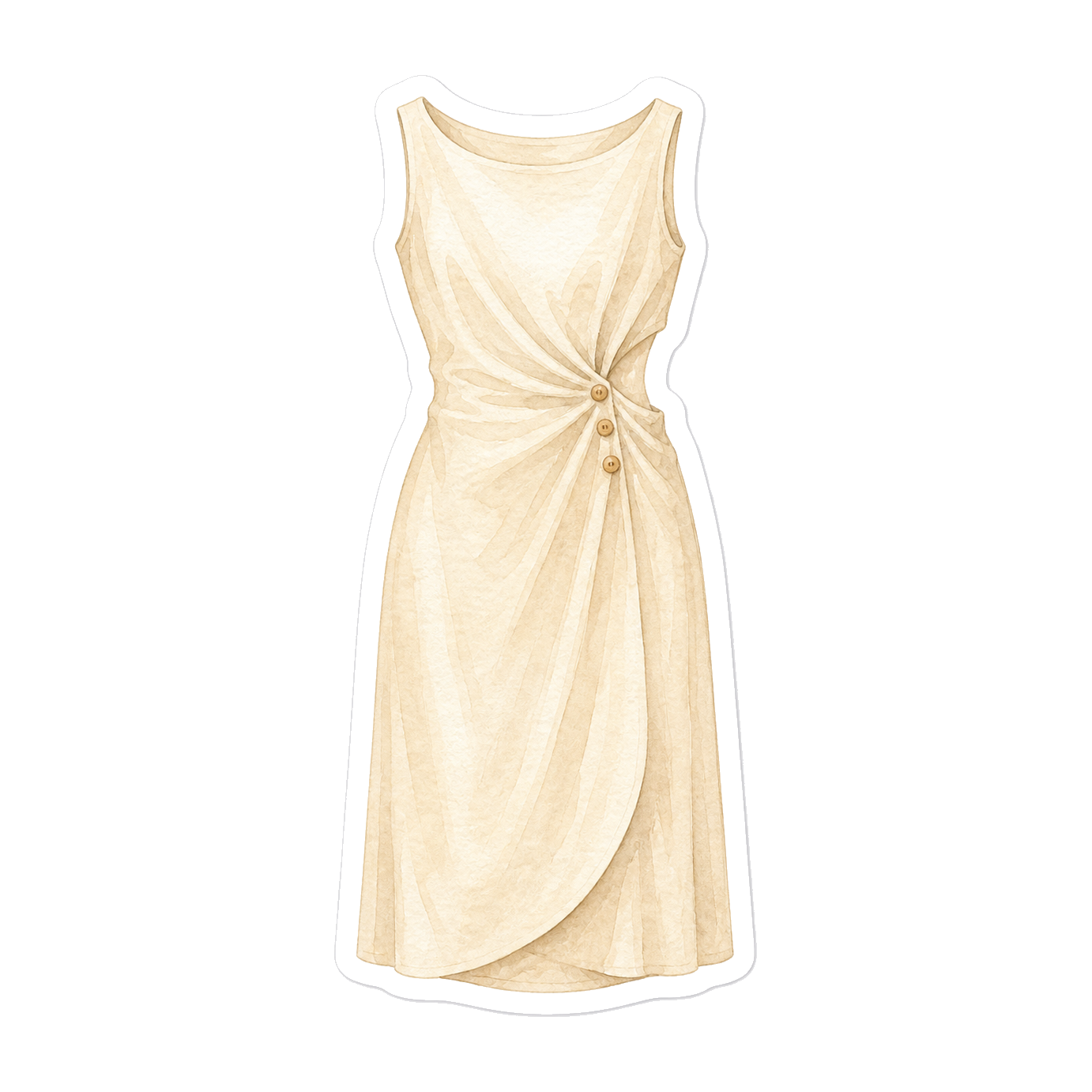 03Knee-length cotton-modal dress
The Rio May dinner piece. Adriana Degreas (Rio-based resort), Lenny Niemeyer (Rio swim-and-resort heritage), Reserva — all do knee-length silhouettes that read carioca-considered, not beach-only.
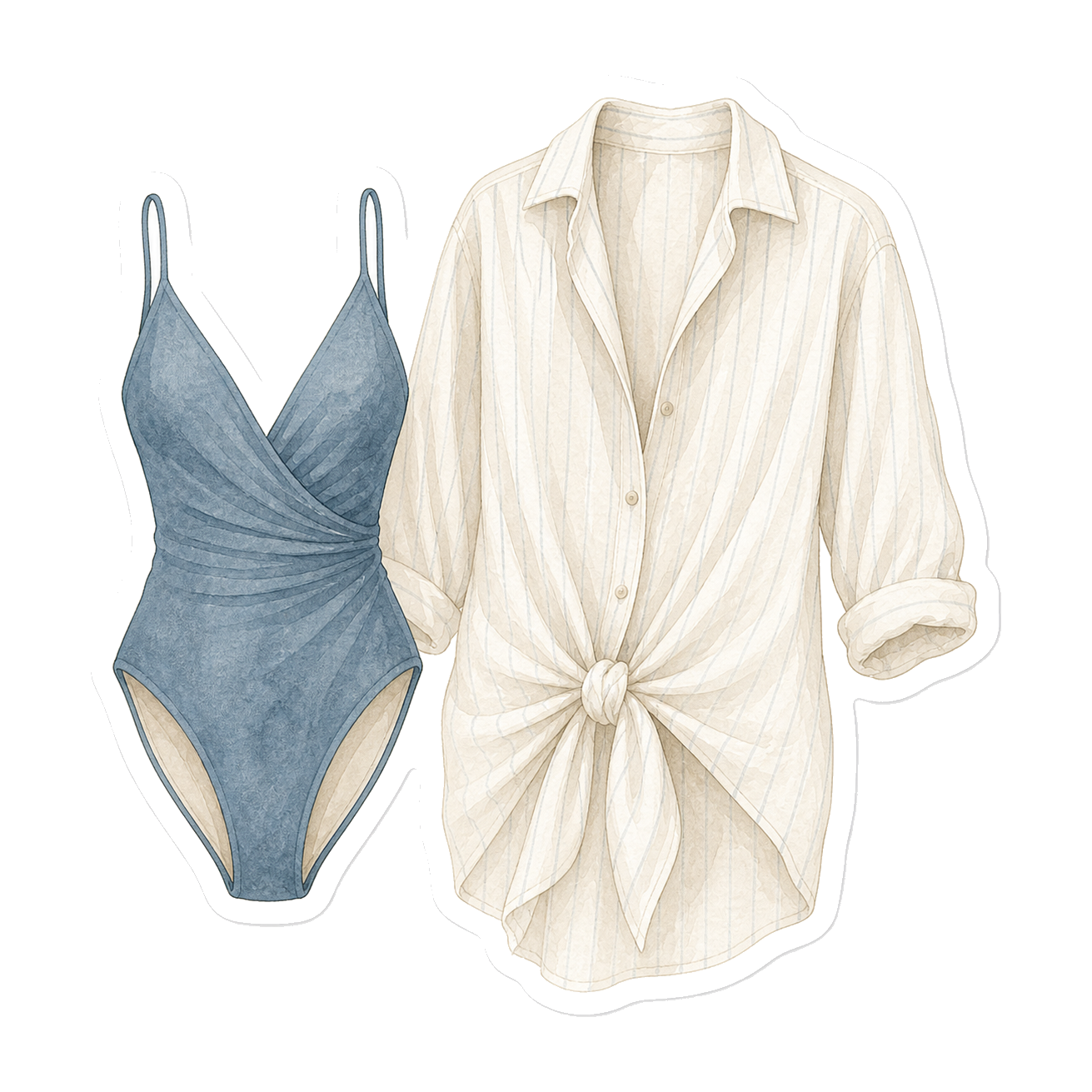 04Swimsuit + cover-up (Lenny Niemeyer or Salinas)
Rio beach culture continues in May with 23°C / 73°F ocean water at Ipanema. Lenny Niemeyer (Rio's iconic swim brand since 1976), Salinas (Rio-Bahia swim), Adriana Degreas (resort). The cover-up is a sarong, kaftan, or oversized linen shirt — required for the boardwalk-to-restaurant walk.
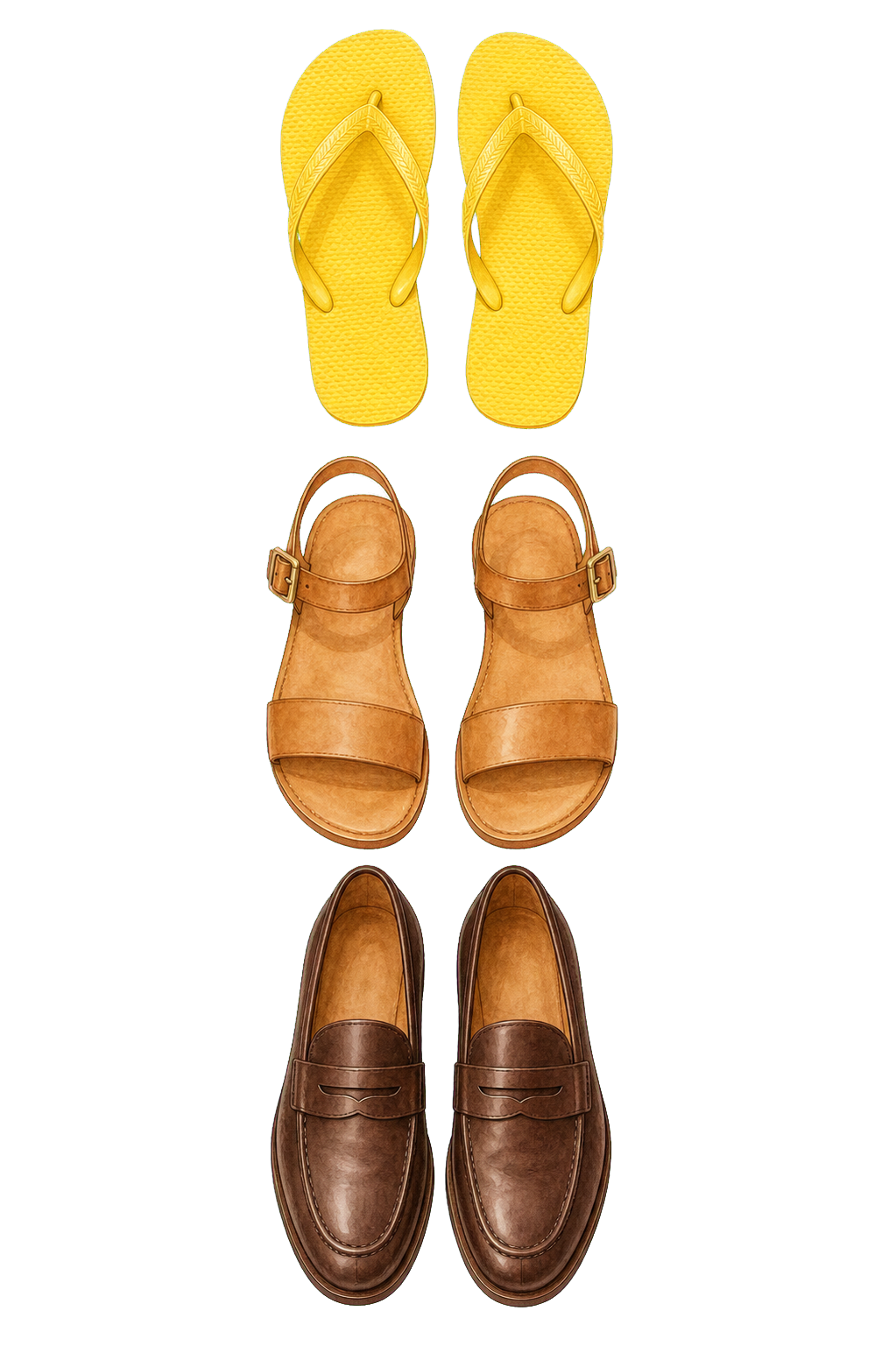 05Havaianas + leather sandals + closed-toe loafer
Three shoe options. Havaianas for beach and casual (the Rio default since 1962). One leather sandal pair for Ipanema-Leblon dinners. One closed-toe loafer for Lapa nightlife (Carioca da Gema, Rio Scenarium, Sambadromo Norte all enforce closed-toe at the door).
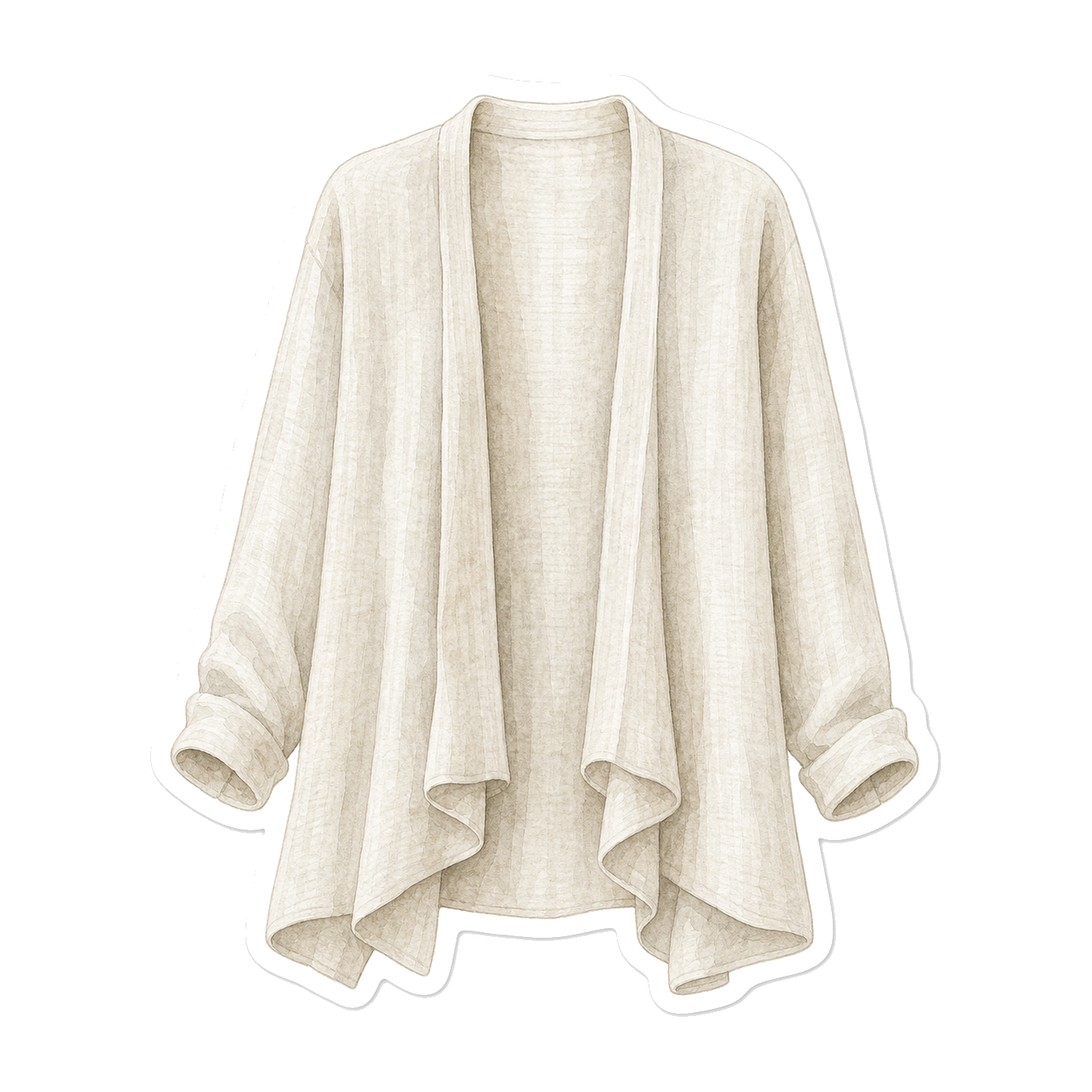 06Light wrap or linen cardigan for evenings
Rio Cariocas wrap up at 19°C / 66°F — a temperature that reads warm to Northern Hemisphere visitors but cool to local residents. A linen wrap, light pashmina, or cotton cardigan handles the differential.
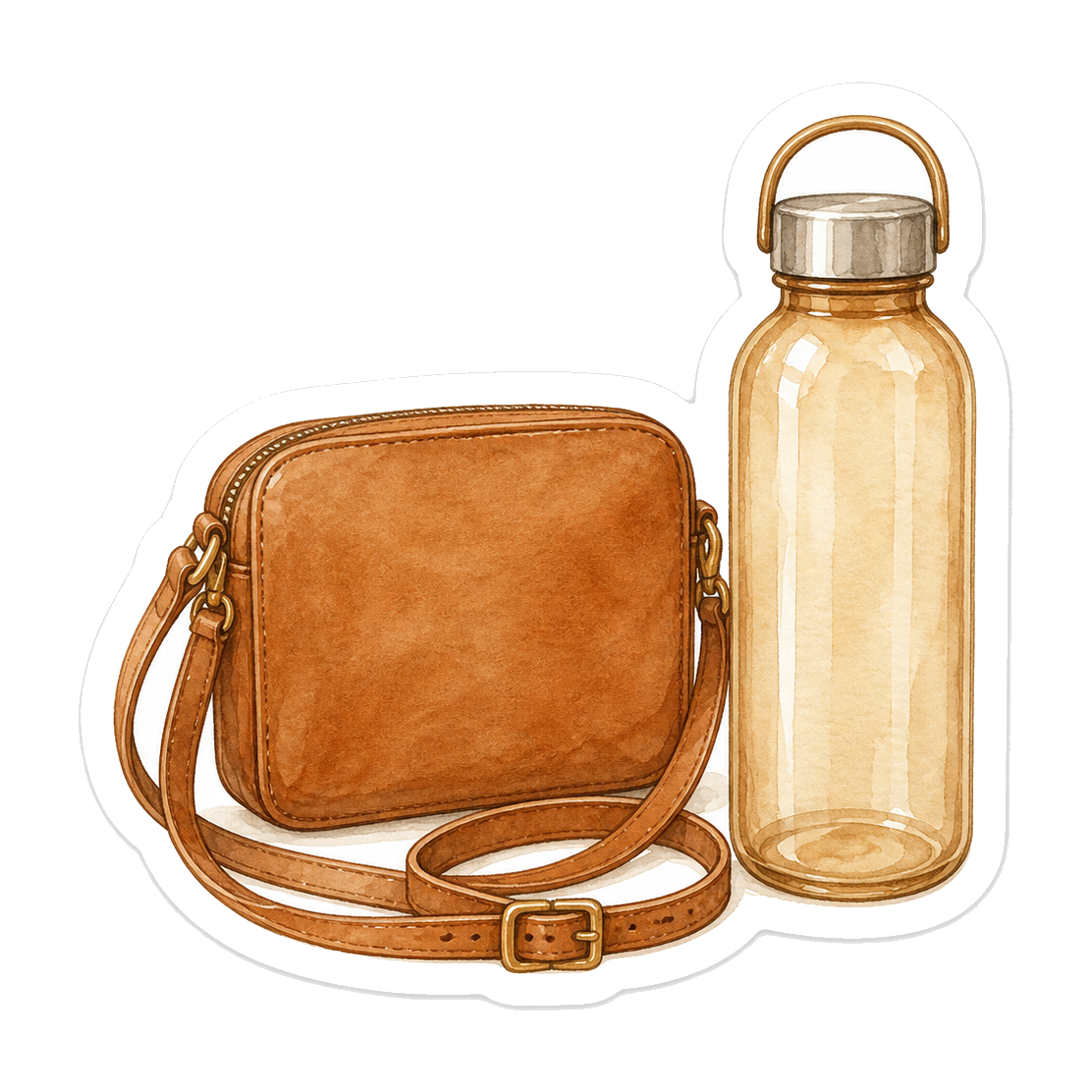 07Slim leather crossbody + reusable water bottle
Crossbody for the boardwalk-to-restaurant walks (Ipanema's Avenida Vieira Souto, Leblon's Avenida Delfim Moreira). Osklen, Schutz (Brazilian), or international Mansur Gavriel. The Rio bottle culture is real — beach kiosks fill bottles for $1 USD.
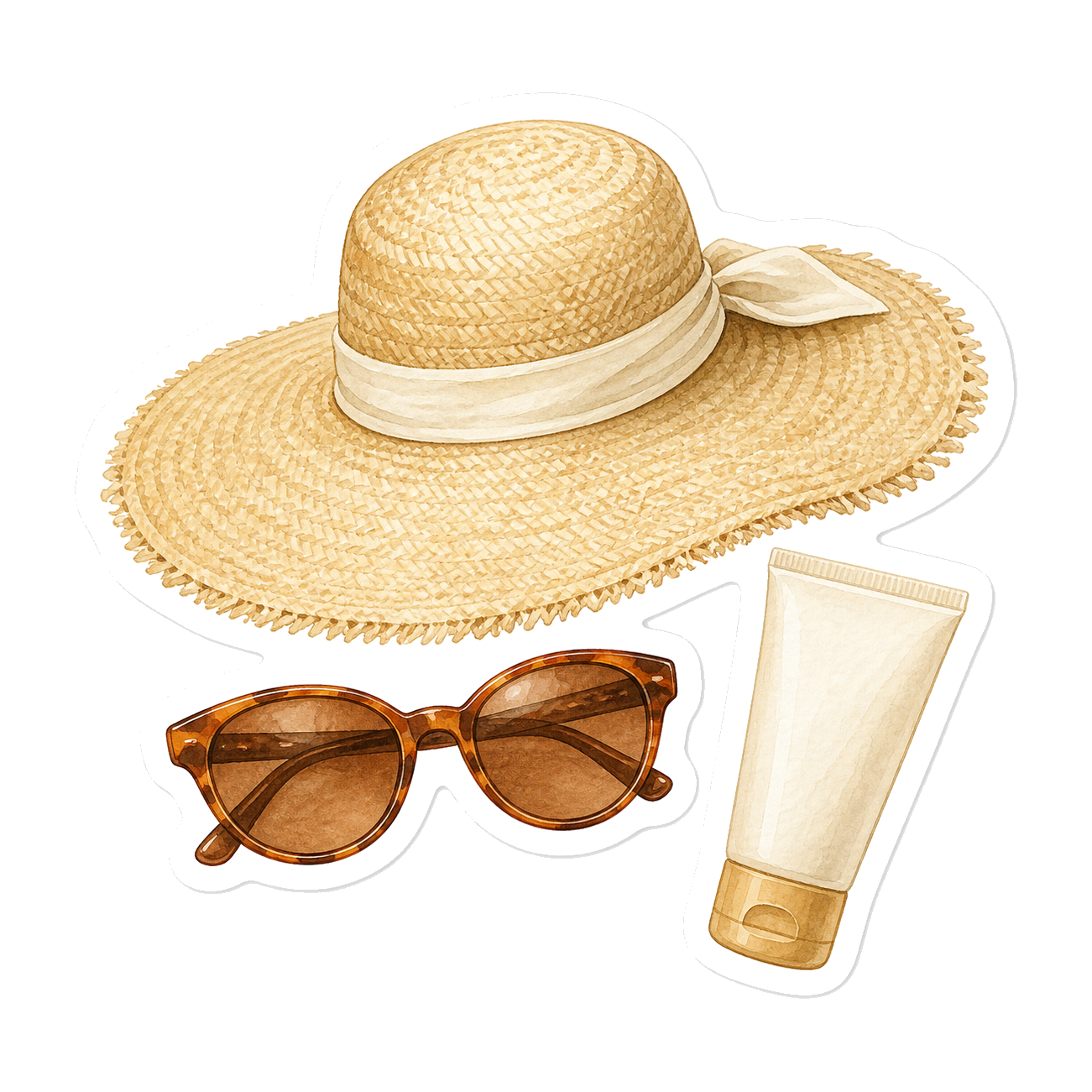 08Wide-brim hat + UV400 sunglasses + SPF 50
Rio sits at 22°S latitude — Southern Hemisphere autumn but UV index still reads 6-8 (high) on clear May afternoons. Wide-brim straw hat (Reserva, Osklen, or local Sa Saude) for beach. SPF 50 mineral. Schutz, Le Specs, or Persol sunglasses.
Day to night
Cotton tee · cotton shorts · Havaianas · cover-up · slim crossbody · wide-brim hat. Suco Bar at Bibi Sucos (Leblon) 9am, Ipanema beach Posto 9 10am-1pm, lunch at Garota de Ipanema.
Knee-length cotton-modal dress · linen wrap · leather sandals · slim crossbody. Dinner at Oro or Lasai (both Michelin) 8pm; samba at Rio Scenarium or Carioca da Gema (closed-toe required).
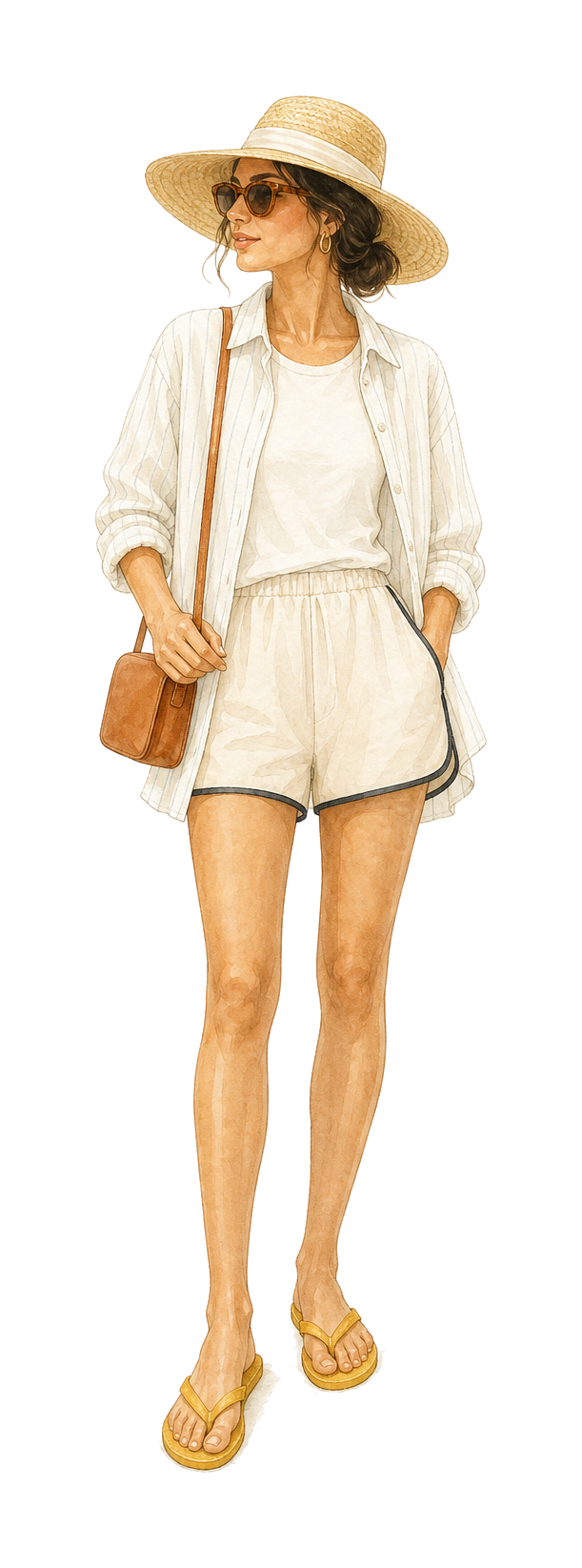
A suggested look — Rio de Janeiro May morning look: warm white linen shirt worn open over a cotton tee, cream cotton shorts, yellow Havaianas-style sandals, slim cognac crossbody bag, wide-brim straw hat.
What to avoid
- Flip-flops to Lapa nightlife — Carioca da Gema, Rio Scenarium enforce closed-toe
- Havaianas to higher-end Ipanema-Leblon restaurants — leather sandals or closed-toe
- Stilettos in Santa Teresa or on Lapa Arches steps — steep cobbled streets
- White linen on beach days — sand stains linen permanently
- Booking Lapa nightlife before 11pm — Rio samba runs 11pm-4am
- Visible valuables on the beach — Rio safety advisory
Frequently asked questions
Per INMET (Instituto Nacional de Meteorologia) data: average daily high is 26°C / 79°F, low is 19°C / 66°F, humidity ~75%, 6 rain days totalling ~80mm. Daylight is 11 hours and contracting through the month. May is Southern Hemisphere autumn — Brazilian outono — with afternoons that still feel warm to Northern Hemisphere visitors but read cool to Cariocas after 28-32°C / 82-90°F summer (December-March). Ocean water at Ipanema-Leblon stays at 23°C / 73°F.
Autumn (outono). Rio's seasons are inverted from the Northern Hemisphere: summer is December-February, autumn is March-May, winter is June-August, spring is September-November. May sits in the autumn-winter transition; afternoons stay 26°C / 79°F (Northern Hemisphere visitors find this warm) but mornings and evenings drop to 19°C / 66°F (Cariocas wrap up at this temperature). June-August is true Rio winter, with afternoons at 24-25°C / 75-77°F — still warmer than Northern European or American summer.
On the sand: swimsuit + light cover-up, Havaianas, sun hat, sunglasses, SPF. The Rio beach uniform is sungão (men's swim brief) and biquíni (bikini, often Brazilian-cut narrow), which reads more revealing than European or American beach norms. Walking from beach to restaurant or hotel: wear a sarong, oversized linen shirt, or knee-length cover-up. Restaurant boardwalks at Ipanema (Garota de Ipanema, Cervantes) accept beachwear with cover-up; higher-end Leblon (Sushi Leblon, Aconchego Carioca) request smart-casual without swimwear.
Lenny Niemeyer (Ipanema flagship since 1976, Brazil's heritage swim brand), Adriana Degreas (Leblon and Shopping Leblon, resort-luxury swimwear-and-beachwear), Salinas (Ipanema and Leblon, Rio-Bahia swim), Osklen (Rio-founded 1989, contemporary lifestyle, Ipanema flagship), Galeria Melissa (jelly shoes and plastic-luxury, Ipanema), Reserva (Brazilian heritage casual, Shopping Leblon and Rio Sul), Schutz (footwear and accessories, Brazilian, multiple Rio locations). Shopping Leblon and Rio Sul handle the international register; Ipanema's Garcia D'Avila street holds independent boutiques.
Havaianas are Brazil's national rubber sandal — São Paulo origin, founded 1962 by Robert Fraser based on the Japanese zori. The rubber compound (proprietary, made in Brazil) wears slowly and grips wet boardwalk; the strap design distributes weight better than Asian-knockoff plastic flip-flops. Cariocas wear them constantly: beach, restaurant, market, casual evening — the only non-Havaianas time is Lapa nightlife (closed-toe enforced) and higher-end dinner (leather sandals work). Brazilian-made beats imports; the Havaianas store in Ipanema and at the airport stocks the full color range.
Sources
- INMET — climate normals