What to Wear in Istanbul in May
Istanbul in May is the Bosphorus shoulder month — 21°C / 70°F, 7 rain days. Comfortable before peak summer heat. The east-meets-west register continues year-round.
- Layered cotton/linen base — 13°C / 55°F mornings + 21°C / 70°F afternoons
- Midi-length dresses or trousers + button-down — modesty register
- Scarf for mosque entry — head cover for women, shoulders/knees covered
- Supportive walking shoes — Sultanahmet cobblestones, Galata Tower path steep
- Crossbody bag — Grand Bazaar, Spice Bazaar, Galata Bridge density
- Light jacket — Bosphorus wind cools evenings
- Don't enter active mosques without head scarf for women — Hagia Sophia, Blue Mosque, Süleymaniye enforce
- Don't wear shorts above knee at any mosque — modesty rule enforced at the door
- Don't expect Mediterranean dryness — Bosphorus humidity adds 5-10% to perceived temp
Istanbul in May is the Bosphorus shoulder month. Turkish State Meteorological Service (MGM) data put afternoon highs at 21°C / 70°F and lows at 13°C / 55°F with 7 rain days. The Bosphorus humidity adds 5-10% to the perceived temperature. The dressing rule: layered cotton/linen base, midi-length dresses or trousers + button-down (Turkey's modesty register expects more coverage than Mediterranean cities), scarf for mosque entry (head cover for women + shoulders and knees covered, enforced at active mosques like the Blue Mosque, Süleymaniye, and Hagia Sophia which converted back to a mosque in 2020), supportive walking shoes (Sultanahmet's cobblestones plus the steep Galata Tower path test fashion sandals), crossbody bag. Beyoğlu and Karaköy run a contemporary international register; Sultanahmet (the historic peninsula with Hagia Sophia, Blue Mosque, Topkapı Palace, Grand Bazaar) is tourist-historical with modesty expectations; Kadıköy on the Asian side runs local-favored creative.
Istanbul is the only major city straddling two continents — Europe to the west of the Bosphorus, Asia to the east. The dressing register reflects it: contemporary international in Beyoğlu, traditional historical in Sultanahmet, creative-design in Karaköy, local-favored in Kadıköy.
The capsule
 01Cotton long-sleeve + tank base
13°C / 55°F mornings + 21°C / 70°F afternoons. Layered for spring shoulder.
 02Midi-length dress or skirt
Turkey modesty register; works at mosques with scarf for shoulders.
 03Wide-leg cotton or linen trousers
Pair with tucked button-down for Beyoğlu/Karaköy contemporary.
 04Cotton button-down — white, cream, fine stripe
Tucked for evening, layered for AC.
 05Light jacket or cardigan
Bosphorus evening wind cools 4-6°C / 7-11°F below midday.
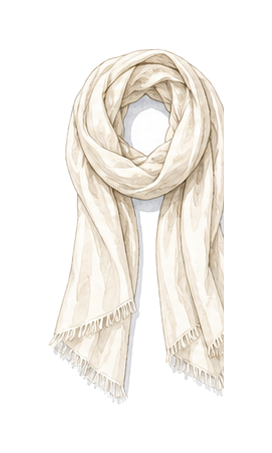 06Large scarf — silk or cotton, for mosque entry
Active mosque dress code requires head cover for women, shoulders covered. The scarf is provided at some mosque entrances but bringing your own is more reliable.
 07Supportive walking shoes — leather sandals or sneakers
Sultanahmet cobblestones, Galata Tower steep path. Skip heels.
 08Crossbody bag
Grand Bazaar pickpocketing documented; worn diagonally.
Day to night
Cotton long-sleeve · trousers · sneakers · light jacket · crossbody · scarf. Turkish coffee at Kronotrop 8am, walk Sultanahmet (Hagia Sophia, Blue Mosque) 9am, lunch at Hamdi Restaurant 1pm.
Midi dress or trousers · button-down · cardigan · loafers. Dinner at Karaköy Lokantası, Mikla, or Çiya Sofrası 8pm; rooftop drinks at 360 Istanbul or Mikla after.
A suggested look — Istanbul May evening look: lightweight cream cotton button-down, pale linen trousers, loafers, thin cardigan and scarf carried; no bag.

What to avoid
- Active mosque entry without head scarf for women — enforced at Hagia Sophia, Blue Mosque, Süleymaniye
- Shorts or sleeveless tops at mosques — modesty rule
- Backpacks behind in Grand Bazaar, Spice Bazaar — documented pickpocketing
- Heels in Sultanahmet — cobblestones eat them
- Dinner before 7:30 — Turkish dining runs 8-10pm
Frequently asked questions
Shoulders and knees covered; head scarf for women (provided at mosque entrances but bringing your own is more reliable). Hagia Sophia converted back to an active mosque in 2020, so the rule applies there as it does at the Blue Mosque, Süleymaniye Mosque, and other active mosques. Shoes are removed before entering the prayer area; bring socks or expect to walk on the carpet barefoot. Note: tourists may visit during non-prayer hours (closed for 5 daily prayers); check the Turkish Religious Affairs schedule before visiting.
Per Turkish State Meteorological Service (MGM): average daily high is 21°C (70°F), low is 13°C (55°F), 7 rain days totalling 38mm. The Bosphorus humidity makes the perceived temperature slightly higher than dry inland Turkish cities. Daylight: 14h 35m. May is one of Istanbul's best-weather months alongside September; June pushes 26°C / 79°F and July-August hit 28°C / 82°F with humidity.
Yes — one of the best months. Pros: mild temperatures, the Bosphorus and harbor walks fully accessible, Tulip Festival in early May (the Tulip is a Turkish heritage flower), Istanbul Music Festival mid-May. Cons: 7 rain days, mornings still 13°C / 55°F, peak tourist arrival begins. Memorial Day weekend in late May brings American tourist density.
Beyoğlu (the European side, around İstiklal Caddesi and Taksim) runs contemporary international; Karaköy (just south of Beyoğlu) runs creative/design; Sultanahmet (the historic peninsula across the Golden Horn) is tourist-historical with mosque-modest expectations; Kadıköy (Asian side, accessible by 15-minute ferry) is local-favored bohemian; Beşiktaş is traditional residential. The dressing register varies — Beyoğlu and Karaköy are most permissive (similar to Berlin), Sultanahmet expects modesty, Kadıköy runs creative-bohemian.
The Grand Bazaar (Kapalıçarşı, founded 1455, the oldest covered market in the world) for the historical experience and broad selection; Sultanahmet's small carpet shops near Hagia Sophia for tourist-friendly options; Sandal Bedesteni (within the Grand Bazaar) for higher-tier antiques; ISBANK Antika or local kilim specialists for authenticated pieces. Authentic Turkish carpets carry origin documentation; tourist-trap imitations are widely sold. Walk multiple shops, negotiate (start at 50% of asking), and request shipping if buying anything large.
Sources
- Turkish State Meteorological Service — 1991–2020 climate normalsMGM publishes Istanbul normals across three representative stations — Kadıköy, Florya and Sarıyer — rather than one city figure.