What to Wear in Rome in May
Rome in May is the shoulder-season sweet spot — 22°C / 72°F afternoons, 13°C / 55°F mornings, before the August heat that empties the city. The walking is everything: 8-10 miles per day on sampietrini.
- Linen midi dress or cotton button-down + tailored shorts — the Roman summer uniform, photographed across Centro Storico every May
- Leather sandals or ballet flats already broken in — the sampietrini cobblestones will defeat new shoes
- Silk scarf in the bag — Vatican, St. Peter's, and most basilicas require shoulders + knees covered, checked at the door
- Light cardigan or shirt — restaurant AC runs cold and 13°C / 55°F evenings need a layer
- Crossbody leather bag, never a backpack worn behind — pickpocketing on tram 8 and Termini is real
- Sunglasses + SPF — Roman sun is sharper than Northern European sun even at 22°C / 72°F
- Don't wear new or pointed heels — sampietrini eats them by lunch, ankles included
- Don't enter a basilica in tank top, shorts above the knee, or any sleeveless cut — guards turn tourists away daily
- Don't wear athletic wear or running shoes outside Villa Borghese — Romans read it as American tourist immediately
May is when Rome behaves. Servizio Meteorologico data (Ciampino) put afternoon highs at 22°C / 72°F and lows at 13°C / 55°F, with about 6 rain days in the month — usually short late-afternoon thunderstorms that clear within an hour. The dressing problem is layered: 13°C / 55°F mornings need a light jacket, 22°C / 72°F afternoons need linen, restaurant AC and stone-cool churches need a cardigan, and the Vatican plus every basilica enforce a shoulders-and-knees-covered rule that overrides whatever you wore there. Romans solve all four with one smart capsule — a midi-length cotton or linen dress, a silk scarf for church entries, leather sandals broken in for the sampietrini, a structured crossbody. The cobblestones are the trap: pavers laid since the 1500s, smooth volcanic basalt, treacherous in any heel sharper than 4cm.
May in Rome is the city before Romans leave for August — restaurants fully staffed, museums under capacity, the air still cool enough to walk Trastevere at noon.
The capsule
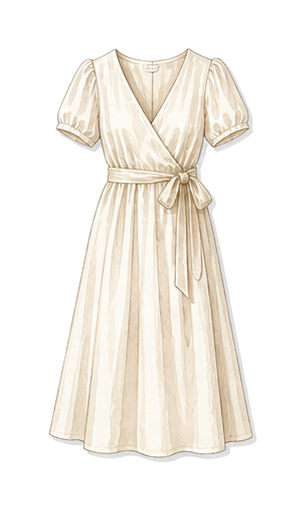 01Linen or cotton midi dress
The Roman May uniform — light enough for 22°C / 72°F, modest enough for basilicas, easy to pair with the silk scarf required for Vatican entry. Reformation, Doen, Massimo Dutti, or COS all clear the register; skip anything labeled 'mini' if you plan to enter a church.
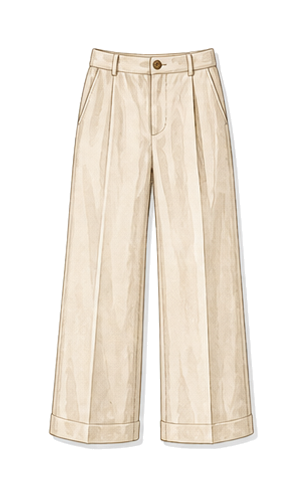 02Tailored cotton or linen wide-leg trousers
The alternative when you'd rather not wear a dress. Wide-leg breathes better than skinny in 22°C / 72°F heat, hides the chafe of a long walking day, and reads polished at any trattoria. Aspesi and Loro Piana are the heritage Italian references; Cos, Massimo Dutti, and Uniqlo cover the same silhouette at lower price points.
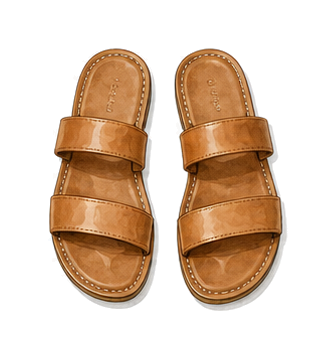 03Leather sandals — already broken in
Sampietrini cobblestones are volcanic basalt cubes laid since the 1500s — uneven, smooth-worn, and treacherous in any heel sharper than a 4cm block. Romans wear flat leather sandals (Birkenstocks for casual, Tod's Gommino loafers for polished, Italian brands like Ancient Greek Sandals for evening). New sandals = guaranteed blisters by Piazza Navona.
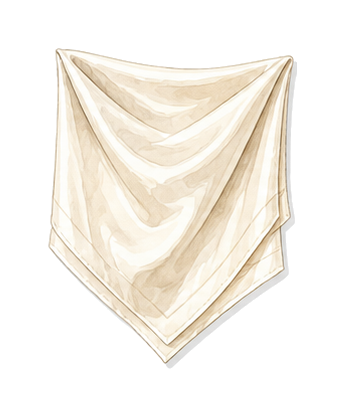 04Silk scarf — large enough to cover shoulders
The single most useful item for Rome. Every basilica, the Vatican, St. Peter's, Santa Maria Maggiore, and most major churches enforce a shoulders-and-knees-covered rule that is checked at the door. A 90×90cm silk scarf doubles as Vatican-compliance + AC layer for restaurants + photo prop. Skip pashminas (read tourist); a silk square reads local.
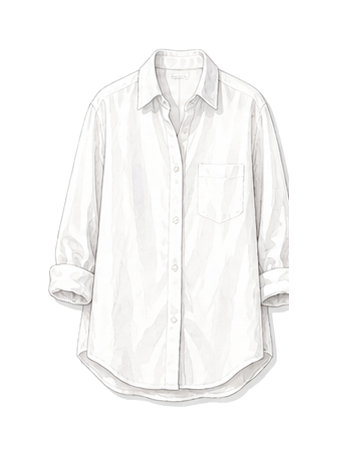 05Cotton button-down or fine knit
Pair with the linen trousers for an outfit that clears any restaurant in Trastevere or Monti, and with the leather sandals for the day. White, cream, or stripe (the navy-on-cream Italian classic). Skip athletic-fit shirts; Roman shirts run relaxed.
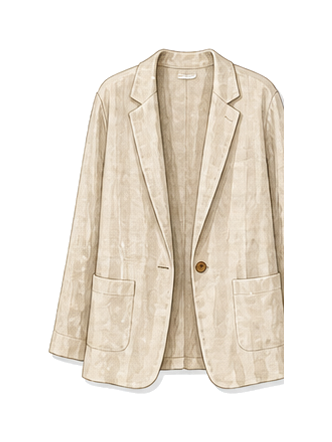 06Light cardigan or unstructured blazer
Restaurant AC in May runs at 18-20°C / 64-68°F; outdoor dinners after 9pm hit 13-15°C / 55-59°F. A thin cashmere cardigan or unstructured linen blazer rolled into the bag is non-negotiable. Loro Piana and Brunello Cucinelli are the heritage references; Quince, Cos, and Uniqlo cover the same silhouette.
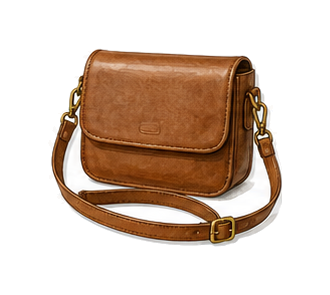 07Structured leather crossbody
Pickpocketing on tram 8, Termini, and the metro between Spagna and Vaticano is real and consistent — backpacks worn behind you are the most common targets. A small leather crossbody worn diagonally across the body, hand on the bag in crowds, is the local standard. Skip canvas; leather reads the right register.
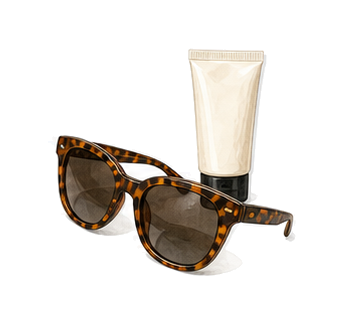 08Oversized sunglasses + SPF 30
Roman sun reflects off travertine and marble and is sharper than the Northern European May sun even at 22°C / 72°F. Italian classic shapes (Persol, Ray-Ban Wayfarer, Linda Farrow) read locally; oversized round or cat-eye reads international. SPF stays in the bag for the Spanish Steps re-application at 3pm.
Day to night
Linen midi dress · leather sandals · silk scarf · crossbody. Coffee at Sant'Eustachio, walk through Centro Storico, slow morning at the Pantheon before tour buses arrive.
Linen trousers · cotton button-down · sandals or low block heels · cardigan in bag. Aperitivo in Monti at 7pm, dinner at Roscioli or Da Enzo at 8:30 (Rome eats late).
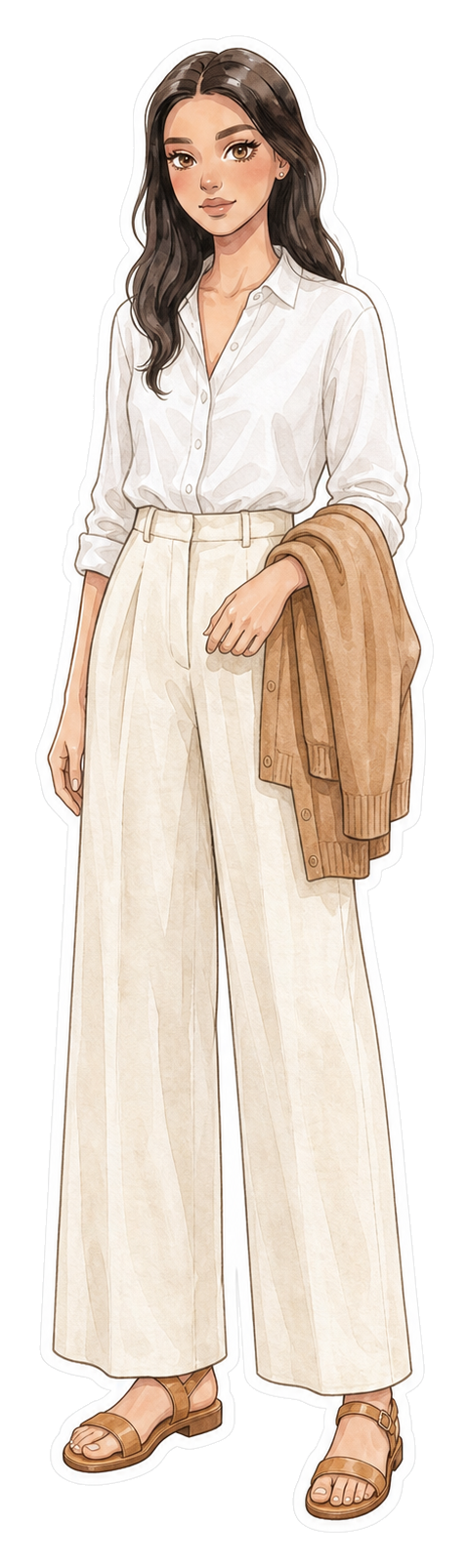
A suggested look — Rome May evening look: white cotton button-down, cream wide-leg linen trousers, tan leather sandals, camel cardigan carried; no bag.
What to avoid
- New or pointed heels — sampietrini ends them within a block
- Sleeveless tops or shorts above the knee in basilicas — guards turn tourists away daily
- Pure white sneakers — sampietrini grit ruins them by day three
- Backpacks worn behind on tram 8, metro, or near Termini — consistent pickpocket target
- Eating dinner before 8pm — trattorie open 7:30 at earliest, locals dine 9pm-midnight
Frequently asked questions
Per Servizio Meteorologico data (Ciampino station): average daily high is 22°C (72°F), low is 13°C (55°F). About 6 days with rain totalling 57mm — mostly short late-afternoon thunderstorms. Daylight: 14h 35m. May is one of Rome's best-weather months alongside late-September; June starts pushing into 28°C / 82°F and August averages 32°C / 90°F.
Shoulders covered, knees covered, no transparent fabrics. The dress code is enforced by guards at St. Peter's Basilica entrance and at the Vatican Museums; tourists are turned away daily. The simplest fix: a midi-length dress or trousers + a top with sleeves, or a sleeveless dress with a silk scarf draped over the shoulders. Hats must be removed inside the basilica. Same rules apply at Santa Maria Maggiore, Santa Maria in Trastevere, and most other major basilicas.
Yes. The sampietrini — volcanic basalt cubes laid since the 1500s — are worn smooth, uneven, and treacherous in any heel sharper than a 4cm block. Heels get caught in the gaps, ankles twist, and pointed-toe shoes scuff their tips on day one. Romans wear flat leather sandals (Birkenstocks for casual, Tod's Gommino loafers for polished, Italian brands like Ancient Greek Sandals for evening). New sandals also defeat you — break in any new pair before the trip.
One of the best months. Mild weather (22°C / 72°F, Romans still in town (which means restaurants fully staffed and museums under capacity), and the heat hasn't arrived yet — June pushes 28°C / 82°F, July hits 31°C / 88°F, and August is the empty-city month when Romans leave for the coast (Ferragosto on August 15 is the peak of the closures). May also has fewer afternoon thunderstorms than the fall shoulder season.
A small to medium leather crossbody worn diagonally across the body. Pickpocketing on tram 8, Termini station, and the metro between Spagna and Vaticano is real and consistent — backpacks worn behind you are the most common targets. Hand on the bag in crowds, especially at Trevi Fountain and outside the Colosseum. Skip canvas totes for valuables and avoid hip packs (read tourist); a structured leather crossbody from any Italian leather shop in Trastevere is the local standard.
Sources
- Servizio Meteorologico Aeronautica Militare — 1991–2020 climate normals, Ciampino station