What to Wear in Florence in July
Florence in July is peak Tuscan heat — 32°C / 90°F, only 3 rain days. The Duomo line at noon hits 38°C / 100°F+ in direct sun. Locals run early-and-late.
- Pale linen exclusively — cream, white, oat, sage, pale navy
- Italian leather sandals broken in — feet swell in 32°C / 90°F, need arch support
- Wide-brim straw hat — non-optional for Duomo + Uffizi + Boboli outdoor sightseeing
- Silk scarf for shoulders + AC contrast
- Carry water always — heat exhaustion risk documented at the Duomo line
- Schedule outdoor sightseeing 7-11am and after 6pm — locals avoid 12-5pm sun
- Don't wear synthetic fabrics — unsafe in 32°C / 90°F Tuscan heat with marble re-radiation
- Don't wear dark colors — black absorbs marble-radiated heat
- Don't schedule Duomo or Uffizi 12-5pm — queues hit 38°C / 100°F+, heat exhaustion documented
Florence in July punishes the unprepared. Servizio Meteorologico data put afternoon highs at 32°C / 90°F and lows at 18°C / 64°F with only 3 rain days. The marble of the Duomo, Palazzo Vecchio, and the Uffizi facades re-radiate heat to surface temperatures of 50°C / 122°F+ at midday. Florentines who stay in the city run an early-and-late rhythm: cornetto at 7am, Duomo or Uffizi at 8am, lunch 1-3pm followed by a long pause until 6pm, walk again at 6:30pm, dinner 9-11pm. Florentines who can leave do — to Tuscan hill towns (Siena, San Gimignano, Montepulciano) or the coast (Forte dei Marmi, Castiglioncello). The dressing rule sharpens further: pale linen exclusively, Italian leather sandals with arch support broken in, wide-brim hat and SPF and ample water. The Duomo line at noon has been documented at 38°C / 100°F+ in direct sun. Restaurant AC at 18-20°C / 64-68°F is a brutal contrast to 32°C / 90°F street; the silk scarf or thin cardigan in the bag is non-negotiable.
Florence in July is the city under heat — Tuscan inland temperatures peak, the marble of the Duomo holds the day's heat past midnight, and locals reschedule their entire day around the 12-5pm off-hours.
The capsule
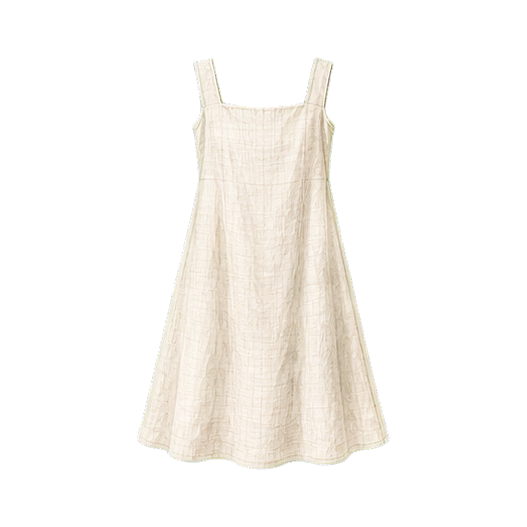 01Pale linen midi dress — cream, white, oat, sage
The Florence July default. Pale reflects marble-radiated heat; linen breathes; sleeveless + silk scarf covers Duomo modesty.
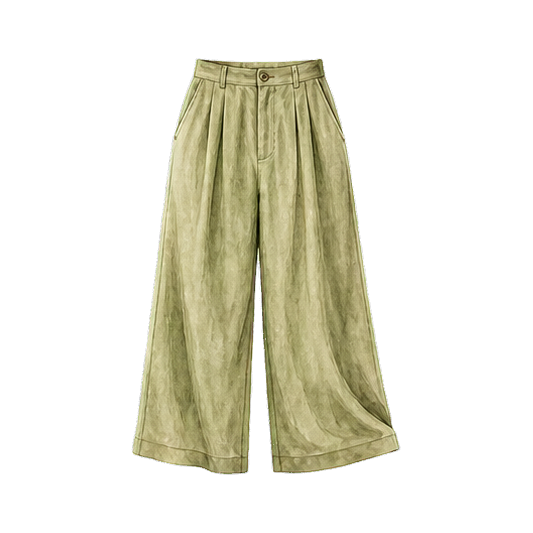 02Lightweight pale linen wide-leg trousers
When a dress isn't right. Wide-leg breathes through Tuscan inland heat; skip skinny.
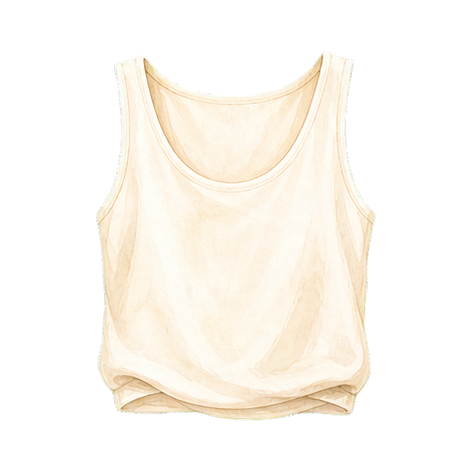 03Cotton tank or pale silk shell
Tucked into trousers, alone for trattoria lunch, layered under cardigan for AC.
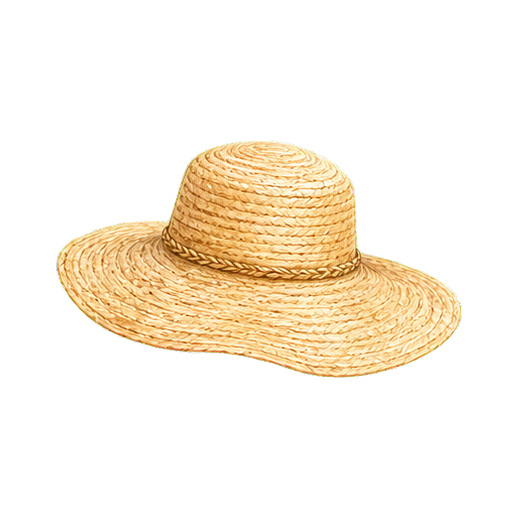 04Wide-brim straw hat — non-optional
Duomo line at noon hits 38°C / 100°F+ in direct sun. Borsalino (founded 1857), Lack of Color.
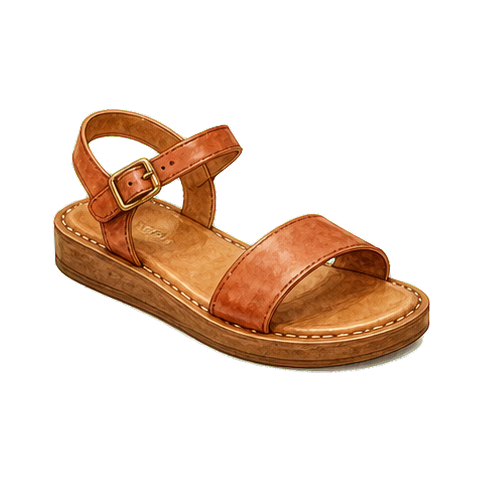 05Italian leather sandals with arch support — broken in
Florentine Salvatore Ferragamo (founded 1927), Tod's Gommino, Ancient Greek Sandals. Feet swell most in 32°C / 90°F; flat thongs end the day in real pain.
 06Silk scarf — large pale square
Duomo + basilica modesty + restaurant AC + late-evening 18°C / 64°F breeze. Italian Hermès, Bulgari.
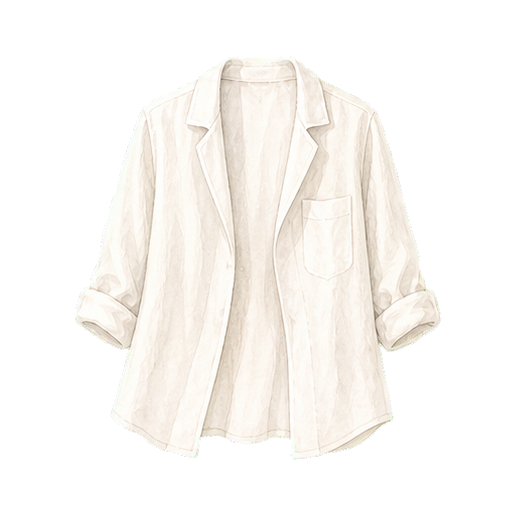 07Thin linen overshirt or unstructured cotton blazer
AC at 18°C / 64°F feels colder when arriving sweat-damp from 32°C / 90°F. Roll over shoulders for evening.
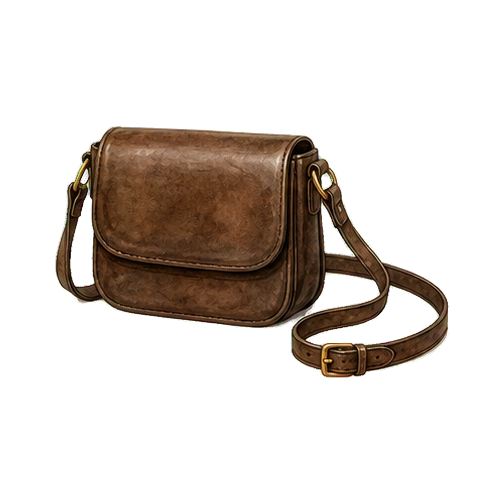 08Structured leather crossbody — worn tight
Pickpocketing peaks in tourist density July. Worn diagonally, strap pulled short, hand on bag in crowds.
Day to night
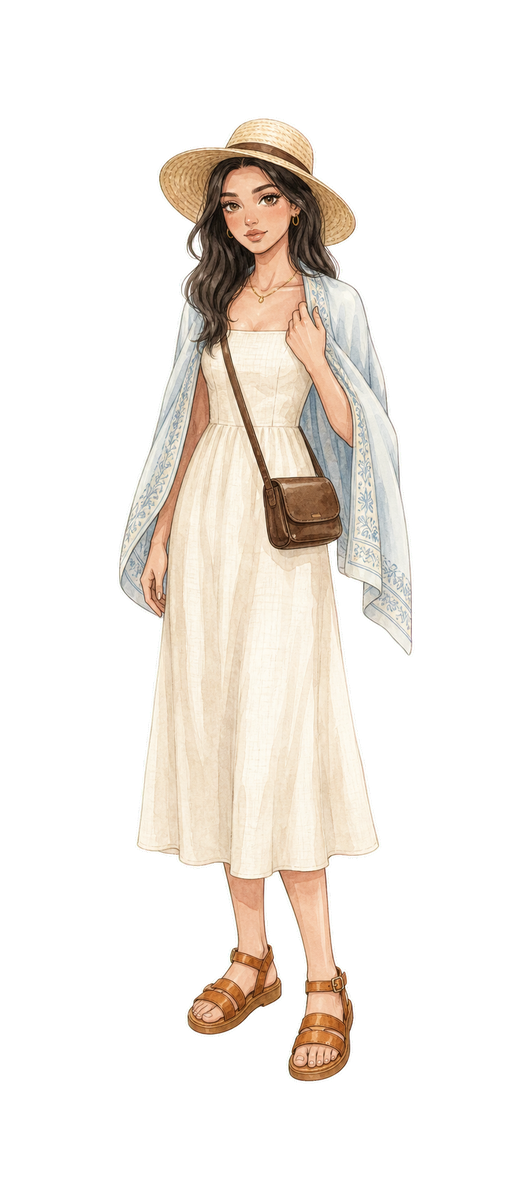
Pale linen midi dress · leather sandals · straw hat · silk scarf · crossbody. Coffee at Ditta Artigianale 7am, Duomo dome climb at 8:15am opening, lunch at Trattoria Sostanza 1pm.
Linen trousers · button-down · linen overshirt · loafers. Dinner at Cibreo, Il Latini 10pm; rooftop at La Terrazza Westin or Hotel Continentale after.
A suggested look — Florence July morning heat look: oat-white linen midi dress, tan supportive leather sandals, raffia wide-brim hat, pale blue silk scarf over shoulders, dark chocolate crossbody; no backpack..
What to avoid
- Synthetic fabrics — unsafe in 32°C / 90°F Tuscan heat with marble re-radiation
- Dark colors — black absorbs marble-radiated heat all day
- Duomo or Uffizi 12-5pm — queues 38°C / 100°F+, heat exhaustion documented daily
- Pure flat sandals after day two — feet swell, blisters guaranteed
- Athletic wear or gym sneakers — Florence reads polished tailoring capital
Frequently asked questions
Per Servizio Meteorologico: average daily high is 32°C (90°F), low is 18°C (64°F), only 3 rain days. Heat waves regularly push afternoons above 36°C / 97°F, and the marble of the Duomo and Palazzo Vecchio re-radiate heat past midnight. Florence's inland location (no coastal moderation) makes it 1-2°C / 2-4°F hotter than Rome at the same time. The Duomo line at noon has been measured at 38°C / 100°F+ in direct sun.
Yes, but only at 8:15am opening or after 5pm. The dome climb is 463 narrow steps without ventilation; at midday in summer the inside of the cupola hits 35-40°C / 95-104°F and heat exhaustion is documented. The 8:15 window is cool, the queue shortest, and the morning light from the cupola viewpoint is the best of the day. After 5pm catches golden hour; the dome closes at 7pm. Bring water and wear supportive shoes — heels or unsupportive sandals will end your climb at step 100.
Siena (1.5 hour bus ride; the Piazza del Campo is one of Italy's most-photographed) or Pisa (1 hour by train; the Leaning Tower plus the older Romanesque cathedral). For wine: Chianti hill towns Greve in Chianti, Radda in Chianti, Castellina in Chianti are 1-2 hours by car or guided tour. The hill towns sit at 200-500m elevation and run 3-5°C / 5-9°F cooler than Florence, which is the practical relief from the city heat. Dress: linen, leather sandals, sun hat, water, and a silk scarf for any churches.
Most Centro Storico tourist-track restaurants (Trattoria Sostanza, Cibreo, La Giostra, Il Latini, Buca dell'Orafo) stay open through August; many local-favored neighborhood spots in Oltrarno and San Frediano close from August 5 through August 25 for owner vacations. June and July are fully operational. Notable July favorites: Trattoria Mario (lunch only, no reservations), Trattoria Sostanza (the Florentine steak benchmark), Cibreo (Mediterranean creative).
It depends. The pros: long daylight, full restaurant operations (vs August closures), strong cultural programming (Estate Fiorentina summer festival), Tuscan day trip access. The cons: brutal afternoon heat (32°C / 90°F peak with marble re-radiation), Duomo + Uffizi queues in direct sun, peak tourist density. May, June, and September generally rank as better months for first-time visitors. For repeat visitors, July's empty-evenings (locals leaving for the coast) have a quiet character not available in May.
Sources
- Servizio Meteorologico Aeronautica Militare — 1991–2020 climate normals