What to Wear in Marrakech in July
Marrakech in July is peak desert heat — 38°C / 100°F peak, 0 rain days. Sightseeing is dawn-only (7-10am); midday is for the riad pool or AC retreat.
- Lightweight cotton/linen in white/cream/sand only
- Modest cuts — medina respect continues
- Sandals broken in, arch-supported
- Wide-brim sun hat + SPF 50+ + ample water
- Sightsee 7-10am only — Marrakech midday is brutal
- Riad pool or AC retreat 11am-6pm — local strategy
- Don't wear dark colors — 38°C / 100°F sun absorption is dangerous
- Don't wear synthetic fabrics — overheating risk
- Don't schedule outdoor 11am-6pm — heat exhaustion documented
Marrakech in July is peak desert heat. Maroc Météo data put afternoon highs at 38°C / 100°F and lows at 21°C / 70°F with virtually 0 rain days. Heat waves regularly push afternoons above 42°C / 108°F; the medina's covered alleys offer some shade but the open Jemaa el-Fnaa square at midday is genuinely dangerous. Locally, the rhythm strict: morning sightseeing 7-10am, riad pool or AC retreat 11am-6pm, evening walk and dining 7-10pm under cooler 25°C / 77°F air. The dressing rule sharpens further: lightweight cotton or linen exclusively, white-cream-sand colors only (any darker tone absorbs too much sun), modest cuts, sandals broken in with arch support, wide-brim sun hat + SPF 50+ + ample water always. The Yves Saint Laurent Garden and Jardin Majorelle stay green in the heat (irrigation maintains the desert oasis); the Bahia Palace and Saadian Tombs offer indoor shaded touring.
Marrakech in July is the desert at its harshest — 38°C / 100°F peak, the medina alleys cooking at noon, locals only out in the dawn-and-dusk windows. The riad pool is the city's relief.
The capsule
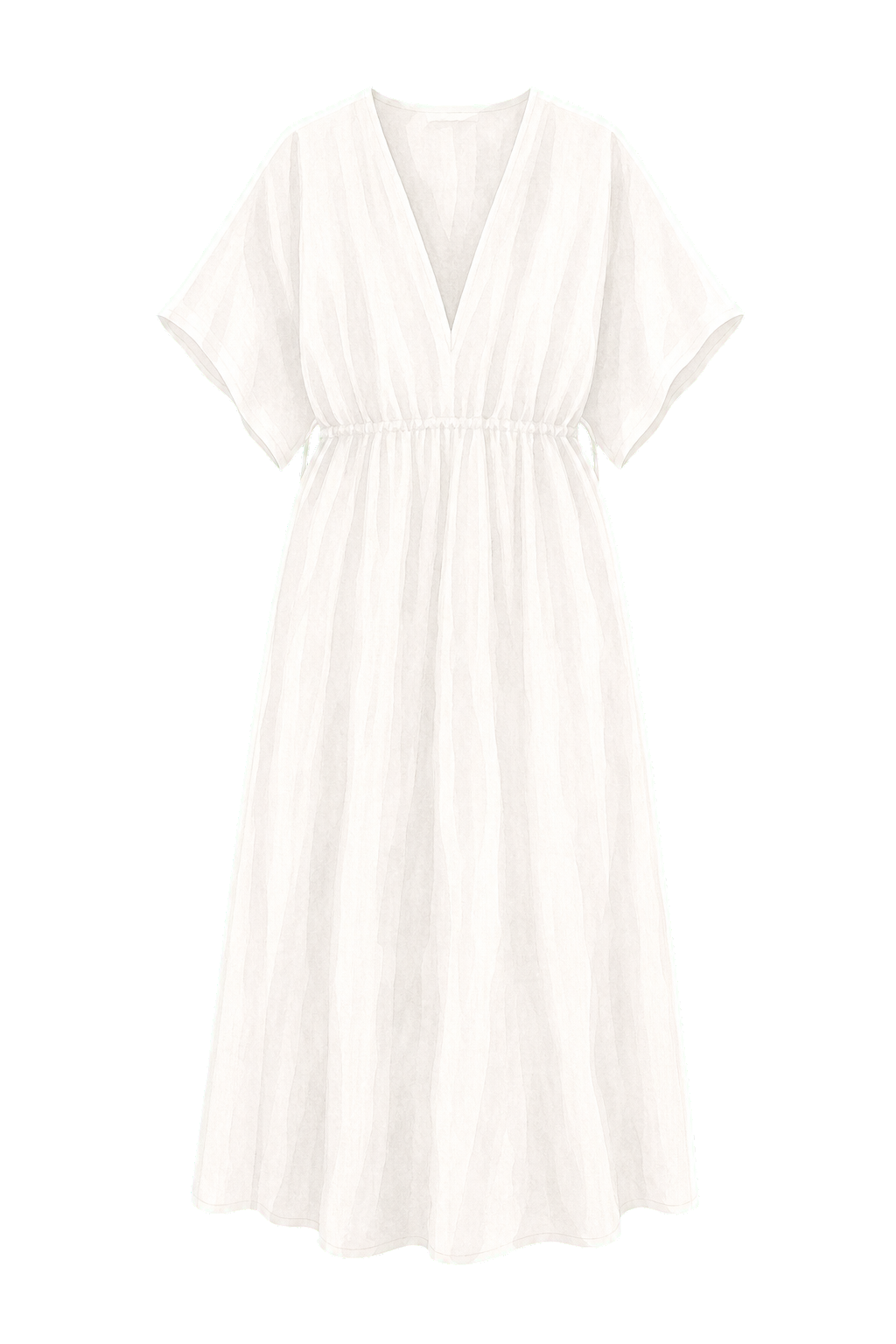 01Lightweight cotton kaftan or pale linen midi dress
White, cream, or sand only — any darker tone absorbs the unfiltered Moroccan sun and becomes genuinely uncomfortable by 11am. The kaftan is Moroccan heritage and reads correctly across the medina, riad rooftop dinners, and the Jardin Majorelle visit. Modest cut clears the Koutoubia Mosque exterior plaza without changing.
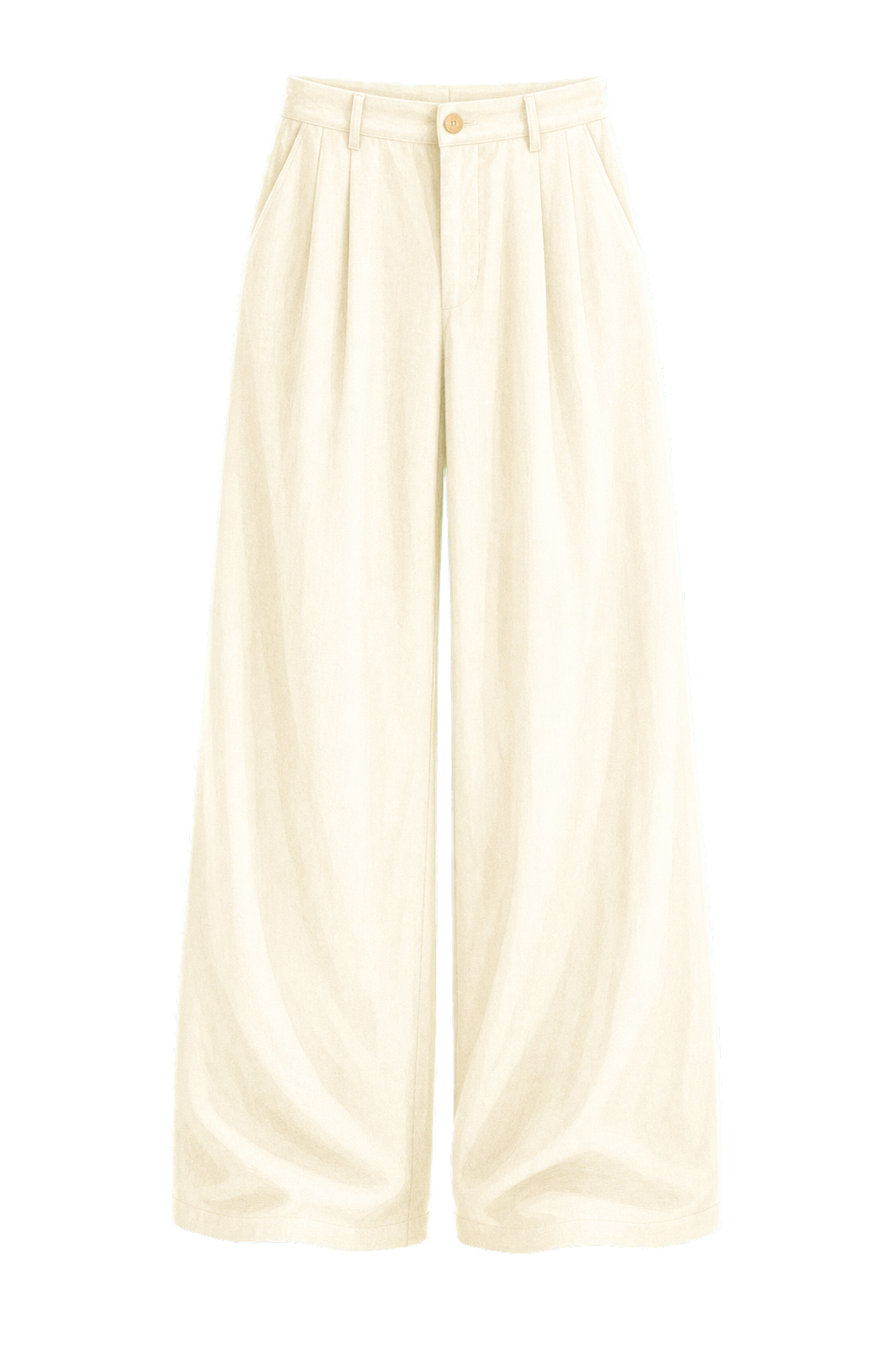 02Pale linen wide-leg trousers
Cream, sand, white only. Pale palette reflects the 38°C / 100°F sun where dark colors absorb it; humidity 30% means UV is unfiltered (UV index 10+ at midday). Wide-leg breathes through the desert heat — the local rhythm reserves trousers for the evening dining slot anyway, since 11am-6pm is riad-pool time.
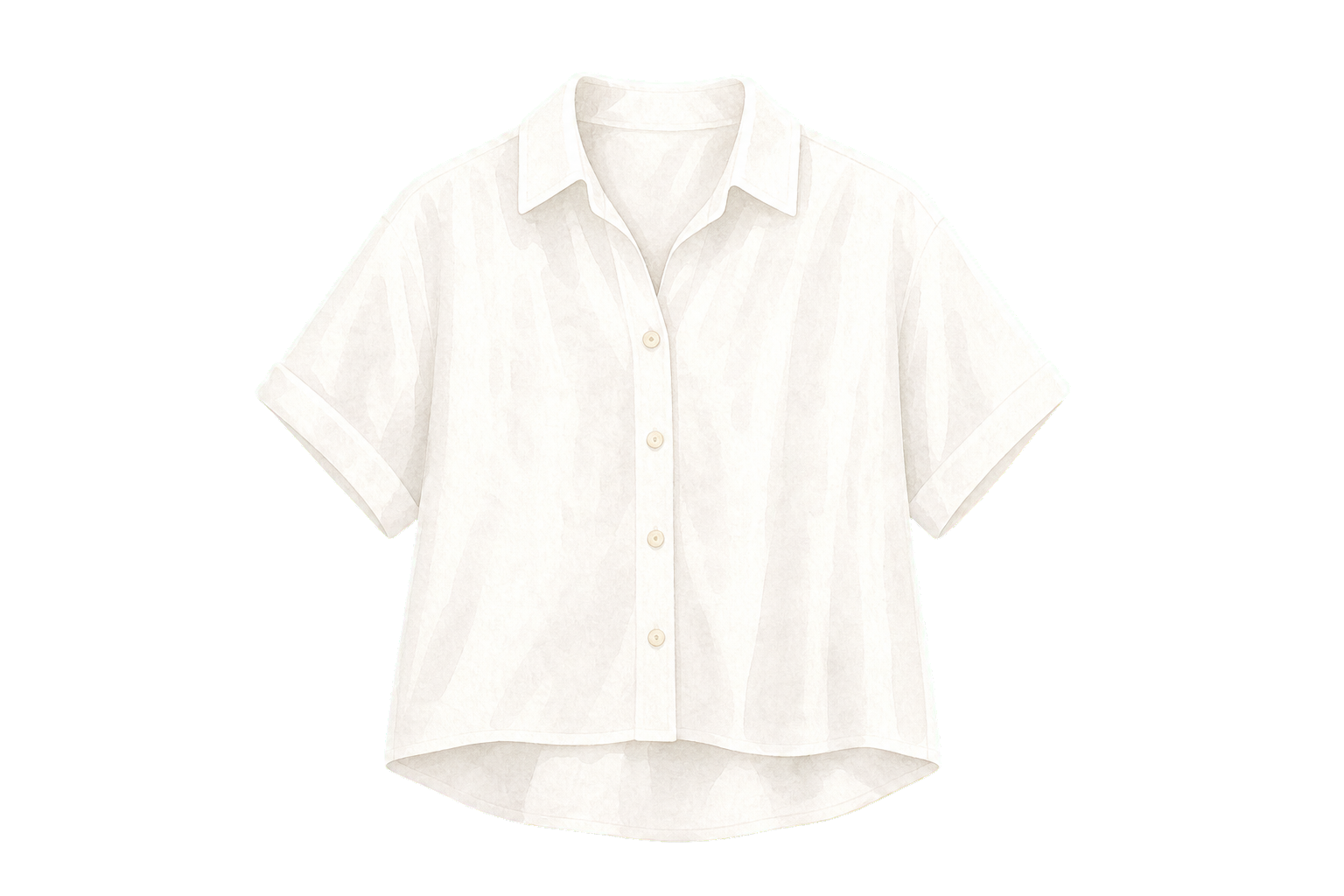 03Cotton or linen button-down — white
Tucked into pale linen trousers for dinner at La Mamounia, Plus 61, or Mardi (Moroccan summer dining runs 8:30-10pm to wait out the day's residual heat); layered open over a tank for the 7-10am dawn medina window. White only — cream and pale stripes work in June, but July's intensity favors maximum reflection.
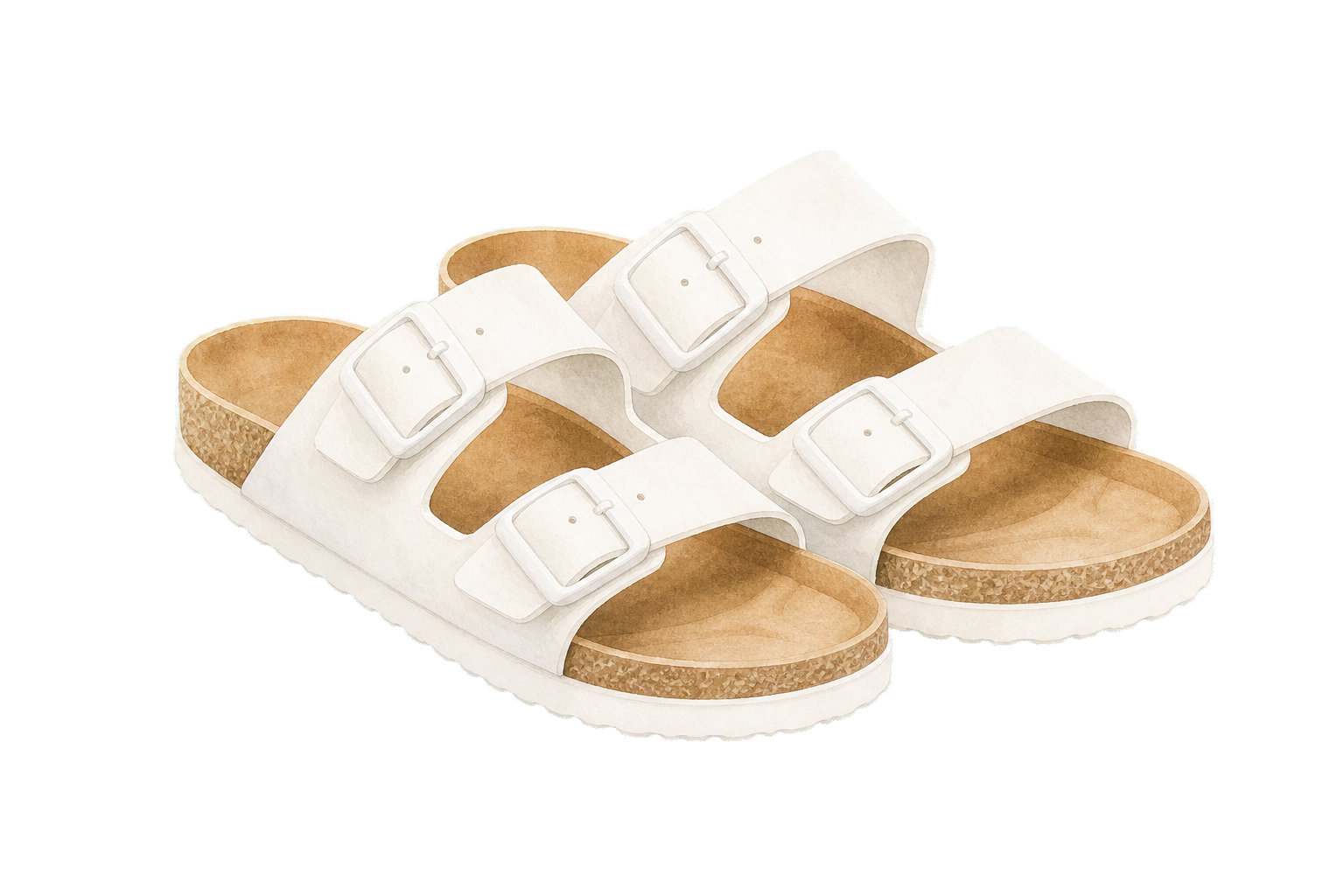 04Sandals — Italian leather or babouches with arch support
Feet swell hardest in 38°C / 100°F dry heat — the medical clinics document blisters from new sandals as a standard tourist injury in July. Broken-in babouches (Souk Cherratine in the medina), Tod's, or Birkenstock with footbed support; pure flat fashion sandals fail by day three.
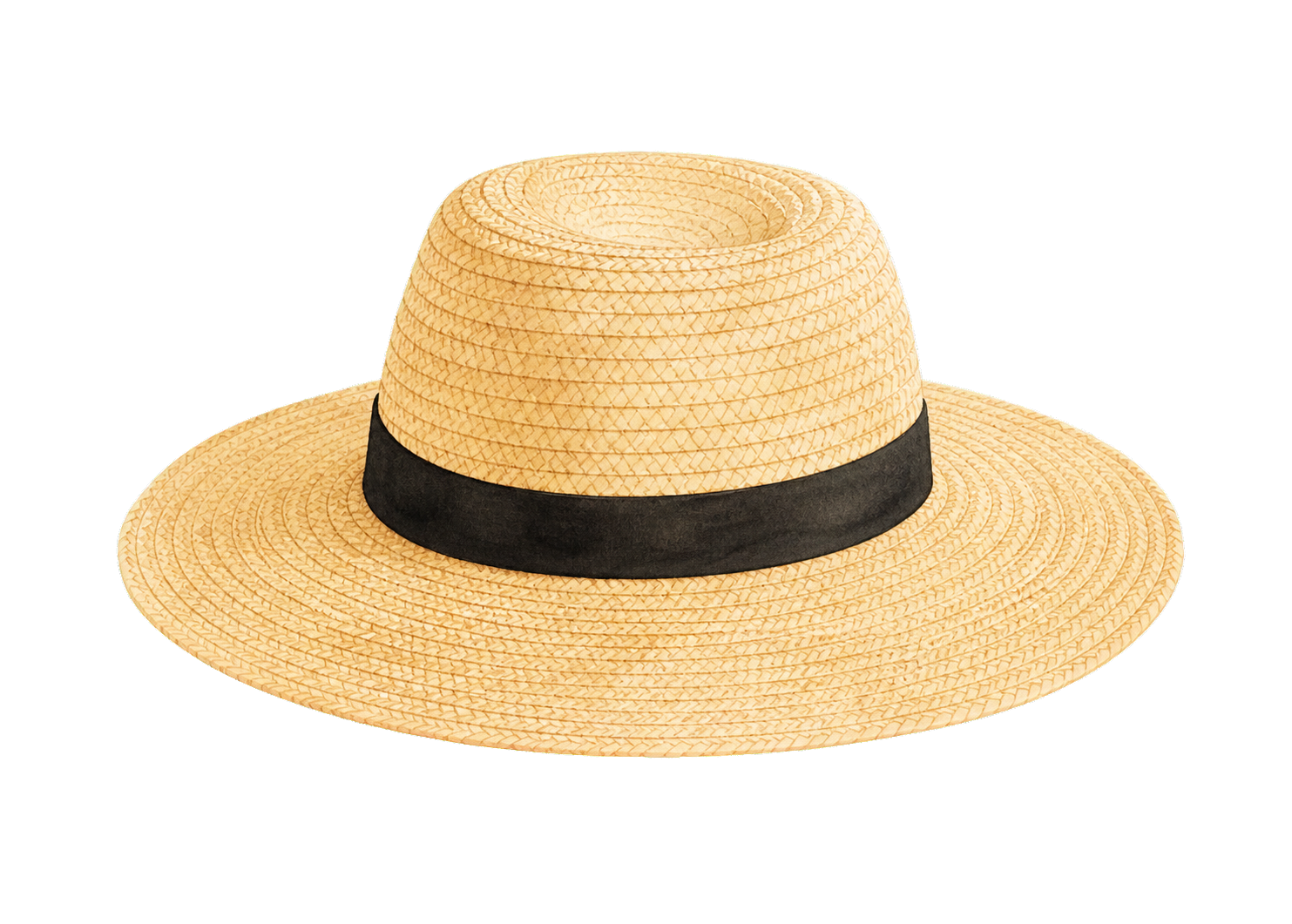 05Wide-brim sun hat — non-negotiable
The Moroccan sun at 38°C / 100°F is genuinely brutal — the unfiltered desert UV plus midday verticality means face and neck burn within 20 minutes unprotected. Wide-brim straw or canvas covers face, neck, shoulders; the baseball cap leaves the neck exposed and the back of the neck burns first. Worn even at the riad pool.
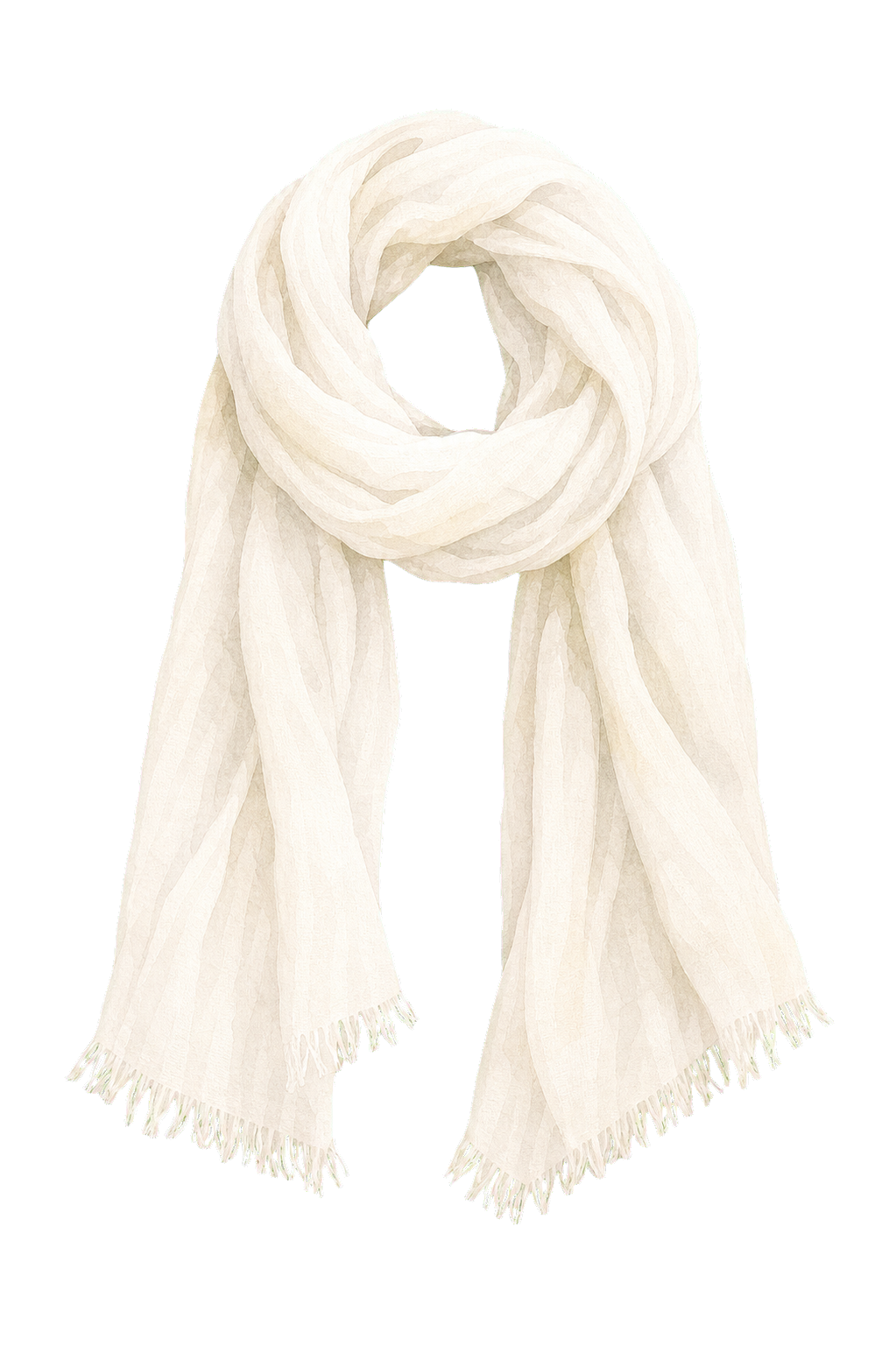 06Light cotton scarf
The desert temperature swing drops evenings to 21°C / 70°F clear-sky cool with stars unbroken — the city's nightly relief after the day's heat. The scarf doubles as shoulder cover for evening dining at La Mamounia, dust filter in the souks during dawn shopping, and the local-souk shawl-buying tradition.
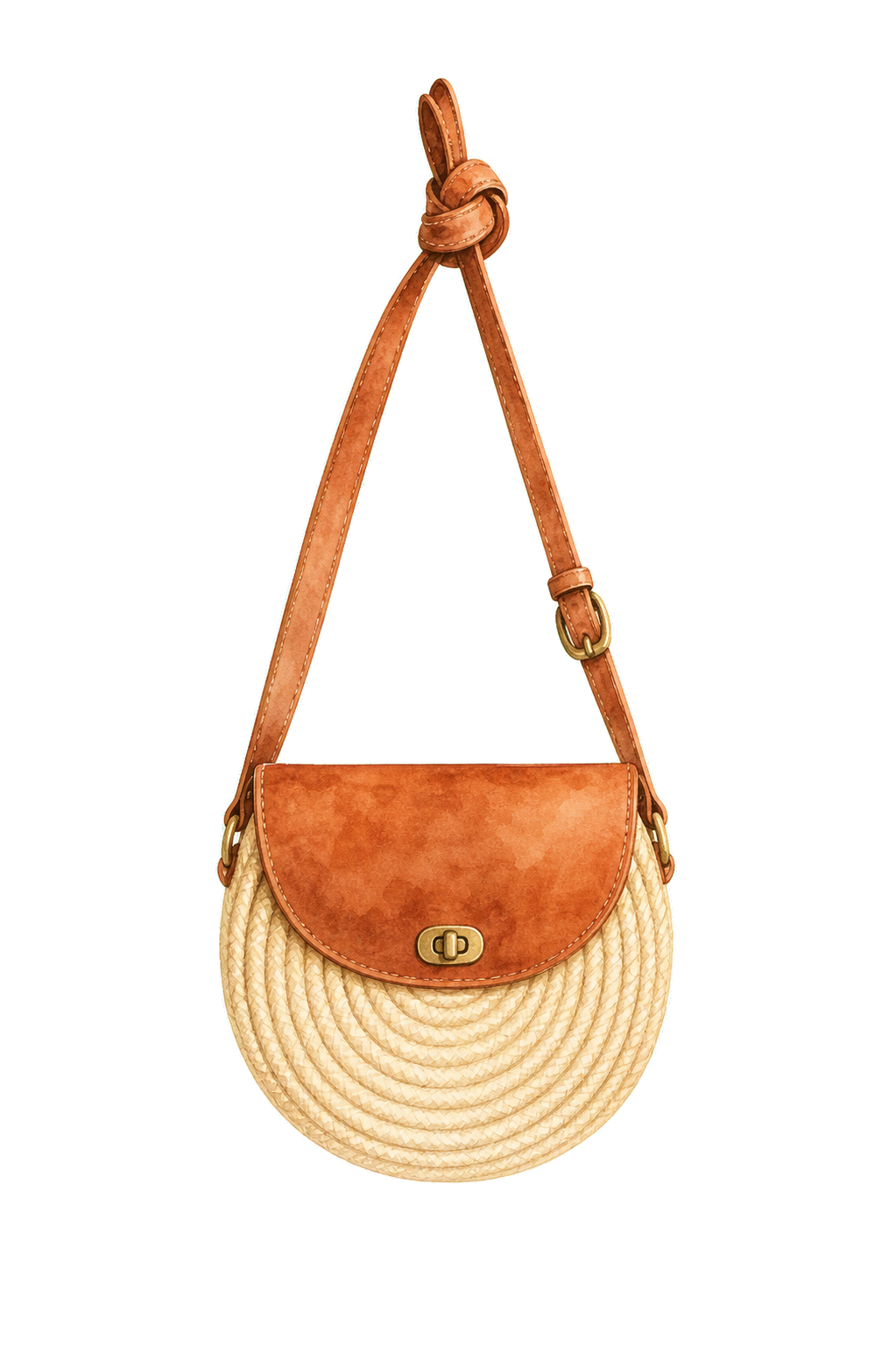 07Structured leather crossbody
Pickpocket precaution stays consistent — Jemaa el-Fnaa main square and the souks are documented zones, with peak density at the 9-11am morning shopping window before the heat closes things down. Small structured leather worn diagonally with hand on bag; the medina's local cognac or natural-tan leather reads correctly.
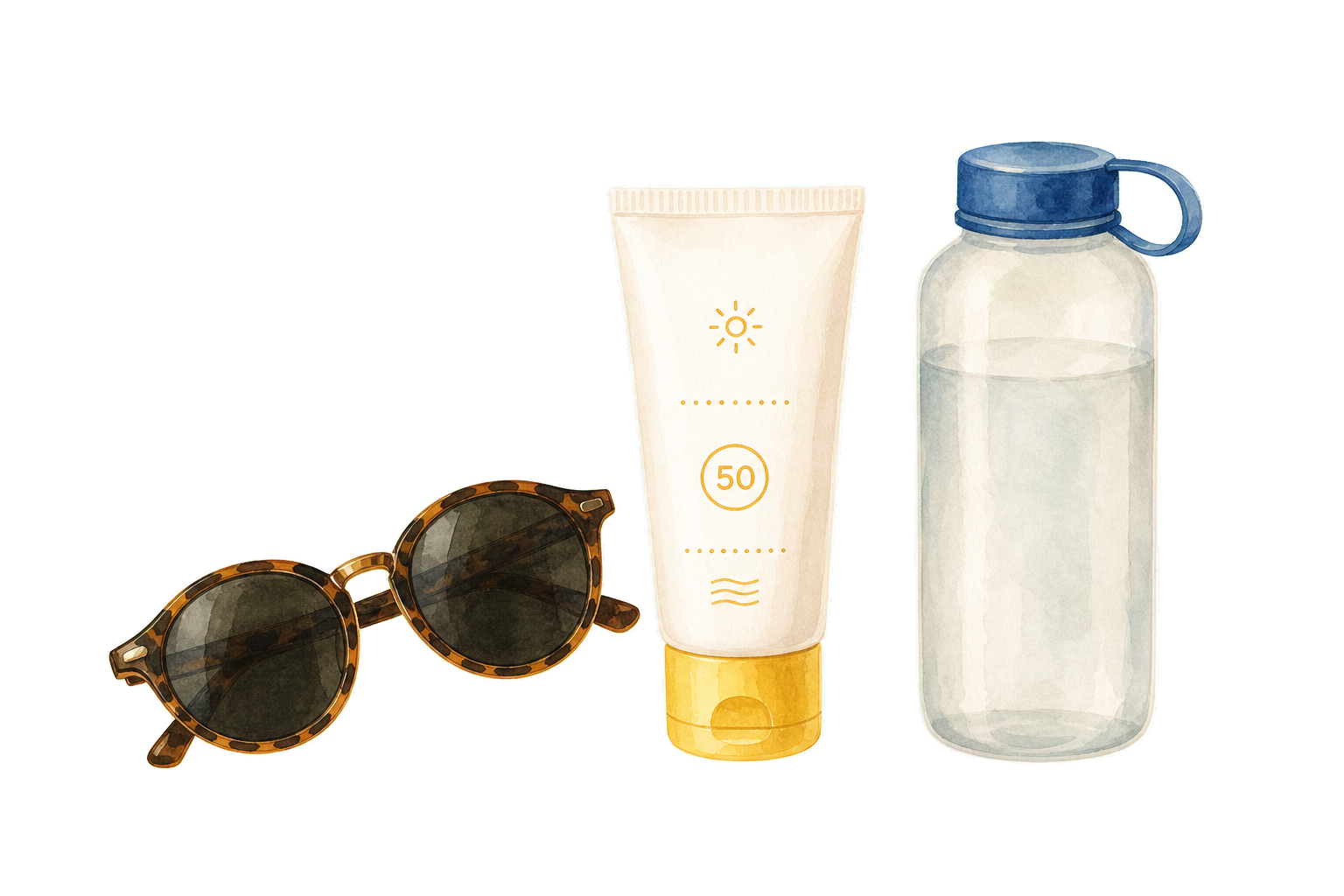 08SPF 50+ + sunglasses + 1L+ water bottle
Dehydration risk is real at 38°C / 100°F with 30% humidity — heat exhaustion is documented at the city's medical clinics during peak July. Drink 50% more water than you think you need; the dryness fools the body's thirst signal. SPF 50+ reapplied every 2 hours; sunglasses with UV400 protection — the Moroccan sun damages eyes faster than coastal sun.
Day to night
Cotton kaftan · pale linen trousers · sandals · sun hat · crossbody · water bottle. Mint tea at Café des Épices 7am, Yves Saint Laurent Garden at 8am opening 9am, riad pool from 11am.
Linen midi dress · block heels · light scarf. Dinner at La Mamounia, Mardi, or Plus 61 8:30pm; cocktails at El Fenn rooftop or Sky Lounge after.
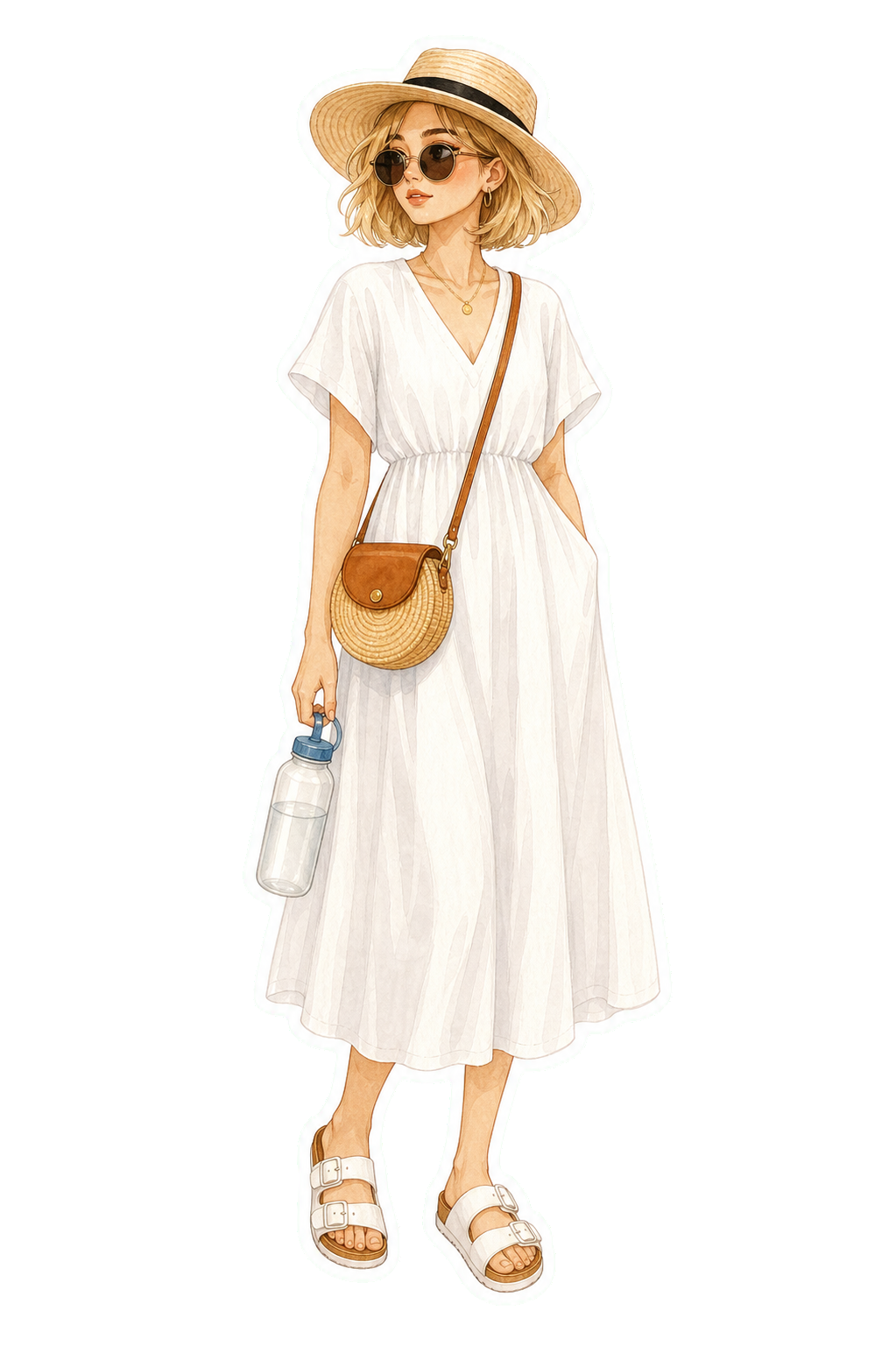
A suggested look — morning look: white lightweight midi dress worn alone, white arch-support slide sandals, round raffia crossbody bag, wide-brim straw hat, tortoiseshell sunglasses.
What to avoid
- Dark colors — 38°C / 100°F sun absorption dangerous
- Synthetic fabrics — overheating risk
- Outdoor activity 11am-6pm — heat exhaustion documented
- New or pure-flat sandals — feet swell, blisters guaranteed
- Medina alleys at night without guide — confusing, occasional harassment
Frequently asked questions
It's manageable with the right rhythm. Per Maroc Météo: average daily high 38°C / 100°F, low 21°C / 70°F, virtually 0 rain days. Heat waves push afternoons above 42°C / 108°F. Locals run a strict early-and-late rhythm: 7-10am outdoor, 11am-6pm at riad pool/AC/shaded gardens, 7-10pm evening dining and walks. Visitors who follow this rhythm find July workable. Visitors who insist on midday outdoor sightseeing struggle and risk heat exhaustion. Book riad accommodations with pools as the practical strategy.
Marrakech is the cultural-historical capital — the medina, Jemaa el-Fnaa square, the Yves Saint Laurent Garden, the Atlas Mountains accessibility. Casablanca is the economic capital with French colonial architecture, the Hassan II Mosque (the only Moroccan mosque open to non-Muslims), and ocean access. For first-time Moroccan visitors, Marrakech offers the more concentrated cultural experience. Casablanca is 2.5 hours by train from Marrakech.
Yes — the medina's covered alleys offer some shade but the Jemaa el-Fnaa central square hits 40°C / 104°F+ at midday in July, and the air stays trapped in the alleys. Locals shop the souks 9-11am or after 6pm; many small shops close 1-4pm for the local lunch and rest period. The Jardin Majorelle and Yves Saint Laurent Garden offer cooler shaded experiences if you must be out midday; the Bahia Palace and Saadian Tombs offer indoor air-conditioned alternatives.
Hammam (Moroccan public bath) is the traditional Moroccan bathing ritual — steam room, exfoliation with a rough mitt (kessa), black soap (savon noir), and rinse. Most hammams are gender-separated; some boutique hammams in luxury hotels are co-ed or private. The traditional public hammam (in the medina) is a local-favored experience; boutique hammams (Heritage Spa Marrakech, La Mamounia spa, Royal Mansour) run a luxury register. Bring: cotton underwear (you'll be in just that during the bath), flip-flops, a towel; the hammam typically provides everything else. The exfoliation is intense; first-time visitors should expect a significant skin-cleansing experience.
The medina souks are the broad-selection source: Souk Smarine (textiles), Souk Cherratine (leather goods including babouches), Souk Haddadine (metalwork), Souk Sebbaghine (dyers' alley with rugs and natural dyes). For higher-tier authentic crafts: Riad Yima (Hassan Hajjaj's gallery and concept store), Max & Jan (modern Moroccan with European designer collaborations), Le Jardin Secret's craft store. Authentic Moroccan goods carry maker stamps; tourist-trap imitations are widely sold. Negotiate (start at 30-40% of asking) and ask about origin (Atlas Mountain villages, Fez, Marrakech itself).
Sources
- Direction de la Météorologie Nationale — climate normals