What to Wear in Rio de Janeiro in December
Rio in December: 29°C / 84°F afternoons, 22°C / 72°F nights, and a month that ends in white on Copacabana.
- White tiered fringe dress — the white Réveillon custom on Copacabana
- White oversized linen shirt — the dermatologists' physical protection in Dezembro Laranja
- Tan slingback sandals — last year every road into Copacabana closed at 9pm
- Round raffia crossbody — search points at the beach entrances
- Sunflower-yellow bikini — 29°C afternoons between Christmas and New Year
- Ivory wide-leg linen trousers — the Iemanjá procession on the 29th
- A bag over 25 litres on New Year's Eve — last year's metro refused it
- Glass on the sand — barred all year by the beach decree
- Heels on the 31st — you walk in and out on sand
- Waiting to buy the Réveillon metro pass — last year's was sold in advance only
Pack white, and pack for walking. INMET's hourly records at Forte de Copacabana, averaged over 2007–2024, give December 29.1°C by day and 22.2°C at night, with 139mm of rain over about 10 days. The month builds to the Réveillon on Copacabana, where people have gone to the beach in white since Umbanda gatherings on the sand in the 1950s: they "passaram a ir à praia vestidas de branco", Agência Brasil reported, to make offerings to Iemanjá and jump seven small waves. The 2026–27 programme had not been announced as of 27 September, but last year's operation sets the terms. Avenida Atlântica closed to traffic at 7am, every road into Copacabana was blocked from 9pm, and pedestrian entrances had search points. The metro ran on passes bought in advance and refused anything over 25 litres, bottles and boards. Riotur's president Bernardo Fellows called the night "o Rio reafirmando seu lugar como a capital mundial da virada", Rio reaffirming itself as the world capital of New Year's Eve. So dress in white, carry little, and wear shoes you can walk a long way in.
December in Rio ends in white, on sand, among two and a half million people. Dress for the walk in, the search at the entrance and the waves at midnight.
The capsule
 01White sleeveless tiered fringe dress
Your Réveillon dress. White on Copacabana on 31 December goes back to the Umbanda gatherings of the 1950s, when people came to the beach in white to leave offerings for Iemanjá. Tiers of fringe move in a sea breeze and catch the light of the fireworks, which last year ran for 12 minutes from 19 barges, and a sleeveless cut stays cool in a crowd of millions.
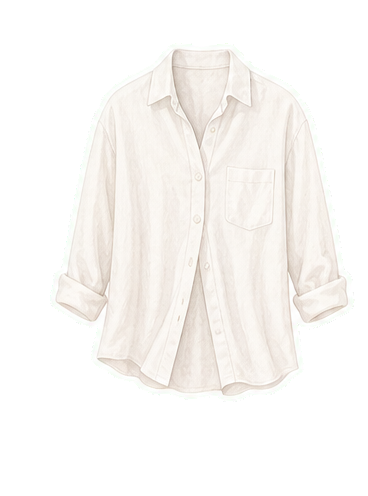 02White oversized linen shirt
December is the Sociedade Brasileira de Dermatologia's Dezembro Laranja, its skin-cancer month, and the society's Dra. Bianca Costa Soares de Sá pairs sunscreen with "proteção física (sombra, roupas e chapéus)", shade, clothing and hats, for long exposure. A long-sleeved linen shirt is that clothing. It goes over the bikini at midday and over the silk shell in the evening, and it stays white for the 31st.
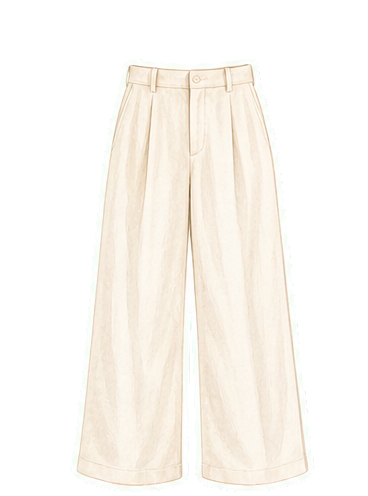 03Ivory wide-leg linen trousers
For the Festa de Iemanjá on Tuesday 29 December, when the procession from the Mercadão de Madureira reaches Copacabana around 3pm to launch its offering boats at Posto 4, and for Christmas Eve dinner on the 24th. Wide linen legs stay cool at 29°C and keep you in white without a dress.
 04Buttercream silk shell
Under the linen shirt or on its own with the trousers. A sleeveless silk shell weighs almost nothing, dries fast on a humid 22°C night, and buttercream keeps the palette pale without the glare of bright white.
 05Sunflower-yellow triangle bikini
For the beach days between Christmas and New Year, when the afternoon averages 29°C. A triangle top and tie sides dry fast between swims, and sunflower yellow shows under a white shirt thrown over it. Swim at a green flag; the state fire brigade flies red where the risk is high.
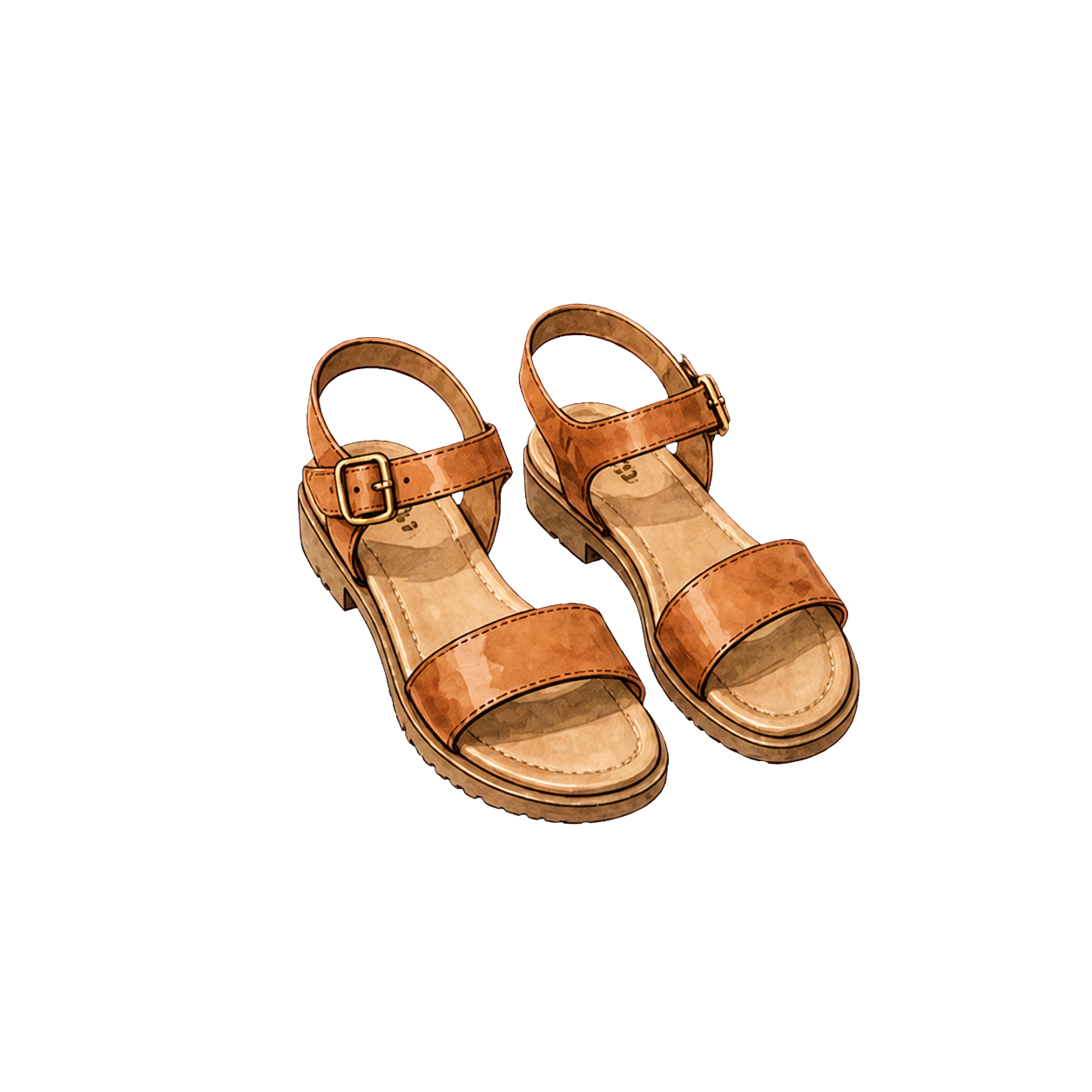 06Tan leather slingback sandals
Last year Avenida Atlântica closed to traffic at 7am on the 31st and every road into Copacabana was blocked from 9pm, so the night is on foot, in and out, much of it on sand. A buckled back strap keeps a flat sandal on in soft sand and through a crowd, and tan leather goes with white.
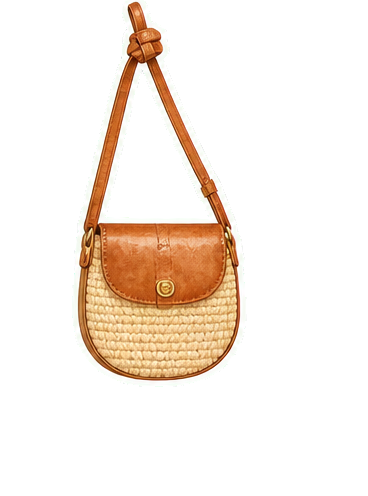 07Round raffia crossbody
Small enough for the search points that stood at Copacabana's pedestrian entrances last year, when the metro also turned away anything over 25 litres. A round raffia crossbody holds a phone, a card and a metro pass, rides in front of you in a crowd of 2.6 million, and looks right with white.
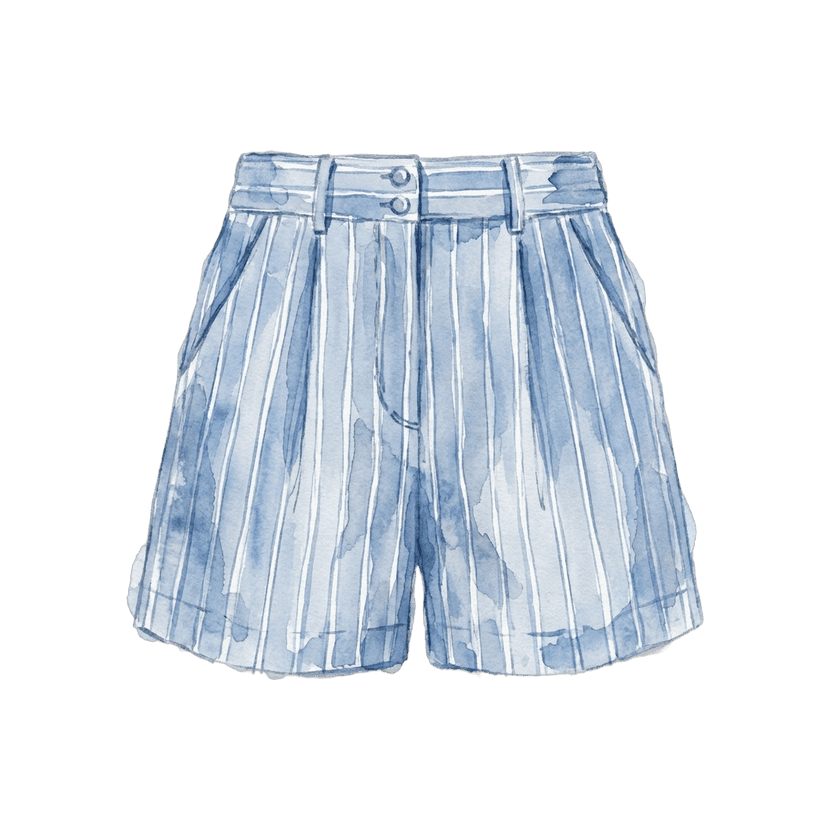 08Blue and white striped pleated shorts
For the daytime between the big nights: Christmas Day is a Friday holiday, and the long weekend runs to the 27th. Pleated shorts go over the bikini and under the linen shirt, and blue and white stripes add one colour to a mostly white suitcase.
Day to night
Sunflower-yellow bikini · white linen shirt open · blue and white striped shorts · tan slingback sandals. Ipanema early, and out of the sun in the middle of the day.
White fringe dress · tan slingback sandals · raffia crossbody. Copacabana on the 31st, on foot, for the midnight fireworks and seven small waves.
A suggested look — white tiered fringe maxi dress, tan leather slingback sandals.

What to avoid
- A bag over 25 litres on New Year's Eve — last year's metro refused it
- Waiting to buy the Réveillon metro pass — last year's was sold in advance only
- Heels on the 31st — you walk in and out on sand
- Glass on the beach — barred all year by Decreto Rio 56.160
- The midday sun — the SBD advises shade from 9am to 3pm
Frequently asked questions
Hot, humid and wet in bursts. INMET's hourly records at its Forte de Copacabana station, averaged over 2007–2024, give December an average high of 29.1°C and a low of 22.2°C, with 139mm of rain over about 10 days of 1mm or more. The city's heat protocol, Decreto Rio 54.740, grades days from NC1 to NC5 on the heat index, which combines temperature and humidity, and at NC4 the city opens air-conditioned public buildings as cooling points. Sunset moves from about 6:24pm on 1 December to 6:41pm on the 31st.
A white tiered fringe dress, a white oversized linen shirt, ivory wide-leg linen trousers, a buttercream silk shell, a sunflower-yellow bikini, tan slingback sandals, a round raffia crossbody and blue and white striped shorts. That covers Christmas Eve, the Iemanjá procession, beach days in between and the Réveillon on foot. Keep the bag small: last year the beach entrances had search points.
White, flat shoes and a small bag. The white goes back to Umbanda gatherings on Copacabana in the early 1950s, Agência Brasil reports, when people came to the beach in white to make offerings to Iemanjá and jump seven small waves. The 2026–27 programme had not been announced as of 27 September. Last year there were 13 stages across the city, three in Copacabana, 12 minutes of fireworks from 19 barges and a 1,200-drone show, and 2.6 million people on the beach. Pedestrian entrances had search points, vendors were barred from selling glass bottles, and every road into Copacabana closed at 9pm, so you walk in.
It depends which nights you want. Last year the Árvore de Natal da Lagoa, 60 metres tall with more than 20km of LED, stayed lit every day until 6 January. Christmas Eve and New Year's Eve, both Thursdays, are optional afternoons off for federal staff from 1pm, and Christmas Day, Friday 25 December, is a national holiday with a long weekend to the 27th. The Festa de Iemanjá reaches Copacabana on Tuesday 29 December, and the Réveillon closes the month. Book the last week early: last year 5.1 million people turned out across the city's 13 stages.
January is hotter and just as wet. INMET's hourly records at Forte de Copacabana give January 30.6°C by day and 23.3°C at night, against December's 29.1°C and 22.2°C, with 133mm of rain against 139mm. Alerta Rio counts January as the first month of summer, with short, heavy afternoon showers, and the samba schools start their free Sambódromo rehearsals on 23 January, which our January guide covers.
Swimwear from local labels by day, white at the end of the month. Lenny Niemeyer began designing bikinis for other labels in 1979, and in 1991 "decidiu criar sua própria marca", she decided to create her own brand, opening her first shop in Ipanema. At the Réveillon the beach dresses in white, the custom Agência Brasil traces to the Umbanda gatherings of the 1950s. A white linen shirt or dress covers both the beach day and the night.
Sources
- INMET — 2007–2024 climate normals, Forte de Copacabana (A652) stationINMET's official 1991–2020 normals for the city cover only its Alto da Boa Vista forest station, so these figures are averaged from INMET's hourly records at its automatic station at Forte de Copacabana, 18 complete Decembers. A rain day means at least 1mm. Recorded per month because the rest of this city's pages are sourced differently.
- INMET — Dados históricos anuais das estações automáticas (hourly records, station A652 Forte de Copacabana) — accessed 2026-09-27
- Prefeitura do Rio — Níveis de calor NC1–NC5 and heat protocols (Decreto Rio 54.740) — accessed 2026-09-27
- Centro de Operações Rio (COR) — Níveis de calor — accessed 2026-09-27
- Prefeitura do Rio — Planejamento operacional do Réveillon 2026 (26 December 2025) — accessed 2026-09-27
- Riotur — Rio Réveillon 2026 programme (4 December 2025) — accessed 2026-09-27
- Agência Brasil — Virada do ano no Rio leva 2,6 milhões de pessoas a Copacabana (1 January 2026) — accessed 2026-09-27
- Agência Brasil — Réveillon no Rio começou com a Umbanda (29 December 2023) — accessed 2026-09-27
- Prefeitura do Rio / COR — Inauguração da Árvore de Natal da Lagoa 2025 — accessed 2026-09-27
- Diário Oficial da União — Portaria MGI nº 11.460/2025, feriados e pontos facultativos de 2026 — accessed 2026-09-27
- Sociedade Brasileira de Dermatologia — Dezembro Laranja 2025 — accessed 2026-09-27
- Sociedade Brasileira de Dermatologia — Guide to sun protection (Dezembro Laranja 2022) — accessed 2026-09-27
- Prefeitura do Rio (SEOP) — Decreto Rio nº 56.160/2025, rules for the seafront — accessed 2026-09-27
- Corpo de Bombeiros Militar do Estado do Rio de Janeiro — Beach warning flags — accessed 2026-09-27
- Sistema Alerta Rio, Prefeitura do Rio — Estações do ano (spring and summer rain) — accessed 2026-09-27
- Liesa — Calendário dos ensaios técnicos, Rio Carnaval 2027 (9 September 2026) — accessed 2026-09-27
- Lenny Niemeyer — A marca (1991, Ipanema) — accessed 2026-09-27