What to Wear in Rio de Janeiro in January
Rio in January: 31°C / 88°F afternoons, 23°C / 73°F nights, afternoon summer storms and the run-up to Carnaval.
- Hot-pink bandeau bikini — swim early, before the hottest hours
- Straw fedora — the health department's heat advice asks for a hat
- Ocean-blue packable shell — afternoon chuvas de verão
- Black canvas sneakers — four evening rehearsals in the Sambódromo stands
- Rust puff-sleeve crop top — a 23°C night in the grandstands
- Raffia H-strap slides — the walk to the sand and back
- Sightseeing in the midday sun — the SBD advises shade from 9am to 3pm
- A plan that needs a dry afternoon — summer showers come mainly after lunch
- Sugarloaf in a building storm — the cable cars pause for lightning
- Glass or a speaker on the beach — both barred by Decreto Rio 56.160
Pack for heat, a daily storm and late nights. INMET's hourly records at Forte de Copacabana, averaged over 2008–2025, give January 30.6°C by day and 23.3°C at night, with 133mm of rain over about 10 days. January opens summer on Alerta Rio's calendar, and the service says what that brings: "chuvas de curta duração e forte intensidade, principalmente à tarde, as chamadas chuvas de verão", short, heavy showers, mainly in the afternoon. The city grades heat on a five-step scale, NC1 to NC5, set by Decreto Rio 54.740 on the heat index, which combines temperature and humidity. Its health department's advice is plain: "Utilize roupas frescas, mas que possam fornecer proteção, como boné, chapéu e óculos de sol", cool clothes that still protect, with a cap, hat and sunglasses. The nights belong to Carnaval's run-up. Liesa's free technical rehearsals fill the Sambódromo on 23, 24, 30 and 31 January; about 360,000 people came in 2026. So swim early, sightsee before lunch, carry a shell, and dress for a hot grandstand after dark.
January in Rio is heat in the morning, a storm in the afternoon and samba at night. Swim early, carry a shell, and save the sneakers for the Sambódromo.
The capsule
 01Hot-pink bandeau bikini, tie sides
For early swims. Renato Bakos, who led the Sociedade Brasileira de Dermatologia's 2022 sun campaign, advises staying in the shade between 9am and 3pm, so the beach day starts at breakfast. A knotted bandeau and tie sides dry quickly between dips, and hot pink stands out on a crowded sand.
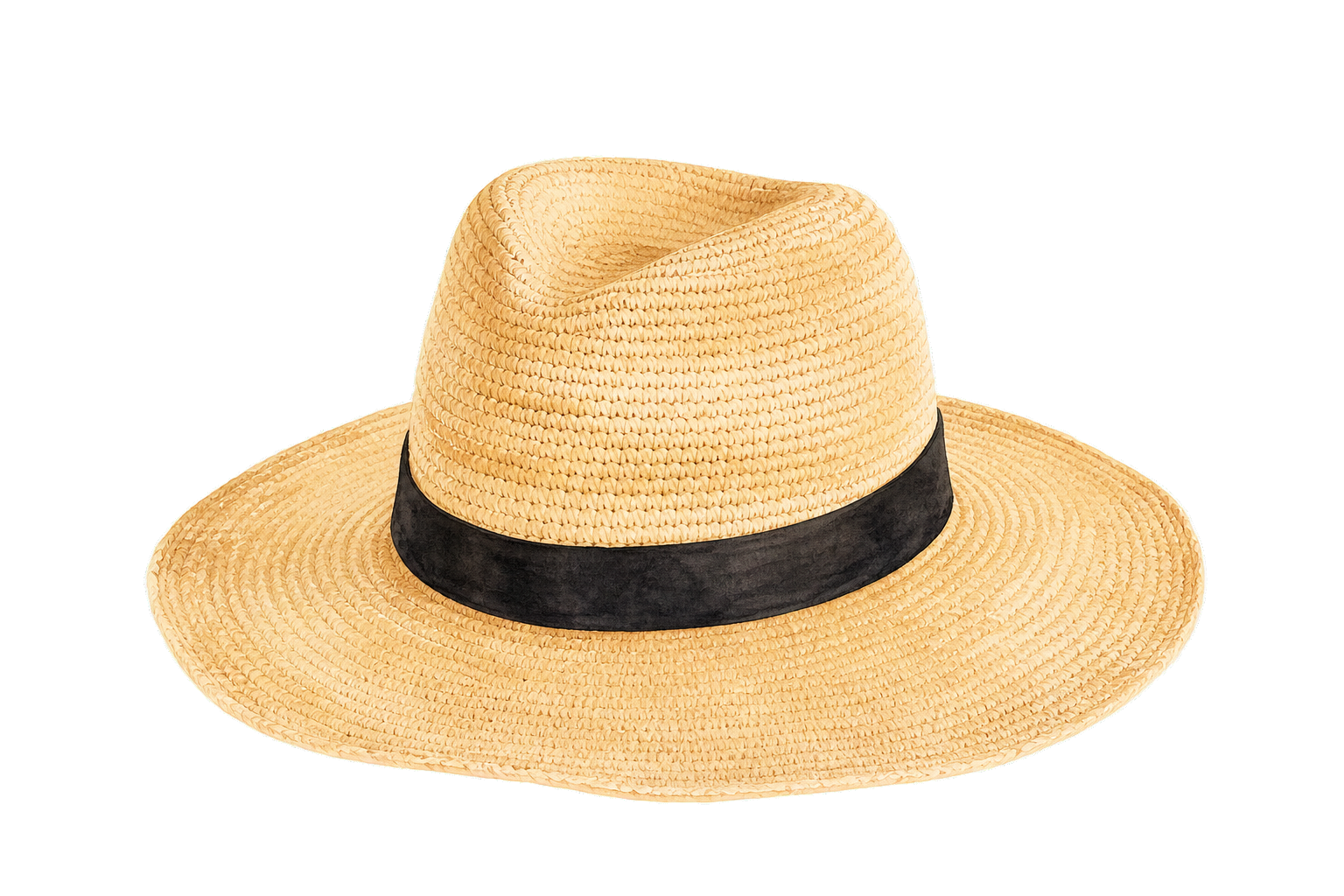 02Natural straw fedora, black band
The health department's heat advice asks for cool clothes that still protect, with a cap, a hat and sunglasses. A wide straw brim shades your face, ears and neck on a walk along the calçadão, and woven straw lets heat out where a closed cap holds it in.
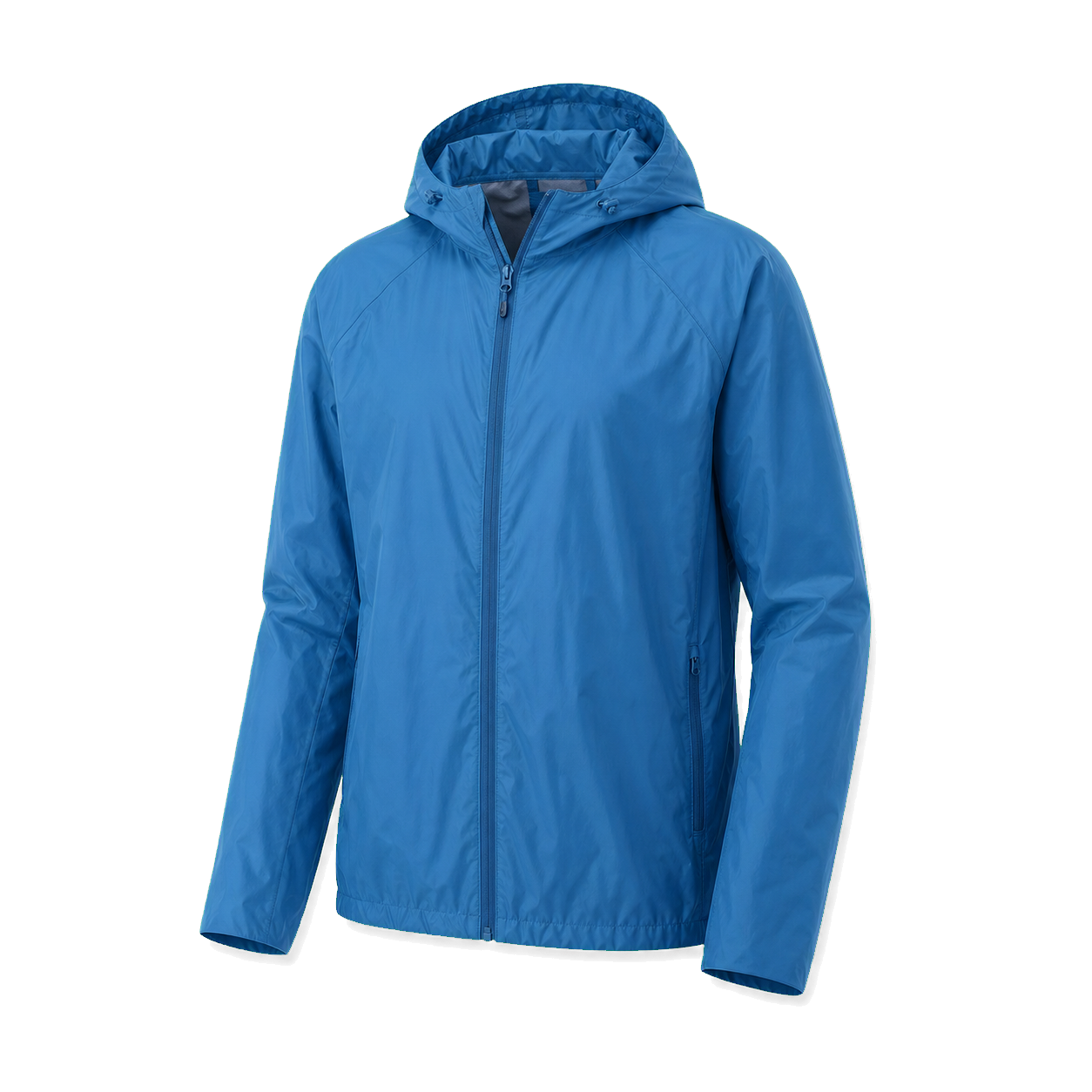 03Ocean-blue hooded packable shell
For the chuvas de verão. Alerta Rio describes them as short and intense and mostly in the afternoon, so the shell rides folded in the crossbody from lunch on. A hood and a zip front handle a downpour on the walk back from the beach, and ocean blue is easy to find in a bag.
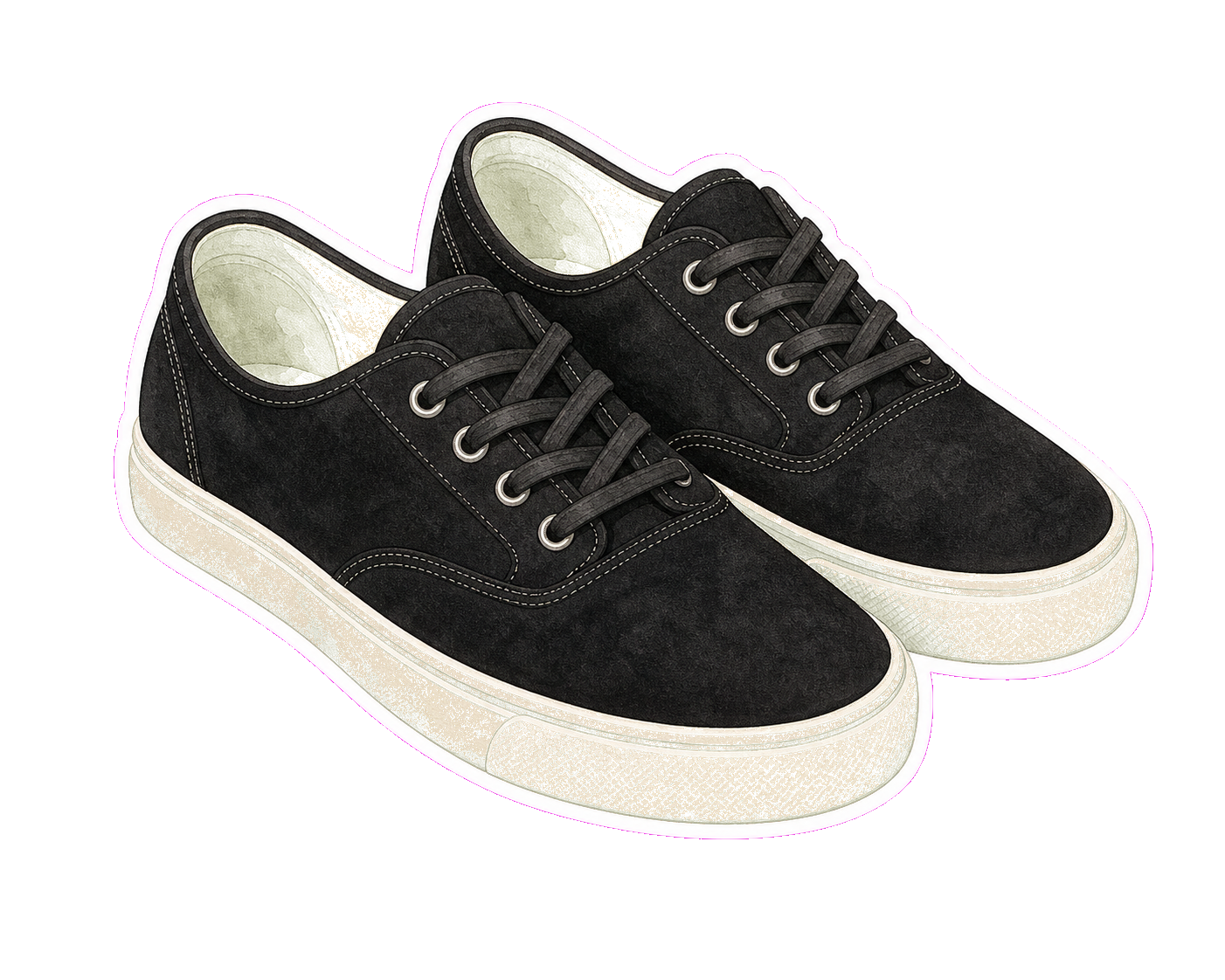 04Black canvas low-top sneakers
For the Sambódromo rehearsals, free and in the evening on Saturday 23, Sunday 24, Saturday 30 and Sunday 31 January: children's schools from about 5pm, the top schools from 7pm or 8pm. You stand, climb and dance in the grandstands for hours in a crowd that reached about 360,000 over the 2026 rehearsals, and closed canvas sneakers protect your feet. Black hides the dust of the avenue.
 05Rust puff-sleeve crop top, tie front
For a hot night in the grandstands. A cropped top with short puff sleeves and a front tie keeps air moving on a 23°C night in a packed stand, and rust looks right under the Sapucaí lights, which Liesa tests during the rehearsals.
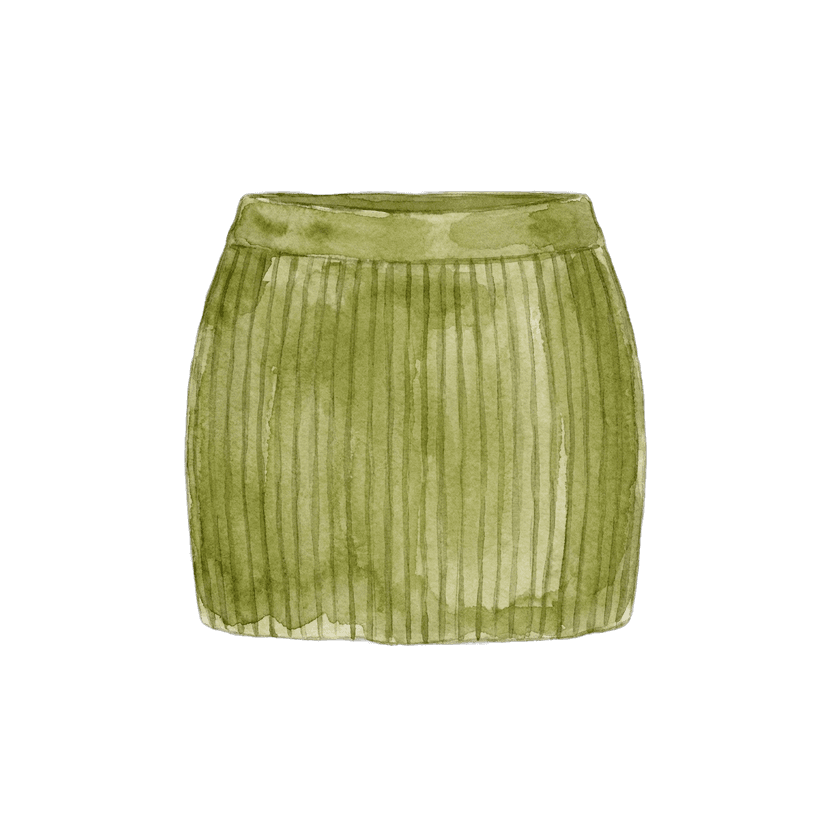 06Olive ribbed knit mini skirt
With the crop top at the Sambódromo, or over the bikini at a beach kiosk. A pull-on ribbed mini does not crease in a day bag and moves when you dance, and olive sits between the rust top and the hot-pink bikini.
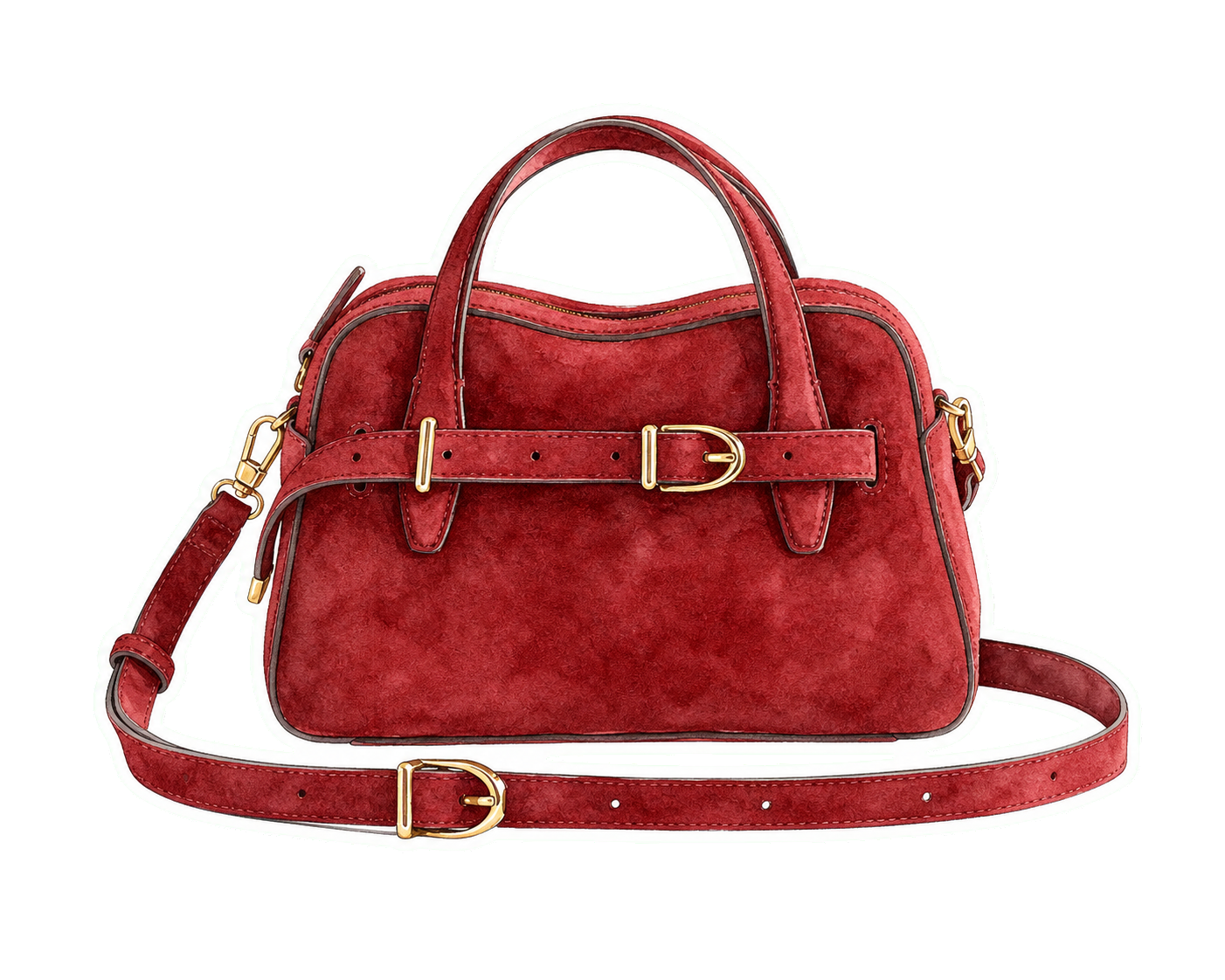 07Cabernet suede crossbody
Hands free in the Sambódromo crowd. A small structured crossbody stays shut and in front of you on the grandstand steps, and holds the folded shell and a phone. Cabernet suede goes with the rust top and the olive skirt.
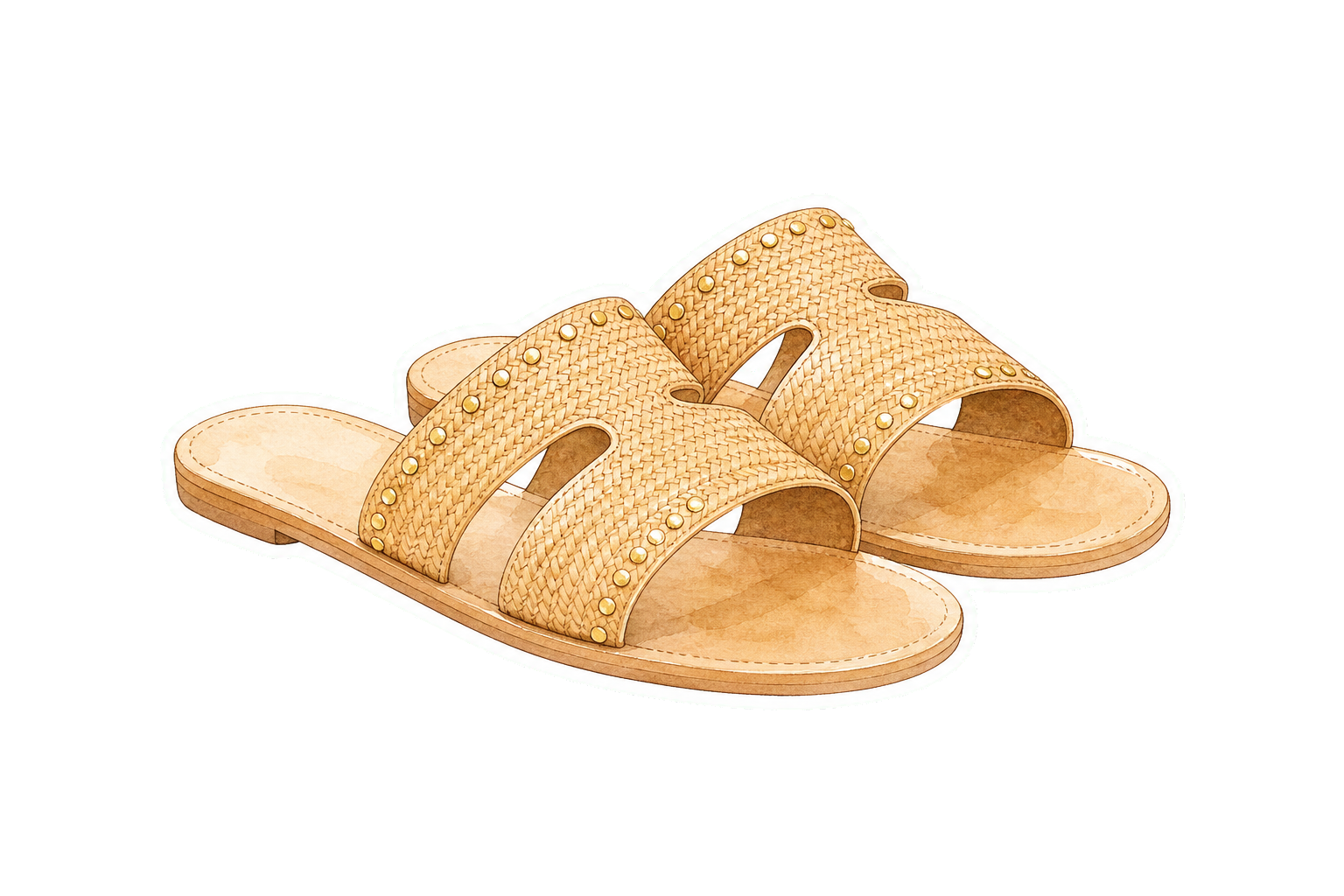 08Natural raffia H-strap slides
For the walk to the sand and back. A raffia H-strap slide slips off at the towel and back on for the kiosk, and woven raffia shrugs off sand and a splash. Leave them at the hotel for the Sambódromo, where closed shoes win.
Day to night
Hot-pink bikini · straw fedora · raffia slides. In the water at Ipanema before 9am, back in the shade before the hottest hours, and indoors while the afternoon storm passes.
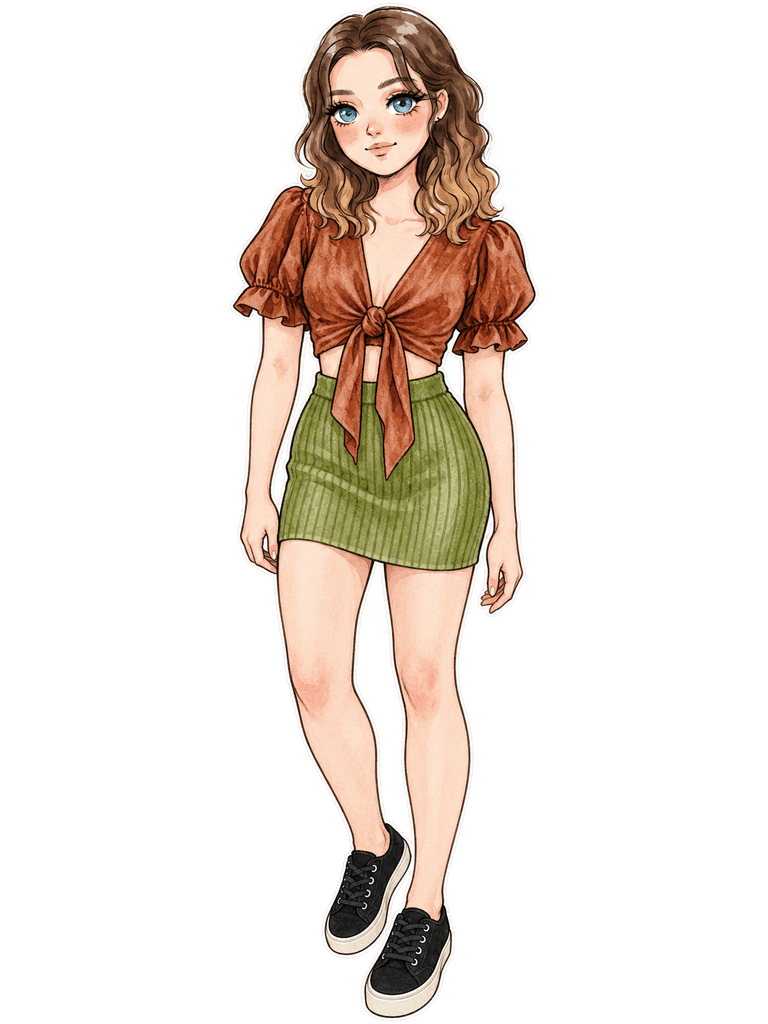
Rust puff-sleeve crop top · olive ribbed mini · black canvas sneakers · cabernet crossbody with the blue shell folded inside. The Sambódromo from about 7pm on a rehearsal night, with the top schools on the avenue until late.
A suggested look — rust puff-sleeve crop top, olive ribbed mini skirt, black canvas sneakers.
What to avoid
- The midday sun — the SBD advises shade from 9am to 3pm
- A plan that needs a dry afternoon — summer showers come mainly after lunch
- Sugarloaf in a building storm — the cable cars pause for lightning
- Glass or a speaker on the beach — barred by Decreto Rio 56.160
- Swimming at a red flag — the fire brigade's sign for high risk
Frequently asked questions
Hot, humid and stormy in the afternoon. INMET's hourly records at its Forte de Copacabana station, averaged over 2008–2025, give January an average high of 30.6°C and a low of 23.3°C, with 133mm of rain over about 10 days of 1mm or more. Alerta Rio counts January to March as summer, with short, intense showers mainly in the afternoon. The city grades hot days from NC1 to NC5 on the heat index; its bands run from high (36–40°C) to extreme (above 44°C), and those are heat-index values, not air temperatures. Sunset stays near 6:40pm all month.
A hot-pink bandeau bikini, a straw fedora, an ocean-blue packable shell, black canvas sneakers, a rust puff-sleeve crop top, an olive ribbed mini skirt, a cabernet crossbody and raffia H-strap slides. That covers an early swim, an afternoon storm and a night in the Sambódromo stands. The hat and the shell matter most: January brings the strongest heat and the afternoon showers together.
Yes, and they are free. Liesa, the league of Rio's top samba schools, holds its technical rehearsals for Carnaval 2027 on 23, 24, 30 and 31 January and says the events are "sempre gratuitos", always free, with light and sound tests on the Marquês de Sapucaí. Children's schools start from about 5pm and the top schools follow from 7pm or 8pm: Beija-Flor on the 23rd, Mocidade on the 24th, Portela on the 30th and Mangueira on the 31st, among others. About 360,000 people attended in 2026. The parades are on 7, 8 and 9 February, with seats in most special grandstand sectors at R$250 a night.
Late January, for the samba. The rehearsals fill the Sambódromo on the weekends of 23–24 and 30–31 January. Early January is the end of the holidays: New Year's Day is a Friday national holiday, and last season the Árvore de Natal da Lagoa stayed lit until 6 January. In between, Wednesday 20 January is the Dia de São Sebastião, the city's patron-saint holiday.
February is just as hot and drier. INMET's hourly records at Forte de Copacabana give February 30.5°C by day and 23.3°C at night, almost the same as January, with 96mm of rain over about 7 days against January's 133mm over about 10. February is Carnaval month: the Grupo Especial parades run on 7, 8 and 9 February 2027, and the top six schools return on the 13th.
Light clothes, with flip-flops underneath. Havaianas, a Brazilian brand, made its first pair, the Tradi, in 1962, inspired by the Japanese zori, and says it now sells 252 million pairs a year in more than 100 countries. For the rest, the health department's advice sets the terms: cool clothes that still protect, a cap or hat, and sunglasses.
Sources
- INMET — 2008–2025 climate normals, Forte de Copacabana (A652) stationINMET's official 1991–2020 normals for the city cover only its Alto da Boa Vista forest station, so these figures are averaged from INMET's hourly records at its automatic station at Forte de Copacabana, 17 complete Januaries. A rain day means at least 1mm. Recorded per month because the rest of this city's pages are sourced differently.
- INMET — Dados históricos anuais das estações automáticas (hourly records, station A652 Forte de Copacabana) — accessed 2026-09-27
- Sistema Alerta Rio, Prefeitura do Rio — Estações do ano (spring and summer rain) — accessed 2026-09-27
- Prefeitura do Rio — Níveis de calor NC1–NC5 and heat protocols (Decreto Rio 54.740) — accessed 2026-09-27
- Secretaria Municipal de Saúde do Rio — Protocolo de calor — accessed 2026-09-27
- Sociedade Brasileira de Dermatologia — Guide to sun protection (Dezembro Laranja 2022) — accessed 2026-09-27
- Liesa — Calendário dos ensaios técnicos, Rio Carnaval 2027 (9 September 2026) — accessed 2026-09-27
- Liesa — Rio Carnaval 2027 dates and tickets (10 August 2026) — accessed 2026-09-27
- Planalto — Lei nº 10.607/2002, feriados nacionais — accessed 2026-09-27
- Justiça Federal da 2ª Região — Feriados no Estado do Rio de Janeiro (Dia de São Sebastião) — accessed 2026-09-27
- Prefeitura do Rio / COR — Inauguração da Árvore de Natal da Lagoa 2025 — accessed 2026-09-27
- Parque Bondinho Pão de Açúcar — Perguntas frequentes (weather stoppages) — accessed 2026-09-27
- Prefeitura do Rio (SEOP) — Decreto Rio nº 56.160/2025, rules for the seafront — accessed 2026-09-27
- Corpo de Bombeiros Militar do Estado do Rio de Janeiro — Beach warning flags — accessed 2026-09-27
- Havaianas — História da marca (since 1962) — accessed 2026-09-27