What to Wear in Kyoto in October
Kyoto in October: 23°C / 73°F afternoons, 14°C / 57°F mornings, 8 rain days — a nine-degree basin swing and two festivals on one day.
- Olive wool blazer — one layer covers the 9°C / 16°F gap between dawn and 2 pm
- Charcoal crew knit — the Kurama Fire Festival runs after dark in the hills, colder than the city
- Khaki pleated trousers — knees covered for every inner hall, hem clear of wet gravel
- Lug-sole derbies — Ninenzaka's stone steps and temple gravel after 8 rain days
- Small zip crossbody — hands free for an IC card and shoes off at every genkan
- Dark crew socks — you stand on tatami in them ten times a day
- Book October for the maples — Kyoto's kōyō peaks in the last two weeks of November
- Heels on Higashiyama — Sannenzaka and Ninenzaka are stone steps, not pavement
- Bare legs at a 14°C / 57°F dawn temple, or shorts inside any hall
- White canvas on wet moss and gravel — 8 rain days and no drying window in a basin
Pack for the basin, not the calendar. Japan Meteorological Agency (JMA) normals give Kyoto's October a 23°C / 73°F afternoon over a 14°C / 57°F dawn, a swing of nine degrees that Tokyo and Osaka do not match, because the hills on three sides let the night drain out of the city. Rain is light at 8 days and 143mm, and the sun manages five hours a day, so this is not Tokyo's wet October. The month turns on 22 October: the Jidai Matsuri parade at noon, then the Kurama Fire Festival at six in a mountain village where the evening runs colder than the city. One blazer, one knit, one scarf, and shoes that grip stone.
Kyoto runs nine degrees between dawn and two o'clock in October. Osaka runs under eight, Tokyo under seven. The basin is the whole brief.
The capsule
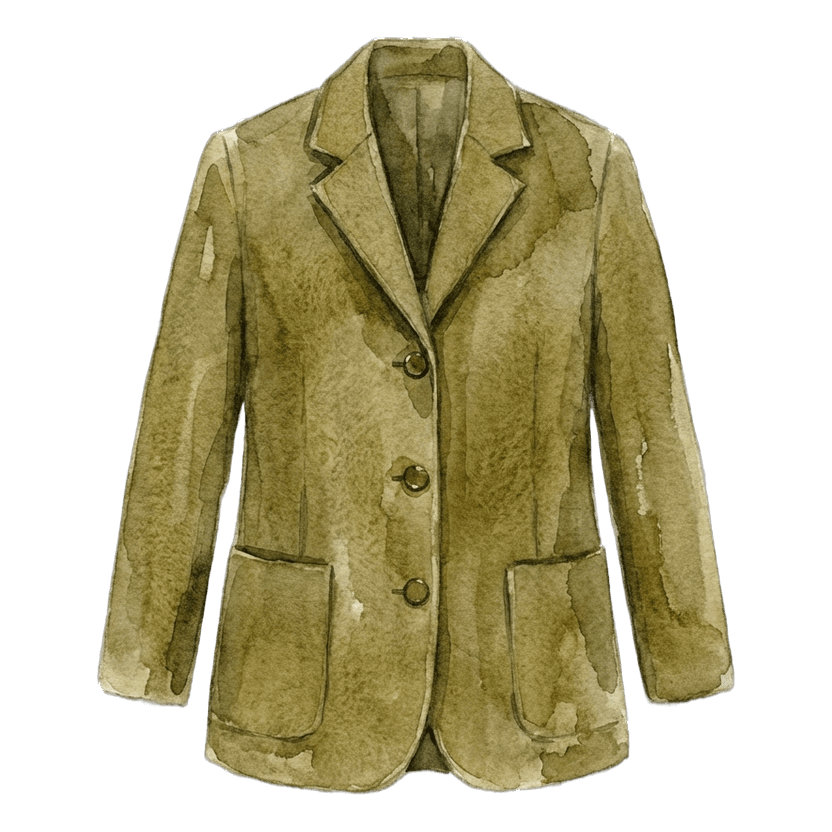 01Olive wool blazer, patch pockets
Start with the layer that goes on at dawn and comes off at Heian Shrine. A three-button wool blazer in olive is warm enough for 14°C / 57°F on the Philosopher's Path at eight and light enough to carry over an arm at 23°C / 73°F by two. Olive rather than navy because it sits inside the temple palette of moss, cedar and cypress instead of against it, and wool rather than cotton because the Kurama evening runs colder than the city.
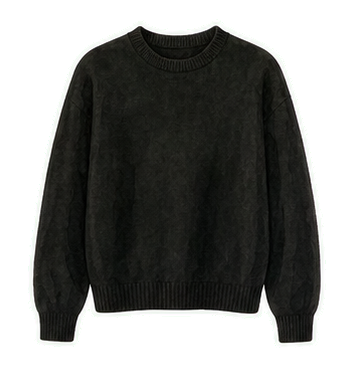 02Charcoal-black crew knit, fine gauge
Your evening base for the 22nd. Kurama sits thirty minutes north on the Eizan line and a few hundred metres higher than the city, and you stand in a village street for three hours while the torches go past; a charcoal crew under the blazer is what makes that bearable. Fine gauge, so it also works alone at a 2 pm lunch in Pontocho without reading as winter.
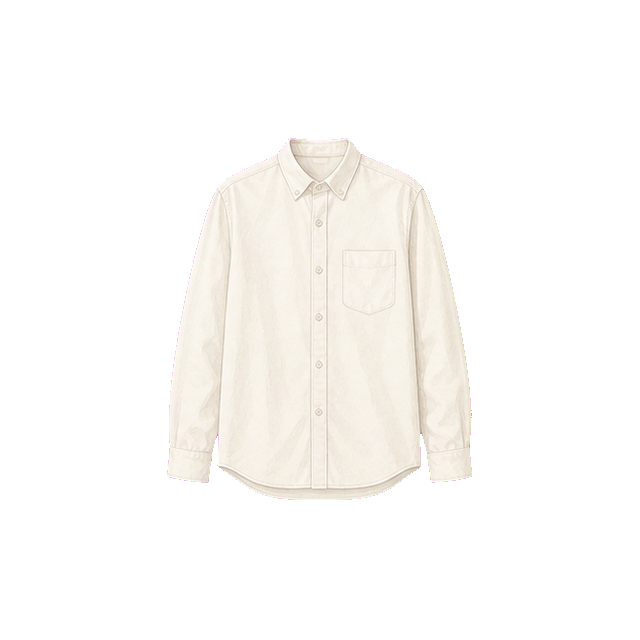 03Ivory cotton button-down
Buttoned to the collar under the knit at dawn, open over a tee by lunch. Ivory cotton is the one light note in a capsule built from olive, khaki and charcoal, and it is the piece that carries a 7 pm kaiseki table in Gion with the blazer. Cotton, not linen: October mornings at 14°C / 57°F make linen look like a mistake.
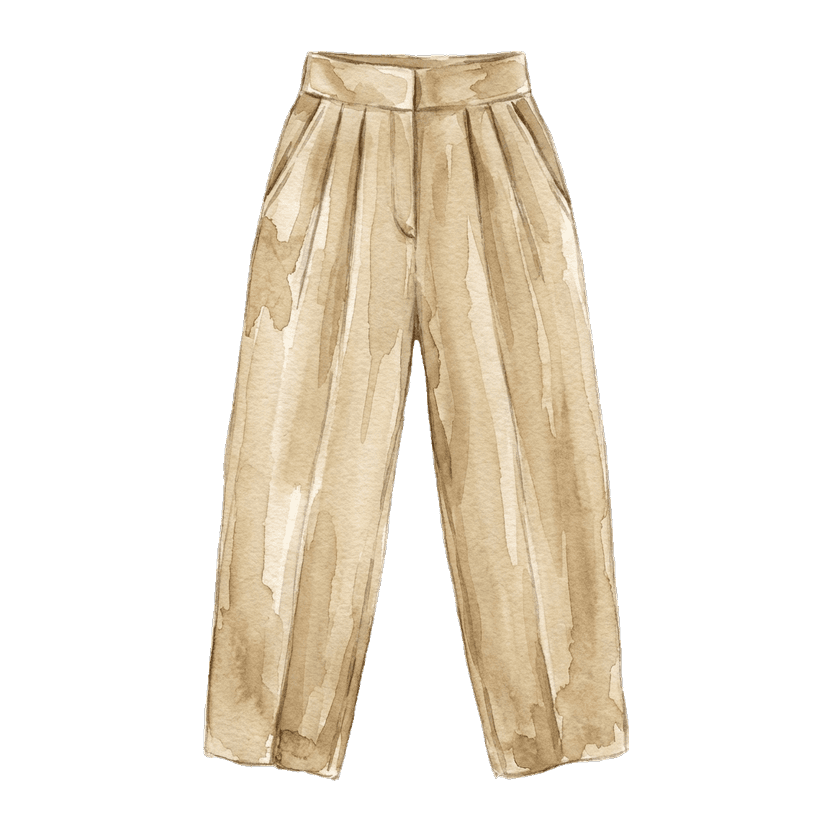 04Khaki pleated trousers, tapered, cropped at the ankle
Every inner hall in Kyoto expects covered knees, and every one of them expects you to step out of your shoes on a threshold, so trousers that sit a finger above the ankle keep the hem off wet gravel and off the floor. Pleated, tapered, high-waisted khaki does both, and walks 20,000 steps from Fushimi Inari to Kinkaku-ji without complaint.
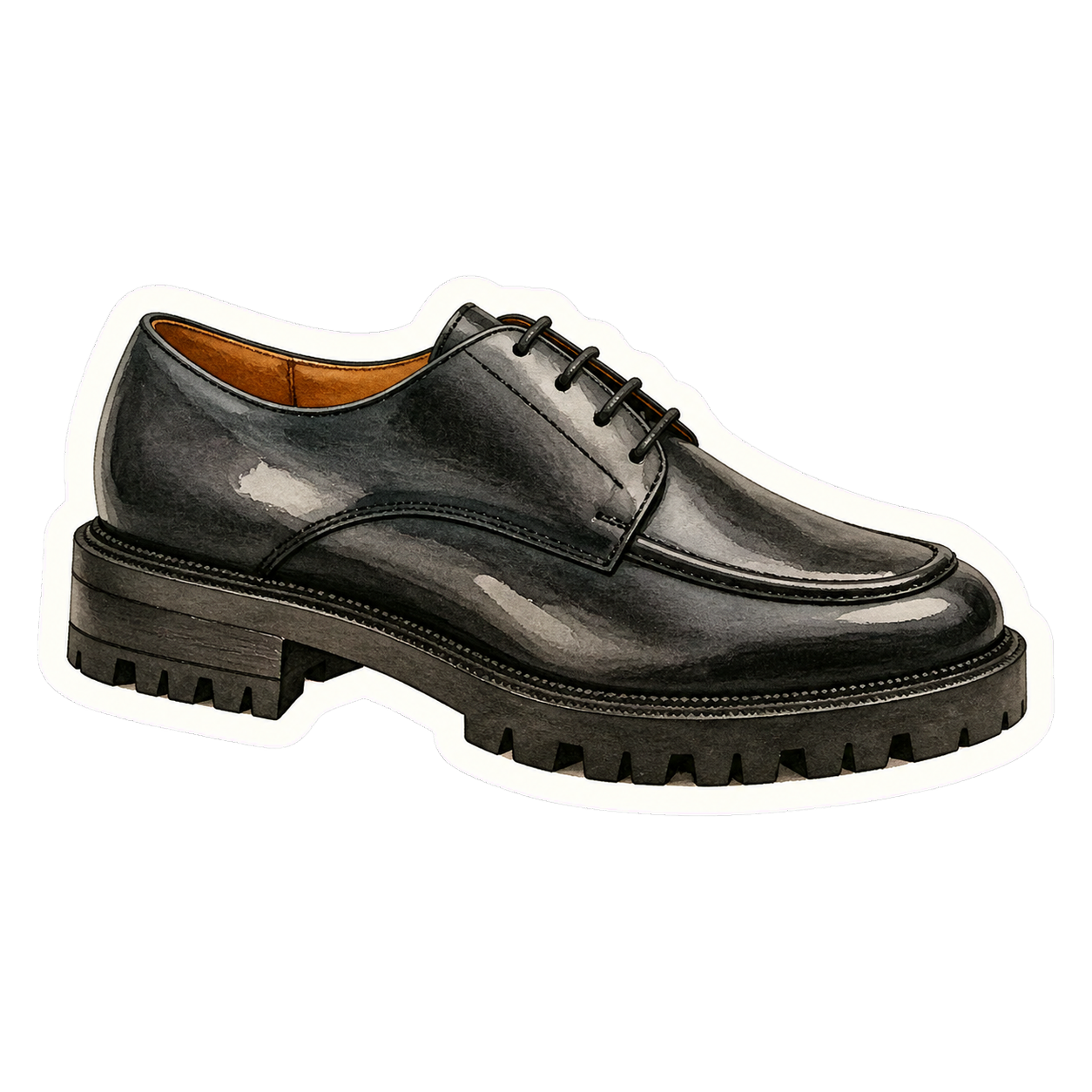 05Black leather derby, lug sole
The shoe question decides the day here. Sannenzaka and Ninenzaka are stone steps, Fushimi Inari is a mountain path, and moss on temple gravel stays slick after any of the 8 rain days. A black leather derby on a lug sole grips all three, laces off in one motion at a genkan, and does not care about the puddle at the Kiyomizu-dera gate that finishes white canvas.
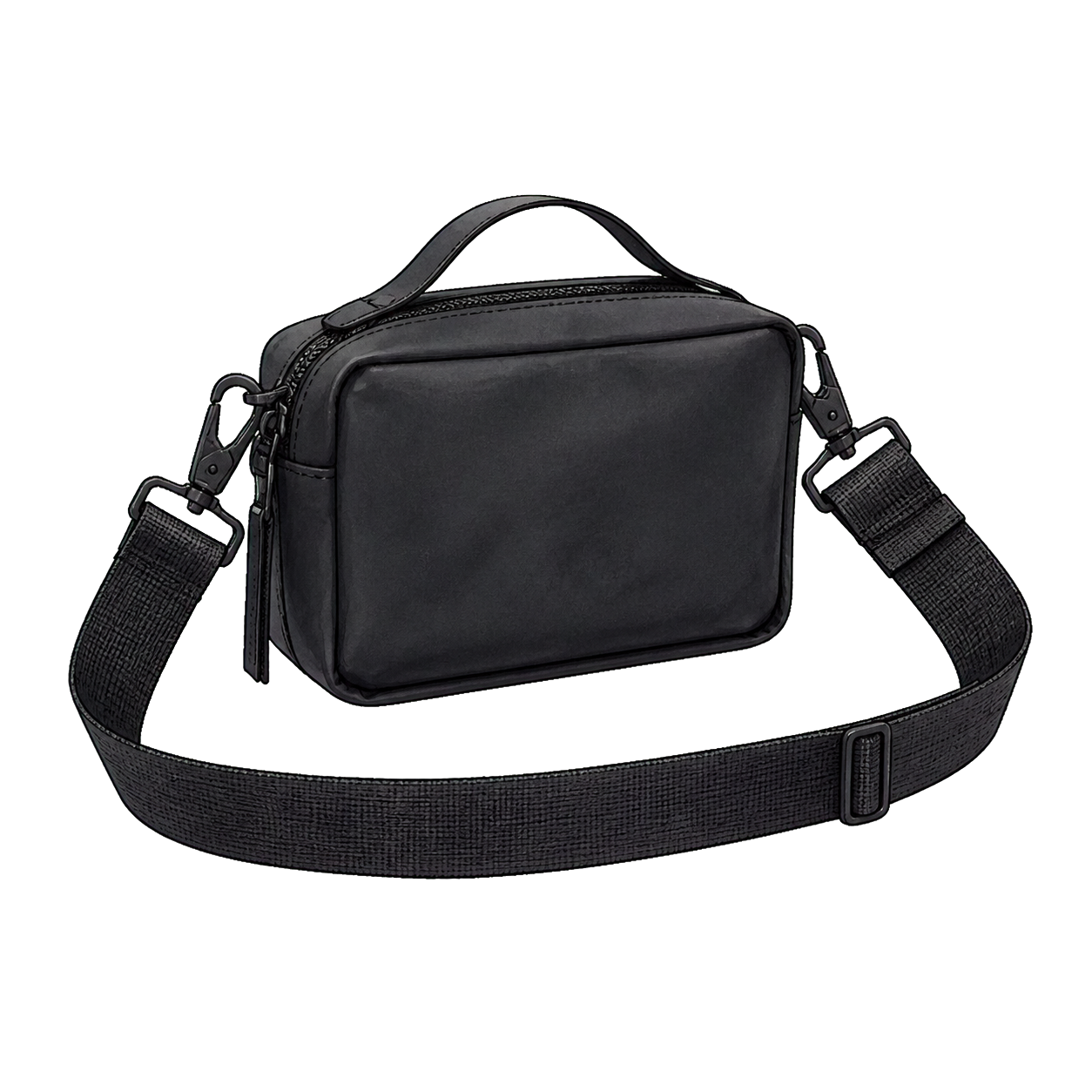 06Small black zip-top crossbody, water-resistant
Small, zip-top, worn across the body. Kyoto is a bus-and-walking city and the day is a sequence of IC cards, shoe removals and ¥500 entry fees; a bag you never take off is the only one that keeps up. Water-resistant because the afternoon shower here arrives with no warning, and black because it disappears against the blazer.
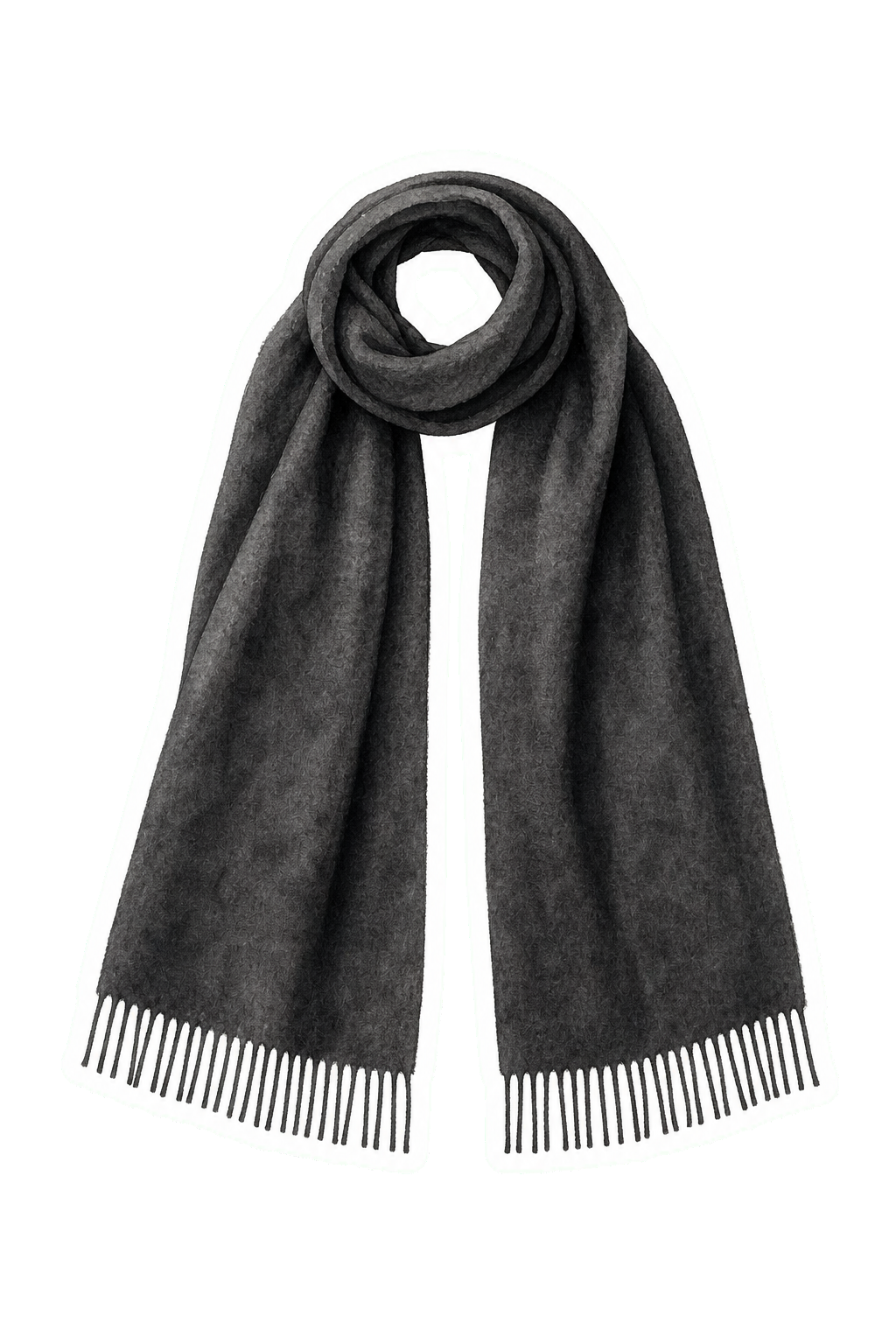 07Charcoal wool scarf
The piece you doubt in the morning and thank at Kurama. A charcoal wool scarf adds a coat's worth of warmth at the neck for the evening in the hills and rolls into the crossbody at noon. It also covers shoulders for a dawn temple visit, which saves packing a wrap you would use once.
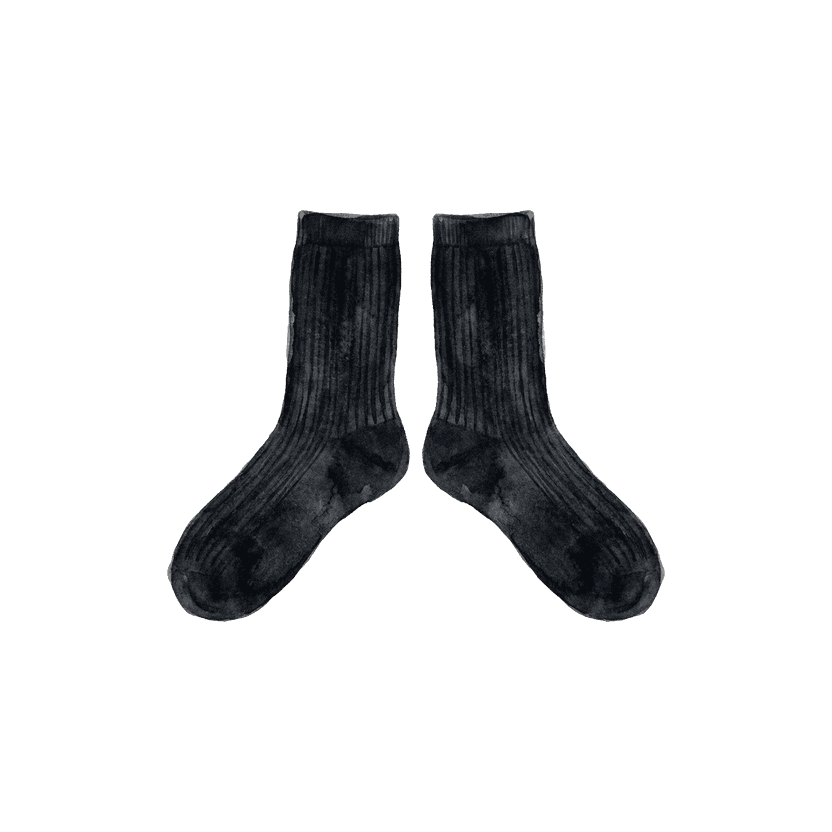 08Black ribbed crew socks, three pairs
Nobody puts socks in a capsule, and everyone in Kyoto regrets it. You remove your shoes at Sanjusangendo, at Nanzen-ji, at the ryokan door and at half the restaurants in Gion, and you are then standing on tatami in whatever you chose at seven in the morning. Black ribbed crew socks, no holes, no white sport socks under khaki.
Day to night
Olive blazer · ivory shirt · khaki pleated trousers · lug derbies · zip crossbody. Philosopher's Path at 8 am in 14°C / 57°F, Nanzen-ji, then a Nishiki Market lunch at one.
Same trousers and derbies · charcoal knit · blazer buttoned · charcoal scarf. Eizan line to Kurama by 5:30 pm on the 22nd, torches from six, back to Demachiyanagi for a 9 pm ramen counter.
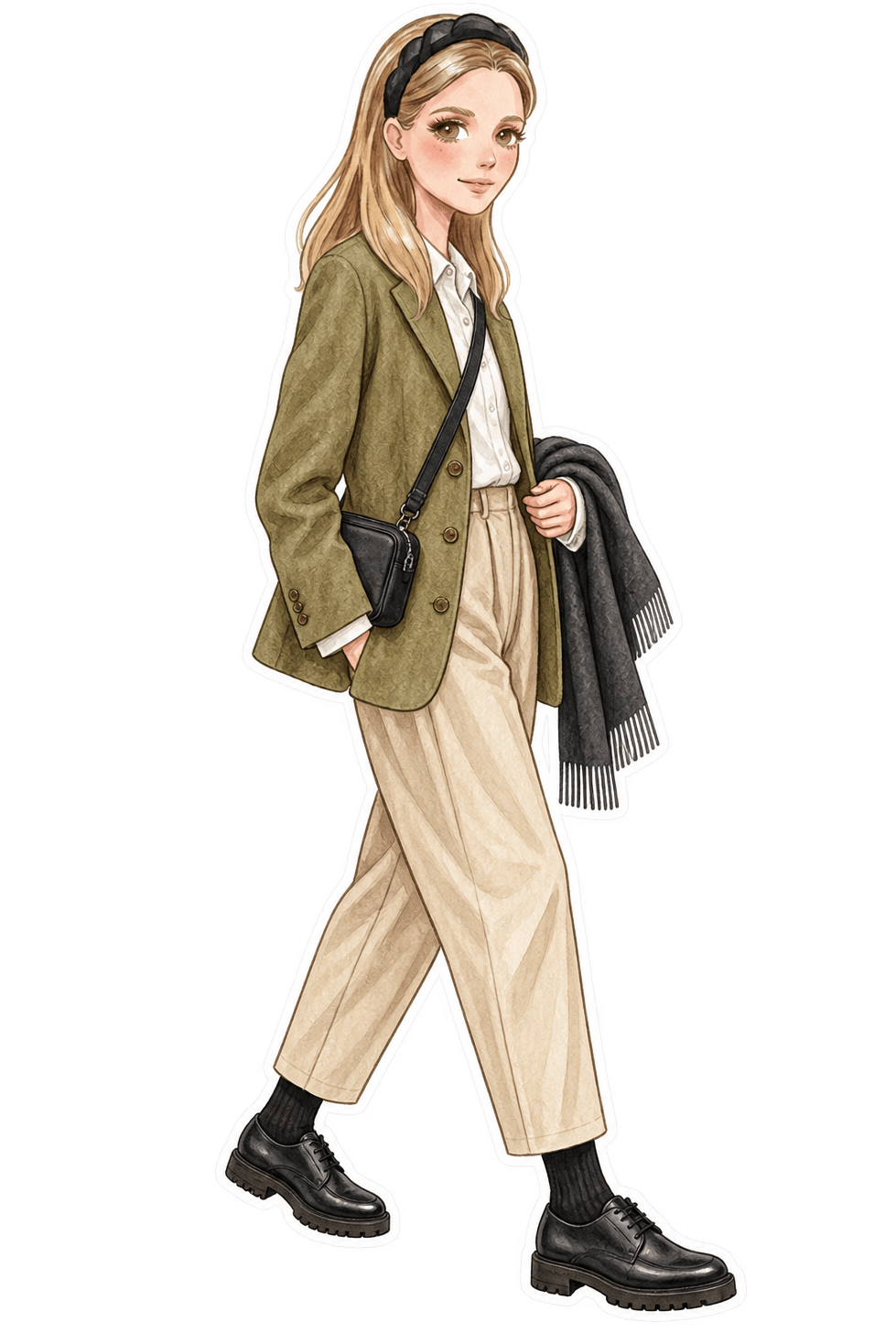
A suggested look — olive wool blazer, ivory button-down shirt, khaki pleated trousers, black ribbed socks, black lug-sole derbies.
What to avoid
- Booking October for the maples — kōyō peaks in the last two weeks of November
- Heels or smooth soles — Ninenzaka and Sannenzaka are stone steps, slick after rain
- Bare legs or shorts — 14°C / 57°F at dawn and covered knees in every hall
- White canvas shoes — wet moss at the first gate, five hours of sun to dry
- Treating 22 October as an ordinary day — street closures at noon, full trains to Kurama by four
Frequently asked questions
Per Japan Meteorological Agency normals for 1991–2020 at the Kyoto station: the average daily maximum is 23.4°C, the average minimum 14.4°C and the monthly mean 18.4°C. Rainfall averages 143mm across about 8 days of 1mm or more, with 156 hours of sunshine, roughly five hours a day, and humidity near 68%. The nine-degree gap between afternoon and dawn is the widest of Japan's three major cities in October and comes from the basin: Osaka's gap is under eight degrees and Tokyo's under seven.
No. Kyoto's autumn colour peaks in the last two weeks of November and holds into early December at the city temples; October is green. The exceptions are the high valleys north of the city, Kurama and Takao, where the first maples turn in the final days of the month. If the leaves are the reason for the trip, book late November. If you are in Kyoto in October you get the festivals, five hours of sun a day, and temples that are walkable rather than queued.
An olive wool blazer, a charcoal fine-gauge crew knit, an ivory cotton button-down, khaki pleated trousers cropped above the ankle, black lug-sole derbies, a small water-resistant zip crossbody, a charcoal wool scarf, and three pairs of dark crew socks for every floor you will stand on without shoes. Add a tee for the 23°C / 73°F afternoons. Leave the umbrella at home and buy a ¥700 compact at any convenience store if one of the 8 rain days lands on you.
Dress for standing, twice. The Jidai Matsuri parade leaves the Kyoto Imperial Palace around noon and reaches Heian Shrine about 2:30 pm, so you stand on a sunlit route at 23°C / 73°F in a shirt and an open blazer. The Kurama Fire Festival begins about 6 pm in Kurama, thirty minutes north on the Eizan line and noticeably colder than the city; add the charcoal knit and the scarf, button the blazer, and wear the lug derbies, because the village street is stone, crowded and dark. Go up early: the trains from Demachiyanagi fill from mid-afternoon.
September is still summer wearing an autumn name. JMA puts it at 29.2°C by day and 20.7°C at night with 178mm of rain across about 10 days, against October's 23.4°C and 14.4°C with 143mm across 8. September needs nothing over a shirt and a plan for typhoon rain; October needs a knit at dawn, a blazer by day and a scarf for the Kurama evening, and the rain shrinks to something a compact umbrella handles.
Quieter than Osaka and more covered than Tokyo. The October street in Kyoto is a knit or a collared shirt under a light wool jacket, a tapered trouser above the ankle, a flat leather shoe that comes off without a fight, and a small bag. The palette follows the temples: olive, moss, charcoal, ivory and dark brown, with almost no bright colour and no logos. Legs are covered, shoulders are covered, and the shoe is the tell, because locals wear something they can step out of at a genkan ten times a day.
Sources
- Japan Meteorological Agency — 1991–2020 climate normals, Kyoto station