What to Wear with Wedding-guest outfits (2026 trends)
Carolyn Bessette-Kennedy 1996 + The Knot 2026 — what to wear to a 2026 wedding without competing with the bride.
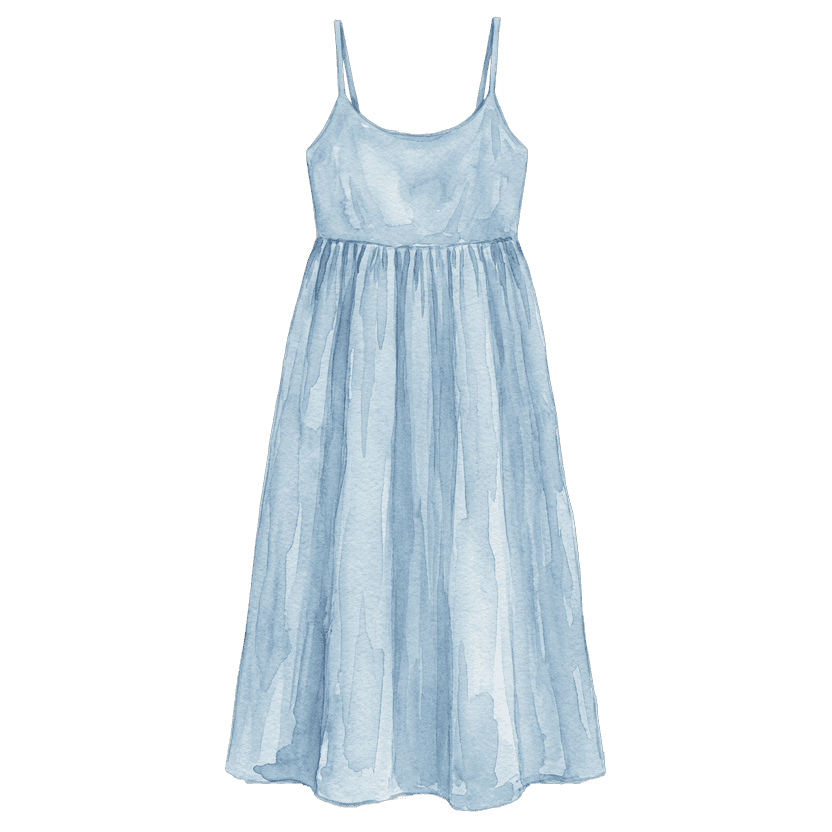
Wedding-guest dressing in 2026 follows The Knot's etiquette + Carolyn Bessette-Kennedy's 1996 colour palette — clearly distinct from bridal, season-matched, dress-code-anchored.
- Match the dress code (cocktail = midi; black-tie = full-length; garden-casual = sundress)
- Choose colours clearly distinct from bridal cream/white/champagne — powder blue, butter yellow, dusty rose, burgundy
- Spring/summer weddings: pastels and warm neutrals; fall/winter: jewel tones and burgundy
- Always carry a small bag (clutch, top-handle mini, or bucket) — never a tote
- When in doubt, go one register dressier than you think the dress code requires
- Don't wear white, ivory, cream, or champagne — Emily Post and The Knot are explicit
- Don't wear black to spring/summer weddings unless explicitly bride-approved
- Don't wear shorter than mid-thigh — even garden weddings expect modesty
- Don't wear flashy logos or brand-loud accessories — the bride is the focal point
Wedding-guest etiquette runs from Emily Post (1922 first edition) through The Knot's 2026 trend report. The two foundational rules — "do not wear white" and "match the dress code" — have run since Edith Wharton's *The Age of Innocence* (1920) where white-at-a-wedding was a documented social violation.
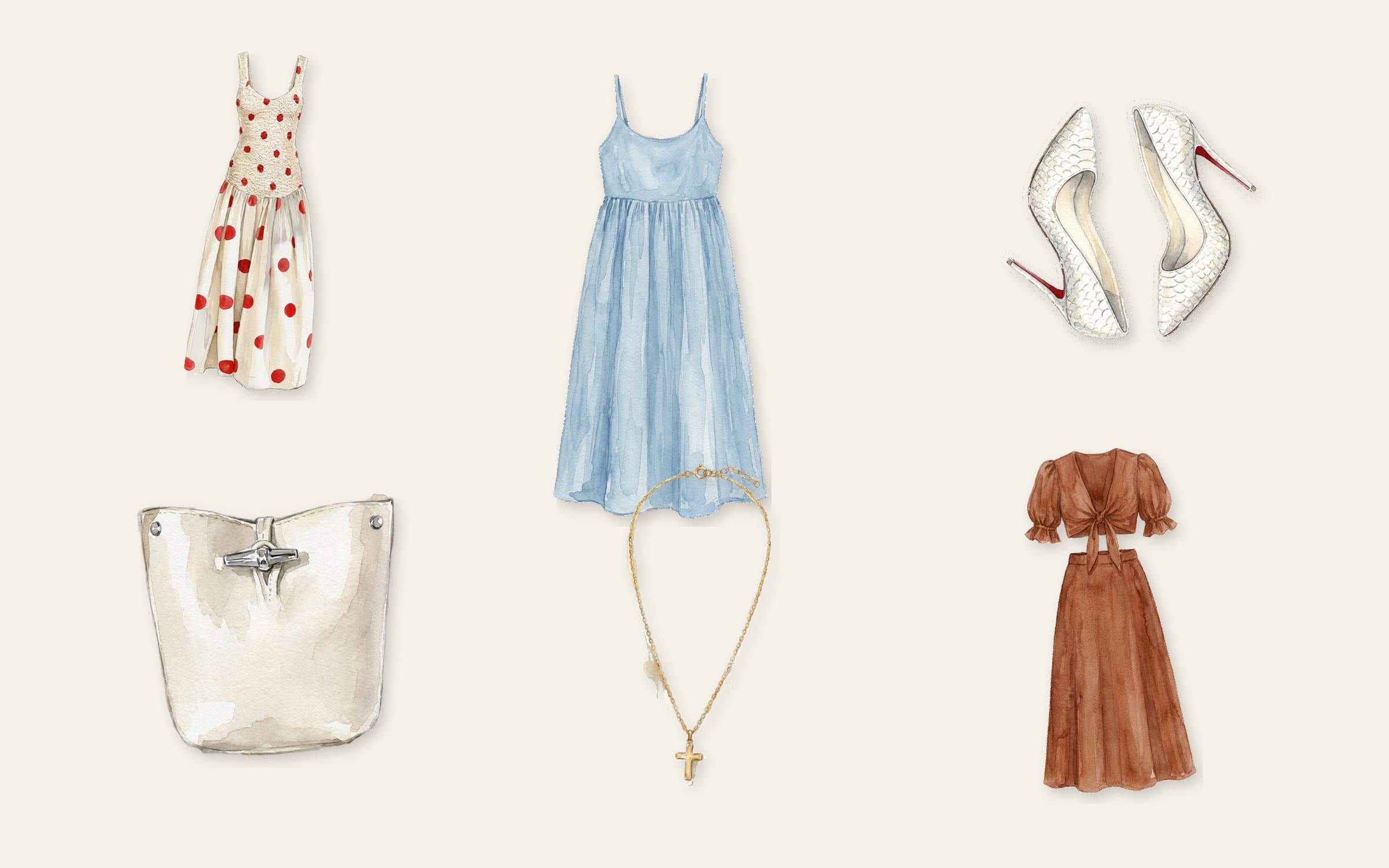
The 2026 guest-colour palette comes from two parallel sources. First, Carolyn Bessette-Kennedy's 1996 wedding-guest wardrobe, photographed at multiple Hamptons benefits and published in Vogue's Carolyn Bessette retrospective (1999): butter silk slip, powder blue silk midi, dusty pink linen. Second, The Knot's 2026 wedding-trend report (published December 2025) which named butter yellow, powder blue, and sage green as breakout guest colours for spring/summer 2026 — explicitly because each reads clearly distinct from bridal cream or white in photographs.
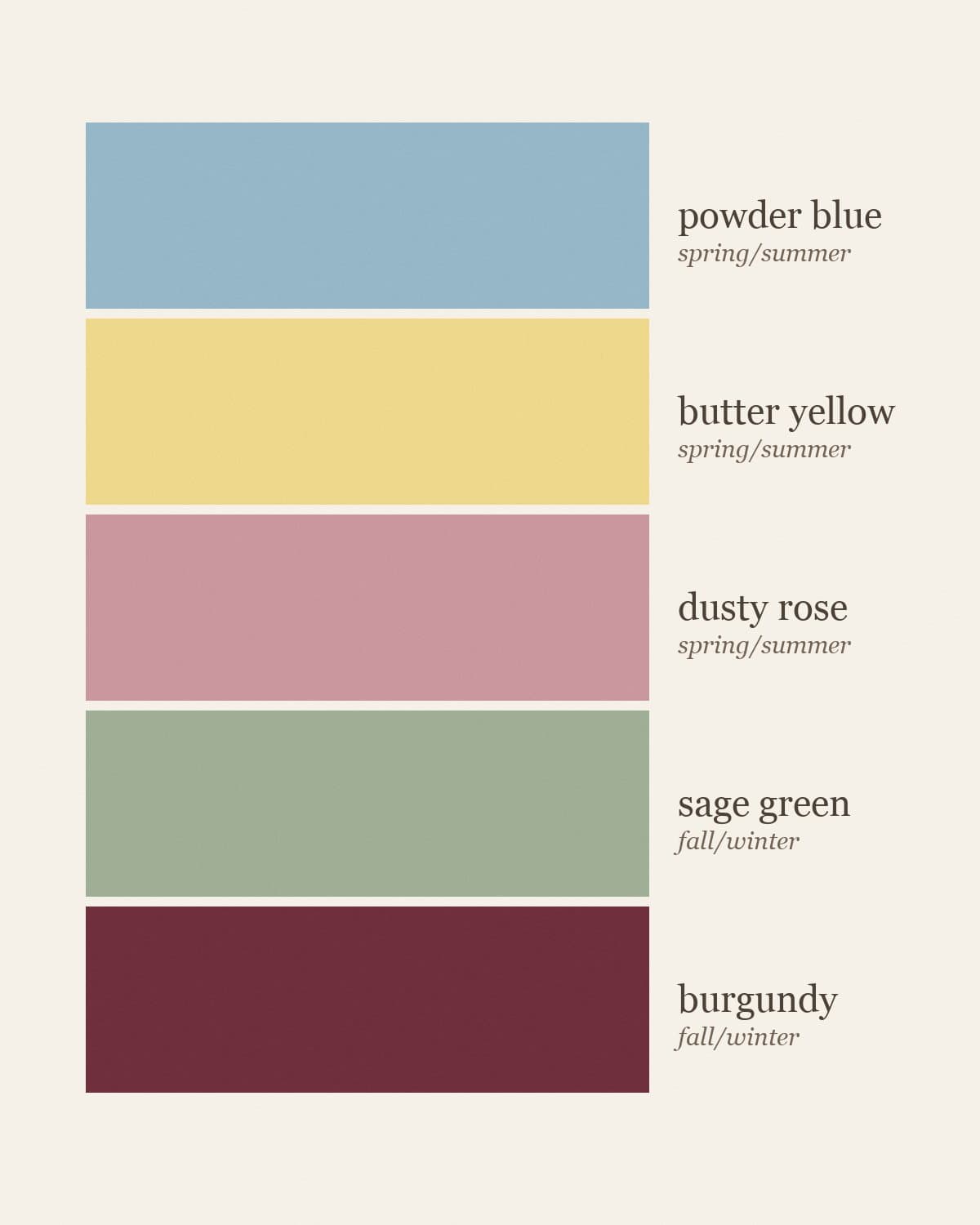
The 2026 register is season-specific and clearly-not-bridal. Spring/summer guest palettes lean pastel and warm-neutral; fall/winter palettes lean jewel-tone and burgundy. The single styling rule from The Knot's 2026 guide: "the bride is the focal point — every guest decision should subtract attention from yourself, not add it."
The bride is the focal point — every guest decision should subtract attention from yourself, not add it.— The Knot's 2026 wedding-guest guide
Wear it with
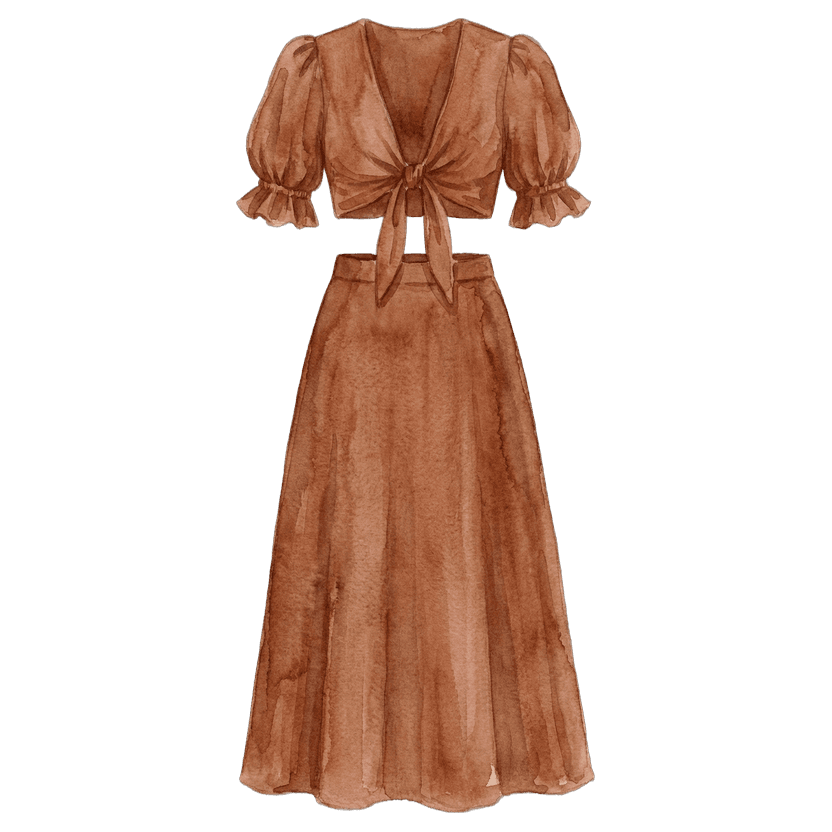 01Rust brown cutout midi dress — the autumn alternative
Rust brown is the canonical fall wedding-guest colour, listed in The Knot's 2026 fall-palette guide alongside burgundy and deep emerald. The cutout detail keeps the dress reading current rather than 1990s; the warm rust pulls against autumn foliage in outdoor wedding photographs. Reformation, Doen, and Mara Hoffman all ship rust midi versions in the £180-£350 band. Skip rust at a spring or summer wedding — the saturation reads off-season against pastels.
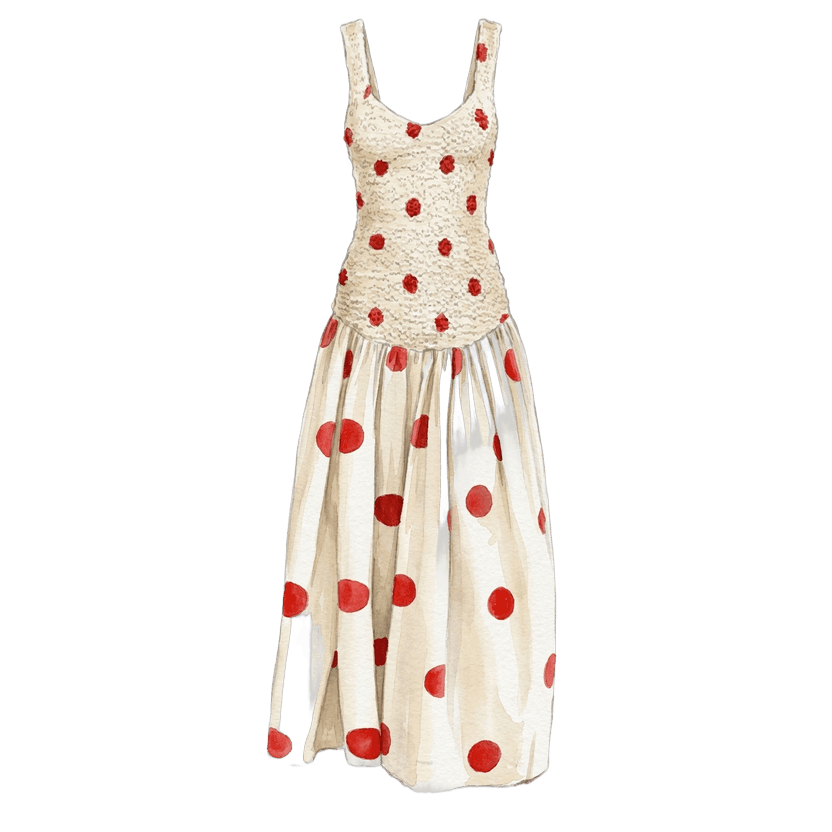 02Cream and red polka-dot smocked maxi — the printed alternative
A cream-with-red-pattern dress is wedding-appropriate when the cream base is broken by a saturated print — the polka-dot pattern signals "not solid bridal cream" in any photograph. The Knot's 2025 etiquette guide explicitly allows printed cream pieces where solid cream is restricted. Skip a solid cream silk maxi at a wedding; the photograph register reads too close to bridal regardless of styling. Reformation, Doen, and Sandy Liang all ship printed-cream wedding-appropriate options.
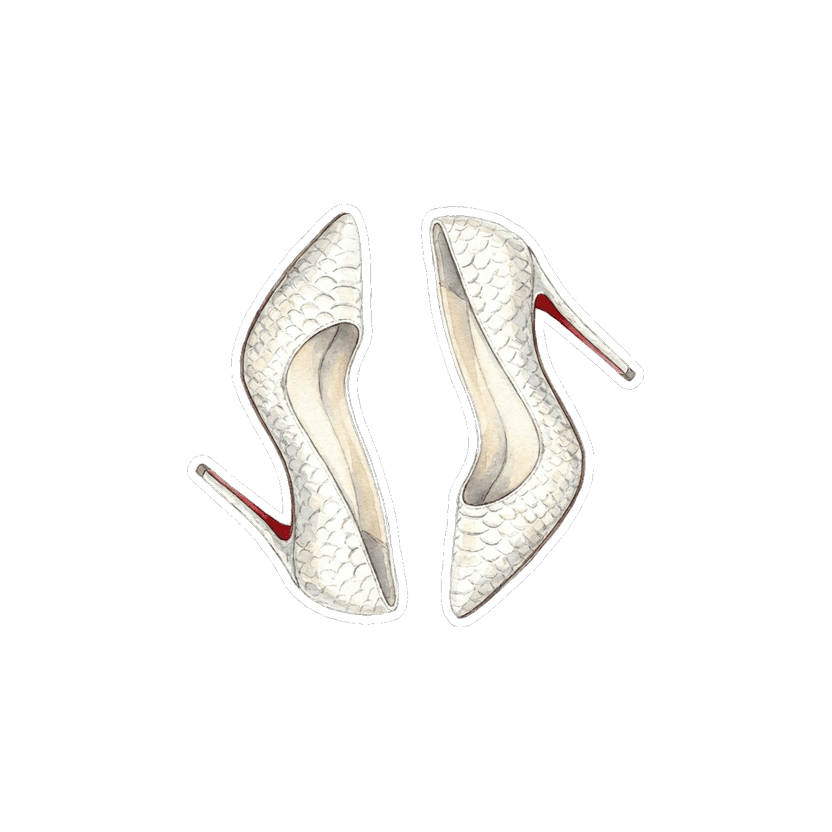 03White pointed-toe stiletto pumps
White pumps are the wedding-guest exception to the no-white rule — shoes don't read bridal in any photograph register, and a pointed-toe stiletto in white is the canonical pump for cocktail and black-tie weddings. Manolo Blahnik's BB pump, Jimmy Choo's Romy, and Christian Louboutin's So Kate are the heritage benchmarks; Aquazzura and By Far ship contemporary versions. Skip white sneakers or white flats at a wedding (too casual); skip white platforms (too costume).
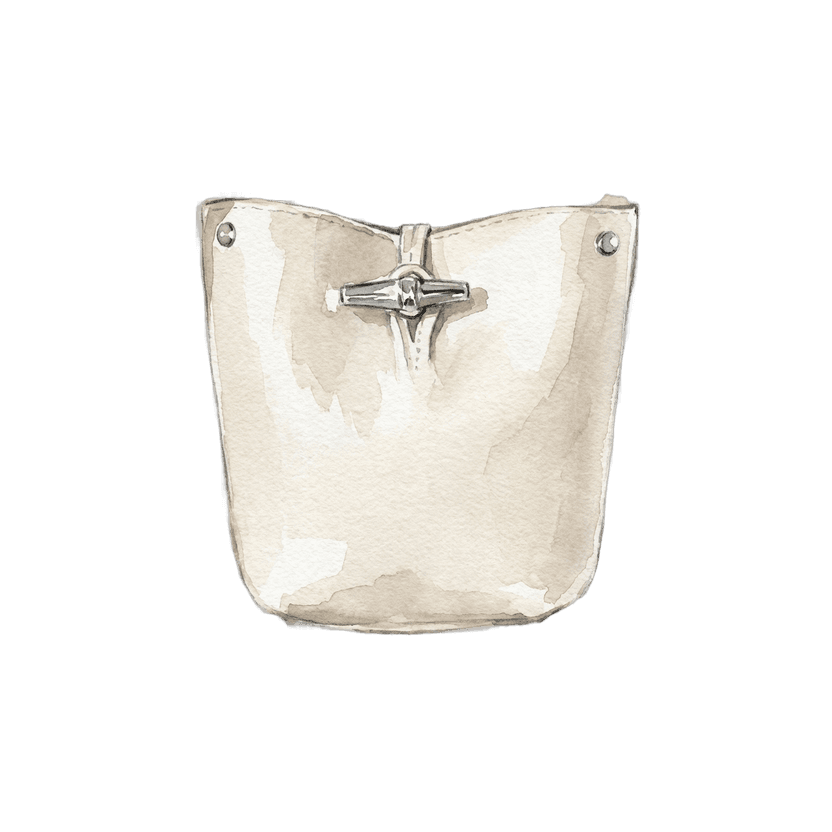 04Cream leather bucket bag — the small carry
Wedding guests carry small. A bucket bag in cream leather is small enough to read appropriate, structured enough to read polished, and warm-tonal enough to pair with most 2026 guest colours. Mansur Gavriel's bucket (the 2014 cult piece) is the heritage reference; The Row, Polène, and Hereu ship contemporary versions. Skip a tote (too casual), a clutch with no strap (impractical), or a logo-loud cross-body. The Knot's 2026 guide specifies "small bag, no logos" for any wedding above garden-casual.
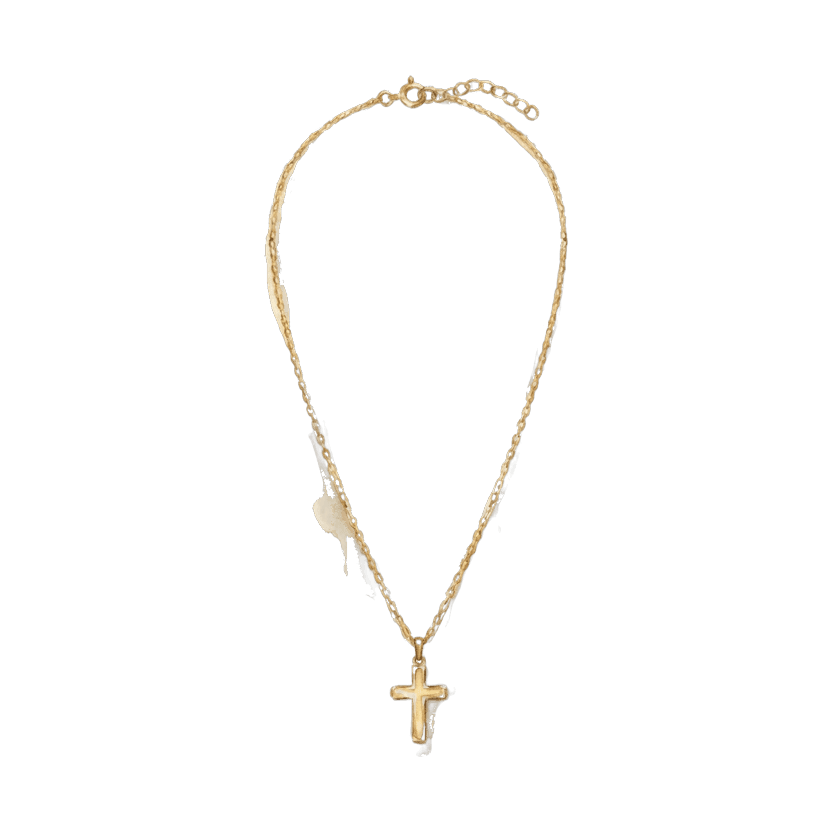 05Delicate gold pendant necklace
A delicate gold pendant is the canonical wedding-guest jewellery — quiet, polished, doesn't compete with the bride's jewellery in photographs. Tiffany & Co.'s Elsa Peretti pendant (1974, still in production) is the heritage reference; Mejuri, Missoma, and AUrate ship contemporary minimalist versions. Skip statement earrings, layered chunky chains, or anything with diamonds bigger than 1ct unless explicitly black-tie. The 2026 guest signal is "polished but not the focal point."
A suggested look — Powder blue linen midi dress, Cream knit open-front cardigan, Black leather horsebit loafers, Cobalt blue oval cameo drop earrings with teardrop dangle.

Dressing rules
Wedding-guest dress codes follow a strict hierarchy in 2026. From most casual to most formal: garden-casual (sundress, sandals, no jacket required), smart-casual (midi dress, kitten heels, structured bag), cocktail (midi or knee-length dress, heels, small bag), black-tie (floor-length gown OR formal midi with embellishment, dress shoes), white-tie (full-length gown only, gloves optional, formal jewellery). The Knot's 2026 guide is explicit on each tier and the consequences of mismatch.
The single colour rule: clearly distinguishable from bridal. Solid white, ivory, cream, and champagne are categorically excluded; any printed dress with a non-white dominant colour is allowed if the print breaks the solid cream register. Vogue's Sarah Mower wrote in her March 2025 column that the 2026 trend toward butter yellow and powder blue had "resolved the bridal-anxiety problem for an entire generation of guests."
For seasonal pairing: spring/summer weddings call for pastels and warm-neutrals (powder blue, butter yellow, dusty rose, sage green); fall/winter weddings call for jewel-tones and burgundy. Black at a spring wedding is conditionally allowed (NYC and London editorial usage permits it; traditional Southern US weddings still consider it off-code) but never the default choice.
What to avoid
- Solid white, ivory, cream, champagne — Emily Post + The Knot are explicit, do not test the rule
- Black at spring/summer weddings unless explicitly bride-approved
- Dresses shorter than mid-thigh — even garden-casual weddings expect modesty
- Logo-heavy bags or branded accessories — competes with the bride's photograph
- Statement jewellery (chunky chains, big stones) outside of black-tie register
Frequently asked questions
Spring/summer: powder blue, butter yellow, dusty rose, sage green, soft coral. Fall/winter: burgundy, deep emerald, navy, plum, rust brown. The two non-negotiables: clearly distinct from bridal (no white, ivory, cream, or champagne), and season-appropriate (no jewel tones at spring weddings, no pastels at fall weddings). The Knot's 2026 trend report named butter yellow and powder blue as the breakout spring/summer guest colours; Vogue's March 2025 column reinforced both as "the colours that resolve the bridal-anxiety problem."
Yes, conditionally. Black at fall and winter weddings, evening weddings, and most NYC/London editorial-coded weddings is appropriate. Black at spring and summer weddings, daytime weddings, and traditional Southern US weddings is conditionally allowed but reads off-code by default. The Knot's 2026 guide treats black silk evening pieces (slip dresses, fitted midis, gowns) as "acceptable in cocktail and black-tie register, regardless of season." Casual black cotton sundresses at a daytime spring wedding read funeral-coded and should be avoided.
Three reliable categories. (1) Heel: pointed-toe pump (cocktail through black-tie), strappy sandal (cocktail summer), kitten heel (smart-casual). Avoid sneakers, flats with no ankle definition, and platform heels. (2) Bag: small clutch, mini top-handle, or small bucket bag — no totes, no logos. (3) Jewellery: a single delicate piece (gold pendant, single pearl earring, thin chain bracelet) — avoid statement jewellery unless black-tie. The Knot's 2026 guide calls accessory restraint "the difference between a polished guest and an attention-seeking one."
A pastel midi or maxi dress in powder blue, butter yellow, dusty rose, or sage green; pointed-toe pumps or strappy sandals in white, nude, or metallic; a small clutch or bucket bag in cream leather; a delicate gold pendant. The Carolyn Bessette-Kennedy 1996 silk slip in butter yellow is the heritage reference — replicate the shape (bias-cut midi or maxi, thin straps, soft draping) in any 2026 pastel. Avoid: black, white, jewel tones, mini lengths, statement jewellery, and logo-heavy bags. The Knot's 2026 guide is explicit on each restriction.
Yes — and 2026 editorial wedding-guest dressing is built around it. The Knot's 2026 guide notes that 78% of guests re-wear at least one wedding outfit per year; the trend toward investment-piece pastels (silk midi, linen maxi) over single-use polyester is explicit in the guide's Q3 2025 update. Practical guidance: invest in a midi-length pastel silk or linen dress in your best colour (whichever pastel reads cleanest on your skin tone), pair with the same shoes/bag/jewellery rotation across multiple weddings, and add a different small accent (different earring, different cardigan) to vary the photograph register. Skip ultra-trendy pieces that lock to a single season; skip anything with bold logo branding.