What to Wear in London in December
London in December: 8.8°C / 48°F afternoons, 3.1°C / 38°F nights, and under two hours of sun a day — sunset before four.
- A waterproof wool-blend coat — warm alone is not enough at 11 rain days
- Layers you keep on indoors; pubs and galleries run cool
- Boots with grip for wet pavement you will cross in the dark
- A scarf, which does more than a heavier coat for the same bulk
- Plan daylight sights before 15:00 — the light goes fast after that
- Something for a Christmas market: standing still outdoors for hours
- A warm coat that is not waterproof — damp is the defining condition
- Assuming afternoon light — sunset is before four all month
- Suede or unsealed leather, with 11 rain days and no drying window
- Overpacking for cold — 8.8°C / 48°F is mild; the dark is the story
Under two hours of sunshine a day is the number that should shape the case. The Met Office's Heathrow averages give December a high of 8.8°C / 48°F and a low of 3.1°C / 38°F, with 57mm of rain across 11 days, so this is not a genuinely cold month by northern European standards — Berlin and Vienna are both colder. What it is, is dark: sunset falls before four for the whole month and daylight runs under eight hours, most of it overcast. Add persistent damp that never quite dries and you get a wardrobe problem about water and darkness rather than temperature. Waterproof beats warm, and anything reflective earns its place after three in the afternoon.
Two hours of sun a day, and the light gone before four. London in December is not a cold city — it is a dark, wet one that stays open late anyway.
The capsule
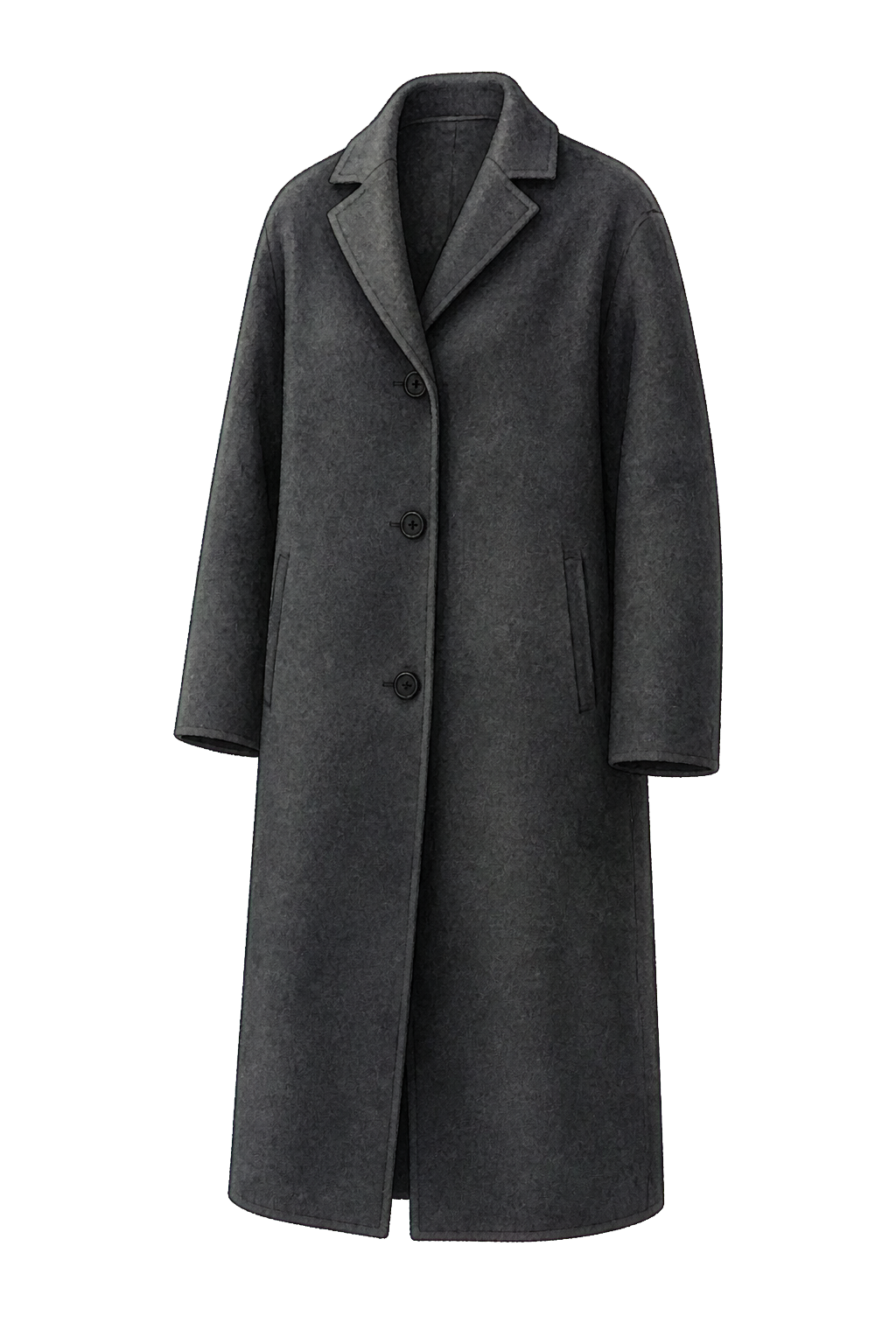 01Waterproof wool-blend coat, knee length
Warm alone is not the specification. Eleven rain days against two hours of daily sun means a coat that soaks through in the morning is still damp the next morning, and pure wool holds water in exactly that way. A wool-blend with a treated face or a bonded membrane keeps the warmth and sheds the drizzle, and knee length covers you standing at a Christmas market rather than only walking between them.
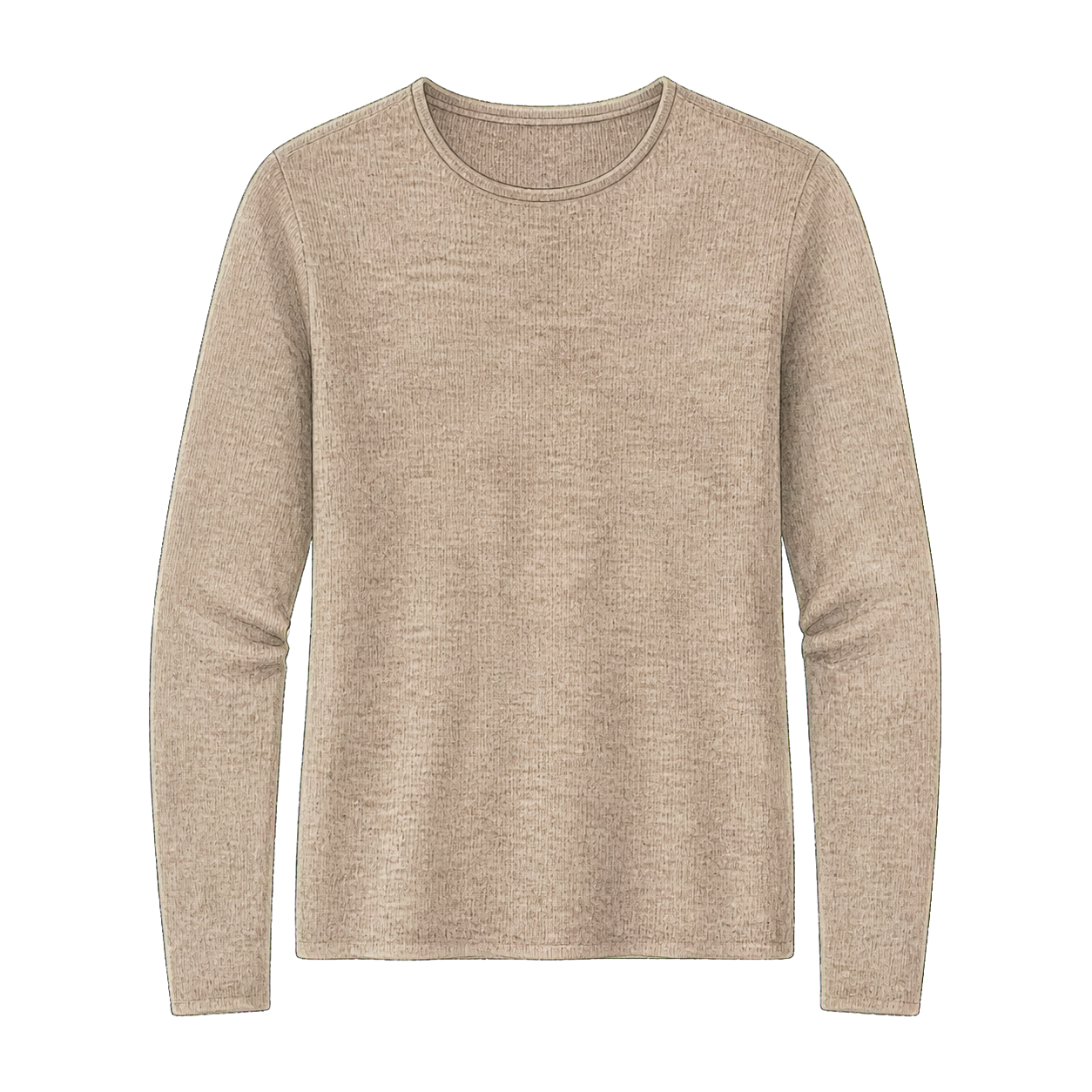 02Merino base layer
Does more per millimetre than anything else here, and December London needs that because the coat is already doing the visible work. Merino under a knit means you can stand outdoors at a Southbank market for an hour at 3.1°C / 38°F, then strip cleanly in a pub that has its heating up. Synthetic works too; cotton does not, because damp is constant and cotton keeps it.
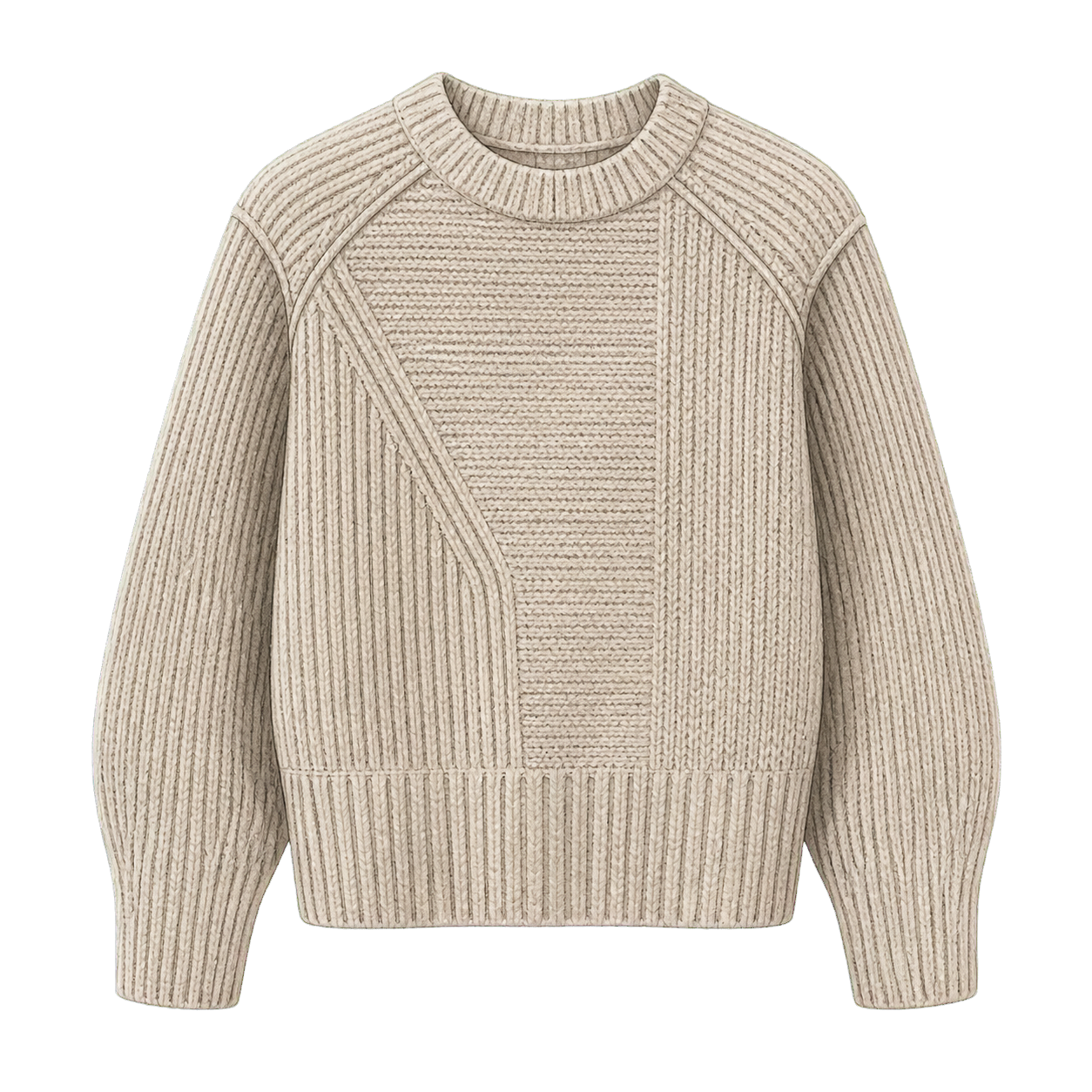 03Heavy knit or lambswool jumper
Stays on indoors, which is the London-specific part. Pubs, older galleries and most restaurants run cool rather than warm — the heating standard is noticeably lower than New York's — so the mid-layer that comes off at a New York coat check stays on here all evening. Choose one you are happy to be seen in for six hours.
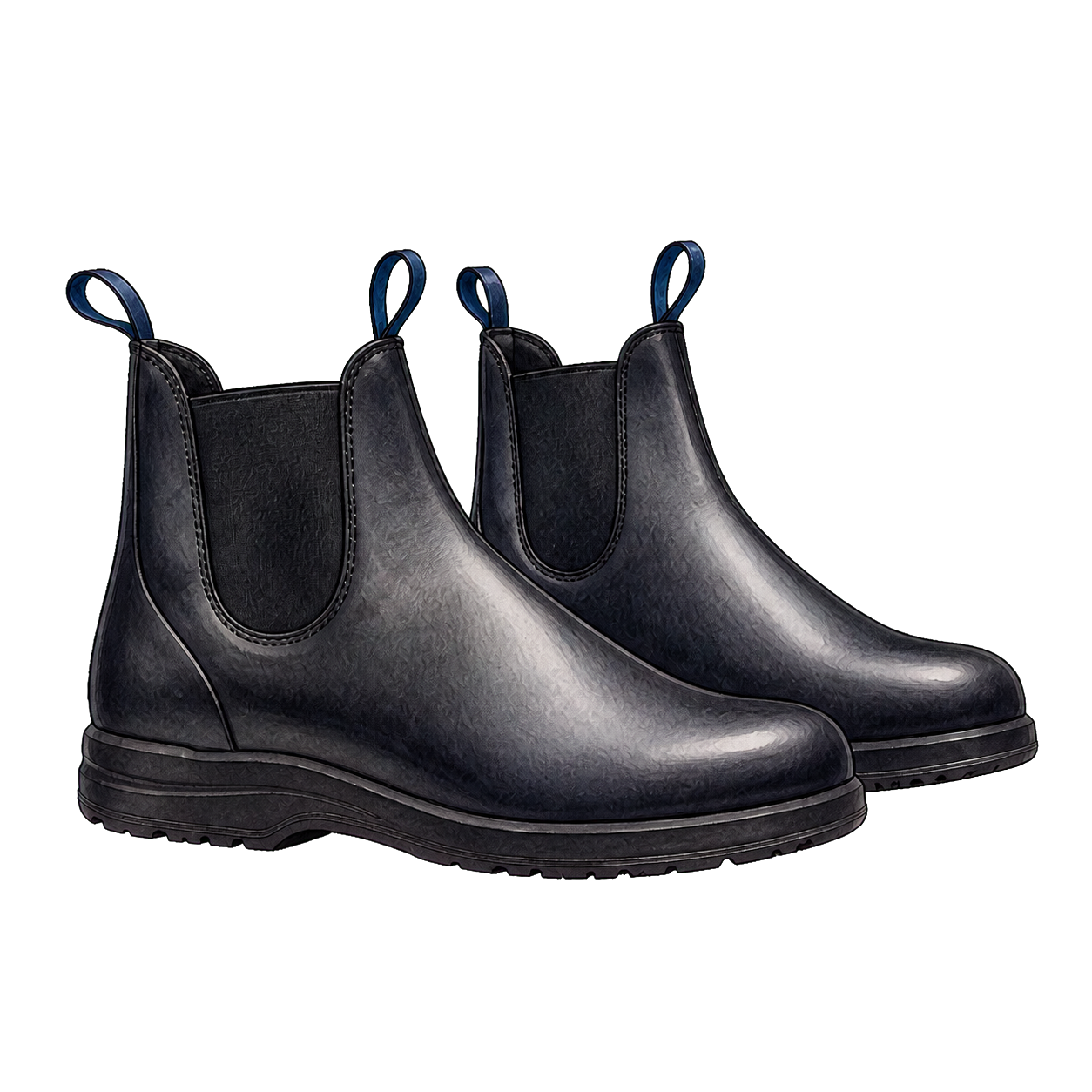 04Leather Chelsea or lace-up boots, sealed
Wet pavement crossed in the dark is the December hazard, and it is worse than it sounds: Victorian paving slabs, painted crossings and Tube station tiles are all slick when wet, and you will meet them after sunset because sunset is before four. Sealed leather with a real tread. Suede is finished by the second wet day and there is no drying window at under two hours of sun.
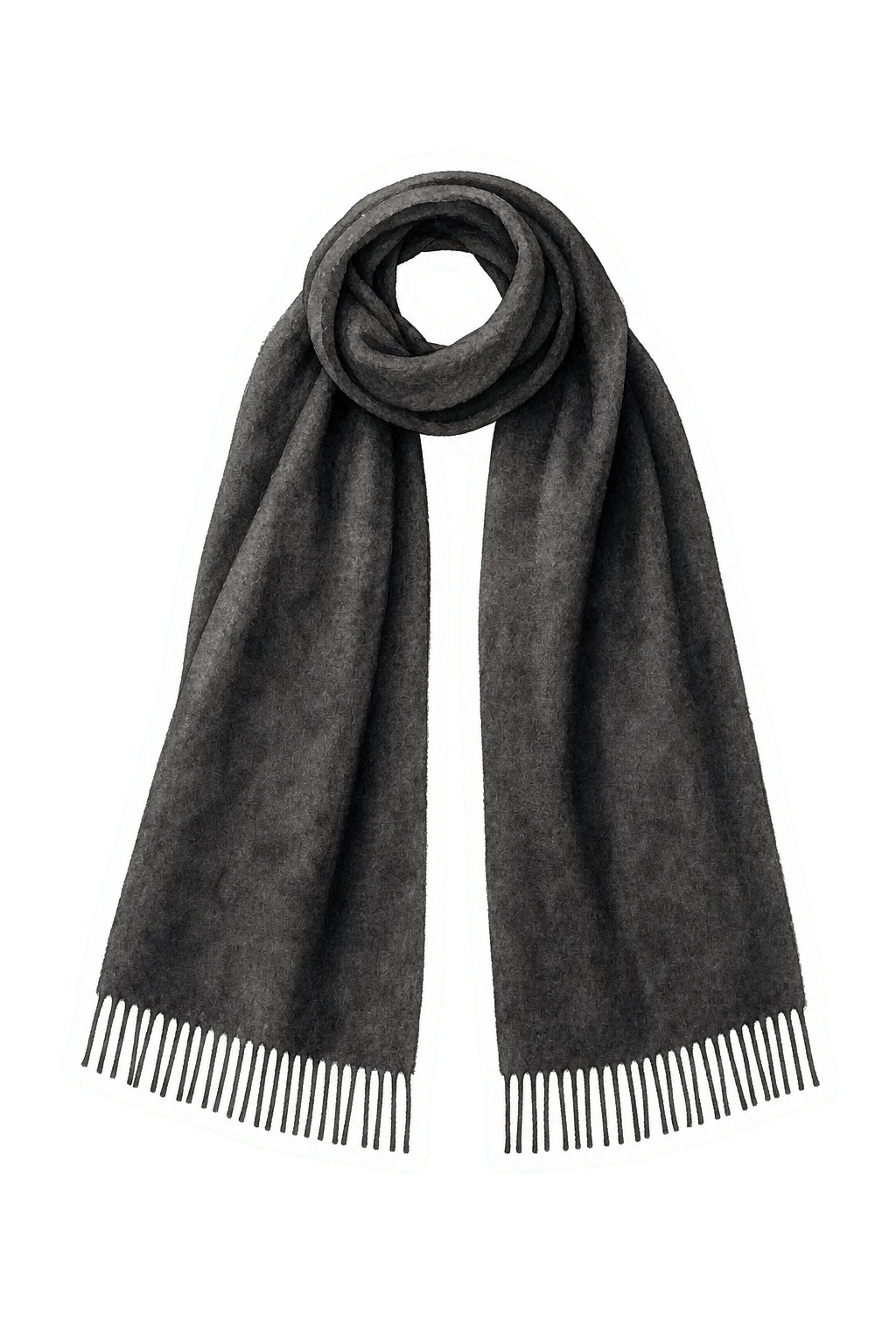 05Long wool scarf
Cheaper and lighter than a warmer coat, and better suited to a month where you move indoors and out constantly. Wrapped twice it closes the gap at the collar where damp cold gets in; unwrapped it comes off in a second at a pub door. Wool-blend rather than cashmere, which will get damp in this month and dislikes it.
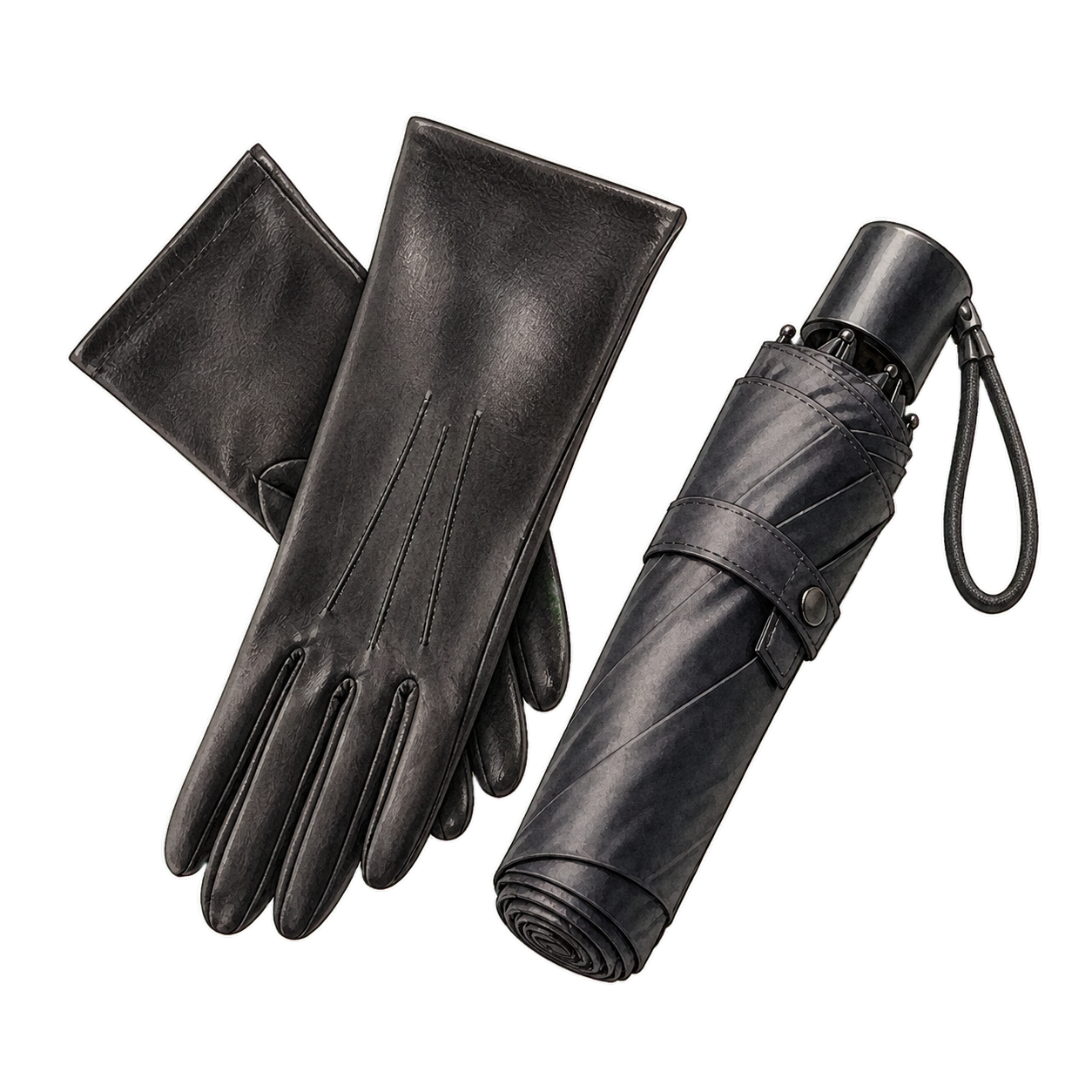 06Gloves and a compact umbrella
Both live in the coat pocket rather than the bag, because you will need them without warning. Eleven rain days and a wind that funnels down the wider streets; a vented compact survives it where a cheap folding frame turns out at the first gust. Gloves matter mainly for market evenings, where you are stationary outdoors with a hot drink and little else to do.
 07Dark trousers or jeans that clear the ground
Full-break trousers drag through standing water at every kerb, and in December that water does not evaporate. Dark because wet pavement throws grit up the back of a hem all month. Jeans are entirely normal here for everything short of a formal dinner, which is more than can be said for several European capitals at the same latitude.
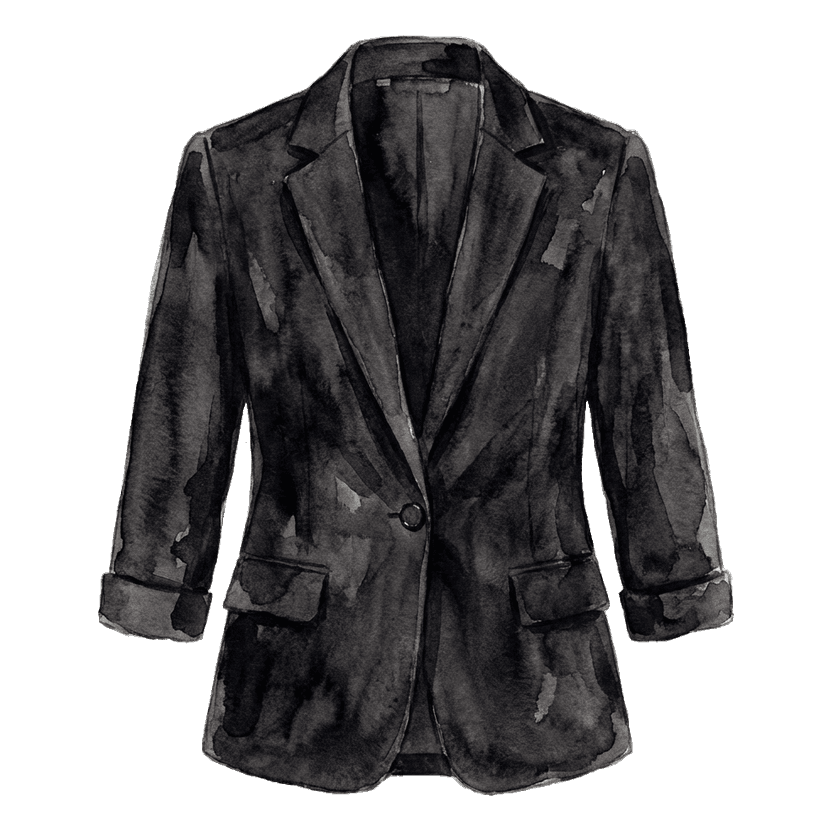 08One smart layer for the season
December is London's densest month for theatre, carol services and Christmas dinners, and the register is smarter than the rest of the year. A fine knit or a jacket that fits under the coat covers it. The coat stays on until the cloakroom regardless, so what matters is that the layer underneath reads finished on its own.
Day to night
Merino base · lambswool jumper · waterproof coat · sealed boots · scarf. The National Gallery at opening, Covent Garden by noon, daylight sights done before three.
Same layers, jumper still on · gloves out. A Southbank or Borough market stall at 18:00 in the dark at 3.1°C / 38°F, then a table in Soho.
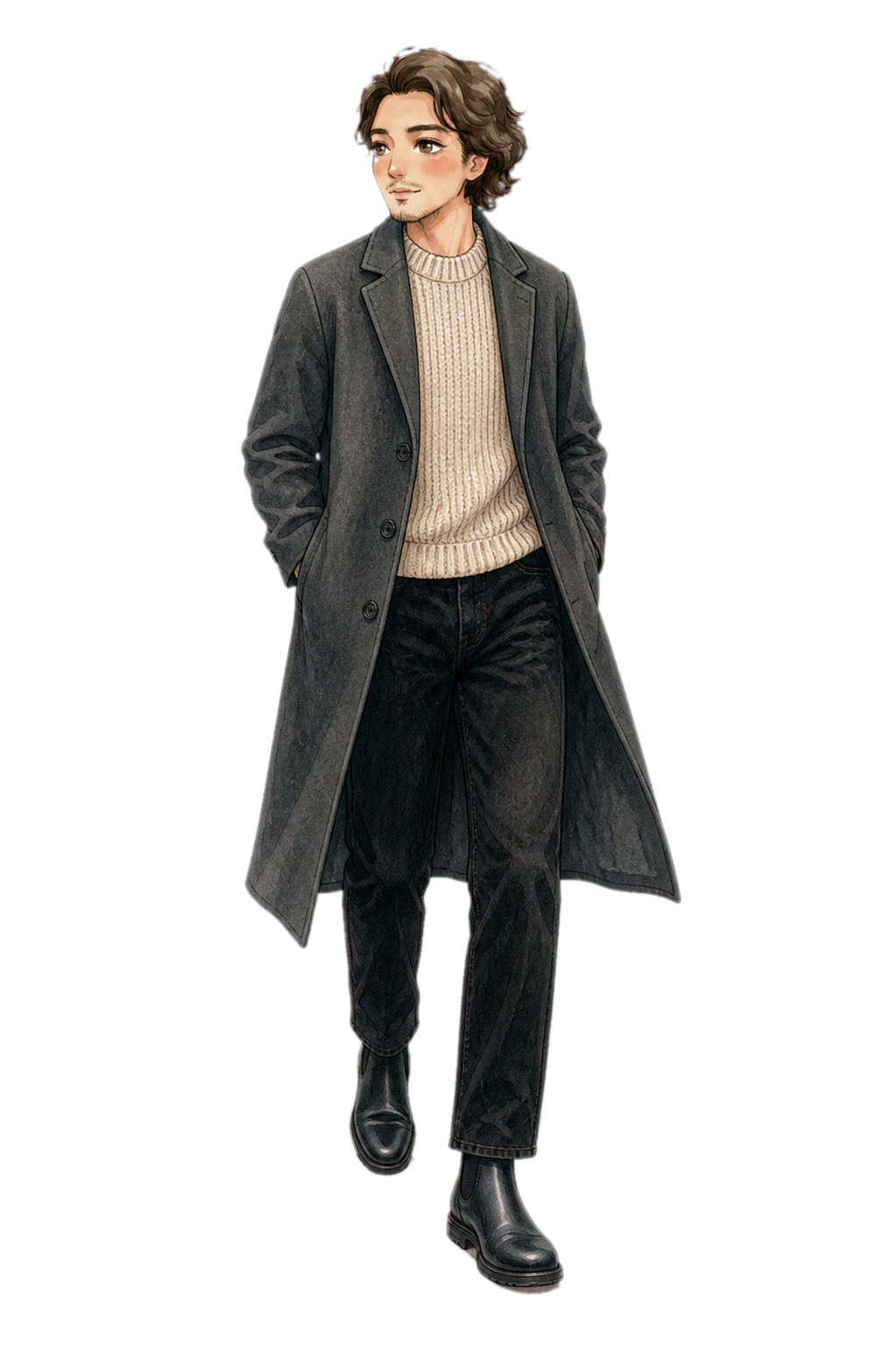
A suggested look — charcoal wool overcoat, stone chunky-knit sweater, dark straight trousers, black Chelsea boots.
What to avoid
- A warm coat that is not waterproof — nothing dries at under two hours of sun
- Suede or unsealed leather — 11 rain days and no drying window
- Daylight sightseeing after three — sunset is before four all month
- A heavy parka — 8.8°C / 48°F is mild for the latitude
- Dressing for walking when a Christmas market means standing for hours
Frequently asked questions
Per the Met Office's 1991–2020 averages for Heathrow: the average daily maximum is 8.8°C / 48°F, the average minimum is 3.1°C / 38°F, and the monthly mean is 6°C / 43°F. Rainfall averages 57mm across about 11 days, with just 1.8 hours of sunshine a day — the lowest of any month. Snow is uncommon in central London and rarely settles. The defining conditions are darkness and damp rather than cold; the city is milder than Berlin, Vienna or Copenhagen at the same time of year.
Sunset falls before four in the afternoon for the whole month, reaching about 15:51 at the solstice, and daylight runs under eight hours. Because December is also heavily overcast, usable light effectively goes an hour before official sunset. The practical planning rule is to schedule anything you want to see in daylight — parks, views, exteriors, markets in the open — before three, and treat the rest of the day as an evening.
A knee-length waterproof wool-blend coat, a merino base layer, one heavy knit you are content to keep on indoors, sealed leather boots with a real tread, a long wool scarf, gloves and a compact vented umbrella, dark trousers that clear the ground, and one smart layer for theatre or a Christmas dinner. Skip suede, skip an unlined wool coat, and skip a heavy parka — the temperature does not justify it.
Yes, provided you accept the light. The Christmas markets, the theatre and pantomime season, the department store windows and the carol services are all at their strongest, and the city commits to December in a way it does not to January or February. Hotel rates climb through the month and peak in the week before Christmas, then drop sharply between Christmas and New Year when many restaurants close. Early December is the value window.
Darker, wetter underfoot and only modestly colder. Met Office normals put October at 15.7°C / 60°F by day against December's 8.8°C / 48°F, so the drop is real but not dramatic; the bigger change is light, from 3.5 hours of daily sun in October to under two in December, and from sunset around 18:00 to before 16:00. October needs a mac and boots. December needs the same plus a base layer, gloves and a scarf.
Continue planning
- Outfits with Chelsea boots
Choose trouser and sock combinations, then check that your boots suit the forecast.
- Vienna in December
For a second winter-city stop, compare the conditions before reusing the same packing list.
Sources
- UK Met Office — 1991–2020 climate normals, Heathrow station