What to Wear with Ballet flats
The dance-studio shoe that crossed into civilian style on Brigitte Bardot's feet in 1956 and stayed.
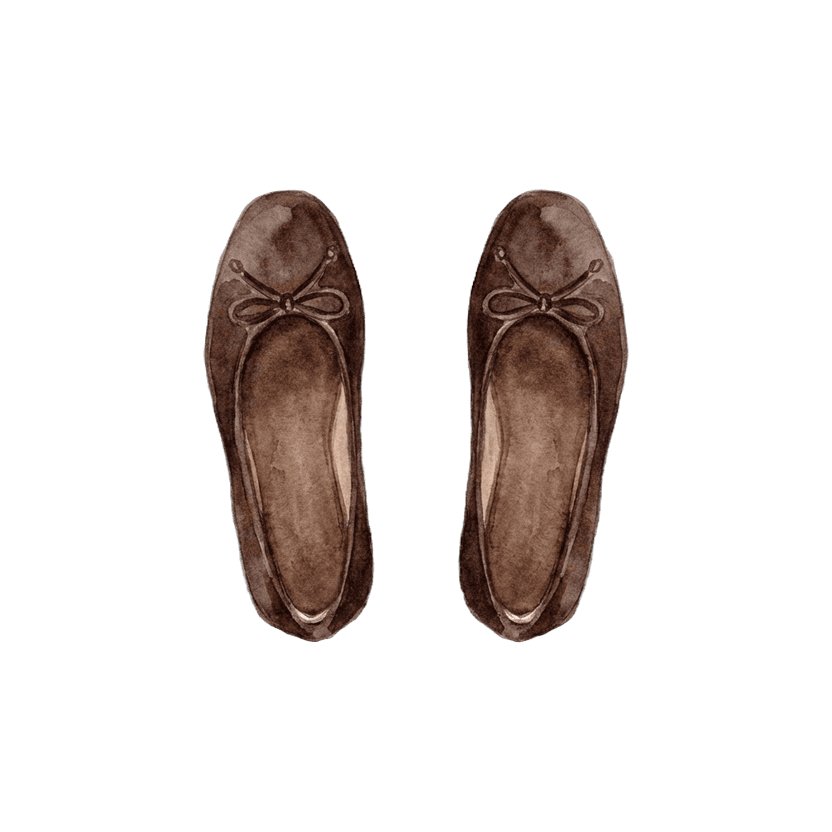
Brigitte Bardot commissioned Repetto's Cendrillon ballet flat for *And God Created Woman* (1956); Audrey Hepburn made Capezios her uniform across two decades of Givenchy films; Sandy Liang and Miuccia Prada brought the silhouette back in 2022. Every editor has worn them since.
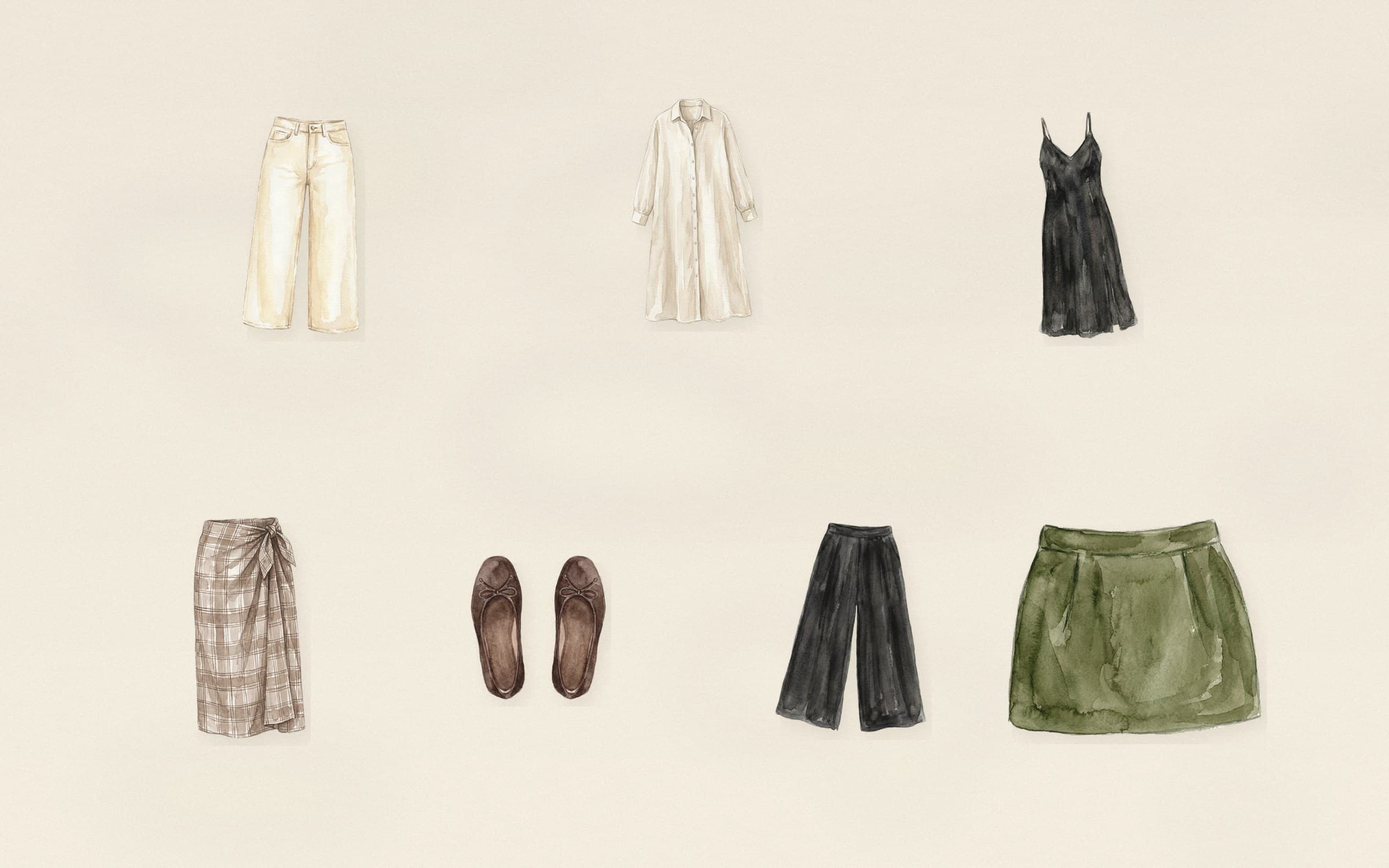
- Cream wide-leg jeans — the Carolyn Bessette-Kennedy 1990s formula, photographed by Steven Meisel for Vogue 1996
- Black midi slip dress — the Sandy Liang FW23 ballet-core register
- Cream linen midi shirtdress — the picnic-era styling, Khaite SS25 reference
- Plaid wrap midi skirt — the school-girl twist, Miu Miu SS22
- Black tailored wide-leg trousers — the office register, Phoebe Philo Céline 2008–2017
- Pick mesh-or-leather lined uppers from Repetto, Sam Edelman, or The Row's 'Eva' — never unlined
- Don't pair with skinny jeans — the slipper silhouette demands volume above (wide-leg or midi-skirt) to balance the flat
- Don't wear with a heavy wool sock — pulls the proportion to costume, breaks the slipper line
- Don't buy unlined leather for daily wear — the heel-cup collapses inside three months of regular use
Salvatore Capezio opened a cobbler's shop opposite the Metropolitan Opera House in New York in 1887, making rehearsal slippers for the dancers. By 1948 Capezio had the first commercial street-flat: Claire McCardell, the American sportswear designer, asked Capezio to produce her ballet-derived flats in materials suitable for outdoor wear. Brigitte Bardot did the rest. In 1956, Roger Vivier's wife Rose Repetto adapted the dance slipper into the Cendrillon — a leather flat with a quilted insole — at Brigitte Bardot's request for *And God Created Woman*. Bardot wore them through the film's beach and bicycle scenes; Repetto's Place de l'Opéra atelier has produced the same shoe in continuous production ever since.
Audrey Hepburn picked up the silhouette through Givenchy. In *Sabrina* (Billy Wilder, 1954) and *Funny Face* (Stanley Donen, 1957), she wore black Capezios with cropped Givenchy capris and a turtleneck — the visual remained the editorial reference for sixty years.
The 2022 revival came through two channels. Miuccia Prada's Miu Miu SS22 collection sent leather ballet flats with ankle ribbons down the runway, and Sandy Liang (founded 2014 in New York) put ballet flats with school-girl skirts in her FW23 lookbook. *Vogue* covered the trend as 'ballet-core' in March 2023; Business of Fashion ran the headline piece in October 2023. By 2026 the silhouette has settled into permanent rotation — The Row's 'Eva' at $850, Repetto Cendrillon at $295, and mass-market entries from J.Crew and Sam Edelman. The single rule: pair with volume above (wide-leg, midi-skirt) so the proportions hold.
Audrey Hepburn wore black Capezios with Givenchy capris through *Funny Face* (1957) and *Sabrina* (1954) — the still images defined the silhouette for sixty years.— Met Costume Institute archive
Wear it with
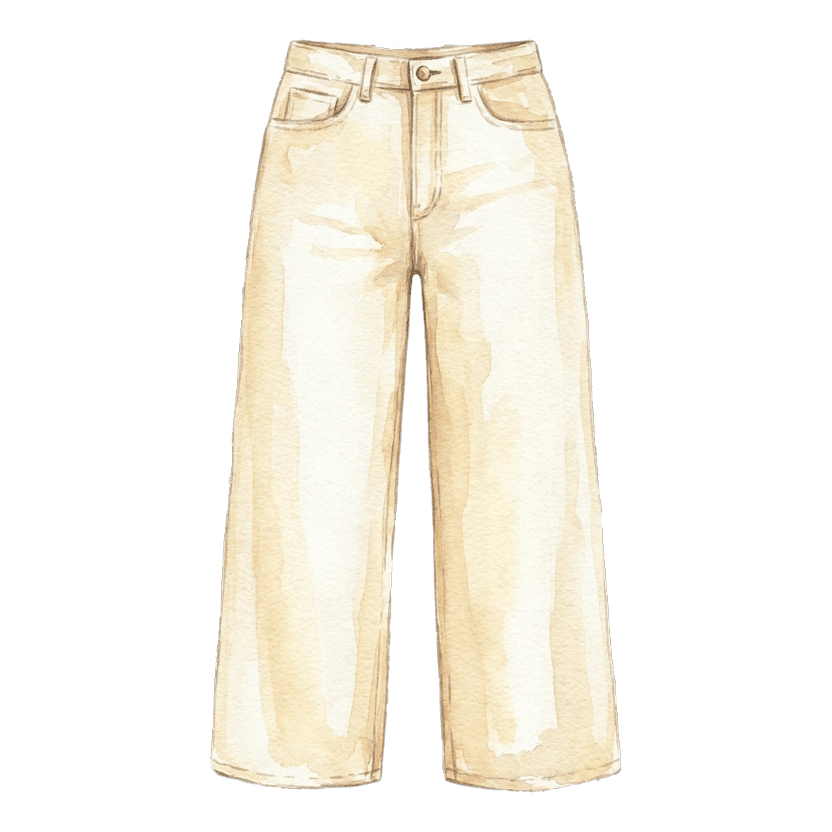 01Cream wide-leg jeans
The Carolyn Bessette-Kennedy 1990s formula — cream denim, soft tee, ballet flat, photographed by Steven Meisel for Vogue 1996. Cream-on-cream lengthens the leg in proportion to the flat; the wide-leg cut stops just above the ankle and gives the slipper visible breathing room. Skip dark navy jeans here — the contrast pulls the eye down and shortens the leg.
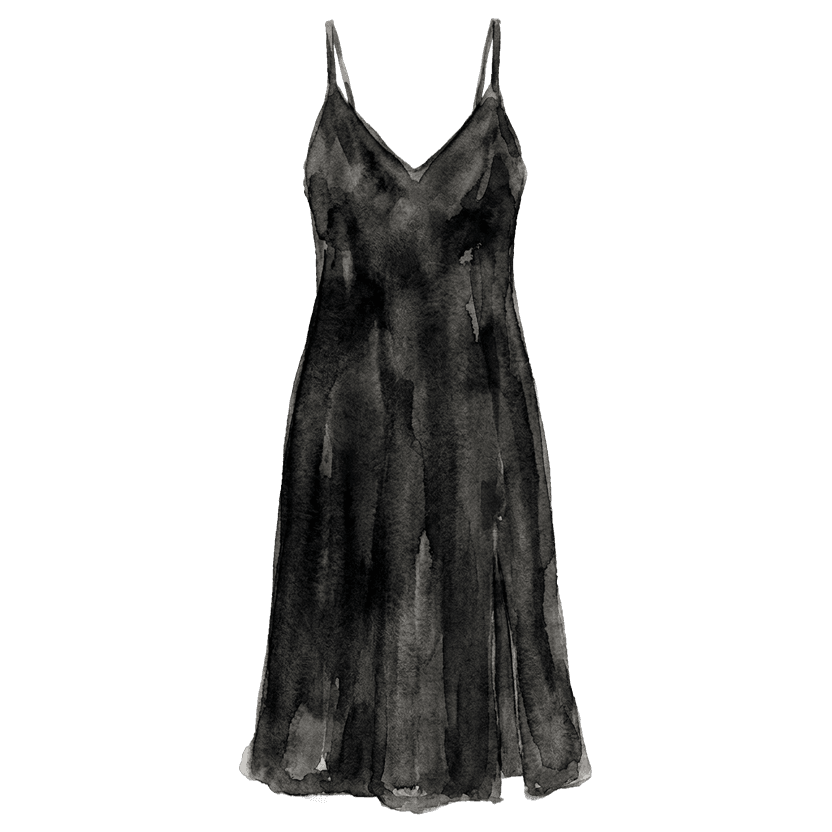 02Black midi slip dress
The Sandy Liang FW23 ballet-core register — slip dress + flat is the ballet-rehearsal-meets-evening pairing that ran across her FW23 lookbook and the 2024 New York Times *Styles* coverage. The bias-cut midi skims the calf and stops above the ankle, giving the flat full visual weight. Add a thin gold chain and the outfit reads dressed; bare-legged in summer or with sheer tights in fall.
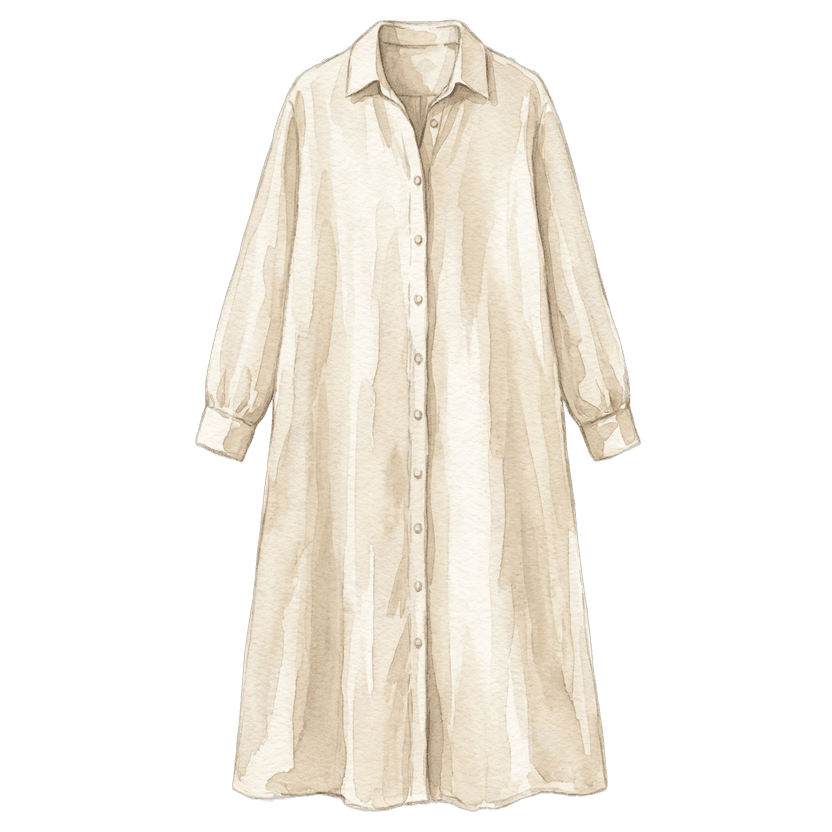 03Cream linen midi shirtdress
The picnic-era register, Khaite SS25 lookbook reference. Cream linen + dark brown ballet flat is a tonal trio (cream / cognac / cream paper) that photographs cleanly under any light; the linen's slight rumple keeps the look soft rather than starched. The shirtdress's button-front lets you decide the formality at the chest — fully buttoned reads garden lunch, two open reads weekend coffee.
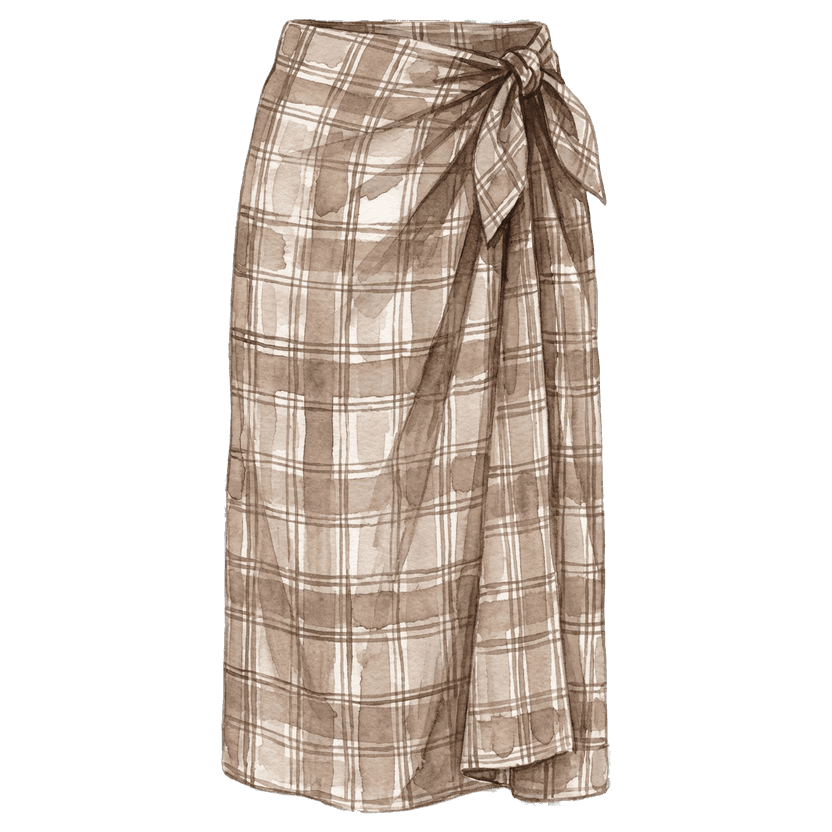 04Plaid wrap midi skirt
The Miu Miu SS22 school-girl twist — plaid skirt, ballet flat, fine knit on top. The midi length covers the calf and stops at the slim ankle, which keeps the schoolgirl reference from tipping into costume. Skip miniskirt + ballet flat unless the rest of the outfit pulls hard against the reference (oversized blazer, masculine tailoring) — the flat-with-mini reads younger than most adult wardrobes want.
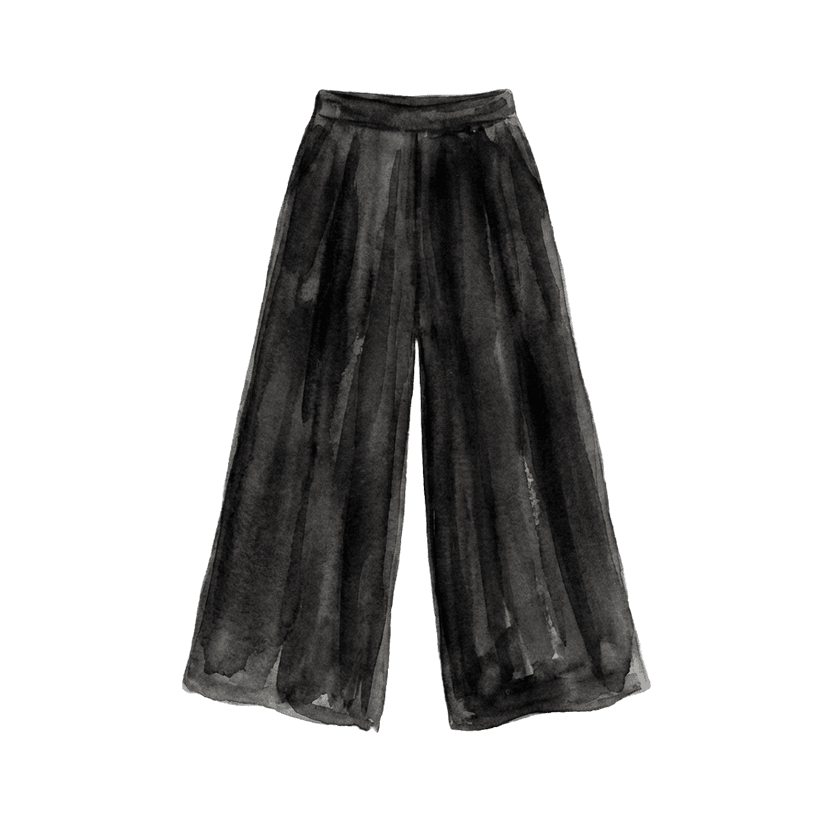 05Black tailored wide-leg trousers
The office register and the Phoebe Philo Céline 2008–2017 reference — black trouser, fitted cashmere knit, black ballet flat. The wide-leg trouser breaks at the right height for a flat (just above the ankle bone) and keeps the silhouette from looking foreshortened. Skip cropped or ankle-length trousers ending two inches above the ankle bone — the gap reads as 'tailoring fail' rather than deliberate.
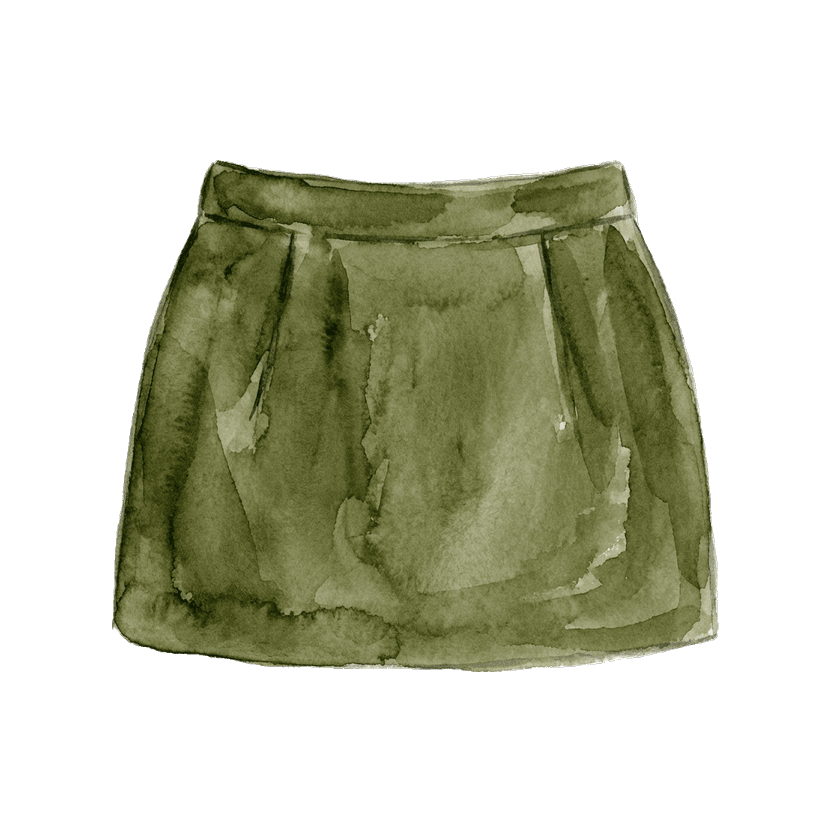 06Olive mini skirt
The Sandy Liang FW23 ballet-core in mini-length form — works only when the top adds volume (oversized blazer, slouchy knit) to counterbalance. Olive + dark brown ballet flat reads warm-tonal; pair with a cream knit or white tee. The 2024–2026 mini-skirt cycle skews preppy rather than club-coded, so the olive cotton or wool reads correct; satin or sequin minis fight the flat.
Dressing rules
Ballet flats clear smart casual, garden, and gallery without effort — they're the default flat for any setting that calls for closed-toe but not heeled. Per The Knot's wedding-guest etiquette, ballet flats are acceptable at every dress code below black-tie when in good condition; they read appropriate at cocktail-coded weddings when paired with a midi or maxi dress (the proportion makes them work). They do not clear traditional formal — black-tie still expects a heeled shoe per Emily Post's *Etiquette* (20th edition, 2022). The single rule across registers: the flat needs visible heel-cup integrity. A collapsed heel-cup (the leather folding inward) ages a ballet flat by a decade and reads worn-out regardless of the rest of the outfit. Repetto and The Row's 'Eva' hold their structure for two-plus years of regular wear; mass-market unlined leather often collapses in three months. Buy lined.
What to avoid
- Skinny jeans — the slipper silhouette demands volume above (wide-leg or midi-skirt)
- Heavy wool socks visible at the ankle — breaks the slipper line, pulls toward costume
- Unlined leather for daily wear — the heel-cup collapses inside three months
- Heavy rain wear (leather + suede absorb water at the seams; never fully recover)
- Cropped trousers ending two inches above the ankle bone — reads tailoring fail with a flat
Frequently asked questions
Three tiers cover most needs. Heritage at $295: Repetto Cendrillon (1956 design, made in Saint-Médard-d'Excideuil, France). Quiet luxury at $850: The Row 'Eva' (calf leather, made in Italy — Mary-Kate and Ashley Olsen's quiet-luxury reference flat since 2017). Mass-market at $130–250: Sam Edelman 'Felicia' or J.Crew 'Margaux' for a year or two of wear before replacement. Skip very cheap unlined leather (the heel-cup collapses in three months) and skip athletic-flex sole flats marketed for travel — the marketing-led 'comfort flat' undermines the slipper silhouette the shoe is selling.
Yes — the silhouette has settled into permanent rotation since the Miu Miu SS22 revival. Vogue Runway's spring 2026 coverage ran the trend across Miu Miu, Sandy Liang, Cecilie Bahnsen, Khaite, The Row, and Toteme. The category had been quietly building since 2020; the Miu Miu show pushed it mainstream. Business of Fashion ran a long-form piece in October 2023 calling ballet-core 'the most-cited shoe trend of 2023,' and the cycle has held into 2026 — they're now classified as a permanent silhouette rather than a trend.
Repetto's care guide is the reference: rotate two pairs (one rest day between wears so the leather recovers), apply a leather-conditioning lotion every six weeks, store on shoe trees between wears to hold the heel-cup shape, and apply a leather-protective spray before the first wear. Avoid wearing them in heavy rain — leather absorbs water at the seams and never fully recovers. For deeper cleans on the leather upper, use Saphir Renovateur (the same product Hermès recommends for leather goods); for the insole, sprinkle baking soda overnight to absorb moisture and odor.
Yes in creative-office settings (media, design, architecture, marketing, gallery, education); read carefully in traditional finance, law, and corporate settings. The flat reads professional when paired with tailored trouser, pencil skirt, or midi dress; it reads casual with denim. Black, dark brown, or navy in lined leather are the safer office colours; saturated colours, satin, or visible logos read more casual and pull the register down. Phoebe Philo wore black ballet flats through her Céline tenure (2008–2017) — the office reference still holds.
Strap and topline. A ballet flat has a low-cut U-shape topline and no strap — the shoe stays on through the heel-cup grip alone. A Mary Jane (named after the Buster Brown comic-strip character's sister, popularised in the early 1900s) has a strap across the instep and a slightly raised topline. Both are flats; the Mary Jane reads more polished and slightly more formal. For a more comprehensive Mary Jane breakdown, see /outfits/with-mary-janes — the strap distinction matters for which one suits which outfit.