What to Wear with Navy and white
The maritime palette Coco Chanel adopted in Deauville 1917 and Saint James has produced since 1889.
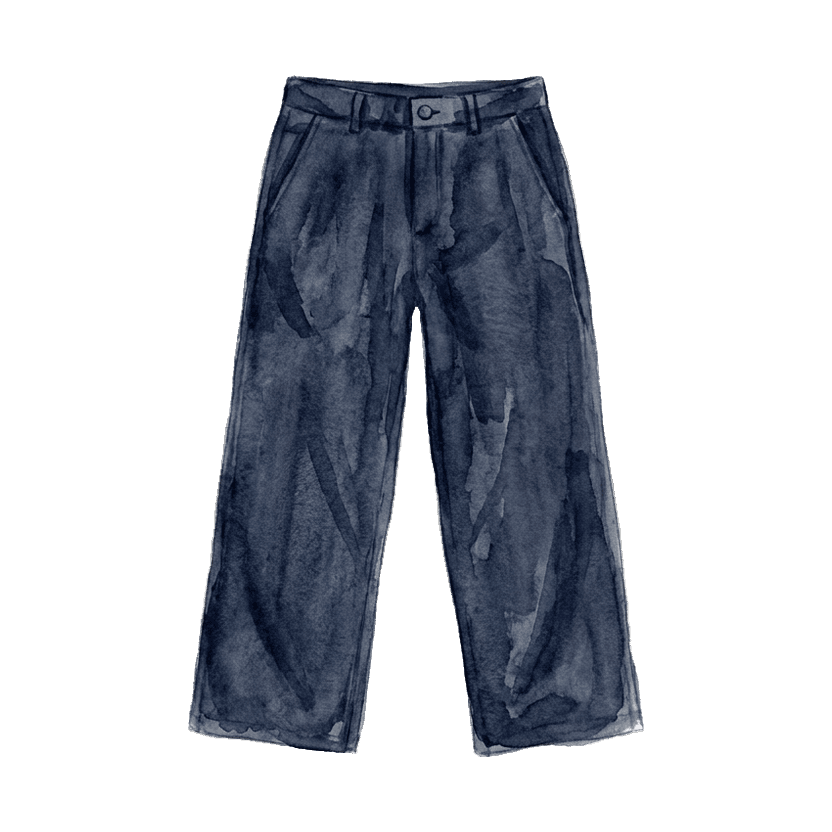
Saint James produces the original Breton stripe in white and navy from Saint-James, Normandy since 1889; Coco Chanel adopted the palette during her 1917 summer in Deauville; Tommy Hilfiger built his 1985 brand on it; Ralph Lauren Polo has run navy-and-white as heritage core since 1972.
- Cream chunky knit over navy trouser — the Coco Chanel Deauville 1917 formula
- White silk cami under navy blazer — the office-into-evening register
- White pinstripe shirt with navy trouser — the heritage prep formula
- Navy button-down over navy trouser — the all-navy tonal register, cognac break required
- White low-top sneakers — the daytime weekend register
- Cognac ankle boots or belt — the warm-tone break, breaks the cool maritime palette
- Don't pair navy with cool-blue (lighter blue, sky blue) — collapses the contrast
- Don't wear stark optical white in office — warm-white (cream) reads softer and quiet-luxury
- Don't buy navy in stretch synthetic — colour fades to washed-out blue, drape collapses
Saint James opened in 1889 in the Normandy fishing village of Saint-James, producing wool sweaters for local fishermen. The brand's signature was the Breton stripe — white wool with thin navy stripes (originally 21 stripes for Napoleon's 21 victories per French naval folklore, though the historical accuracy of that count is debated). The original 'matelot' sweater became the French Navy's standard-issue knit in 1858 (predating the brand). Saint James has produced the same silhouette in continuous quantity from its Saint-James, Manche atelier since 1889; the brand's Meridien (long-sleeve) and Naval (short-sleeve) are the heritage benchmarks at €120–€180.
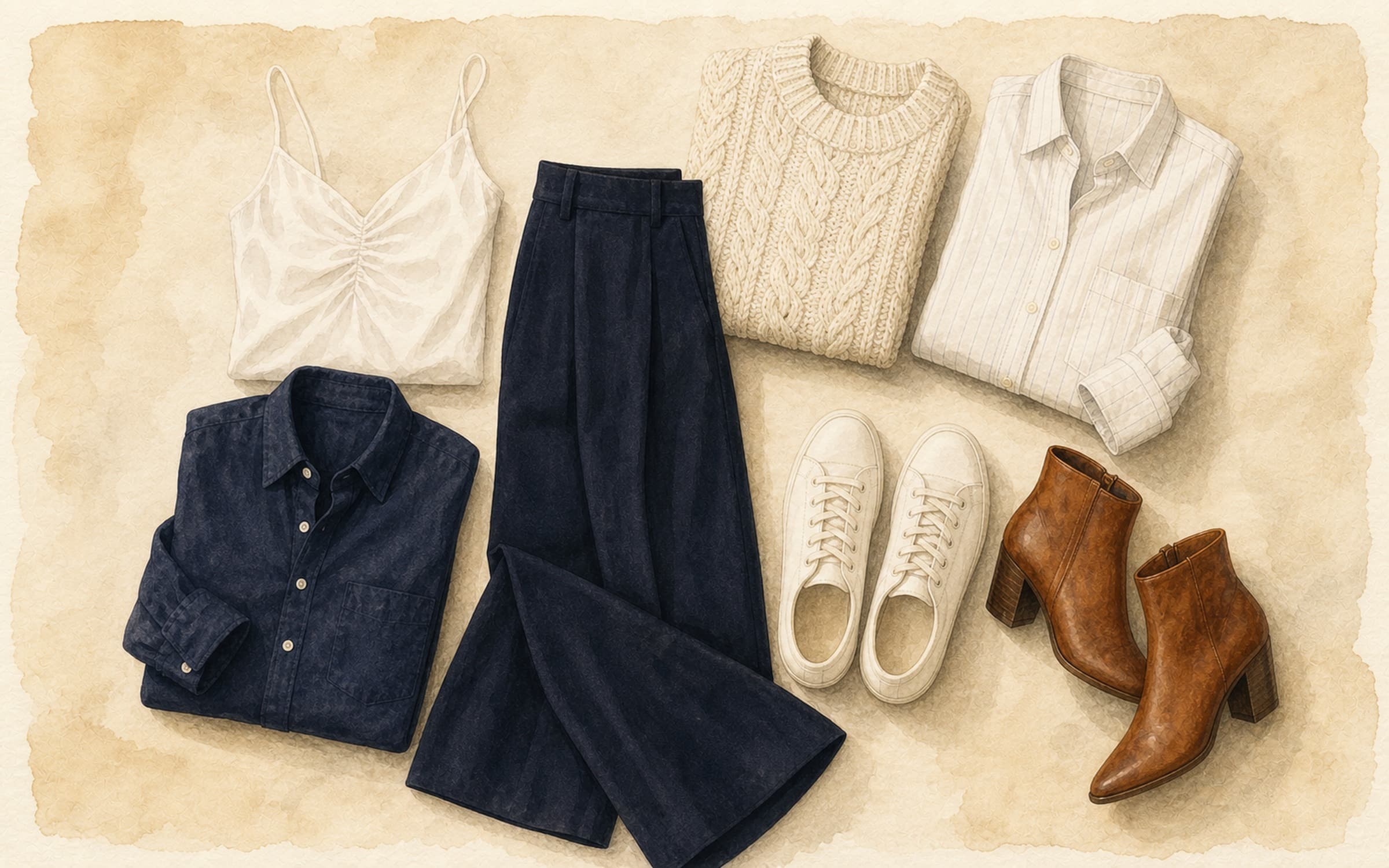
Coco Chanel spent the summer of 1917 in Deauville (the Normandy beach resort that became the site of her first boutique, opened 1913). Chanel adopted the maritime palette across her 1917 collection — cream linen suits with navy bouclé jackets, navy-and-white horizontal stripes adapted from local sailors. The look defined Chanel's leisurewear range and entered the brand's permanent rotation. Photographs of Chanel at Deauville 1917 in cream linen and navy striped knit are the reference editorial uses to anchor the maritime cycle.
Tommy Hilfiger founded his namesake brand in 1985 in New York, with navy-and-white nautical preppy as the brand's design DNA. Ralph Lauren Polo has run navy-and-white as the heritage core since the brand's 1972 founding; every Polo collection includes navy-and-white striped rugby shirts, navy chinos with white tees, and navy blazers with white pinstripe shirts. In 2026 navy-and-white sits in the rotation across The Row, Toteme, Saint Laurent, Brunello Cucinelli, Khaite, and Saint James per *Vogue Runway*'s spring 2026 coverage. The single rule: cognac or warm-tone break at the foot prevents the cool-on-cool column.
Photographs of Coco Chanel at Deauville in summer 1917 in cream linen and navy striped knit are the editorial reference for the maritime palette — the silhouette that entered her permanent rotation.— Vogue Paris archive
Wear it with
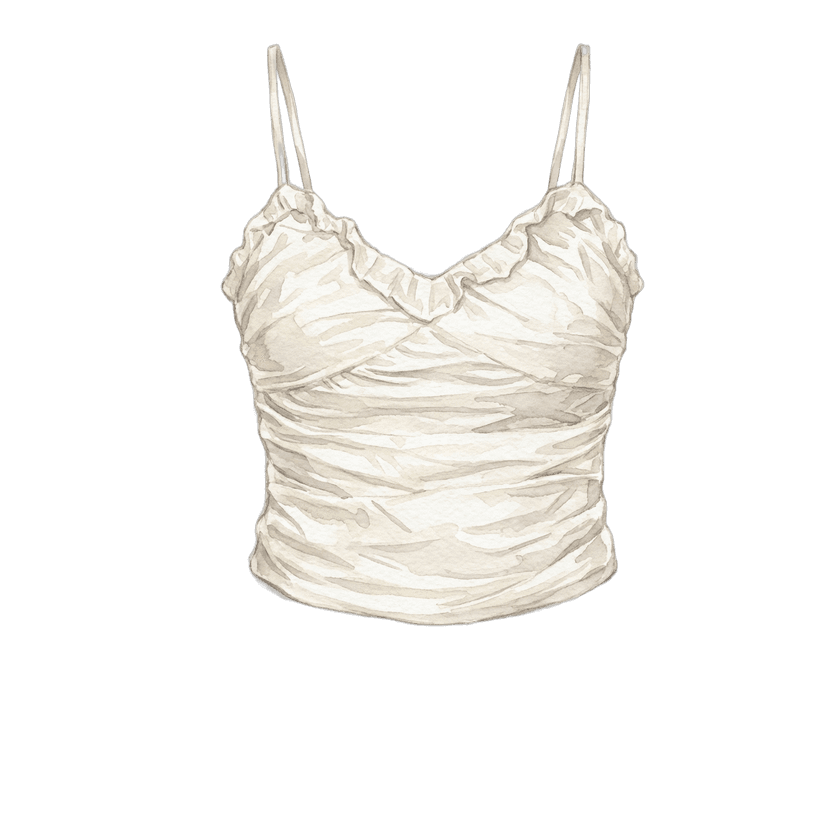 01White ruched silk cami top
The summer-into-evening register — Khaite SS24 lookbook reference. White cami under a navy blazer with navy trouser is the office-into-evening formula; the cami's bias drape softens the navy structure. Skip stark optical white in the cami — warm-white (cream-white) reads softer.
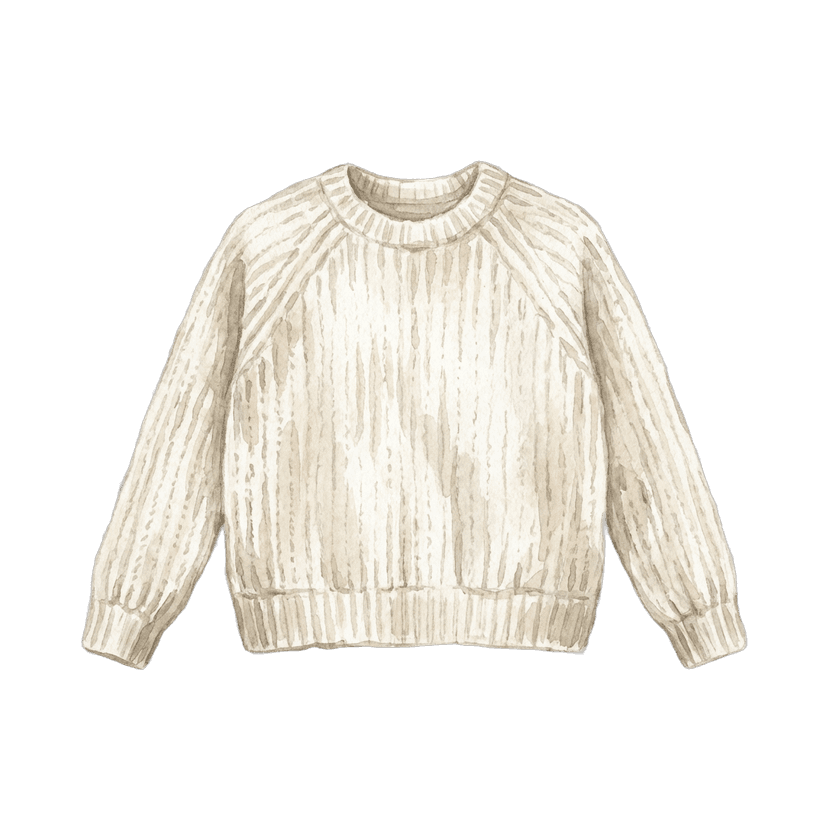 02Cream chunky knit sweater over navy trouser
The Coco Chanel Deauville 1917 formula — cream linen + navy. Cream is one tone warmer than stark white and softens the navy's coolness; the combination reads warm-tonal-meets-maritime. The Row and Brunello Cucinelli rotate the same pairing every pre-fall.
 03White pinstripe linen shirt
The heritage prep formula — Brooks Brothers, Ralph Lauren Polo, Tommy Hilfiger all rotate navy + white-pinstripe through every collection. The white stripes break up navy's solid weight without adding saturated colour; the linen reads slightly more relaxed than poplin.
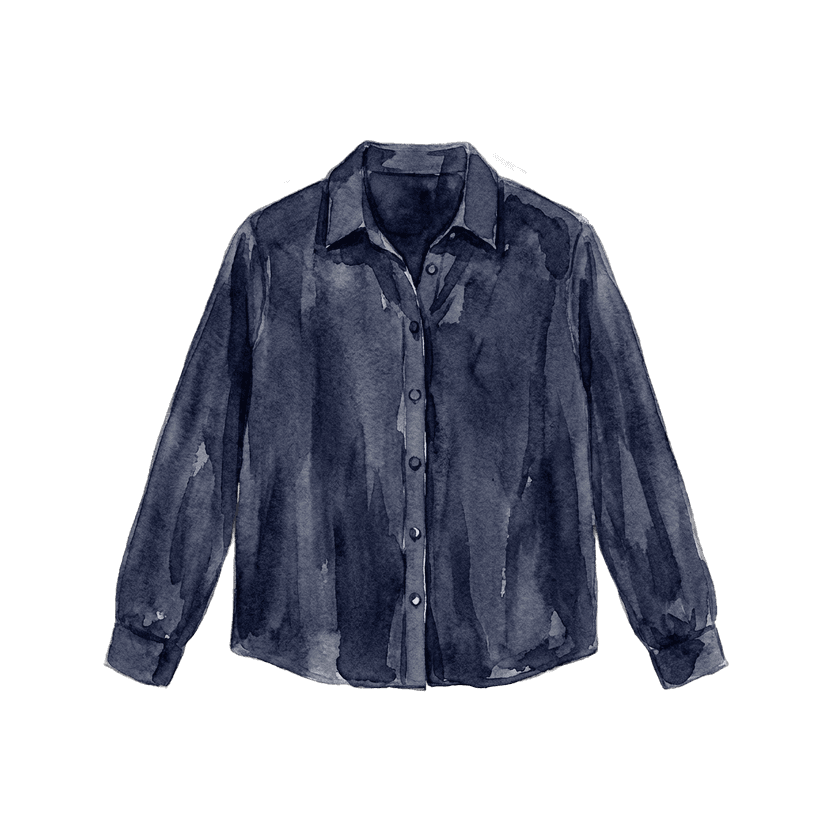 04Navy button-down shirt for the all-navy tonal layered register
Navy-on-navy with white at the cuff and collar reads tonal-deep when the wool or cotton quality is high. The Brooks Brothers Number One blazer paired with a navy button-down was photographed in Take Ivy (1965) across Yale, Harvard, and Princeton campuses. Skip without a warm-tone break at the foot — all-cool creates the column problem.
 05White low-top leather sneakers
The daytime weekend register — JJJJound editorial register and Aimé Leon Dore brand campaigns. White at the foot prevents the cool-on-cool column the all-navy + white outfit can create. Skip athletic sneakers — Common Projects Achilles, Adidas Stan Smith, or Veja V-10 are the editorial register.
 06Cognac leather ankle boots — the warm-tone break
The single rule — cognac at the foot warms the cool maritime palette and prevents flatness. Saint Laurent under Anthony Vaccarello pairs cognac ankle boots with navy across SS19 onward; the warm-tone break is the editor formula. Skip black footwear with navy + white — the all-cool reads as scattered.
Dressing rules
Navy-and-white clears every dress code from creative-office through cocktail. The maritime palette reads sharper than navy-and-cream at evening and softer than navy-and-stark-white at office. Per The Knot's wedding-guest etiquette, navy-and-white is acceptable at every dress code below 'beach attire'; particularly correct at country-club, garden, and rustic-coded weddings. The single rule across registers: warm-tone break at the foot. Cognac, dark brown, oxblood, or warm-tone leather goods (bag, belt) prevent the all-cool column problem. Saint Laurent under Anthony Vaccarello pairs cognac ankle boots with navy across SS19 onward; The Row and Brunello Cucinelli pair cognac belts and bags with navy across every collection. The warm-tone break is non-negotiable.
What to avoid
- Navy + cool-blue (sky, baby, light) — contrast collapses, reads colour mistake
- Stark optical white in office — warm-white reads softer and quiet-luxury
- Stretch synthetic navy — colour fades to washed-out blue inside two seasons
- Black footwear with navy-and-white — all-cool reads scattered, cognac is the break
- All-navy + white + cool-foot — creates the cool-on-cool column problem
Frequently asked questions
Yes — *Vogue Runway*'s spring 2026 coverage flagged navy-and-white across The Row, Toteme, Saint Laurent, Brunello Cucinelli, Khaite, and Saint James. The combination has been in continuous editorial rotation since Coco Chanel's 1917 Deauville summer and is currently in a strong cycle. The maritime aesthetic that emerged through Saint James, Tommy Hilfiger, and Ralph Lauren Polo has stayed permanently in editorial focus; the 2026 register is slightly softer than the strict-prep 1980s version, leaning warm-white and Breton stripe over stark-white and solid blocks.
Cream (warm-white) for office and quiet-luxury; stark white for daytime athletic and casual. Cream + navy is the Coco Chanel Deauville 1917 formula and the Brunello Cucinelli warm-tonal register; the warm-white softens navy's structure. Stark white + navy is the Tommy Hilfiger 1985 prep formula and the JJJJound editorial register; the stark contrast reads sharper but also harsher in low-light. For most wardrobes, cream is the higher-leverage warm-white; stark white pairs best with white sneakers and casual contexts.
Yes at every dress code below 'beach attire,' per The Knot's wedding-guest etiquette. Particularly correct at country-club, garden, rustic, and casual weddings where the maritime register reads seasonally appropriate. For black-tie, navy reads as a black-substitute when paired with stark or warm-white; pair with closed-toe pump or sandal. Skip cream or ivory white at any wedding (reads bridal); use stark white or warm-white (oat) instead. The 60-30-10 proportion holds — 60% navy, 30% white, 10% warm accent (cognac, gold).
Tone position. Navy is a specific dark blue with slight warm undertone (Pantone 19-3933 Estate Blue or 19-4119 Dark Sapphire). Dark blue is a broader category covering navy through midnight-blue. The Saint James Breton stripe, the Saint Laurent under Anthony Vaccarello navy collections, and the Brunello Cucinelli wisteria navy all sit in the specific navy register. For most wardrobes, navy is the higher-leverage tone because it pairs with both warm-white (cream) and stark-white cleanly; dark blue (cooler) pairs with cool-white only.
Three reliable options. Cognac ankle boots (Saint Laurent, Isabel Marant Dicker) — the warm-tone heritage break. White low-top sneakers (Common Projects Achilles, Adidas Stan Smith, Veja V-10) — the daytime register. Dark brown loafers (Tod's, Gucci horsebit) — the office register. Skip black footwear with navy-and-white — the all-cool reads scattered. Skip very-saturated coloured shoes (red, electric blue) with navy-and-white — the binary palette demands warm-tonal restraint.