What to Wear with Pearl earrings
The earrings Jan Vermeer painted in 1665 and Jackie Kennedy made the canonical American First Lady reference in 1961.
Jan Vermeer painted *Girl with a Pearl Earring* circa 1665; Mikimoto Kōkichi invented the cultured pearl in Japan in 1893; Jackie Kennedy wore three-strand pearls and pearl studs as First Lady (1961–1963), making them the canonical American reference.
- Match size to face shape — small studs (under 8mm) daily, medium (8–12mm) cocktail, large (12mm+) evening
- Pick cultured Akoya or freshwater pearls — white or cream tones, smooth round surface
- Cream knit + white silk cami — the Jackie Kennedy 1961 daytime register
- Navy blazer + white pinstripe shirt — the Jackie Kennedy 1961 formal register
- Ivory midi skirt + black slip dress — the evening register, Givenchy 1954 reference
- Pair with cool-tone or warm-tone outfits — pearl whites pair flexibly across both
- Don't pair pearls with very saturated colours — the muted register fails next to saturation
- Don't wear large pearls (12mm+) with casual outfits — formality mismatches
- Don't buy plastic 'pearls' for daily wear — surface scratches inside three months
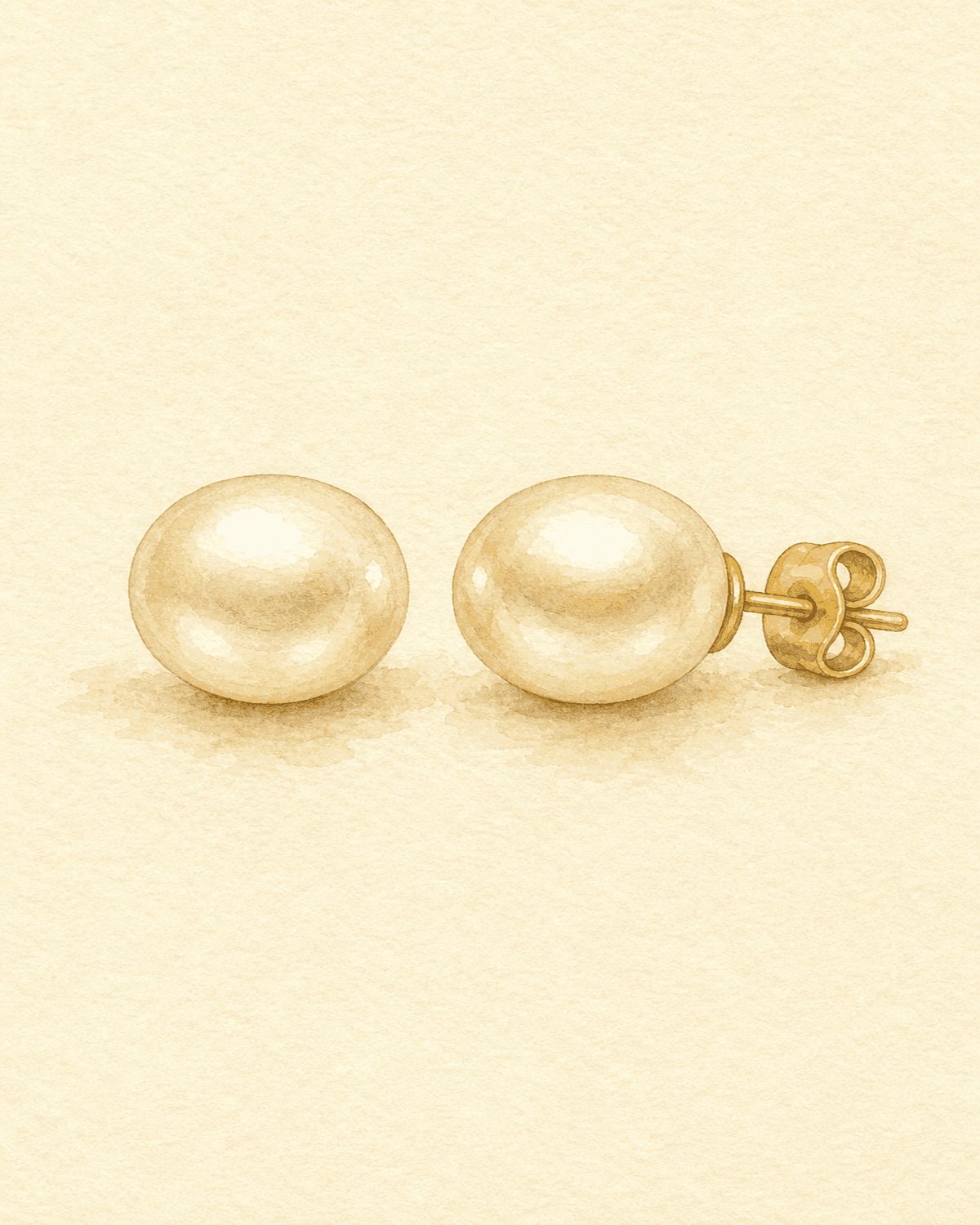
Pearls have been used in earrings for over 2,500 years across Egyptian, Etruscan, Greek, Roman, Persian, Indian, Chinese, and Mesoamerican jewelry traditions. The British Museum holds Etruscan pearl earrings dating to the 4th century BCE; Cleopatra is reputed to have owned a pair of pearl earrings worth 10 million sesterces (Pliny the Elder, *Natural History* IX.121). Pearls are organic gems — formed when an irritant enters a mollusk's mantle and the mollusk secretes layers of nacre around it; natural pearls were extremely rare and expensive across history.
Mikimoto Kōkichi changed the economics in 1893. After two decades of experimentation, Mikimoto produced the first cultured pearl in Toba, Japan — by inserting an irritant into an oyster, he triggered the natural nacre-secretion process at scale. The 1893 patent and Mikimoto's subsequent cultured-pearl farms (the brand still operates from Mikimoto Pearl Island in Toba) made pearls affordable and turned them into a 20th-century jewelry mass-classic. Coco Chanel made layered cultured pearl strands a 1920s house signature; Audrey Hepburn wore Givenchy pearl studs through *Breakfast at Tiffany's* (1961); Jackie Kennedy wore three-strand pearls and pearl studs as First Lady (1961–1963).
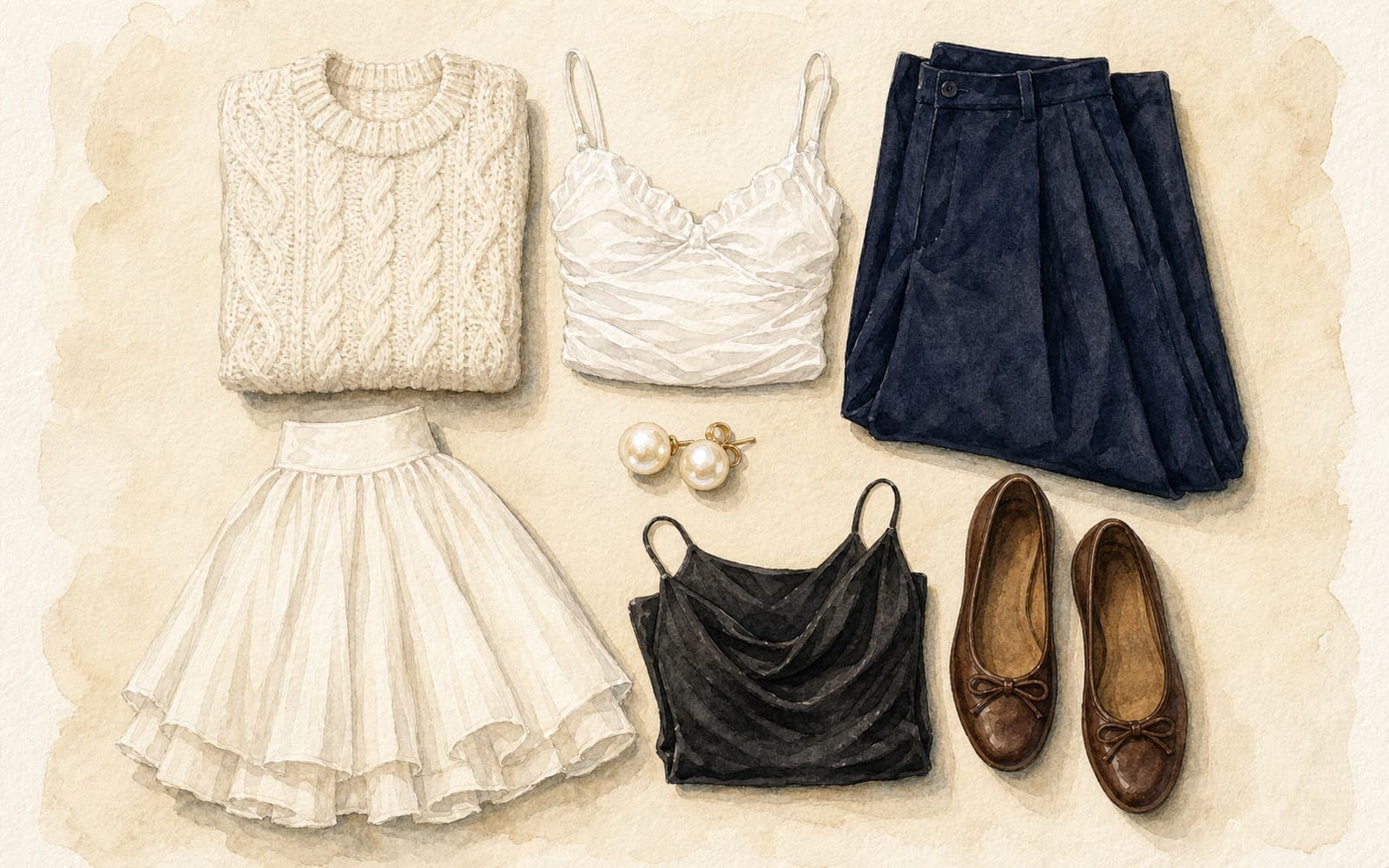
*Girl with a Pearl Earring* (c. 1665, Mauritshuis collection in The Hague), painted by Jan Vermeer, is the canonical Western art reference for the pearl earring. In 2026 pearl earrings sit across Mikimoto, Tiffany & Co., Pearl Source, and Catbird per *Vogue Runway*'s spring 2026 coverage. The single rule: match size to face shape and outfit formality. Small studs (under 8mm Akoya) read daily and office; medium (8–12mm) read cocktail; large (12mm+) and pearl drops read evening. Cultured Akoya for the heritage register; cultured freshwater for the contemporary or budget tier.
Mikimoto Kōkichi produced the first cultured pearl in Toba, Japan in 1893 — the patent and the subsequent farms turned pearls from rare luxury into a 20th-century jewelry classic.— Mikimoto Pearl Island archive
Wear it with
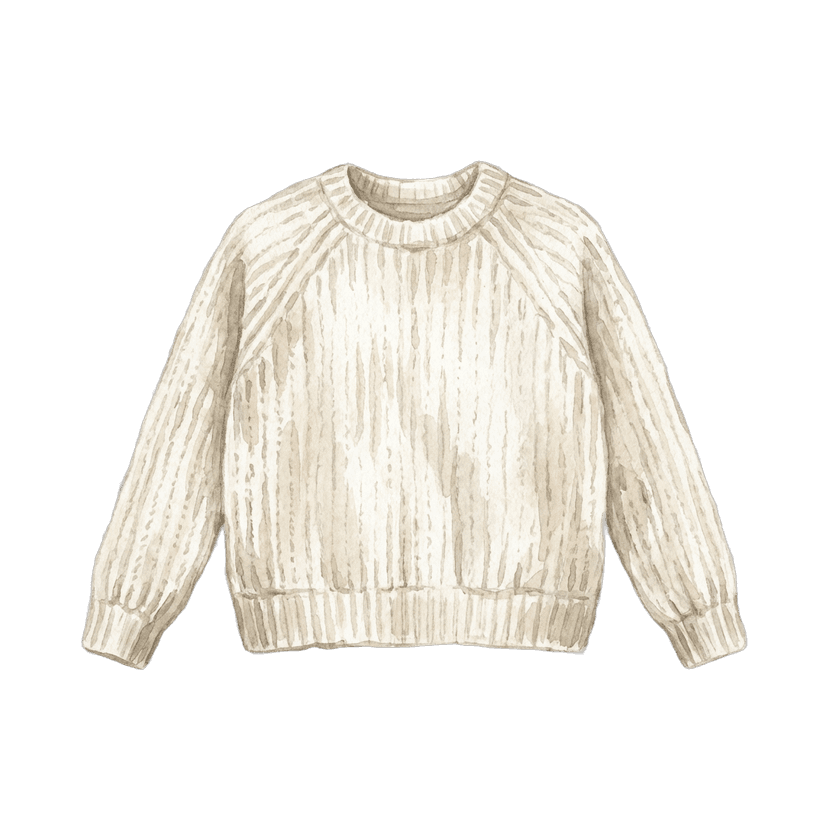 01Cream chunky knit sweater
The Jackie Kennedy 1961 daytime register adapted — pearl studs + cream cashmere is the warm-tonal column that reads quiet-luxury at every tier from creative-office to garden lunch. The pearl's white pulls warm against cream; the studs sit visible at the ear without competing.
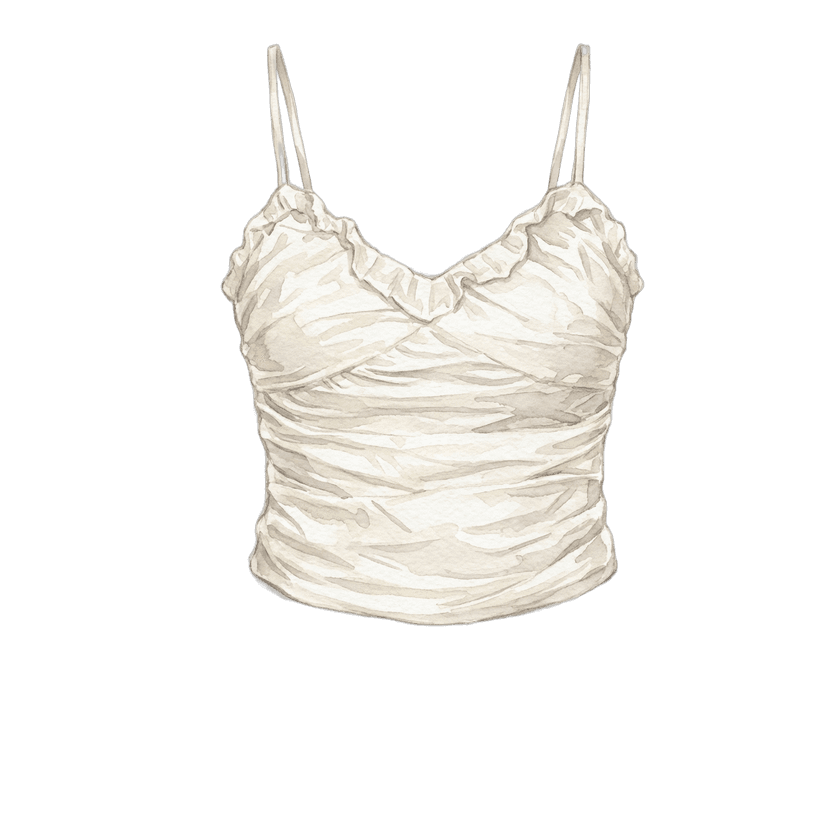 02White ruched silk cami top
The Carolyn Bessette-Kennedy 1990s daytime register adapted — pearl studs + white silk cami + dark jean reads soft and editorial. The white cami's bias drape sits softer than a tee, making the pearls read as deliberate jewelry rather than school-girl reference.
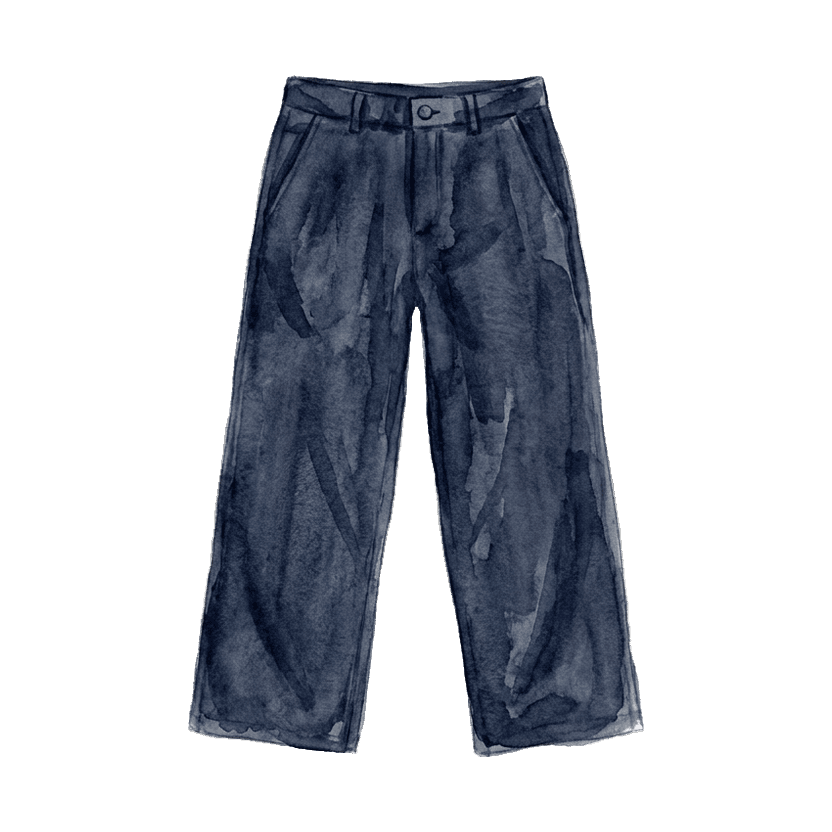 03Dark navy wide-leg trousers + white pinstripe shirt
The Jackie Kennedy 1961 formal register — pearl studs + navy + white-pinstripe is the canonical American First Lady jewelry uniform. Navy + white + pearl is the maritime palette adapted for jewelry; the pearls add the warm-tone accent that prevents the all-cool maritime palette from flattening.
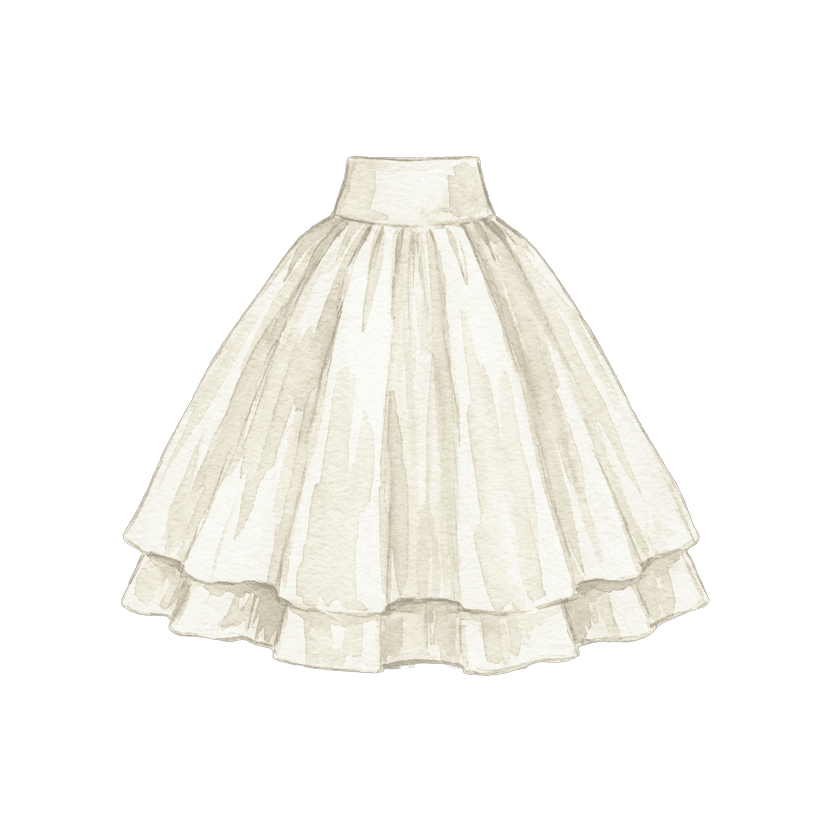 04Ivory voluminous midi skirt + cream knit
The Phoebe Philo Céline 2008–2017 reference adapted — fitted top + ivory mid-calf skirt + pearl studs reads cocktail-appropriate at conservative weddings and evening events. Ivory + cream + pearl reads as one warm tonal range; skip stark-white blouses with pearl studs (the temperature mismatch flattens).
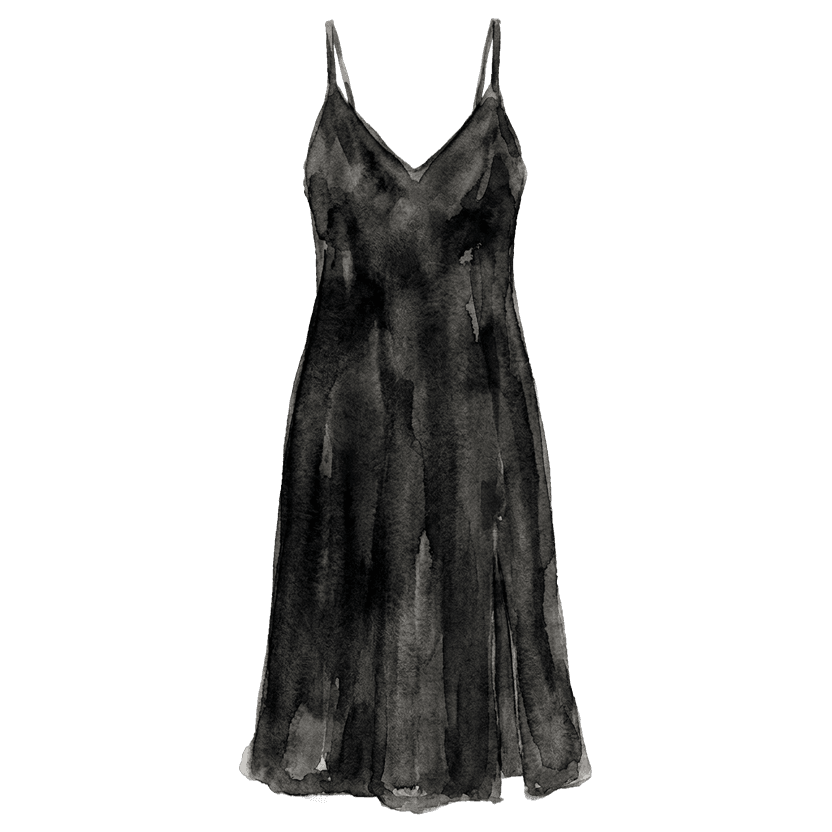 05Black bias-cut silk slip dress
The evening register — Audrey Hepburn in *Breakfast at Tiffany's* (1961) wore pearl studs with a black Givenchy slip dress. Pearl + black reads as the highest-contrast jewelry combination across the 20th century; the pearls add warmth that prevents the all-black silhouette from reading flat.
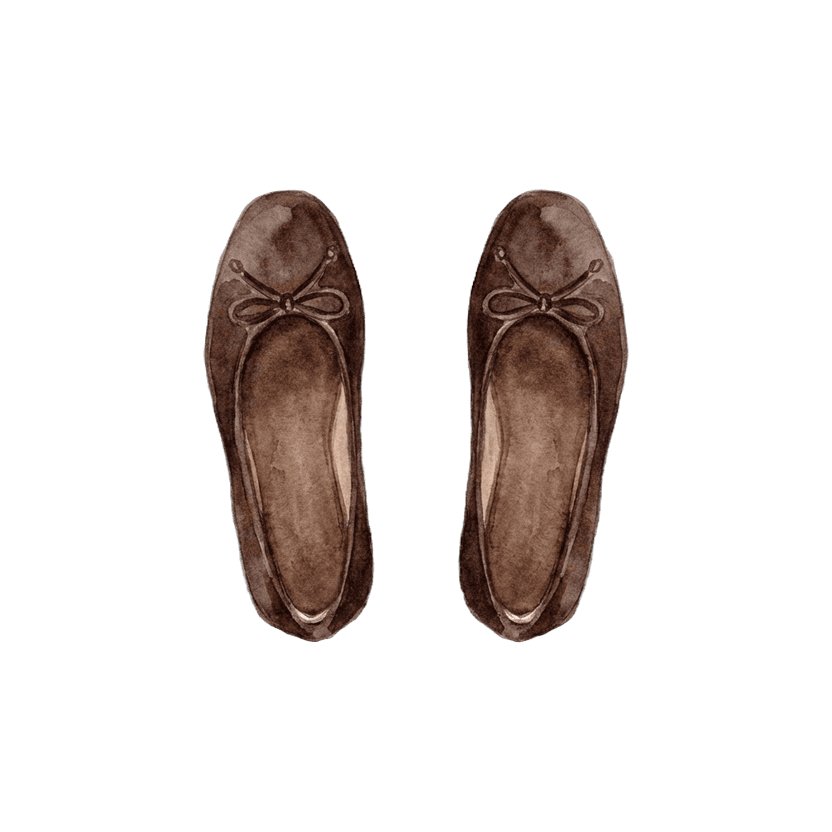 06Dark brown ballet flats
The proportion holds at flat — pearl studs + dark brown ballet flats reads warm-tonal and quiet-luxury. The flats anchor the warm-tonal column the pearls and warm-tone outfit (cream, camel, ivory) create. Skip black ballet flats with pearls in cream or camel outfits — the temperature mismatch reads scattered.
Dressing rules
Pearl earrings clear every dress code from creative-office through black-tie when the size matches the room. Small studs (under 8mm) read office and quiet-luxury at every tier including traditional finance and law. Medium studs (8–12mm) read cocktail and creative-office. Large studs (12mm+) and pearl drops read evening or formal — appropriate at black-tie and evening weddings, slightly informal at office. Per The Knot's wedding-guest etiquette, pearls are universally appropriate at every dress code; particularly correct at conservative church weddings and traditional formal events. The single rule across registers: cultured Akoya or freshwater pearls in white or cream tones pair across warm-tonal and cool-tonal outfits flexibly. Black or grey Tahitian pearls read more evening and pair specifically with cool-tonal outfits (charcoal, navy, dove-grey).
What to avoid
- Saturated colours — pearl's muted register fails next to saturation
- Large pearls (12mm+) with casual outfits — formality mismatches
- Plastic 'faux pearls' — surface scratches inside three months
- Sleeping in pearl studs — post-friction damage to the pearl
- Chlorinated pools or saltwater — chlorine reacts with the nacre
Frequently asked questions
Three reliable tiers. Heritage at $1,500+: Mikimoto Akoya pearl studs (the cultured-pearl invention's brand, Toba, Japan since 1893), Tiffany & Co. South Sea pearls. Mid-tier at $300–800: Pearl Source Akoya pearls, Catbird freshwater pearls (Brooklyn-based, founded 2004), Vrai cultured pearls. Mass-market at $50–250: Mejuri Akoya, Madewell freshwater. Skip plastic 'faux pearls' under $50 — surface scratches fast. For one purchase, 7–8mm cultured Akoya pearl studs in 14K gold posts is the safer answer; the size pairs with daily and cocktail registers, the metal pairs with both yellow and white gold jewelry across the rest of the wardrobe.
Match size to face shape and outfit formality. Small studs (under 7mm — the 'sleeper' scale) read office and conservative formal. Medium studs (7–10mm — the Jackie Kennedy 1961 reference) read daily, office, cocktail, and most-versatile single-pair size. Large studs (10–12mm) read cocktail, evening, and statement; pearl drops read black-tie and formal evening. For a first pair, 7–8mm cultured Akoya in 14K gold studs is the safer answer — the size pairs with most face shapes and outfits.
Yes — *Vogue Runway*'s spring 2026 coverage flagged pearl earrings across editor street-style coverage and across Mikimoto, Tiffany & Co., Catbird, and Vrai. The category has been in continuous editorial rotation since the Mikimoto 1893 cultured-pearl invention and is currently in a strong cycle alongside the warm-tonal palette. The 'quiet luxury' aesthetic that emerged through the *Succession* HBO series and the 2023 Sofia Richie–Elliot Grainge wedding has kept pearls permanently in editorial focus. The 2026 register favours cultured Akoya in white-cream tones over Tahitian or saltwater pearls in coloured tones.
Mikimoto's care guide is the reference. Wipe with a soft cloth after each wear (the body's natural oils dull the nacre over time); store separately from other jewelry in a soft cloth pouch (other gems scratch the pearl surface); avoid chlorinated pools, saltwater, perfume, and hairspray (all damage the nacre). Restring pearl strands every 2–3 years (the silk cord stretches and frays); pearl studs need only the post-and-back inspection, not restringing. For deep cleans, take pearls to a Mikimoto or Tiffany flagship for professional cleaning; budget 1–2 weeks.
Origin and shape. Akoya pearls (saltwater, cultured in Japan since Mikimoto's 1893 patent) are typically 5–10mm, near-perfectly round, with high lustre. Freshwater pearls (cultured in China since the late 20th century) are typically 6–12mm, baroque or button-shaped (round freshwater is rarer), with softer lustre. Akoya is the heritage register and the higher price tier ($300–1,500 for studs); freshwater is the contemporary or budget register ($50–300). Both are real pearls; both hold for decades. For one purchase, Akoya for traditional formal and conservative settings; freshwater for creative-office, daily, and contemporary aesthetics.